LANGUAGE
 中文简体
中文简体 русский
 Français
 Español
 Português
 عربى
عربى
Content
- 1 1. The Role of an XLPE and PE Cable Extrusion Machine
- 2 2. Main System Configuration
- 3 3. How the Machine Solves Common Production Problems
- 4 4. Advantages Compared with Conventional or Less Integrated Equipment
- 5 5. Application Areas
- 6 6. Advanced Manufacturing Strengths of the Supplier
- 7 7. Manufacturing and Quality-Control Considerations
- 8 8. Production Workflow
- 9 9. Key Benefits for Cable Manufacturers
- 10 10. Installation and Commissioning
- 11 11. Maintenance Recommendations
- 12 12. Selecting the Right Configuration
- 13 13. Why Choose a Specialized Cable Machinery Supplier?
- 14 14. Frequently Asked Questions
- 14.1 Q1: What materials can this cable extruder process?
- 14.2 Q2: Why is a cooling water tank necessary after extrusion?
- 14.3 Q3: What is the benefit of a multi-section cooling tank?
- 14.4 Q4: Can the machine be used for different cable sizes?
- 14.5 Q5: Is the machine suitable for power cable manufacturing?
- 14.6 Q6: Can it be integrated with pay-off and take-up equipment?
- 14.7 Q7: Does the machine support communication cable production?
- 14.8 Q8: How does the equipment help reduce production waste?
- 14.9 Q9: What information should a customer provide when requesting a quotation?
- 14.10 Q10: Can the supplier provide a complete cable production solution?
- 14.11 Q11: How should the cooling water system be maintained?
- 14.12 Q12: Is operator training required?
- 15 15. Conclusion
- 16 References
- 17 Product: XLPE PE Cable Extruder with Cooling Water Tank
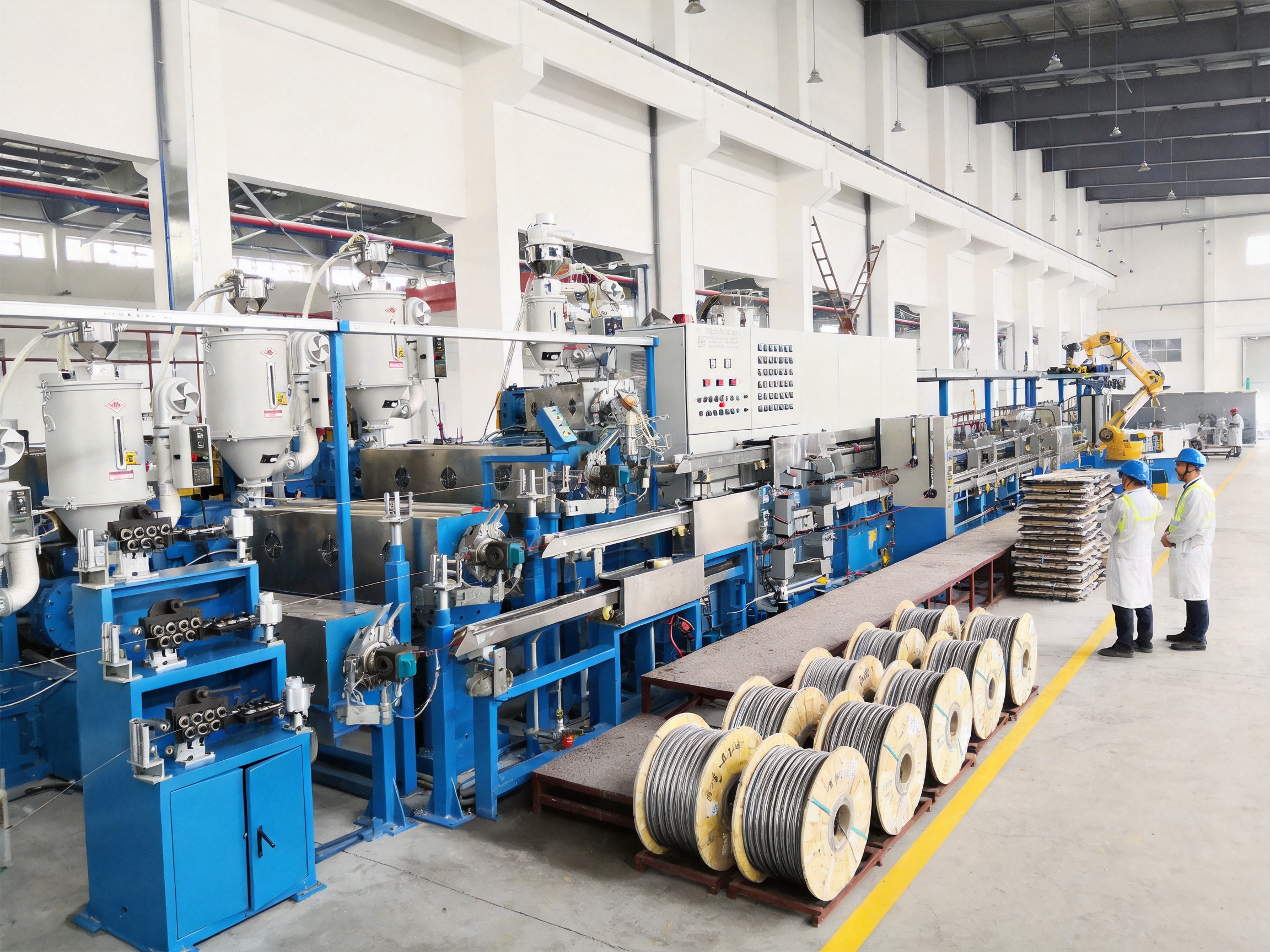
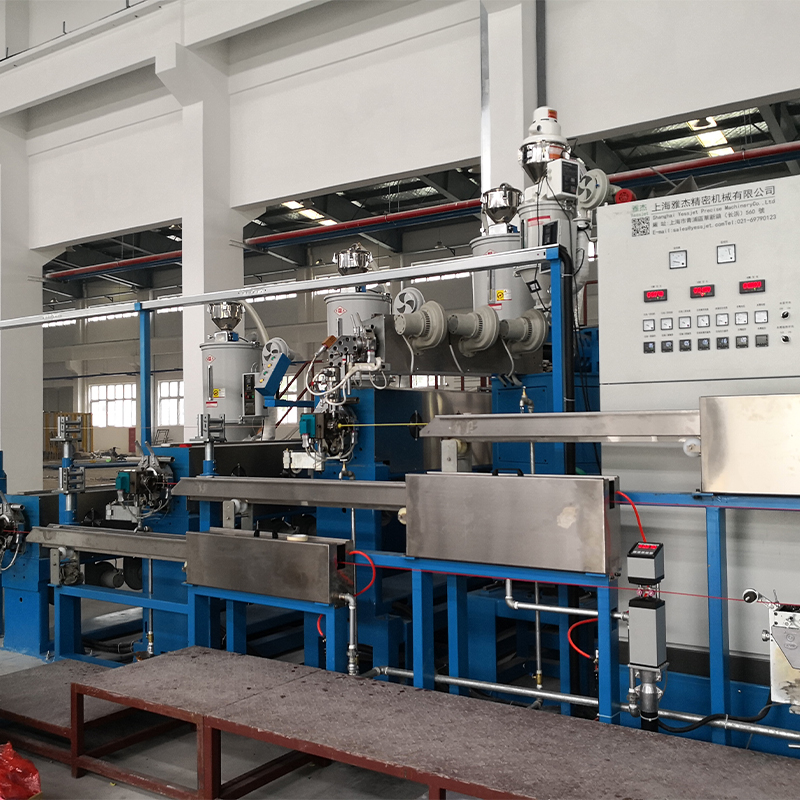
The quality of cable insulation directly affects electrical safety, transmission stability, service life, and production efficiency. For manufacturers producing power cables, communication cables, automotive wires, and other insulated conductors, the extrusion stage must deliver consistent insulation thickness, reliable material flow, stable temperature control, and efficient cooling. The XLPE PE Cable Extruder with Cooling Water Tank is designed to address these requirements through an integrated extrusion and cooling system for XLPE and PE insulated cables.
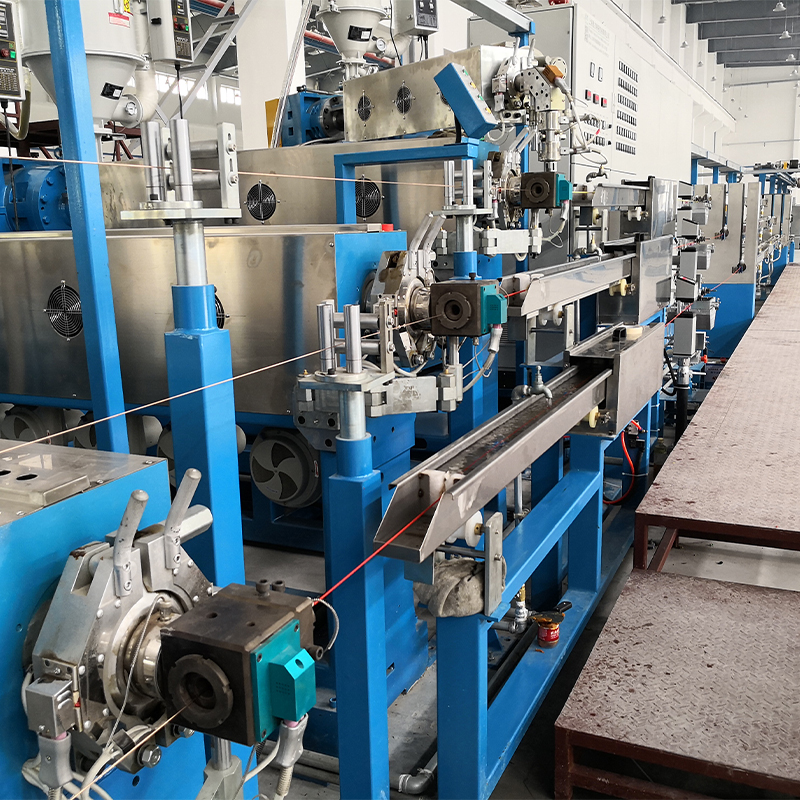
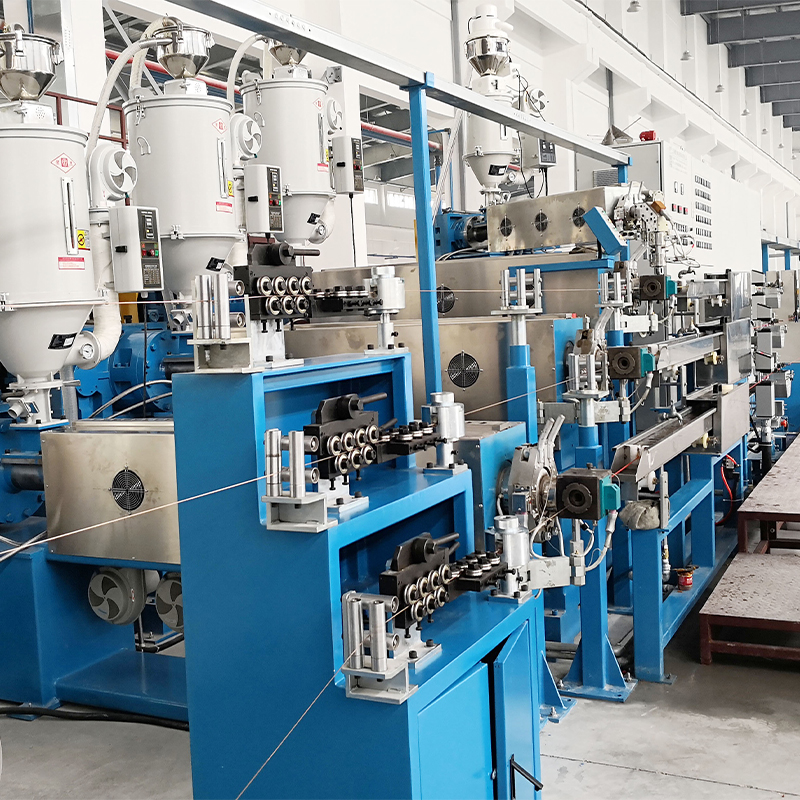
This equipment combines a precision single-screw extruder, an electrically heated temperature-control system, and a multi-section cooling water tank. Together, these components support continuous production while helping manufacturers control conductor coverage, insulation geometry, surface quality, and dimensional stability. Instead of treating extrusion and cooling as separate processes, the machine is configured as a coordinated production unit in which material plasticization, die forming, sizing, and cooling work together.
For cable manufacturers seeking dependable insulation performance and a practical route to production-line modernization, this machine provides a balanced solution. It is suitable for factories that need stable operation, straightforward process adjustment, efficient use of floor space, and compatibility with high-standard cable manufacturing requirements.
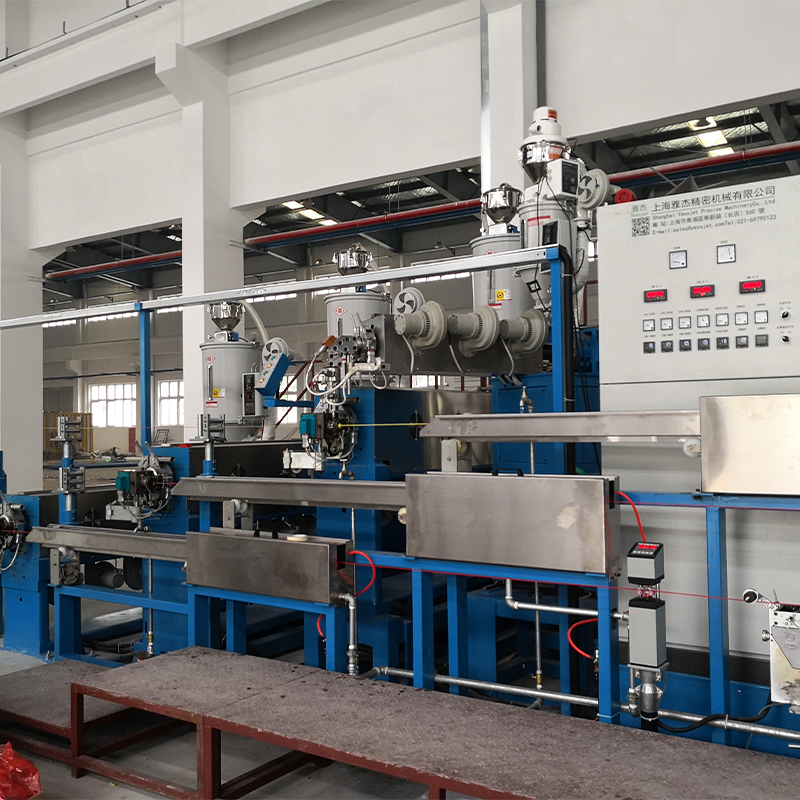
XLPE PE Cable Extruder with Cooling Water Tank
1. The Role of an XLPE and PE Cable Extrusion Machine
Cable extrusion is the process of applying a continuous layer of polymer insulation or sheathing around a conductor. During production, polymer granules are fed into the extruder, conveyed by a rotating screw, heated until they reach the required processing condition, and pushed through a die. The die forms the material around the conductor, after which the newly insulated cable enters a cooling system for dimensional stabilization.
Polyethylene is widely used in cable manufacturing because of its electrical insulation properties, low moisture absorption, chemical resistance, and favorable mechanical performance. XLPE, or cross-linked polyethylene, is valued for its improved thermal and mechanical characteristics after cross-linking. Depending on the cable structure and production method, the extruder may be integrated into a line that includes cross-linking, curing, or other downstream processes.
The extrusion machine must therefore maintain stable conditions before, during, and after die forming. Small fluctuations in melt pressure, screw speed, temperature, conductor alignment, or cooling intensity can influence insulation eccentricity, wall thickness, surface appearance, and electrical performance. A well-designed extrusion system reduces these fluctuations and gives operators a more controllable production environment.
The XLPE PE Cable Extruder with Cooling Water Tank is engineered around this principle. It is not simply a heating and conveying machine. It is a coordinated system for polymer preparation, insulation application, and controlled cooling. This integrated approach helps manufacturers reduce process variation and improve the repeatability of finished cables.
2. Main System Configuration
2.1 Precision Single-Screw Extruder
The single-screw extruder is the core of the machine. Its primary functions are to receive polymer material, convey it forward, provide controlled melting or plasticization, mix the material sufficiently for a stable melt, and deliver the melt to the extrusion die at a consistent rate.
A properly designed screw and barrel combination helps create a stable relationship between feeding speed, screw rotation, melt temperature, and extrusion output. This is important when the production line must maintain a uniform insulation layer over a long length of cable. A stable melt also reduces the risk of visible surface defects, incomplete fusion, air marks, and irregular material distribution.
The single-screw configuration is widely accepted in wire and cable production because it offers a practical balance of output stability, operating simplicity, maintenance accessibility, and compatibility with common thermoplastic insulation materials. It is suitable for factories that require dependable daily production without unnecessary mechanical complexity.
2.2 Electrical Heating and Temperature Control
Polymer processing depends heavily on temperature accuracy. If the material is not sufficiently heated, the melt may be too viscous to flow evenly through the die. If it is overheated, the material may suffer from thermal degradation, discoloration, unstable viscosity, or unwanted changes in processing behavior.
The machine uses an electrical heating system with temperature control for the relevant processing sections. This arrangement allows the operator to manage the heating conditions of the barrel and other thermal zones according to the material and production requirements. Appropriate temperature zoning supports gradual material conditioning rather than exposing the polymer to a sudden and uncontrolled heat increase.
Controlled heating also contributes to energy management. Instead of applying excessive heat across the entire machine, operators can set process zones according to the actual requirements of the material. This can reduce unnecessary thermal loss and help maintain more stable operating conditions during extended production runs.
2.3 Extrusion Die and Conductor Coverage
The extrusion die is responsible for distributing the polymer around the conductor and forming the initial insulation geometry. Die alignment, conductor centering, melt pressure, and material flow all influence insulation concentricity and wall thickness.
When these conditions are properly coordinated, the machine can help produce a smoother and more uniform insulation layer. This is particularly important for cables that must meet demanding electrical and mechanical requirements. Uneven insulation may create weak points, reduce dielectric reliability, increase material consumption, or cause difficulties during subsequent cable processing.
The die arrangement can be selected according to the conductor size, insulation material, cable construction, and required production output. In a complete line, die tooling is normally matched with the extruder, cooling section, haul-off, take-up, and other equipment so that the cable travels through the process without unnecessary tension or vibration.
2.4 Multi-Section Cooling Water Tank
After leaving the die, the hot insulation must be cooled in a controlled manner. The cooling water tank provides the necessary heat removal and supports the dimensional stabilization of the extruded cable.
A multi-section tank provides more control than a single undivided cooling area. Different sections can support progressive cooling as the cable moves through the line. This reduces the likelihood of sudden thermal shock and helps the insulation solidify in a more controlled way. The result can be improved surface quality, more stable cable dimensions, and a lower risk of deformation while the polymer is still soft.
Cooling performance depends on water temperature, flow, tank length, cable speed, material type, insulation thickness, and the temperature of the cable entering the tank. A properly configured water system helps keep these factors within a practical operating range. It also supports continuous production by removing heat consistently over the length of the cable.
The cooling tank is especially important when manufacturers are trying to increase line speed. Higher speed means the cable spends less time in the cooling section. A well-designed multi-section system helps compensate by providing organized and effective heat removal throughout the available cooling path.
3. How the Machine Solves Common Production Problems
3.1 Uneven Insulation Thickness
Uneven insulation thickness is one of the most common concerns in cable extrusion. It may result from unstable material flow, improper die centering, conductor movement, inconsistent tension, temperature variation, or inadequate process synchronization.
The machine addresses this issue through the combined use of a controlled single-screw extrusion system, temperature-managed heating zones, stable die forming, and coordinated cooling. These systems do not eliminate the need for correct setup, but they provide a more stable foundation for achieving consistent insulation geometry.
Uniform thickness is important for both electrical and economic reasons. Electrically, it supports reliable dielectric performance and predictable insulation resistance. Economically, it helps prevent excessive use of polymer caused by over-insulation. Consistent material distribution allows manufacturers to use the required amount of material more efficiently while maintaining product quality.
3.2 Slow or Uneven Cooling
Insufficient cooling can lead to soft insulation, surface marks, dimensional changes, and deformation during haul-off or take-up. If the cable is pulled or wound before the insulation has stabilized, the final product may not retain the intended geometry.
The multi-section water tank improves the cooling process by creating a longer and more organized heat-removal path. Progressive cooling supports the transition from a hot, formable polymer layer to a stable insulation surface. This is especially valuable for continuous production, where a consistent cooling condition must be maintained for many kilometers of cable.
3.3 Unstable Melt Processing
Polymer materials require suitable processing temperatures and a stable conveying action. Temperature fluctuations can cause changes in melt viscosity, which in turn influence extrusion pressure and material distribution. A well-controlled electrical heating system helps reduce these fluctuations.
Stable melt processing can also make production adjustments more predictable. When operators change the line speed or material feed rate, a controlled heating and extrusion system responds more consistently. This shortens the time needed to reach a steady condition after startup or a process change.
3.4 Excessive Production Waste
Waste may be created during startup, product changes, die adjustment, temperature stabilization, or the correction of dimensional defects. Although every extrusion process requires some setup material, better control can reduce the amount of off-specification cable produced.
The machine supports waste reduction by making key process variables more manageable. Stable heating, consistent extrusion, and efficient cooling help operators reach acceptable product conditions more quickly. Over longer production runs, this can contribute to improved material utilization and lower operating costs.
4. Advantages Compared with Conventional or Less Integrated Equipment
4.1 Integrated Extrusion and Cooling
A major advantage of this equipment is the integration of the extrusion unit and cooling water tank into one coordinated process. In less integrated arrangements, the extrusion and cooling sections may be selected separately without sufficient attention to line balance. This can create problems involving cable speed, tension, heat removal, or available production space.
An integrated design helps manufacturers evaluate the process as a complete system. The extrusion output, die configuration, tank length, cooling arrangement, and downstream handling equipment can be matched more effectively. This reduces the risk of creating a bottleneck in which the extruder produces cable faster than the cooling section can stabilize it.
4.2 Better Process Repeatability
Repeatability is a decisive factor in industrial cable manufacturing. A machine that performs well only under one narrow set of conditions is less valuable than a system that can maintain stable operation across different cable sizes and production schedules.
The controlled heating system and multi-section cooling arrangement provide a repeatable process framework. Operators can establish standard settings for different products and use those settings as a basis for future production. This makes it easier to train personnel, manage quality, and maintain consistent results across shifts.
4.3 Practical Single-Screw Technology
Some advanced extrusion systems include highly complex configurations that may require specialized operators, more intensive maintenance, and greater investment. While advanced technology has its place, many cable manufacturers need equipment that is precise without being unnecessarily difficult to operate.
The single-screw structure offers a practical solution. It is familiar to many wire and cable technicians, supports straightforward inspection, and can be maintained using established procedures. The machine therefore combines industrial precision with operational practicality.
4.4 Improved Cooling Efficiency
A single large water section may not provide the same degree of process control as a properly organized multi-section tank. Progressive cooling can improve the cable’s transition from a hot extrudate to a dimensionally stable product. This is particularly beneficial for thicker insulation layers or higher-speed production conditions.
Efficient cooling also helps protect downstream equipment. When the cable leaves the cooling tank at a stable temperature and with a consistent surface, it can be handled more reliably by the haul-off and take-up systems. This reduces the likelihood of mechanical marks, surface damage, or winding deformation.
4.5 Support for High-Standard Cable Production
The equipment is intended for cable manufacturing environments that work according to demanding technical and quality requirements. Its design supports production practices associated with IEC, GB, and ANSI-oriented cable specifications, subject to the exact product design, material formulation, tooling, and line configuration selected by the customer.
Compliance with a standard is not created by the machine alone. It depends on the complete production system, approved materials, conductor quality, tooling, process settings, testing procedures, and final inspection. However, a stable extrusion and cooling platform provides the necessary basis for manufacturers that must meet high-standard production targets.
5. Application Areas
5.1 Power Cable Manufacturing
Power cables require dependable insulation because they operate under electrical, thermal, and mechanical stresses. PE and XLPE insulation systems are widely used in different power cable constructions. The extrusion machine can support the insulation-processing stage in production lines for power conductors, subject to the required voltage class and line design.
Uniform insulation is particularly important for power cable production because local thin spots may weaken electrical performance. Controlled extrusion and cooling help manufacturers maintain the intended insulation profile and prepare the cable for subsequent processes such as screening, armoring, sheathing, testing, or coiling.
5.2 Communication Cable Production
Communication cables require stable geometry and reliable insulation to protect signal quality. PE materials are commonly used in communication cable structures because of their electrical properties and resistance to moisture.
The machine can be incorporated into production lines for insulated conductors and communication cable components. Precise material distribution and smooth surface formation help support downstream twisting, cabling, shielding, and sheathing operations.
5.3 Automotive Wire Manufacturing
Automotive wires operate in environments involving vibration, temperature changes, chemicals, and limited installation space. Consistent insulation thickness and good surface quality are essential for reliable routing and terminal processing.
The extrusion system can support automotive wire applications where PE-based materials or related insulation compounds are suitable. The final result depends on the selected compound, conductor design, tooling, production speed, and required automotive specification. The machine provides a controlled platform for these variables to be managed in a continuous process.
5.4 Industrial and Specialty Cables
Industrial equipment, control systems, renewable-energy installations, transportation systems, and machinery all require different types of insulated wires and cables. The appropriate material and line configuration may vary, but the need for stable extrusion remains consistent.
Because the machine is based on adjustable extrusion and cooling principles, it can be adapted to a range of cable sizes and insulation requirements. Customers can work with the equipment supplier to determine suitable die tooling, process settings, cooling arrangements, and downstream handling equipment.
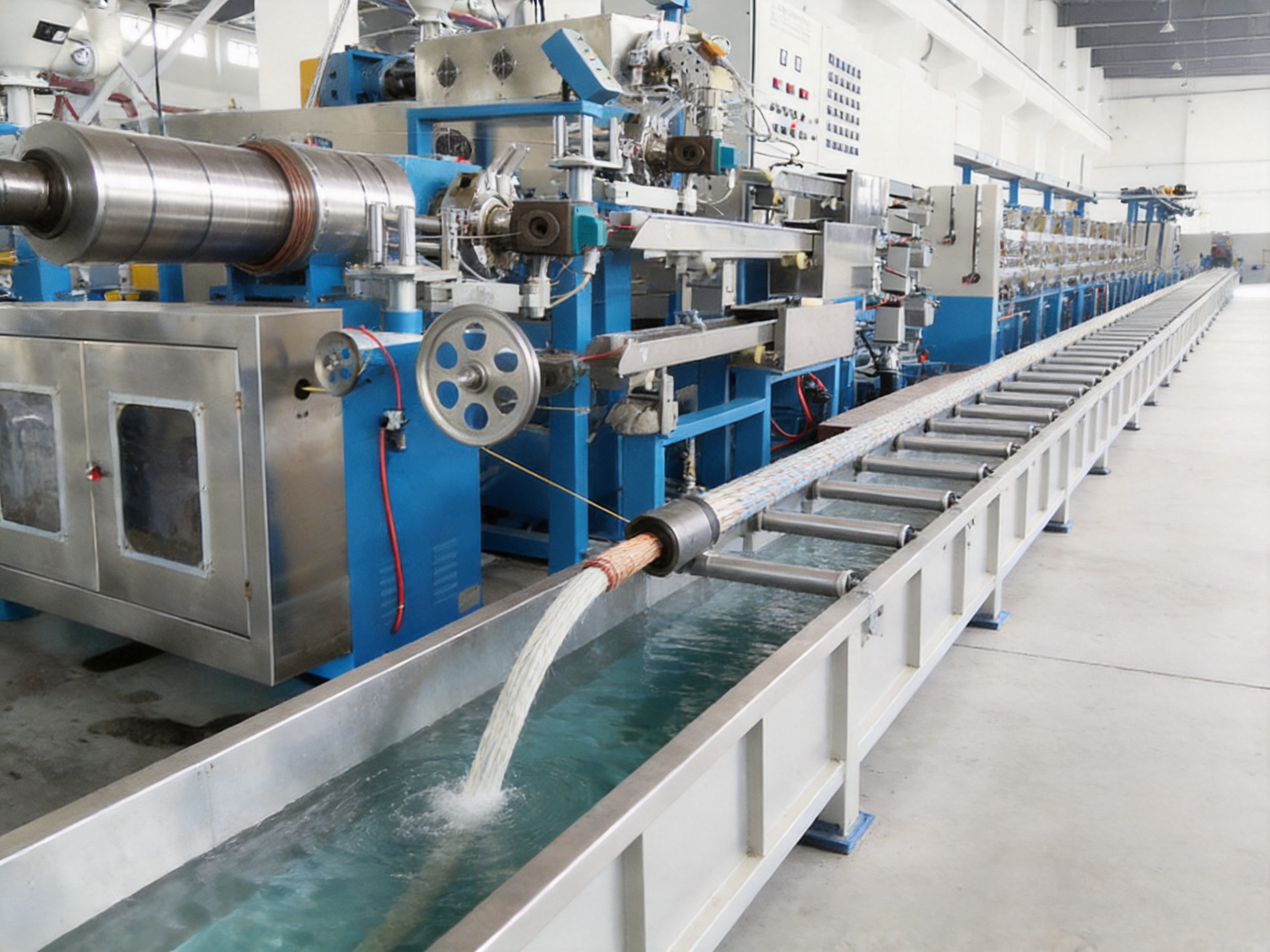
6. Advanced Manufacturing Strengths of the Supplier
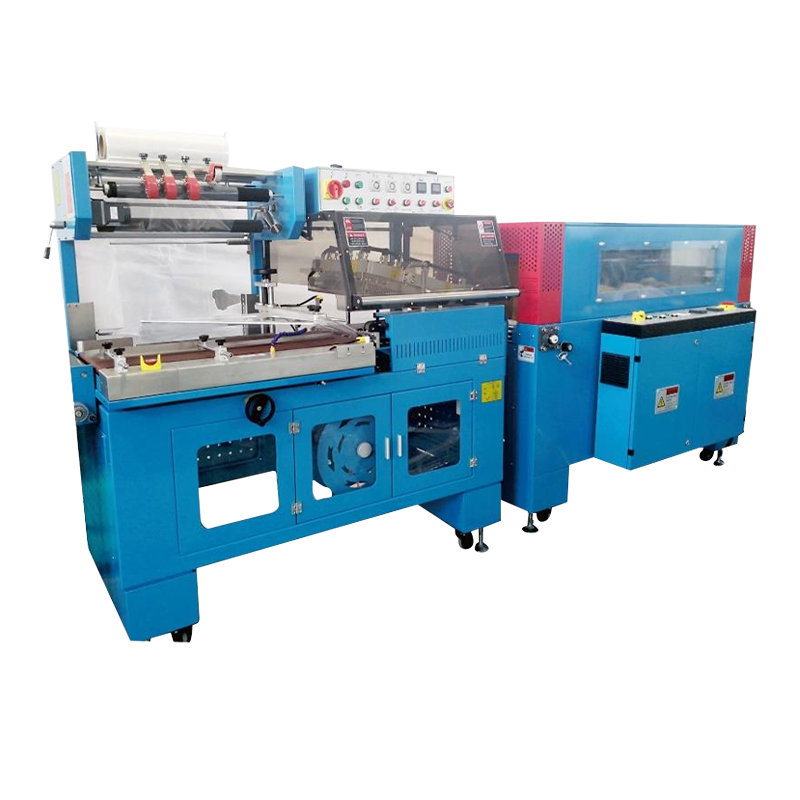
Shanghai Yessjet Precise Machinery Co., Ltd. focuses on wire and cable machinery and turnkey cable production solutions. Its product range includes wire and cable extrusion lines, fully automatic coiling and packaging equipment, intelligent robot stackers, coiling machines, motorized pay-off equipment, motorized take-up equipment, accessory equipment, and cable extrusion machines.
This broader product portfolio is significant because cable production performance depends on more than the extruder itself. Pay-off equipment must release the conductor smoothly. The extrusion unit must apply the insulation consistently. The cooling system must stabilize the cable. Haul-off and take-up equipment must maintain suitable tension. Coiling, packaging, and stacking systems must protect the finished product and support efficient logistics.
A supplier with experience across these process stages can evaluate the production line as a complete workflow rather than as a collection of unrelated machines. This helps customers reduce compatibility risks and plan future automation more effectively.
6.1 Precision-Oriented Equipment Design
The company’s focus on precise machinery is reflected in the equipment concept: controlled extrusion, managed temperature zones, organized cooling, and compatibility with continuous cable production. Precision in this context includes mechanical alignment, repeatable adjustment, stable material flow, and appropriate coordination between process sections.
For cable manufacturers, precision is valuable because small errors can become significant over long production lengths. A slight eccentricity in insulation or a minor change in cooling behavior can result in large quantities of off-specification product if it remains unnoticed. Equipment designed for stable production helps operators detect and correct process changes more effectively.
6.2 Production Experience in Wire and Cable Machinery
Experience in the wire and cable sector gives the supplier a practical understanding of common factory requirements. These requirements may include limited floor space, varying product sizes, frequent product changes, labor shortages, material-cost pressure, quality traceability, and the need for reliable long-term operation.
Such experience supports more useful equipment recommendations. Instead of selecting a machine only according to nominal output, a complete solution should consider conductor dimensions, insulation material, cable structure, line speed, cooling capacity, take-up method, operator workflow, and future expansion plans.
6.3 Turnkey Solution Capability
A turnkey approach can simplify project planning for customers that are building a new cable production line or upgrading an existing factory. The supplier can assist with equipment selection, line arrangement, process coordination, accessory matching, and production-line integration.
This approach may reduce the communication gaps that occur when the extruder, cooling section, pay-off, take-up, coiler, and packaging equipment are purchased from unrelated sources. A more unified project structure can also make installation, commissioning, operator training, and after-sales communication more efficient.
6.4 Customization for Different Production Requirements
Cable factories rarely have identical production needs. One manufacturer may focus on small-diameter automotive wires, while another may produce larger power cables. Some customers may prioritize maximum speed, while others require frequent product changes, compact layout, or easy maintenance.
The equipment can be discussed and configured according to the intended product range. Customization may involve the extrusion configuration, die arrangement, cooling tank structure, line layout, take-up system, control requirements, and integration with other machinery. The objective is to create a production solution that matches actual operating conditions rather than relying on a one-size-fits-all arrangement.
7. Manufacturing and Quality-Control Considerations
Reliable cable machinery depends on the quality of its mechanical, electrical, and thermal components. A production line must withstand continuous operation, repeated heating and cooling cycles, material changes, operator adjustments, and routine maintenance.
Manufacturing quality begins with suitable component selection. The extruder frame, barrel, screw, heating elements, temperature sensors, drive system, water tank, pumps, control components, and safety devices must be selected and assembled to support the intended operating conditions.
Mechanical alignment is also important. The extruder, die, cooling tank, haul-off, and take-up should form a coherent line path. Misalignment can cause conductor deviation, uneven insulation, unnecessary friction, or surface damage. Proper assembly and inspection help maintain a stable cable path from pay-off to take-up.
Electrical and control-system checks are equally important. Temperature sensors should provide reliable feedback, heating zones should respond correctly, and drive controls should support stable speed adjustment. Water circulation equipment should operate consistently, while safety functions should help protect operators and the machine during abnormal conditions.
Before delivery, equipment should be inspected for assembly quality, control response, mechanical movement, heating performance, water circulation, and general operating safety. Depending on the project, customers may also request trial operation, sample production, factory acceptance checks, or commissioning assistance.
8. Production Workflow
8.1 Material Preparation
The selected PE or XLPE-related compound must be stored and prepared according to its technical requirements. Material cleanliness, dryness, batch consistency, and correct feeding are important factors in extrusion stability.
8.2 Conductor Pay-Off
The conductor is released from a pay-off unit and guided toward the extrusion head. Stable pay-off tension helps keep the conductor centered and reduces sudden movement that could influence insulation thickness.
8.3 Polymer Feeding and Plasticization
Polymer material enters the extruder, where the screw conveys it through heated sections. The material is progressively conditioned until it reaches a suitable melt state for extrusion.
8.4 Insulation Application
The melt passes through the die and forms a continuous layer around the conductor. At this stage, die centering, melt pressure, conductor alignment, and line speed must be coordinated carefully.
8.5 Water Cooling
The hot insulated cable enters the multi-section cooling water tank. Heat is removed progressively as the cable travels through the tank, allowing the insulation to solidify and stabilize.
8.6 Haul-Off and Take-Up
The haul-off controls cable movement through the line, while the take-up collects the finished cable under controlled tension. Depending on the product, the cable may then be coiled, packaged, stacked, or transferred to another production process.
9. Key Benefits for Cable Manufacturers
| Production Requirement | Machine Feature | Practical Benefit |
|---|---|---|
| Uniform insulation thickness | Stable single-screw extrusion and coordinated die forming | More consistent cable geometry and improved material utilization |
| Reliable thermal processing | Electrical heating with temperature control | Better management of melt viscosity and processing stability |
| Fast and controlled cooling | Multi-section cooling water tank | Improved dimensional stability and surface quality |
| Continuous production | Integrated extrusion and cooling workflow | Reduced interruption between forming and stabilization |
| Product flexibility | Adjustable operating conditions and matched tooling | Support for different cable sizes and insulation requirements |
| Factory modernization | Compatibility with pay-off, take-up, coiling, and packaging equipment | More efficient line integration and future automation planning |
| Quality management | Repeatable process structure | Easier standardization, operator training, and process monitoring |
10. Installation and Commissioning
Correct installation is essential for achieving the expected performance of an extrusion line. The installation area should provide sufficient space for material handling, operator access, maintenance, die changes, water-system service, and cable movement.
The foundation or support structure must be suitable for the machine configuration. The extruder and connected line components should be leveled and aligned carefully. Electrical power, water supply, drainage, ventilation, and safety arrangements should be prepared before commissioning begins.
During initial commissioning, the machine should be checked without material to verify mechanical movement, drive rotation, heating response, control functions, and emergency-stop behavior. Water circulation should also be tested to confirm that the cooling tank and associated equipment operate correctly.
Material trials can then be conducted gradually. Operators should allow the heating zones to reach stable conditions before feeding polymer. The extrusion speed, line speed, conductor tension, die settings, and cooling conditions should be adjusted step by step. Product samples should be measured for insulation diameter, wall thickness, eccentricity, surface appearance, and other customer-specific requirements.
Commissioning should not be treated as a single adjustment. The best operating settings are usually established through controlled trials based on the actual compound, conductor, insulation thickness, and production target.
11. Maintenance Recommendations
11.1 Extruder Maintenance
The screw and barrel should be inspected according to the material and operating schedule. Residual polymer, contamination, or degraded material can influence output stability and product quality. Cleaning procedures should be performed safely and according to the equipment instructions.
Heating elements, temperature sensors, electrical connections, drive components, and lubrication points should be checked regularly. Unusual noise, unstable temperature readings, or changes in extrusion pressure should be investigated before they develop into major failures.
11.2 Cooling System Maintenance
The cooling water tank should be kept clean and free from excessive contamination. Water quality, circulation, filtration, pump condition, and temperature should be monitored. Deposits or blockages may reduce cooling efficiency and affect the stability of the cable surface.
Water should be managed according to local operating conditions and the equipment design. Scheduled cleaning and inspection help maintain heat-transfer performance and protect pumps, pipes, valves, and related components.
11.3 Die and Tooling Maintenance
Die surfaces must be kept clean and free from damage. Small scratches, deposits, or alignment problems can affect the cable surface and insulation distribution. Tooling should be stored properly when not in use, and worn or damaged components should be replaced or refurbished as appropriate.
11.4 Line Alignment and Tension
The cable path should be checked regularly from pay-off to take-up. Guide rollers, haul-off belts, take-up components, and alignment points should be inspected for wear and incorrect adjustment. Stable tension protects the insulation layer and supports accurate winding.
12. Selecting the Right Configuration
Before purchasing an XLPE PE Cable Extruder with Cooling Water Tank, customers should define their product and production requirements clearly. Important considerations include the conductor material, conductor diameter, insulation material, insulation thickness, target line speed, output requirement, cable length, take-up method, and expected production schedule.
Customers should also consider whether the equipment will operate as an independent extrusion line or as one section of a larger turnkey system. If the line will later connect to coiling, packaging, robot stacking, or additional cable-processing machinery, these future requirements should be considered during the initial layout.
Material compatibility is another important factor. PE and XLPE-related materials may have different processing behavior, temperature requirements, and downstream treatment conditions. The selected screw, barrel, die, cooling system, and control settings should be appropriate for the intended material formulation.
Factory conditions also influence equipment selection. Available electrical capacity, water supply, drainage, ventilation, floor area, ambient temperature, and operator access should all be reviewed before finalizing the design.
13. Why Choose a Specialized Cable Machinery Supplier?
A general-purpose machinery supplier may be able to provide an extruder, but cable production requires more than generic polymer processing. The equipment must be coordinated with conductor handling, insulation geometry, cooling, line tension, take-up, coiling, packaging, and quality inspection.
A specialized wire and cable machinery supplier understands these relationships. This knowledge can help customers avoid problems such as insufficient cooling capacity, incompatible line speeds, unsuitable take-up equipment, poor cable alignment, or difficult product changeovers.
Shanghai Yessjet Precise Machinery Co., Ltd. offers equipment and production-line solutions for the wire and cable sector. Its range of extrusion, coiling, packaging, pay-off, take-up, and robot stacking equipment supports customers that want to build integrated manufacturing systems rather than purchase isolated machines.
The company’s location in Jiangsu Province, China, places its manufacturing operation in a region with a strong industrial equipment and manufacturing base. For international customers, this can support access to a broad supply chain for mechanical, electrical, automation, and cable-production components.
Customers can contact the supplier to discuss product requirements, line layout, tooling, cooling capacity, automation level, commissioning, and other project details before making a final equipment decision.
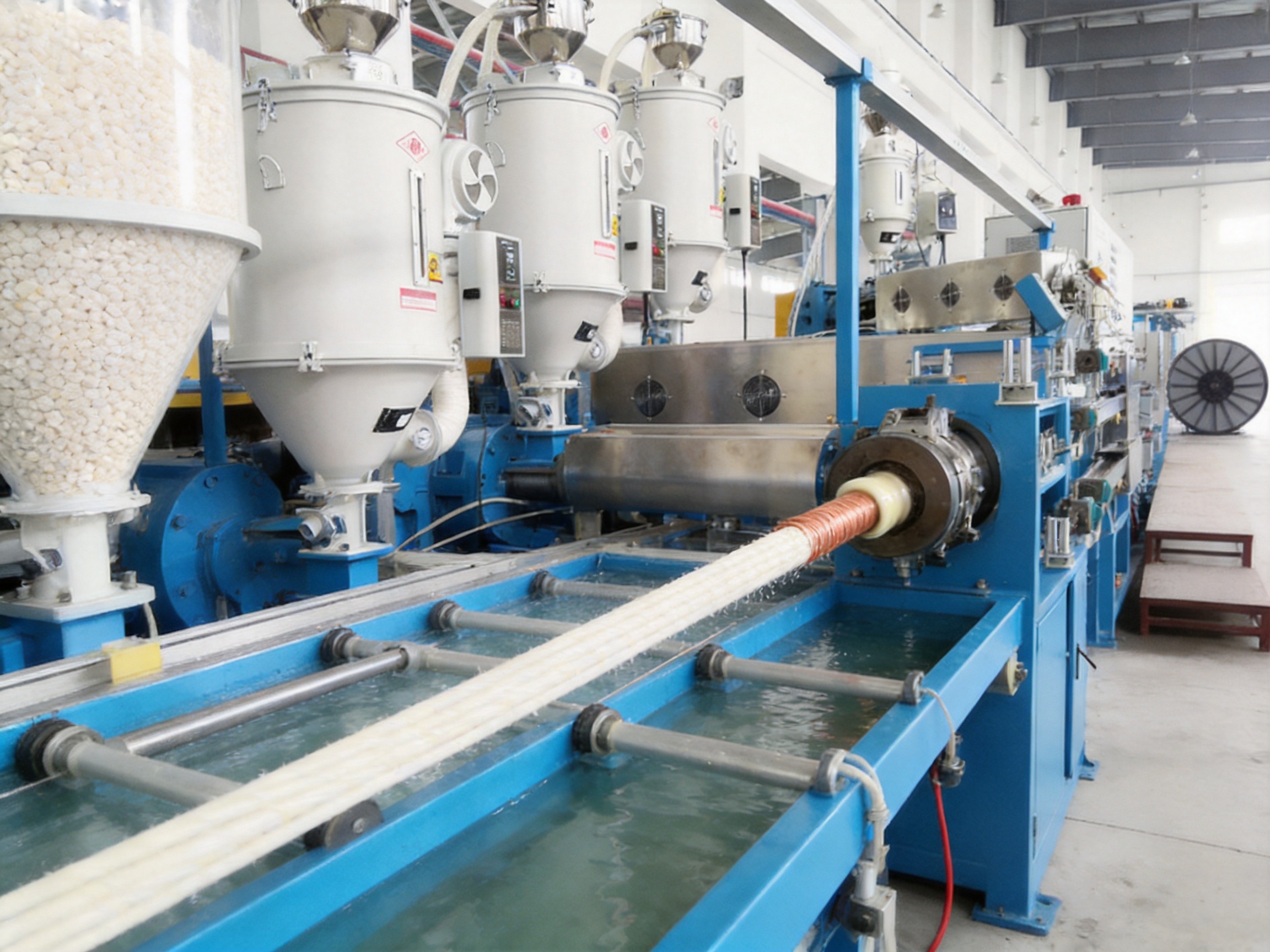
14. Frequently Asked Questions
Q1: What materials can this cable extruder process?
The machine is designed for XLPE and PE cable insulation applications. The exact material suitability depends on the compound formulation, processing temperature, conductor structure, die tooling, and downstream requirements. Customers should provide the material data sheet before final configuration.
Q2: Why is a cooling water tank necessary after extrusion?
The polymer leaves the die at an elevated temperature and must be cooled so that the insulation can solidify and retain its intended dimensions. The cooling water tank removes heat continuously and supports stable cable geometry, surface quality, and downstream handling.
Q3: What is the benefit of a multi-section cooling tank?
A multi-section tank allows cooling to take place progressively. This provides more control over the thermal transition and can improve dimensional stability compared with an inadequately organized single-stage cooling arrangement.
Q4: Can the machine be used for different cable sizes?
It can be configured for a range of cable sizes, but the usable range depends on the extruder capacity, die tooling, conductor dimensions, insulation thickness, cooling length, and line-speed requirements. Tooling and process settings may need to be changed when switching between products.
Q5: Is the machine suitable for power cable manufacturing?
It can support the insulation extrusion stage of power cable production when the selected material, tooling, output, and line configuration match the cable design. The complete cable must still satisfy the applicable technical standard through suitable materials, process control, testing, and inspection.
Q6: Can it be integrated with pay-off and take-up equipment?
Yes. The extruder and cooling tank can be incorporated into a broader wire and cable line that includes motorized pay-off equipment, haul-off, motorized take-up equipment, coiling machinery, packaging systems, and other accessories.
Q7: Does the machine support communication cable production?
It can be used for suitable PE-insulated communication cable components and related applications. The final configuration should be selected according to the conductor type, cable structure, required diameter, material formulation, and communication-cable specification.
Q8: How does the equipment help reduce production waste?
Controlled heating, stable extrusion, coordinated die forming, and efficient cooling help operators reach stable production conditions more quickly and maintain them more consistently. This can reduce off-specification cable caused by temperature fluctuations, uneven insulation, or insufficient cooling.
Q9: What information should a customer provide when requesting a quotation?
Useful information includes conductor material and size, insulation material, insulation thickness, target output, line speed, cable diameter, production length, take-up method, required automation level, factory power conditions, and any applicable standards or testing requirements.
Q10: Can the supplier provide a complete cable production solution?
The supplier provides wire and cable machinery covering extrusion, pay-off, take-up, coiling, packaging, robot stacking, and related equipment. A complete solution can be discussed according to the customer’s product range, production capacity, factory layout, and automation objectives.
Q11: How should the cooling water system be maintained?
The water tank, circulation system, pumps, pipes, filters, and related components should be inspected and cleaned according to the operating schedule. Water quality and temperature should be monitored, and any reduction in circulation or heat-transfer performance should be corrected promptly.
Q12: Is operator training required?
Operators should be trained in material preparation, temperature setting, extrusion adjustment, die changes, cooling control, line synchronization, product inspection, emergency procedures, and routine maintenance. Proper training is important for protecting both product quality and equipment service life.
15. Conclusion
The XLPE PE Cable Extruder with Cooling Water Tank is a practical solution for manufacturers that need stable, continuous, and high-quality cable insulation processing. Its precision single-screw extruder provides controlled polymer conveying and plasticization. Its electrical heating system supports reliable thermal management. Its multi-section cooling water tank helps remove heat progressively and stabilize the finished insulation.
Compared with less integrated equipment, this configuration offers stronger process coordination, better repeatability, improved cooling management, and easier integration into a complete cable production line. It can support applications in power cables, communication cables, automotive wires, industrial cables, and other products that use suitable PE or XLPE-related insulation systems.
The value of the equipment is further strengthened by the supplier’s broader experience in wire and cable machinery. By providing extrusion lines, pay-off equipment, take-up equipment, coiling machines, packaging systems, robot stackers, and accessories, Shanghai Yessjet Precise Machinery Co., Ltd. can help customers plan production systems around their actual manufacturing objectives.
For manufacturers seeking improved insulation consistency, controlled cooling, reduced process variation, and a foundation for future automation, this extrusion machine provides a reliable starting point for modern cable production.
References
1. International Electrotechnical Commission, standards and technical guidance for insulated power cables and cable production practices.
2. International Electrotechnical Commission, general principles for electrical cable testing, insulation performance, and dimensional verification.
3. American National Standards Institute, cable and wire performance requirements applicable to selected industrial and electrical products.
4. National standards and technical specifications for wire and cable manufacturing, polymer insulation, conductor construction, and finished-cable inspection.
5. Technical literature on polymer extrusion, single-screw extruder design, melt processing, die forming, and thermoplastic material behavior.
6. Technical literature on cable insulation cooling, water-tank design, heat transfer, dimensional stabilization, and continuous production-line control.
7. Industrial guidelines for extrusion-line maintenance, temperature monitoring, water circulation management, tooling inspection, and operator safety.