LANGUAGE
 中文简体
中文简体 русский
 Français
 Español
 Português
 عربى
عربى
Content
- 1 Why Cable Tension Control Is Essential
- 2 Core Function of Wire Cable Tension Control Systems
- 3 Operating Principle and Production Workflow
- 4 Advantages Over Conventional Tension Management Methods
- 5 Product Advantages for Cable Manufacturers
- 6 Manufacturing Strengths and Engineering Approach
- 7 Design Features That Support Reliable Operation
- 8 Application Areas
- 9 How to Select the Right System
- 10 Installation and Commissioning Guidelines
- 11 Maintenance and Long-Term Performance
- 12 Quality and Business Benefits
- 13 Why Choose an Experienced Cable Machinery Manufacturer
- 14 Q&A: Wire Cable Tension Control Systems
- 14.1 What is the main purpose of a wire cable tension control system?
- 14.2 Can the system be used with a storage rack?
- 14.3 Is the system suitable for extrusion lines?
- 14.4 Can it work with motorized take-up equipment?
- 14.5 What problems can excessive cable tension cause?
- 14.6 What problems can insufficient tension cause?
- 14.7 Does the system eliminate all winding defects?
- 14.8 Is a dedicated tension system better than manual adjustment?
- 14.9 Can one system handle different cable products?
- 14.10 What information should be supplied when requesting a quotation?
- 14.11 How does tension control reduce production waste?
- 14.12 What should operators check during commissioning?
- 14.13 Why is manufacturer experience across several cable machines useful?
- 15 Conclusion
- 16 References
- 17 Product: Wire Cable Tension Control Systems
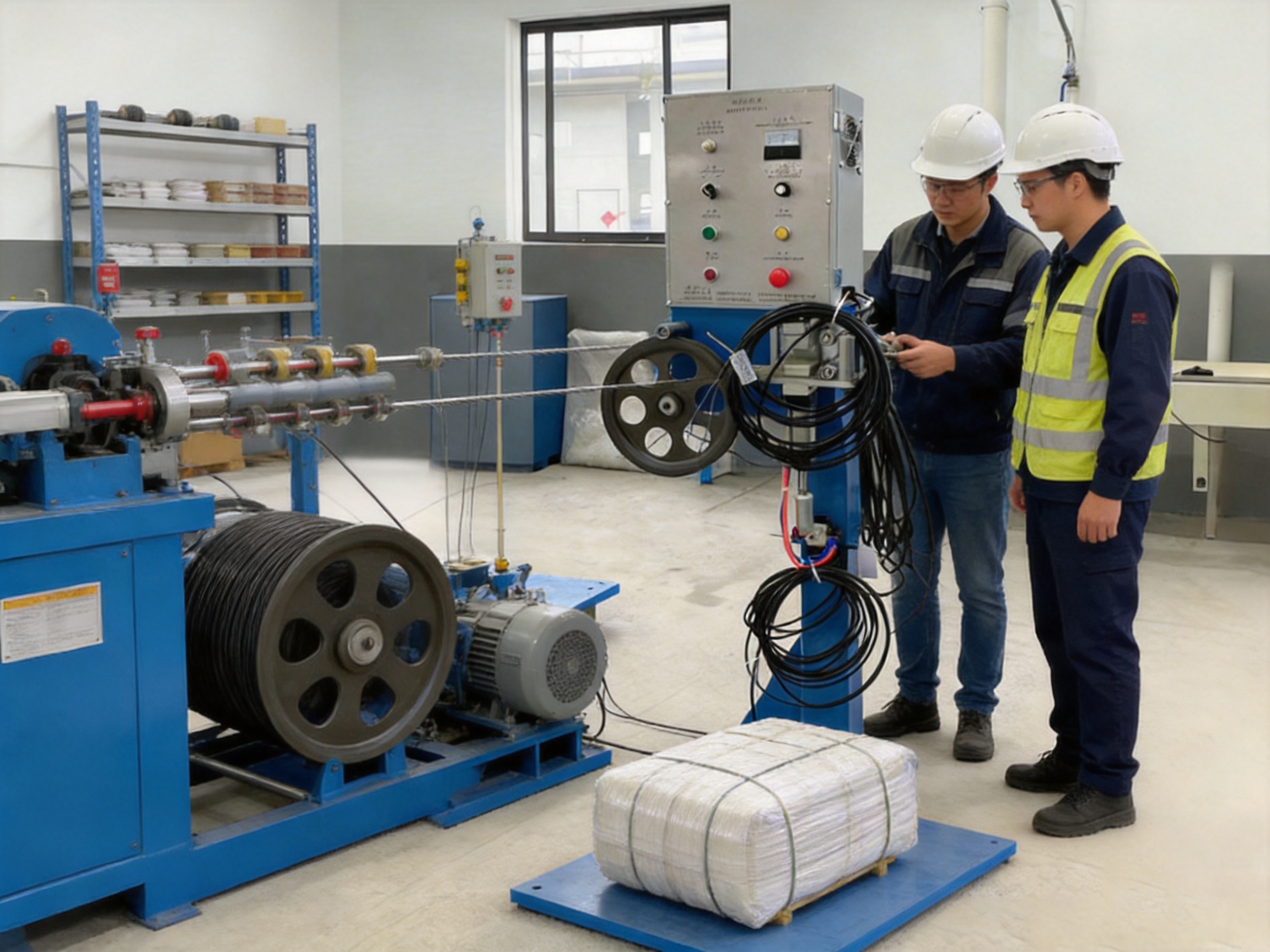
In modern wire and cable production, winding quality is determined by more than the performance of the extrusion line or the speed of the coiling machine. The cable must also be guided, stored, wound, and transferred under stable mechanical conditions. Among these conditions, tension is one of the most important. If the tension is too high, the cable may stretch, deform, flatten, damage its insulation, or develop internal stress. If the tension is too low, the cable may become loose, overlap irregularly, slip during winding, or form an unstable package. A reliable tension control system provides the balance required for consistent production.
Wire Cable Tension Control Systems are designed to regulate cable tension during winding, coiling, storage, and related handling processes. The equipment continuously supports the adjustment of cable pulling force so that the material can move through the production line with reduced variation. It is commonly used together with storage racks, coiling machines, take-up equipment, extrusion machinery, and other accessory equipment. By integrating tension management into the production workflow, manufacturers can improve winding accuracy, reduce material waste, and achieve more stable output.
This article explains the operating principles, advantages, application value, integration methods, and manufacturing strengths associated with modern wire and cable tension control systems. It also examines why a dedicated tension management solution can offer important advantages over basic mechanical braking devices, manual adjustment methods, and poorly coordinated line accessories.
Why Cable Tension Control Is Essential
Cable production involves continuous movement. Conductors, insulated wires, shielded cables, control cables, data cables, and other products may pass through several stages before they reach the final package. During extrusion, cooling, printing, testing, accumulation, take-up, and coiling, the cable is exposed to changing forces. These forces can come from the extrusion line, pulling device, guide rollers, storage rack, winding spindle, or operator adjustment.
Without an effective method of tension control, even a well-designed production line can experience inconsistent winding. A cable that enters the coiler with excessive force can become tightly compressed against the previous layer. This may cause surface marks, insulation deformation, conductor elongation, or difficulty during later unwinding. On the other hand, insufficient force can allow the cable to wander laterally, creating loose loops, crossed layers, uneven flanges, and unstable coils.
The consequences of poor tension are not limited to appearance. Excessive tension can change the dimensional characteristics of the product. For products with sensitive insulation, fine conductors, optical elements, shielding layers, or special jackets, even a small increase in pulling force may affect performance. Insufficient tension can create mechanical instability that leads to tangling, package collapse, and higher handling costs.
A tension control system therefore serves as a link between product protection and production efficiency. It helps maintain a controlled relationship between cable movement and the receiving equipment. The objective is not simply to increase or decrease tension. The objective is to keep tension within a suitable working range while the cable diameter, line speed, package diameter, and operating conditions change.
Core Function of Wire Cable Tension Control Systems
The primary function of the system is real-time cable tension adjustment. As the cable moves through the production process, the equipment helps maintain a stable pulling force. The operator or production control system can set a suitable tension value according to the material, cable construction, diameter, winding method, and package requirements.
When the system detects a change in operating conditions, it can support a corresponding adjustment. For example, as the winding diameter increases, the relationship between rotational speed and linear cable speed changes. If no compensation is made, the cable may be pulled too tightly or allowed to slacken. A well-coordinated tension system helps reduce this variation and keeps the winding condition more consistent from the beginning of the package to the end.
The system is particularly valuable when cable is transferred between different pieces of equipment. A storage rack may temporarily hold product between production stages, while a coiling machine or motorized take-up unit draws the cable forward. If the pulling relationship between these machines is not properly controlled, the cable can accumulate excessive slack or become overstretched. Tension control helps coordinate the material flow and supports a smoother production sequence.
Preventing Excessive Tension
Excessive tension is one of the most common causes of cable damage during winding. It may occur when the take-up speed is too high, when mechanical resistance is excessive, when the cable path is misaligned, or when the braking force is not matched to the product. A suitable control system reduces the risk of these conditions by moderating the pulling force.
Preventing excessive tension is especially important for small-diameter wires, flexible cables, fine-stranded conductors, insulated products, and cables with multi-layer structures. These products may be more sensitive to elongation, compression, or surface pressure. Controlled tension helps protect the cable geometry and minimizes unnecessary stress during handling.
Preventing Insufficient Tension
Insufficient tension can be equally damaging to winding quality. When the cable is too loose, it may not follow the intended winding path. Loops can rise above the package surface, adjacent turns may cross, and the final coil may become unstable. Loose winding also creates problems during transportation and subsequent customer use.
By maintaining an appropriate minimum tension, the system supports orderly cable placement. The cable can be arranged more evenly across the package width, improving package density and reducing the possibility of collapse. This is particularly useful for continuous production, where the winding process must operate for long periods without frequent manual correction.
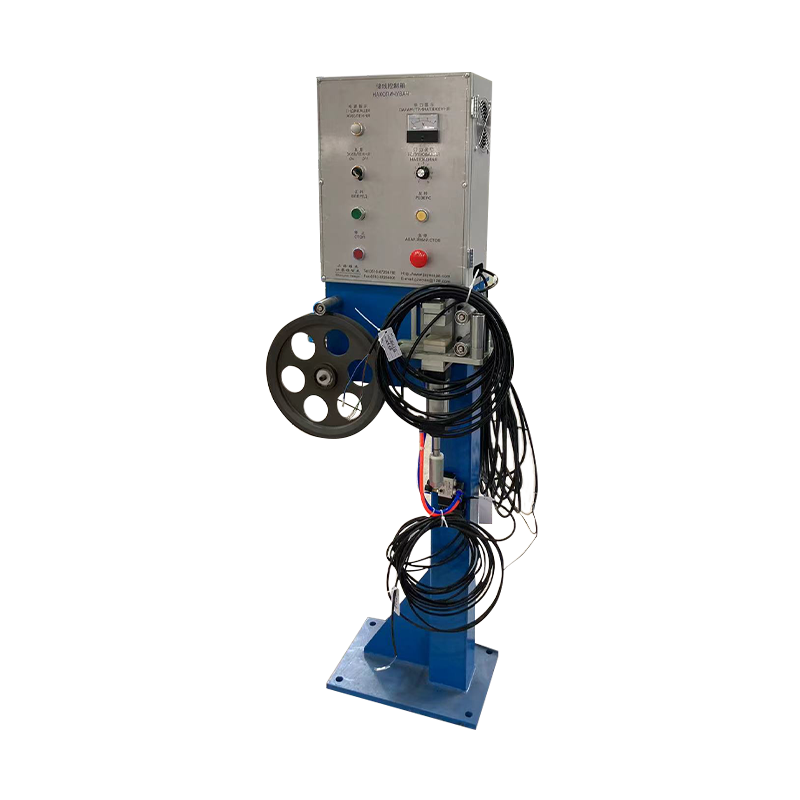
Wire Cable Tension Control Systems
Operating Principle and Production Workflow
A complete tension control arrangement normally includes a cable path, guiding components, tension adjustment elements, sensing or monitoring functions, and a connection to the winding or take-up process. The exact configuration depends on the cable type, line speed, required tension range, package dimensions, and level of automation.
During operation, the cable enters the controlled path from an extrusion line, storage rack, pay-off unit, or preceding process. The cable then passes through guiding and tension-related components before reaching the coiling machine or take-up equipment. The system influences the resistance or pulling relationship in the cable path. When the operating condition changes, the tension setting can be adjusted to maintain a stable material flow.
In a manual or semi-automatic production environment, the operator may set the initial tension and make adjustments according to product behavior. In a more advanced automated line, tension information can be incorporated into the control logic of the take-up machine, coiler, or production line. This allows the tension function to work as part of a coordinated system rather than as an isolated mechanical device.
Interaction with Storage Racks
Storage racks are often used to hold cable temporarily between different production stages. They help separate processes, provide material buffering, and make continuous operation easier. However, the cable must enter and leave the storage area under controlled conditions. If the cable is pulled too strongly from the rack, it may become stretched or displaced. If the outgoing pull is too weak, excessive accumulation or irregular loops may form.
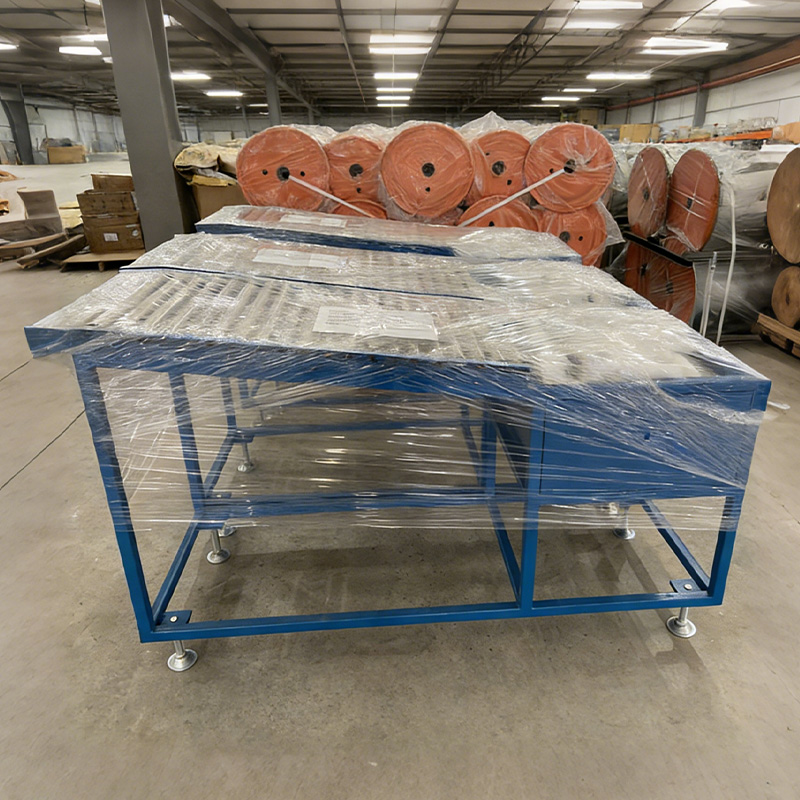
Wire Cable Tension Control Systems are frequently used together with storage racks because they help regulate this transition. The combination provides a smoother material-handling path. The rack stores the cable, while the tension system helps control how the cable is released or received. This arrangement can reduce manual intervention and make the workflow more predictable.
Interaction with Coiling Machines
A coiling machine requires consistent cable entry conditions. The winding mechanism must place each turn in a controlled position while the package rotates. Variations in incoming tension can influence layer compactness, package shape, and cable placement. By stabilizing the cable before it reaches the coiling point, the tension system supports a cleaner final package.
For high-speed coiling, the importance of coordinated tension increases. A small variation in force can be repeated many times during a long package, eventually producing visible defects. A controlled system reduces the accumulation of these small variations and improves overall package uniformity.
Interaction with Motorized Pay-Off and Take-Up Equipment
Motorized pay-off equipment supplies cable to the line, while motorized take-up equipment receives and winds the finished product. These machines must work together despite changes in reel diameter, cable weight, operating speed, and production length. Tension control helps bridge the difference between the pay-off and take-up sides.
On the pay-off side, the system can help prevent sudden pulling from the downstream equipment. On the take-up side, it can help prevent slack cable from entering the package. When properly integrated, the tension control function contributes to synchronized operation and reduces the risk of line interruption.
Advantages Over Conventional Tension Management Methods
Many cable manufacturers still rely on simple mechanical friction, fixed braking, manual roller adjustment, or operator experience. These methods may be adequate for low-speed or occasional production, but they often provide limited flexibility. Modern cable production requires more consistent and repeatable control, especially when several products are manufactured on the same line.
Compared with Fixed Mechanical Braking
A fixed brake applies approximately the same resistance regardless of changing production conditions. This can create an unstable result because the appropriate braking force is not always constant. As the package diameter increases, the cable speed and winding geometry change. A fixed setting may be too strong at one stage and too weak at another.
A tension control system is more adaptable because the target is the cable condition rather than a single permanent brake position. It can be adjusted according to different materials, sizes, speeds, and winding requirements. This flexibility makes it more suitable for manufacturers producing multiple cable specifications.
Compared with Manual Adjustment
Manual adjustment depends heavily on operator experience. Skilled operators are valuable, but manual intervention can create differences between shifts, production batches, and individual machines. It is also difficult for an operator to respond instantly to every small variation during continuous high-speed production.
A dedicated tension control arrangement provides a more repeatable operating method. Once the correct parameters are established, the same product can be processed with a consistent starting point. Operators can focus on monitoring the line and confirming product quality instead of making constant mechanical corrections.
Compared with Uncoordinated Line Accessories
Some production lines use separate accessories that perform their individual functions but do not work together effectively. A storage rack may be mechanically sound, and a coiler may have adequate winding capability, yet the cable path between them may still experience unstable force. Tension control addresses this connection point.
The system can be designed as part of a complete material-handling concept. This allows the pay-off, storage rack, guide path, coiler, and take-up machine to operate with a clearer relationship. The result is not merely an additional component, but a more coordinated production process.
Compared with Overly Complicated Systems
Another potential problem in the market is excessive complexity. Systems with unnecessary functions can increase installation difficulty, operator training requirements, maintenance demands, and total cost. A practical tension control system should provide the adjustment and stability required by the cable process without adding functions that do not contribute to production value.
The Wire Cable Tension Control Systems described here focus on the essential requirement: reliable adjustment of cable tension during winding and handling. This focused design philosophy can make the equipment easier to understand, integrate, operate, and maintain. For manufacturers seeking dependable performance rather than exaggerated specifications, this is an important advantage.
| Evaluation area | Basic manual method | Fixed mechanical brake | Dedicated tension control system |
| Adjustment consistency | Depends on operator skill | Limited after initial setting | More repeatable and process-oriented |
| Response to changing package diameter | Requires manual correction | Often inconsistent | Can be adjusted for changing conditions |
| Suitability for different cable types | Moderate | Limited by fixed resistance | Suitable for varied product requirements |
| Winding stability | Variable | Acceptable under narrow conditions | Improved through controlled tension |
| Integration with storage racks | Basic | Usually separate | Designed for coordinated material handling |
| Operator workload | High during variation | Moderate | Reduced after parameter setup |
| Risk of loose or damaged winding | Relatively high | Depends on product and speed | Reduced through more stable control |
Product Advantages for Cable Manufacturers
Improved Winding Quality
The most direct advantage is improved winding quality. Stable tension helps each cable turn sit in a more controlled position. This can produce a neater package with fewer overlapping sections, loose loops, and disordered layers. A stable package is easier to transport, store, inspect, and unwind.
Improved winding quality also creates a better presentation for customers. In many cable applications, package appearance reflects process discipline. Although appearance is not the only quality indicator, it often reveals whether the cable was handled consistently. A clean and compact coil supports confidence in the product and reduces complaints related to delivery condition.
Reduced Product Waste
Winding defects may require rework, repackaging, or even scrapping. If a cable has been stretched, damaged, or severely tangled, the affected section may not be usable. By reducing tension-related defects, the system helps manufacturers protect valuable raw materials and finished products.
Waste reduction is also connected to production stability. When the line stops to correct a package problem, material may need to be cut, reconnected, or removed. Stable tension reduces the frequency of these interruptions and helps maintain a more continuous process.
Higher Production Yield
Production yield reflects how much acceptable product is obtained from the materials and operating time consumed. Tension control contributes to yield by reducing damaged cable, defective packages, and unnecessary line adjustments. Even small improvements can become significant when the equipment operates for many hours or processes large cable volumes.
Higher yield also supports more reliable delivery planning. When the production process has fewer unpredictable interruptions, manufacturers can schedule orders with greater confidence. This is especially valuable for custom cable products, where a missed delivery date can affect an entire downstream project.
Better Protection of Cable Characteristics
Different cables have different mechanical sensitivities. Some require careful handling because of thin insulation, soft jackets, fine strands, shielding layers, or specialized structures. Excessive pulling force may affect the cable even when no immediate external damage is visible.
Controlled tension helps reduce unnecessary mechanical stress and supports the preservation of cable characteristics. It does not replace proper extrusion, cooling, testing, or material selection, but it complements those processes by providing more suitable handling conditions after or between production stages.
More Efficient Material Handling
When tension is poorly controlled, operators may need to monitor the cable constantly and manually correct its position. This consumes time and introduces inconsistency. A tension system helps streamline the material path, particularly when used with storage racks and automated coiling or take-up equipment.
More efficient handling can also improve workplace organization. Stable cable movement reduces sudden loops, uncontrolled slack, and irregular accumulation around the machine. A cleaner operating area supports easier inspection and safer routine maintenance.
Manufacturing Strengths and Engineering Approach
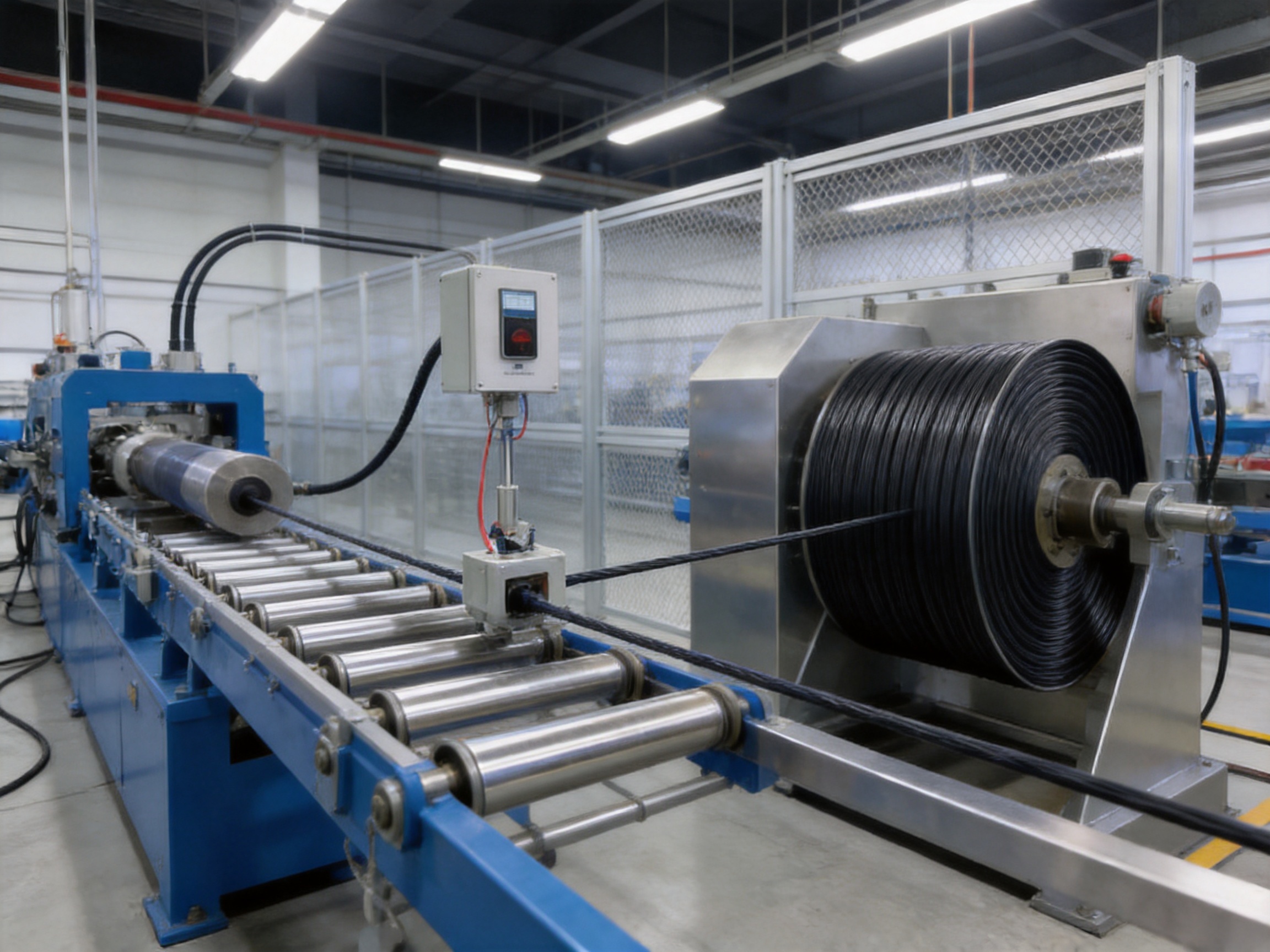
Shanghai Yessjet Precise Machinery Co., Ltd. supplies wire and cable machinery and related production equipment for cable manufacturing applications. Its product scope includes wire and cable extrusion lines, fully automatic coiling and packaging equipment, intelligent robot stackers, coiling machines, motorized pay-off equipment, motorized take-up equipment, accessory equipment, and cable extrusion machines.
This broad product range is important when evaluating a tension control supplier. Tension management is most effective when it is understood in the context of the complete line. A company that works with extrusion, pay-off, take-up, coiling, packaging, and stacking equipment can assess how cable movement changes across the production process. This broader perspective supports better equipment matching and integration.
Process-Oriented Equipment Development
A strong manufacturing approach begins with understanding the production process rather than treating each machine as an isolated product. For tension control, this means considering the cable entry direction, line speed, storage method, receiving equipment, product diameter, winding pattern, and desired package form.
Equipment development based on these factors can provide a more practical solution than a standard device selected without considering the surrounding machinery. The tension system must fit the actual cable path and work with the operational rhythm of the line. This process-oriented approach can reduce integration problems and support more stable commissioning.
Integration with a Complete Equipment Portfolio
The company’s range of related equipment provides a foundation for coordinated project planning. A customer may require only a tension control accessory, or may need a broader wire and cable production line. In either case, experience across multiple machine categories can help identify the correct relationship between upstream and downstream equipment.
For example, a motorized pay-off may require a different tension strategy from a passive pay-off. A high-speed extrusion line may require a different cable storage arrangement from a low-speed processing line. An automatic coiling and packaging system may require more consistent cable entry conditions than a manual winding station. Understanding these differences is essential for selecting a suitable configuration.
Precision-Oriented Manufacturing
The term “precise machinery” reflects an important expectation in cable equipment: mechanical components must work together accurately and consistently. Guide alignment, rotating elements, structural rigidity, adjustment mechanisms, and control interfaces all influence the final result.
Precision-oriented manufacturing involves careful attention to component fit, cable-path alignment, operating smoothness, and adjustment repeatability. For a tension control system, these details matter because irregular mechanical resistance can be transferred directly to the cable. Smooth movement and stable support help the control function deliver more predictable results.
Practical Customization
Cable manufacturers often produce many product specifications, and no single tension setting is suitable for every application. Equipment may need to be adapted to different cable diameters, material properties, winding speeds, package dimensions, or line layouts.
Practical customization does not necessarily mean creating a completely unique machine for every customer. It may involve selecting appropriate guiding components, adjusting the cable path, matching the system to a storage rack, configuring the control range, or coordinating the equipment with an existing take-up machine. This type of application-focused customization can deliver value while keeping the project manageable.
Manufacturing and Assembly Considerations
Reliable equipment depends on more than a product concept. The manufacturing and assembly stages must preserve the intended mechanical and control relationships. Components should be installed with attention to alignment, movement, access, and serviceability. The completed system should be checked for smooth operation and suitable response before being placed into regular production.
For cable machinery, assembly quality is particularly important because the product travels continuously through the machine. Small alignment errors may create repeated lateral movement, uneven contact, or inconsistent resistance. Careful assembly and process inspection help reduce these risks.
Application Support and Commissioning
A tension control system cannot be evaluated only by its nameplate or individual components. Its practical performance depends on correct installation and commissioning. The cable path, initial settings, machine speed, package dimensions, and product structure must be considered together.
A supplier with experience in complete cable machinery can provide more useful application guidance than a supplier that offers only a generic tension device. The goal is to establish stable operating parameters, verify the winding result, and help the customer understand how to adjust the system when changing products.
Design Features That Support Reliable Operation
Adjustable Tension Range
Different cable types require different tension levels. A suitable system should provide enough adjustment flexibility to accommodate common production variations without forcing the operator to work at an extreme setting. The adjustment range should match the intended application, rather than being selected only for a large numerical specification.
Correct adjustment also protects the cable from abrupt changes. A controlled increase or decrease is generally more useful than a system that moves between only two broad states. The operator should be able to find a stable working condition for each product family.
Stable Cable Guidance
Guidance components influence how the cable enters and leaves the tension control area. If the cable path is poorly aligned, even a well-designed adjustment mechanism may not produce a stable result. Proper guidance minimizes unnecessary bending, rubbing, lateral displacement, and contact pressure.
Guides should also be appropriate for the cable surface. Sensitive jackets and insulation may require careful consideration of contact shape and material. The objective is to maintain control without creating additional surface marks or friction-related damage.
Compatibility with Continuous Production
Cable manufacturing is often a continuous process. Equipment must therefore support long operating periods and repeated adjustment without becoming difficult to use. The system should be positioned so that operators can inspect it, make necessary settings, and perform routine maintenance without interrupting the entire line more than necessary.
Continuous-production compatibility also involves stable mechanical behavior. Excessive vibration, irregular resistance, or frequent loosening of adjustment components can reduce performance over time. A robust design and appropriate installation help maintain the original operating condition.
Clear Operation and Maintenance
A tension control system should be understandable to the personnel who operate it. Clear adjustment methods and accessible components can reduce training time and prevent incorrect settings. Maintenance points should also be identifiable so that operators can inspect wear, cleanliness, alignment, and cable contact areas.
Regular maintenance is important because dust, cable residue, wear, or changes in mechanical condition can affect tension stability. Simple maintenance procedures encourage more consistent care and help protect the equipment investment.
Application Areas
Wire Cable Tension Control Systems can be applied in many wire and cable manufacturing and processing scenarios. They are suitable for production environments where cable must be transferred, stored, coiled, or wound under controlled force.
Extruded Wire and Cable
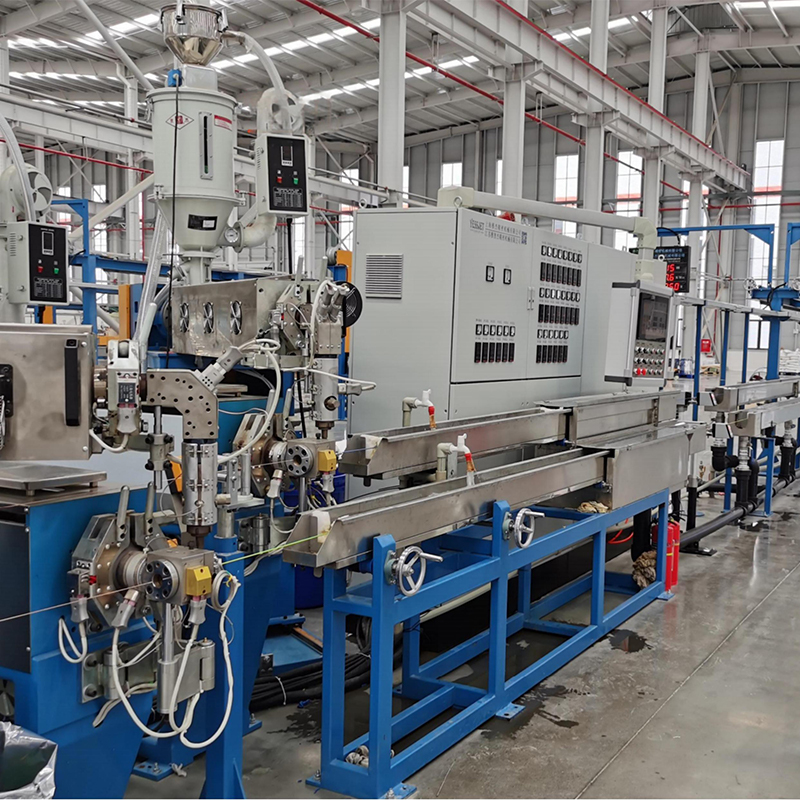
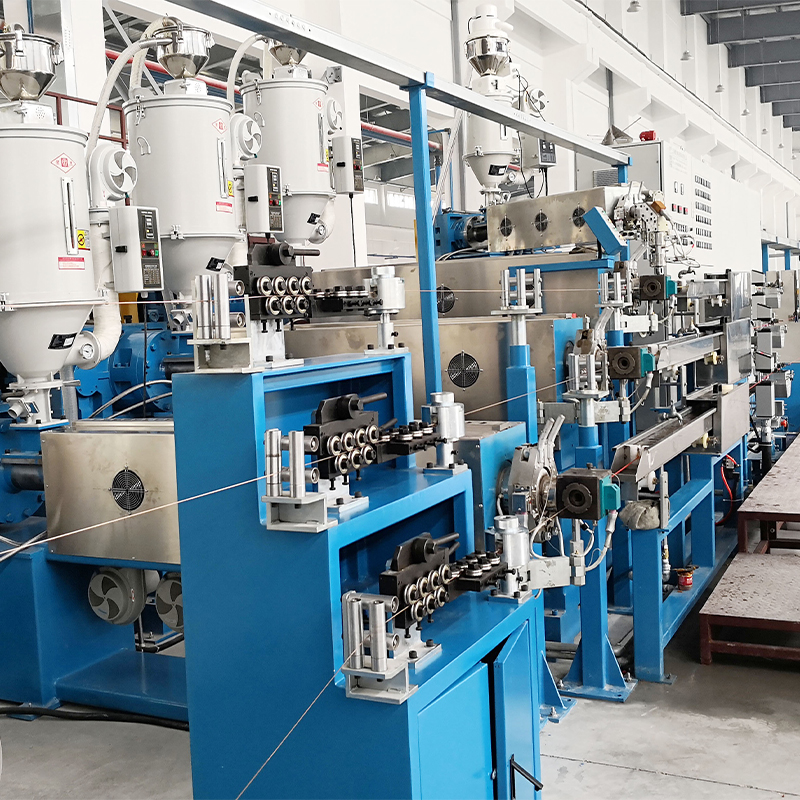
After insulation or jacketing, extruded cable must often pass through cooling, inspection, printing, measuring, and take-up stages. Tension control helps maintain a stable movement condition as the finished product travels toward the package.
Control and Instrumentation Cable
Control and instrumentation cables may contain multiple components and layers. Stable handling can help protect the cable arrangement and reduce unnecessary mechanical stress during winding. A well-formed package also supports organized downstream installation.
Flexible Cable Products
Flexible cables can behave differently from rigid or heavy products. Their movement may be more sensitive to slack, bending, and lateral displacement. Controlled tension helps guide flexible cable into a stable winding pattern without excessive pulling.
Small-Diameter Wire
Small-diameter wire can be especially sensitive to pulling force and surface contact. A suitable tension control solution helps prevent over-tensioning and supports consistent placement on reels or coils.
Rewinding and Secondary Processing
Not every application begins at an extrusion line. Some manufacturers rewind cable from one package to another, prepare customer-specific lengths, or transfer material between processing stages. In these operations, the system can provide more stable handling and reduce package defects.
Automatic Coiling and Packaging Lines
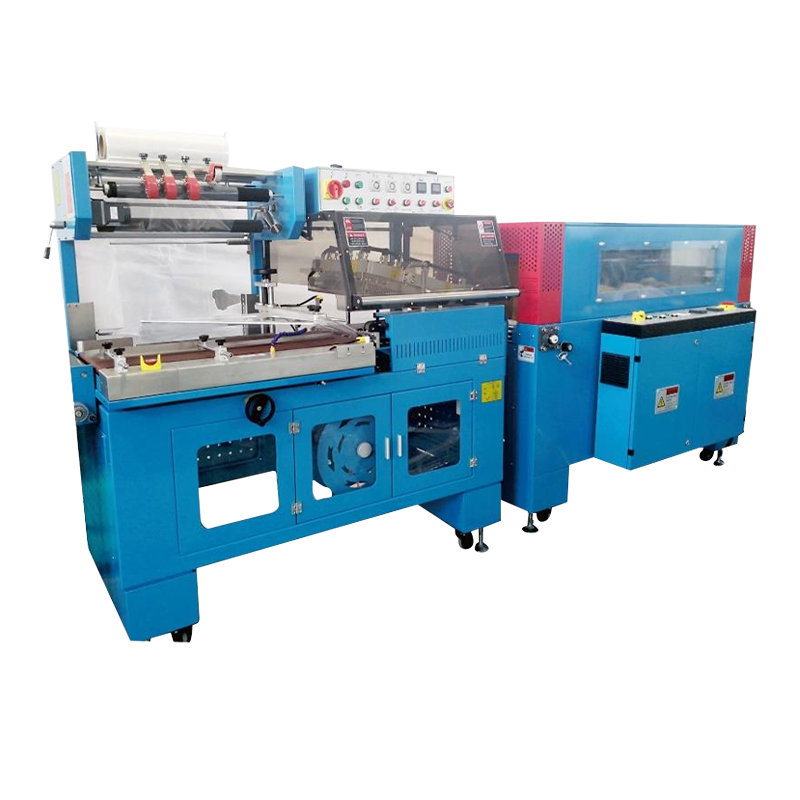
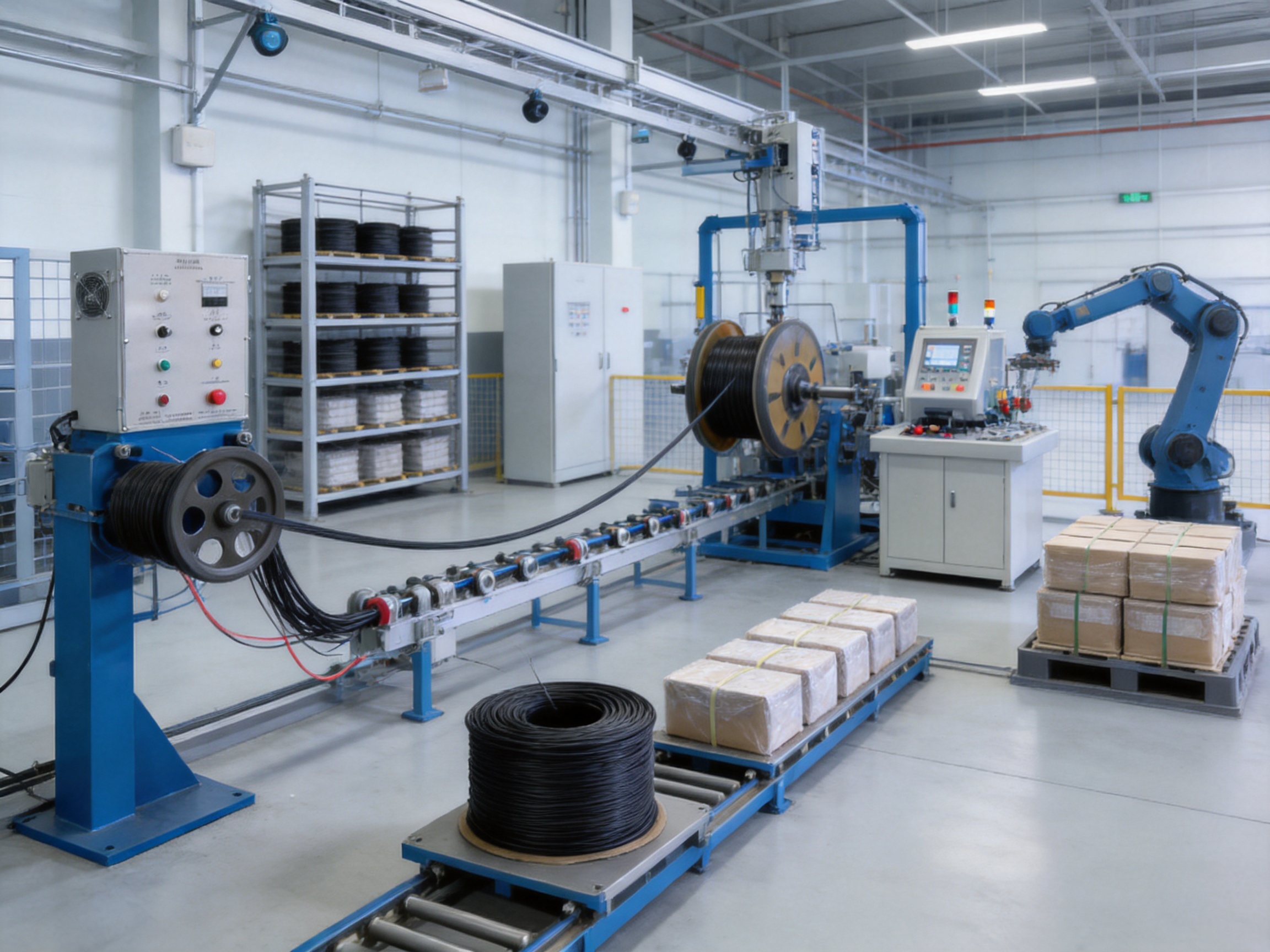
Automatic coiling and packaging equipment benefits from a predictable cable supply. If the incoming cable is too loose or too tight, the automatic sequence may experience winding errors or package variation. Tension control helps prepare the material for more reliable automatic operation.
How to Select the Right System
Selection should begin with the cable rather than the machine name. Important information includes conductor construction, insulation or jacket material, finished diameter, flexibility, surface characteristics, maximum line speed, minimum bend requirements, and target package type.
The manufacturer should also review the production layout. The distance between the preceding machine and the coiler, the height of the cable path, the position of the storage rack, and the available installation space all influence the final configuration. A system that performs well in one layout may need adjustment in another.
Key Selection Questions
What is the normal and maximum cable speed? What tension range is required? Is the cable fragile, flexible, heavy, or highly elastic? Will the system be used continuously or intermittently? Is it connected to a motorized take-up, a coiling machine, or a storage rack? Does the customer need a standalone accessory or integration with a complete line?
These questions help define the appropriate equipment arrangement. They also prevent over-specification. Purchasing a system with functions unrelated to the actual process may increase cost without improving the product. A focused design matched to the cable and line is usually more valuable than a complicated system selected only for its feature list.
| Selection factor | Information to review | Reason for importance |
| Cable diameter | Minimum, maximum, and typical finished diameter | Influences guiding, contact, and adjustment requirements |
| Cable construction | Solid, stranded, shielded, multi-layer, flexible, or rigid | Determines mechanical sensitivity |
| Surface material | PVC, PE, rubber, special jacket, or other covering | Affects contact and friction considerations |
| Line speed | Normal operating speed and peak speed | Influences response and continuous operating demands |
| Package format | Coil, reel, drum, or customer-specific package | Determines winding behavior and receiving equipment |
| Upstream equipment | Extrusion line, pay-off, storage rack, or rewinder | Defines material entry conditions |
| Downstream equipment | Coiler, take-up, packaging unit, or stacker | Defines material receiving requirements |
| Automation level | Manual, semi-automatic, or automatic production | Determines control and interface expectations |
| Installation space | Available length, height, width, and access area | Supports practical line integration |
Installation and Commissioning Guidelines
Correct installation is essential for achieving the expected result. The equipment should be positioned so that the cable path is as direct and controlled as possible. Sharp changes in direction, unnecessary contact points, and poor alignment can introduce additional force that makes tension adjustment more difficult.
Before commissioning, the operator should confirm that the cable path is clean, the guides are correctly installed, and the receiving machine is ready for operation. The cable should be threaded according to the intended path without twisting or crossing. The initial setting should be conservative, especially when processing a new cable type.
Commissioning should begin at a lower or moderate speed. The operator can observe whether the cable remains stable, whether the package is forming evenly, and whether any surface marks or irregular loops appear. The tension setting can then be adjusted gradually until the desired winding condition is achieved.
When a new product is introduced, the operator should not assume that the previous setting is suitable. Changes in diameter, material, flexibility, or package size can alter the required tension. Maintaining a record of proven settings for different products can simplify future changeovers.
Signs of Excessive Tension
Possible signs include visible cable stretching, flattened sections, insulation marks, excessive package compression, unusual noise from the cable path, or difficulty pulling the cable from the finished package. If these symptoms appear, the operator should check the tension setting, line speed, guide alignment, and mechanical resistance.
Signs of Insufficient Tension
Possible signs include loose layers, raised loops, crossed turns, package collapse, cable wandering, or irregular accumulation in the storage rack. These symptoms may indicate that the tension is too low, but they may also result from incorrect guiding or poor coordination between the take-up and coiling equipment.
For this reason, troubleshooting should examine the complete material path rather than changing only one setting. Tension control is most effective when the associated machines are properly synchronized and mechanically aligned.
Maintenance and Long-Term Performance
Routine maintenance helps preserve stable tension performance. Operators should inspect guide components, moving parts, adjustment mechanisms, and cable-contact surfaces at regular intervals. Dust, residue, and worn components can alter friction and create inconsistent cable movement.
Mechanical fasteners should be checked for looseness, especially in environments with vibration or continuous movement. The equipment should remain properly aligned with the cable path and the receiving machine. If the system is moved or the line layout is changed, it should be recommissioned rather than placed back into operation without verification.
Maintenance intervals depend on operating hours, cable materials, production speed, and working conditions. High-volume production may require more frequent inspection than occasional processing. Keeping a basic maintenance record can help identify gradual changes before they become production defects.
Operators should also monitor the finished package. A change in winding appearance may be an early indication of a developing tension problem. Prompt attention can prevent a small adjustment issue from becoming a large quantity of defective product.
Quality and Business Benefits
The value of tension control can be measured through several production indicators. Reduced scrap is one of the clearest benefits. If fewer cables are damaged or packages rejected, material utilization improves. Reduced rework provides another benefit because operators spend less time correcting winding defects.
Equipment availability may also improve. A stable cable path reduces the likelihood of sudden stops caused by tangled material, package collapse, or manual intervention. More consistent operation makes it easier to plan production shifts and meet delivery requirements.
Customer satisfaction can improve as well. Customers expect cable packages to arrive in a stable, usable condition. Neat winding reduces the risk of damage during transport and makes the cable easier to install or process. Consistent package quality can therefore support both technical performance and commercial reputation.
For companies building or upgrading a complete cable production line, tension control can be a relatively focused investment with benefits across several stages. It supports the extrusion line, storage system, coiling machine, take-up unit, and packaging process. The result is a more connected production system rather than a collection of independent machines.
Why Choose an Experienced Cable Machinery Manufacturer
Selecting a manufacturer for tension control equipment should involve more than comparing basic prices. The supplier’s understanding of cable production, ability to integrate equipment, manufacturing discipline, and service approach are all important.
Shanghai Yessjet Precise Machinery Co., Ltd. focuses on wire and cable machinery and offers equipment covering multiple stages of cable production. This specialization provides a useful foundation for customers who need an accessory system that works with existing or planned line equipment.
The company’s product categories indicate experience across extrusion, coiling, pay-off, take-up, packaging, stacking, and supporting equipment. Such breadth can help customers evaluate tension control as part of a complete workflow. Instead of selecting a device without considering the upstream and downstream machines, customers can discuss the production objective and identify a suitable equipment combination.
The company is based in Jiangsu Province, China, an area with an established machinery manufacturing environment and a strong industrial supply chain. Its business focus on precise machinery supports the expectation of application-oriented equipment for wire and cable manufacturers.
A manufacturer’s strength should ultimately be judged by how effectively its equipment solves the customer’s process problem. For tension control, that means stable cable movement, reduced winding defects, practical integration, reasonable operation, and dependable support. These priorities are more meaningful than claims based only on maximum speed or a long list of optional functions.
Q&A: Wire Cable Tension Control Systems
What is the main purpose of a wire cable tension control system?
The main purpose is to regulate the force applied to a moving cable during winding, coiling, storage, or transfer. It helps prevent excessive tension that may stretch or damage the cable and insufficient tension that may create loose, irregular, or unstable winding.
Can the system be used with a storage rack?
Yes. The system is often used together with storage racks. The rack provides temporary cable storage or buffering, while the tension control system helps regulate how the cable enters or leaves the storage area. This combination supports smoother material handling between production stages.
Is the system suitable for extrusion lines?
Yes. It can be integrated into cable extrusion and post-extrusion handling processes, particularly where the finished cable must be transferred to take-up or coiling equipment. The configuration should be selected according to cable diameter, line speed, product construction, and the layout of the extrusion line.
Can it work with motorized take-up equipment?
Yes. Tension control is commonly used to coordinate cable movement with motorized take-up equipment. It helps reduce the difference between the cable supply rate and the winding rate, particularly when package diameter and operating conditions change.
What problems can excessive cable tension cause?
Excessive tension may stretch the cable, deform the insulation or jacket, affect conductor arrangement, create surface marks, increase package compression, or cause hidden mechanical stress. The exact result depends on the cable structure and material.
What problems can insufficient tension cause?
Insufficient tension may create loose winding, crossed turns, raised loops, cable wandering, irregular packages, and package collapse. These problems can increase rework, complicate transportation, and make later unwinding more difficult.
Does the system eliminate all winding defects?
No equipment can eliminate every possible production defect. Tension control addresses tension-related problems, but winding quality also depends on guide alignment, coiler settings, cable condition, line speed, package dimensions, and operator procedures. The best result comes from coordinating all of these factors.
Is a dedicated tension system better than manual adjustment?
A dedicated system generally provides more repeatable control and reduces the need for constant operator correction. Manual adjustment may still be useful for simple or low-speed applications, but dedicated control is more valuable when production is continuous, product specifications vary, or winding quality must remain consistent.
Can one system handle different cable products?
It may handle multiple products if the required tension range, cable path, and operating conditions are compatible. Product-specific settings should be established for different diameters, materials, and winding speeds. The manufacturer should review the application before confirming the configuration.
What information should be supplied when requesting a quotation?
Useful information includes cable type, finished diameter, construction, jacket or insulation material, line speed, desired package format, upstream and downstream equipment, storage rack requirements, installation space, automation level, and expected production volume.
How does tension control reduce production waste?
It reduces the likelihood of cable damage, loose winding, package collapse, and repeated manual correction. Fewer defects mean less material scrapping, less rework, and fewer production interruptions. The actual improvement depends on the original process condition and the quality of system integration.
What should operators check during commissioning?
Operators should check cable threading, guide alignment, initial tension setting, line speed, package formation, cable surface condition, and the coordination between the tension system and the receiving machine. Commissioning should begin carefully and proceed through gradual adjustment.
Why is manufacturer experience across several cable machines useful?
Tension is influenced by the entire production line. A manufacturer familiar with extrusion, pay-off, take-up, coiling, packaging, and storage equipment can better understand how the cable moves through the process. This supports more practical integration than treating tension control as an isolated accessory.
Conclusion
Wire Cable Tension Control Systems provide an important solution for manufacturers seeking stable, orderly, and efficient cable winding. By regulating cable tension in real time or through controlled adjustment, the system helps prevent the two major tension-related problems: excessive force that can damage the cable and insufficient force that can create loose or disordered packages.
The equipment is especially valuable when paired with storage racks, coiling machines, motorized pay-off units, motorized take-up units, and cable extrusion lines. Its focused function supports improved winding quality, reduced waste, higher production yield, better material handling, and more consistent output.
Compared with fixed braking, manual adjustment, and uncoordinated accessories, a dedicated tension control system offers greater adaptability and repeatability. Its advantages become more significant as line speed, cable variety, automation level, and production volume increase.
Shanghai Yessjet Precise Machinery Co., Ltd. brings together a broad range of wire and cable machinery, including extrusion, coiling, packaging, pay-off, take-up, stacking, and accessory equipment. This product coverage supports a process-oriented approach to tension control and allows customers to consider the equipment as part of a complete cable production solution.
For manufacturers evaluating a new installation or upgrading an existing line, the most important step is to match the system to the cable, production speed, package format, and equipment layout. With proper selection, installation, commissioning, and maintenance, tension control can become a practical foundation for steady, high-quality cable production.
References
1. IEC 60228, Conductors of Insulated Cables.
2. IEC 60811, Electric and Optical Fibre Cables—Test Methods for Non-Metallic Materials.
3. IEC 62440, Electric Cables with a Rated Voltage Not Exceeding 450/750 V—Guide to Use.
4. ISO 9001, Quality Management Systems—Requirements.
5. Wire and Cable Manufacturing Technology, Industrial Production and Process Control Reference.
6. Mechanical Handling of Flexible Materials, Tension Regulation and Web-Transport Principles.
7. Cable Extrusion, Cooling, Take-Up, and Winding Process Engineering References.
8. Industrial Automation and Motion Control Guidelines for Continuous Production Lines.