LANGUAGE
 中文简体
 русский
 Français
 Español
 Português
 عربى
Content
- 1 1. The Role of Automated Coiling and Binding in Cable Manufacturing
- 2 2. Complete Automatic Operating Sequence
- 3 3. Main Advantages Compared with Conventional Manual Systems
- 4 4. Product Specification Overview
- 5 5. Advantages for Different Cable and Wire Applications
- 6 6. Manufacturing Strengths and Engineering Capabilities
- 7 7. Production Process and Quality Considerations
- 8 8. Why Automation Can Offer a Stronger Competitive Position
- 9 9. Installation and Production Planning
- 10 10. Operator Training and Daily Use
- 11 11. Frequently Asked Questions
- 11.1 Q1: What products can the machine process?
- 11.2 Q2: What is the maximum rated speed?
- 11.3 Q3: What coil sizes are supported?
- 11.4 Q4: What binding materials can be used?
- 11.5 Q5: Does the machine require continuous operator attention?
- 11.6 Q6: Can the machine be connected to heat shrink packaging equipment?
- 11.7 Q7: Is the machine suitable for high-volume production?
- 11.8 Q8: Can one machine process different cable products?
- 11.9 Q9: What information should be provided before purchasing?
- 11.10 Q10: What makes this machine different from a manual coiling station?
- 11.11 Q11: Can the machine form part of a complete cable production line?
- 11.12 Q12: How can users maintain stable performance?
- 12 12. Recommended Application Strategy
- 13 13. Supplier Support and Project Communication
- 14 14. Conclusion
- 15 References
- 16 Product: Fully Automatic Coiling Binding & Wrapping Machine
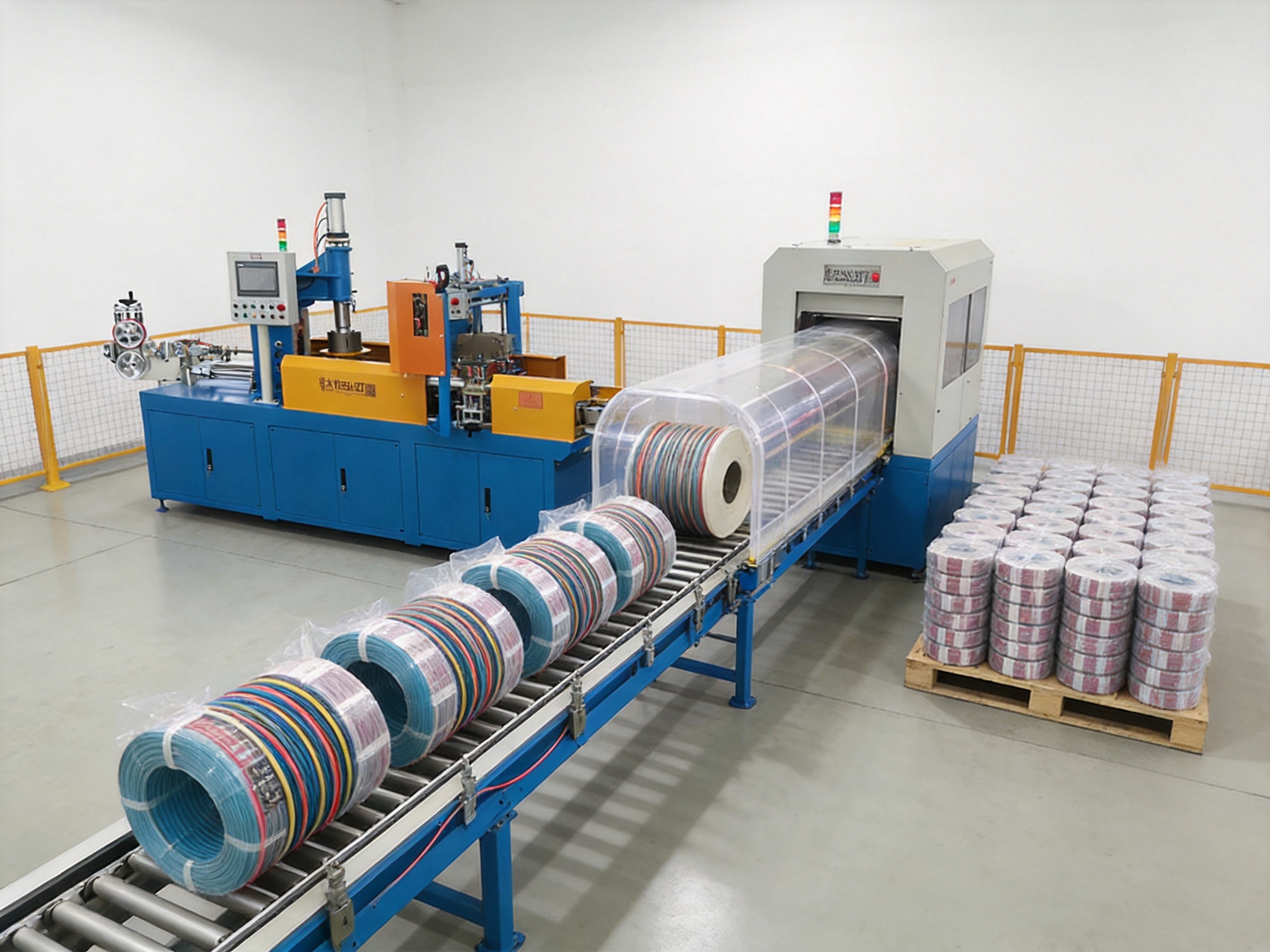
Modern wire and cable manufacturers face constant pressure to increase output, maintain consistent product quality, reduce labor costs and make better use of factory space. Coiling and packaging are especially important because these operations are performed after extrusion, stranding, cabling or other production processes. Even when the cable itself has been manufactured accurately, inconsistent coil dimensions, loose binding, excessive manual handling or irregular packaging can reduce productivity and affect the finished product’s appearance.
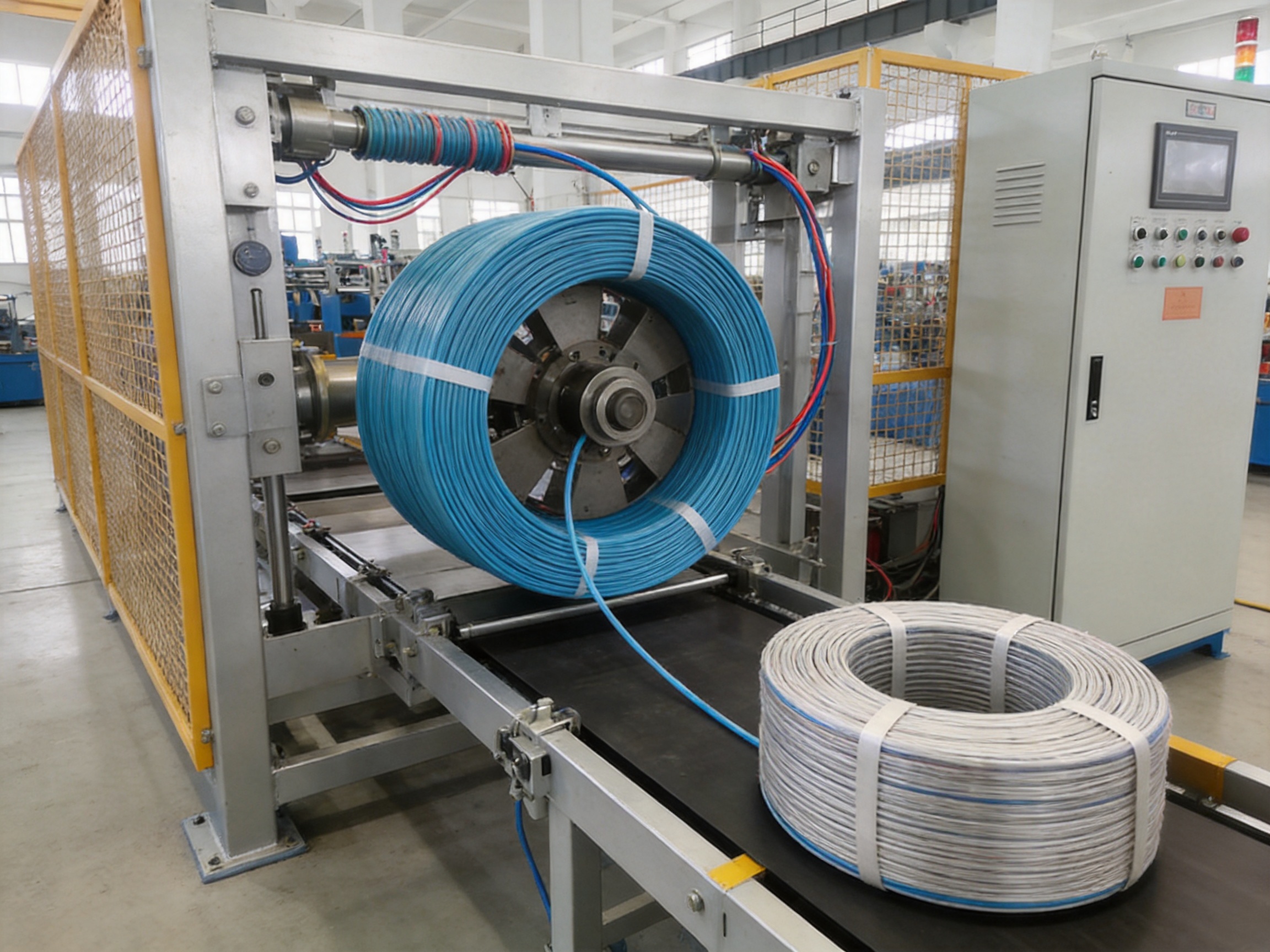
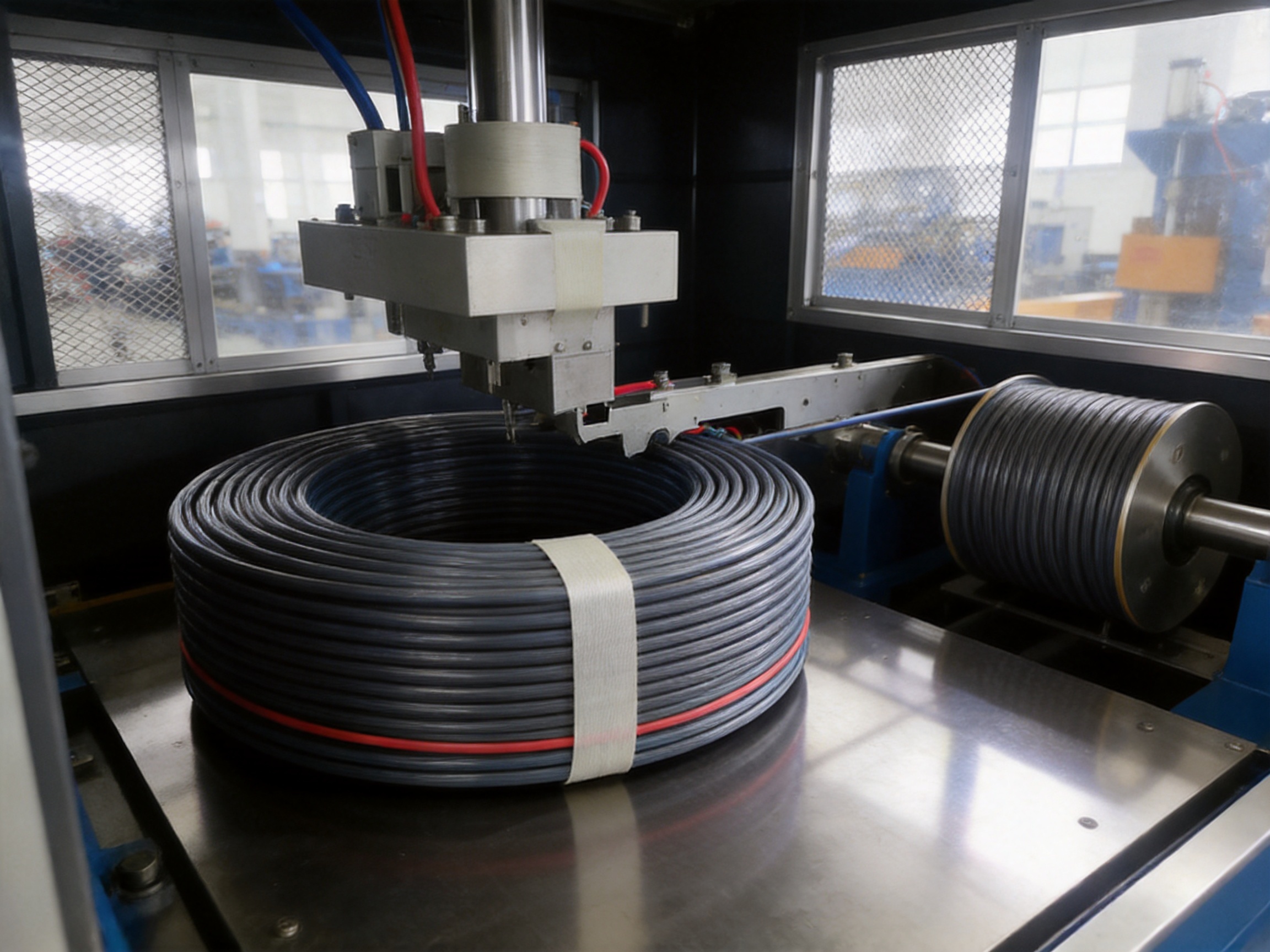
The Fully Automatic Coiling Binding & Wrapping Machine is designed to solve these challenges through a coordinated process that automatically forms cable coils, positions them, applies binding material, cuts the secured product and delivers it for the next packaging stage. Instead of requiring separate manual operations, the machine integrates coiling and continuous binding into one automated production unit. It is suitable for wires, cables, hoses and other flexible products that must be organized into compact, stable coils.
With a working range that includes coil heights of approximately 50 to 100 millimeters, outer diameters of 180 to 400 millimeters, inner diameters of 140 to 200 millimeters and wire diameters of 1 to 8 millimeters, the CB1040 model is intended for a wide range of cable-processing applications. Its rated speed of up to 1,000 revolutions per minute supports fast production while maintaining repeatable coil formation.
The machine is manufactured by Shanghai Yessjet Precise Machinery Co., Ltd., a Chinese supplier specializing in wire and cable machinery, cable production line solutions and related automation equipment. Its product range includes wire and cable extrusion lines, motorized pay-off and take-up machines, coiling equipment, accessory machinery, automatic packaging equipment and intelligent robot stackers. This broader product background enables the company to understand the complete cable production process rather than treating coiling and packaging as isolated operations.
1. The Role of Automated Coiling and Binding in Cable Manufacturing
Coiling is the process of arranging a continuous length of wire, cable or hose into a controlled circular or spiral form. Binding is the next step: the formed coil is secured with tape, ties or another suitable material so that it remains stable during handling, storage, transportation and subsequent packaging.
In a traditional production environment, operators may need to guide the cable, control the coil diameter, stop the line, move the completed coil, apply binding material and cut the finished product. These separate actions create several potential problems. The operator must maintain concentration over long periods, and production speed may vary according to fatigue, product size or handling conditions. Manual operations can also produce differences in coil tightness, binding location, coil dimensions and output timing.
A fully automatic system coordinates these actions through a defined operating cycle. The cable enters the coiling section, where it is formed according to the selected parameters. Once the required coil is created, the machine automatically transfers or positions the coil for binding. Binding material is then applied, the material is cut, and the finished coil is discharged. The sequence can be repeated with limited operator intervention.
This automation is valuable for manufacturers producing long cable runs, wiring products, electronic cables, control cables, harness components, flexible tubing and similar products. It is particularly useful where the same or similar product must be processed continuously in large quantities.
Coiling and binding also influence the efficiency of later operations. A stable coil is easier to label, wrap, box, palletize and transport. When the coil shape is consistent, automatic or semi-automatic packaging equipment can work more reliably. The machine can also be connected with a heat shrink packing machine, creating a more continuous route from coiling to final package preparation.
2. Complete Automatic Operating Sequence
2.1 Cable Feeding and Product Entry
The production process begins when the wire, cable, hose or other flexible product enters the coiling system. The upstream equipment may include an extrusion line, take-up machine, cutting device or other cable-processing equipment. The coiling unit is designed to receive the continuous product and guide it into the winding area.
Stable product entry is essential because irregular feeding can affect the final coil’s appearance and dimensions. A properly configured production line maintains controlled tension and alignment before the cable reaches the coiling section. The broader equipment portfolio of the manufacturer includes motorized pay-off and take-up machinery, allowing customers to develop a more coordinated production arrangement when required.
2.2 Automatic Coiling
During coiling, the machine organizes the cable into a controlled circular form. The coiling mechanism is intended to keep the cable positioned consistently as the coil grows. Depending on the product diameter, required coil size and operating parameters, the system can be configured for the intended production specification.
The CB1040 model supports an outer coil diameter range of approximately 180 to 400 millimeters and an inner diameter range of approximately 140 to 200 millimeters. The supported wire diameter range is approximately 1 to 8 millimeters. These specifications allow one machine to process different cable sizes within the stated operating range rather than limiting the user to one fixed product format.
2.3 Automatic Coil Transfer and Positioning
After coiling, the finished coil must be correctly positioned for binding. In a manual process, the operator may need to remove the coil and place it into a binding station. The automatic machine performs this movement and positioning as part of the production cycle.
Automatic positioning reduces handling time and helps ensure that the binding material is applied at the intended location. It also supports repeatability between production cycles. When the coil is presented to the binding mechanism in a consistent position, the resulting package is more uniform and easier to process downstream.
2.4 Automatic Binding
The binding stage secures the coil using suitable binding material, such as adhesive tape or cable ties, according to the production requirement and machine configuration. Binding prevents the cable from unwinding during transfer, storage or packaging.
Continuous binding is one of the machine’s most important productivity features. Rather than requiring an operator to stop the line and secure every coil manually, the equipment integrates binding into the automatic sequence. This can reduce interruptions and improve the number of finished coils produced during a shift.
2.5 Automatic Cutting and Output
Once the binding operation is completed, the system cuts the binding material and outputs the finished coil. The product can then be transferred to a heat shrink packing machine, inspection station, labeling area, collection table or other downstream equipment.
Automatic output reduces the need for constant manual unloading. It also helps maintain a clear and organized work area. For high-volume operations, the output stage is important because even a fast coiling process can be slowed if finished coils accumulate at the machine or require frequent manual removal.
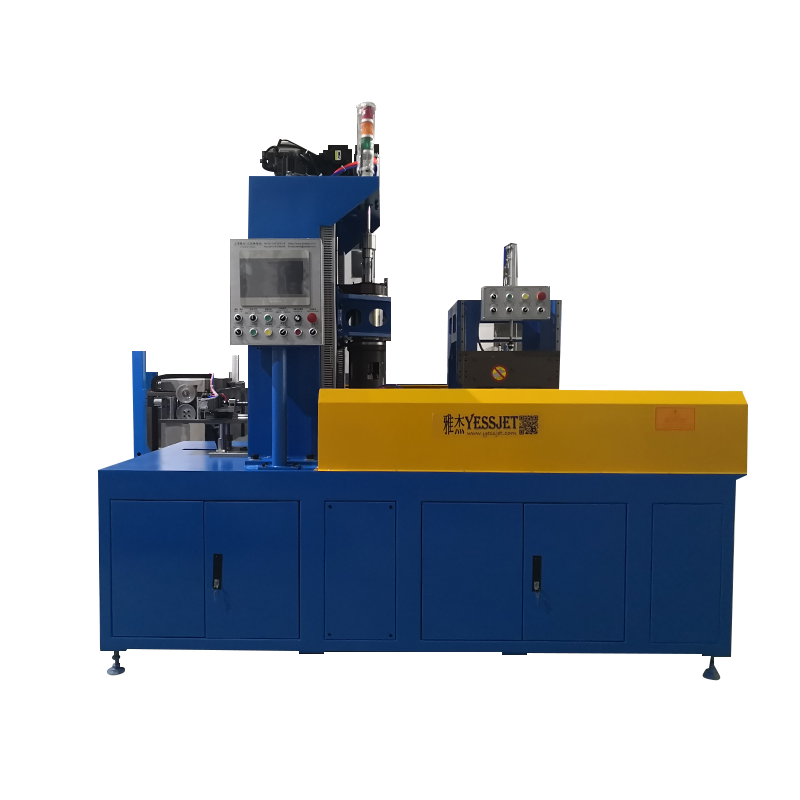
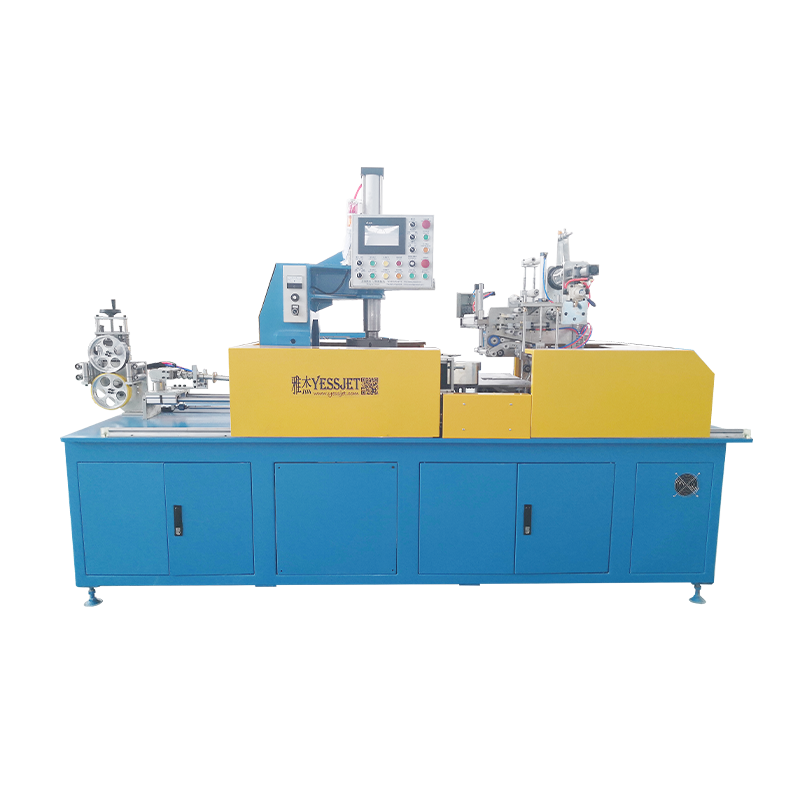
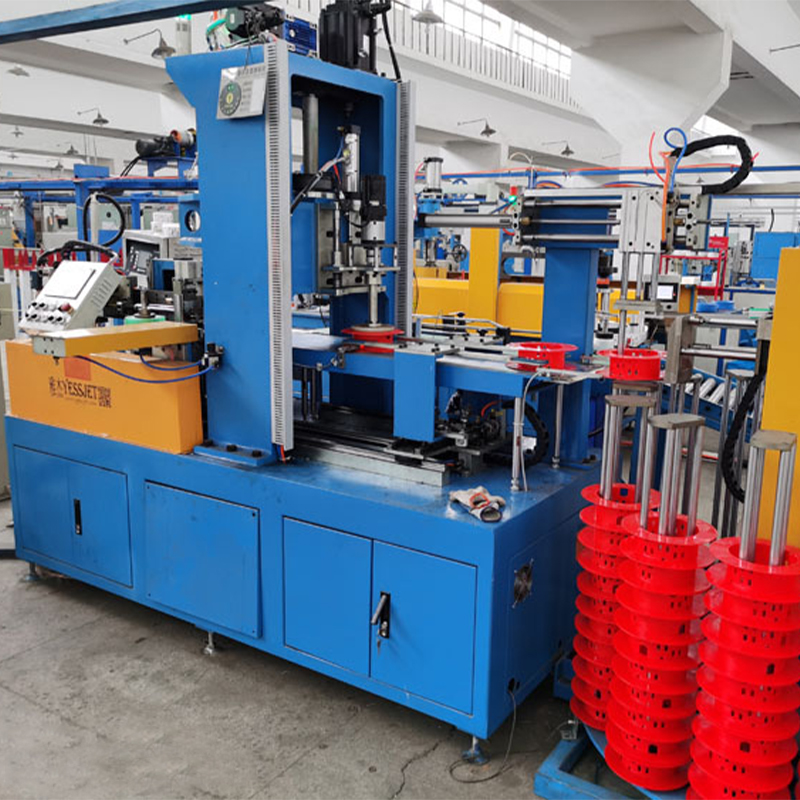
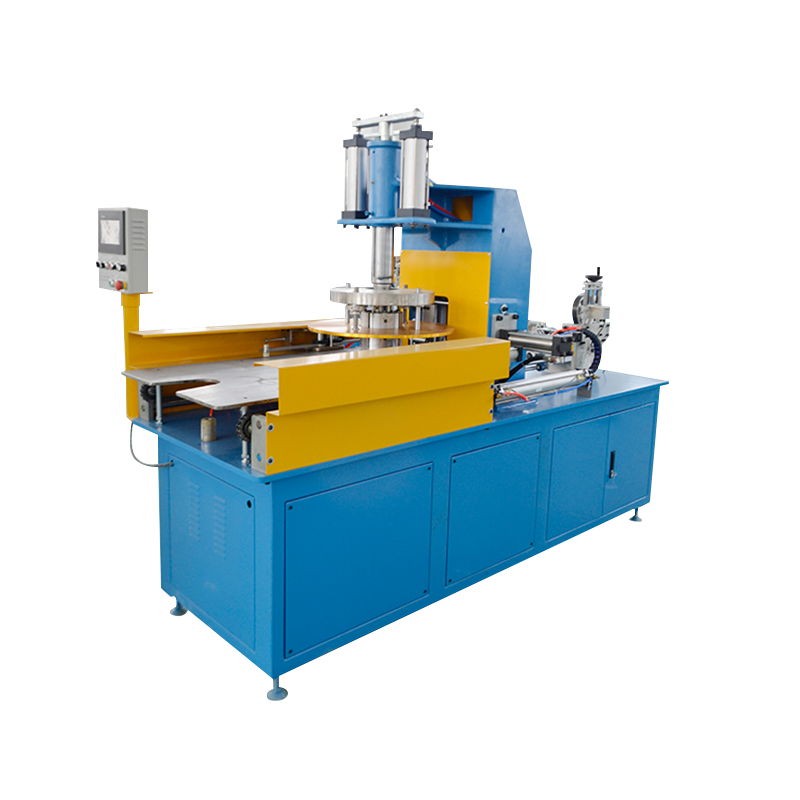
Fully Automatic Coiling Binding & Wrapping Machine
3. Main Advantages Compared with Conventional Manual Systems
3.1 Higher Production Efficiency
The most direct advantage of the fully automatic machine is the reduction of manual steps. Coiling, positioning, binding, cutting and output are coordinated within one system. This makes the production cycle more consistent and can increase the number of completed coils per hour.
The CB1040 model is specified at up to 1,000 RPM. Actual production speed depends on cable type, coil dimensions, binding method, product stability and other operating conditions, but the rated speed demonstrates the machine’s suitability for rapid production. The equipment is intended for long-term, high-volume manufacturing rather than occasional workshop use.
3.2 Consistent Coil Formation
Manual coiling can produce variations in coil diameter, coil tightness and cable alignment. These differences may be acceptable in some low-volume applications, but they become more significant when customers require a consistent finished appearance or when coils must fit into standardized packaging.
Automatic coiling provides controlled movement and repeatable positioning. Once the correct production parameters have been established, successive coils can be made according to the same operating conditions. This supports better product uniformity and simplifies downstream packaging.
3.3 Reliable Binding Quality
Binding quality affects the stability of the finished coil. If the binding is too loose, the cable may unwind or become difficult to handle. If the binding is inconsistent, the appearance of the package may vary and the coil may not remain compact during transportation.
By integrating the binding operation into the machine cycle, the system reduces dependence on individual operator technique. Binding position, timing and cutting can be managed as part of the automatic sequence. This supports repeatable securing of the cable and reduces the probability of incomplete or irregular binding.
3.4 Reduced Labor Requirements
A manual process may require one or more operators to guide the cable, form the coil, hold it in position, apply binding material and transfer the completed product. The fully automatic machine reduces these repetitive physical tasks.
Reduced labor does not necessarily mean the elimination of all operators. Personnel may still be needed for material preparation, parameter setting, quality inspection, maintenance and production supervision. However, the operator’s role can shift from repetitive handling to more valuable process-control activities.
3.5 Non-Stop or Continuous Production
The machine is designed to support continuous production and non-stop operation within the requirements of the selected product and line configuration. Automatic sequencing minimizes unnecessary pauses between coils. This is particularly beneficial in cable manufacturing, where upstream extrusion or take-up equipment may operate continuously.
Keeping the coiling and binding process moving can also reduce material accumulation between production stages. When the downstream packaging operation is properly matched to the coiling output, the entire line can operate more smoothly.
3.6 More Efficient Use of Factory Space
A separate manual coiling area, manual binding station and temporary storage area may require considerable floor space. Integrating multiple functions into one machine can reduce the footprint required for these operations.
The compact arrangement is useful for manufacturers that need to expand output without moving to a larger facility. Space savings can also improve material flow, reduce unnecessary walking and make it easier to organize safety zones around the production line.
3.7 Easier Integration with Heat Shrink Packaging
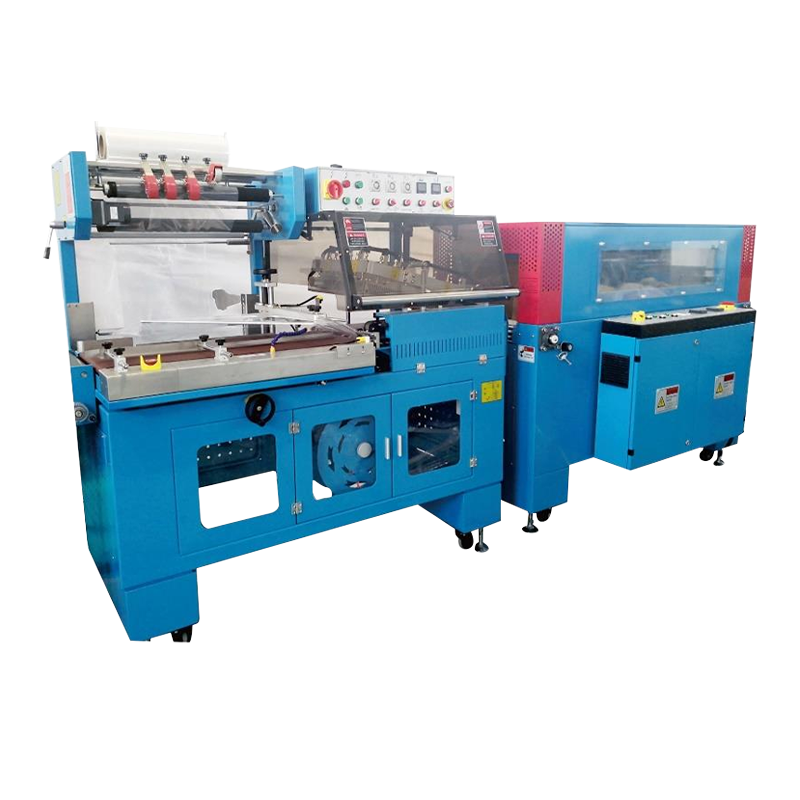
The equipment can be connected with a heat shrink packing machine to create a more continuous packaging process. After the coil is formed and bound, it can proceed to heat shrink wrapping without requiring extensive manual transfer.
Integration can reduce handling between stages and help protect the finished coil from dust, moisture and surface contamination, depending on the packaging material and application. It can also improve the visual presentation of the cable package and make products easier to store and transport.
4. Product Specification Overview
The following table summarizes the supplied specifications for the CB1040 fully automatic coiling binding and wrapping machine. Production results may vary according to cable construction, material properties, coil dimensions, binding materials, line layout and operating settings.
| Specification | CB1040 Value | Production Significance |
|---|---|---|
| Coil height | 50–100 mm | Defines the approximate axial height of the completed coil |
| Outer coil diameter | 180–400 mm | Supports multiple finished coil sizes within the operating range |
| Inner coil diameter | 140–200 mm | Determines the central opening of the coil |
| Wire or cable diameter | 1–8 mm | Allows processing of various wire and cable products |
| Rated speed | Up to 1,000 RPM | Supports high-speed coiling for continuous production |
| Integrated operations | Coiling, positioning, binding, cutting and output | Reduces manual handling between individual process steps |
Before selecting the machine, manufacturers should confirm the actual product diameter, insulation material, surface characteristics, required coil dimensions, binding material, production speed and downstream packaging requirements. Testing with representative cable samples is recommended when the product has unusual flexibility, stiffness, surface friction or shape.
5. Advantages for Different Cable and Wire Applications
5.1 Electronic and Control Cables
Electronic and control cables are often produced in large quantities and may require clean, compact and consistently sized coils. Automatic coiling and binding can make these products easier to label, pack and deliver to assembly plants or distributors.
When cables are supplied in standardized coils, customers can more easily estimate material quantities and organize inventory. Consistent binding also helps prevent tangling during handling.
5.2 Wire Harness Production
Wire harness manufacturers may handle different cable lengths and product types. Although not every harness application uses a circular coil, many wires and auxiliary cables can benefit from automatic organization before packaging or storage.
The machine’s ability to process wire diameters within the specified range makes it suitable for selected harness-related products. Manufacturers should evaluate the shape and flexibility of the specific wire before finalizing the configuration.
5.3 Power and Industrial Cables
Industrial cables can be heavier and more rigid than electronic wires. For suitable products within the machine’s operating range, automatic coiling can reduce the physical effort required from workers and improve the consistency of finished packages.
Product weight, bending radius and surface condition should be considered carefully. Where cable stiffness or weight is high, upstream and downstream handling equipment may need to be selected to match the coiling machine’s capacity.
5.4 Flexible Hoses and Similar Products
The machine can also be considered for hoses and other flexible continuous products when their dimensions and material properties fall within the required operating conditions. A suitable coil shape can simplify storage and transportation while preventing uncontrolled loops.
Because hoses may have different elasticity and surface friction from electrical cables, application testing is important. The binding material must also be compatible with the hose surface and the intended use.
6. Manufacturing Strengths and Engineering Capabilities
The performance of an automatic coiling and binding machine depends not only on its final assembly but also on the manufacturer’s engineering approach. A cable-processing machine must coordinate mechanical movement, product guidance, binding timing, cutting action and output handling. It also needs to operate repeatedly in an industrial environment.
Shanghai Yessjet Precise Machinery Co., Ltd. focuses on wire and cable production machinery and related automation equipment. Its product portfolio includes extrusion lines, coiling machines, motorized pay-off equipment, motorized take-up equipment, accessory machinery, automatic packaging equipment and intelligent robot stackers. This range provides a foundation for designing equipment around the broader manufacturing process.
6.1 Experience Across the Cable Production Line
A supplier that understands extrusion, pay-off, take-up, coiling and packaging can better evaluate how one machine affects another. For example, a coiling machine must receive cable at an appropriate speed and tension. A take-up system must not create unnecessary surges, while a downstream wrapping system must be able to accept the completed coil without creating a bottleneck.
Knowledge of the complete line helps the manufacturer recommend suitable equipment combinations instead of treating each machine as an independent purchase. This is valuable for new production lines, capacity expansions and replacement projects.
6.2 Integrated Automation Design
The machine combines several operations in one automated unit. This requires more than simply placing a coiler next to a binding device. The transfer, positioning, binding and cutting stages must work in the correct sequence. Timing errors can lead to loose binding, incomplete cuts, product jams or unnecessary downtime.
An integrated design allows the operating cycle to be planned as one process. This can simplify production management and reduce the number of separate control points that operators must monitor.
6.3 Manufacturing Focus on Repeatability
Industrial customers generally require machinery that can perform the same operation repeatedly over long production periods. Repeatability is especially important in coiling because small variations can become visible when large quantities of products are stacked or packed together.
The machine’s automatic positioning and controlled binding process are intended to support repeatable output. Correct mechanical adjustment, regular maintenance and appropriate product settings remain essential to achieving stable results.
6.4 Support for Customized Production Requirements
Cable manufacturers often produce multiple product types rather than one standard cable. Their requirements may differ in coil diameter, coil height, binding material, output direction, line speed and packaging method.
The machine concept allows different models and configurations to be selected according to production needs. Before ordering, customers should provide detailed information about cable size, material, length, coil dimensions, expected production volume, binding method and available installation space. This information helps determine whether the standard configuration is suitable or whether adjustments are needed.
6.5 Connection with Other Automation Equipment
The machine can be part of a broader automation system that includes extrusion machinery, pay-off equipment, take-up machinery, heat shrink packaging and intelligent stacking equipment. Connecting these stages can reduce manual transfers and improve the movement of materials through the factory.
For manufacturers planning a turnkey cable production solution, the ability to source related equipment from one specialized supplier may simplify communication, layout planning and technical coordination. It can also make it easier to identify the cause of problems when several machines are connected in one line.
7. Production Process and Quality Considerations
7.1 Selecting the Correct Coil Dimensions
Coil dimensions should be selected according to the cable’s physical properties and the customer’s packaging requirements. The outer diameter affects the volume of the finished product, while the inner diameter influences the coil’s stability and appearance. Coil height affects how easily the product can be stacked or placed into packaging.
If the coil is too tight, the cable may experience unnecessary bending stress. If it is too loose, the package may be unstable or difficult to handle. A balanced setting is required for each cable type.
7.2 Managing Cable Tension
Controlled tension is important throughout the production line. Excessive tension can alter the cable’s shape or affect sensitive insulation. Insufficient tension can result in loose coils or irregular layers.
The coiling machine should therefore be matched with upstream pay-off and take-up equipment. Operators should monitor cable feeding, product alignment and coil formation during initial setup and after changing product types.
7.3 Choosing Binding Materials
Binding materials may include adhesive tape, cable ties or other suitable securing products. The correct choice depends on the cable’s surface, coil weight, storage period, transportation conditions and customer requirements.
Adhesive tape may be suitable for fast application and a compact appearance, while cable ties may provide a different level of mechanical restraint. The selected material should not damage the cable surface or interfere with later use.
7.4 Inspection of Finished Coils
Although automation improves consistency, finished coils should still be inspected. Operators can check coil diameter, binding position, binding tightness, cut quality, cable surface condition and overall appearance.
Inspection results can be used to adjust machine settings and identify wear in guides, cutters or binding components. A simple inspection routine can help prevent repeated production defects.
7.5 Maintenance and Operating Discipline
Regular maintenance helps preserve machine performance. Cleaning should remove cable debris, dust and binding material residue from relevant areas. Moving parts, guides and cutting components should be inspected according to the manufacturer’s maintenance recommendations.
Operators should also verify that binding material is loaded correctly, cable paths are clear and emergency stop devices are accessible. Maintenance intervals should be recorded so that service tasks are not overlooked during busy production periods.
8. Why Automation Can Offer a Stronger Competitive Position
In competitive cable markets, machinery is not evaluated only by its purchase price. Manufacturers also consider production capacity, labor requirements, floor space, packaging quality, changeover efficiency and long-term operating stability.
A manual coiling and binding process may appear economical at low production volumes, but its labor requirements can become significant as output increases. Manual variation may also create hidden costs associated with rework, repackaging, product tangling, damaged binding or delayed deliveries.
The fully automatic machine addresses these issues through process integration. It combines multiple operations, reduces repeated handling and supports continuous production. Its rated speed and product range make it suitable for manufacturers seeking higher throughput without adding a separate operator to each individual stage.
Another competitive advantage is the ability to connect the machine with heat shrink packaging. Instead of treating coiling and final packaging as unrelated activities, manufacturers can create a connected workflow. This can improve product presentation and reduce the time between finished coiling and shipment preparation.
The space-saving design is also significant. Factory space is an important production resource, especially in established plants that cannot easily expand their buildings. Combining coiling, binding and output functions in one machine can support higher productivity within the existing layout.
Consistency is another area where automation can outperform manual production. Uniform coil size and binding appearance can strengthen a company’s professional image and make products easier for customers to handle. For distributors, standardized packages can improve shelf arrangement, counting and inventory control.
9. Installation and Production Planning
Before installation, the user should evaluate the available floor area, cable flow direction, operator access, electrical requirements, upstream equipment and downstream packaging equipment. The machine should be positioned so that raw material enters smoothly and finished coils can be removed without obstructing walkways or emergency access.
The production line should also provide enough space for cable loading, binding material replacement, inspection and maintenance. Although the machine reduces manual handling, operators still need safe access to critical working areas.
For a new line, the coiling machine can be planned together with the extrusion line, motorized pay-off, motorized take-up, heat shrink packing machine and stacking equipment. For an existing plant, the machine can be introduced as an upgrade to the current coiling or packaging process.
Trial production is recommended after installation. During the trial, the manufacturer and customer can confirm coil dimensions, speed, binding quality, output stability and compatibility with the downstream packaging process. Product samples should be tested at different cable sizes when multiple products will be manufactured on the same machine.
10. Operator Training and Daily Use
Automation simplifies production, but trained operation remains important. Operators should understand the cable path, control functions, adjustment procedures, binding material replacement and emergency stopping sequence.
At the beginning of a production run, the operator should confirm the selected coil dimensions and verify that the cable is correctly threaded. A sample coil should be checked before full-speed operation begins. This helps identify incorrect settings before a large amount of product is processed.
During operation, the operator should monitor cable feeding, coil formation, binding application and output. Abnormal noise, irregular coil shape, incomplete binding or material accumulation should be addressed promptly.
When changing product specifications, the operator should follow a controlled changeover process. The cable diameter, coil dimensions, binding material and speed may need to be adjusted. A documented setup procedure can reduce changeover errors and help different operators achieve similar results.
11. Frequently Asked Questions
Q1: What products can the machine process?
The machine is designed for wires, cables, hoses and other flexible continuous products. The CB1040 specification covers wire or cable diameters of approximately 1 to 8 millimeters. Product flexibility, weight, surface material and bending behavior should be evaluated before confirming suitability.
Q2: What is the maximum rated speed?
The supplied specification lists a speed of up to 1,000 RPM. Actual production speed depends on the product diameter, coil size, material properties, binding method, cable feeding condition and required output quality.
Q3: What coil sizes are supported?
The CB1040 model supports an approximate coil height of 50 to 100 millimeters, an outer diameter of 180 to 400 millimeters and an inner diameter of 140 to 200 millimeters. Customers should confirm their required dimensions during the technical evaluation.
Q4: What binding materials can be used?
The machine can apply binding materials such as adhesive tape or cable ties, depending on the selected configuration and production requirement. The binding material should be compatible with the cable surface and provide sufficient stability during handling and packaging.
Q5: Does the machine require continuous operator attention?
The machine is designed to automate coiling, positioning, binding, cutting and output, which significantly reduces repetitive manual work. Operators are still required for setup, material loading, inspection, maintenance and production supervision.
Q6: Can the machine be connected to heat shrink packaging equipment?
Yes. The machine is designed to connect easily with a heat shrink packing machine for continued packaging. The exact connection method and line arrangement depend on the selected equipment and factory layout.
Q7: Is the machine suitable for high-volume production?
Yes. Continuous binding, automatic positioning and automatic output make the machine suitable for long-term, high-volume production. It is intended to improve throughput and reduce manual labor in cable processing and related industries.
Q8: Can one machine process different cable products?
One machine can process different products within its operating range, but settings may need to be changed for cable diameter, coil dimensions, speed and binding requirements. Product trials are recommended when switching between significantly different cable types.
Q9: What information should be provided before purchasing?
Customers should provide cable diameter, material, flexibility, finished cable length, desired outer and inner coil diameter, coil height, binding material, production volume, line speed, power requirements, available space and downstream packaging needs.
Q10: What makes this machine different from a manual coiling station?
The machine integrates coiling, coil positioning, binding, cutting and output in one automatic process. Compared with a manual station, it can reduce handling, improve repeatability, support higher production efficiency and provide a more consistent finished package.
Q11: Can the machine form part of a complete cable production line?
Yes. It can be combined with wire and cable extrusion lines, motorized pay-off and take-up equipment, heat shrink packaging machinery, accessory equipment and intelligent robot stackers. This makes it suitable for customized cable production line solutions.
Q12: How can users maintain stable performance?
Users should keep the cable path clean, inspect binding and cutting components, follow recommended maintenance schedules, use suitable binding materials and train operators in correct setup procedures. Regular inspection of finished coils also helps identify problems at an early stage.
12. Recommended Application Strategy
Manufacturers considering this machine should begin with a review of their current coiling and packaging process. The review should identify labor requirements, average output, product variation, common defects, available space and the time spent moving finished coils between operations.
If manual binding is creating a bottleneck, integrating automatic binding may produce an immediate improvement. If inconsistent coil dimensions are causing packaging or storage problems, automatic positioning and controlled coiling may provide greater value. If the factory has limited floor space, the combined design can help consolidate separate workstations.
The next step is to define the target products and production volume. A company producing one standard cable may prioritize maximum speed and continuous operation. A company producing several cable sizes may place greater importance on adjustment flexibility and changeover convenience.
Finally, the machine should be evaluated as part of the complete production system. The best results are achieved when cable feeding, coiling, binding, output and final packaging are properly matched. A machine that is faster than the upstream or downstream process may create accumulation, while an undersized packaging stage may limit the benefit of automatic coiling.
13. Supplier Support and Project Communication
Successful machinery projects depend on clear communication between the manufacturer and the customer. Technical discussions should cover cable samples, production targets, installation conditions, electrical specifications, packaging preferences and expected delivery requirements.
Shanghai Yessjet Precise Machinery Co., Ltd. supplies wire and cable machinery and can support customers seeking equipment for individual processes or broader cable production turnkey solutions. Its product categories cover the stages from cable extrusion and material handling to coiling, packaging and stacking.
Customers can use the following information for project inquiries:
Company: Shanghai Yessjet Precise Machinery Co., Ltd.
Email: sales@yessjet.com
Telephone: +86-0510-87258118
Additional telephone: +86-18888031330
Address: No. 27, Youth Farm, Fengyi Village, Guanlin Town, Yixing City, Jiangsu Province, China.
When contacting the supplier, customers should include product drawings or samples whenever possible. Detailed technical information allows the supplier to recommend a more appropriate model and determine whether additional accessories or downstream equipment are required.
14. Conclusion
The Fully Automatic Coiling Binding & Wrapping Machine is a practical automation solution for manufacturers that need faster, more consistent and more space-efficient cable packaging. It automates the complete sequence of coiling, positioning, binding, cutting and output, reducing the manual work traditionally associated with preparing cable coils.
Its key advantages include continuous production, repeatable coil formation, automatic binding, reduced labor requirements, improved packaging consistency, efficient use of factory space and compatibility with heat shrink packing equipment. With the CB1040 model supporting cable diameters of approximately 1 to 8 millimeters, coil heights of 50 to 100 millimeters, outer diameters of 180 to 400 millimeters, inner diameters of 140 to 200 millimeters and speeds up to 1,000 RPM, the equipment can serve a variety of wire and cable processing applications.
The machine’s value is strengthened by the manufacturer’s broader experience in wire and cable extrusion lines, pay-off and take-up machinery, coiling equipment, packaging systems and intelligent stacking solutions. This product range supports a complete-line approach in which coiling and binding are coordinated with upstream production and downstream packaging.
For cable manufacturers seeking to increase output, lower repetitive labor, standardize finished coils and prepare products for efficient packaging, an automatic coiling, binding and wrapping system can provide a strong improvement over separate manual workstations. Proper product testing, line planning, operator training and routine maintenance will help ensure that the equipment delivers stable performance over long-term production.
References
1. Product specification and operating information supplied for the CB1040 Fully Automatic Coiling Binding & Wrapping Machine.
2. Internal product descriptions covering automatic coiling, coil positioning, binding, cutting, output and heat shrink packaging integration.
3. General principles of wire and cable extrusion, take-up, coiling and packaging line design.
4. Industrial automation practices for repetitive material handling and flexible-product packaging.
5. Manufacturing planning principles for high-volume cable processing, product consistency and workspace optimization.