LANGUAGE
 中文简体
中文简体 русский
 Français
 Español
 Português
 عربى
عربى
Content
- 1 Why Automated Cable Packaging Matters
- 2 Integrated Coiling and Wrapping in One Machine
- 3 Core Operating Features
- 4 Technical Specifications and Model Selection
- 5 Wrapping Material Options
- 6 Advantages Over Conventional and Competing Solutions
- 7 Manufacturing and Engineering Strengths
- 8 Application Areas
- 9 Production Line Integration
- 10 Installation and Commissioning Considerations
- 11 Maintenance and Operating Best Practices
- 12 Economic Benefits for Cable Manufacturers
- 13 How to Choose the Right Model
- 14 Quality Control from Coil Formation to Finished Package
- 15 Q&A
- 15.1 What types of cable can be processed?
- 15.2 What wrapping materials can be used?
- 15.3 Can the machine apply labels automatically?
- 15.4 Does the machine require manual adjustment for every cable size?
- 15.5 How fast can the machine produce coils?
- 15.6 Can the machine operate continuously?
- 15.7 Can it be integrated with a stacking system?
- 15.8 How does the C-RING system work?
- 15.9 What information should be provided before selecting a machine?
- 15.10 Is the equipment suitable for a complete turnkey cable production solution?
- 16 Conclusion
- 17 References
- 18 Product: Fully Automatic Coiling & Wrapping Machine
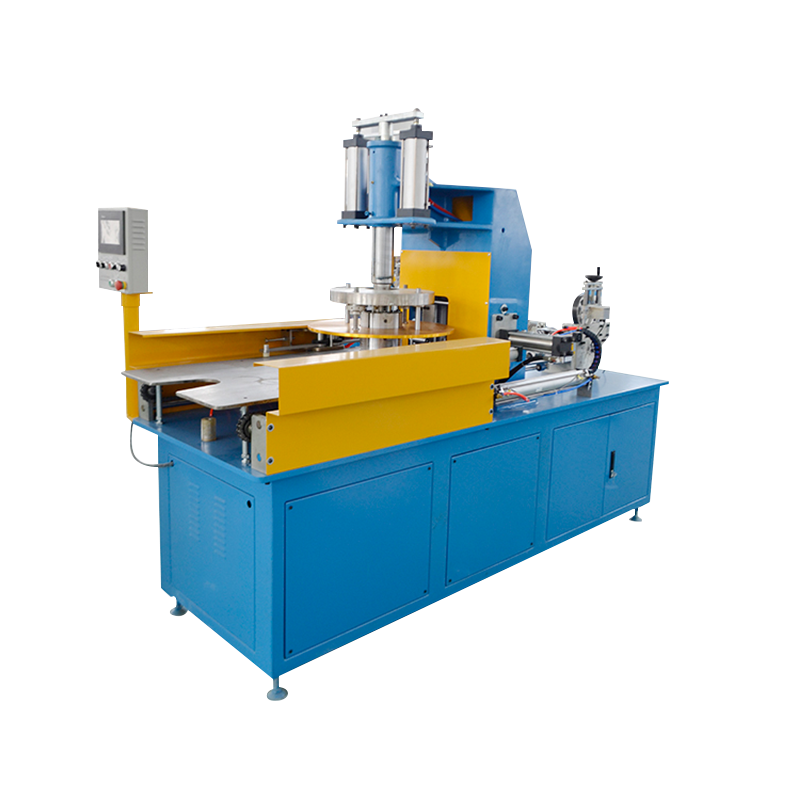
The final packaging stage is one of the most important operations in modern wire and cable manufacturing. After extrusion, cooling, testing, marking, and measuring, finished cables must be formed into accurate coils, wrapped securely, labeled correctly, and transferred to storage or shipping. If these operations depend heavily on manual labor, production speed can become inconsistent, packaging quality can vary, and labor costs can rise quickly. A fully automatic coiling and wrapping machine provides an integrated solution by combining cable coiling, cable arrangement, wrapping, labeling, fault detection, and product discharge in a continuous production process.
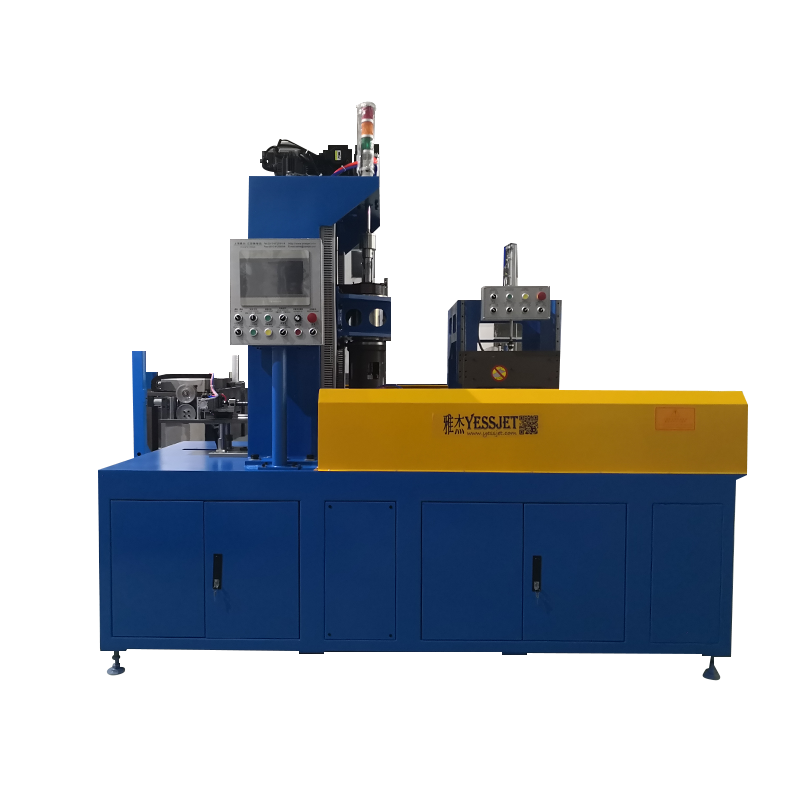
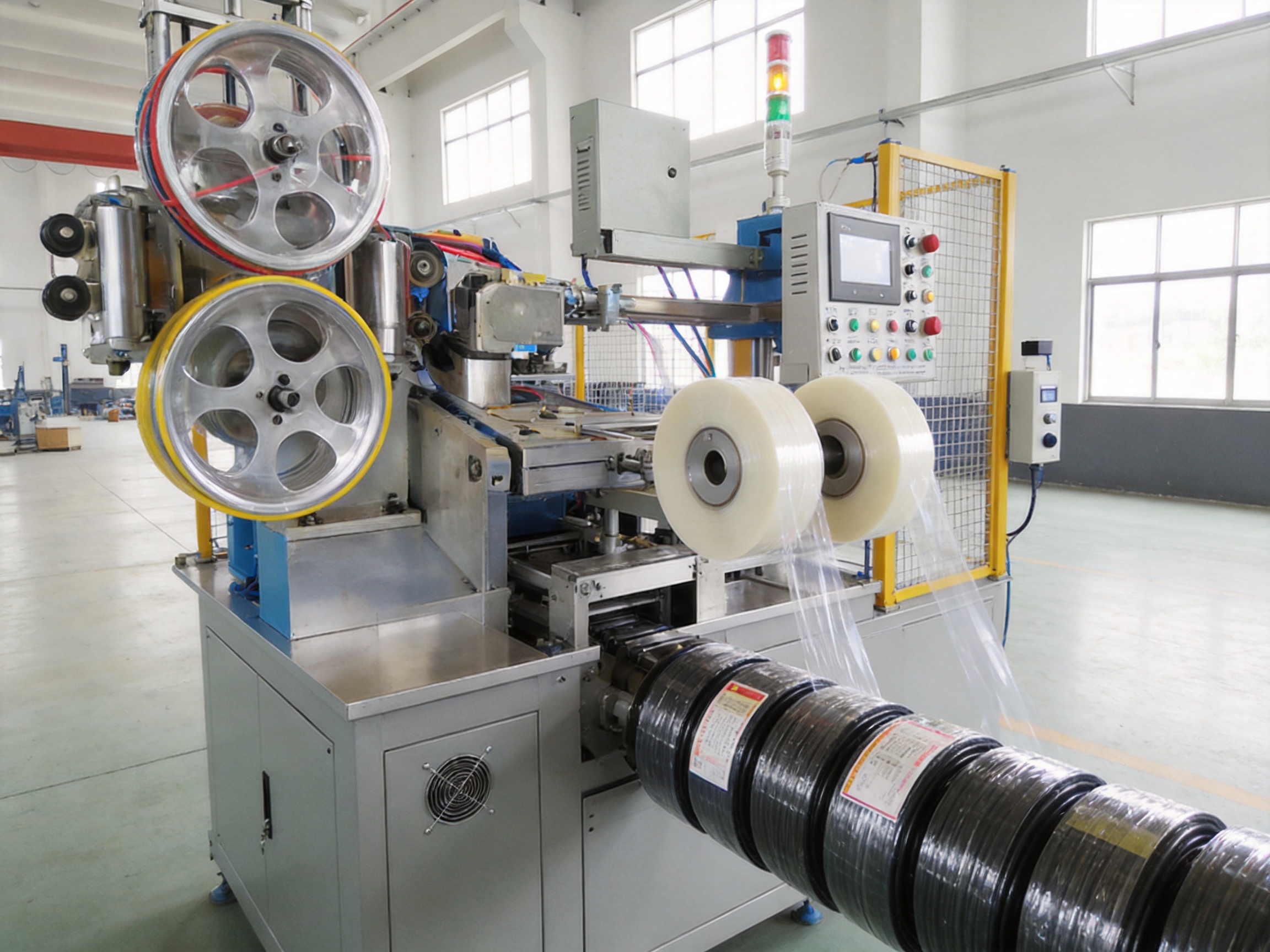
The fully automatic coiling and wrapping machine supplied by Shanghai Yessjet Precise Machinery Co., Ltd. is designed for manufacturers that need a reliable, space-efficient, and highly automated packaging solution for wires and cables. It is suitable for products such as BV, BVR, RVV, UL electronic wires, flower wires, and other cable types within the applicable diameter range. The machine forms cable into neat loops and then wraps each finished coil with PVC film, PE film, PP film, paper tape, or other compatible wrapping materials, depending on the selected configuration.
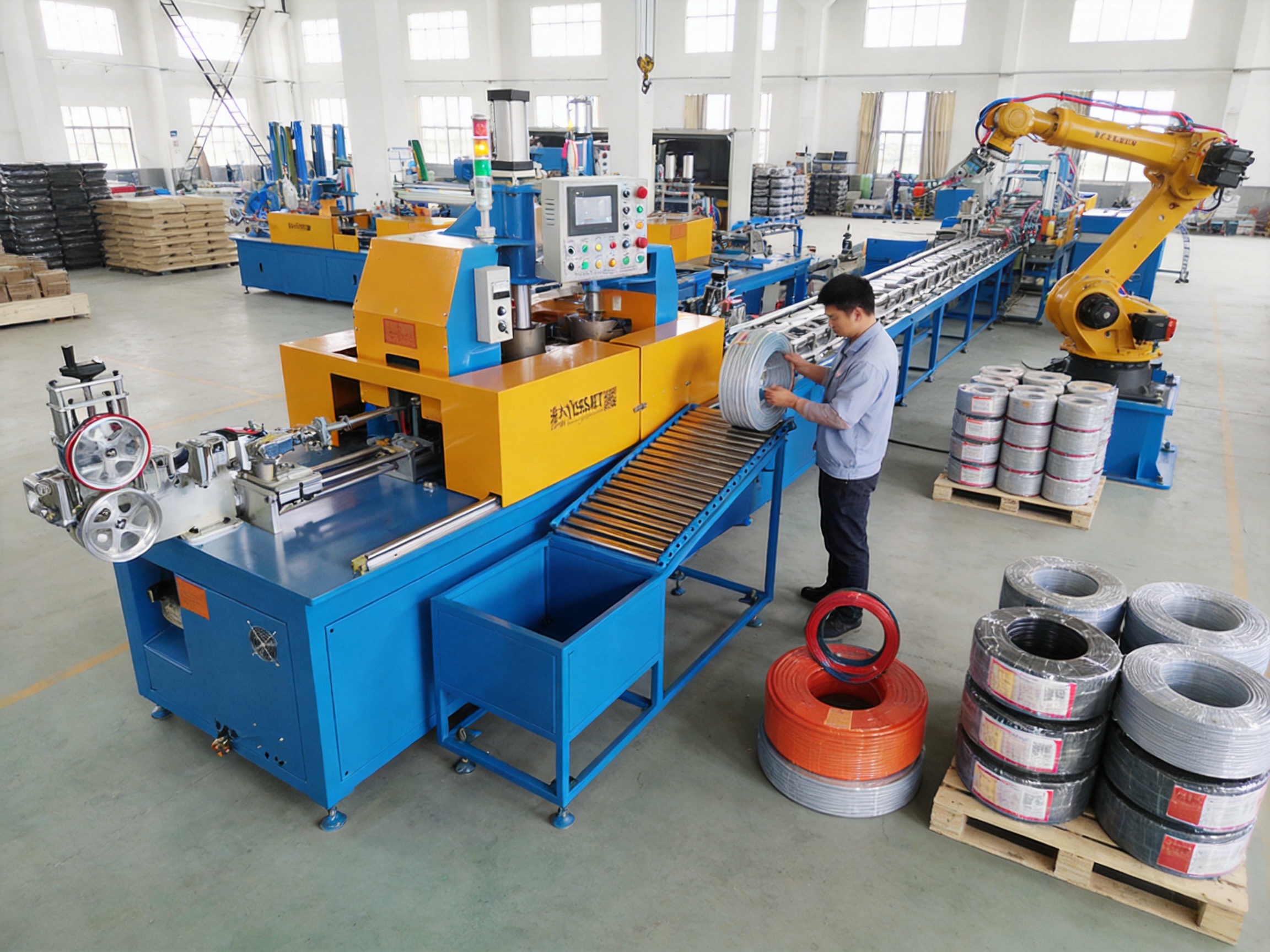
Unlike a basic coiling machine that only forms a loop, this integrated system is designed to complete several downstream operations within one coordinated machine. Automatic feeding, servo-controlled cable arrangement, adjustable holding arms, automatic labeling, C-ring wrapping, error detection, and continuous output help reduce manual intervention while improving production consistency. It can also be connected with an automatic stacking system or automatic palletizing system to create a more complete cable packaging line.
Why Automated Cable Packaging Matters
Wire and cable products often require precise handling because their external insulation must remain clean, smooth, and undamaged. Manual coiling can create uneven loops, crossed wires, loose sections, or excessive bending. Manual wrapping may also result in inconsistent tension, incomplete coverage, and incorrectly positioned labels. These problems can affect appearance, transport stability, warehouse handling, and customer perception.
An automatic coiling and wrapping machine addresses these challenges by coordinating the movement of the cable and packaging materials through programmed mechanical and servo systems. The cable is guided into a controlled coil pattern rather than being placed randomly. The winding process can be adjusted according to the cable diameter, coil height, outer diameter, and inner diameter. Once the coil reaches the programmed length or target condition, the wrapping unit applies the selected wrapping material around the product.
Automation also improves production planning. Operators can establish repeatable parameters for different cable specifications and change between products more efficiently than with a fully manual process. The machine can support continuous production and reduce the time required for repeated handling, tying, labeling, and packaging activities. This is particularly valuable for cable extrusion plants with several production lines or for factories producing large quantities of standardized coils.
Integrated Coiling and Wrapping in One Machine
The central advantage of this equipment is the integration of coiling and wrapping into one continuous process. A conventional production arrangement may require a separate coiler, manual transfer station, wrapping machine, label application process, and inspection step. Each transfer creates opportunities for cable damage, production delays, and inconsistent handling. The integrated design reduces the number of independent operations and creates a more compact workflow.
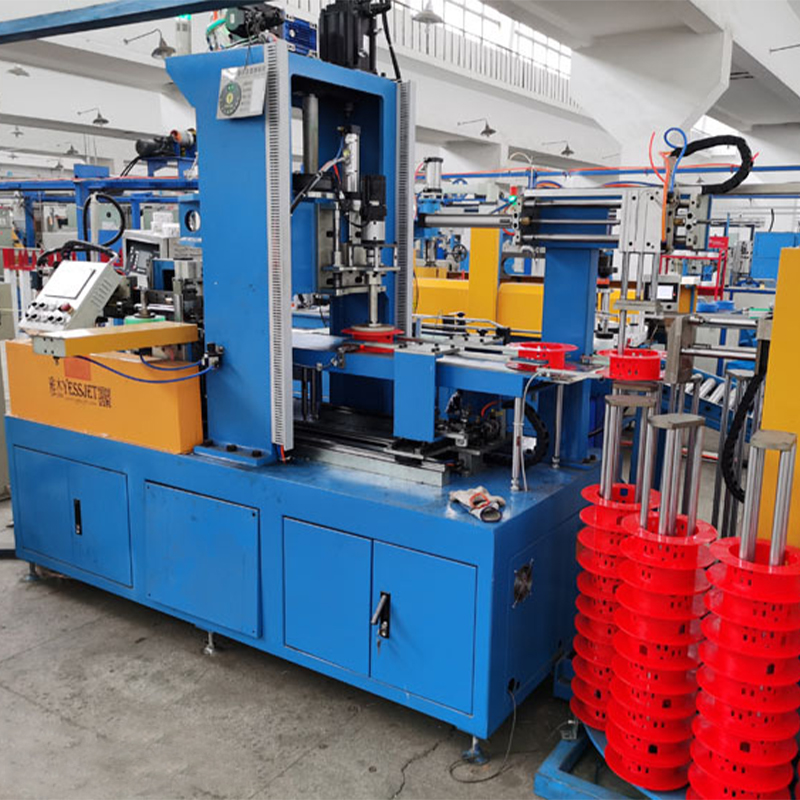
During operation, the cable enters the machine through the feeding and guiding system. The servo motor cable arrangement system controls the position of the cable as it is formed into loops. The adjustable thread holding arm helps maintain the required coil shape and can automatically adapt to changing product dimensions within the machine’s specified working range. When the coil is complete, it proceeds to the wrapping section, where the selected material is applied around the cable coil.
The use of a C-RING wrapping design is another distinctive feature. Two plastic rollers directly wrap the coil with the C-ring, helping the packaging material follow the outside of the coil in a controlled manner. This arrangement is intended to improve wrapping efficiency while reducing the need for complex manual positioning. The result is a packaged coil that is easier to handle, stack, transport, and identify.
Combining these processes can save valuable floor space. Instead of installing multiple separate machines with transfer conveyors or manual workstations between them, manufacturers can use a more compact production arrangement. The saved space can be used for additional extrusion equipment, raw material storage, inspection areas, or finished-product staging.
Core Operating Features
Continuous Automatic Coiling
The machine automatically forms wire and cable into loops according to preset dimensions. Continuous coiling allows the production line to operate with fewer interruptions, especially when the machine is connected to an upstream extrusion or measuring system. The system is suitable for applications in which a consistent coil length and repeatable coil geometry are required.
Automatic coiling helps reduce common manual problems such as uneven winding, irregular coil edges, tangled loops, and excessive variation between finished products. A more uniform coil is also easier to wrap because the wrapping material can follow a consistent shape and tension pattern.
Servo Motor Cable Arrangement
The servo motor cable arrangement system is designed to position the cable accurately during the winding process. Servo control provides a responsive method for managing the cable path and coordinating movement with the coiling mechanism. This supports neat cable distribution and helps achieve an orderly coil structure.
For cable manufacturers, neat arrangement is not merely an appearance issue. Proper arrangement can make the coil more stable, reduce the risk of loose loops, and improve the effectiveness of the wrapping stage. It can also make labels easier to read and simplify downstream stacking or palletizing.
Automatic Adjustable Thread Holding Arm
The automatic adjustable thread holding arm helps maintain the cable position while the coil is being formed. Because the arm can be adjusted automatically, operators do not need to make repeated manual adjustments for every coil. This reduces setup effort and helps the machine respond to products with different dimensions within its operating range.
Automatic adjustment is especially useful in production environments with multiple cable sizes. It can reduce changeover complexity and make it easier for operators to switch between product specifications. The exact adjustment range depends on the selected machine model and the characteristics of the cable being processed.
Automatic Cable and Label Feeding
The machine incorporates automatic cable feeding and automatic label feeding. Automatic feeding improves continuity and reduces the need for operators to manually guide every cable or place every label. It also supports safer operation by reducing the amount of direct handling required near moving components.
Automatic labeling creates a more consistent presentation of product information. Labels can be used for product identification, length, specification, production batch, customer information, or other manufacturing data. In a modern factory, reliable labeling is essential for traceability, warehouse control, order fulfillment, and after-sales support.
Automatic Error Detection and Alarm
Automatic error detection monitors operating conditions and alerts the operator when a problem occurs. If the machine identifies an abnormal condition, it can issue an alarm so that the operator can investigate and perform maintenance. Early notification can reduce the risk of producing a large quantity of incorrectly coiled or improperly wrapped products.
Error detection also contributes to safer and more disciplined operation. Instead of relying exclusively on visual observation, the machine provides an additional layer of process monitoring. Operators can respond more quickly to material feeding problems, wrapping abnormalities, or other detected conditions.
C-RING Wrapping Design
The C-RING wrapping design uses two plastic rollers to wrap the completed cable coil directly with the C-ring. This design is intended to provide efficient wrapping while keeping the packaging process integrated with the coiling operation. It helps reduce manual wrapping steps and supports a consistent packaging appearance.
The C-RING system can be configured for compatible wrapping materials and product dimensions. Depending on the application, manufacturers may use PVC film, PE film, PP film, paper tape, or PVC woven belt. Material selection should consider cable size, desired protection, storage conditions, transportation requirements, and customer packaging specifications.
Non-Stop Production Capability
Continuous production is a major advantage for factories that need higher output. The machine is designed to support non-stop operation within its specified production conditions. Reducing unnecessary pauses improves equipment utilization and can increase the number of finished coils produced during a shift.
Non-stop operation does not mean that inspection and maintenance should be neglected. Regular checking of wrapping material, cable guides, rollers, sensors, and moving assemblies remains important. Proper maintenance allows the machine to maintain stable performance and reduces unplanned downtime.
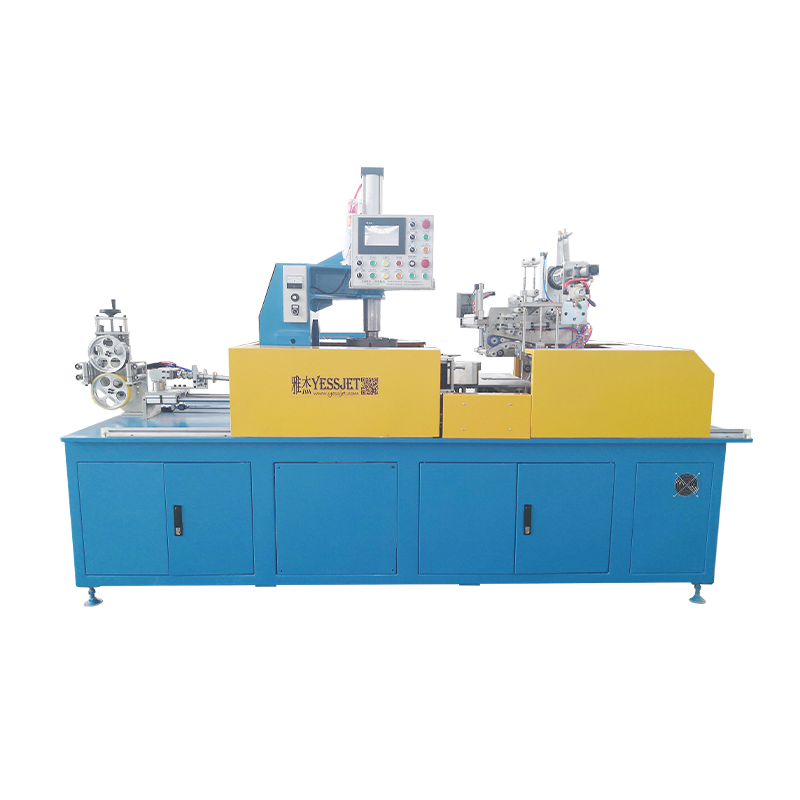
Fully Automatic Coiling & Wrapping Machine
Technical Specifications and Model Selection
The available models cover several cable diameter and coil size ranges. Selecting the correct model requires consideration of wire diameter, finished coil height, outer diameter, inner diameter, wrapping material, target cable length, and required output speed. The following table summarizes the principal specifications provided for the product range.
| Model | Coil Height (mm) | Outer Diameter (mm) | Inner Diameter (mm) | Wire Diameter (mm) | Wrapping Material | Average Output for 100 m Coils |
|---|---|---|---|---|---|---|
| CP1040 | 50–120 | 180–400 | 120–200 | 3–10 | PVC | 2–3 coils/min |
| CP1246 | 50–120 | 180–460 | 120–200 | 2.5–8 | PVC | 2–2.5 coils/min |
| CP1860 | 70–180 | 280–600 | 160–300 | 4–15 | PVC | 1–1.5 coils/min |
| CP2480 | 120–240 | 360–800 | 250–400 | 10–25 | PVC woven belt | 0.5–1 coil/min |
The specifications should be treated as a selection reference rather than a substitute for application confirmation. Actual output can vary according to cable construction, insulation stiffness, cable diameter tolerance, coil dimensions, wrapping tension, label requirements, operator settings, and upstream line stability. Before ordering, manufacturers should provide representative cable samples or complete product data for a detailed technical evaluation.
CP1040
The CP1040 is suitable for relatively compact coils and cable diameters from approximately 3 to 10 millimeters. Its outer diameter range of 180 to 400 millimeters and inner diameter range of 120 to 200 millimeters make it appropriate for many common building wires and electronic cable applications. With an average output of approximately two to three 100-meter coils per minute, it is designed for production environments requiring a comparatively high packaging rate.
CP1246
The CP1246 supports wire diameters from approximately 2.5 to 8 millimeters and allows an outer coil diameter up to approximately 460 millimeters. It can be considered for products requiring a slightly broader outer diameter range than the CP1040 while maintaining a compact coil height. Its average output is approximately two to two and a half coils per minute for 100-meter coils.
CP1860
The CP1860 is intended for larger coils and cable diameters from approximately 4 to 15 millimeters. Its coil height range extends to approximately 180 millimeters, and its outer diameter range reaches approximately 600 millimeters. It is a practical choice for medium-size power, control, electronic, or industrial cables that exceed the typical range of smaller coiling machines.
CP2480
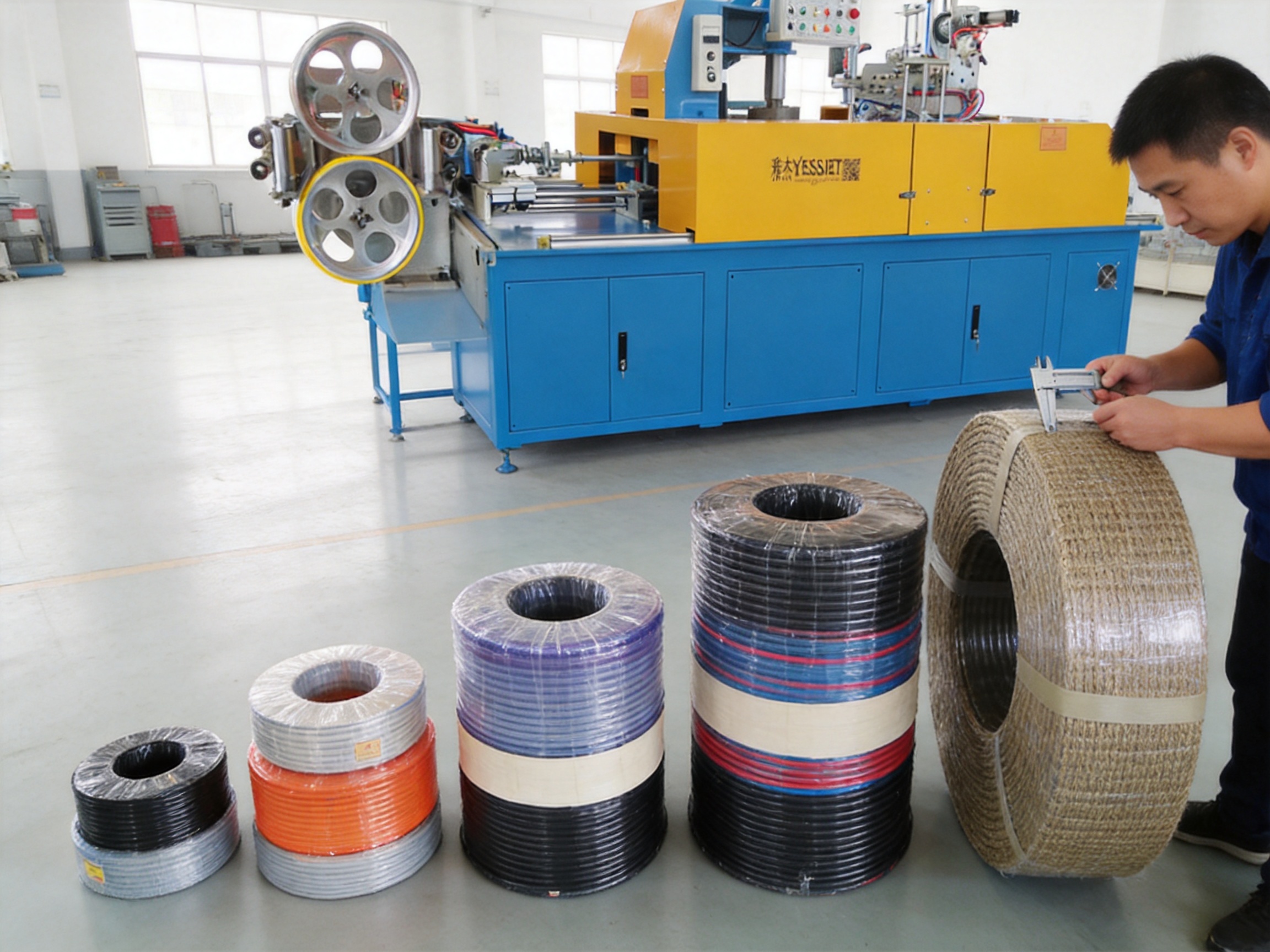
The CP2480 is designed for larger and heavier cable coils, supporting wire diameters from approximately 10 to 25 millimeters. It accommodates coil heights up to approximately 240 millimeters and outer diameters up to approximately 800 millimeters. The use of PVC woven belt is suitable for applications in which a stronger or more robust wrapping format is required. Because larger coils require more material movement and handling, the average output is lower than that of compact coil models.
Wrapping Material Options
The machine can be configured for several types of wrapping materials. PVC film is commonly selected when manufacturers need a clean, visible, and secure outer package. PE film can provide a flexible packaging solution, while PP film may be selected for specific strength and appearance requirements. Paper tape may be appropriate when a paper-based packaging format is preferred. PVC woven belt can be used for larger products that require a more substantial wrapping structure.
Material selection should be based on the final use of the cable coil. For indoor storage, a light film may be sufficient. For longer-distance transportation, outdoor storage, or repeated handling, a stronger wrapping material may be preferred. The wrapping material should also be compatible with the machine’s roller and feeding mechanism.
Manufacturers should consider material thickness, width, tensile strength, elongation, surface friction, roll dimensions, and sealing or fixing requirements. These factors influence wrapping tension, material consumption, package appearance, and operating stability. Testing the selected material under actual production conditions is recommended before large-scale implementation.
Advantages Over Conventional and Competing Solutions
Reduced Manual Labor
A conventional manual packaging process may require several workers to guide the cable, form the coil, hold the loops, wrap the product, attach a label, inspect the package, and move it to the next area. The fully automatic machine combines many of these operations and allows one operator to supervise a more complete process.
Reducing manual labor can lower packaging costs and make staffing more predictable. It can also help manufacturers address labor shortages or reduce the physical demands associated with repetitive cable handling. Operators can focus on machine supervision, material replenishment, quality inspection, and production coordination rather than performing every packaging movement by hand.
Improved Coil Consistency
Manual coiling quality can vary according to operator skill, fatigue, cable stiffness, and production speed. The servo arrangement system and automatic holding arm provide more consistent control over the winding path. Improved consistency supports more uniform coil dimensions and a more professional finished appearance.
Uniform coils are easier to store and transport. They can occupy less irregular space, reduce the risk of deformation, and improve the efficiency of palletizing. Consistency also helps downstream systems operate with fewer adjustments.
Higher Packaging Efficiency
Coiling and wrapping in one machine eliminates repeated transfers between separate workstations. The machine’s continuous process can increase output while reducing waiting time. For high-volume cable production, even a small reduction in handling time per coil can create a significant increase in daily production capacity.
The output rate depends on the model and product characteristics. Compact models may process approximately two to three 100-meter coils per minute, while larger models may process approximately half to one and a half coils per minute. These rates provide a useful basis for line planning, but final performance should be verified with the actual cable and packaging material.
Lower Space Requirements
Separate coiling, wrapping, and labeling machines require additional floor area and may need conveyors or manual transfer zones. The integrated machine reduces the footprint of the packaging section. This is especially useful in factories where production space is limited or where additional equipment must be installed without expanding the building.
A compact arrangement can also improve workflow visibility. Operators can monitor the complete packaging process from one area rather than moving between multiple machines. Maintenance personnel may benefit from a clearer equipment layout and fewer independent control points.
Improved Safety and Process Control
Automatic cable feeding, label feeding, and wrapping reduce direct contact with moving cable and packaging components. The error alarm system provides an additional method of notifying operators when an abnormal condition occurs. Together, these features support a more controlled working environment.
Safety performance still depends on correct installation, guarding, electrical protection, operator training, emergency-stop access, and preventive maintenance. The machine should be operated according to the supplier’s instructions and applicable local industrial safety requirements.
Better Integration with Smart Factory Systems
The machine can serve as a packaging module in a larger automated production line. It may be connected with upstream extrusion, measuring, or take-up equipment and downstream automatic stacking or palletizing systems. This makes it suitable for manufacturers that are gradually increasing automation rather than replacing an entire factory at once.
Integration can help production managers coordinate material flow from extrusion to finished-goods storage. When machine status, alarms, output data, and product parameters are managed systematically, the factory can improve scheduling and traceability.
Manufacturing and Engineering Strengths
Shanghai Yessjet Precise Machinery Co., Ltd. develops equipment for wire and cable production and packaging applications. Its product range includes wire and cable extrusion lines, fully automatic coiling packaging equipment, intelligent robot stackers, coiling machines, motorized pay-off equipment, motorized take-up equipment, accessory equipment, and cable extrusion machines. This broader product scope is important because it gives the company experience across multiple stages of wire and cable manufacturing.
A supplier that understands extrusion, pay-off, take-up, coiling, wrapping, and stacking can evaluate a packaging machine as part of a complete production system. This is different from supplying an isolated machine without considering upstream line speed, cable tension, finished length, product cooling, or downstream logistics. System-level knowledge helps manufacturers select equipment that is better matched to their actual production workflow.
Application-Oriented Engineering
Wire and cable products differ significantly in flexibility, insulation material, diameter, surface friction, weight, and acceptable bending radius. A machine that performs well with a small flexible electronic wire may require different settings for a larger industrial cable. Application-oriented engineering is therefore essential.
The available model range demonstrates a focus on different coil dimensions and cable diameter requirements. By offering compact, medium, and larger models, the manufacturer can support a broader selection of product specifications rather than forcing every customer into a single standard machine format.
Coordinated Mechanical and Servo Systems
The machine combines mechanical coiling and wrapping structures with servo motor cable arrangement. Coordinating these systems requires accurate timing, stable cable guiding, and appropriate control parameters. The aim is to maintain smooth cable movement while preserving the shape of the coil and the quality of the wrapping process.
Servo-based arrangement is especially valuable when product dimensions change or when the manufacturer needs a more precise winding pattern. It provides a controllable platform for adjusting cable distribution and supports repeatable operation over extended production periods.
Manufacturing Quality and Assembly Control
Advanced equipment performance depends not only on its design but also on the quality of component selection, assembly, wiring, testing, and commissioning. A professional manufacturing process should include dimensional inspection of critical structures, alignment checks for rollers and guides, electrical testing, control-system verification, and trial operation before delivery.
For a coiling and wrapping machine, assembly accuracy affects cable alignment, wrapping stability, and long-term mechanical wear. Properly installed sensors and carefully routed wiring support reliable detection and control. A structured factory testing procedure can identify operating issues before the equipment reaches the customer’s facility.
Complete Line and Customization Capability
Because the company supplies multiple categories of wire and cable equipment, it can support customers seeking more than a standalone packaging machine. A production line may include motorized pay-off equipment, extrusion equipment, cooling and measuring sections, motorized take-up equipment, coiling and wrapping equipment, and automatic stacking or palletizing.
Equipment integration can be adapted to production capacity, cable specifications, factory layout, automation objectives, and packaging requirements. Customers should discuss cable samples, target output, coil dimensions, label format, wrapping material, and desired connection points during the engineering stage.
Application Areas
Building Wire
BV and BVR building wires are common applications for automatic coiling and wrapping equipment. These products are often manufactured in standardized lengths and require clean, compact, and clearly labeled packages. Automatic coiling can improve the appearance of retail or distribution-ready products and reduce the labor required for repetitive packaging.
Flexible Cable
RVV and similar flexible cables can benefit from controlled cable arrangement because flexible products may form irregular loops when handled manually. Servo-guided winding helps create a more orderly coil and can reduce loose sections before wrapping.
UL Electronic Wire
UL electronic wires and other small-diameter electronic cables are often produced in high volumes. Compact models such as the CP1040 or CP1246 may be suitable when the wire diameter and coil dimensions fall within the relevant ranges. Automatic labeling is useful for distinguishing product types, sizes, colors, and order batches.
Flower Wire and Special Flexible Products
Flower wires and similar products can require careful handling because of their flexibility and surface characteristics. The appropriate machine settings should be established through product testing. Cable tension, winding speed, coil diameter, and wrapping pressure should be adjusted to avoid deformation or surface damage.
Industrial and Larger Cables
Industrial cables with larger diameters may require the CP1860 or CP2480 model range, depending on the required coil size. Larger products place greater demands on the winding structure, rollers, frame, wrapping material, and discharge process. A correctly selected machine can provide a more efficient alternative to manual handling of heavy cable coils.
Production Line Integration
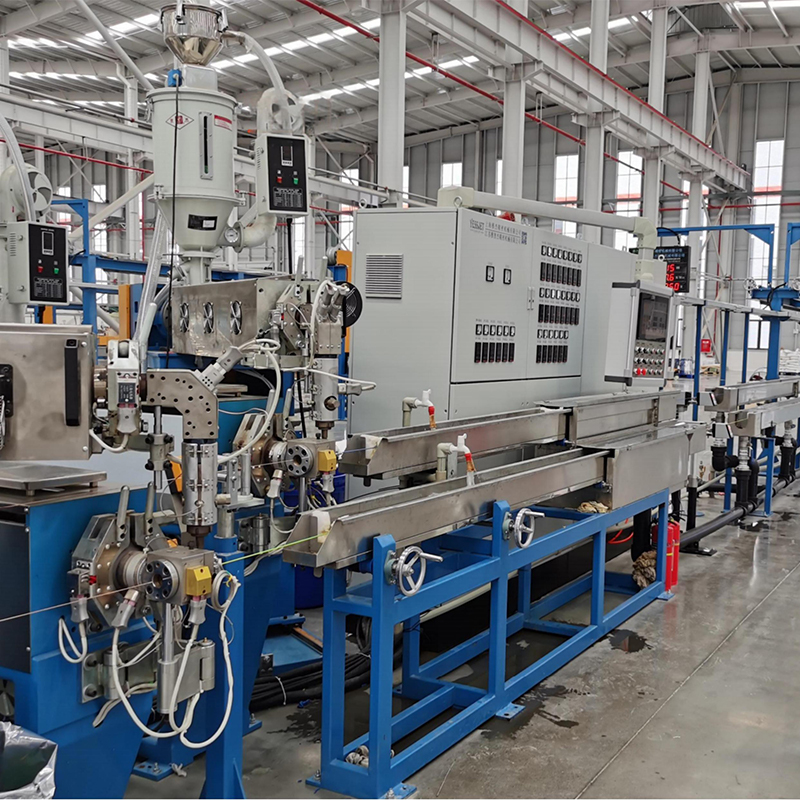
The fully automatic coiling and wrapping machine can be installed after cable extrusion and take-up operations. In a typical arrangement, the extrusion line produces and cools the cable, the measuring or take-up section manages the finished length, and the coiling and wrapping machine forms the final package. After wrapping, the coil can be transferred to a stacking or palletizing system.
For a basic automated line, the machine can be operated as an independent packaging station with manual removal of finished coils. For a higher-capacity line, it can be connected with an automatic stacking system. Where warehouse and shipping automation are priorities, an automatic palletizing system can be added to reduce manual movement after wrapping.
The connection between machines should be planned carefully. Important factors include cable speed, tension control, buffer capacity, communication signals, emergency-stop circuits, floor elevation, product transfer height, and finished coil orientation. A good integration plan prevents one machine from becoming a production bottleneck for the entire line.
Factories should also consider material replenishment. Wrapping film, paper tape, labels, and other consumables need to be stored near the machine without obstructing access or creating safety hazards. A clear maintenance zone should be included around the equipment so that rollers, guides, sensors, and electrical cabinets can be inspected efficiently.
Installation and Commissioning Considerations
Before installation, the customer should confirm that the factory floor can support the equipment and that sufficient space is available for operation, maintenance, material loading, and finished-product discharge. Electrical power, compressed air if required, environmental conditions, and grounding should be prepared according to the supplier’s technical requirements.
Commissioning should include mechanical inspection, electrical connection checks, sensor verification, control-system testing, and trial production. Initial trials should use representative cable products and the intended wrapping materials. Operators should confirm coil dimensions, cable arrangement, wrapping tightness, label position, and final package quality.
Production parameters should be recorded for each major cable type. These parameters may include winding speed, cable guide position, holding arm setting, coil length, inner diameter, outer diameter, wrapping tension, label timing, and discharge timing. Keeping a parameter record makes future product changeovers faster and more consistent.
Operator training should cover normal operation, product changeover, material loading, alarm interpretation, emergency procedures, cleaning, and basic preventive maintenance. Training is particularly important during the first production period because correct setup has a direct effect on packaging quality and machine life.
Maintenance and Operating Best Practices
Regular cleaning is necessary to prevent dust, insulation particles, and packaging residue from affecting cable guides, rollers, sensors, and moving assemblies. The cleaning schedule should be based on production volume and the type of cable being processed.
Operators should inspect the cable path for sharp edges, contamination, or abnormal wear. Guides and rollers should rotate smoothly and remain correctly aligned. Damaged or worn components should be replaced before they cause cable surface damage or winding instability.
Wrapping material should be installed correctly and stored in a clean, dry environment. Material rolls with deformation, moisture damage, or inconsistent thickness can create wrapping faults. The operator should also verify that the material width and mechanical properties are compatible with the selected machine configuration.
Alarm messages should not be ignored. When an error is detected, the operator should stop and investigate the cause according to the operating instructions. Repeated alarms may indicate a sensor issue, material problem, mechanical misalignment, or incorrect product parameter.
Preventive maintenance should include checking fasteners, lubrication points where applicable, electrical connections, emergency-stop devices, protective guards, sensors, and servo operation. Maintenance records help identify recurring issues and support planned replacement of wear parts.
Economic Benefits for Cable Manufacturers
The economic value of automated packaging comes from more than the reduction of direct labor. A stable packaging process can reduce rework, improve material utilization, increase line availability, and lower the risk of customer complaints caused by poor coil appearance or incorrect labeling.
Space savings can also have a financial effect. A compact integrated machine may allow the factory to increase output within its existing building rather than investing immediately in expansion. The ability to connect the equipment with automatic stacking or palletizing can further reduce labor in the finished-product area.
Consistent packaging can improve inventory handling. Uniform coils are easier to count, stack, move, and identify. Better labeling can reduce picking errors and support more reliable order fulfillment. For distributors and end users, an orderly package can simplify storage and installation preparation.
The return on investment depends on production volume, labor cost, cable types, operating hours, packaging material consumption, and the degree of automation already present in the factory. A detailed evaluation should compare the current manual process with the expected automatic output, labor requirement, maintenance cost, and available production capacity.
How to Choose the Right Model
The first selection factor is wire diameter. The cable must fall within the applicable working range of the selected model. The second factor is the required coil geometry, including height, inner diameter, and outer diameter. A machine should not be selected solely according to the cable diameter because the finished package dimensions also affect the coiling and wrapping process.
The required output rate is another important consideration. Manufacturers should calculate the number of coils required per hour and compare that figure with the model’s average output under similar cable conditions. If the upstream extrusion line operates continuously, the packaging machine should have sufficient capacity or a buffer arrangement should be planned.
Wrapping material must also be confirmed. PVC, PE, PP, paper tape, and PVC woven belt have different physical characteristics. The selected machine configuration must be compatible with the required material type, roll dimensions, wrapping width, and tension.
Finally, customers should consider future expansion. If production is expected to increase, it may be useful to select a machine that can connect with automatic stacking or palletizing equipment. Planning for future automation can reduce the cost and disruption of later upgrades.
Quality Control from Coil Formation to Finished Package
Quality control should begin with the cable entering the machine. The cable surface should be free from excessive contamination, and the upstream line should deliver a stable and correctly measured product. Variations in cable diameter or tension can affect the finished coil and should be monitored.
During coiling, inspectors should check that loops are distributed evenly, the coil remains within the required dimensions, and there are no crossed or loose sections. During wrapping, they should verify material coverage, tension, overlap, and package stability. After labeling, the information should be readable, correctly positioned, and matched to the production order.
Finished coils can be sampled at defined intervals. Inspection records may include cable length, coil dimensions, label accuracy, wrapping condition, appearance, and package weight where relevant. These records provide useful evidence for internal quality management and customer documentation.
Because the machine integrates several operations, a defect may originate from feeding, arrangement, winding, wrapping, labeling, or discharge. A systematic inspection method helps operators identify the source quickly instead of treating every issue as a general machine problem.
Q&A
What types of cable can be processed?
The machine is designed for a range of wires and cables, including BV, BVR, RVV, UL electronic wires, flower wires, and other products within the applicable model diameter and coil-size ranges. Compatibility should be confirmed with actual cable samples, especially for products with unusual flexibility, insulation, or surface characteristics.
What wrapping materials can be used?
Depending on the model and configuration, the machine can use PVC film, PE film, PP film, paper tape, or PVC woven belt. The correct material depends on the product size, package strength requirement, storage environment, and customer specification.
Can the machine apply labels automatically?
Yes. The equipment includes an automatic label feeder to reduce manual labeling work. Label format, size, adhesive properties, and application position should be confirmed during the technical planning stage.
Does the machine require manual adjustment for every cable size?
The automatic adjustable thread holding arm reduces the need for repeated manual adjustment. However, operators still need to select or confirm the appropriate product parameters when changing cable specifications. The available adjustment range depends on the selected model.
How fast can the machine produce coils?
Average output varies by model and product. For 100-meter coils, the listed average rates range from approximately 0.5 to 3 coils per minute. Smaller models generally provide higher output, while larger coils and thicker cables require more handling time.
Can the machine operate continuously?
The machine is designed for continuous coiling and wrapping within its rated operating conditions. Continuous operation depends on stable cable supply, sufficient wrapping material, correct parameter settings, regular maintenance, and prompt response to alarms.
Can it be integrated with a stacking system?
Yes. The machine is recommended for connection with an automatic stacking system or automatic palletizing system when a more complete production line is required. Integration details should be planned according to coil orientation, discharge height, production speed, and factory layout.
How does the C-RING system work?
The C-RING design uses two plastic rollers to wrap the finished cable coil directly with the C-ring. This integrated structure helps automate the wrapping stage and reduces the need for manual placement and handling.
What information should be provided before selecting a machine?
Customers should provide cable diameter, cable construction, insulation material, required cable length per coil, coil height, inner diameter, outer diameter, target output, wrapping material, label requirements, and the intended upstream and downstream equipment. Cable samples are recommended for testing when the application is complex.
Is the equipment suitable for a complete turnkey cable production solution?
The machine can be used as part of a broader wire and cable production solution. The supplier also provides extrusion lines, pay-off and take-up equipment, accessory equipment, intelligent robot stackers, and other cable machinery. A complete solution can be planned according to product specifications, factory capacity, and automation goals.
Conclusion
The fully automatic coiling and wrapping machine provides a practical way to modernize the final packaging stage of wire and cable production. By combining automatic coiling, servo-controlled cable arrangement, adjustable holding, automatic feeding, labeling, C-RING wrapping, error detection, and continuous operation, it addresses many limitations of manual packaging and disconnected equipment.
Its advantages include reduced labor requirements, improved coil consistency, higher packaging efficiency, lower space consumption, safer operation, and easier integration with automatic stacking or palletizing systems. The range of models allows manufacturers to select equipment for compact electronic wires, building wires, flexible cables, medium industrial cables, and larger cable products.
Shanghai Yessjet Precise Machinery Co., Ltd. supports wire and cable manufacturers with equipment covering multiple stages of production. Its experience with extrusion, pay-off, take-up, coiling, wrapping, stacking, and related machinery provides a foundation for application-oriented engineering and complete line planning. For the best result, machine selection should be based on actual cable data, coil dimensions, wrapping requirements, target capacity, and future automation plans.
With appropriate model selection, commissioning, operator training, and preventive maintenance, the machine can become an important part of a more efficient, consistent, and automated wire and cable production line.
References
1. Product technical information for fully automatic coiling and wrapping equipment, including model ranges, cable diameter limits, coil dimensions, wrapping materials, and average output data.
2. Wire and cable production line engineering principles covering extrusion, cable guiding, pay-off, take-up, coiling, wrapping, stacking, and palletizing operations.
3. Industrial automation practices for servo motor control, automatic material feeding, product labeling, alarm systems, and production-line integration.
4. Packaging engineering considerations for PVC film, PE film, PP film, paper tape, and woven belt applications.
5. Manufacturing quality and preventive maintenance practices for cable processing and automatic packaging machinery.