LANGUAGE
 中文简体
中文简体 русский
 Français
 Español
 Português
 عربى
عربى
Content
- 1 Product Overview
- 2 Why XLPE and PE Insulation Matter
- 3 Core Structure and Working Principle
- 4 Key Product Advantages
- 5 Advantages Compared with Conventional Extrusion Equipment
- 6 Technical Feature Summary
- 7 Advanced Manufacturing Processes Behind the Machine
- 8 Importance of Temperature Control
- 9 Cooling Water Tank Design and Its Production Value
- 10 Applications in Power Cable Manufacturing
- 11 Applications in Communication Cable Manufacturing
- 12 Applications in Automotive Wire Manufacturing
- 13 Turnkey Cable Production Line Capability
- 14 Automation and Labor Efficiency
- 15 Quality Control and Standards Compliance
- 16 Material Savings and Cost Control
- 17 Operational Flexibility for Different Cable Products
- 18 Installation, Commissioning, and Production Support
- 19 Maintenance and Long-Term Reliability
- 20 Competitiveness in the Cable Machinery Market
- 21 How the Machine Supports Sustainable Production
- 22 Selection Considerations for Buyers
- 23 Recommended Production Line Configuration
- 24 Q&A Section
- 24.1 What is the XLPE PE Cable Extruder with Cooling Water Tank used for?
- 24.2 Why is the cooling water tank important?
- 24.3 How does this machine improve insulation thickness consistency?
- 24.4 Can the machine process both XLPE and PE materials?
- 24.5 What industries can benefit from this equipment?
- 24.6 What advantages does it offer over ordinary cable extruders?
- 24.7 Can it be integrated into a turnkey cable production line?
- 24.8 Does the machine support standards-based cable production?
- 24.9 How can manufacturers reduce material waste with this extruder?
- 24.10 What should buyers consider before purchasing?
- 25 Conclusion
- 26 References
- 27 Product: XLPE PE Cable Extruder with Cooling Water Tank
In modern wire and cable manufacturing, insulation quality is one of the most important factors determining the safety, durability, and electrical performance of the finished cable. The XLPE PE Cable Extruder with Cooling Water Tank is designed for continuous extrusion of cross-linked polyethylene and polyethylene insulation layers, offering a stable production platform for power cables, communication cables, automotive wires, building wires, and other insulated conductor products. By integrating a high-precision single-screw extruder, an accurately controlled electrical heating system, and a multi-section cooling water tank, this equipment supports reliable insulation thickness, consistent surface quality, and controlled cooling performance throughout the production process.
Unlike ordinary extrusion machines that may focus only on material melting and forming, this cable extrusion machine is engineered as a complete insulation processing solution. It addresses common production challenges such as uneven insulation concentricity, surface defects, poor temperature stability, slow cooling, unstable line speed, and insufficient process repeatability. For manufacturers seeking higher productivity, better quality control, and stronger compliance with international cable standards, the machine provides a practical and advanced solution.
Shanghai Yessjet Precise Machinery Co., Ltd. develops wire and cable machinery with a focus on precision, automation, production stability, and turnkey production line integration. With deep experience in cable extrusion equipment, coiling machines, automatic packaging systems, pay-off and take-up equipment, robot stacking systems, and auxiliary equipment, the company is able to provide not only individual machines but also complete production line solutions. This strength allows cable manufacturers to build more efficient and coordinated workshops, reduce compatibility problems between different machines, and achieve higher long-term production value.
XLPE PE Cable Extruder with Cooling Water Tank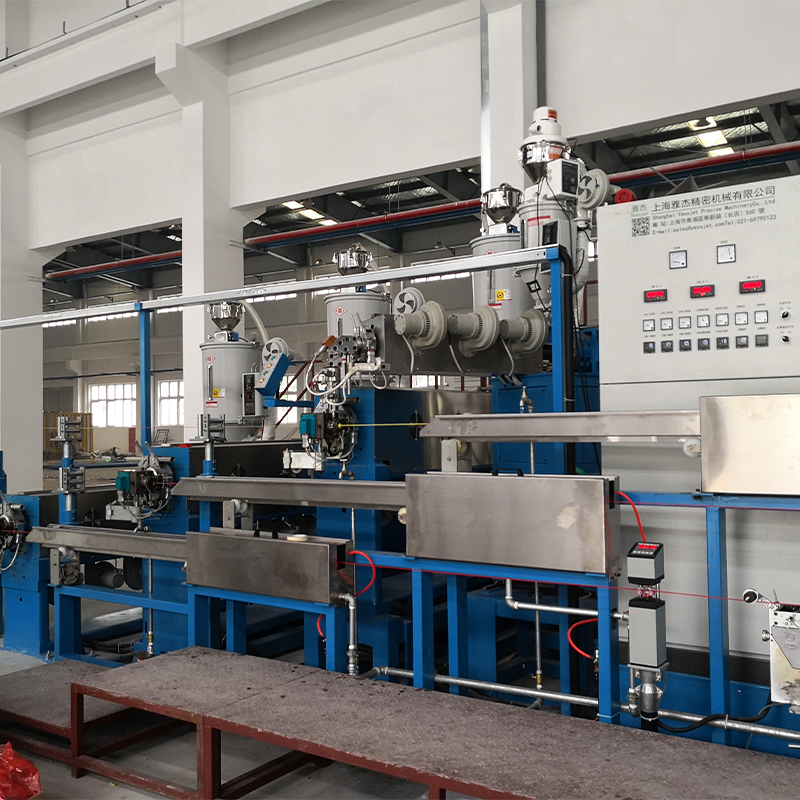
Product Overview
The XLPE PE Cable Extruder with Cooling Water Tank is a specialized cable extrusion system used to apply an insulation layer onto conductors or wire cores. It is suitable for processing XLPE and PE materials, both of which are widely used in the cable industry because of their excellent electrical insulation properties, chemical resistance, and mechanical performance. XLPE is especially valued for its heat resistance and cross-linked molecular structure, while PE is appreciated for its flexibility, low dielectric loss, and stable insulation behavior.
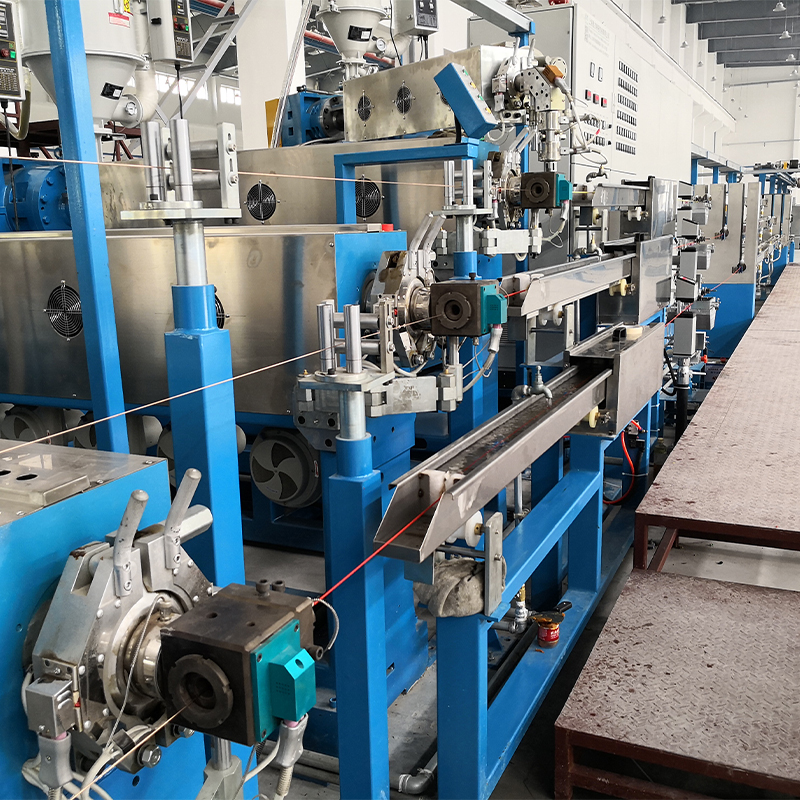
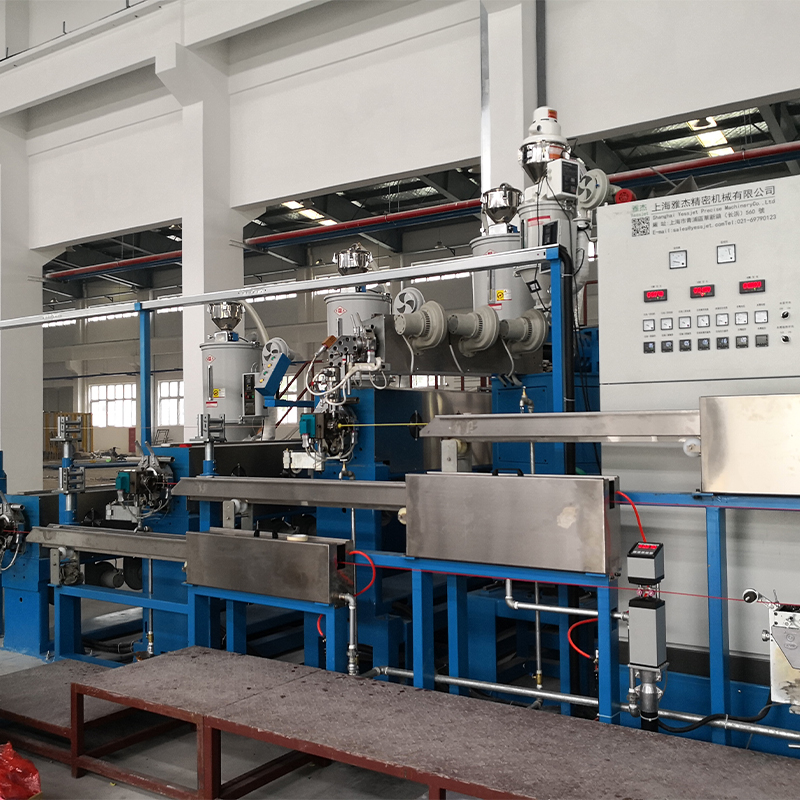
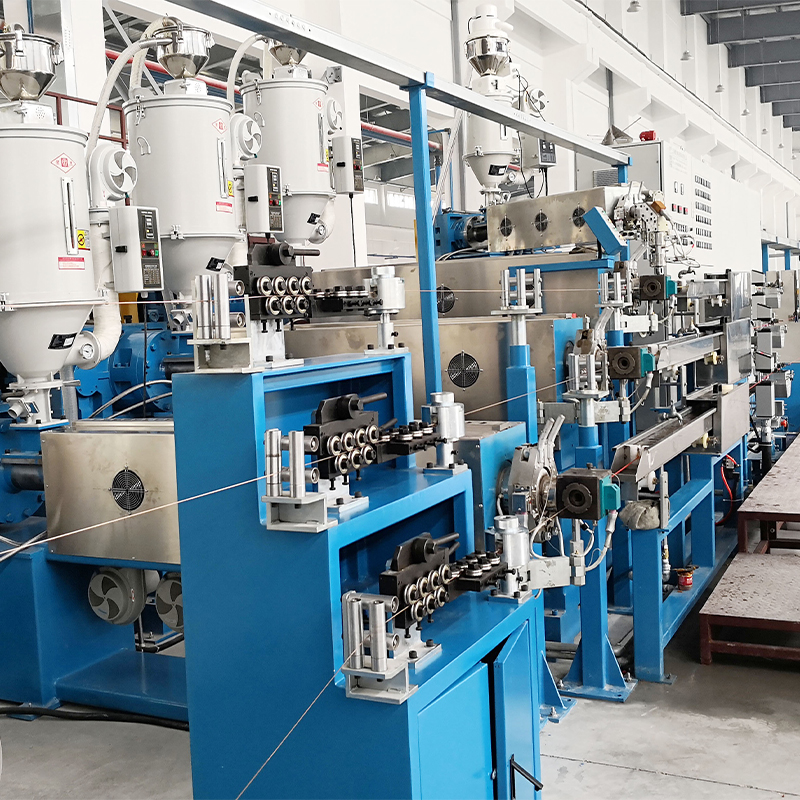
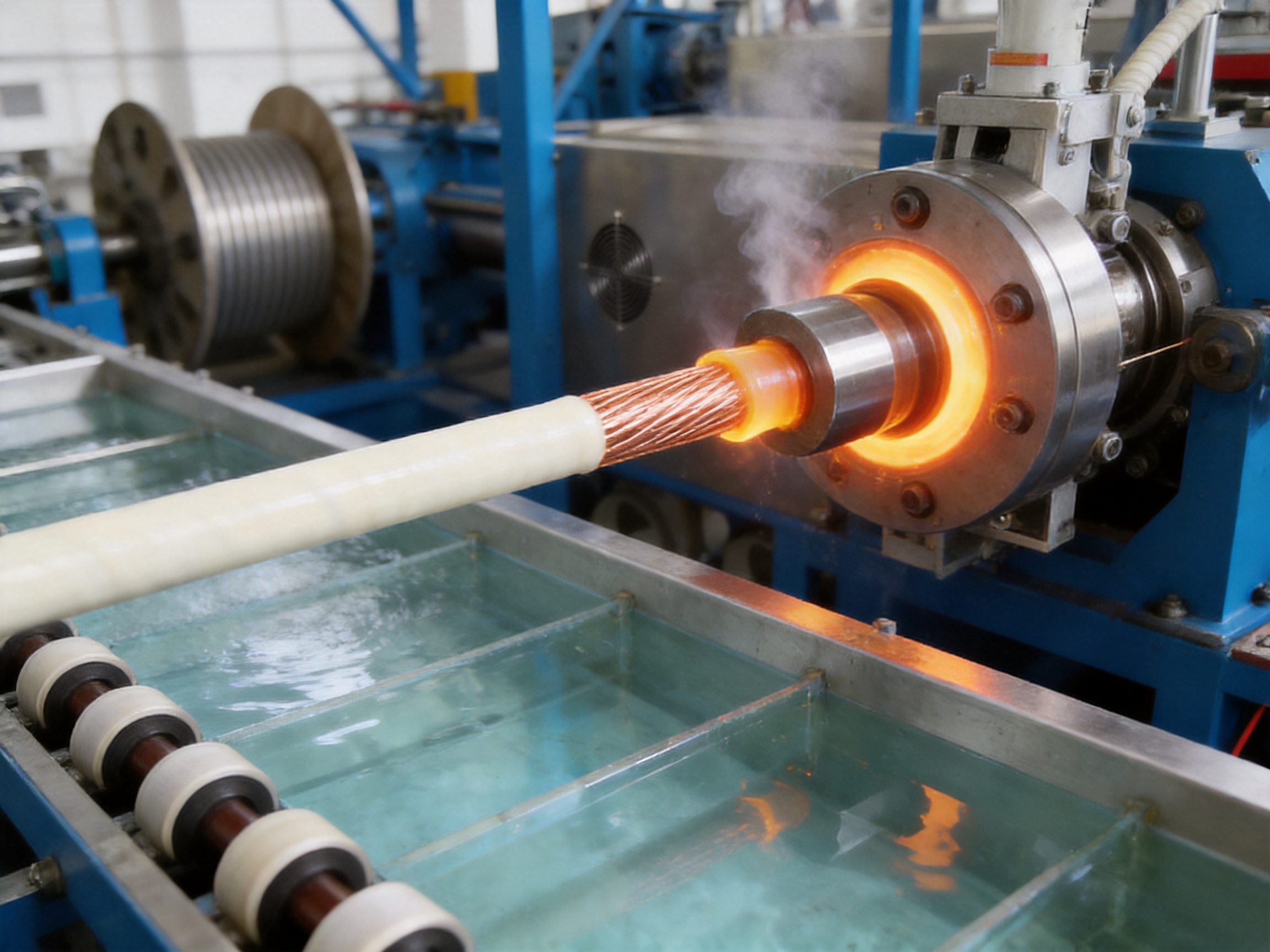
The machine combines extrusion, sizing, and cooling into a continuous manufacturing process. During production, raw polymer material is fed into the extruder barrel, heated, plasticized, and pushed forward by the screw. The molten insulation material is then formed around the conductor through a precision extrusion head and die system. Immediately after extrusion, the insulated cable enters the cooling water tank, where controlled water cooling stabilizes the insulation layer, preserves dimensional accuracy, and improves surface finish.
The key advantage of this configuration is production continuity. Instead of separating extrusion and cooling into disconnected stages, the system allows the cable to pass smoothly through each process section. This reduces deformation risk, shortens cooling time, and helps maintain consistent insulation thickness along the cable length. For cable producers working with demanding specifications, process consistency directly affects product qualification rates and customer satisfaction.
The extruder is built for industrial cable production environments where equipment reliability is essential. It can be incorporated into a complete cable production line with pay-off systems, preheating equipment, diameter measuring devices, spark testers, traction units, take-up machines, and automatic coiling or packaging systems. This integration capability makes the machine suitable for both new cable factory projects and upgrades of existing production lines.
Why XLPE and PE Insulation Matter
XLPE and PE materials are widely used in cable insulation because they provide a strong balance between electrical performance, mechanical protection, and processing efficiency. PE, or polyethylene, has low moisture absorption, good dielectric strength, and excellent resistance to many chemical substances. It is commonly used in communication cables, low-voltage wires, and various general-purpose insulated cable products.
XLPE, or cross-linked polyethylene, is created by forming cross-links between polymer chains. This structure improves heat resistance, deformation resistance, and long-term aging performance. XLPE insulated cables are frequently used in power transmission and distribution systems because they can withstand higher operating temperatures than ordinary thermoplastic materials. They also show improved resistance to stress cracking and thermal deformation.
The extrusion process for these materials must be carefully controlled. If the material is overheated, it may degrade, discolor, or lose performance. If it is not heated enough, the insulation may contain unmelted particles or show poor surface quality. If cooling is too fast or too uneven, residual stress, surface roughness, or dimensional instability may occur. Therefore, an effective XLPE PE cable extruder must combine accurate temperature control, stable material pressure, precise die design, and controlled cooling.
This machine is developed to meet those requirements. Its single-screw extrusion structure is optimized for uniform plasticization and stable output. The electrical heating system enables controlled temperature zones, allowing the operator to match material characteristics and product requirements. The cooling water tank is divided into sections to support gradual and efficient cooling, which is especially important for maintaining roundness, insulation adhesion, and surface smoothness.
Core Structure and Working Principle
The main structure of the XLPE PE Cable Extruder with Cooling Water Tank includes the extruder host, screw and barrel assembly, heating and temperature control system, extrusion head and die tooling, cooling water tank, electrical control system, and optional connection interfaces for auxiliary equipment. Each part plays a specific role in forming a stable insulation layer around the cable core.
The extrusion host supplies mechanical power to rotate the screw. The screw conveys, compresses, melts, mixes, and meters the polymer material. A properly designed screw is critical because it determines material residence time, melting uniformity, pressure stability, and output consistency. For cable insulation production, stable pressure is especially important because pressure fluctuation can cause insulation thickness variation and surface defects.
The barrel is equipped with electrical heating zones that raise the temperature of the polymer material to the proper processing range. Temperature sensors and control components help maintain stable heat distribution. Multi-zone heating enables fine adjustment from the feed section to the metering section, reducing the risk of thermal shock or uneven plasticization. In comparison with machines using less accurate temperature systems, this design gives manufacturers better process control and more repeatable production results.
The extrusion head and die assembly shape the molten material around the conductor. Die accuracy strongly influences insulation concentricity, surface finish, and dimensional stability. A well-designed head reduces dead corners and material retention, helping prevent material degradation and color contamination when changing production batches. For manufacturers producing different cable sizes, convenient die replacement and adjustment can significantly reduce downtime.
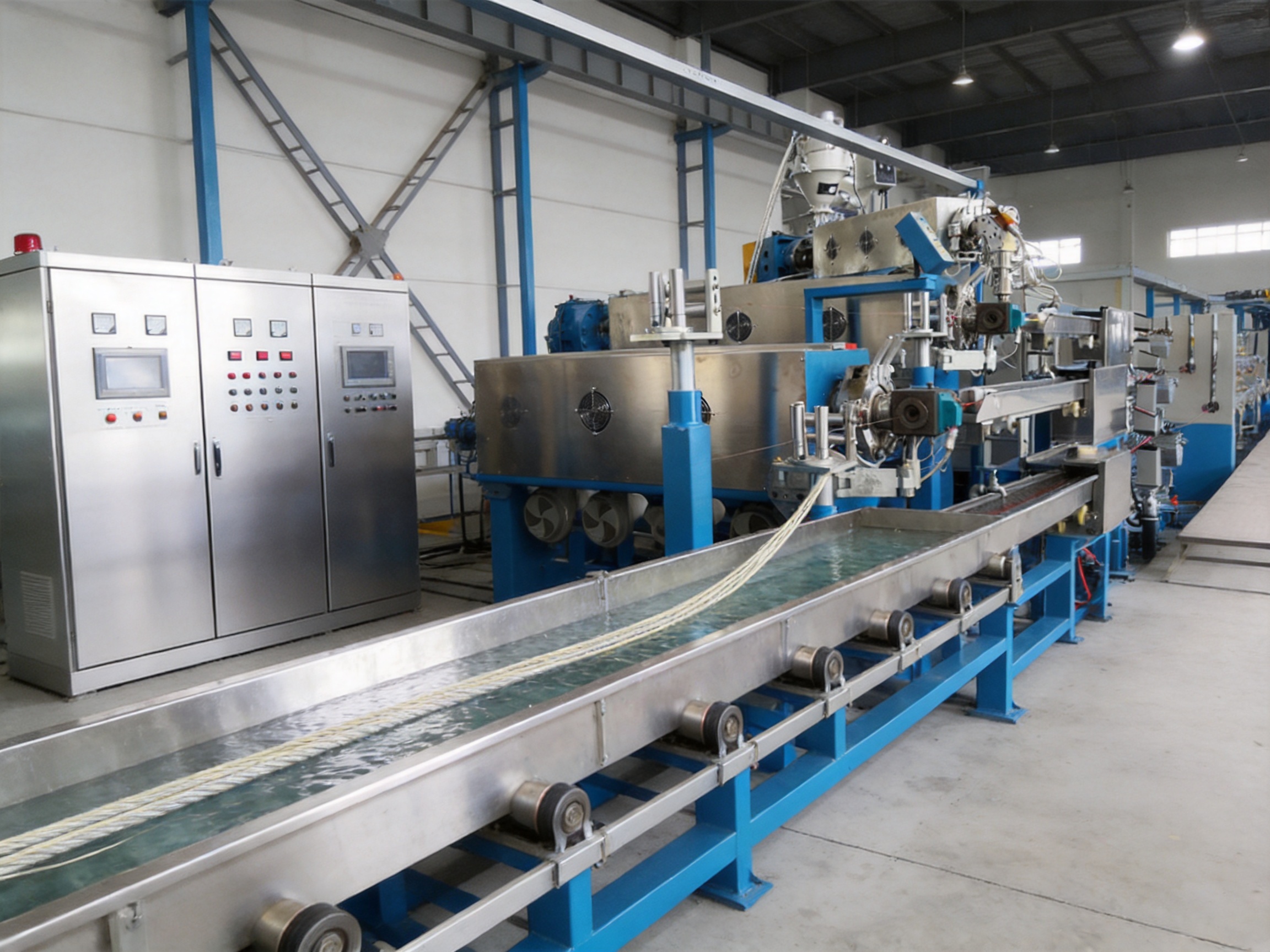
The cooling water tank follows the extrusion head. Its purpose is to remove heat from the newly extruded insulation layer in a controlled manner. A multi-section water tank makes cooling more flexible and uniform than a simple single-zone tank. Different sections may be adjusted to support gradual cooling, helping reduce internal stress and preventing sudden shrinkage. This contributes to better cable appearance and more stable insulation dimensions.
Key Product Advantages
One of the most important advantages of this machine is its ability to deliver consistent insulation thickness. In cable production, uneven insulation can cause serious quality problems. Thin insulation areas may reduce dielectric strength and increase the risk of electrical failure. Excessively thick areas waste material and increase production cost. By combining stable extrusion pressure, precision die tooling, and controlled line coordination, the machine supports more uniform insulation distribution.
Another advantage is improved cooling efficiency. Traditional production lines may suffer from slow cooling, especially when manufacturing larger cable sizes or thicker insulation layers. Slow or unstable cooling can limit line speed and reduce productivity. The integrated cooling water tank of this machine helps accelerate heat removal while maintaining process control. This allows manufacturers to increase throughput without sacrificing product quality.
The machine also supports stable electrical performance of finished cables. Insulation quality affects dielectric strength, insulation resistance, capacitance stability, and long-term service life. Because the extrusion process is stable and cooling is controlled, the final cable can achieve more reliable electrical characteristics. This is especially valuable for power, communication, and automotive cable applications where performance reliability is essential.
Mechanical strength is another area where the machine provides value. Proper extrusion and cooling help produce insulation layers with better surface integrity, adhesion, toughness, and resistance to cracking. Cables made with stable insulation processing are more likely to withstand bending, installation stress, temperature changes, and long-term use. For cable manufacturers, fewer mechanical defects mean fewer customer complaints and lower after-sales risk.
The system also offers excellent adaptability. It can be used for different wire diameters, insulation thicknesses, material formulations, and production speeds, depending on the configured model and line design. When combined with appropriate auxiliary equipment, it can support a wide range of cable products. This flexibility helps manufacturers respond to changing market demand without investing in completely separate production systems for every product type.
Advantages Compared with Conventional Extrusion Equipment
Many conventional cable extruders are limited by unstable temperature control, insufficient cooling capacity, slow adjustment, or poor line integration. These problems may not be obvious during short trial runs, but they become costly during long-term industrial production. The XLPE PE Cable Extruder with Cooling Water Tank is developed to reduce these limitations by focusing on process stability, precision, and coordinated production.
Compared with equipment that uses basic heating control, this machine offers more accurate zone control for the barrel and extrusion process. Better temperature accuracy improves melt uniformity and reduces material degradation. This is especially important for XLPE and PE materials because processing temperature affects flow behavior, surface quality, and insulation performance. Stable heating can also reduce operator dependence and make production easier to repeat across shifts.
Compared with machines using simple cooling troughs, the multi-section water tank provides more effective control of cooling progression. In cable insulation extrusion, cooling is not only about reducing temperature; it is also about preserving geometry, preventing stress concentration, and maintaining surface appearance. A controlled water tank can help the cable maintain roundness and dimensional accuracy while supporting higher line speeds.
Compared with less integrated systems, this extruder is easier to connect with upstream and downstream equipment. A complete cable production line may include conductor pay-off, straightening, preheating, extrusion, cooling, drying, diameter measurement, spark testing, printing, traction, and take-up. If machines are poorly matched, speed synchronization and quality inspection become difficult. The company’s broader equipment portfolio gives it the ability to design coordinated production solutions rather than isolated machines.
Another competitive advantage is manufacturing precision. Cable extrusion machines must run continuously for long periods, and small mechanical errors can accumulate into major quality issues. Precision machining, proper assembly, strict testing, and stable electrical control help improve equipment life and reduce maintenance frequency. Customers benefit from fewer unplanned stops, more stable production output, and better total cost of ownership.
Technical Feature Summary
| Feature | Function | Production Benefit |
|---|---|---|
| High-precision single-screw extruder | Melts, mixes, and meters XLPE or PE material | Stable output, uniform plasticization, consistent insulation quality |
| Multi-zone electrical heating system | Controls barrel temperature in different processing sections | Reduces overheating, improves melt stability, supports repeatable production |
| Precision extrusion head and die | Forms insulation layer around conductor | Improves concentricity, surface finish, and dimensional accuracy |
| Multi-section cooling water tank | Cools newly extruded insulation in controlled stages | Faster cooling, reduced deformation, better cable roundness |
| Integrated line compatibility | Connects with pay-off, take-up, testing, and packaging systems | Supports turnkey cable production line construction |
| Stable electrical control | Coordinates speed, heating, and operating parameters | Improves process reliability and reduces operator workload |
| Industrial-grade mechanical design | Supports continuous cable manufacturing | Longer service life, lower downtime, improved production efficiency |
Advanced Manufacturing Processes Behind the Machine
A high-quality cable extruder depends not only on design but also on manufacturing capability. Shanghai Yessjet Precise Machinery Co., Ltd. emphasizes precision processing, standardized assembly, and strict inspection throughout equipment manufacturing. This approach helps ensure that every major component works reliably under industrial production conditions.
Precision machining is essential for the screw, barrel, extrusion head, mechanical frame, and transmission components. The screw must have accurate geometry to maintain stable conveying and plasticizing performance. The barrel must maintain proper straightness, wear resistance, and heating contact. The extrusion head must be accurately processed to avoid flow imbalance and material retention. By controlling machining accuracy, the equipment can achieve better extrusion stability and longer component life.
Assembly quality is equally important. Even if individual parts are well manufactured, poor assembly can lead to vibration, misalignment, leakage, unstable rotation, and early wear. The company’s assembly process focuses on alignment, fastening reliability, electrical layout, and functional testing. Before delivery, equipment can be checked for operating stability, heating response, speed control, and compatibility with line configuration requirements.
The company’s manufacturing strength also comes from its experience in full wire and cable production systems. Because it supplies not only extruders but also coiling machines, automatic packaging equipment, robot stackers, motorized pay-off machines, motorized take-up machines, and auxiliary equipment, it understands how each machine affects the complete production flow. This integrated knowledge helps engineers design extrusion systems that are practical for real factory use rather than only suitable for isolated laboratory conditions.
For customers, advanced manufacturing processes translate into predictable production results. A well-made machine is easier to install, easier to commission, and more stable in long-term operation. It also supports better process repeatability, which is essential when producing cables according to IEC, GB, ANSI, or customer-specific technical standards.
Importance of Temperature Control
Temperature control is one of the most critical factors in XLPE and PE cable extrusion. The polymer must be heated enough to flow smoothly through the screw and die, but excessive heat can cause degradation, bubbles, discoloration, or poor mechanical performance. Inconsistent temperature can lead to uneven viscosity, which may cause insulation thickness fluctuation and poor surface quality.
The machine’s temperature-controlled electrical heating system supports stable processing through multiple heating zones. Each zone can be controlled according to the material type, line speed, die size, and insulation thickness. This makes it easier to establish an optimized process window. Once a reliable recipe is developed, operators can reproduce the same conditions for future batches, improving production consistency.
For XLPE processing, accurate temperature control is especially valuable because cross-linkable materials may require stricter thermal management. Poor temperature control can affect material flow and curing behavior. For PE processing, stable temperature helps maintain smooth extrusion, reduce surface roughness, and avoid material overheating. In both cases, accurate heating control improves finished cable quality and reduces waste.
Good temperature control also reduces energy waste. When the system maintains temperature efficiently, it avoids unnecessary overheating and repeated adjustments. Over time, this can reduce operating cost. It also helps protect equipment components because stable thermal conditions reduce thermal stress and improve the service life of heaters, sensors, and mechanical parts.
Cooling Water Tank Design and Its Production Value
The cooling water tank is not merely an accessory; it is a key part of the insulation forming process. After the molten insulation material leaves the die, it remains soft and dimensionally sensitive. If cooling is poorly controlled, the cable may become oval, the surface may show marks, or the insulation may shrink unevenly. The integrated water tank helps stabilize the cable after extrusion and supports a smooth transition from molten state to solid insulation layer.
A multi-section cooling design gives manufacturers more control over the cooling profile. The first section can provide gentle cooling to avoid sudden surface hardening while the inner layer remains hot. Later sections can remove heat more aggressively after the insulation has gained initial shape stability. This staged cooling method helps reduce internal stress and supports better mechanical performance.
For high-speed cable production, cooling capacity directly affects productivity. If cooling is insufficient, the line speed must be reduced to allow the insulation to solidify before downstream handling. By improving cooling efficiency, the machine allows manufacturers to maintain better output while preserving product quality. This is particularly important for factories that operate multiple shifts or large-volume production orders.
Cooling stability also helps downstream quality inspection. Diameter measuring systems and spark testers work best when the cable geometry is stable. If the cable is still too hot or changing dimensions, measurement accuracy may be reduced. Proper cooling improves inspection reliability and reduces false alarms or undetected defects.
Applications in Power Cable Manufacturing
Power cable manufacturers require insulation systems that can withstand electrical stress, thermal load, and mechanical handling. XLPE is widely used in power cables because of its high operating temperature capability and excellent dielectric performance. The XLPE PE Cable Extruder with Cooling Water Tank supports production of insulated conductors used in low-voltage and certain configured medium-voltage cable production processes, depending on complete line specification and material system.
In power cable production, insulation concentricity is extremely important. Uneven insulation may create weak points that are more vulnerable to electrical stress. Stable extrusion output and accurate die alignment help improve insulation uniformity. This not only supports compliance with technical standards but also improves long-term cable reliability in installation environments.
The machine also supports productivity needs in power cable factories. Power cables often require thicker insulation than small electronic wires, so cooling time can become a bottleneck. The cooling water tank reduces this bottleneck by supporting efficient and controlled heat removal. This helps manufacturers produce more cable length per shift while maintaining dimensional accuracy.
Because power cable customers often require strict documentation and consistent quality, repeatable equipment performance is valuable. Stable temperature control, mechanical precision, and line integration help manufacturers maintain consistent batch quality. This can improve customer trust and strengthen competitiveness in tenders, infrastructure projects, and OEM supply chains.
Applications in Communication Cable Manufacturing
Communication cables require stable electrical properties because signal transmission quality depends on insulation uniformity, dielectric characteristics, and conductor spacing. PE is commonly used in communication cable insulation due to its low dielectric loss and stable performance. The extruder provides a controlled process for applying PE insulation onto conductors used in communication cable structures.
In communication cable production, small variations in insulation thickness can affect capacitance and impedance. Therefore, stable extrusion pressure and precision die tooling are critical. The machine helps reduce variation by maintaining steady material flow and controlled forming around the conductor. When paired with online measurement systems, it can support tight process control for demanding communication cable applications.
Surface quality is also important. Rough surfaces, bubbles, or contamination can affect downstream twisting, shielding, or jacket extrusion. Accurate temperature control and smooth material flow reduce the risk of surface defects. Controlled cooling also helps preserve shape and avoid deformation before the cable enters later production stages.
For manufacturers producing different types of communication wire, flexibility is important. The extruder can be configured with suitable tooling and line components to adapt to different conductor sizes and insulation requirements. This helps factories manage product variety while maintaining efficient production.
Applications in Automotive Wire Manufacturing
Automotive wire production requires reliability under demanding service conditions. Vehicle wiring may be exposed to vibration, bending, temperature changes, oils, chemicals, and compact installation spaces. Insulation must be stable, durable, and accurately applied. PE and XLPE materials are used in different automotive cable applications depending on performance requirements.
The XLPE PE Cable Extruder with Cooling Water Tank supports the production of automotive insulated wires by providing stable insulation thickness and good surface quality. Consistency is especially important because automotive wire harness production depends on accurate wire diameter, stripping performance, terminal crimping quality, and long-term insulation reliability. Poor insulation uniformity can cause processing difficulty or electrical failure risk.
Automotive cable manufacturers also need efficient batch change capability because product variety is high. Different wire colors, sizes, and specifications may be required for different vehicle models and harness designs. A well-designed extrusion head and stable control system help reduce adjustment time and improve production flexibility.
For suppliers entering automotive supply chains, process repeatability and quality documentation are important. Stable equipment performance supports better internal quality management and customer audits. When the extruder is integrated into a complete line with measurement and testing equipment, manufacturers can improve traceability and reduce nonconforming output.
Turnkey Cable Production Line Capability
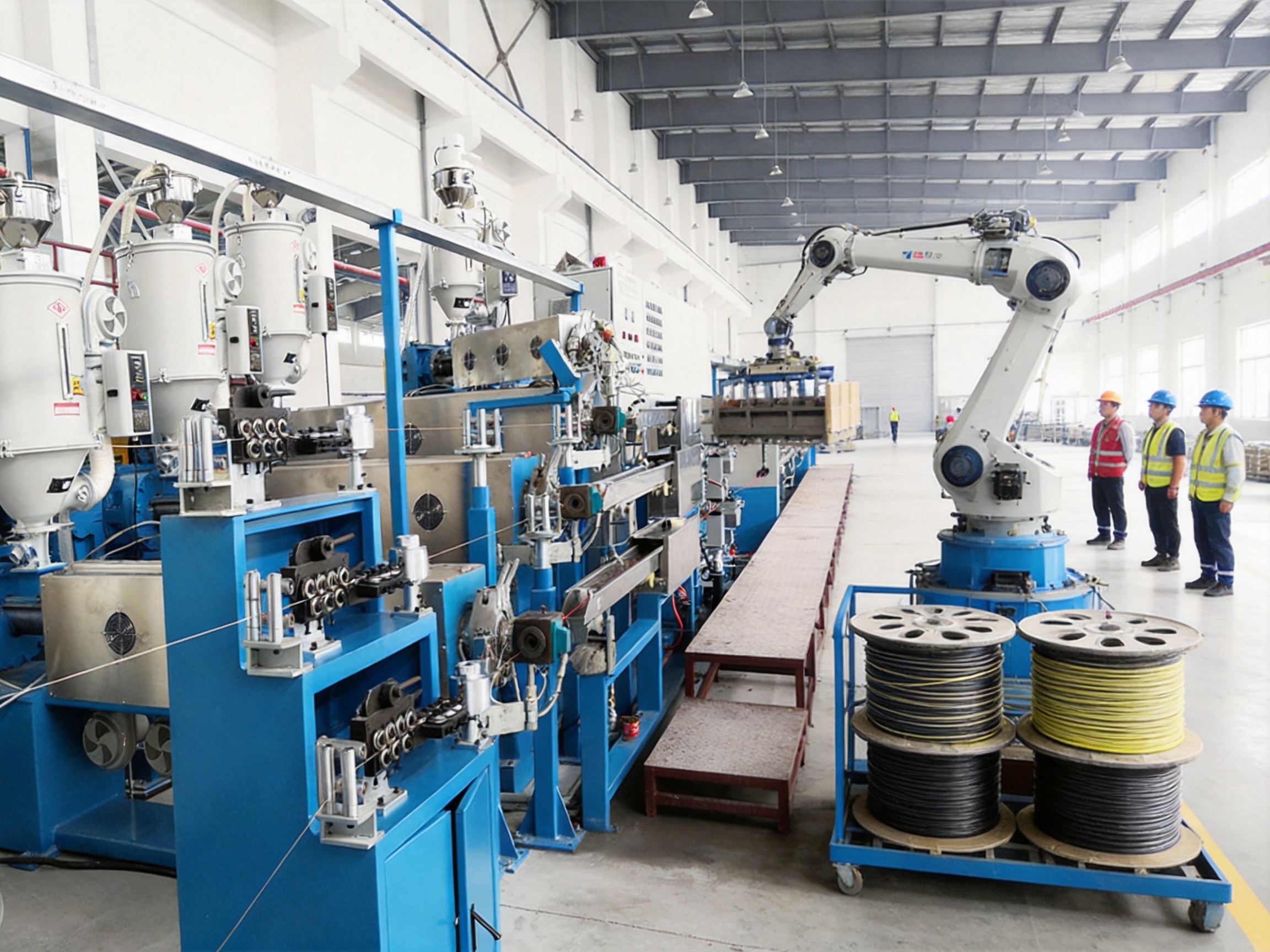
One major strength of Shanghai Yessjet Precise Machinery Co., Ltd. is its ability to provide cable production turnkey solutions. A cable extrusion machine performs a central function, but it operates most effectively when matched with the correct upstream and downstream equipment. The company’s product range includes wire and cable extrusion lines, fully automatic coiling packaging equipment, intelligent robot stackers, coiling machines, motorized pay-off equipment, motorized take-up equipment, accessory equipment, and cable extrusion machines.
This broad product capability allows customers to build a coordinated production system from conductor feeding to finished cable handling. For example, a complete line may begin with a motorized pay-off machine that releases conductor smoothly and with controlled tension. The conductor may pass through preheating or alignment equipment before entering the extrusion head. After extrusion and cooling, the cable may pass through drying, diameter measurement, spark testing, printing, traction, and take-up. For packaged finished goods, automatic coiling and packaging equipment can be connected to improve labor efficiency.
Turnkey integration reduces the risk of mismatched equipment. If machines from different suppliers are combined without proper engineering coordination, the line may suffer from speed conflict, tension instability, poor signal communication, or production bottlenecks. A supplier with full-line capability can design machines to work together more smoothly. This improves commissioning efficiency and helps customers reach stable production faster.
Turnkey support is also valuable for new cable factory projects. Customers may need guidance on machine layout, process flow, capacity planning, equipment selection, and future expansion. A company experienced in complete wire and cable machinery can provide practical recommendations based on product type, target output, material selection, and quality standards. This reduces investment risk and improves the likelihood of long-term success.
Automation and Labor Efficiency
Automation is becoming increasingly important in cable manufacturing. Rising labor costs, quality consistency requirements, and production traceability needs are pushing manufacturers to upgrade from manual or semi-manual systems to more automated production lines. The XLPE PE Cable Extruder with Cooling Water Tank can be integrated into automated line configurations to improve production efficiency and reduce dependence on manual adjustment.
Stable electrical control helps operators manage temperature, speed, and process coordination more efficiently. When machines operate with predictable parameters, fewer manual corrections are needed during production. This reduces operator fatigue and lowers the chance of human error. It also makes training easier because production procedures can be standardized.
Downstream automation can further increase value. Automatic coiling packaging equipment can reduce manual handling of finished cable coils. Intelligent robot stackers can improve warehouse and palletizing efficiency. Motorized take-up systems can ensure stable winding tension and neat cable reels. When these machines are integrated with the extruder, the entire production flow becomes more efficient and less labor-intensive.
Automation also improves workplace safety. Cable production lines involve rotating parts, hot surfaces, moving cable, and heavy reels. Reducing manual handling and improving process control can lower safety risks. Well-designed equipment also improves workshop organization, making production cleaner and more predictable.
Quality Control and Standards Compliance
Cable manufacturers must often comply with IEC, GB, ANSI, and customer-specific standards. These standards may define requirements for insulation thickness, conductor resistance, voltage withstand performance, spark testing, mechanical properties, aging behavior, and dimensional tolerance. Equipment quality plays a direct role in meeting these requirements.
The XLPE PE Cable Extruder with Cooling Water Tank supports standards compliance by improving process stability. Stable extrusion helps maintain insulation thickness within target range. Controlled cooling helps preserve cable geometry. Accurate temperature control supports proper material performance. When connected with online testing systems, the line can identify defects during production and reduce the amount of nonconforming product.
Quality control should not be limited to final inspection. In modern manufacturing, the most effective approach is process control. By stabilizing temperature, pressure, line speed, cooling, and tension, manufacturers prevent defects before they occur. This machine is designed with that philosophy in mind. It provides a stable foundation for repeatable cable insulation processing.
For export-oriented cable producers, consistent quality is especially important. International customers often require reliable documentation and repeatable performance across production batches. A machine that supports stable output can help manufacturers build stronger market reputation and reduce the risk of rejected shipments.
Material Savings and Cost Control
Insulation material is a major cost component in cable production. Uneven extrusion can lead to excessive insulation thickness, which wastes material, or insufficient thickness, which causes scrap. A precision extruder helps control material usage by applying the correct amount of insulation more consistently. Over time, even small reductions in material waste can generate significant savings.
Stable production also reduces scrap during startup and adjustment. Machines with poor temperature control or unstable pressure often require more trial material before reaching acceptable quality. A more predictable system helps shorten startup time and reduce rejected cable length. This is valuable for manufacturers producing multiple specifications or frequent batch changes.
Cooling efficiency also contributes to cost control. If the cooling system supports higher line speed without quality loss, manufacturers can produce more output with the same labor and factory space. Higher productivity improves equipment utilization and reduces unit production cost. For factories with large order volumes, this can improve profitability and delivery performance.
Maintenance cost is another important factor. Precision manufacturing, stable mechanical design, and reliable electrical components help reduce unexpected downtime. Lower downtime means fewer production interruptions, less emergency repair, and better order fulfillment. Total cost of ownership is therefore improved not only through initial equipment performance but also through long-term reliability.
Operational Flexibility for Different Cable Products
Cable markets are diverse. A manufacturer may need to produce building wire, flexible wire, communication cable, automotive wire, control cable, or power cable products. Each product may require different conductor size, insulation thickness, material type, color, and production speed. Equipment flexibility is therefore a major advantage.
The XLPE PE Cable Extruder with Cooling Water Tank can be configured according to production needs. With proper die tooling and line design, it can support a range of insulation applications. The ability to adjust temperature zones, line speed, and cooling conditions helps operators adapt to different materials and cable dimensions. This improves the machine’s usefulness across multiple product categories.
For growing cable manufacturers, flexibility supports business expansion. Instead of purchasing separate equipment for every new product, a capable extrusion platform can cover multiple production requirements. This allows companies to respond faster to market opportunities and customer inquiries. It also helps reduce capital investment pressure.
Flexibility must be balanced with process stability. A machine should not only handle different products but also produce each one reliably. The design of this extruder emphasizes both adaptability and repeatability, helping manufacturers maintain quality even when production plans change.
Installation, Commissioning, and Production Support
Successful equipment investment depends on more than machine delivery. Installation, commissioning, operator training, and process support are important for achieving stable production. Shanghai Yessjet Precise Machinery Co., Ltd. can support customers with practical knowledge of cable machinery and production line integration.
During installation planning, machine layout must consider space, cable path, cooling water supply, electrical connection, operator access, maintenance clearance, and downstream handling. Proper layout improves production efficiency and reduces operational inconvenience. For complete production lines, synchronization between pay-off, extruder, cooling tank, traction, and take-up must be carefully managed.
Commissioning involves testing mechanical movement, heating performance, control functions, cooling operation, line speed coordination, and product quality. Operators may need to adjust temperature settings, die alignment, screw speed, traction speed, and cooling water conditions. A supplier with extrusion experience can help shorten this learning curve and guide the customer toward stable parameters.
Training is also important. Operators should understand material behavior, temperature control, startup procedures, shutdown procedures, die cleaning, safety precautions, and quality inspection points. Proper training reduces operational mistakes and improves long-term equipment performance. Maintenance personnel should also understand lubrication, inspection, electrical checks, and wear part management.
Maintenance and Long-Term Reliability
Industrial cable extrusion equipment must be maintained properly to deliver consistent performance over many years. The machine is designed for durability, but routine maintenance remains essential. Regular inspection of the screw, barrel, heaters, sensors, die tooling, cooling tank, transmission system, and electrical cabinet helps prevent sudden failures.
The screw and barrel are key wear components because they handle polymer material under heat and pressure. Over time, wear can reduce output stability and plasticizing efficiency. Manufacturers should monitor production behavior and inspect components according to operating hours and material abrasiveness. Proper cleaning during material change can also prevent contamination and degradation.
Heating elements and temperature sensors should be checked to ensure accurate control. A faulty sensor may cause temperature deviation, leading to product defects. Electrical connections should be kept secure and clean. Cooling water systems should be maintained to prevent blockage, corrosion, or contamination that may reduce cooling efficiency.
The water tank should be cleaned regularly to maintain stable cooling and cable surface quality. Water circulation, temperature control, and guide components should be checked. Proper water management can improve cable appearance and reduce process instability. Mechanical components such as bearings, belts, gearboxes, and traction interfaces should also receive scheduled maintenance.
Long-term reliability is supported by both equipment quality and disciplined operation. A well-manufactured machine from a capable supplier provides the foundation, while proper maintenance preserves performance. Together, they help manufacturers achieve lower downtime and more stable production output.
Competitiveness in the Cable Machinery Market
The cable machinery market includes many equipment suppliers, but not all machines provide the same level of precision, integration, and production support. Some low-cost machines may appear attractive at the purchasing stage but create higher costs later through unstable production, excessive scrap, difficult maintenance, and limited technical support. The XLPE PE Cable Extruder with Cooling Water Tank is positioned as a value-focused solution that emphasizes long-term production performance.
Its competitive strength comes from several combined factors. First, it is designed specifically for XLPE and PE cable insulation extrusion, rather than being a generic plastic extruder with limited cable adaptation. Second, it includes a cooling water tank that supports controlled and efficient cable cooling. Third, it can be integrated with a full range of cable production equipment, creating a more complete manufacturing solution. Fourth, it is supported by a company with wire and cable machinery expertise and practical production line experience.
Compared with suppliers offering only single machines, the company’s turnkey capability is a major advantage. Customers can obtain a coordinated solution from extrusion to coiling and packaging, improving production flow and reducing equipment compatibility risks. Compared with manufacturers that lack precision manufacturing focus, the company emphasizes accuracy, stability, and standardized equipment performance. These strengths help customers improve both product quality and factory efficiency.
For cable producers competing in demanding markets, equipment selection can directly affect their competitiveness. Better extrusion quality supports higher-grade cable products. Higher productivity improves delivery capability. Lower scrap reduces cost. Automation reduces labor pressure. A reliable supplier improves project success. The machine addresses all these needs through its integrated design and manufacturing foundation.
How the Machine Supports Sustainable Production
Sustainability in cable manufacturing is increasingly important. While cable extrusion is an energy- and material-intensive process, improved equipment efficiency can reduce waste and resource consumption. The XLPE PE Cable Extruder with Cooling Water Tank contributes to more sustainable production by improving material utilization, reducing scrap, and supporting efficient cooling and line operation.
Material waste reduction is one of the most direct sustainability benefits. By producing more uniform insulation thickness, the machine helps avoid excessive material use. It also reduces rejected cable caused by surface defects or dimensional instability. Less scrap means lower raw material consumption and less waste treatment pressure.
Stable temperature control can also improve energy efficiency. When the heating system maintains target temperatures accurately, it reduces unnecessary overheating and repeated process corrections. Efficient cooling supports higher productivity without excessive production delay. When combined with automatic take-up, coiling, and packaging equipment, the entire production line can operate with less manual intervention and better resource planning.
Long equipment life is another sustainability factor. Durable machines reduce the need for frequent replacement and lower the environmental impact associated with manufacturing and transporting new equipment. Precision manufacturing and proper maintenance support longer service life, making the investment more responsible from both economic and environmental perspectives.
Selection Considerations for Buyers
When selecting an XLPE PE cable extruder, buyers should consider product range, required output, insulation material, conductor size, insulation thickness, cooling length, line speed, automation level, testing requirements, and available factory space. A correct machine configuration depends on actual production goals rather than a single general specification.
Buyers should also evaluate supplier capability. A qualified supplier should understand cable process requirements, not only mechanical equipment manufacturing. The supplier should be able to recommend suitable extruder size, screw design, die tooling, water tank configuration, pay-off and take-up matching, and optional quality inspection equipment. Turnkey line experience is valuable because it ensures the extrusion machine fits into a complete production workflow.
Manufacturing quality should be carefully considered. Precision components, stable frame structure, reliable electrical control, and quality assembly all affect long-term performance. Buyers should look beyond initial price and consider total cost of ownership, including scrap rate, maintenance cost, downtime risk, production speed, and product qualification rate.
After-sales support is also important. Cable production lines may require installation guidance, commissioning, parameter optimization, spare parts, and maintenance advice. A responsive supplier can help customers solve problems faster and keep production running. For manufacturers entering new cable markets, technical support can be especially valuable.
Recommended Production Line Configuration
A typical cable insulation extrusion line using this machine may include a motorized pay-off machine, conductor tension control device, conductor preheater if required, XLPE PE cable extruder, precision extrusion head, cooling water tank, drying device, online diameter measuring system, spark tester, printing machine, traction unit, meter counter, motorized take-up machine, and optional automatic coiling packaging equipment. The exact configuration depends on the cable product and production capacity.
For high-quality applications, online measurement and testing are strongly recommended. Diameter measurement helps monitor insulation thickness and cable dimension. Spark testing helps detect insulation pinholes or weak points. These devices improve quality control and reduce the chance of defective cable reaching customers. When connected with automated control systems, they can also support real-time process adjustment.
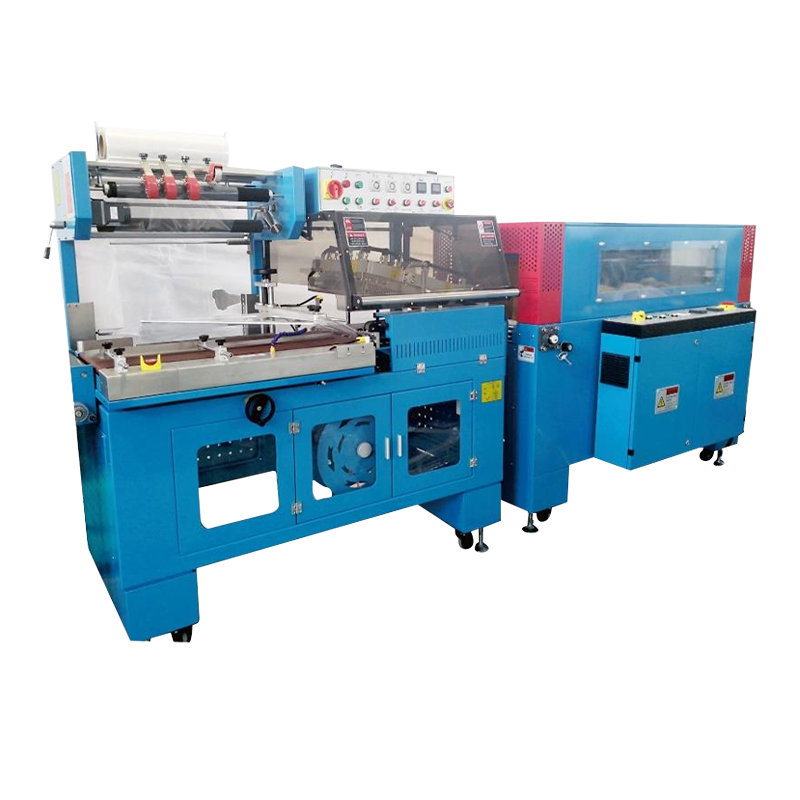
For manufacturers focused on finished coil products, automatic coiling and packaging equipment can significantly improve efficiency. Manual coiling may be slow, inconsistent, and labor-intensive. Automated coiling produces neater coils, improves packaging consistency, and reduces labor cost. Intelligent robot stacking can further improve warehouse handling and finished goods management.
For reel-based cable products, motorized take-up equipment is important. Stable winding tension prevents cable deformation and improves reel appearance. Proper take-up matching also supports continuous high-speed production. Because the company supplies these related machines, customers can obtain a more integrated solution with better compatibility.
Q&A Section
What is the XLPE PE Cable Extruder with Cooling Water Tank used for?
It is used to extrude XLPE or PE insulation layers onto conductors or wire cores and then cool the insulated cable through a controlled water tank. It is suitable for power cables, communication cables, automotive wires, building wires, and other insulated cable products.
Why is the cooling water tank important?
The cooling water tank stabilizes the insulation layer after extrusion. It helps maintain cable roundness, surface quality, and dimensional accuracy. A multi-section cooling design allows more controlled cooling, reducing deformation and internal stress.
How does this machine improve insulation thickness consistency?
The machine combines stable single-screw extrusion, accurate temperature control, precision die tooling, and coordinated line operation. These factors reduce pressure fluctuation and improve material flow, helping produce a more uniform insulation layer.
Can the machine process both XLPE and PE materials?
Yes. The machine is designed for XLPE and PE insulated cable production. Processing parameters such as temperature, screw speed, die tooling, and cooling conditions should be adjusted according to the specific material formulation and cable specification.
What industries can benefit from this equipment?
Power cable manufacturers, communication cable producers, automotive wire suppliers, building wire factories, and general wire and cable manufacturers can benefit from this equipment. It is especially valuable where stable electrical performance and dimensional accuracy are required.
What advantages does it offer over ordinary cable extruders?
It offers better temperature stability, more controlled cooling, improved insulation uniformity, stronger integration with complete production lines, and support from a manufacturer experienced in wire and cable machinery. These advantages help reduce scrap, improve productivity, and support higher product quality.
Can it be integrated into a turnkey cable production line?
Yes. It can be integrated with pay-off equipment, take-up machines, testing devices, traction units, coiling machines, automatic packaging systems, robot stackers, and other auxiliary equipment. This makes it suitable for turnkey cable production solutions.
Does the machine support standards-based cable production?
The machine supports production processes aimed at meeting IEC, GB, ANSI, and customer-specific cable standards. Actual compliance depends on complete line configuration, material selection, process control, and quality testing procedures.
How can manufacturers reduce material waste with this extruder?
By maintaining stable insulation thickness and reducing surface defects, the machine helps avoid excessive material use and decreases rejected cable length. Stable startup and repeatable parameters also reduce scrap during production changeovers.
What should buyers consider before purchasing?
Buyers should consider cable type, production capacity, material system, conductor size, insulation thickness, cooling requirements, automation level, quality testing needs, factory layout, and supplier support capability. A complete line assessment is recommended before final configuration.
Conclusion
The XLPE PE Cable Extruder with Cooling Water Tank is a high-value solution for manufacturers that need stable, efficient, and standards-oriented cable insulation production. By combining a high-precision single-screw extruder, temperature-controlled electrical heating, precision extrusion tooling, and a multi-section cooling water tank, the machine addresses critical production challenges such as uneven insulation thickness, slow cooling, unstable surface quality, and inconsistent process performance.
Its advantages extend beyond the extrusion machine itself. Supported by Shanghai Yessjet Precise Machinery Co., Ltd.’s experience in wire and cable machinery, automatic coiling packaging equipment, robot stackers, pay-off and take-up systems, and complete turnkey production lines, customers can obtain a more integrated and efficient manufacturing solution. This helps reduce compatibility problems, improve commissioning efficiency, and strengthen long-term production capability.
For cable manufacturers serving power, communication, automotive, and general wire markets, equipment reliability and process stability are essential. A machine that improves insulation consistency, cooling control, mechanical strength, and electrical performance can directly enhance product competitiveness. It can also reduce material waste, support automation, improve labor efficiency, and help manufacturers meet demanding customer standards.
In an industry where quality, delivery speed, and cost control are all critical, investing in a precise and integrated XLPE PE cable extrusion system is a strategic decision. This machine provides the technical foundation for high-quality insulated cable production and supports the future development of modern cable manufacturing.
References
International Electrotechnical Commission. IEC Standards for Electric Cables and Insulating Materials.
American National Standards Institute. ANSI Cable and Electrical Safety Standard Publications.
National Standardization Administration. GB Standards for Wire and Cable Products.
Rauwendaal, C. Polymer Extrusion. Hanser Publishers.
Rosato, D. V. Plastics Processing Data Handbook. Springer.
Strong, A. B. Plastics: Materials and Processing. Pearson.
Thue, W. A. Electrical Power Cable Engineering. CRC Press.