LANGUAGE
 中文简体
中文简体 русский
 Français
 Español
 Português
 عربى
عربى
Content
- 1 Understanding the Role of a Motorized Take-Up Equipment Machine
- 2 Key Advantages Over Conventional and Competing Take-Up Systems
- 3 Advanced Tension Control: Why It Matters
- 4 Dancer-Based and Load Cell-Based Feedback Systems
- 5 Traverse Pitch and Layer Stability
- 6 Spool Change Efficiency and Scrap Reduction
- 7 Mechanical Compatibility and Spool Interface Accuracy
- 8 Advanced Manufacturing Processes Behind Reliable Equipment
- 9 Intelligent Control and Product Recipe Management
- 10 Integration into Existing Extrusion Lines
- 11 Applications Across Cable Manufacturing and Industrial Use
- 12 Why Customization Is Important
- 13 Reliability, Maintenance, and Total Cost of Ownership
- 14 Competitive Strengths of Shanghai Yessjet Precise Machinery Co., Ltd.
- 15 How the Machine Supports Higher Production Quality
- 16 Environmental and Labor Efficiency Benefits
- 17 Q&A Section
- 17.1 What is the main purpose of a motorized take-up equipment machine?
- 17.2 Why is taper tension important for large cable spools?
- 17.3 How does traverse pitch affect winding quality?
- 17.4 Can the machine be integrated into an existing extrusion line?
- 17.5 What advantages does automatic spool change provide?
- 17.6 Which tension feedback system is better: dancer or load cell?
- 17.7 Why choose a customized take-up machine instead of a standard model?
- 17.8 How does Shanghai Yessjet support equipment reliability?
- 18 Conclusion
- 19 References
- 20 Product: Motorized Take-Up Equipment Machine
In modern wire and cable manufacturing, the take-up process is far more than the final step of collecting finished cable onto a spool. It is a critical production stage that directly affects cable geometry, electrical performance, surface quality, downstream handling efficiency, and total production cost. A motorized take-up equipment machine is designed to wind, store, and manage cables, wires, and similar linear materials with controlled tension, accurate traverse movement, and synchronized operation with upstream extrusion, cooling, printing, testing, and haul-off systems.
As cable manufacturers face higher expectations for dimensional stability, longer continuous production runs, faster line speeds, and reduced labor dependency, conventional manual or semi-manual winding methods are increasingly unable to meet production requirements. Large cable spools, high-value insulation materials, precision communication cables, automotive wires, and power cables all require winding systems that can maintain consistent quality from the first layer to the final outer layer. A motorized take-up equipment machine provides this capability by integrating electric drive technology, tension control, diameter tracking, traverse synchronization, spool handling mechanisms, safety protection, and intelligent control logic into one complete production solution.
Shanghai Yessjet Precise Machinery Co., Ltd. develops and manufactures motorized wire and cable take-up machines for cable production lines requiring dependable winding performance, stable tension management, and practical industrial durability. Founded in Shanghai in 2002 and expanded through Jiangsu Yessjet Precise Machinery Co., Ltd. in Yixing, Wuxi in 2017, the company combines years of cable machinery experience with advanced manufacturing processes, customized engineering, and turnkey production line integration capability. Its motorized take-up equipment machines are designed not merely as auxiliary winding devices, but as intelligent production assets that help cable producers improve yield, reduce scrap, protect cable structure, and increase operational efficiency.
Motorized Take-Up Equipment Machine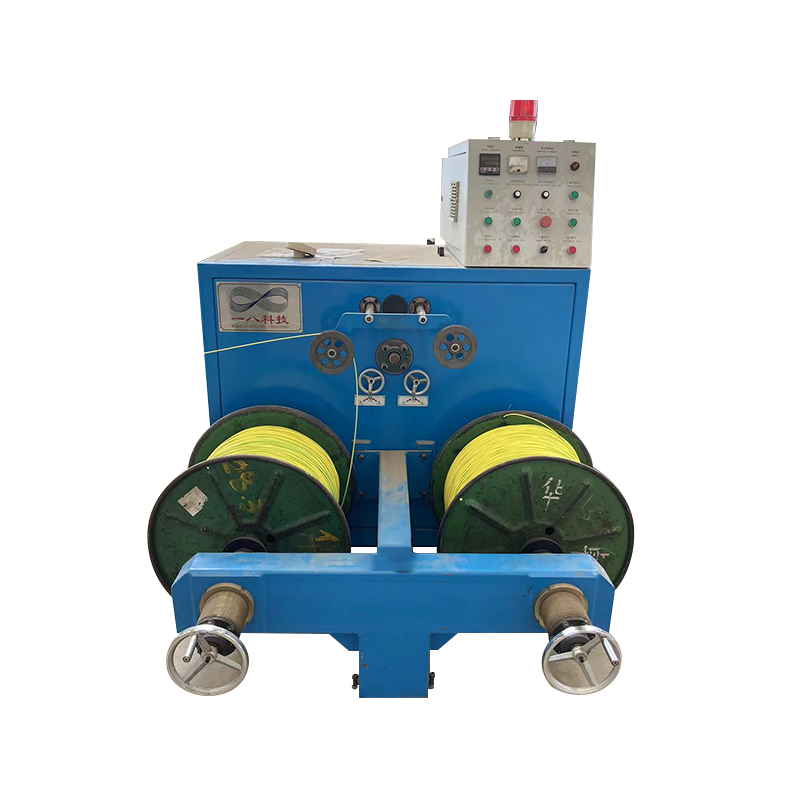
Understanding the Role of a Motorized Take-Up Equipment Machine
A motorized take-up equipment machine automatically winds cable or wire onto reels, bobbins, spools, or drums after the material has passed through earlier production stages. In an extrusion line, for example, the cable may move through conductor pay-off, extrusion, cooling trough, diameter measurement, spark testing, printing, haul-off, and then final take-up. If the take-up system fails to synchronize with the rest of the line, the entire production process can suffer from tension fluctuations, surface abrasion, uneven spool build, cable deformation, or unplanned stoppage.
The core function of the machine is controlled winding. It must rotate the spool at the correct speed while adjusting torque as the winding diameter increases. At the beginning of a spool, the winding radius is small; as more cable is wound, the radius becomes larger. If the machine simply maintains a fixed rotational speed without compensating for diameter growth, the cable surface speed will increase and tension will rise sharply. Conversely, if tension falls too low, loose winding, crossed layers, and unstable packages may occur. A well-designed motorized take-up system continuously balances speed, torque, and traverse position so that the cable is collected smoothly and safely.
Compared with manual winding or basic driven reels, a modern automatic cable take-up machine offers a higher level of repeatability. Operators can store product recipes, including spool size, cable diameter, winding tension, taper ratio, traverse pitch, acceleration profile, and stopping length. During production changeover, the machine can recall the appropriate settings, reducing manual calculation and operator error. This is especially valuable for cable factories producing many specifications, such as building wire, flexible cable, automotive cable, communication cable, power cable, and specialty industrial cable.
Key Advantages Over Conventional and Competing Take-Up Systems
One of the main advantages of an advanced motorized take-up equipment machine is precision tension control. Competing machines with simple open-loop speed control often rely heavily on operator judgment. These systems may perform acceptably at low speeds or for short coils, but they struggle with larger spools, changing diameters, and high-speed extrusion lines. The result can be unstable winding tension, compressed inner layers, loose outer layers, and inconsistent package quality. A more advanced machine uses torque control, dancer feedback, load cell feedback, or a combination of control methods to maintain tension within the required working range.
Another advantage is smoother synchronization with upstream equipment. A cable line operates as a continuous system; the take-up cannot be treated as an isolated machine. When the haul-off, accumulator, cutter, printer, and take-up are not properly coordinated, changes at one point create disturbances elsewhere. Shanghai Yessjet designs its take-up equipment with integration in mind, enabling communication with line master control systems and supporting stable operation during acceleration, deceleration, spool change, emergency stop, and restart conditions. This gives the user a production advantage because the machine can be installed as part of a complete line or integrated into existing equipment with reduced commissioning risk.
Mechanical rigidity is also a major differentiator. A take-up machine must support the dynamic load of a rotating spool that becomes heavier during winding. Poorly built frames can vibrate, misalign, or deform, causing traverse errors and tension ripple. Competitor products with lighter structures may appear economical at purchase, but they often generate hidden costs through maintenance, inconsistent package geometry, and shorter service life. A robust frame, accurately machined shaft interface, reliable bearings, balanced rotating components, and carefully aligned traverse mechanism all contribute to long-term winding stability.
Operational safety is another important advantage. Large loaded spools can be dangerous if not properly clamped, guarded, or stopped. Modern motorized take-up equipment includes protective covers, emergency stop devices, interlock logic, controlled braking, overload protection, and fault alarms. These features reduce risk for operators while supporting continuous industrial operation. In comparison, older take-up systems may require frequent manual intervention near rotating components, increasing safety hazards and labor intensity.
From an economic perspective, the machine helps reduce waste. Poor winding can create cable that is difficult to pay off, cable with jacket damage, unstable spools that collapse during transport, and scrap during spool change. By controlling tension, traverse pitch, spool change sequence, and acceleration, a motorized take-up machine reduces the amount of downgraded material. For factories producing high-value cable, even a small reduction in scrap can produce significant annual savings.
Advanced Tension Control: Why It Matters
Tension control is the heart of cable winding. The cable must be held firmly enough to form a stable spool, yet gently enough to avoid stretching, flattening, or damaging the insulation. Different cable types require different tension strategies. A rigid armored power cable may tolerate higher winding force than a soft flexible cable with delicate insulation. A coaxial or data cable may require particularly stable tension to preserve electrical properties. A one-size-fits-all winding approach is not sufficient for professional cable production.
A common mistake is assuming that constant tension throughout the spool build always produces the best result. For large spools, constant tension may overload the inner layers. The first layers wound near the core are later compressed by the weight and tension of all outer layers. If the same winding tension is applied from the beginning to the end, the inner cable layers can experience cumulative radial pressure. This pressure may deform insulation, alter geometry, and affect capacitance or dielectric performance. The defect may not be visible on the outside of the spool, making it difficult to detect until later testing or customer use.
Taper tension winding solves this issue by reducing winding tension as the spool diameter increases. At the start of the spool, tension is higher to secure the inner layers. As the package grows, the machine gradually lowers the tension setpoint according to a defined taper curve. For many PVC-insulated power cables, the final tension may be set at approximately 60 to 75 percent of the starting tension, depending on cable construction, jacket modulus, spool geometry, and acceptable compressive stress. This approach produces a more mechanically stable spool and protects the cable from hidden inner-layer damage.
Shanghai Yessjet configures taper tension profiles within product recipe systems for suitable motorized take-up machine models. Operators can select stored parameters for each cable specification, reducing manual adjustment during changeover. This improves repeatability, shortens setup time, and helps standardize production quality across shifts. Compared with competing machines that rely on simple manual potentiometer settings, recipe-based taper tension gives the factory better process control and more predictable results.
Dancer-Based and Load Cell-Based Feedback Systems
Motorized wire cable take-up machines commonly use dancer rollers or load cells to provide tension feedback. A dancer system uses the position of a movable roller to represent tension and absorb short-term speed variations. This structure is mechanically practical and provides some buffering capacity, which is useful when the upstream line speed changes or when small disturbances occur. The dancer arm position can be measured by a sensor and used to trim motor torque or speed, maintaining stable cable flow.
A load cell system measures tension more directly through an instrumented roller or force sensor. It can provide faster and more precise feedback, especially for high-speed lines or cables requiring tighter tension tolerance. However, load cells require careful calibration and do not provide the same mechanical buffering as a dancer mechanism. The control loop must be tuned properly to prevent oscillation, and the installation must minimize friction-related measurement errors.
The best choice depends on the production application. For general building wire and many power cable applications, a dancer-based system may offer a reliable balance of stability, simplicity, and cost. For high-speed communication cable, fine wire, or applications with strict process control requirements, load cell feedback may be preferred. In some cases, a combined system can provide both buffering and accurate tension monitoring. The ability to select and customize the correct tension architecture is one of the strengths of an experienced cable machinery manufacturer.
Shanghai Yessjet evaluates cable type, line speed, spool size, winding tension range, factory operating practice, and integration requirements before recommending a suitable control architecture. This application-focused engineering helps customers avoid overpaying for unnecessary complexity while also preventing under-specified systems that cannot meet production demands.
Traverse Pitch and Layer Stability
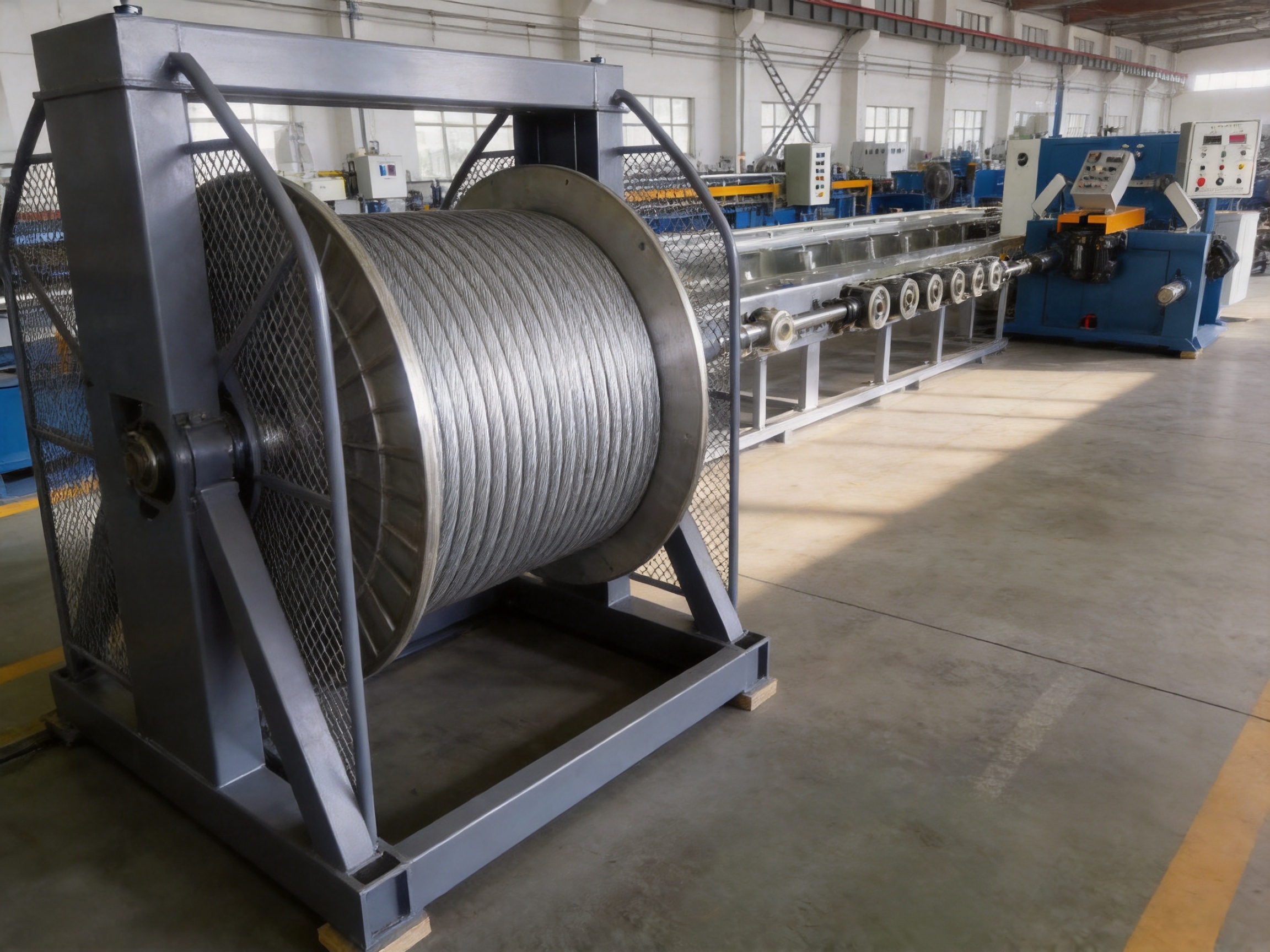
Traverse control determines how the cable is distributed across the width of the spool. The traverse pitch is the lateral distance the cable moves during each spool revolution. If the pitch is too tight, adjacent turns may overlap or press into each other, causing jacket marks, uneven layer height, and unstable spool build. If the pitch is too wide, gaps form between turns; upper layers may fall into these gaps and create crossed layers, making the spool difficult to use on automatic pay-off equipment.
For a single-layer wind, the theoretical pitch is close to the cable outer diameter plus a small clearance allowance. However, real cable diameter varies within tolerance. If the pitch is calculated only from the nominal diameter, cable produced at the upper tolerance may overlap. Therefore, many applications require pitch calculation based on the maximum specified outer diameter. For cables with wider diameter variation, real-time diameter measurement and automatic pitch compensation may provide better winding quality.
Multi-layer winding introduces additional complexity. When the traverse reaches the flange and reverses direction, the cross-over angle must be controlled. If the reversal is too abrupt or the angle too steep, the cable may dig into the previous layer and form a raised bead near the flange. Over many layers, this defect grows and prevents proper seating across the spool width. A quality motorized take-up machine controls traverse acceleration, deceleration, reversal timing, and flange approach parameters to reduce this problem.
Cable Type |
Typical Diameter Tolerance |
Recommended Pitch Basis |
Winding Priority |
Building wire |
Low to medium |
Maximum specified outer diameter |
Stable layers and high throughput |
Flexible multi-core cable |
Medium to high |
Actual measured diameter where available |
Surface protection and anti-crossing |
Armored power cable |
Medium |
Maximum diameter plus armor profile allowance |
High load stability and flange control |
Coaxial and data cable |
Low |
Nominal or measured precision diameter |
Electrical performance protection |
Automotive wire |
Low to medium |
Recipe-based diameter setting |
Repeatability and clean package appearance |
This table shows why traverse settings should not be treated as a simple mechanical adjustment. The correct pitch and reversal profile depend on cable construction and process requirements. A machine with recipe-based traverse control, servo or precision drive synchronization, and accurate mechanical guidance can produce more consistent spool quality than a basic take-up machine with manual traverse adjustment.
Spool Change Efficiency and Scrap Reduction
In continuous cable production, spool change is one of the most important sources of waste. When a spool reaches the required length, the line must transition to a new empty spool. During this transition, the upstream extrusion line may continue producing cable. If the accumulator cannot hold enough cable or if the take-up takes too long to restart stable winding, the line may need to slow down or stop. Speed changes in an extrusion process can cause wall thickness variation, conductor eccentricity, surface irregularity, or printing inconsistency. The affected length may be downgraded or scrapped.
An automatic cable take-up machine reduces this risk by optimizing spool change sequence. Full spool detection, cable cutting, tail securing, spool indexing, empty spool positioning, lead attachment, and acceleration must happen quickly and reliably. A turret-style or automated handling system can reduce changeover time compared with single-position machines requiring manual forklift exchange. Servo-driven winding acceleration can reach stable tension faster than older drive systems, further reducing off-specification length.
For example, at a line speed of 200 meters per minute, a 30-second changeover may affect approximately 100 meters of cable. Reducing the transition time to eight seconds may lower the affected length to about 27 meters. Over many spool changes per shift, the material savings become substantial. In competitive cable production, this type of yield improvement directly affects profitability.
Shanghai Yessjet’s experience with complete cable production lines allows it to design take-up equipment with practical spool change logic. The machine can be engineered to cooperate with accumulators, cutters, haul-off units, and line master controls. Instead of treating spool change as an isolated mechanical movement, the system is designed as part of a coordinated production sequence. This gives customers a meaningful advantage over lower-cost equipment that may require operators to manually manage transitions and accept higher scrap levels.
Mechanical Compatibility and Spool Interface Accuracy
Winding quality is influenced not only by control software but also by mechanical compatibility between the machine and the spool. Cable factories often use spools from different suppliers, accumulated over many years. Small variations in bore diameter, keyway width, flange runout, and structural strength can create serious winding problems. A spool with excessive bore clearance may run eccentrically on the shaft, producing once-per-revolution tension ripple that cannot be fully corrected by the control system. A flange with runout may cause traverse timing errors and edge buildup. A weak spool may deform under cable weight and winding tension.
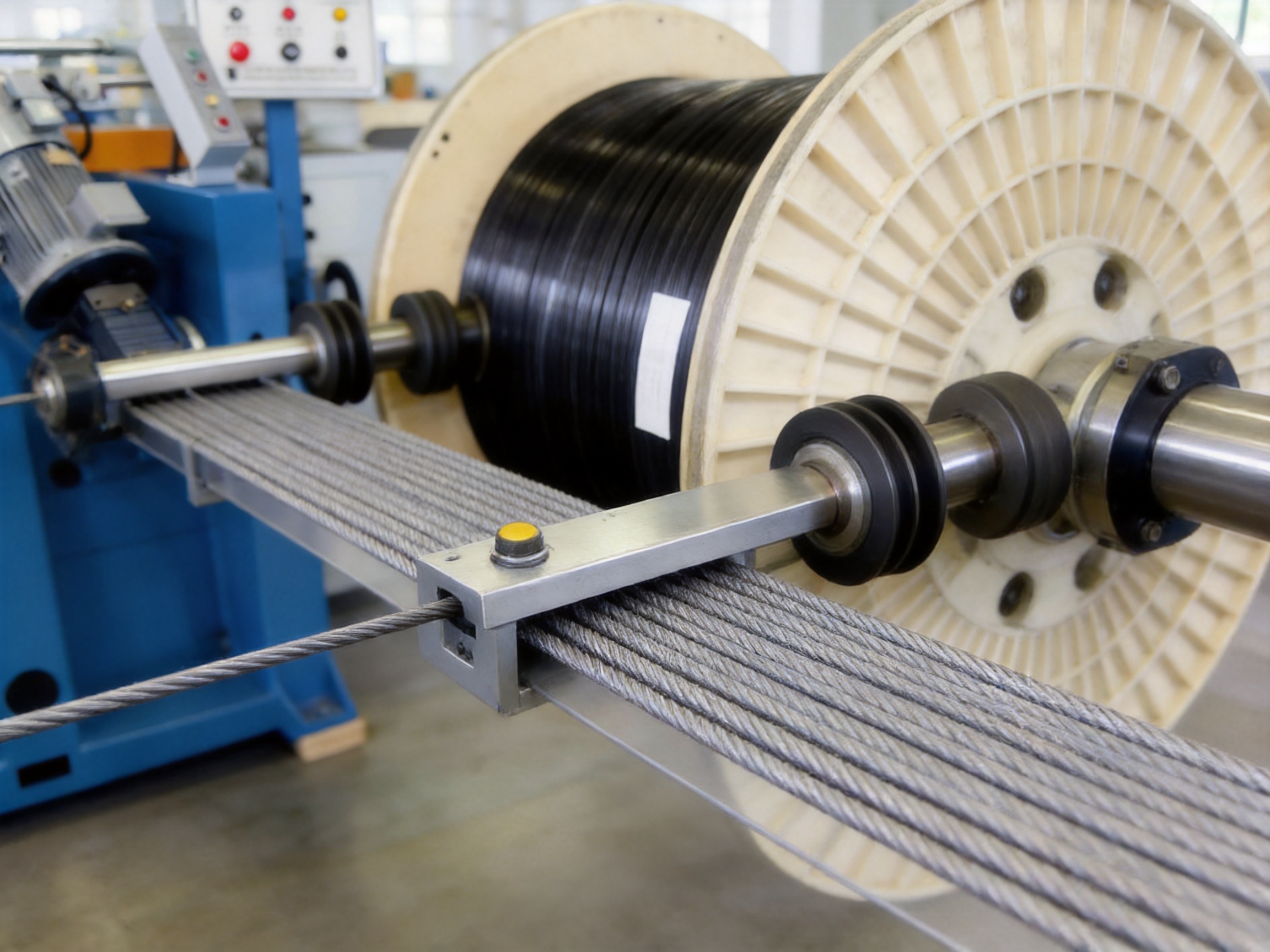
A high-quality motorized take-up machine must therefore include a precise shaft interface and strong support structure. The spool clamping system should hold the reel securely, minimize eccentricity, and allow efficient loading and unloading. Bearings must be selected for the expected load and operating speed. Shafts must be manufactured with accuracy and strength. The machine frame must resist vibration and bending. These mechanical details distinguish a professional industrial take-up machine from a simple motorized reel stand.
Shanghai Yessjet applies engineering attention to these mechanical requirements. The company’s manufacturing process emphasizes accurate machining, fit verification, welding quality, alignment inspection, and assembly control. By controlling both design and production, the company can provide machines suited to customer spool dimensions and load requirements. This customization is important because cable producers may use different reel standards depending on region, product type, and existing factory equipment.
Advanced Manufacturing Processes Behind Reliable Equipment
The long-term performance of a motorized take-up equipment machine depends heavily on manufacturing quality. Even the best control design cannot compensate for poor machining, weak frames, imprecise assembly, or unreliable electrical installation. Shanghai Yessjet’s strength lies in combining mechanical manufacturing capability with cable process knowledge. The company understands that take-up equipment must survive continuous industrial use while maintaining accuracy over time.
Frame fabrication is a key foundation. The machine frame must be rigid enough to support heavy rotating spools, traverse movement, motor torque, and dynamic loading during acceleration or braking. Proper welding procedures, stress control, surface treatment, and dimensional inspection help ensure that the frame remains stable. A rigid base reduces vibration and supports accurate alignment of shafts, guide rollers, and traverse components.
Machining quality is equally important. Spool shafts, bearing seats, guide assemblies, and drive components require controlled tolerances. Poor concentricity can create vibration, tension ripple, and premature bearing wear. Accurate machining improves smooth rotation and reduces maintenance requirements. For customers, this means more stable operation and fewer unexpected production interruptions.
Electrical assembly and control cabinet construction also require professional standards. Motor drives, PLC systems, sensors, safety circuits, human-machine interfaces, and communication modules must be organized for reliability and serviceability. Clear wiring, proper grounding, heat management, cable labeling, and accessible layout make the machine easier to operate and maintain. In industrial environments, electrical reliability is a major factor in total equipment effectiveness.
Before delivery, performance testing and inspection help confirm that the machine meets customer requirements. Testing may include rotation stability, traverse synchronization, tension response, emergency stop function, alarm logic, safety interlocks, spool clamping, and communication with simulated line signals. This process reduces commissioning time and gives customers confidence that the equipment is ready for production integration.
Intelligent Control and Product Recipe Management
Modern cable factories increasingly require intelligent machinery that supports repeatable production. A motorized take-up equipment machine with recipe management allows operators to store product-specific parameters. These may include cable diameter, spool size, winding length, target tension, taper ratio, traverse pitch, flange position, acceleration speed, deceleration speed, and alarm thresholds. During product changeover, the operator selects the correct recipe instead of manually setting every parameter.
This improves consistency between shifts. In factories relying on manual adjustment, winding quality may depend heavily on operator experience. One operator may set tension slightly higher, another may choose a different traverse pitch, and a third may adjust speed based on visual judgment. These differences can cause inconsistent packages and process variation. Recipe-based control standardizes the winding process and reduces dependence on individual experience.
Intelligent control also supports fault diagnosis. The machine can display alarms for over-tension, under-tension, drive fault, spool full, guard open, emergency stop, traverse limit, communication failure, or abnormal sensor signal. Clear alarm information helps operators respond quickly and maintenance teams locate problems efficiently. Competing low-end systems may provide only basic stop signals, making troubleshooting slower and more dependent on specialized technicians.
Where required, the take-up machine can be integrated with production data systems. Winding length, speed, tension trend, batch information, alarm history, and operating status can support quality traceability. For cable manufacturers serving demanding markets such as automotive, energy, communication, or infrastructure, process traceability is becoming increasingly valuable.
Integration into Existing Extrusion Lines
Many cable factories do not purchase a completely new production line every time they upgrade winding capability. Instead, they retrofit automatic take-up equipment into existing extrusion lines. This can provide major productivity improvement, but it must be engineered carefully. If the take-up drive and haul-off drive both attempt to control cable speed without proper coordination, the line may oscillate. Tension drops can cause one drive to accelerate while another drive decelerates, creating instability.
A common professional solution is to keep the haul-off as the speed master and configure the take-up primarily for torque or tension control. In this structure, the take-up applies the required winding force while automatically matching the line speed. Dancer position or load cell signal trims the torque setpoint rather than competing for speed control. This reduces control loop conflict and improves line stability.
Shanghai Yessjet has practical experience integrating motorized wire cable take-up machines and automatic cable take-up machines into lines from various original equipment manufacturers. The process typically begins with a control audit: identifying the haul-off drive type, PLC platform, available communication protocols, input and output signals, accumulator capacity, line speed range, and safety interlock requirements. Based on this information, engineers define how the take-up will receive references, how alarms will be exchanged, and how the spool change sequence will interact with upstream equipment.
This structured integration approach is a key advantage over suppliers that sell standalone machines without understanding the complete process. A take-up machine may look good mechanically but still perform poorly if it is not properly integrated. By considering the entire cable production line, Shanghai Yessjet helps customers reduce commissioning delays, avoid control conflicts, and achieve stable production faster.
Applications Across Cable Manufacturing and Industrial Use
Motorized take-up equipment machines are widely used in power cable production, communication cable production, automotive wire manufacturing, construction wire production, mining cable production, port machinery cable handling, and other industries that require orderly winding of long linear materials. The machine can be designed for different cable diameters, spool sizes, winding lengths, speeds, and load capacities.
In power cable production, the take-up machine must handle heavier cable and larger reels. Tension taper, shaft strength, bearing capacity, and safe spool handling are especially important. In communication cable production, winding precision and tension stability are critical because cable geometry can affect signal performance. In automotive wire production, repeatability, clean package appearance, and efficient changeover are important because factories often produce many specifications. In flexible cable production, surface protection and controlled winding force help prevent insulation damage and deformation.
For construction wire, productivity and cost efficiency are often primary concerns. A reliable automatic take-up system can reduce labor, improve coil uniformity, and support stable high-volume production. For specialty cable, customization may be required, including special guide rollers, non-standard spool interfaces, clean handling requirements, or data traceability. The ability to engineer the machine according to the application gives users a stronger return on investment.
Why Customization Is Important
No single take-up machine configuration is ideal for every cable factory. Cable diameter range, spool dimensions, line speed, plant layout, operator practice, automation level, and future expansion plans all affect the best equipment choice. A customer producing small automotive wire requires a different machine than a customer producing large armored power cable. A factory with frequent product changes may prioritize recipe management and quick setup, while a factory producing long continuous runs may prioritize heavy-duty durability and automatic spool handling.
Shanghai Yessjet offers customized automatic wire and cable take-up equipment to match these needs. Customization may include motor selection, torque range, traverse width, spool loading method, safety guarding, control interface, communication protocol, dancer or load cell feedback, spool clamping structure, and integration with upstream or downstream equipment. This engineered approach gives customers equipment that fits their production reality rather than forcing them to adapt their process to a generic machine.
Customization also supports future competitiveness. As cable producers expand into higher-value products, they may need more precise tension control, better traceability, faster changeover, or compatibility with automated handling systems. A well-designed take-up platform can be prepared for future upgrades, protecting the customer’s investment.
Reliability, Maintenance, and Total Cost of Ownership
The purchase price of a take-up machine is only one part of its real cost. Total cost of ownership includes installation time, commissioning effort, downtime, maintenance, spare parts, scrap, labor, safety risk, and service life. A cheaper machine that causes frequent winding defects or requires constant adjustment may become more expensive than a higher-quality system. For cable manufacturers, stable production is often worth more than a small initial saving.
Reliable mechanical design reduces maintenance demand. Strong frames, quality bearings, accurate shafts, durable guide rollers, and well-protected drive components support long service life. Reliable electrical design reduces nuisance faults and makes troubleshooting faster. Standardized components and clear documentation help maintenance teams perform routine service without excessive downtime.
Preventive maintenance for a motorized take-up machine typically includes checking bearing condition, cleaning guide rollers, inspecting traverse movement, verifying dancer or load cell calibration, checking electrical cabinet ventilation, confirming safety interlocks, inspecting spool clamping surfaces, and reviewing drive parameters. A machine designed for serviceability makes these tasks easier and safer.
Shanghai Yessjet’s manufacturing and engineering experience supports machines that are practical for real factory environments. The company understands that cable plants operate under production pressure and that equipment must be robust, accessible, and maintainable. This practical focus is a significant advantage over machines designed mainly for low initial cost.
Competitive Strengths of Shanghai Yessjet Precise Machinery Co., Ltd.
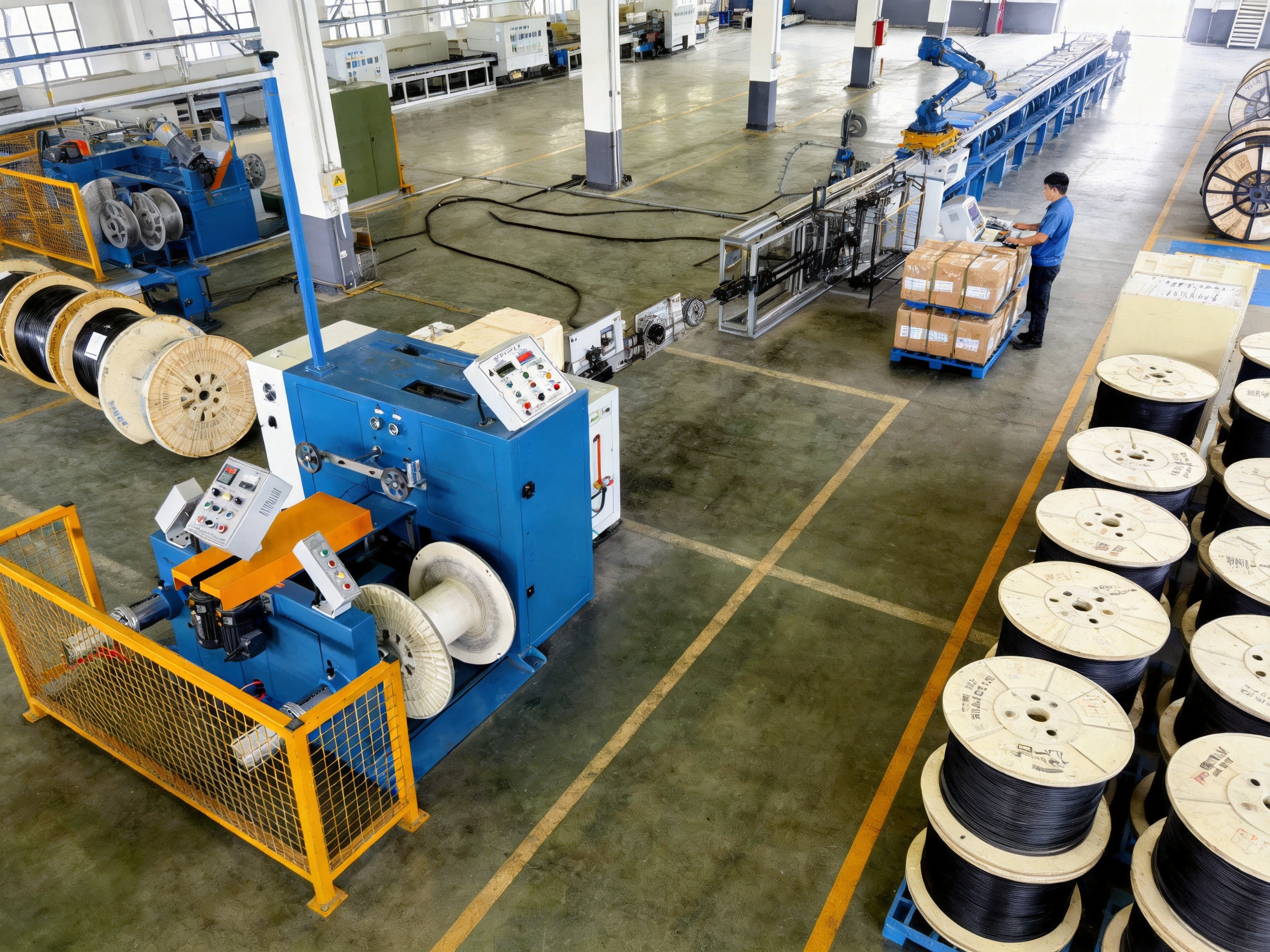
Shanghai Yessjet Precise Machinery Co., Ltd. is positioned as a wire and cable machinery manufacturer capable of providing cable production turnkey solutions. Its product categories include wire and cable extrusion lines, fully automatic coiling packaging equipment, intelligent robot stackers, coiling machines, motorized pay-off equipment, motorized take-up equipment, accessory equipment, and cable extrusion machines. This broad product range gives the company a complete understanding of cable production flow rather than a narrow focus on a single isolated machine.
The company’s history reflects continuous development in cable machinery. Established in Shanghai in 2002 and expanded in Jiangsu in 2017, it has accumulated experience in manufacturing, process integration, and customer-specific engineering. This background is valuable because successful take-up equipment requires knowledge of extrusion behavior, haul-off control, cooling line dynamics, cable testing, packaging requirements, and factory logistics.
One competitive strength is turnkey integration capability. Customers can work with the company not only for a take-up machine but also for related machinery and complete line solutions. This reduces compatibility risk and simplifies project communication. When one engineering team understands the entire line, it can optimize interfaces between pay-off, extrusion, haul-off, take-up, coiling, packaging, and stacking systems.
Another strength is practical customization. Instead of offering only fixed standard machines, the company can adapt equipment to customer requirements. This includes mechanical dimensions, spool compatibility, tension range, automation level, control system, and plant layout. For international customers with different production standards and reel specifications, this flexibility is particularly important.
The company’s manufacturing strength also contributes to product reliability. Advanced processing, accurate assembly, quality inspection, and industrial experience support equipment that can perform under continuous production conditions. Combined with engineering knowledge, this manufacturing discipline helps deliver machines that are stable, durable, and efficient.
How the Machine Supports Higher Production Quality
A motorized take-up equipment machine improves quality in several direct and indirect ways. Directly, it controls winding tension and traverse geometry, protecting the cable from mechanical damage. Indirectly, it stabilizes the production line, reducing speed disturbances that can affect extrusion quality. It also improves consistency between batches by using stored recipes and repeatable control logic.
Stable tension helps preserve conductor position, insulation roundness, jacket surface condition, and internal cable structure. Proper traverse prevents crossed layers, flange buildup, and spool collapse. Smooth acceleration and deceleration reduce sudden stress. Controlled spool change reduces off-specification cable length. These improvements support better inspection results, easier downstream handling, and higher customer satisfaction.
In addition, a well-wound spool improves logistics. Stable packages are easier to move, store, ship, and pay off. Customers receiving well-wound cable experience fewer tangles and interruptions. This can strengthen the cable manufacturer’s reputation and reduce complaints.
Environmental and Labor Efficiency Benefits
Reducing scrap is not only an economic advantage but also an environmental benefit. Cable materials such as copper, aluminum, PVC, polyethylene, cross-linked polyethylene, and specialty compounds require energy and resources to produce. When poor winding causes scrap, those resources are wasted. By improving winding stability and reducing changeover waste, the take-up machine helps lower material loss per kilometer of cable produced.
Automation also reduces labor intensity. Manual take-up and spool handling can be physically demanding and potentially hazardous, especially for large or heavy reels. Motorized systems with automatic control, safe clamping, and coordinated operation reduce the need for operators to work near moving spools. This supports safer and more efficient factory operation.
Labor efficiency is increasingly important as cable manufacturers face rising labor costs and the need for consistent production quality. Automated take-up equipment allows operators to supervise the process, manage changeovers, and monitor quality rather than constantly making manual adjustments. This improves productivity and supports more standardized factory management.
Q&A Section
What is the main purpose of a motorized take-up equipment machine?
The main purpose is to automatically wind cable, wire, or similar linear materials onto a spool or reel with controlled tension and accurate traverse movement. It helps produce stable, orderly packages while protecting the cable from stretching, kinking, tangling, or surface damage.
Why is taper tension important for large cable spools?
Taper tension reduces winding tension as the spool diameter increases. This prevents excessive compressive pressure on inner cable layers, which can occur when constant tension is applied throughout the entire spool build. It is especially important for large spools and cables with insulation that may deform under pressure.
How does traverse pitch affect winding quality?
Traverse pitch determines the spacing between adjacent cable turns. If the pitch is too tight, turns may overlap and damage the jacket. If it is too wide, gaps may form and upper layers may cross into lower layers. Correct pitch produces stable layers and improves spool usability.
Can the machine be integrated into an existing extrusion line?
Yes. A motorized take-up machine can be retrofitted into an existing extrusion line, but the control architecture must be carefully engineered. The haul-off typically remains the line speed master, while the take-up controls winding tension or torque. Proper signal exchange and interlocking are essential for stable operation.
What advantages does automatic spool change provide?
Automatic spool change reduces transition time between full and empty spools. This helps minimize scrap length, reduce line speed disturbances, improve productivity, and lower labor requirements. Fast and coordinated spool change is especially valuable on high-speed extrusion lines.
Which tension feedback system is better: dancer or load cell?
Neither is universally better. A dancer system provides mechanical buffering and is suitable for many general applications. A load cell system provides more direct and faster tension measurement, which may be preferred for high-speed or high-precision cable production. The best choice depends on cable type, speed, tension range, and process requirements.
Why choose a customized take-up machine instead of a standard model?
Customization ensures compatibility with the customer’s cable specifications, spool sizes, plant layout, control system, automation level, and future production needs. A customized machine can provide better performance, easier integration, and stronger long-term value than a generic system.
How does Shanghai Yessjet support equipment reliability?
The company combines cable machinery experience, mechanical manufacturing capability, control engineering, quality inspection, and turnkey line integration. Its approach focuses on rigid construction, accurate machining, intelligent control, practical customization, and stable operation in real production environments.
Conclusion
A motorized take-up equipment machine is a critical component in modern wire and cable production. Its performance directly affects winding quality, cable protection, production efficiency, scrap reduction, safety, and downstream usability. Advanced tension control, taper winding, accurate traverse pitch, efficient spool change, reliable mechanical design, and intelligent recipe management distinguish a professional machine from basic winding equipment.
Shanghai Yessjet Precise Machinery Co., Ltd. offers motorized wire and cable take-up machines designed for demanding industrial applications. With experience in cable extrusion lines, automatic coiling and packaging systems, motorized pay-off and take-up equipment, and turnkey production solutions, the company provides more than a standalone machine. It delivers engineering support, customization capability, manufacturing strength, and integration knowledge that help cable manufacturers improve productivity and quality.
For cable producers seeking stable winding, reduced waste, safer operation, and long-term equipment value, a well-engineered motorized take-up equipment machine is an essential investment. By selecting a supplier with deep process experience and advanced manufacturing capability, manufacturers can achieve better spool quality, smoother production, and stronger competitiveness in the wire and cable market.
References
1. Wire Association International. The Book of Wire and Cable Technology. Wire Association International.
2. Rao, S. S. Mechanical Vibrations. Pearson Education.
3. Groover, M. P. Automation, Production Systems, and Computer-Integrated Manufacturing. Pearson.
4. Bolton, W. Mechatronics: Electronic Control Systems in Mechanical and Electrical Engineering. Pearson.
5. International Electrotechnical Commission. Standards and Guidelines for Electric Cable Testing and Manufacturing Practice.
6. Rosato, D. V. Extruding Plastics: Practical Processing Handbook. Springer.