LANGUAGE
 中文简体
中文简体 русский
 Français
 Español
 Português
 عربى
عربى
Content
- 1 Why Tension Control Matters in Cable Manufacturing
- 2 Core Function of Wire Cable Tension Control Systems
- 3 Advantages Compared with Basic or Manual Tension Methods
- 4 Integration with Storage Racks and Cable Handling Equipment
- 5 Product Quality Benefits
- 6 Reducing Waste and Improving Production Yield
- 7 Manufacturing Strengths and Engineering Approach
- 8 Why a Complete Machinery Supplier Can Offer Greater Value
- 9 Applications in Different Production Environments
- 10 Operating Considerations for Best Performance
- 11 Selection Guide for Cable Manufacturers
- 12 Economic Benefits for Cable Manufacturers
- 13 Supporting Consistent Output in Turnkey Cable Solutions
- 14 Safety and Workplace Organization
- 15 Implementation and Commissioning
- 16 Common Problems and Corrective Thinking
- 17 Q&A: Wire Cable Tension Control Systems
- 17.1 What is the main purpose of a wire cable tension control system?
- 17.2 Can the system be used with a storage rack?
- 17.3 Which machines can be connected with the tension control system?
- 17.4 Does tension control protect every type of cable in the same way?
- 17.5 Can it reduce cable waste?
- 17.6 Is the equipment suitable for an existing production line?
- 17.7 Does the system eliminate the need for operators?
- 17.8 Why is a supplier with a broader cable machinery range advantageous?
- 17.9 What information should be provided when requesting a quotation?
- 17.10 What maintenance does the system require?
- 18 Conclusion
- 19 References
- 20 Product: Wire Cable Tension Control Systems
In modern wire and cable manufacturing, winding quality is directly connected to tension stability. Even when the conductor, insulation, and extrusion process meet demanding specifications, inconsistent tension during winding can create loose coils, overlapping turns, stretched conductors, damaged insulation, and disorganized storage. These defects may reduce product value, interrupt downstream operations, increase material waste, and create unnecessary manual handling.
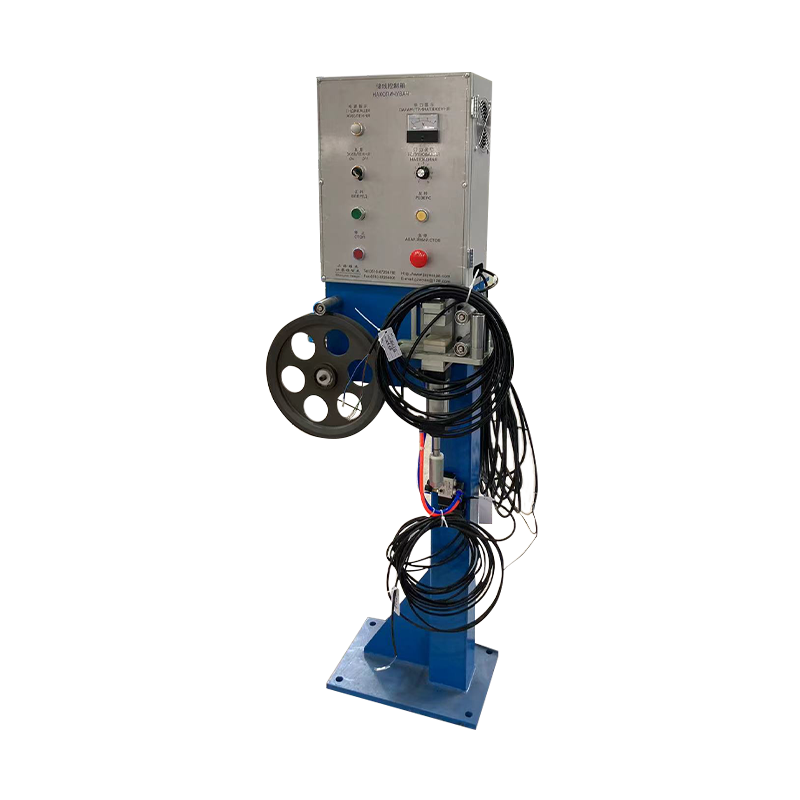
Wire Cable Tension Control Systems are designed to solve this important production challenge. As accessory equipment for cable manufacturing and processing lines, the systems regulate cable tension in real time during winding and related handling operations. Their central purpose is straightforward: maintain a stable and suitable tension level so that cable can be wound evenly, safely, and consistently.
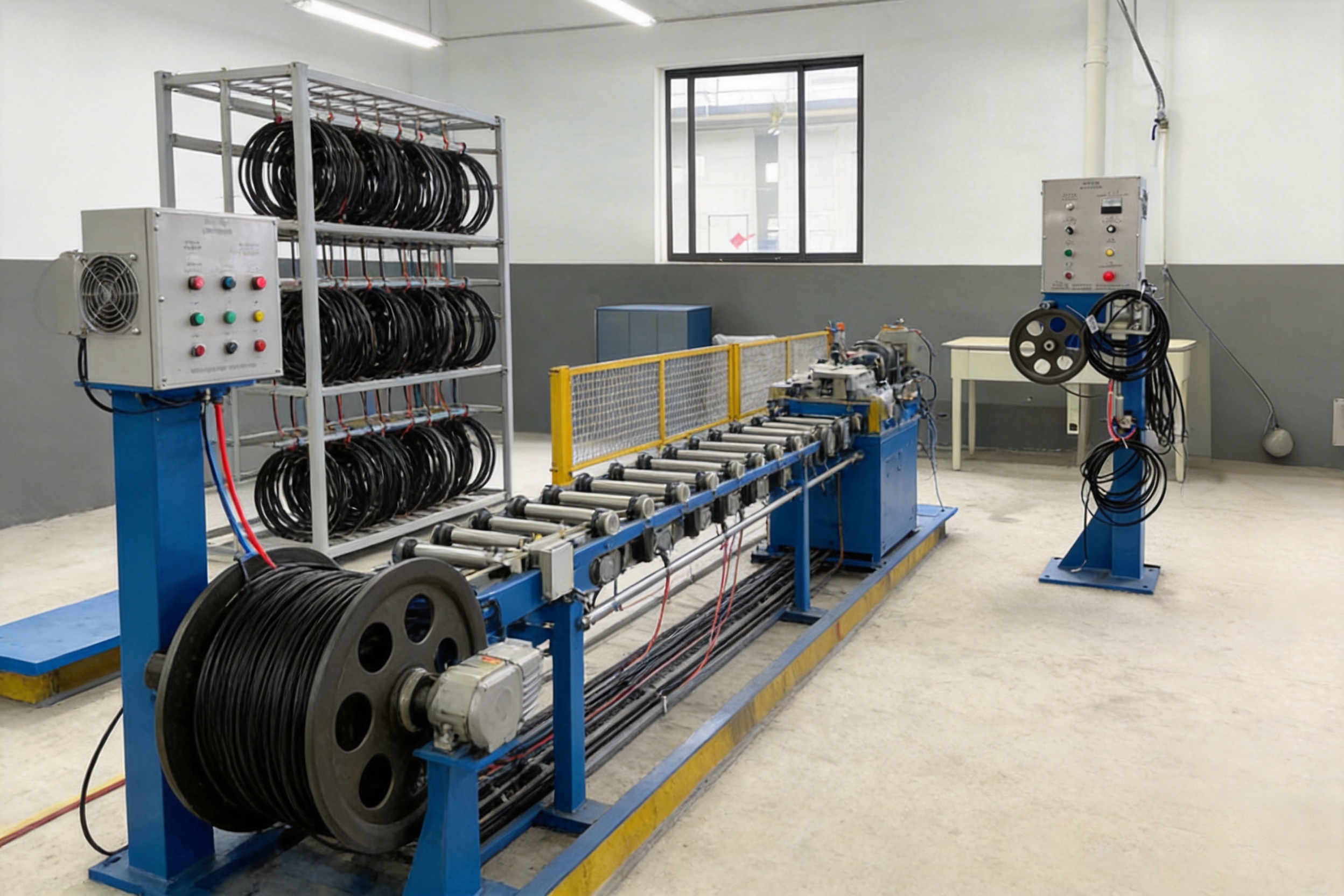
When integrated with storage racks, coiling machines, take-up equipment, or other cable handling systems, tension control equipment contributes to a more coordinated workflow. It helps operators reduce the risk of excessive or insufficient tension while supporting better coil formation and more dependable product quality. This makes the equipment suitable for a wide range of cable manufacturing environments, including extrusion lines, cable processing workshops, coiling operations, and production areas that require organized intermediate storage.
Shanghai Yessjet Precise Machinery Co., Ltd. supplies wire and cable machinery, cable production line solutions, and accessory equipment for manufacturers seeking stable and practical production performance. Its Wire Cable Tension Control Systems are developed as part of a broader machinery portfolio that includes wire and cable extrusion lines, fully automatic coiling and packaging equipment, intelligent robot stackers, coiling machines, motorized pay-off machines, motorized take-up machines, and related accessories.
In this article, the working principles, production advantages, application value, integration methods, and selection considerations of wire cable tension control systems are examined in detail.
Wire Cable Tension Control Systems
Why Tension Control Matters in Cable Manufacturing
Cable is a flexible continuous product. Unlike rigid components, it can be stretched, compressed, bent, twisted, or displaced when the forces applied during production are not properly controlled. During winding, the cable travels through several mechanical stages before reaching a reel, coil, storage rack, or packaging unit. Every stage can influence the tension applied to the product.
If the tension is too high, the cable may be pulled beyond its preferred mechanical condition. Depending on the cable construction, excessive force can affect the conductor, insulation, jacket, shielding layer, or outer surface. Repeated tension peaks can also cause dimensional variation and make the finished coil difficult to unwind.
If the tension is too low, the cable may not settle correctly on the reel or coil. Turns can become loose, uneven, or crossed. The result may be a disordered arrangement that occupies more space and complicates later handling. Loose winding can also allow cable movement during transportation, increasing the risk of abrasion and deformation.
Stable tension is therefore essential for several reasons:
1. It supports uniform winding density.
2. It reduces the likelihood of cable stretching or surface damage.
3. It helps prevent loose turns and disordered arrangements.
4. It improves the consistency of finished coils and reels.
5. It reduces material waste caused by winding defects.
6. It supports more predictable downstream packaging and storage.
7. It reduces the need for frequent manual adjustment.
A tension control system does not replace the quality of the cable itself. Instead, it protects the cable during handling and ensures that the mechanical conditions around the winding process remain appropriate. This distinction is important because a high-quality extrusion line can still produce poor final presentation if winding tension is unstable.
Core Function of Wire Cable Tension Control Systems
The primary function of a Wire Cable Tension Control System is the adjustment and stabilization of cable tension during winding or material transfer. The system monitors the operating condition and applies corrective control so that the cable remains within a suitable tension range.
In practical terms, the equipment works between the cable supply side and the winding or storage side. The cable may come from an extrusion line, pay-off unit, accumulator, storage rack, or another processing machine. It then passes through the tension control mechanism before reaching the coiling machine, take-up device, reel, or packaging station.
The control process is intended to respond to changes caused by reel diameter, line speed, cable movement, material resistance, or temporary variations in the supply path. As winding progresses, the effective winding conditions may change. Without adjustment, the tension applied to the cable may gradually become too high or too low. The tension system helps compensate for such changes and keeps the handling process more stable.
This function is especially valuable when the production line operates continuously. In a manual process, an operator may need to observe the coil and adjust mechanical settings repeatedly. A dedicated system provides a more systematic method of tension regulation, reducing dependence on constant manual intervention.
The equipment is often used together with storage racks. This combination provides a controlled transition between cable production, temporary storage, and subsequent winding or processing. Instead of allowing cable to accumulate irregularly, the storage and tension management arrangement helps preserve a more orderly material flow.
Preventing Excessive Tension
Excessive tension is one of the most common risks in continuous cable handling. It may occur when the winding speed is too high, when the receiving reel creates excessive pulling force, or when the cable path has too much resistance. It can also appear when the cable supply and take-up speeds are not coordinated correctly.
A suitable tension control system helps reduce these risks by regulating the force applied to the cable. This protects the cable from unnecessary stretching and helps preserve the intended geometry of the finished product. For insulated or jacketed cables, controlled tension also helps reduce the possibility of surface marks, deformation, or uneven winding pressure.
Preventing Insufficient Tension
Insufficient tension creates a different set of problems. The cable may fail to settle tightly and evenly on the reel. Individual turns can move, overlap, or drift away from the intended winding path. In severe cases, the coil may collapse or become difficult to transport.
By maintaining adequate tension, the system supports closer and more consistent winding. The result is a better-organized coil that is easier to inspect, package, store, and unwind.
Advantages Compared with Basic or Manual Tension Methods
Many cable workshops begin with simple mechanical arrangements or manual adjustments. These methods may be adequate for low-volume production, but they can become inefficient when product types, line speeds, and production requirements increase. A dedicated tension control system offers several practical advantages over basic methods.
| Production consideration | Basic or manual method | Wire Cable Tension Control System |
|---|---|---|
| Tension adjustment | Often depends on operator intervention | Provides more consistent and organized regulation |
| Response to operating changes | May react slowly to speed or winding changes | Supports timely adjustment during continuous operation |
| Winding appearance | More likely to show loose or irregular turns | Promotes stable and orderly winding |
| Material protection | Greater risk of excessive pulling force | Helps reduce unnecessary cable stress |
| Production efficiency | Frequent checking and correction may be required | Reduces repeated manual intervention |
| Workflow integration | May operate as an isolated process | Can be paired with racks, coilers, pay-offs, and take-ups |
| Quality consistency | Can vary between operators and batches | Supports more repeatable handling results |
The main competitive advantage is not an exaggerated claim of universal automation. It is the ability to provide a more controlled and repeatable cable handling process. For manufacturers, repeatability is often more valuable than a single high-speed result because it supports stable production over multiple shifts and product batches.
Compared with a simple fixed brake or manually adjusted resistance device, a dedicated tension control solution can be better suited to changing production conditions. A fixed mechanical setting may not provide the same performance when cable diameter, cable construction, line speed, or reel size changes. A more adaptable system gives manufacturers greater flexibility when handling different products.
Compared with relying only on operator observation, the system also improves process discipline. Operators can focus on production supervision, material preparation, and quality inspection instead of continuously correcting cable movement by hand. This can be particularly helpful in production environments where labor efficiency and stable output are important.
Integration with Storage Racks and Cable Handling Equipment
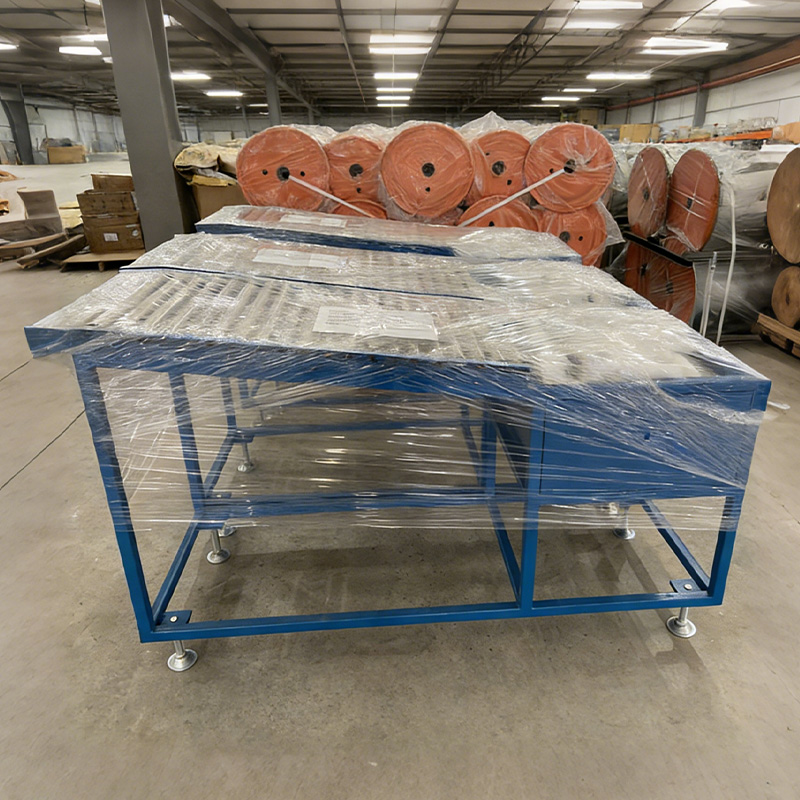
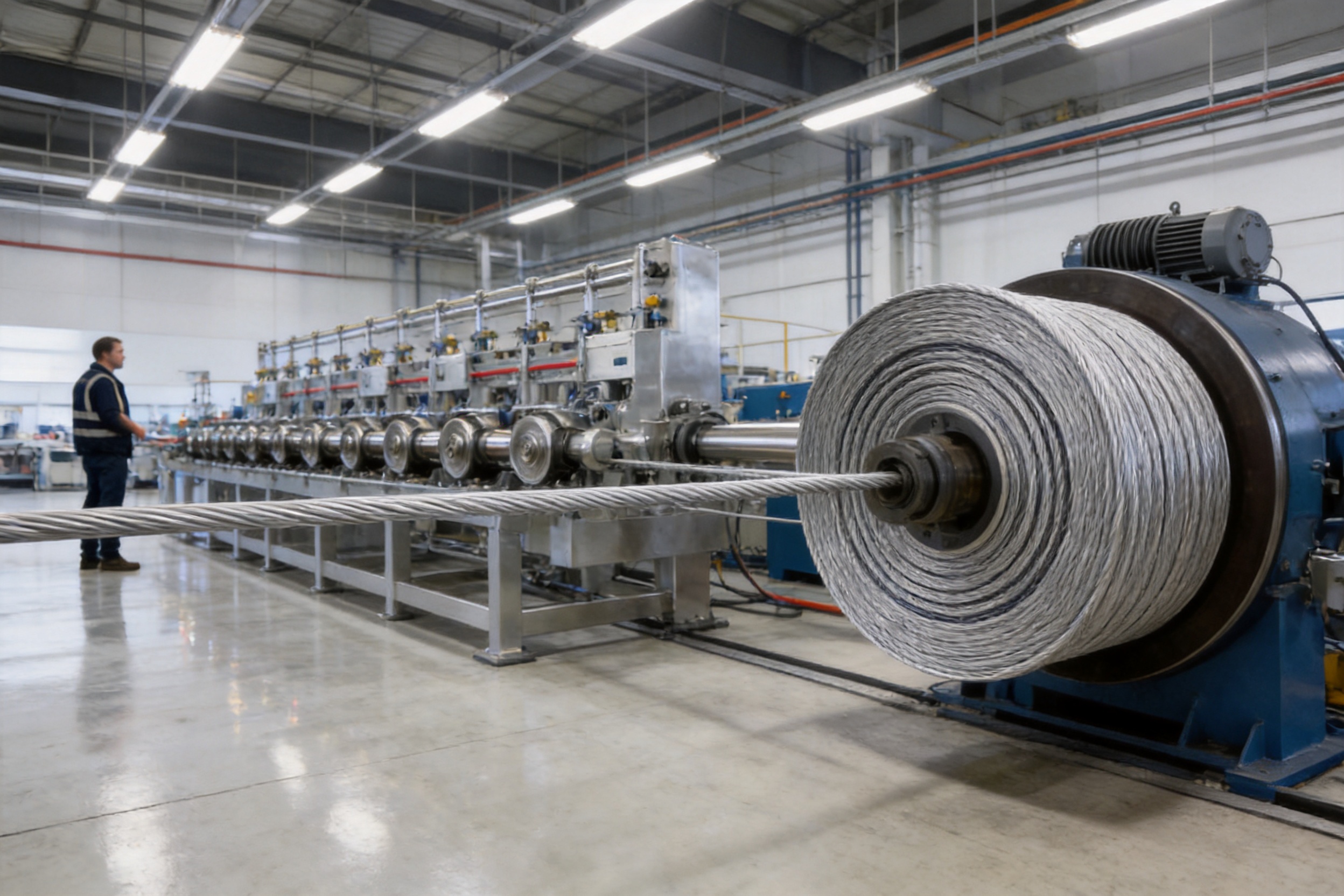
Wire Cable Tension Control Systems are often used together with storage racks. Storage racks can provide a temporary holding point for cable between production stages, but the transition into and out of storage must be managed carefully. If cable is released too quickly, pulled too strongly, or allowed to accumulate irregularly, the material may become disordered or subject to unnecessary mechanical stress.
When a storage rack and tension control system are coordinated, the cable can move through the workflow in a more predictable manner. The system helps regulate the force as cable is supplied, stored, and transferred to the next machine. This is useful in lines where extrusion, cooling, inspection, coiling, and packaging are separate but connected operations.
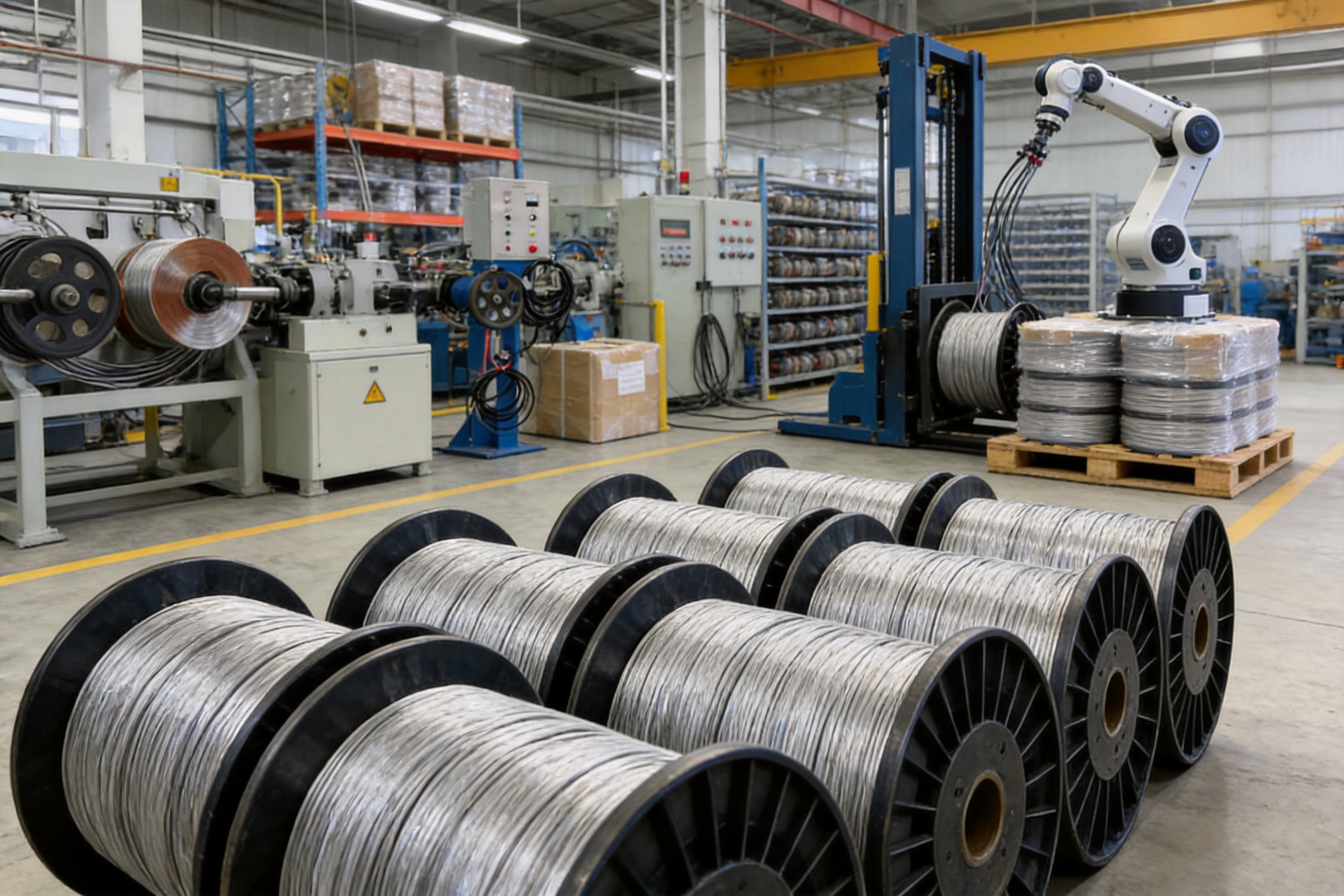
The equipment can also be incorporated into broader cable machinery arrangements. Depending on the production layout, it may work with:
• Motorized pay-off equipment for controlled cable release.
• Motorized take-up equipment for organized cable collection.
• Coiling machines for finished coil formation.
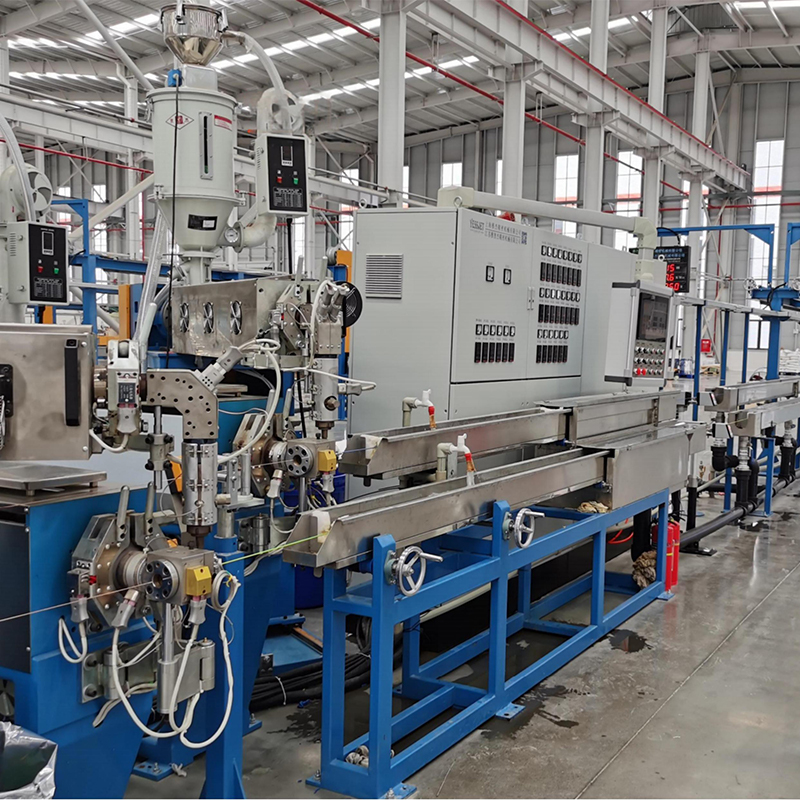
• Cable extrusion lines for continuous post-extrusion handling.
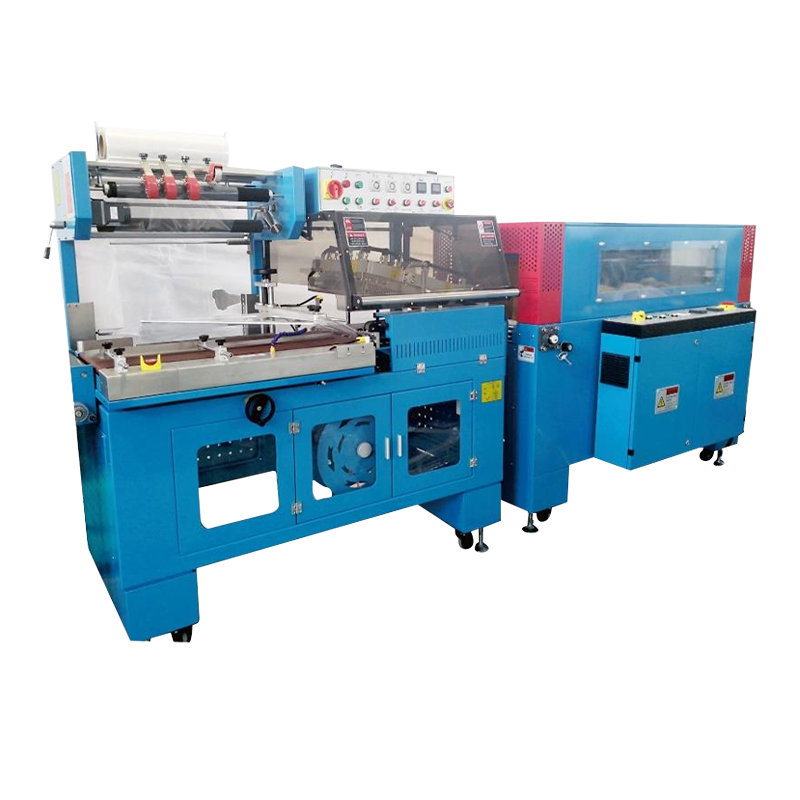
• Fully automatic coiling and packaging equipment for downstream preparation.
• Intelligent robot stackers for organized movement and palletizing.
• Accessory equipment supporting cable storage, transfer, and production coordination.
The exact configuration depends on cable type, line speed, coil dimensions, reel size, plant layout, and the desired level of automation. The tension system is valuable because it can serve as a connecting control point within this wider arrangement.
Connection with Motorized Pay-Off Equipment
A motorized pay-off unit supplies cable from a reel or material source. If the pay-off releases cable too quickly, the downstream system may experience slack. If it releases too slowly, the cable may be pulled excessively by the take-up side. Tension control helps balance the relationship between supply and demand.
This coordination is important when cable is transferred over a long path or when the production line includes several intermediate rollers and guides. Stable tension helps reduce sudden changes and supports smoother cable travel.
Connection with Motorized Take-Up Equipment
A motorized take-up machine collects cable onto a reel or other receiving structure. Its winding action naturally influences cable tension. As the reel fills, the winding diameter changes, and the relationship between rotational speed and linear cable speed must remain suitable.
A tension control system helps manage the effect of this changing condition. The result is a more consistent winding process and a reduced risk of excessive pull near the beginning or end of a reel.
Connection with Coiling and Packaging Systems
Coiling machines require cable to arrive with a stable and predictable tension. If the incoming material is loose, the coiler may produce uneven loops. If it is too tight, the coil may have excessive internal pressure or become difficult to remove.
When the tension system is positioned before the coiling station, it helps create more favorable conditions for the coiling and packaging process. This contributes to better product presentation and fewer interruptions caused by tangled or irregular coils.
Product Quality Benefits
One of the clearest benefits of tension control is improved winding quality. A well-formed coil is not only more attractive; it is also more useful in transportation, storage, installation, and subsequent processing.
Stable tension supports the following quality characteristics:
Uniform arrangement: Cable turns are placed more consistently, reducing visible gaps, crossings, and irregular edges.
Controlled compactness: The coil remains sufficiently firm without being subjected to unnecessary compressive or pulling force.
Improved handling: A stable coil is easier to lift, package, label, transport, and unwind.
Reduced damage risk: The cable is less likely to suffer from excessive stretching, scraping, or deformation caused by poor winding conditions.
Better repeatability: Similar operating conditions can produce more similar results from one batch to another.
These advantages can reduce rework. If a cable coil is poorly formed, an operator may need to rewind it, inspect it again, or discard sections that have been damaged. Every additional handling step increases labor costs and the possibility of further defects. Tension control addresses the problem at the process stage rather than after the defect has already occurred.
For cable manufacturers serving industrial, construction, communications, energy, appliance, or equipment markets, consistent winding quality can also support customer confidence. Although tension control is an accessory function, its influence extends to the final appearance and usability of the finished product.
Reducing Waste and Improving Production Yield
Production yield is influenced by many factors, including raw material quality, extrusion conditions, dimensional control, electrical performance, and handling. Winding defects are an often-overlooked source of waste because they may appear after the cable has already passed through several expensive production stages.
If excessive tension damages the surface or changes the cable geometry, the affected section may require rework or removal. If insufficient tension creates a tangled coil, the manufacturer may need to stop the line and reorganize the material. Both conditions reduce effective output.
A tension control system helps lower this risk by maintaining more stable cable handling conditions. It cannot eliminate every possible defect, but it can reduce defects associated specifically with unstable winding force. This supports better material utilization and more predictable production planning.
Improved yield also has environmental and operational value. Less rejected cable means lower consumption of conductor material, insulation compounds, jacket materials, packaging, labor, and energy. In a high-volume facility, even a modest reduction in winding-related waste can create meaningful annual savings.
The system also supports production efficiency by reducing interruptions. When cable is wound in an orderly manner, operators spend less time correcting coils, clearing tangles, or adjusting the winding path. This allows the production line to operate closer to its intended capacity.
Manufacturing Strengths and Engineering Approach
Shanghai Yessjet Precise Machinery Co., Ltd. focuses on wire and cable machinery and provides equipment for multiple stages of cable production and handling. Its product portfolio demonstrates an engineering approach centered on complete workflow support rather than isolated machine supply.
The company’s equipment range includes wire and cable extrusion lines, fully automatic coiling and packaging equipment, intelligent robot stackers, coiling machines, motorized pay-off equipment, motorized take-up equipment, accessory equipment, and cable extrusion machines. This broad range gives customers the opportunity to coordinate equipment selection across connected production stages.
For tension control systems, this broader manufacturing background is valuable. Tension regulation cannot be considered separately from cable supply, winding, storage, and packaging. A supplier familiar with these related machines can better understand how tension conditions affect the entire process.
Precision-Oriented Mechanical Design
The purpose of a tension control system is precision in a practical production environment. This requires carefully arranged cable paths, reliable guiding components, stable mechanical structures, and adjustment capability suited to the application. The equipment must manage continuous movement while minimizing unnecessary friction, vibration, and variation.
A precision-oriented design also considers maintainability. Operators need to access relevant components for inspection, cleaning, adjustment, or replacement. A machine that is difficult to maintain may create avoidable downtime even if its basic tension function is effective. Practical accessibility is therefore an important part of manufacturing quality.
Process Integration
Advanced manufacturing is not limited to the fabrication of individual parts. It also involves the integration of mechanical, electrical, and production control elements into a functioning machine. For cable equipment, integration includes the relationship between the tension mechanism, cable guides, storage systems, take-up units, coilers, and operator controls.
The company’s experience with complete cable production solutions supports this integrated perspective. Customers can evaluate tension control as part of a larger line rather than treating it as an unrelated add-on. This can simplify equipment matching and reduce the risk of compatibility problems.
Application-Based Customization
Different cables require different handling conditions. A small flexible wire, a multi-core industrial cable, a shielded cable, and a heavier power cable may not respond to the same winding settings. Production speed, outer diameter, reel dimensions, and cable surface characteristics also influence the appropriate tension range.
A capable machinery manufacturer must therefore consider the customer’s actual process. Important information includes cable construction, diameter range, winding method, target output, storage arrangement, available floor space, and the equipment already installed at the customer’s factory.
Application-based customization does not necessarily mean developing an entirely new machine for every order. It may involve selecting suitable components, adjusting the cable path, configuring control parameters, adapting interfaces, or arranging the system to match existing pay-off and take-up equipment. This approach can provide a more practical result than forcing every customer into one fixed configuration.
Quality Control During Production
Reliable machinery depends on quality control throughout manufacturing. This includes confirming the dimensions and condition of fabricated parts, checking the assembly of mechanical units, verifying cable-guiding alignment, inspecting electrical connections, and testing machine operation before delivery.
For a tension control system, production checks should focus on whether the cable path is smooth, whether the adjustment mechanism responds correctly, whether the system maintains stable operation, and whether the equipment can work with the associated storage or winding equipment. These checks help identify problems before installation at the customer’s facility.
Factory testing is particularly important for integrated cable machinery. When a tension system is delivered as part of a larger solution, testing the relationship between components can reveal issues that would not be visible during separate component inspection. This contributes to more efficient commissioning and a shorter adjustment period on site.
Why a Complete Machinery Supplier Can Offer Greater Value
Purchasing a tension control system from a supplier with a broader cable machinery portfolio can offer advantages over sourcing a small accessory from an unrelated vendor. The first advantage is compatibility. The supplier is more likely to understand how cable tension interacts with pay-off speed, take-up speed, coiling movement, storage capacity, and packaging requirements.
The second advantage is communication efficiency. When several machines are supplied by one experienced manufacturer, customers may have a clearer point of contact for technical discussions, layout planning, machine matching, and after-sales support. This can reduce the confusion that sometimes occurs when multiple vendors assign responsibility for the same process issue to one another.
The third advantage is future expansion. A customer may initially purchase a tension control system for a single coiling station and later add automatic packaging, robot stacking, or a new extrusion line. A supplier familiar with the broader equipment range can help plan a more coordinated development path.
The fourth advantage is process understanding. The most useful accessory is not necessarily the one with the most complicated specification. It is the one that addresses the actual production bottleneck. A manufacturer with experience across cable extrusion and handling can help identify whether the main issue is tension, speed synchronization, storage arrangement, winding geometry, or a combination of factors.
Applications in Different Production Environments
Wire Cable Tension Control Systems can be used in a variety of cable manufacturing and processing scenarios. The exact application depends on the product and line configuration, but common uses include the following.
Extruded Cable Production
After extrusion, cable often passes through cooling, drying, inspection, marking, and take-up stages. Stable tension helps maintain a controlled path through these stages and supports orderly collection at the end of the line.
Where cable dimensions are sensitive to pulling force, tension control is especially useful. It helps avoid adding unnecessary mechanical stress after the extrusion process has formed the insulation or jacket.
Intermediate Cable Storage
Some factories use storage racks between production processes. The cable may be temporarily held before coiling, inspection, packaging, or further assembly. Tension regulation helps prevent uncontrolled release and reduces the chance of loose or tangled material.
Finished Coil Production
For manufacturers supplying cable in coils, winding presentation is an important part of product preparation. The system helps the coiling machine receive cable under more stable conditions, supporting consistent loop formation and better coil density.
Rewinding and Repackaging
Cable may need to be transferred from a large reel to smaller reels, coils, or customer-specific packages. During rewinding, the receiving reel and supply reel may operate at changing speeds. Tension control helps maintain a suitable relationship between the two sides.
Multi-Product Manufacturing
Factories producing multiple cable types can benefit from a controllable tension system because the required handling conditions may differ by product. A system that supports adjustment and repeatable settings can make product changeovers more organized.
Operating Considerations for Best Performance
Correct equipment selection is important, but operating practices also influence results. The tension control system should be installed with an appropriate cable path and positioned so that the cable enters and exits without excessive bending or friction.
Operators should confirm that the cable guides, rollers, storage rack, pay-off, and take-up machine are aligned. Misalignment can create lateral forces that appear to be tension problems. Similarly, damaged or contaminated guiding surfaces may affect cable movement and create unstable handling conditions.
Production settings should be established according to cable characteristics and winding requirements. A setting suitable for one diameter or construction may not be appropriate for another. When product changes occur, operators should follow a controlled adjustment procedure rather than making large, undocumented changes.
Regular inspection is also necessary. Operators should look for unusual vibration, abnormal noise, surface marks on the cable, loose winding, excessive pulling, or irregular coil edges. These signs may indicate that the system requires adjustment or that another part of the line needs attention.
Preventive maintenance should include cleaning, inspection of wear-prone parts, checking mechanical fasteners, confirming cable guide condition, and reviewing the performance of the control mechanism. Maintenance intervals should be based on operating hours, cable types, production speed, and the factory environment.
Selection Guide for Cable Manufacturers
Before purchasing a Wire Cable Tension Control System, manufacturers should define the production conditions clearly. A suitable system should match the cable, the winding method, and the surrounding equipment.
Key selection questions include:
• What is the cable diameter range?
• What cable materials and constructions will be handled?
• What are the normal and maximum line speeds?
• Will the cable be wound onto reels, formed into coils, or transferred to a packaging line?
• Is a storage rack located before or after the tension control equipment?
• What pay-off and take-up machines are already in use?
• How much floor space is available?
• Does the system need to support more than one product specification?
• What degree of operator adjustment is preferred?
• Is future integration with automated packaging or robot stacking expected?
These questions help the manufacturer recommend a suitable arrangement. They also reduce the risk of purchasing equipment that performs well in isolation but does not fit the actual production line.
Compatibility with Existing Equipment
Many customers do not require a completely new cable line. They may already have extrusion, pay-off, take-up, or coiling equipment and need to improve one part of the process. In this situation, compatibility becomes a central selection factor.
The system should be evaluated according to available connection points, cable height, machine spacing, line direction, control requirements, and operating speed. A supplier experienced in cable machinery can help determine how the tension system should be positioned within the existing line.
Balancing Automation and Practicality
Automation can improve consistency, but the best level of automation depends on the production environment. Some factories need a highly integrated line with automatic coiling, packaging, and robot stacking. Others primarily need stable tension adjustment around a storage rack or take-up unit.
A practical supplier should recommend the level of equipment that matches the customer’s actual output and investment plan. The goal is to achieve reliable tension management without adding unnecessary complexity or exaggerated functions.
Economic Benefits for Cable Manufacturers
The value of tension control can be evaluated through several operating factors. First, improved winding quality may reduce the amount of cable requiring rework. Second, stable operation can lower the time spent on manual correction. Third, orderly coils can reduce packaging and storage difficulties. Fourth, better process consistency can support more predictable production scheduling.
The equipment may also help reduce indirect costs. A disordered cable coil can occupy more storage space and require additional labor to handle. A damaged cable section can create customer complaints or internal quality investigations. An unexpected line stop can affect not only the winding station but also upstream extrusion and downstream packaging.
By improving the stability of one relatively small part of the production process, a tension control system can contribute to the performance of the entire line. This is why accessory equipment should not be evaluated only by its purchase price. Its process impact, integration value, maintenance needs, and potential waste reduction should also be considered.
Supporting Consistent Output in Turnkey Cable Solutions
Wire and cable production lines include multiple connected steps. A typical workflow may begin with material pay-off, continue through extrusion and cooling, proceed to inspection and storage, and finish with take-up, coiling, packaging, and stacking. Each transition can affect the next stage.
Shanghai Yessjet Precise Machinery Co., Ltd. positions its machinery portfolio to support these connected requirements. The availability of extrusion machines, pay-off systems, take-up systems, coiling machines, packaging equipment, robot stackers, and accessories allows customers to consider a complete production solution.
Within such a solution, tension control provides an important link between continuous cable production and organized finished-product handling. It supports the transition from a moving cable line to a stable coil, reel, storage arrangement, or package.
This broader approach can be especially valuable for customers developing a new workshop or upgrading an existing plant. Instead of selecting equipment only by individual specifications, they can consider material flow, machine coordination, operator workload, future capacity, and final product requirements as one system.
Safety and Workplace Organization
Stable cable movement can also contribute to a more organized production area. Loose cable, irregular coils, and uncontrolled loops may create trip hazards, obstruct access, or complicate material movement. Better winding and storage organization helps keep the working area more predictable.
Operators should still follow appropriate machine safety procedures, including guarding moving components, keeping hands away from active cable paths, and using suitable methods for reel and coil handling. Tension control equipment is a production aid, not a substitute for safe operating procedures.
Good workplace organization also supports inspection and maintenance. When cable is stored and wound in a controlled manner, operators can more easily identify defects, access equipment, and keep production routes clear.
Implementation and Commissioning
Successful installation begins with accurate information about the customer’s cable products and production line. The supplier should understand the direction of cable travel, the position of upstream and downstream machines, the available installation space, and the expected operating conditions.
During commissioning, the system should be tested at appropriate operating speeds and with representative cable products. Operators should observe whether the cable remains stable, whether the winding pattern is uniform, and whether the system responds appropriately when production conditions change.
Initial settings should be documented for each major cable type or winding format. This creates a useful reference for future production and reduces the time needed for repeat orders. Operators can then make controlled adjustments instead of starting from an unknown setting.
Training should cover normal operation, adjustment methods, signs of excessive or insufficient tension, cleaning, inspection, and basic troubleshooting. A well-trained operator can identify early warning signs before they develop into major defects.
Common Problems and Corrective Thinking
Loose or Disordered Winding
Loose winding may indicate insufficient tension, incorrect winding speed, poor alignment, or an unstable cable supply. The operator should inspect the complete cable path rather than adjusting only one setting. The tension control system can help restore suitable winding force, but the surrounding machines must also be coordinated.
Excessive Cable Pulling
Excessive pulling may result from high take-up demand, resistance in the cable path, or an unsuitable control setting. Visible stretching, surface marks, or unusually tight coils should be treated as warning signs. Corrective action should be gradual and should consider both the tension system and the take-up machine.
Irregular Coil Edges
Uneven edges can be caused by inconsistent tension, improper guiding, incorrect traverse movement, or variation in cable placement. Tension control contributes to stability, while the coiling machine and guide arrangement determine how the cable is positioned.
Frequent Manual Intervention
If operators must constantly touch or reposition the cable, the line may lack sufficient coordination. Possible causes include unsuitable machine spacing, inconsistent supply, an incorrect tension range, or insufficient integration between the storage rack and winding equipment. A technical review can determine whether the system needs adjustment or whether the overall layout should be improved.
Q&A: Wire Cable Tension Control Systems
What is the main purpose of a wire cable tension control system?
Its main purpose is to regulate cable tension during winding and material handling. It helps prevent excessive tension that may stretch or damage the cable and insufficient tension that may create loose or disordered winding.
Can the system be used with a storage rack?
Yes. The system is often used together with storage racks to manage cable movement between production, temporary storage, and subsequent winding or processing stages.
Which machines can be connected with the tension control system?
It can be considered for use with motorized pay-off equipment, motorized take-up equipment, coiling machines, extrusion lines, storage racks, packaging systems, and other cable handling equipment. The actual arrangement depends on the cable and line configuration.
Does tension control protect every type of cable in the same way?
No. Different cables have different mechanical characteristics and handling requirements. The appropriate tension range depends on cable diameter, construction, material, winding method, and production speed. The system should be configured for the specific application.
Can it reduce cable waste?
It can help reduce waste associated with winding defects, excessive pulling, loose coils, and disordered cable arrangements. It does not eliminate waste from unrelated causes such as raw material defects or extrusion problems.
Is the equipment suitable for an existing production line?
It may be suitable for an existing line if the cable path, machine spacing, control requirements, and operating range are compatible. A technical assessment should be completed before installation.
Does the system eliminate the need for operators?
No. It is designed to reduce repetitive manual adjustment and support more consistent operation, but operators remain responsible for setup, inspection, product changeover, safety, and maintenance.
Why is a supplier with a broader cable machinery range advantageous?
A broader machinery supplier can evaluate tension control together with pay-off, take-up, extrusion, coiling, packaging, storage, and stacking requirements. This can improve compatibility and simplify the development of a coordinated production solution.
What information should be provided when requesting a quotation?
Useful information includes cable diameter, cable construction, line speed, winding method, reel or coil dimensions, storage rack arrangement, existing machine details, floor space, desired automation level, and expected production capacity.
What maintenance does the system require?
Maintenance generally includes cleaning, inspection of cable guides and mechanical components, checking alignment and fasteners, observing operating noise and vibration, and confirming that the tension adjustment mechanism performs consistently. The maintenance schedule should reflect actual production conditions.
Conclusion
Wire Cable Tension Control Systems provide a focused and practical solution to one of the most important challenges in cable winding: maintaining stable mechanical force throughout continuous handling. By regulating cable tension, the equipment helps prevent excessive pulling, loose winding, disordered arrangement, and avoidable material damage.
Its value becomes greater when integrated with storage racks, motorized pay-off units, motorized take-up units, coiling machines, extrusion lines, packaging equipment, and robot stacking systems. In this position, tension control supports the complete flow from cable production to finished-product preparation.
Compared with basic manual or fixed-resistance methods, a dedicated system offers more repeatable operation, improved workflow coordination, reduced manual intervention, and better support for different cable products. These benefits can contribute to lower waste, improved yield, more organized storage, and steadier high-quality output.
Shanghai Yessjet Precise Machinery Co., Ltd. combines tension control equipment with a broader portfolio of wire and cable machinery. Its strengths include a precision-oriented equipment focus, integrated cable production knowledge, application-based machinery planning, and the ability to support customers across extrusion, winding, coiling, packaging, storage, and stacking processes.
For cable manufacturers evaluating production upgrades, the best solution is not necessarily the most complicated one. It is the equipment that addresses the actual process need, matches the existing line, supports stable operation, and provides a clear path for future improvement. In that context, a reliable Wire Cable Tension Control System is a valuable accessory for manufacturers seeking consistent winding quality and efficient cable production.
References
1. Shanghai Yessjet Precise Machinery Co., Ltd., product information for Wire Cable Tension Control Systems.
2. Shanghai Yessjet Precise Machinery Co., Ltd., product portfolio information for wire and cable extrusion, coiling, take-up, pay-off, packaging, and stacking equipment.
3. International Electrotechnical Commission, general principles for wires and cables, cable construction, and product handling considerations.
4. International Organization for Standardization, quality management principles for manufacturing process consistency and continual improvement.
5. Cable manufacturing engineering references concerning winding tension, reel handling, cable storage, and continuous material processing.