LANGUAGE
 中文简体
中文简体 русский
 Français
 Español
 Português
 عربى
عربى
Content
- 1 Why Automatic Coiling Matters in Modern Cable Production
- 2 Integrated Coiling and Packaging in One Machine
- 3 Servo Motor Cable Arrangement System
- 4 Automatic Adjustable Thread Holding Arm
- 5 Automatic Label Feeder for Traceable Products
- 6 Automatic Fault Detection and Alarm Functions
- 7 Touchscreen Graphic Operation Terminal
- 8 Wide Application Range for Wires and Cables
- 9 Available Models and Technical Capacity
- 10 Advantages Over Conventional and Competing Equipment
- 11 Manufacturing Strengths and Engineering Capability
- 12 Manufacturing Process Considerations
- 13 Integration with Extrusion Lines and Pay-Off Equipment
- 14 Quality, Safety, and Operational Benefits
- 15 Efficient Operation and Production Management
- 16 How to Select the Correct Model
- 17 Recommended Application Scenarios
- 18 Economic Value of Automatic Coiling
- 19 Customer Support and Customized Solutions
- 20 Frequently Asked Questions
- 20.1 What is an Automatic Coiling Machine used for?
- 20.2 Can the machine work directly with an extrusion line?
- 20.3 Which cable products are suitable for this equipment?
- 20.4 How many coil recipes can be stored?
- 20.5 Is manual adjustment required when changing coil sizes?
- 20.6 What is the function of the servo motor cable arrangement system?
- 20.7 Does the machine apply labels automatically?
- 20.8 What happens if the equipment develops a fault?
- 20.9 Which model is suitable for small-diameter wire?
- 20.10 Which model is suitable for larger cable?
- 20.11 Can the machine use different wrapping materials?
- 20.12 How does the machine reduce labor costs?
- 20.13 What information should be provided when requesting a quotation?
- 21 Conclusion
- 22 References
- 23 Product: Automatic Coiling Machine
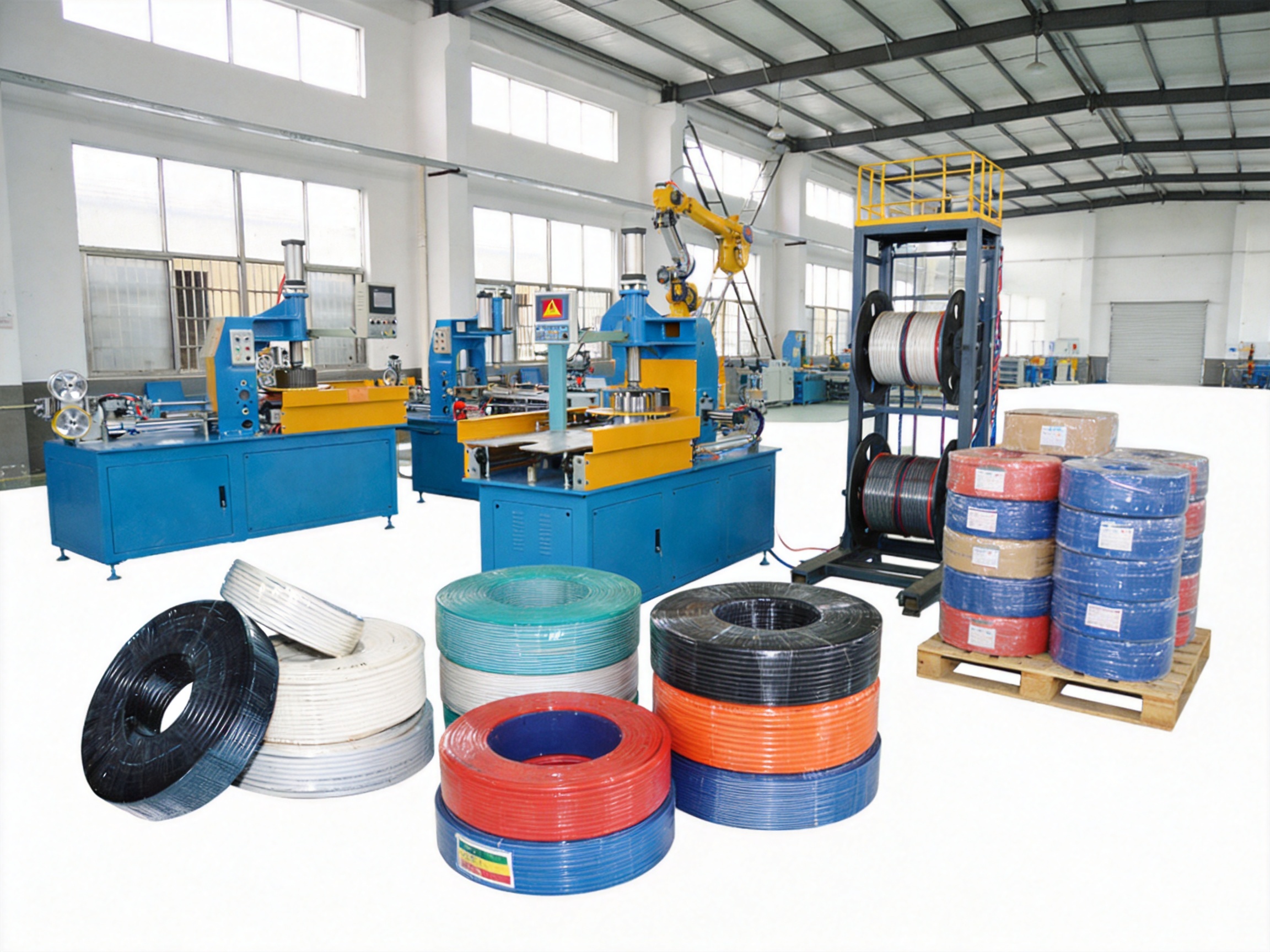
Wire and cable manufacturers are under constant pressure to improve production speed, maintain consistent product quality, reduce labor requirements, and deliver finished coils that are easy to store, transport, and sell. The final coiling and packaging stage is especially important because it directly affects the appearance, dimensional accuracy, handling convenience, and overall production efficiency of a cable manufacturing line.
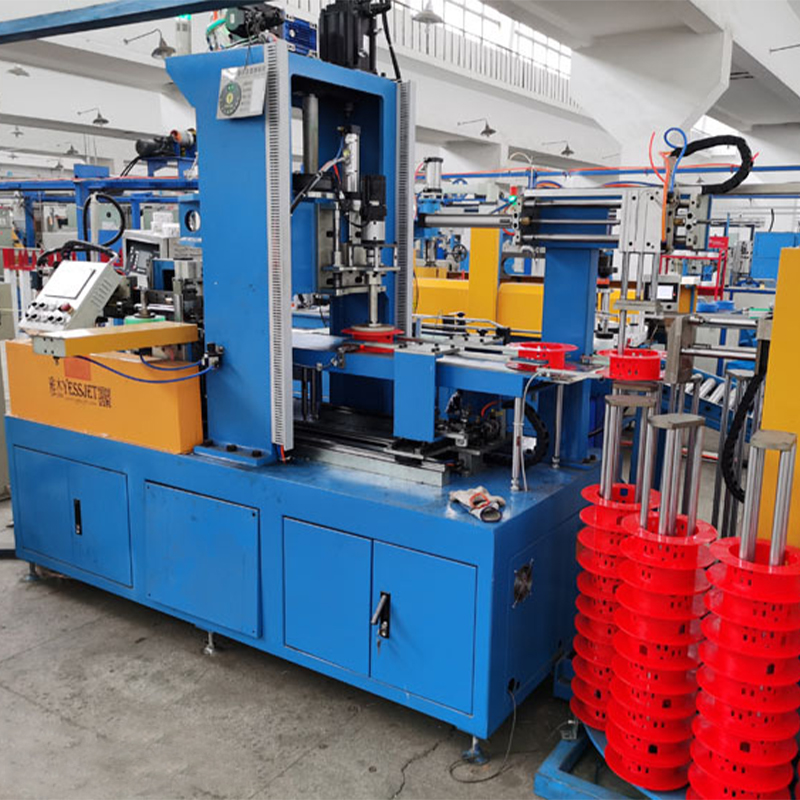
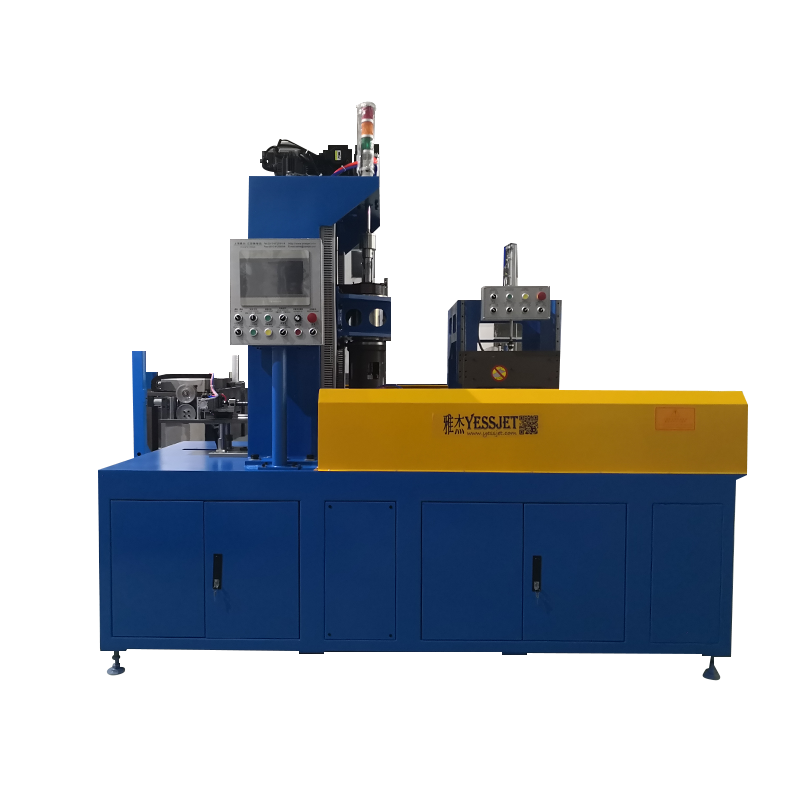
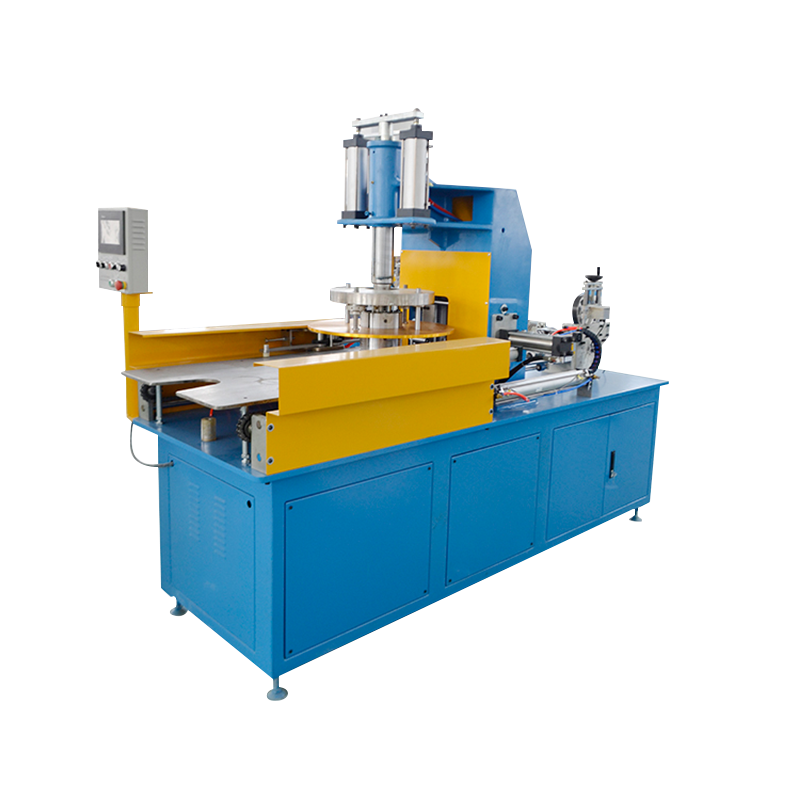
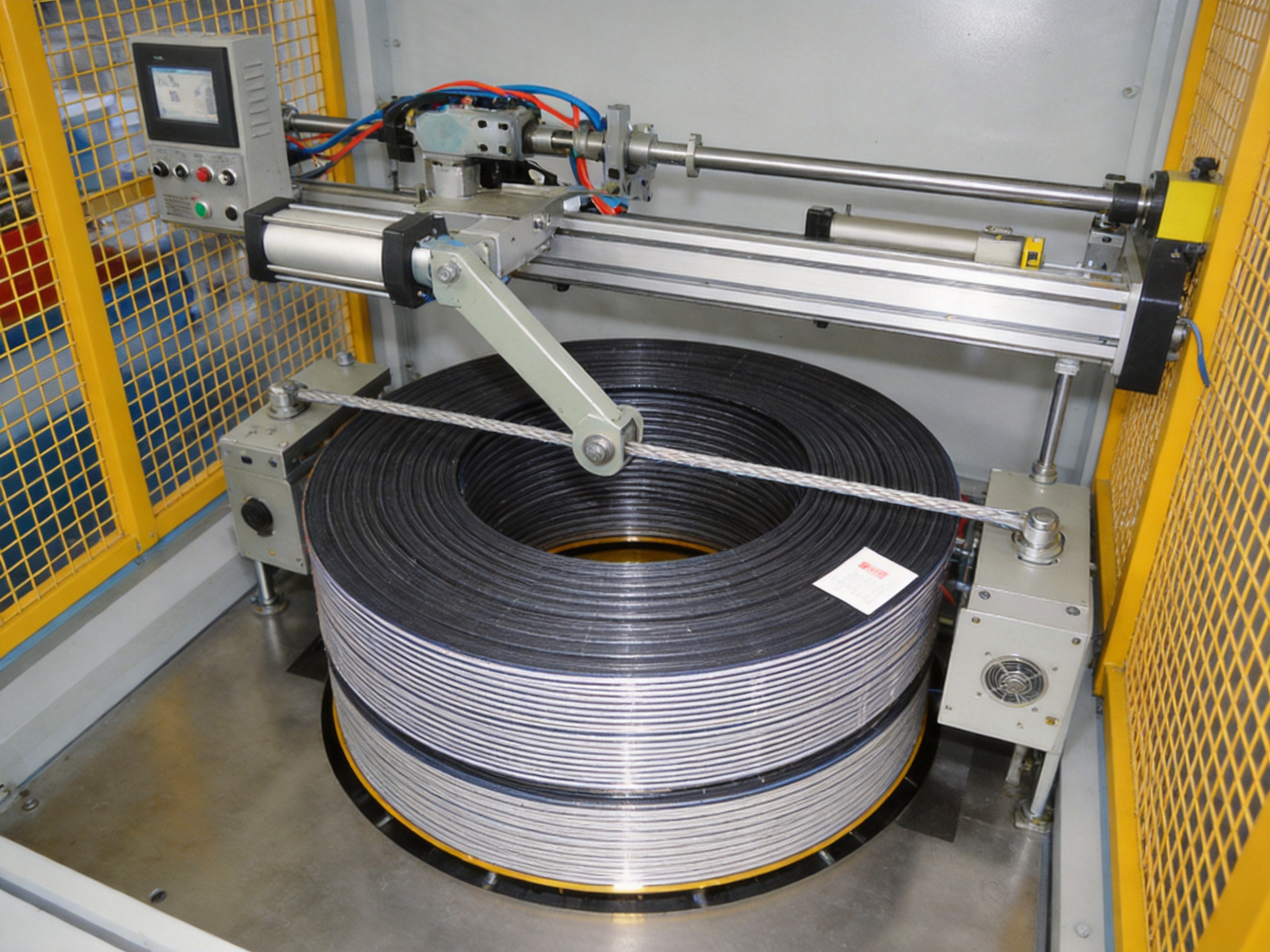
The Automatic Coiling Machine is designed to meet these requirements by combining automatic cable coiling, servo-controlled cable arrangement, adjustable thread holding, automatic labeling, fault detection, and wrapping functions in one integrated system. It can receive cable from an extrusion line or a motorized pay-off machine, form the cable into a controlled coil, apply a wrapping material, and prepare the finished product for subsequent handling or shipment.
Unlike conventional winding equipment that may require frequent manual adjustment, manual labeling, or separate packaging operations, this machine is designed for continuous production and quick product changeover. It is suitable for a broad range of wires and cables, including BV, BVR, RVV, UL electronic wires, flower wires, and other cable types used in electrical, electronic, construction, and industrial applications.
With multiple models available for different cable diameters and coil dimensions, the equipment provides a flexible solution for manufacturers that need reliable automatic packaging without excessive floor space or unnecessary labor expenditure.
Why Automatic Coiling Matters in Modern Cable Production
Coiling is more than simply winding a length of cable into a circle. A finished coil must have a stable shape, a smooth surface, an accurate inner diameter, and a consistent outer diameter. The turns should be arranged evenly so that the cable does not overlap irregularly, twist excessively, or become difficult to unwind at the customer’s site.
In a manual or semi-automatic process, operators may need to guide the cable by hand, adjust the cable arrangement mechanism, measure the coil, apply a label, and wrap the finished product. These tasks require time and experience. They can also create differences between production batches, particularly when the line is operating at high speed or when the product specification changes frequently.
An automatic coiling system addresses these problems by coordinating cable feeding, traversing, winding, holding, labeling, and packaging. Once the required coil data has been selected or entered, the machine can repeat the same process with a high level of consistency. This improves production stability and allows operators to focus on monitoring the line rather than performing repetitive manual actions.
For manufacturers producing many cable sizes, automatic data storage is particularly valuable. The control system can store up to 99 types of coil data in the PLC memory. This allows the operator to recall established settings for different products without manually recalibrating every part of the machine during each changeover.
Integrated Coiling and Packaging in One Machine
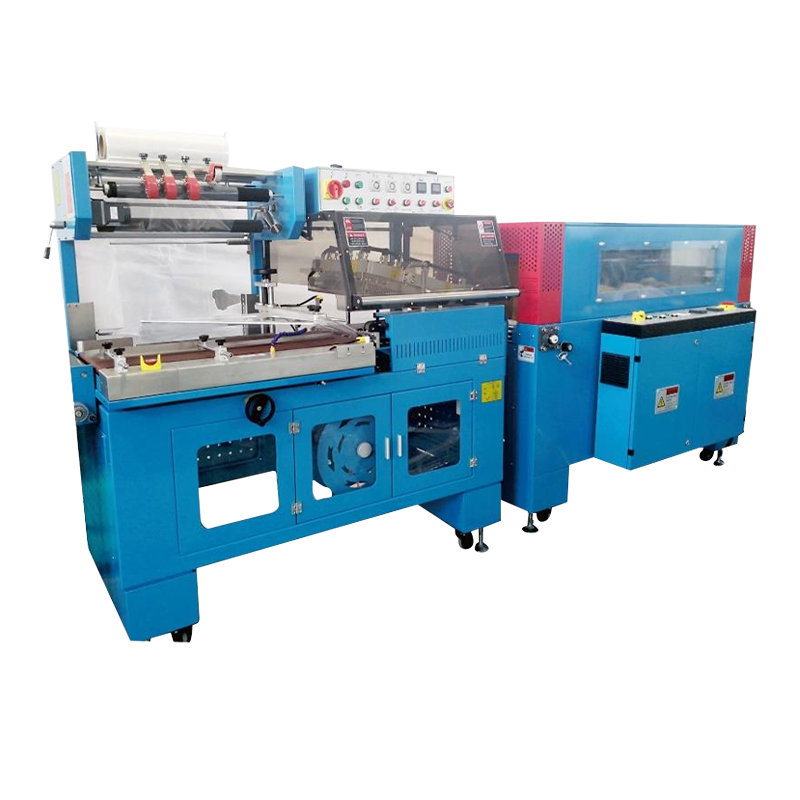
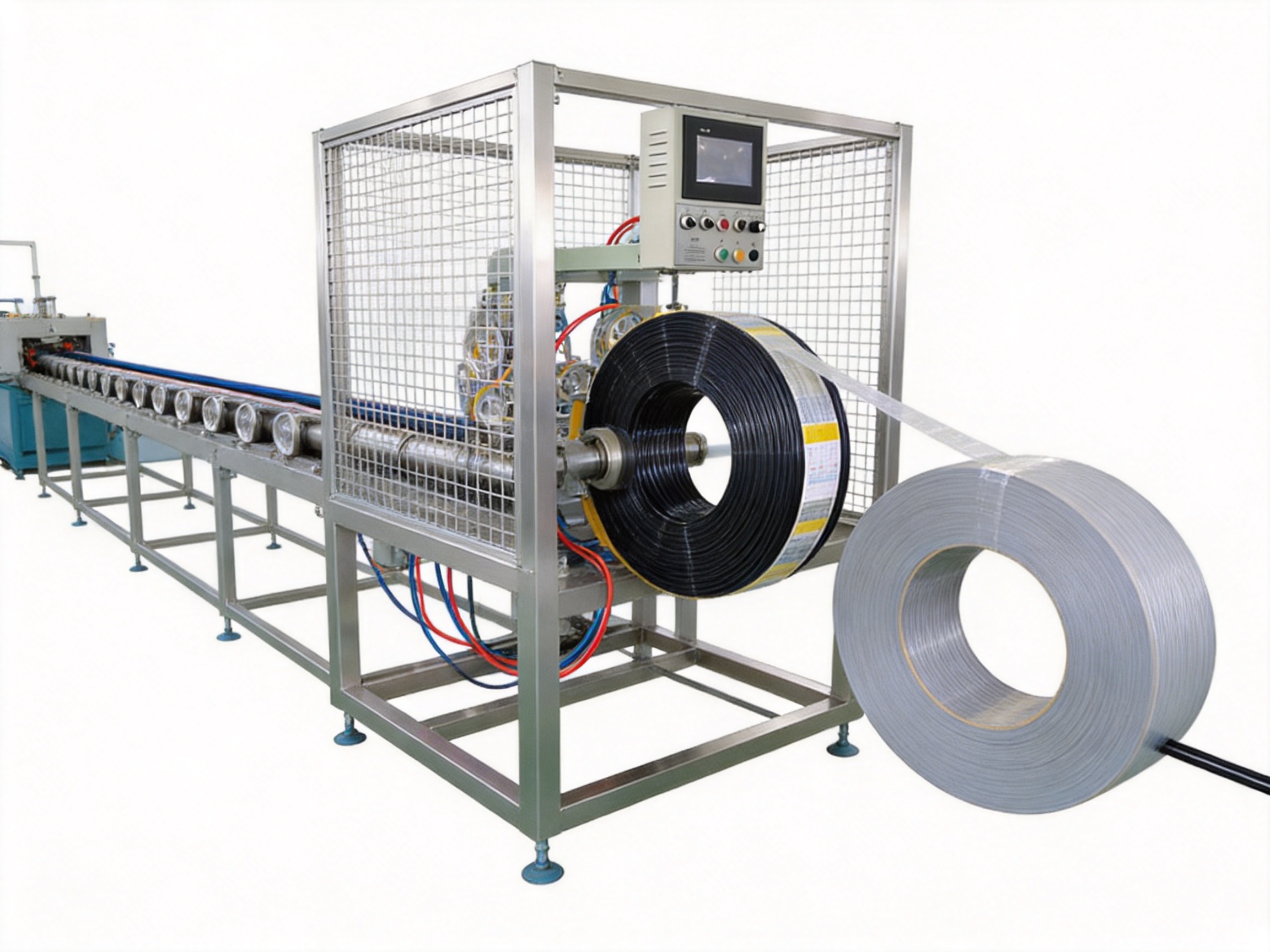
The main advantage of the equipment is its integrated operating concept. The machine automatically winds wire or cable into a coil and then wraps the coil using suitable packaging materials. Depending on the application, PP tape, paper tape, woven tape, or similar materials may be used.
Combining these functions in one machine reduces the need for separate workstations. In a conventional arrangement, cable winding may take place at one location while labeling and wrapping are performed elsewhere. Each additional step creates opportunities for handling damage, production delays, and inconsistent packaging. An integrated machine minimizes these transfers and creates a more direct production flow.
The packaging process also helps maintain the shape of the coil after winding. Properly wrapped cable is easier to handle, stack, count, and transport. It is less likely to loosen during movement and can be presented in a more professional form to distributors and end users.
Automatic packaging is particularly useful when a manufacturer produces large volumes of retail or installation cable. Finished coils can be prepared in a repeatable format, with labels applied automatically and wrapping tension controlled as part of the machine cycle.
Because the machine is designed for continuous operation, it can support production environments in which long extrusion runs must be processed without frequent stops. Non-stop production helps increase output and reduces the time lost between individual coils.
Automatic Coiling Machine
Servo Motor Cable Arrangement System
The cable arrangement system is one of the most important components in an automatic coiler. If the cable is not distributed evenly across the winding width, the finished coil may have an uneven surface or an unstable shape. Manual guidance can produce acceptable results at low speeds, but it becomes increasingly difficult as line speed rises or cable stiffness changes.
This equipment uses a servo motor traversing system to guide the cable accurately across the coil width. The servo system can coordinate the movement of the cable guide with the rotation of the winding mechanism. As a result, cable turns are placed in a controlled pattern to produce a smooth and uniform coil surface.
Servo control provides several practical benefits. It allows precise movement, fast response, repeatable positioning, and flexible adjustment for different cable sizes. It also supports the storage of multiple coil recipes, making it easier to reproduce established winding patterns when production returns to a previous product specification.
A smooth cable arrangement improves both appearance and function. The finished coil is easier to package, less likely to deform, and more convenient for installers or customers to unwind. Uniform winding can also reduce the risk of localized pressure, sharp bends, crossovers, and unnecessary cable stress.
Compared with basic mechanical traversing systems, servo-driven cable arrangement provides greater flexibility when the manufacturer must process different coil heights, inner diameters, outer diameters, or wire diameters. It is especially useful for factories that handle a wide product range rather than producing only one fixed cable specification.
Automatic Adjustable Thread Holding Arm
The automatic adjustable thread holding arm is another feature that reduces manual intervention. In many traditional coiling processes, an operator must adjust the thread holding position when the coil size changes. This adjustment can take time and may lead to inconsistent results if the position is not set correctly.
The automatic holding arm adjusts according to the selected coil parameters. This eliminates the need for routine manual adjustment and helps maintain stable cable control during winding and packaging. It also improves operator safety by reducing the need to reach into the working area during setup or production.
Accurate holding is important because the cable must remain properly positioned as the winding cycle starts, continues, and finishes. If the cable moves unexpectedly, the coil may become loose or irregular. The automatic holding arm helps stabilize the cable and supports a more controlled transition from one process stage to the next.
By automating this adjustment, the machine can achieve shorter changeover times and more consistent operation between different production orders. The feature is especially beneficial in facilities that need to change coil dimensions frequently or produce multiple cable types during the same shift.
Automatic Label Feeder for Traceable Products
Labeling is an essential part of cable packaging. Product labels may include information such as cable type, size, length, production batch, customer order, or handling instructions. Manual labeling can be slow and may result in labels being placed unevenly, applied to the wrong coil, or omitted altogether.
The automatic label feeder applies labels as part of the machine’s operating cycle. This creates a more consistent appearance and reduces the amount of labor required for final packaging. It also helps improve product identification when finished coils are moved from production to storage or shipment.
Automatic labeling contributes to better production traceability. When the labeling process is coordinated with the selected coil data, manufacturers can reduce the risk of mismatching cable products and labels. This is valuable for distributors and end users who need to identify cable specifications quickly.
The automatic feeder also improves workplace safety and convenience. Operators are not required to manually place a label on every finished coil, and the labeling process does not need to be performed at a separate station. This supports a more streamlined and organized production area.
Automatic Fault Detection and Alarm Functions
Reliable fault detection is essential for automated machinery. A production line that continues running after a mechanical or electrical problem occurs may produce defective coils, waste cable, damage packaging materials, or create a safety hazard.
The Automatic Coiling Machine can automatically detect faults and provide an alarm to remind the operator. This allows problems to be identified earlier and supports timely inspection, adjustment, and maintenance.
Alarm functions can help operators respond to conditions such as abnormal machine operation, material interruptions, or control errors. While the exact alarm configuration depends on the machine setup, the general purpose is to provide clear feedback rather than requiring the operator to discover a problem only after a large quantity of product has been affected.
Early fault notification improves production control in several ways. It can reduce material waste, limit unplanned downtime, protect the winding mechanism, and help maintenance personnel locate the source of a problem more efficiently. It also supports a safer working environment by making abnormal operating conditions more visible.
For factories operating multiple machines, automatic alarms are particularly useful because one operator may supervise several pieces of equipment. The operator can respond to the machine that requires attention while allowing other production equipment to continue running normally.
Touchscreen Graphic Operation Terminal
The machine is equipped with a screen touch graphic operation terminal designed to simplify control and monitoring. A graphical interface allows operators to view machine status, select production data, enter parameters, and respond to alarms through a more intuitive operating process.
Compared with systems that rely on numerous switches and manual adjustment points, a touchscreen interface can present the most important information in a centralized format. This helps reduce operator training time and makes it easier to understand the relationship between the selected product data and the machine’s operating conditions.
The interface can be used to manage coil dimensions, production recipes, machine functions, and alarm information. Once a product has been configured and verified, its data can be stored in the PLC memory for future use.
This recipe-based operation offers an important advantage over competitors’ basic coiling machines that may require repeated manual setup. A manufacturer can maintain standardized settings for regular products and quickly recall them when a new production order is scheduled.
Touchscreen control also supports more organized production management. Operators can work from defined parameters instead of relying solely on personal experience. This helps reduce variation between shifts and makes the process easier to standardize across a production team.
Wide Application Range for Wires and Cables
The equipment is designed for automatic coiling and winding packaging of various wire and cable products. It can receive cable from an extrusion line or from a pay-off machine, allowing it to be incorporated into different production layouts.
Typical application products include BV building wire, BVR flexible wire, RVV sheathed flexible cable, UL electronic wires, flower wires, and other cable types with suitable dimensional and material characteristics.
Its broad application range makes the machine suitable for cable factories serving multiple markets. Building wire manufacturers may use it to prepare coils for distribution and installation. Electronic wire producers may use it for orderly packaging of smaller-diameter products. Flexible cable manufacturers can benefit from controlled winding that reduces tangling and improves handling.
The suitability of a particular model depends on wire diameter, coil height, inner diameter, outer diameter, material stiffness, line speed, and packaging requirements. Manufacturers should confirm these parameters before selecting a machine configuration.
Because several models are available, the equipment can be matched more closely to the required product range. A factory producing small and medium-sized coils may choose a high-speed model, while a manufacturer processing larger cable diameters may select a model with a larger coil capacity and lower operating speed.
Available Models and Technical Capacity
The product range includes the C1246, C1860, C2060, and C2480 models. Each model is designed for a different combination of coil dimensions, wire diameter, and operating speed.
| Model | Coil Height (mm) | Outer Diameter (mm) | Inner Diameter (mm) | Wire Diameter (mm) | Maximum Speed (RPM) |
|---|---|---|---|---|---|
| C1246 | 50–120 | 180–460 | 120–220 | 1–12 | 900 |
| C1860 | 60–180 | 220–600 | 180–250 | 5–15 | 300 |
| C2060 | 60–200 | 220–600 | 180–250 | 5–15 | 300 |
| C2480 | 80–240 | 250–800 | 250–320 | 10–25 | 150 |
The C1246 model offers the highest listed rotational speed and is suitable for smaller wire diameters and compact coils. With a wire diameter range of 1 to 12 millimeters and a maximum speed of 900 RPM, it is appropriate for applications where high throughput is a priority.
The C1860 and C2060 models are designed for wire diameters from 5 to 15 millimeters. Their coil dimensions are similar, although the allowable coil height ranges differ. These models provide a practical solution for medium-sized cable products and production environments that require stable, repeatable coiling.
The C2480 model is intended for larger coils, with an outer diameter range of 250 to 800 millimeters and a wire diameter range of 10 to 25 millimeters. Its lower maximum speed is appropriate for heavier or larger cable products, where controlled winding and stable handling are more important than extremely high rotational speed.
The model selection should be based on the full production requirement rather than speed alone. A proper evaluation should consider cable material, cable flexibility, coil weight, required packaging method, line integration, and expected daily output.
Advantages Over Conventional and Competing Equipment
Higher Level of Automation
Many conventional coiling machines still depend on manual cable guidance, manual thread holding adjustment, manual labeling, or separate wrapping operations. These methods can be workable for low-volume production, but they become inefficient as output requirements increase.
The Automatic Coiling Machine combines several of these functions into one automated workflow. This reduces operator involvement and creates a more consistent production rhythm. The result is improved efficiency without requiring a large increase in staffing.
Reduced Labor Expense
Labor is a significant part of packaging cost, especially when every finished coil must be handled several times. Automatic coiling, labeling, and wrapping reduce repetitive manual work and allow operators to supervise more than one process or machine.
Lower labor dependence does not mean eliminating skilled personnel. Instead, it allows employees to spend more time on quality monitoring, material preparation, preventive maintenance, and production coordination rather than repetitive packaging tasks.
Fast Product Changeover
Product changeover can be a major source of lost production time. Manual machines may require repeated adjustment of the cable guide, holding arm, winding width, and packaging position whenever the coil size changes.
The ability to store 99 coil data types in the PLC memory helps reduce this burden. Operators can select the appropriate recipe and verify the settings rather than rebuilding the setup from the beginning. The design also allows coil size changes without adjusting every device manually, improving flexibility for mixed-product production.
Better Coil Appearance
A coil with a smooth and even surface communicates quality to customers. It is easier to stack, wrap, label, and transport. The servo motor cable arrangement system helps produce this appearance by controlling the cable traversing movement during winding.
Compared with irregular hand-guided coils, servo-arranged coils can provide more consistent geometry and improved handling performance. This is particularly important for retail products, where the visible appearance of the package influences customer confidence.
More Efficient Use of Factory Space
Integrating coiling, labeling, and wrapping in one machine can reduce the space required for separate packaging stations. This is beneficial for factories that need to increase capacity without expanding the building.
A compact production layout can also reduce the distance that finished coils must travel. Shorter material movement paths may improve workflow, lower handling effort, and simplify supervision.
Improved Production Continuity
Non-stop production supports higher output by reducing interruptions between coils. When the machine is correctly integrated with the extrusion line or pay-off equipment, cable can be processed in a continuous and controlled manner.
Production continuity is especially valuable for long extrusion runs. Instead of stopping the extrusion process to remove and manually package each coil, the automatic system can continue processing according to the selected coil data and packaging cycle.
Manufacturing Strengths and Engineering Capability
The performance of an automatic coiling machine depends not only on its visible functions but also on the quality of its design, assembly, control integration, and testing. The manufacturer, Shanghai Yessjet Precise Machinery Co., Ltd., specializes in wire and cable machinery and provides equipment for cable production and packaging applications.
Its product scope includes wire and cable extrusion lines, fully automatic coiling packaging equipment, intelligent robot stackers, coiling machines, motorized pay-off equipment, motorized take-up equipment, accessory equipment, and cable extrusion machines. This broad range provides an important engineering advantage because coiling equipment can be considered as part of a complete cable production system rather than as an isolated machine.
Understanding upstream extrusion and feeding equipment is important when designing a coiler. Cable speed, tension, cooling conditions, product stiffness, and take-up behavior all affect the final winding result. A manufacturer with experience across these equipment categories can better evaluate integration requirements and help customers develop a suitable production arrangement.
The company’s experience in cable machinery also supports customized solutions. Different customers may require different coil dimensions, wire ranges, packaging materials, operating speeds, control interfaces, or line connections. A flexible engineering approach makes it possible to adapt the machine to practical production requirements rather than forcing every customer to use one fixed configuration.
Precision machinery manufacturing requires coordination between mechanical components, electrical controls, servo systems, sensors, safety systems, and software logic. The Automatic Coiling Machine reflects this integrated approach through its servo traversing system, PLC data storage, touchscreen terminal, automatic alarms, adjustable holding arm, and automatic label feeder.
These functions must operate together accurately. The winding mechanism must maintain stable rotation, the servo system must guide the cable correctly, the holding arm must respond to product data, and the packaging system must complete its task without interrupting the overall cycle. Proper engineering coordination is therefore a central manufacturing strength.
Manufacturing Process Considerations
Advanced machinery production begins with a clear understanding of the intended application. Before equipment configuration, important technical factors include cable diameter, cable construction, conductor flexibility, insulation material, coil size, line speed, packaging material, and required daily capacity.
Mechanical components must be selected and assembled to support stable operation under the required load. Rotating parts require accurate alignment, while cable guiding components must provide smooth movement without damaging the cable surface. The servo arrangement system requires coordinated mechanical installation and control calibration.
Electrical integration is equally important. The PLC, touchscreen terminal, servo motor, sensors, alarms, and safety-related components must communicate correctly. Control parameters should be organized so that operators can adjust approved production settings without creating unnecessary risk of incorrect operation.
During assembly and commissioning, the machine should be checked for winding accuracy, cable tracking, coil dimensions, label positioning, wrapping performance, alarm response, and changeover behavior. Testing with representative cable products helps verify that the machine performs correctly under realistic conditions.
A reliable manufacturing process also includes attention to maintainability. Components that require routine inspection should be accessible, and operating instructions should be clear enough for production staff and maintenance personnel. A machine that is easy to inspect and service can provide better long-term availability than equipment that is difficult to access.
The manufacturer’s experience with complete cable production lines further supports practical integration. The coiler can be connected to an extrusion line or pay-off machine according to the customer’s layout and operating requirements. This helps reduce compatibility problems during installation and commissioning.
Integration with Extrusion Lines and Pay-Off Equipment
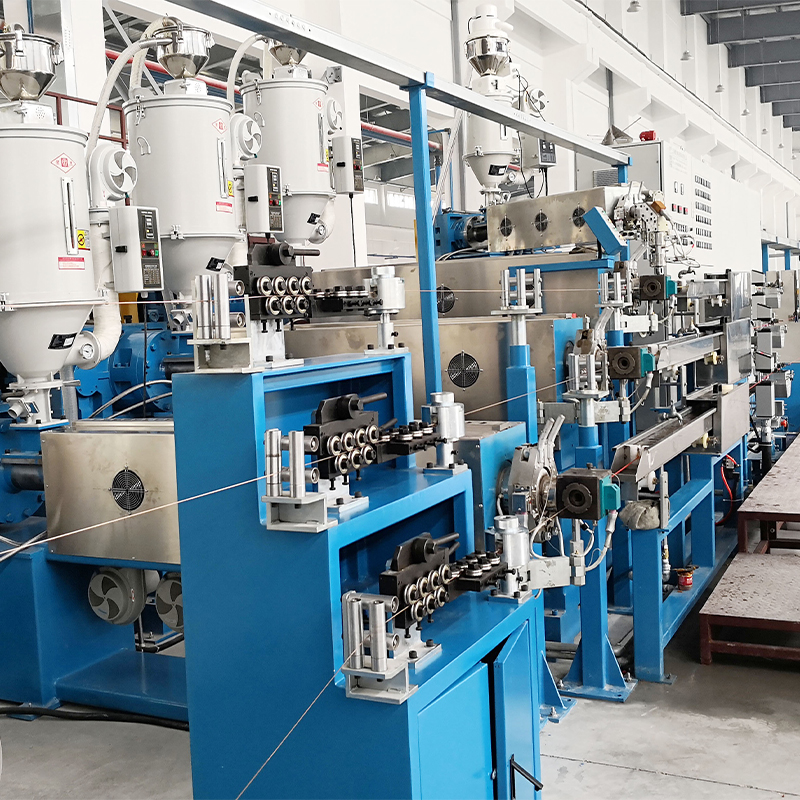
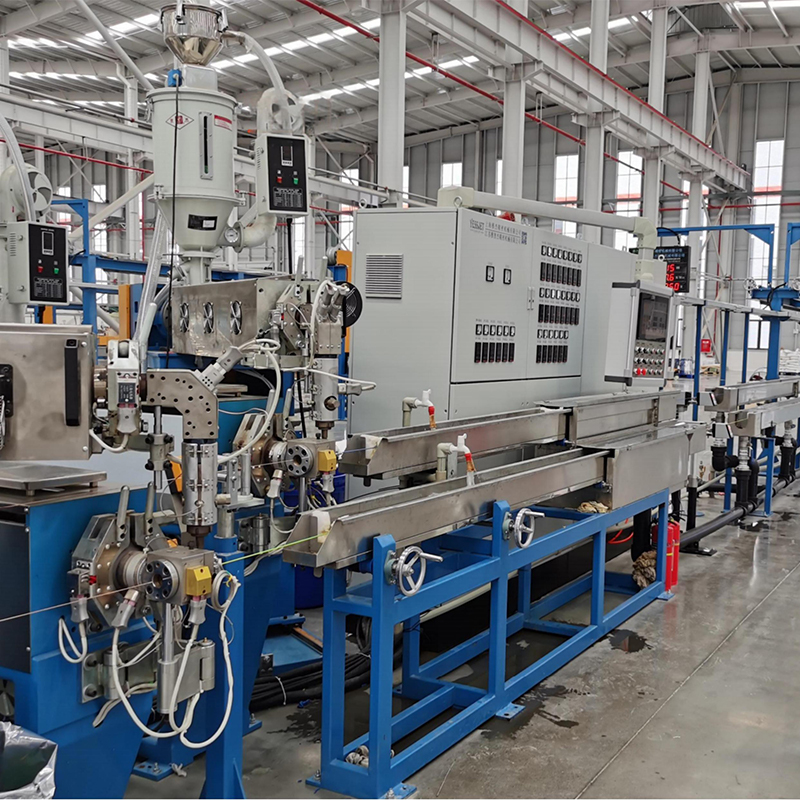
The Automatic Coiling Machine can receive wire or cable directly from an extrusion line or from a motorized pay-off machine. This flexibility allows it to be used in both new production lines and existing factories that are upgrading their packaging processes.
When connected to an extrusion line, the coiler must be synchronized with the cable delivery speed. Stable communication between upstream equipment and the coiling system helps maintain consistent coil length and avoid excessive tension. The exact integration method depends on the line design, cable type, and production speed.
When connected to a pay-off machine, the coiler can process cable that has already been produced and stored in another form. This is useful when manufacturers want to repackage, reorganize, or prepare existing cable for a new order or distribution channel.
A coordinated line can reduce manual handling between extrusion, winding, packaging, and stacking. For higher-volume facilities, the coiling machine may also be used with intelligent robot stackers or other material-handling equipment to create a more automated finished-product area.
Before installation, the customer should confirm cable entry direction, available floor space, electrical supply, line speed, product buffer requirements, and packaging material specifications. These details help ensure smooth commissioning and efficient daily operation.
Quality, Safety, and Operational Benefits
Consistent coiling contributes to product quality because it limits unnecessary bending, crossing, and deformation. The servo arrangement system helps maintain a controlled winding pattern, while the holding arm supports cable stability during the cycle.
Automatic fault detection provides an additional quality safeguard. If the machine identifies an abnormal condition, the alarm allows the operator to stop and investigate before a large number of defective coils are produced.
Automation can also improve workplace safety. Operators do not need to perform every adjustment or label application near moving components. Reduced manual intervention lowers exposure to repetitive motions and helps create a more controlled operating environment.
Safety procedures should still be followed at all times. Operators should receive appropriate training, understand emergency stop functions, keep protective covers and safety devices in place, and perform maintenance only according to approved procedures.
Manufacturers should also establish routine checks for cable guides, winding components, sensors, packaging material paths, servo mechanisms, and electrical connections. Preventive maintenance can reduce unexpected downtime and help preserve winding accuracy over the life of the equipment.
Efficient Operation and Production Management
To achieve the best results, operators should begin by confirming that the selected coil data matches the cable being produced. The cable diameter, coil height, inner diameter, and outer diameter should be within the capability of the selected model.
Packaging material should be installed correctly and checked for suitable width, strength, and surface condition. PP tape, paper tape, woven tape, and other materials may have different handling characteristics. Correct material selection helps maintain reliable wrapping performance.
During operation, the operator should monitor the touchscreen terminal, alarm messages, cable position, winding surface, and finished coil shape. Early attention to abnormal conditions can prevent larger production problems.
When changing to another coil size, the operator can recall the corresponding data from the PLC memory. The machine is designed so that it is unnecessary to adjust every device manually when switching between coil sizes. Even so, the operator should verify the first finished coil after a changeover to ensure that the selected settings are appropriate for the specific cable.
Production records can be used to compare output, downtime, material consumption, and maintenance events. These records help manufacturers identify opportunities for further improvement and confirm the economic benefits of automation.
How to Select the Correct Model
The first selection factor is wire diameter. The C1246 model covers the smallest listed diameter range, while the C2480 model is designed for larger cable products. Selecting a model that matches the actual cable range is essential for stable feeding and winding.
The second factor is finished coil size. Outer diameter, inner diameter, and coil height determine whether the cable can be formed correctly and packaged efficiently. Customers should consider both current products and likely future product requirements.
The third factor is operating speed. A smaller cable may be suitable for high-speed winding, while larger or heavier cable may require a slower and more controlled process. Maximum RPM should therefore be considered together with cable weight, stiffness, and required coil quality.
The fourth factor is line configuration. Customers should determine whether the machine will be installed after an extrusion line, connected to a pay-off machine, or used as a stand-alone packaging unit. The material flow and control communication requirements may differ in each case.
The fifth factor is packaging. The required wrapping material, label format, number of wraps, and finished-product handling method should be discussed before final configuration. This ensures that the packaging system supports the customer’s sales and logistics requirements.
Recommended Application Scenarios
Building Wire Production
Building wire products such as BV and BVR are commonly supplied in coils for electrical installation. Automatic coiling improves the consistency of these coils and supports efficient retail or wholesale packaging.
Flexible Cable Manufacturing
Flexible products such as RVV cable benefit from controlled winding because irregular handling can create tangles or unnecessary bends. A servo-guided winding path helps produce orderly coils that are easier to use at the installation site.
Electronic Wire Packaging
UL electronic wires and similar products may be manufactured in a wide range of sizes and lengths. The stored coil data and flexible model range make automatic equipment suitable for manufacturers that regularly change specifications.
High-Volume Cable Lines
Factories with long production runs can benefit from continuous operation, automatic labeling, and integrated wrapping. The machine reduces the need to stop the line for manual packaging and supports higher daily output.
Multi-Product Cable Factories
Manufacturers producing several cable types can use the recipe storage function to simplify product changeover. This is particularly useful when production orders vary in coil diameter, height, and wire size.
Economic Value of Automatic Coiling
The return on investment of an automatic coiling machine comes from several sources rather than from speed alone. Reduced labor, fewer handling steps, lower packaging variation, improved product presentation, and less downtime all contribute to the total economic benefit.
When fewer operators are required for repetitive tasks, labor resources can be redirected toward quality control and maintenance. When packaging is completed in one integrated process, the factory may reduce the space and equipment needed for separate winding and wrapping stations.
Consistent coils can also reduce customer complaints related to poor appearance, loose winding, incorrect labels, or difficult handling. Better packaging may improve order fulfillment and strengthen the manufacturer’s reputation for reliable delivery.
Stored coil recipes reduce setup time and help prevent repeated trial-and-error adjustments. Over a large number of production orders, these small time savings can become a significant improvement in overall equipment utilization.
The best economic result is achieved when the machine is correctly matched to the cable range and integrated into an organized production workflow. A technical evaluation before purchase is therefore essential.
Customer Support and Customized Solutions
Wire and cable manufacturers often have requirements that cannot be met by a standard machine configuration. They may need customized coil dimensions, special cable materials, particular packaging materials, unique label formats, or integration with existing extrusion and pay-off systems.
As a wire and cable machinery manufacturer, Shanghai Yessjet Precise Machinery Co., Ltd. can provide equipment solutions based on the customer’s production objectives. The company’s product range and application experience support consultation from individual coiling equipment to broader cable production line projects.
Technical communication should include product samples, cable drawings, target production speed, coil dimensions, packaging requirements, factory layout, and electrical standards. Providing this information at an early stage helps the engineering team select a suitable model and avoid later modifications.
Customer support may also include equipment installation guidance, operating instruction, commissioning assistance, maintenance recommendations, and process optimization. The exact scope should be confirmed during the project planning stage.
For manufacturers that are expanding production, the ability to work with one machinery supplier across extrusion, pay-off, take-up, coiling, packaging, and stacking equipment can simplify project coordination. It may also help create better compatibility between different stages of the line.
Frequently Asked Questions
What is an Automatic Coiling Machine used for?
It is used to wind wires and cables into circular coils and automatically wrap them using materials such as PP tape, paper tape, or woven tape. Depending on the configuration, it can also feed labels and detect operating faults.
Can the machine work directly with an extrusion line?
Yes. The machine can automatically coil wire from an extrusion line or from a pay-off machine. The specific connection and synchronization requirements depend on the cable type, line speed, and production layout.
Which cable products are suitable for this equipment?
The machine is suitable for various wires and cables, including BV, BVR, RVV, UL electronic wires, flower wires, and other products within the dimensional range of the selected model.
How many coil recipes can be stored?
Up to 99 types of coil data can be entered and stored in the PLC memory. These recipes help operators recall established settings when changing between different coil sizes or cable products.
Is manual adjustment required when changing coil sizes?
The machine is designed so that operators do not need to adjust every device manually when changing from one coil size to another. The automatic adjustable thread holding arm and stored coil data help simplify changeover. The first finished coil should still be inspected after every major product change.
What is the function of the servo motor cable arrangement system?
The servo system guides the cable across the winding area with controlled movement. It helps create a smooth coil surface, even cable distribution, and a more stable finished package.
Does the machine apply labels automatically?
Yes. It includes an automatic label feeder, which reduces manual labeling work and helps improve label consistency and product identification.
What happens if the equipment develops a fault?
The machine can automatically detect faults and issue an alarm to notify the operator. The operator can then inspect the indicated condition and carry out the required corrective action according to the operating and maintenance procedures.
Which model is suitable for small-diameter wire?
The C1246 model covers a wire diameter range of 1 to 12 millimeters and has a listed maximum speed of 900 RPM. Final selection should also consider coil size, material characteristics, and production requirements.
Which model is suitable for larger cable?
The C2480 model covers a wire diameter range of 10 to 25 millimeters and supports outer coil diameters from 250 to 800 millimeters. It is intended for larger coils and operates at a listed maximum speed of 150 RPM.
Can the machine use different wrapping materials?
Common wrapping materials include PP tape, paper tape, and woven tape. The appropriate material depends on the cable product, required package strength, appearance, and customer requirements.
How does the machine reduce labor costs?
It automates cable winding, cable arrangement, thread holding adjustment, labeling, fault notification, and wrapping. This reduces repetitive manual work and allows operators to supervise production more efficiently.
What information should be provided when requesting a quotation?
Customers should provide cable diameter, cable type, cable material, target coil length, inner and outer coil diameter, coil height, required production speed, packaging material, label requirements, and details of the existing or planned production line.
Conclusion
The Automatic Coiling Machine provides a comprehensive solution for manufacturers that need faster, cleaner, and more consistent wire and cable packaging. By combining automatic winding, servo motor cable arrangement, adjustable thread holding, label feeding, fault detection, recipe storage, and wrapping, it addresses many of the limitations associated with conventional manual or semi-automatic equipment.
Its wide application range makes it suitable for building wire, flexible cable, electronic wire, flower wire, and other products within the specifications of the available models. The C1246, C1860, C2060, and C2480 models provide different capacities for wire diameter, coil dimensions, and operating speed.
The machine’s main competitive advantages include reduced labor requirements, faster changeover, non-stop production, improved coil appearance, better labeling consistency, lower space consumption, and easier operation through a touchscreen graphic terminal. Its servo-controlled traversing system is especially valuable for manufacturers that require smooth and uniform cable arrangement.
The strength of the solution is further supported by the manufacturer’s broader experience in wire and cable machinery. With product capabilities covering extrusion lines, pay-off equipment, take-up equipment, coiling and packaging systems, accessory machinery, and intelligent stacking equipment, the company can support both individual equipment purchases and complete cable production line projects.
For a successful project, customers should evaluate cable specifications, coil dimensions, production speed, packaging materials, factory layout, and upstream equipment before selecting a model. When correctly matched and integrated, the Automatic Coiling Machine can improve productivity, product quality, packaging consistency, and long-term manufacturing efficiency.
References
1. Product technical information for automatic wire and cable coiling and packaging equipment.
2. Product model specifications for C1246, C1860, C2060, and C2480 automatic coiling machines.
3. General principles of servo-controlled cable traversing and precision winding.
4. Industrial practices for wire and cable extrusion line integration.
5. General guidelines for automated labeling, wrapping, and finished-coil handling.
6. Manufacturer-provided information concerning wire and cable machinery, production line solutions, and auxiliary equipment.
For technical consultation and model selection, customers may contact the machinery supplier through its sales department.