LANGUAGE
 中文简体
中文简体 русский
 Français
 Español
 Português
 عربى
عربى
Content
- 1 Understanding the Role of Automatic Cable Coiling Equipment
- 2 Core Operating Process
- 3 Key Technical Specifications
- 4 Advantages Compared with Conventional Packaging Methods
- 5 Suitable Cable Applications
- 6 Manufacturing and Engineering Strengths
- 7 Quality and Production Benefits
- 8 How the CQ260 Can Fit into a Production Line
- 9 Recommended Implementation Procedure
- 10 Maintenance and Reliable Operation
- 11 Application and Purchasing Considerations
- 12 Why Integrated Automation Creates a Competitive Advantage
- 13 Environmental and Workplace Considerations
- 14 Frequently Asked Questions
- 14.1 What does the Automatic Cable Spooler Coiling Machine do?
- 14.2 What is the production speed of the CQ260?
- 14.3 What cable diameters can the machine handle?
- 14.4 What spool sizes are suitable?
- 14.5 Can the machine package different wire and cable products?
- 14.6 Does the machine require an operator?
- 14.7 How does the servo cable organization system improve the package?
- 14.8 What happens when the machine detects a malfunction?
- 14.9 Is film wrapping performed manually?
- 14.10 How is the finished coil removed?
- 14.11 Can the machine be added to an existing cable line?
- 14.12 What should be tested before production acceptance?
- 14.13 What are the main benefits over manual coiling?
- 15 Conclusion
- 16 References
- 17 Product: Automatic Cable Spooler Coiling Machine
Wire and cable manufacturers increasingly need packaging equipment that can combine speed, consistency, flexibility, and dependable automation. After extrusion, insulation, testing, and length measurement, the final coiling and packaging stage has a direct effect on product appearance, delivery efficiency, labor consumption, and customer satisfaction. An automatic cable spooler coiling machine provides an integrated solution for winding wires and cables onto plastic spools, applying protective film, and transferring finished coils without requiring continuous manual handling.
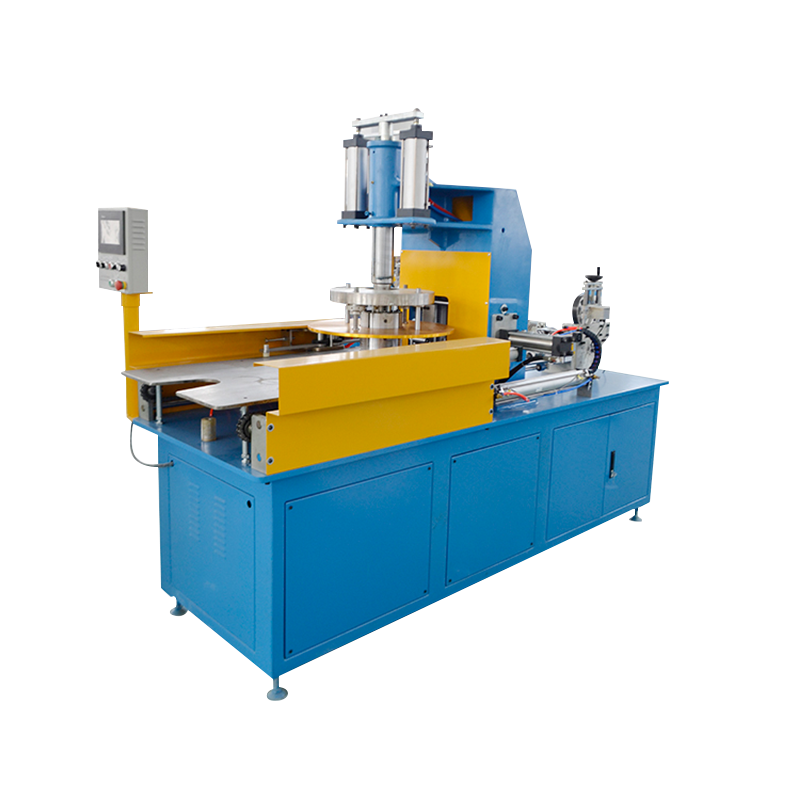
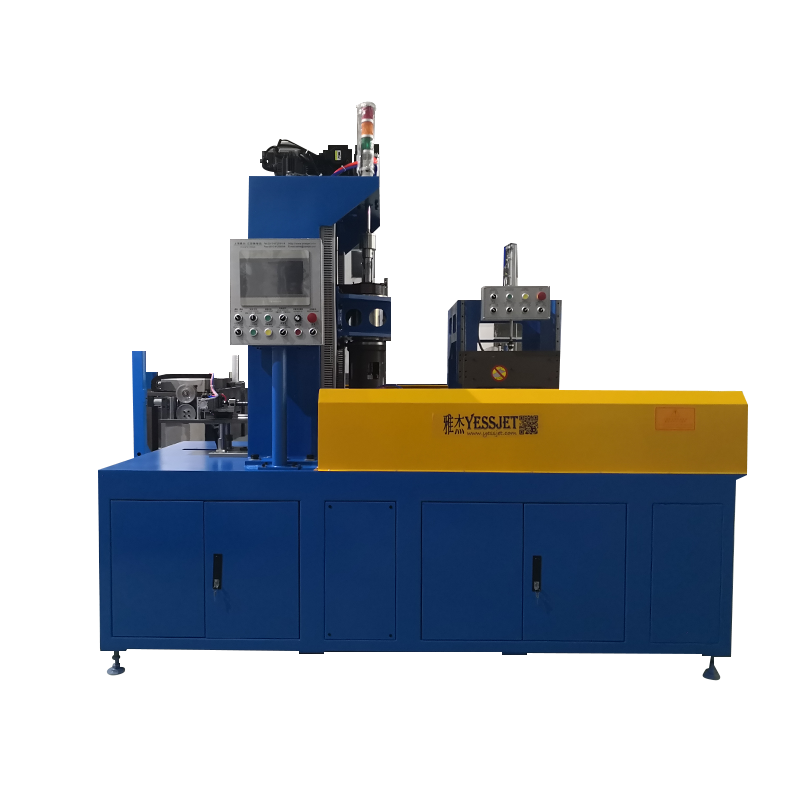
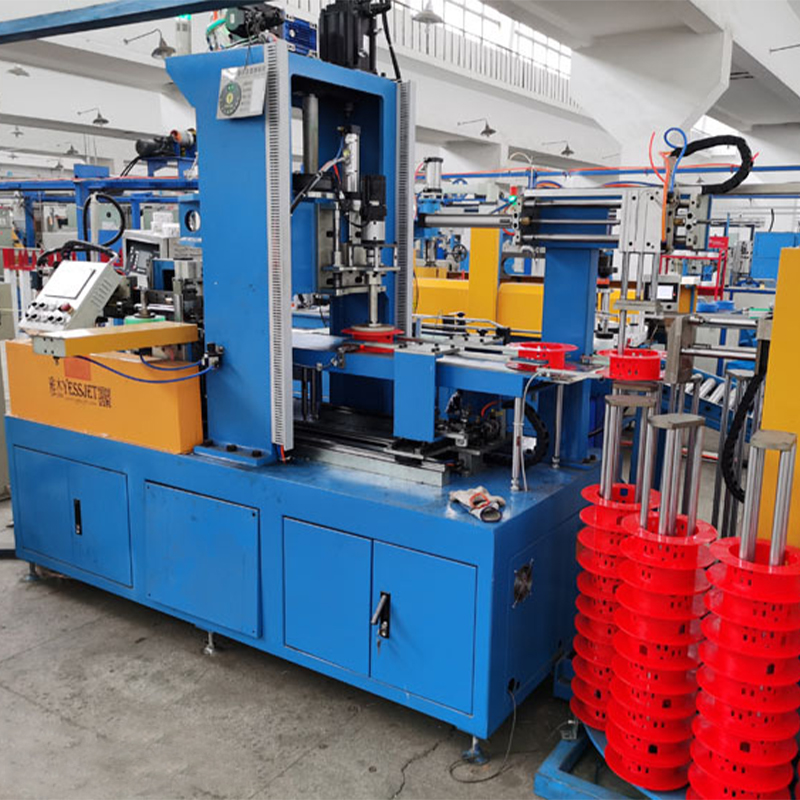
The Automatic Cable Spooler Coiling Machine, model CQ260, is designed for automatic wrapping of wires and cables on plastic spools. It combines spool delivery, controlled coiling, servo-driven cable organization, automatic film wrapping, fault detection, and finished-product transfer in one coordinated production process. With a stated production speed of up to two coils per minute for an example application such as BV 2.5 mm² cable in 100-meter lengths, the machine is suitable for manufacturers seeking to improve output while maintaining a uniform winding pattern.
Unlike a basic winding unit that only rotates a spool, this equipment is designed as a complete packaging station. It coordinates the movement of the spool, the feeding and arrangement of the cable, the application of protective film, and the removal of the completed package. This integrated approach helps reduce handling steps, lowers the possibility of winding errors, and supports a more orderly factory workflow.
Automatic Cable Spooler Coiling Machine
Understanding the Role of Automatic Cable Coiling Equipment
In a traditional cable packaging process, workers may need to position an empty spool, guide the cable during winding, monitor the coil diameter, wrap the completed spool manually, and move the packaged product to the next station. Each individual task may appear simple, but the combined process can consume substantial labor and can produce variation between packages.
Manual or semi-automatic winding may also create several common problems. Cable layers can become uneven, the winding tension may vary, and the finished coil may not have the same visual quality from one spool to another. If the operator must repeatedly handle the product, the cable may be scratched, contaminated, or bent beyond the preferred radius. Manual wrapping can likewise lead to inconsistent film coverage and unnecessary material consumption.
An automatic spooler addresses these challenges by coordinating the main packaging actions through a programmed control system. The machine can deliver a plastic spool to the coiling position, organize the cable during winding, apply film after coiling, and use a transfer arm to remove the completed product. By reducing the number of manual interventions, the equipment supports stable and repeatable packaging performance.
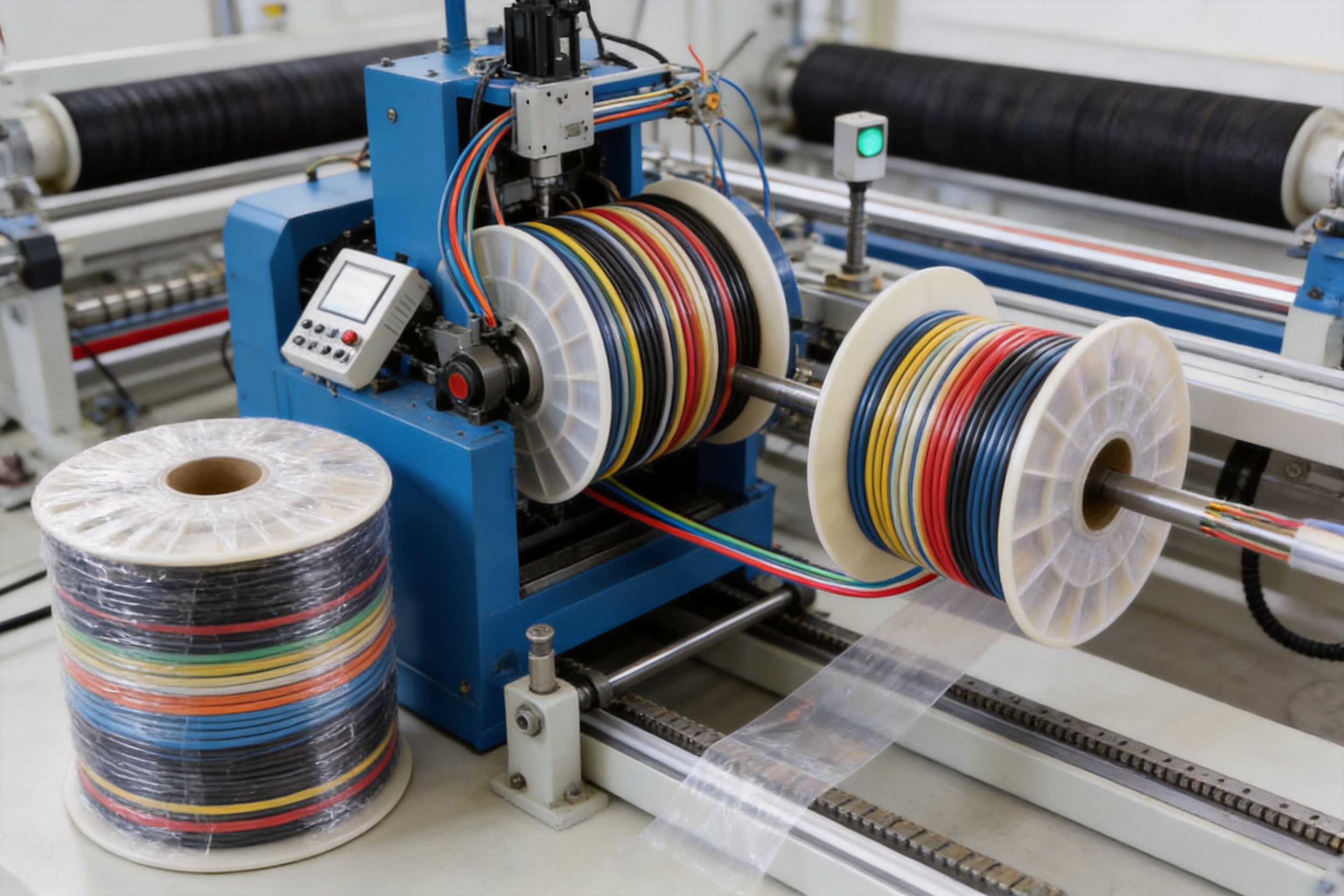
The machine is especially relevant to wire and cable plants that produce multiple cable types and lengths. The stated application range includes BV, BVR, RVV, UL electronic wires, and flower wires. These products can differ in conductor construction, insulation material, flexibility, outside diameter, and packaging requirements. A spooler with adjustable operating parameters gives the manufacturer a practical way to handle product variation without designing a separate packaging line for every cable type.
Core Operating Process
Automatic Plastic Spool Delivery
The packaging cycle begins with the delivery of an empty plastic spool to the coiling position. This eliminates the need for an operator to manually place every spool on the machine. Automated positioning also helps ensure that each spool is presented at a consistent location, which is important for accurate cable winding and reliable transfer after packaging.
Correct spool positioning contributes to process stability. If the spool is not centered or secured properly, the cable may be distributed unevenly, the film may not cover the package correctly, or the transfer mechanism may have difficulty removing the finished product. By incorporating spool delivery into the automated sequence, the CQ260 supports a more controlled beginning to every packaging cycle.
Servo Motor Cable Organization
The cable organization system uses a servo motor to guide the wire during coiling. Servo technology allows the movement of the cable guide to be coordinated with spool rotation. The guide can travel across the required winding area so that the cable is arranged in orderly layers instead of accumulating at one point.
A tidy winding pattern is important for both appearance and practical handling. Evenly arranged cable occupies the available spool width more effectively and helps prevent loose loops, crossed sections, and unstable edges. A well-organized coil is also easier to transport, store, count, and present to the customer.
Servo-driven organization offers an important advantage over simple mechanical guiding arrangements. A conventional guide may be limited to a fixed speed or a narrow range of products. Servo control can provide more adaptable movement and more precise synchronization, allowing production parameters to be adjusted according to cable diameter, spool dimensions, and required winding length.
Automatic Coiling
Once the spool is positioned and the cable is correctly guided, the machine winds the specified cable length onto the spool. The coiling operation is intended to provide repeatable packaging results while reducing the dependence on operator skill. For the example of BV 2.5 mm² cable with a 100-meter length, the listed production capacity is two coils per minute.
Actual production performance can depend on the selected cable, spool dimensions, winding length, line speed, film process, loading conditions, and factory operating method. Nevertheless, the stated reference speed demonstrates the machine’s suitability for continuous production environments where packaging output must keep pace with upstream extrusion and testing operations.
Automatic coiling also helps separate the operator’s role from direct cable guidance. Instead of continuously holding and arranging the wire, the operator can supervise the machine, replenish materials, verify the finished package, and respond to system alerts. This supports a more efficient allocation of labor and can reduce repetitive physical work.
Automatic Film Wrapping
After the cable has been coiled, the machine automatically wraps film around the package. Protective film helps keep the coil together and can reduce exposure to dust, moisture, and handling damage during internal movement, storage, and delivery. It also gives the finished product a more standardized appearance.
Combining coiling and wrapping in one automated sequence is more efficient than moving unwrapped coils to a separate manual packaging station. It reduces intermediate handling and helps preserve the winding arrangement established during the coiling stage. The operator does not need to manually gather the cable, hold the package together, and apply film while attempting to maintain a consistent appearance.
Automatic Finished-Product Transfer
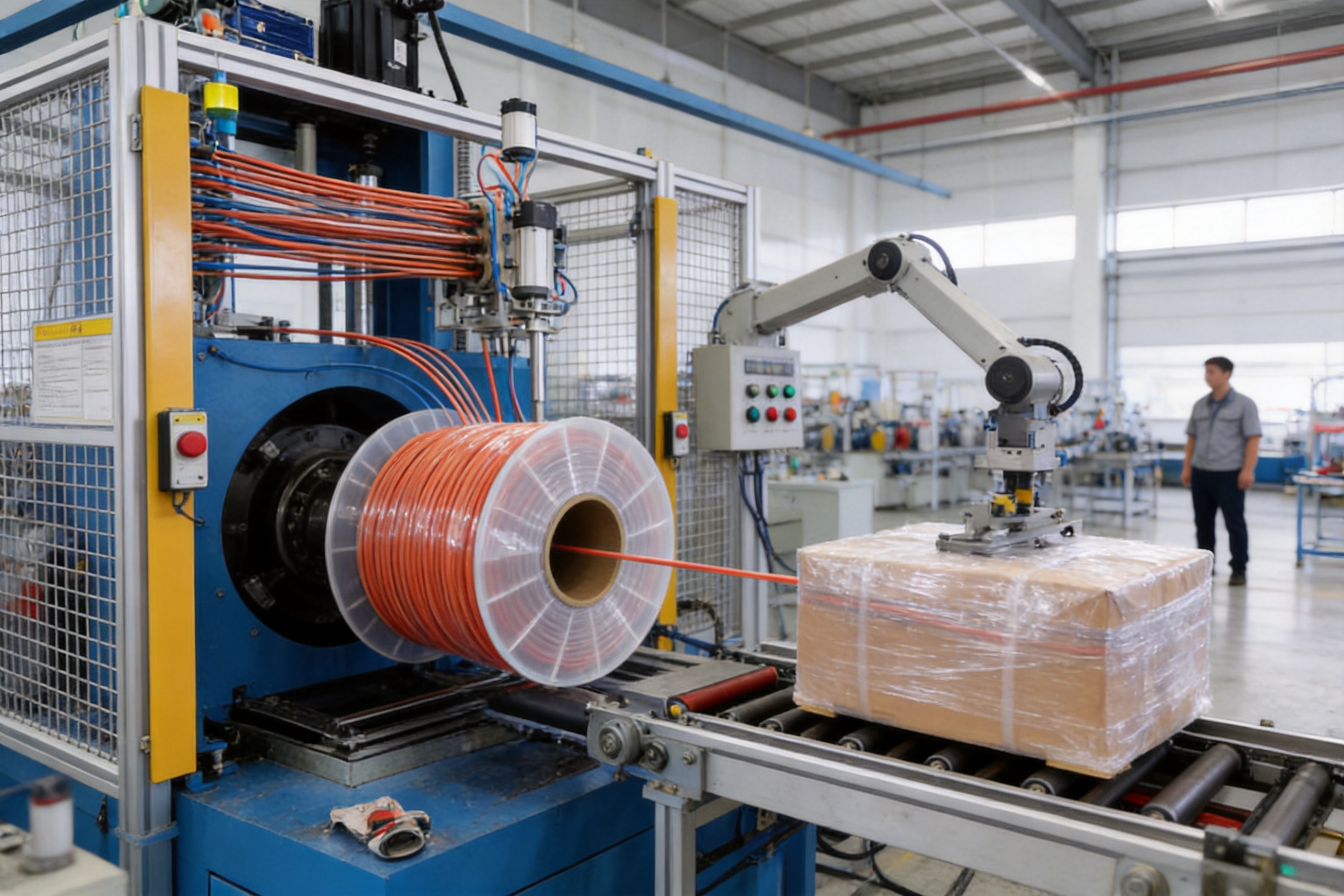
When wrapping is complete, a transfer arm removes the finished product from the coiling position. This feature is particularly valuable in repetitive, high-volume production because it eliminates the need for an operator to manually lift or pull every completed package from the machine.
Automatic transfer improves cycle continuity. Once the finished coil has been removed, the equipment can prepare for the next spool according to the programmed sequence. Reduced manual unloading can also lower the likelihood of accidental impact, cable deformation, or damage to the film package.
Key Technical Specifications
The CQ260 model is designed for a defined range of spool and cable applications. The following table summarizes the available specifications provided for this equipment.
| Item | Specification |
|---|---|
| Model | CQ260 |
| Applicable spool height | 50–100 mm |
| Applicable spool outside diameter | 215–235 mm |
| Applicable spool inside diameter | 140 mm |
| Applicable wire diameter | 1.6–6 mm |
| Reference production speed | 2 coils per minute for BV 2.5 mm², 100 m example |
| Spool material referenced in the process | Plastic |
| Primary functions | Spool delivery, cable coiling, servo cable organization, film wrapping, automatic transfer |
The dimensions indicate that the machine is intended for a specific family of plastic spools rather than unlimited spool formats. This is an important consideration when planning a production line. Manufacturers should compare the spool height, outside diameter, inside diameter, and cable diameter with their existing product specifications before ordering or configuring the equipment.
The listed cable diameter range of 1.6 to 6 mm covers many common low-voltage wires, electronic wires, and flexible cable products. However, cable diameter alone is not the only factor that influences packaging performance. Insulation stiffness, surface friction, minimum bending radius, conductor construction, finished length, and spool geometry should also be evaluated during application confirmation.
Advantages Compared with Conventional Packaging Methods
Higher Process Automation
The most visible advantage is the number of packaging actions performed automatically. Spool delivery, coiling, wrapping, and transfer are included in the operating sequence. A conventional manual process may require an operator for each of these actions, while a semi-automatic machine may automate only the winding step and leave wrapping or unloading to workers.
By integrating several stages, the CQ260 can reduce the number of separate workstations and minimize movement between them. This can make the packaging area easier to organize and may reduce work-in-process accumulation between coiling and wrapping.
More Consistent Cable Organization
The servo motor cable organization system is a major distinction from simple spool rotation equipment. A rotating spool without coordinated guiding may produce uneven layers, especially when the operator’s hand movement changes during the cycle. Servo-controlled guiding provides a more repeatable distribution pattern and supports an orderly finished coil.
Consistent organization can improve package quality in several ways. It can help maintain a stable coil profile, reduce protruding loops, make the product easier to stack, and present a more professional appearance. It can also make the cable easier for downstream users to unwind because the layers are less likely to become tangled or displaced.
Reduced Dependence on Manual Labor
Manual coiling and packaging can be repetitive and physically demanding. Operators may need to stand for long periods, guide cable continuously, lift plastic spools, wrap film, and remove completed packages. Automation can reduce these repeated actions and allow the workforce to focus on supervision, inspection, material replenishment, and exception handling.
Lower manual involvement does not mean that the operator becomes unnecessary. Skilled personnel remain important for setup, product changeover, quality verification, maintenance, and response to alarms. The difference is that labor is directed toward higher-value control and management tasks instead of constant repetitive handling.
Improved Packaging Appearance
Customers often judge cable quality partly by the appearance of the package. A neat coil with uniform layers and stable film coverage suggests that the manufacturer has control over its production process. Automatic operation can help reduce visible differences between packages produced by different operators or during different shifts.
Consistent packaging is also beneficial for warehousing. Uniform packages are easier to identify, stack, count, and transport. A stable spool profile can reduce the risk of packages leaning or falling when placed on pallets or shelves.
Faster Change from Coiling to Dispatch
When film wrapping and transfer occur automatically after the cable has been wound, the product can move more quickly from the coiling station toward inspection, labeling, storage, or shipment. Eliminating a separate manual wrapping stage can shorten the path from finished cable to finished package.
This advantage is particularly useful when the extrusion line operates continuously and the packaging department must process a large number of coils. A bottleneck at the final stage can restrict the overall capacity of an otherwise efficient wire production line. Automated coiling and packaging help align final handling capacity with upstream production requirements.
Automatic Fault Detection
The equipment includes an automated error detection function. In the event of a malfunction, the machine can identify the problem and notify the operator so that appropriate maintenance or operating action can be taken. Clear fault identification is valuable because it can shorten troubleshooting time and reduce unnecessary inspection of unrelated components.
Early notification can also help prevent a small abnormality from developing into a larger production problem. For example, an operator who receives a prompt indication of a positioning, transfer, or winding issue can stop the cycle, inspect the equipment, and correct the condition before multiple packages are affected.
Fault detection should be regarded as a support function rather than a substitute for preventive maintenance. Regular cleaning, lubrication where required, inspection of moving parts, checking of cable guides, and verification of film and spool supplies remain essential for dependable operation.
Suitable Cable Applications
BV Wires
BV wires are commonly used building wires with solid conductors and PVC insulation. Their relatively structured construction makes them suitable for controlled spool winding when the machine is correctly configured for the cable diameter and required length. Automated organization can help produce compact and orderly packages for distribution and installation markets.
BVR Wires
BVR wires use flexible stranded conductors and may behave differently from solid-core products during winding. The servo organization system can help manage the cable path and maintain a regular arrangement across the spool. Application testing is still recommended because flexibility and surface characteristics can influence the preferred winding parameters.
RVV Cables
RVV cables generally contain insulated conductors within an outer sheath. Their construction may require careful consideration of bending behavior and package dimensions. The stated wire diameter range provides a reference for product selection, while actual suitability should be confirmed according to the finished cable diameter, spool dimensions, and production length.
UL Electronic Wires
UL electronic wires are used in electronic equipment, control assemblies, appliances, and related applications. These products often require clean, orderly packaging to protect the insulation surface and make length identification easier. Automatic coiling and film wrapping can support consistent handling of such wires in production and distribution environments.
Flower Wires and Similar Flexible Products
Flower wires and other flexible specialty wires can benefit from controlled guiding because their flexibility may make them more difficult to arrange consistently by hand. A servo-driven organization system can help distribute the cable across the spool and reduce loose sections. The exact operating settings should be selected according to the product’s flexibility and surface condition.
Manufacturing and Engineering Strengths
Experience in Wire and Cable Machinery
The equipment is supplied by Shanghai Yessjet Precise Machinery Co., Ltd., a China-based manufacturer focused on wire and cable machinery. Its product range includes wire and cable extrusion lines, cable extrusion machines, motorized pay-off equipment, motorized take-up equipment, coiling machines, automatic coiling and packaging equipment, accessory equipment, and intelligent robot stackers.
This product coverage is significant because a coiling machine is most effective when it can be considered as part of the complete cable production process. A manufacturer familiar with extrusion, pay-off, take-up, coiling, packaging, and stacking can better understand how the final packaging station interacts with the rest of the line.
For a cable producer, this can simplify technical communication. Instead of treating the spooler as an isolated machine, the customer can evaluate its role within the full production workflow, including cable speed, product changeover, take-up requirements, packaging capacity, and finished-goods handling.
Integrated Machinery Perspective
Wire and cable production involves a sequence of connected operations. The pay-off must provide stable material supply, the extrusion line must apply insulation consistently, the take-up must collect the cable without damaging it, and the packaging equipment must handle the finished product in a controlled manner. Changes in one stage can affect the requirements of another.
An integrated machinery perspective helps manufacturers consider these relationships during planning. For example, a packaging machine should be selected according to the cable sizes and lengths produced by the extrusion line. The spool format should match the downstream packaging and storage system. The production rhythm should also be considered so that the spooler does not become a bottleneck.
Precision-Oriented Equipment Design
The product name and supplier specialization emphasize precision machinery. In an automatic spooler, precision is relevant to spool positioning, cable guide movement, synchronization, film wrapping, and transfer. Small deviations in these areas can influence package shape and production stability.
The servo motor cable organization system reflects this precision-oriented approach. By controlling the guide movement electronically, the machine can coordinate the cable path with the rotating spool. This is more adaptable than relying solely on a fixed mechanical guide and is better suited to a production environment that handles more than one wire specification.
Automation for Industrial Production
The machine is not presented merely as a bench-top winding device. Its automatic delivery, wrapping, transfer, and fault notification functions indicate an industrial production orientation. These functions are intended to support repeatable cycles and reduce dependence on manual intervention during normal operation.
Industrial automation also requires practical attention to maintenance and operator use. A useful system should allow personnel to understand the operating status, recognize an error, carry out basic checks, and return the machine to production safely. Automated fault detection contributes to this goal by providing an indication of abnormal conditions rather than leaving the operator to discover every problem through visual observation.
Support for Turnkey Cable Production Solutions
The company’s stated business focus includes custom wire and cable production line solutions. This suggests that the CQ260 can be considered alongside other production equipment when a customer is planning a new line, upgrading an existing facility, or improving only the packaging section.
A turnkey approach can offer practical benefits. It may reduce the number of interfaces between different equipment suppliers, simplify layout planning, and make it easier to coordinate technical requirements. It can also support a more unified approach to installation, commissioning, operator training, and production optimization, subject to the specific project agreement.
Quality and Production Benefits
Repeatable Package Dimensions
Because the spool dimensions and cable organization are controlled within the machine’s operating range, the finished packages can be made more consistent than manually produced coils. Repeatability is valuable for storage, palletizing, and transportation because standard package sizes use available space more efficiently.
Repeatable dimensions also help downstream processes. Labels can be positioned more consistently, inspection can follow a clearer visual standard, and warehouse personnel can identify product units more quickly.
Protection During Handling
Film wrapping provides a basic protective layer around the finished cable package. It helps maintain the coil arrangement and can reduce exposure to dust during storage. When the product is moved several times between manufacturing, warehousing, distribution, and installation, this additional protection can help preserve its appearance and handling condition.
The film does not replace appropriate storage conditions. Cable products should still be protected from excessive moisture, heat, direct sunlight, chemicals, and mechanical impact according to the cable manufacturer’s requirements. The automatic wrapping function is one part of a broader packaging and logistics strategy.
Reduced Variation Between Shifts
Manual packaging quality can depend on operator experience, fatigue, and workload. One operator may produce a tight and evenly distributed coil, while another may leave larger gaps or use a different amount of film. Automated sequencing reduces this type of variation by using programmed movement and a repeatable process.
Lower shift-to-shift variation is useful for manufacturers that operate multiple shifts or supply customers with regular repeat orders. It also makes process evaluation easier because production results can be compared against a more stable operating method.
Better Use of Factory Labor
When a machine handles repetitive spool delivery, winding, film wrapping, and transfer, fewer workers may be required for direct packaging tasks. The available workforce can instead support quality inspection, material preparation, equipment monitoring, and maintenance planning.
Labor savings should be evaluated together with production volume, product mix, operating hours, staffing costs, and required supervision. The value of automation is not limited to reducing headcount. It also includes improved consistency, lower physical workload, better process visibility, and the ability to maintain output during labor shortages or periods of increased demand.
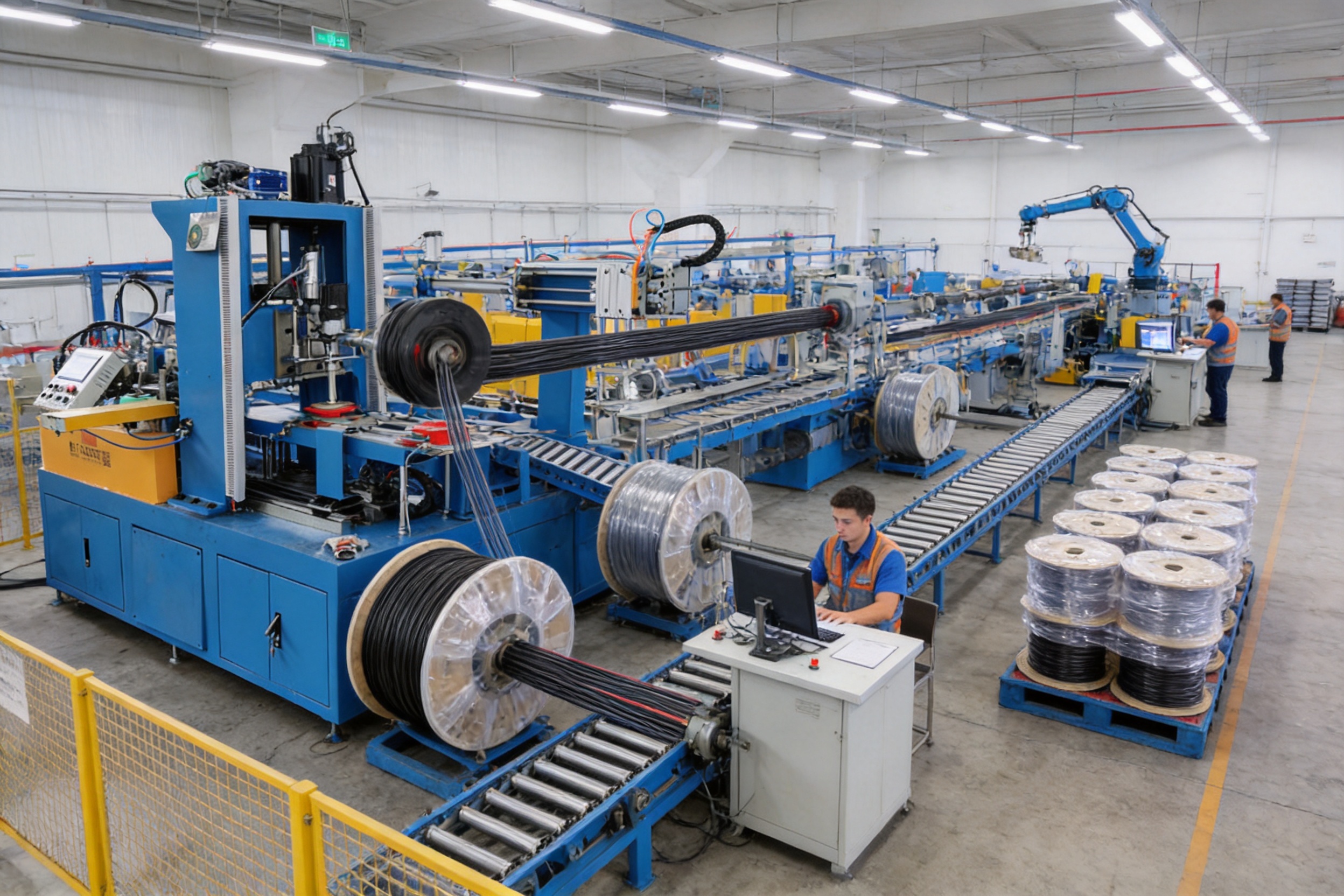
How the CQ260 Can Fit into a Production Line
The CQ260 can be positioned after the cable production and length measurement stages, where the finished wire or cable is ready to be wound onto a plastic spool. Depending on the factory layout, the incoming cable may be supplied from an extrusion line, a take-up machine, an inspection station, or an intermediate storage arrangement.
Before installation, the manufacturer should review the complete material flow. The selected spool should be available at the loading point, the cable should enter the machine at a suitable height and direction, and the finished package should have a clear route to inspection or storage. Adequate space should be provided for operators, maintenance access, film supply, spare spools, and finished-product collection.
The packaging station should also be evaluated against upstream production speed. If extrusion and take-up operate faster than the spooler can package the finished cable, an accumulation area or additional packaging capacity may be required. If the spooler has excessive capacity compared with the upstream process, the manufacturer may prioritize flexibility and labor reduction rather than maximum speed.
For a new production line, the spooler can be included during the initial layout and control planning. For an existing line, the machine may be introduced as an upgrade to replace manual coiling and wrapping. In both cases, application confirmation is important to ensure that cable diameter, length, spool size, film material, and transfer conditions are compatible.
Recommended Implementation Procedure
1. Confirm Product Requirements
Begin by listing the cable types that will be packaged. Include conductor construction, insulation material, finished outside diameter, cable flexibility, minimum bending radius, standard coil length, and expected production quantity. The stated application range includes cables with diameters from 1.6 to 6 mm, but each product should be reviewed individually.
2. Confirm Spool Dimensions
Compare the available plastic spools with the CQ260 range: 50–100 mm spool height, 215–235 mm outside diameter, and 140 mm inside diameter. Spools outside these dimensions may require a different configuration or technical evaluation. Spool material strength and dimensional accuracy should also be considered because inconsistent spools can affect positioning and winding stability.
3. Define Packaging Materials
Identify the required film type, film width, thickness, transparency, strength, and wrapping appearance. The film should be compatible with the package size and the intended storage and transport conditions. The amount of film used per package should be evaluated as part of operating cost and product protection.
4. Conduct Application Testing
Before full production, representative samples should be tested. The test should examine winding tightness, layer arrangement, cable surface condition, spool stability, film coverage, transfer performance, and finished-product appearance. Testing several cable types is advisable if the machine will serve a mixed-product line.
5. Establish Operating Parameters
Each cable type may require its own operating recipe. Parameters can include winding speed, guide movement, cable length, spool positioning, film wrapping settings, and transfer timing. Clearly defined recipes help operators switch products more efficiently and reduce the risk of incorrect settings.
6. Train Operators and Maintenance Personnel
Operators should understand the complete operating cycle, loading requirements, normal machine status, alarm indications, emergency procedures, and basic cleaning tasks. Maintenance personnel should be trained to inspect the servo organization system, transfer arm, spool delivery mechanism, film system, sensors, and other moving parts.
7. Monitor Results after Commissioning
After installation, the manufacturer should track actual production speed, package quality, film consumption, unplanned stops, changeover time, and maintenance needs. These records help determine whether the machine is meeting the expected production goals and whether settings should be adjusted for specific products.
Maintenance and Reliable Operation
Automatic equipment performs best when preventive maintenance is treated as part of production management. Cable dust, insulation particles, film fragments, and general factory contamination can accumulate around guides, sensors, spool supports, and transfer components. Regular cleaning helps preserve accurate movement and reliable detection.
The cable guide should be checked for wear or damage because it contacts the product during winding. A damaged guide can mark the cable surface or change the cable path. The spool positioning area should be kept clear so that empty spools can be delivered and centered properly. The transfer arm should be inspected to ensure that it moves smoothly and does not interfere with the completed package.
Servo-driven systems should be monitored for abnormal noise, vibration, positioning errors, or inconsistent movement. Film-related parts should be checked for correct tension and smooth material feeding. Sensors should be kept clean and correctly aligned because inaccurate detection can interrupt the automatic sequence.
Operators should respond to error notifications according to established procedures. The cause of an alarm should be identified before restarting the machine. Repeated alarms should be recorded and communicated to maintenance personnel so that underlying causes can be addressed rather than repeatedly cleared.
Application and Purchasing Considerations
When comparing the CQ260 with competing equipment, buyers should look beyond the headline speed. A machine that operates quickly but requires frequent manual correction may deliver less effective output than a slightly slower system with stable winding, wrapping, and transfer. Important evaluation criteria include the degree of automation, cable organization quality, spool compatibility, product range, fault notification, changeover requirements, maintenance access, and integration with existing equipment.
The listed two-coil-per-minute reference is useful for initial planning, but production studies should be based on the customer’s actual cable and spool. A thinner or more flexible cable may behave differently from the reference product. Longer cable lengths may require more winding time. Film wrapping and transfer can also influence the complete cycle time.
Buyers should ask whether the proposed configuration matches their spool dimensions, cable diameter range, standard lengths, and packaging materials. They should also define how empty spools will be supplied and how finished packages will be collected. These logistical details can affect the practical output of the entire station.
Another consideration is future product development. If a manufacturer expects to add new cable types, the available adjustment range and control flexibility should be reviewed. Servo organization is advantageous because it provides a more adaptable method of guiding the cable, but each new product should still be validated before routine production.
Technical service and communication are also important. A supplier with experience in wire and cable extrusion lines, pay-off systems, take-up machines, coiling equipment, packaging systems, and robot stackers can provide a broader perspective during line planning. This can be especially useful for export projects, customized production lines, and factories upgrading several stages at the same time.
Why Integrated Automation Creates a Competitive Advantage
The competitive value of the Automatic Cable Spooler Coiling Machine lies in the combination of functions rather than in a single component. Automatic spool delivery alone does not guarantee a good package. Servo cable organization alone does not complete the packaging process. Film wrapping without automatic transfer still leaves manual handling. The CQ260 brings these functions together in one operating sequence.
This integration can reduce the number of handoffs and improve process continuity. Every additional manual handoff creates an opportunity for cable displacement, package damage, inconsistent film application, or production delay. By carrying out more actions within the machine, the process becomes easier to standardize.
The equipment also offers a practical balance between automation and product flexibility. It is designed for a defined range of spool sizes and cable diameters, yet it is not limited to one named cable product. Its stated application range includes several common wire and cable categories. This makes it suitable for manufacturers that need to package different products on the same production floor.
Compared with a basic coiling machine, the CQ260 provides broader packaging functionality. Compared with a fully manual station, it offers stronger repeatability and lower labor dependence. Compared with a collection of disconnected machines, its integrated sequence can simplify operation and reduce intermediate handling.
Environmental and Workplace Considerations
Automation can contribute to a cleaner and more organized packaging area by reducing loose cable handling and minimizing scattered packaging materials. Automatic film wrapping can also make film usage more consistent, helping the factory monitor packaging consumption and reduce avoidable waste caused by irregular manual wrapping.
From a workplace perspective, reducing repeated lifting and continuous cable guiding can improve the physical conditions for operators. The machine still requires appropriate guarding, safe access, emergency procedures, and operator training. Safety measures should be implemented according to the applicable regulations and the final machine configuration.
Energy consumption, compressed-air requirements if applicable, film usage, and maintenance materials should be included in the total operating evaluation. A complete assessment should compare the equipment’s resource consumption with the labor, rework, handling, and packaging benefits it provides.
Frequently Asked Questions
What does the Automatic Cable Spooler Coiling Machine do?
It automatically places plastic spools in the coiling position, winds wire or cable onto the spool, organizes the cable through a servo motor system, wraps the completed coil with film, and transfers the finished package out of the machine.
What is the production speed of the CQ260?
The stated reference speed is two coils per minute for an example application of BV 2.5 mm² cable with a 100-meter length. Actual speed depends on the cable type, cable length, spool dimensions, film process, and operating conditions.
What cable diameters can the machine handle?
The listed applicable wire diameter range is 1.6–6 mm. Product trials should be conducted for each cable type because flexibility, insulation surface, bending behavior, and construction can affect winding performance.
What spool sizes are suitable?
The listed spool range includes a height of 50–100 mm, an outside diameter of 215–235 mm, and an inside diameter of 140 mm. Spool specifications should be confirmed before purchasing or integrating the equipment into an existing line.
Can the machine package different wire and cable products?
Yes. The stated applications include BV, BVR, RVV, UL electronic wires, and flower wires. The machine is intended for a range of wires and cables within its dimensional and process capabilities. Each product should be tested and assigned suitable operating parameters.
Does the machine require an operator?
The machine is automated, but an operator is still needed for supervision, loading and replenishment activities, product changeover, quality checks, alarm response, and routine operating tasks. Automation reduces continuous manual handling rather than eliminating the need for trained personnel.
How does the servo cable organization system improve the package?
The servo system coordinates cable guide movement with spool rotation. This helps distribute the cable across the spool in a more orderly pattern, supporting uniform layers, a stable package shape, and improved appearance compared with uncontrolled or inconsistent manual guiding.
What happens when the machine detects a malfunction?
The automated error detection function can identify a problem and notify the operator. The operator can then follow the appropriate maintenance or operating procedure. The alarm function should be supported by regular inspection and preventive maintenance.
Is film wrapping performed manually?
No. According to the stated process, film is automatically wrapped around the finished coil after coiling is complete. This reduces a separate manual packaging step and helps create more consistent coverage.
How is the finished coil removed?
A transfer arm takes the completed, film-wrapped package out of the machine. This eliminates the need for manual removal during the normal production cycle.
Can the machine be added to an existing cable line?
It may be possible to use the machine as an upgrade for an existing line, subject to confirmation of cable delivery, spool supply, layout, control interfaces, and product requirements. A technical review should be completed before installation.
What should be tested before production acceptance?
Testing should include winding quality, cable surface protection, length accuracy, spool positioning, film coverage, transfer reliability, cycle time, product changeover, alarm response, and compatibility with all intended cable types.
What are the main benefits over manual coiling?
The main benefits include reduced repetitive labor, more consistent cable organization, automatic wrapping, automatic transfer, improved package appearance, faster process flow, and automated fault notification.
Conclusion
The Automatic Cable Spooler Coiling Machine is designed to modernize the final packaging stage of wire and cable manufacturing. Its CQ260 configuration combines automatic plastic spool delivery, servo motor cable organization, automatic winding, film wrapping, fault detection, and transfer-arm unloading. Together, these functions create a more continuous and repeatable alternative to manual or partially automated packaging.
The machine is suitable for a range of wires and cables, including BV, BVR, RVV, UL electronic wires, and flower wires, within the stated dimensional range. Its reference performance of two coils per minute for BV 2.5 mm², 100-meter coils demonstrates its application in production environments that require efficient and consistent output.
Its advantages over conventional equipment are based on process integration, reduced manual handling, improved winding organization, automated protective packaging, and clearer fault response. These advantages can help manufacturers improve production efficiency, package quality, workplace conditions, and overall workflow.
Supplied by a manufacturer whose product portfolio covers wire and cable extrusion lines, pay-off and take-up equipment, coiling machines, packaging systems, accessory equipment, and intelligent robot stackers, the CQ260 can also be evaluated as part of a broader cable production solution. For manufacturers planning a new line or upgrading an existing facility, a technical assessment of product dimensions, spool compatibility, production speed, film requirements, layout, and maintenance procedures will help ensure the best result.
References
1. Product specification sheet for the CQ260 Automatic Cable Spooler Coiling Machine.
2. Technical product information concerning automatic wire and cable coiling, film wrapping, and spool transfer processes.
3. General manufacturing guidance for wire and cable extrusion, take-up, coiling, and packaging line integration.
4. Industrial automation principles for servo motor control, cable guiding, fault detection, and material handling.
5. General quality-control practices for wire and cable winding, protective packaging, storage, and transport.