LANGUAGE
 中文简体
 русский
 Français
 Español
 Português
 عربى

Content
- 1 1. The Role of Automated Coiling and Wrapping in Cable Production
- 2 2. Product Overview
- 3 3. Core Technical Features
- 4 4. Supported Wires, Cables, and Packaging Materials
- 5 5. Model Selection and Technical Range
- 6 6. Advantages Compared with Conventional and Competing Solutions
- 7 7. Manufacturing Strengths and Engineering Approach
- 8 8. Production Workflow and Quality Control Benefits
- 9 9. Installation, Operation, and Maintenance Considerations
- 10 10. Economic and Operational Benefits
- 11 11. How the Machine Supports Intelligent Factory Development
- 12 12. Recommended Applications by Production Type
- 13 13. Frequently Asked Questions
- 13.1 Q1: What types of cables can this machine process?
- 13.2 Q2: What wrapping materials can be used?
- 13.3 Q3: Does the machine coil and wrap in separate steps?
- 13.4 Q4: How does the servo motor system improve the coil?
- 13.5 Q5: Is manual adjustment required during operation?
- 13.6 Q6: Can labels be applied automatically?
- 13.7 Q7: What happens if the machine malfunctions?
- 13.8 Q8: What is the fastest available output?
- 13.9 Q9: Which model is suitable for large cables?
- 13.10 Q10: Can the machine connect to a stacking or palletizing system?
- 13.11 Q11: How should a customer select the model?
- 13.12 Q12: Is the machine suitable for a turnkey cable production line?
- 14 14. Purchasing and Project Evaluation Checklist
- 15 15. Conclusion
- 16 References
- 17 Product: Fully Automatic Coiling & Wrapping Machine
Modern wire and cable manufacturers are under constant pressure to increase output, reduce labor dependence, improve packaging consistency, and respond quickly to different product specifications. Coiling and wrapping are often among the most labor-intensive stages of cable production because they require accurate length control, orderly winding, secure wrapping, labeling, inspection, and transfer to the next handling process. When these operations are performed manually or with disconnected machines, production lines may experience inconsistent coil dimensions, material waste, labeling errors, unplanned downtime, and higher operating costs.
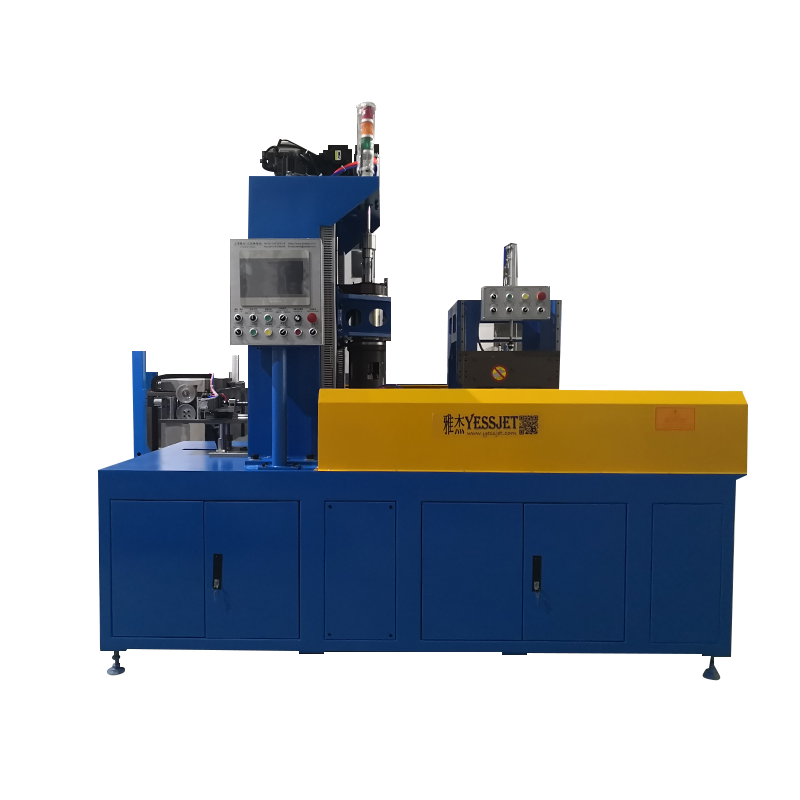
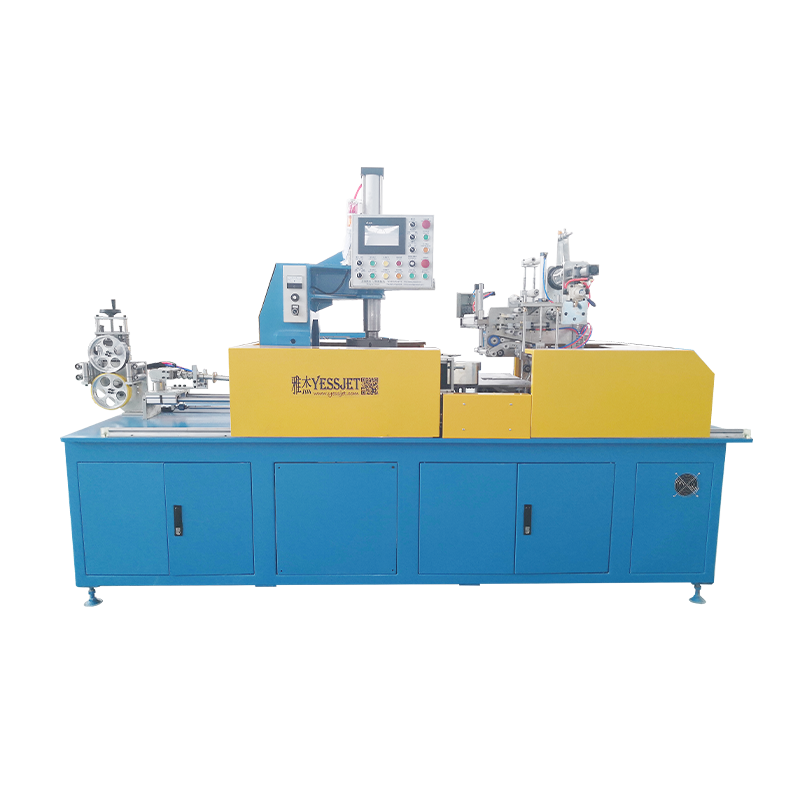
The Fully Automatic Coiling & Wrapping Machine is designed to address these challenges through an integrated, continuous process. It automatically forms wires and cables into coils, arranges the cable in an orderly pattern, applies wrapping materials, feeds labels, detects operating problems, and prepares finished coils for subsequent stacking or palletizing. By combining several operations in one coordinated system, the machine helps manufacturers create a more efficient and stable packaging line.
Manufactured by Shanghai Yessjet Precise Machinery Co., Ltd., the equipment is intended for cable producers seeking dependable automation and flexible processing capability. Its application range includes BV, BVR, RVV, UL electronic wires, flower wires, and other similar wire and cable products. Depending on the selected model, it can process cable diameters from approximately 2.5 mm to 25 mm and produce coils with different inner diameters, outer diameters, and heights.
The equipment is especially suitable for factories that need to reduce repetitive manual work without sacrificing packaging quality. Its servo motor cable arrangement system, automatic adjustable thread holding arm, automatic label feeding, continuous wrapping design, C-ring wrapping structure, and automatic error detection system provide a combination of productivity, consistency, and operational convenience.
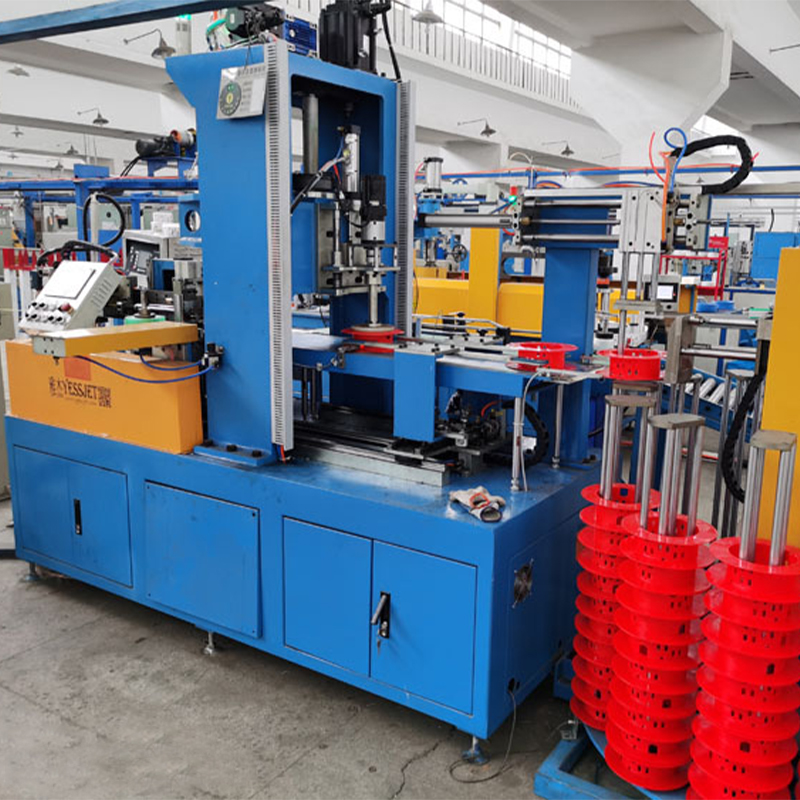
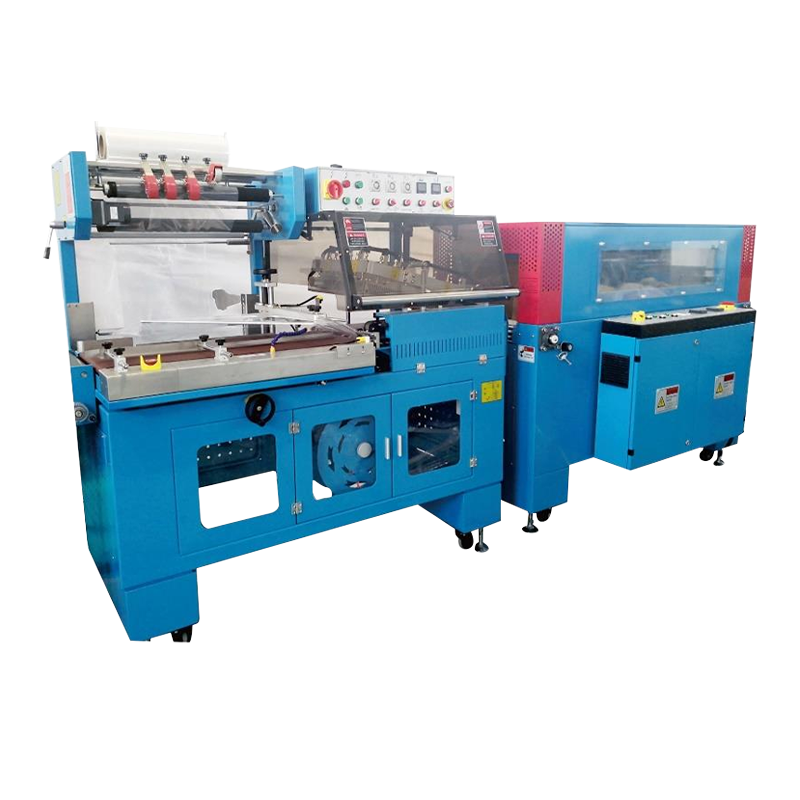
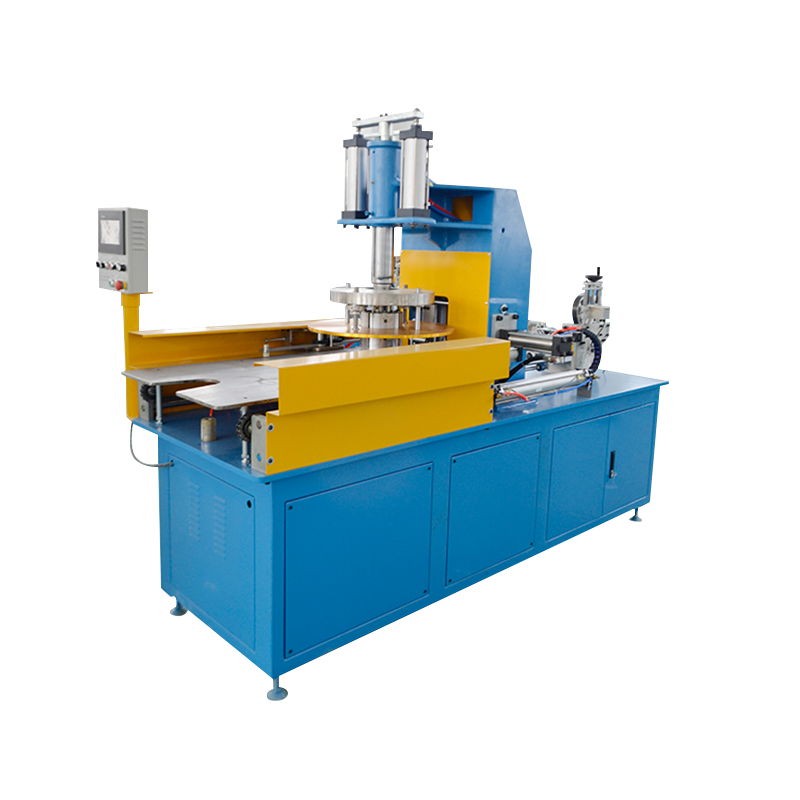
Fully Automatic Coiling & Wrapping Machine
1. The Role of Automated Coiling and Wrapping in Cable Production
Wire and cable packaging is more than a final presentation step. It protects the product, maintains the cable’s shape, supports transportation, communicates product information, and influences the efficiency of storage and distribution. A well-formed coil is easier to handle, measure, label, stack, and sell. A poorly formed coil, by contrast, can contain crossed conductors, loose sections, uneven edges, damaged insulation, or unclear labeling.
Traditional manual packaging normally requires several separate actions. An operator may need to guide the cable, control the coil diameter, hold the cable in position, cut or secure the end, apply a label, and wrap the finished coil. Each action introduces a possibility of variation. Operator fatigue can affect coil tightness and appearance, while changes between operators may lead to inconsistent results.
Separate semi-automatic machines can improve some of these problems, but they often require manual transfer between stations. This increases handling time and occupies more floor space. It may also create bottlenecks if the wrapping station operates more slowly than the coiling machine or if labels have to be attached by hand.
The fully automatic integrated approach combines coiling and wrapping in one continuous operating sequence. Cable feeding, orderly arrangement, coil formation, wrapping, labeling, and fault monitoring are coordinated within a single production solution. This reduces the number of manual interventions and makes the final packaging process more predictable.
For a high-volume cable manufacturer, the benefits can extend beyond labor savings. A stable automated process can support improved production planning, more uniform product appearance, lower rework requirements, and better use of available factory space. When connected to an automatic stacking system or automatic palletizing system, the equipment can become part of a more complete end-of-line packaging solution.
2. Product Overview
The Fully Automatic Coiling & Wrapping Machine automatically coils wires and cables into loops and then wraps the coils with selected materials. Depending on the configuration and product requirement, wrapping materials may include PVC film, PE film, PP film, paper tape, or PVC woven belt for larger cable sizes.
The system is designed around a continuous operating concept. Instead of requiring the operator to manually move every finished coil from a coiling station to a wrapping station, the machine coordinates these processes as one automated sequence. This structure helps reduce unnecessary handling and supports a more compact installation layout.
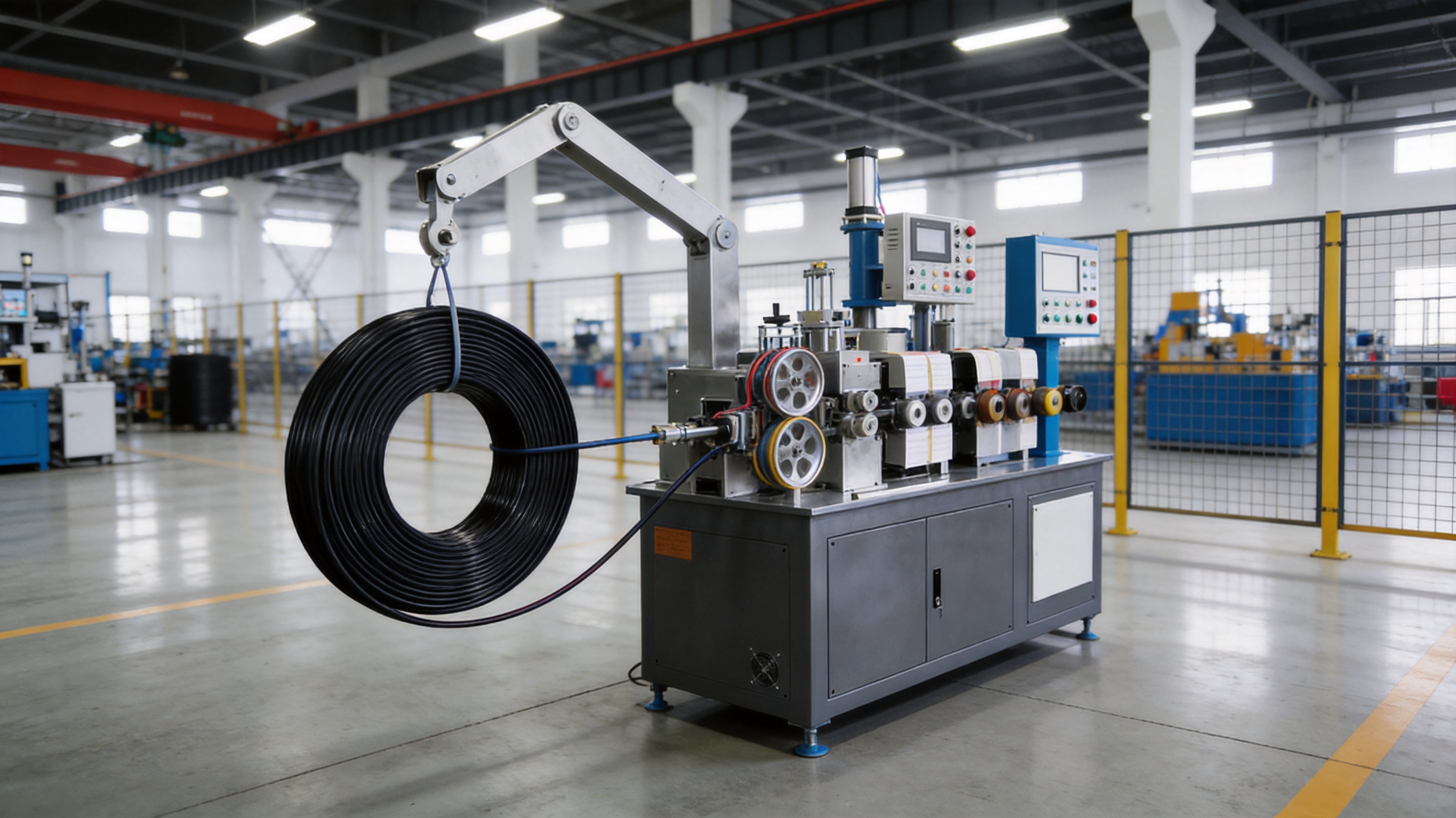
A servo motor cable arrangement system guides the cable during coiling. The servo-controlled movement allows the cable to be distributed in a more orderly manner, helping create even coil edges and a more consistent finished shape. The automatic adjustable thread holding arm adapts to operating requirements without requiring constant manual adjustment by the operator.
The machine also includes automatic cable and label feeding functions. These features reduce repetitive manual actions and help standardize the position of labels and cable placement. An automatic error detection and alarm function monitors the operating process and alerts the operator when a problem occurs. Early notification can shorten troubleshooting time and support faster maintenance.
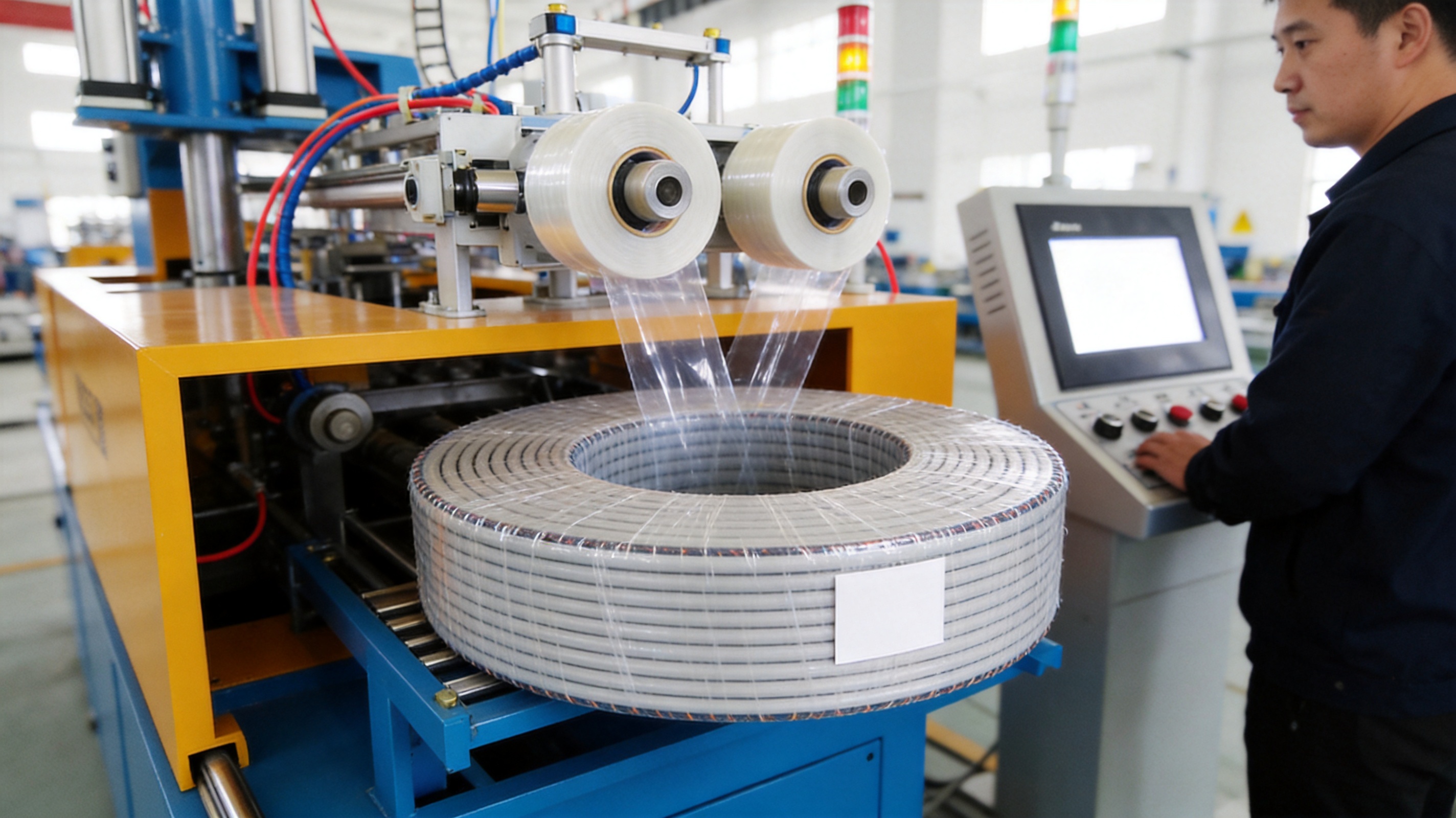
The C-ring wrapping design uses two plastic rollers to wrap the formed coil directly with a C-ring. This arrangement is intended to support efficient and controlled wrapping while reducing the need for manual positioning. It also contributes to a compact machine design suitable for factories where floor space is limited.
Main Processing Sequence
The operating sequence generally begins with cable feeding. The cable enters the machine and is guided toward the coiling area. The arrangement system then distributes the cable into the required coil pattern. During this stage, the machine controls the movement of the cable so that the loops remain orderly and the coil reaches the specified dimensions.
After the coil is formed, the wrapping section applies the selected packaging material. The wrapping material can be chosen according to cable type, coil size, appearance requirements, and transportation conditions. The wrapping process helps hold the coil together and improves its protection during handling.
Labels can be fed automatically as part of the packaging cycle. This may help identify product specifications, length, model, customer information, batch information, or other production data, depending on the label system used by the customer.
At the same time, the control system monitors the operation for abnormal conditions. If the machine detects a problem, it can trigger an alarm and inform the operator that inspection or maintenance is required. Once the coil is completed, it can be discharged or transferred to a downstream stacking or palletizing process.
3. Core Technical Features
3.1 Continuous Coiling and Wrapping
The most important feature of the machine is the integration of coiling and wrapping into one continuous process. This design reduces the need for manual transfer and can improve the relationship between upstream cable production and downstream packaging.
Continuous operation is particularly useful for manufacturers producing long runs of similar products. Instead of stopping after every coil to adjust the cable or move the finished package, the equipment can maintain a repeated processing cycle. This helps increase output and makes production capacity easier to estimate.
The continuous concept can also reduce the risk of handling damage. Every additional manual transfer creates an opportunity for a coil to become loose, deformed, contaminated, or incorrectly identified. Keeping the product within a coordinated machine sequence helps improve packaging discipline.
3.2 Servo Motor Cable Arrangement
The servo motor cable arrangement system is responsible for guiding the cable into a neat and controlled coil. Cable arrangement is one of the most important factors affecting final appearance and dimensional stability. If the cable is not properly distributed, the finished coil may have uneven sides, loose loops, gaps, or overlapping sections.
Servo control supports accurate and responsive movement. It allows the cable arrangement action to be coordinated with the coiling speed and product requirements. Compared with a basic mechanical arrangement mechanism, a servo-based system can provide more flexible control and support more consistent results across repeated production cycles.
For cable producers, better arrangement may also simplify downstream operations. Neat coils are easier to wrap, label, stack, transport, and display. They may also reduce the possibility of cable entanglement when customers open the package.
3.3 Automatic Adjustable Thread Holding Arm
The automatic adjustable thread holding arm supports stable cable positioning during operation. In a manual process, the operator may need to repeatedly adjust the holding position as the coil changes in size. This takes time and can create variation from one coil to the next.
Automatic adjustment reduces the need for routine manual intervention. It supports a more consistent operating sequence and allows the machine to respond to different coil requirements. This feature is especially valuable when production involves multiple cable sizes or different coil dimensions.
Reducing manual adjustment also improves operator convenience. The operator can focus more on material supply, production supervision, quality checks, and maintenance rather than repeatedly correcting the position of the cable by hand.
3.4 Automatic Cable and Label Feeding
Automatic feeding helps maintain a consistent relationship between the cable, the coil, and the packaging materials. It reduces the number of actions that must be completed manually and supports a safer and more organized production environment.
Automatic label feeding is useful for factories that process several products or customer orders. Manual labeling may lead to misplaced labels, missing labels, incorrect labels, or inconsistent positioning. An automated label feeder can help standardize the labeling stage and reduce the potential for avoidable human error.
Labeling also improves traceability. Depending on the customer’s information system and label design, labels may carry details such as product type, cable length, production batch, order number, or destination. The exact data arrangement depends on the customer’s production requirements, but the automatic feeder provides the physical automation needed for a more organized labeling process.
3.5 C-Ring Wrapping Design
The unique C-ring wrapping design uses two plastic rollers to wrap the coil directly. This arrangement allows the wrapping process to take place around the formed cable coil without requiring extensive manual manipulation.
The C-ring structure is designed to support efficient wrapping and consistent package formation. It can help hold the cable loops together while creating a clean external appearance. Because the wrapping action is integrated into the machine cycle, it contributes to lower labor requirements and more stable output.
The design is also beneficial for space utilization. A wrapping system that works directly with the coiling station can reduce the need for a separate large wrapping area. This makes the equipment suitable for factories that are expanding capacity but have limited available floor space.
3.6 Automatic Error Detection and Alarm
Unexpected machine problems can reduce productivity if they are not identified quickly. The automatic error detection function is designed to recognize abnormal operating conditions and alert the operator through an alarm.
Early notification helps operators respond before a minor issue affects a large number of coils. It can also support more systematic maintenance by providing a clear indication that inspection is needed. Although the exact error types depend on the machine configuration, the general purpose is to improve operator awareness and reduce the time required to locate operating problems.
Automatic monitoring is an important advantage over basic manual equipment. With a purely manual process, an operator may not notice a problem until the finished coil has already been affected. A monitored automated process can provide faster feedback and improve the consistency of production supervision.
4. Supported Wires, Cables, and Packaging Materials
The equipment is intended for automatic coiling and wrapping of a broad range of wires and cables. Common applications include BV wires, BVR wires, RVV cables, UL electronic wires, flower wires, and comparable products with suitable dimensional characteristics.
BV and BVR wires are widely used in electrical installations. RVV products are commonly applied where flexible insulated cable construction is required. UL electronic wires are often used in electronic equipment and control applications. Flower wires and other decorative or specialized wires may also benefit from neat automatic coiling and wrapping.
The machine’s suitability for a particular product depends on cable diameter, coil dimensions, insulation properties, flexibility, required length, wrapping material, and production speed. Before final selection, manufacturers should provide representative cable samples and complete product parameters so that the machine configuration can be matched correctly.
Wrapping materials may include PVC film, PE film, PP film, paper tape, and PVC woven belt. PVC and PE films are suitable for many standard cable packaging applications. PP film or paper tape may be selected according to appearance, strength, environmental requirements, or customer preference. Larger cable products may require a PVC woven belt or another appropriate wrapping solution.
The wrapping material is not only a visual element. It helps retain the coil shape, protects the cable during handling, and supports more stable stacking. The correct selection should consider the cable surface, coil weight, storage environment, transportation conditions, and expected package life.
| Application or Material | Typical Purpose | Important Selection Considerations |
|---|---|---|
| BV wire | Automatic coiling and packaged electrical wire | Wire diameter, insulation surface, coil dimensions, and required length |
| BVR wire | Flexible wire coiling and wrapping | Flexibility, coil tightness, arrangement quality, and wrapping tension |
| RVV cable | Multi-core flexible cable packaging | Outer diameter, bending behavior, coil weight, and protection requirements |
| UL electronic wire | Neat packaging for electronic and control wires | Product identification, labeling, surface protection, and repeatability |
| Flower wire | Decorative or specialized wire packaging | Appearance, coil neatness, packaging material, and presentation quality |
| PVC or PE film | Standard protective wrapping | Film width, thickness, wrapping tension, and product surface |
| Paper tape | Alternative wrapping for selected cable products | Adhesion, strength, storage conditions, and customer requirements |
| PVC woven belt | Wrapping larger or heavier coils | Coil weight, belt strength, outer diameter, and handling method |
5. Model Selection and Technical Range
The machine family includes different models for different cable diameters and coil sizes. The main selection factors are coil height, outer diameter, inner diameter, wire diameter, wrapping material, and expected output speed.
The CP1040 model is designed for smaller and medium-sized coils. The supplied specifications indicate a coil height range of approximately 50 to 120 mm, an outer diameter range of 180 to 400 mm, an inner diameter range of 120 to 200 mm, and a wire diameter range of 3 to 10 mm. Its average output speed for a 100-meter coil is listed at approximately 2 to 3 coils per minute in one specification set.
The CP1246 model provides a larger outer diameter range than the CP1040 while maintaining a similar inner diameter range. Its stated outer diameter range is approximately 180 to 460 mm, with wire diameters of about 2.5 to 8 mm. The average output speed is listed at approximately 2 to 2.5 coils per minute for a 100-meter coil.
The CP1860 model is intended for larger coils and thicker cable products. Its stated coil height range is approximately 70 to 180 mm, outer diameter range is 280 to 600 mm, inner diameter range is 160 to 300 mm, and wire diameter range is 4 to 15 mm. Its average output speed is approximately 1 to 1.5 coils per minute for a 100-meter coil.
The CP2480 model is designed for still larger products. Its stated height range is approximately 120 to 240 mm, outer diameter range is 360 to 800 mm, inner diameter range is 250 to 400 mm, and wire diameter range is 10 to 25 mm. PVC woven belt is listed as the wrapping material, with an average output of approximately 0.5 to 1 coil per minute for a 100-meter coil.
Some provided specifications use slightly different values for certain models, including the CP1040 and CP1860. This may reflect different configurations, production conditions, or product versions. Final technical confirmation should therefore be based on the customer’s cable samples, target coil dimensions, wrapping material, and required production speed.
| Model | Coil Height | Outer Diameter | Inner Diameter | Wire Diameter | Wrapping Material | Average Output for 100 m Coil |
|---|---|---|---|---|---|---|
| CP1040 | 50–120 mm | 180–400 mm | 120–200 mm | 3–10 mm | PVC; PVC or PE depending on configuration | Approximately 2–3 coils/minute or 2–2.5 coils/minute |
| CP1246 | 50–120 mm | 180–460 mm | 120–200 mm | 2.5–8 mm | PVC | Approximately 2–2.5 coils/minute |
| CP1860 | 70–180 mm or approximately 80–180 mm | 280–600 mm | 160–300 mm or approximately 180–250 mm | 4–15 mm | PVC; PVC or PE depending on configuration | Approximately 1–1.5 coils/minute |
| CP2480 | 120–240 mm | 360–800 mm | 250–400 mm | 10–25 mm | PVC woven belt | Approximately 0.5–1 coil/minute |
How to Choose the Correct Model
Model selection should begin with the actual cable diameter rather than the desired output alone. A machine that is too small may not provide sufficient space for the required coil, while a machine that is unnecessarily large may occupy more floor space and cost more than needed.
The next consideration is the finished coil size. Manufacturers should identify the required inner diameter, outer diameter, and height. These dimensions may be determined by customer packaging standards, retail display requirements, transport limitations, or compatibility with downstream stacking equipment.
The required coil length also affects production planning. The listed output speeds are based on a 100-meter coil and should be treated as reference values. Different cable lengths, product stiffness, coil sizes, wrapping materials, and operator settings may influence actual output.
Finally, the wrapping method must be confirmed. A small flexible wire wrapped with film may require a different configuration from a large cable packaged with a woven belt. The technical team should evaluate the complete combination of cable, coil size, material, and output target before recommending a final model.
6. Advantages Compared with Conventional and Competing Solutions
6.1 Fewer Manual Operations
Many conventional coiling and packaging processes depend on operators to guide cable, adjust holding arms, transfer coils, apply labels, and initiate wrapping. These actions consume time and may require several workers when production volumes are high.
The integrated machine automates many of these repetitive tasks. Automatic cable feeding, automatic label feeding, automatic arm adjustment, and continuous wrapping reduce the amount of direct manual involvement. This can help manufacturers control labor costs and redirect personnel toward supervision, material preparation, quality assurance, and maintenance.
6.2 More Consistent Coil Appearance
Manual coiling can produce variations in coil tightness, edge alignment, and overall shape. The servo motor cable arrangement system provides controlled movement during winding, supporting a more uniform result.
Consistent appearance is valuable for both industrial and retail products. It improves the visual quality of the cable package and may reduce customer complaints related to loose or irregular coils. Consistency also helps downstream equipment handle the product more reliably.
6.3 Improved Space Utilization
A separate coiling machine, manual transfer area, wrapping machine, and labeling station can occupy substantial floor space. The integrated coiling and wrapping design reduces the number of independent stations required for the basic process.
This space-saving advantage can be especially important for manufacturers upgrading an existing plant. Rather than adding several large machines, the factory may be able to create a more compact automated packaging cell. The saved space can be used for raw material storage, inspection, finished goods, or future production expansion.
6.4 Higher Packaging Efficiency
Continuous operation reduces interruptions between coiling and wrapping. The machine can process repeated coils in a coordinated cycle, allowing production managers to plan output more accurately.
Higher efficiency does not simply mean a faster mechanical movement. It also includes reduced waiting time, fewer transfers, shorter adjustment periods, and lower dependence on manual labeling. These combined improvements can increase the number of finished coils produced during a shift.
6.5 Better Support for Line Integration
The equipment is designed to work with an automatic stacking system or automatic palletizing system. This makes it suitable for manufacturers developing a broader end-of-line automation strategy.
When the coiling and wrapping machine is connected to downstream handling equipment, finished coils can move from packaging to stacking with less manual intervention. This creates a clearer production flow and can reduce congestion near the packaging area.
6.6 Faster Problem Awareness
Automatic error detection and alarm functions offer an important operational advantage. A problem that is recognized quickly is generally easier to correct than a problem discovered only after several coils have been produced.
The alarm function supports more active supervision. Operators can respond to alerts, inspect the relevant area, and resume operation after the cause has been addressed. This can reduce the quantity of potentially affected products and help maintain stable output.
7. Manufacturing Strengths and Engineering Approach
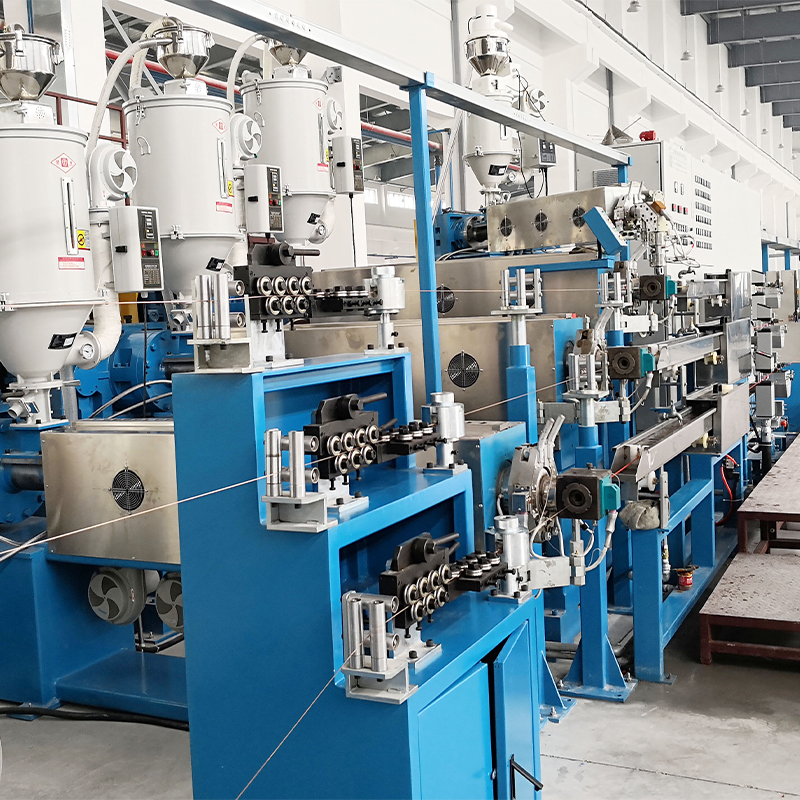
Shanghai Yessjet Precise Machinery Co., Ltd. focuses on wire and cable machinery, cable production line solutions, coiling equipment, take-up and pay-off equipment, accessory equipment, intelligent robot stackers, and automatic packaging systems. This product scope gives the company a broad understanding of cable production rather than limiting its activity to a single packaging mechanism.
A manufacturer with experience across the cable production line can evaluate the relationship between extrusion, cooling, take-up, coiling, packaging, stacking, and palletizing. This system-level perspective is important because a packaging machine must work effectively with the output speed, cable tension, product dimensions, and handling requirements of the preceding equipment.
The company’s manufacturing strengths are reflected in the machine’s integrated design. The use of servo motor cable arrangement, automatic adjustment, automatic feeding, alarm monitoring, and C-ring wrapping demonstrates an engineering approach focused on coordinated automation rather than isolated mechanical actions.
The equipment is also designed around practical factory requirements. Labor saving, reduced installation space, non-stop production, automatic fault notification, and compatibility with downstream automation are all operational concerns faced by real cable manufacturers. Addressing these requirements helps transform the machine from a standalone coiler into a production-line component.
Precision-Oriented System Design
The quality of an automated coiling machine depends on the coordination of multiple mechanical and control functions. Cable feeding must be synchronized with arrangement movement. Arrangement must be synchronized with coil formation. Wrapping must occur at the correct stage, and label feeding must be coordinated with the finished package.
The machine’s servo arrangement system and automatic adjustment mechanisms are intended to maintain this coordination. Such design reduces the need for operators to compensate manually for every change in coil size or production cycle.
Automation for Repeatability
Advanced manufacturing is not defined only by the presence of motors or sensors. It also depends on whether the machine can repeat the same process with stable results. The automatic sequence of cable feeding, arrangement, wrapping, labeling, and error detection supports repeatability across production batches.
Repeatability is particularly important for manufacturers serving multiple customers or producing standardized cable packages. A repeatable process makes it easier to establish operating parameters, train employees, inspect output, and identify deviations.
Equipment Compatibility and Customization
Wire and cable factories often have different product ranges and packaging standards. One factory may need compact retail coils, while another may produce heavy industrial cable packages. The availability of several models allows the equipment to cover different size ranges.
In addition, the machine can be evaluated according to the customer’s cable samples and desired wrapping materials. This application-focused approach is important because nominal cable diameter alone does not determine the best operating configuration. Flexibility, surface finish, coil weight, and packaging style must also be considered.
Turnkey Production Line Perspective
The company’s broader focus on wire and cable machinery enables it to support more than an individual machine purchase. Customers may require a complete production line involving extrusion, pay-off, take-up, coiling, wrapping, stacking, and palletizing.
A turnkey perspective can simplify communication and equipment coordination. It may also help customers plan future automation stages instead of purchasing disconnected equipment that cannot be integrated efficiently later.
8. Production Workflow and Quality Control Benefits
A standardized workflow begins with the preparation of the cable and wrapping material. The operator loads or supplies the appropriate cable, confirms the selected coil parameters, installs the correct wrapping material, and verifies the label supply.
During operation, the machine guides the cable through the arrangement system. The servo motor controls the cable path so that the loops are distributed evenly. The automatic holding arm supports stable positioning as the coil develops.
Once the cable reaches the programmed or required coil length, the wrapping sequence begins. The C-ring wrapping structure and plastic rollers apply the selected material directly around the coil. The label feeder then supports product identification according to the system configuration.
The completed package is inspected visually or through the manufacturer’s quality procedure. Operators can check coil dimensions, wrapping tightness, label position, surface appearance, and any signs of cable damage. If the line includes downstream automation, the finished coil can move to stacking or palletizing.
This workflow supports quality control in several ways. First, it reduces the variation caused by different manual techniques. Second, it provides a defined sequence that can be monitored and documented. Third, it allows problems to be identified closer to the point where they occur.
Quality control should still include appropriate inspection of cable length, insulation condition, conductor performance, and package integrity. The coiling and wrapping machine improves packaging consistency, but it should operate as part of the manufacturer’s complete quality management process.
9. Installation, Operation, and Maintenance Considerations
Installation Planning
Before installation, the factory should confirm the machine footprint, cable entry direction, finished coil discharge position, operator access, electrical supply, and relationship with upstream and downstream equipment. Adequate space should be provided for material replacement, cleaning, adjustment, and maintenance.
If the machine will connect to an automatic stacking system or palletizing system, the transfer height and product orientation should be reviewed in advance. Proper layout planning helps avoid unnecessary conveyors, manual handling points, or difficult maintenance access.
Operator Training
Operators should be trained to identify the main machine sections, load wrapping material, supply labels, select suitable production parameters, and respond to alarms. Training should also cover safe access procedures and the correct method for stopping the machine when abnormal conditions occur.
Although automation reduces manual work, it does not eliminate the need for knowledgeable supervision. An operator who understands the normal sound, movement, and appearance of the machine can often recognize developing problems earlier.
Routine Maintenance
Routine maintenance should include inspection of cable guides, holding arms, rollers, wrapping components, sensors, labels, and moving mechanisms. Accumulated dust or packaging residue should be removed according to the manufacturer’s maintenance recommendations.
Servo systems and mechanical transmission components should be checked for abnormal noise, vibration, looseness, or inaccurate movement. Wrapping material paths should remain clean and correctly aligned. Regular maintenance helps preserve coil quality and reduce unexpected interruptions.
Alarm Response
When an alarm occurs, the operator should follow the established troubleshooting procedure rather than immediately restarting the equipment. The affected coil should be checked, the cause of the alarm should be identified, and the relevant section should be inspected before production resumes.
Maintaining a record of recurring alarms can help the factory identify patterns. Repeated issues may indicate material variation, incorrect parameter settings, component wear, or a need for additional operator training.
10. Economic and Operational Benefits
The return on investment of an automatic coiling and wrapping machine depends on production volume, labor costs, product range, packaging requirements, and existing equipment. However, several potential benefits can be evaluated during a project assessment.
Labor reduction is one of the most direct benefits. When coiling, wrapping, and labeling are automated, fewer workers may be needed for repetitive packaging tasks. Existing employees can be reassigned to quality inspection, material handling, production supervision, or other higher-value activities.
Improved throughput can also increase capacity. The listed average speeds range from approximately 0.5 to 3 coils per minute, depending on model and product conditions. Actual output will vary, but the integrated process can reduce delays between operations and help the factory produce more finished coils within the same working period.
Lower rework and reduced packaging inconsistency may provide additional savings. If manually formed coils frequently require adjustment, rewrapping, or relabeling, automation can reduce these nonproductive activities. More consistent packaging may also decrease complaints and improve customer confidence.
Space savings can have economic value as well. A compact integrated solution may allow a manufacturer to increase packaging capacity without renting additional production space or carrying out extensive plant expansion.
Finally, the machine can support future automation. A company may initially use the equipment as an automated coiling and wrapping station and later connect it to automatic stacking or palletizing. This staged approach can help distribute investment while creating a path toward a more intelligent production line.
11. How the Machine Supports Intelligent Factory Development
Intelligent manufacturing depends on the collection, coordination, and use of production information. A fully automated coiling and wrapping machine provides a foundation for this development by standardizing the physical packaging process and generating clear operating events such as start, stop, completed coil, material replacement, and alarm condition.
When integrated with a factory control system, these events can help production managers understand output, downtime, and equipment utilization. The exact communication and data functions depend on the final configuration, but the machine’s automatic sequence creates a more structured process than manual packaging.
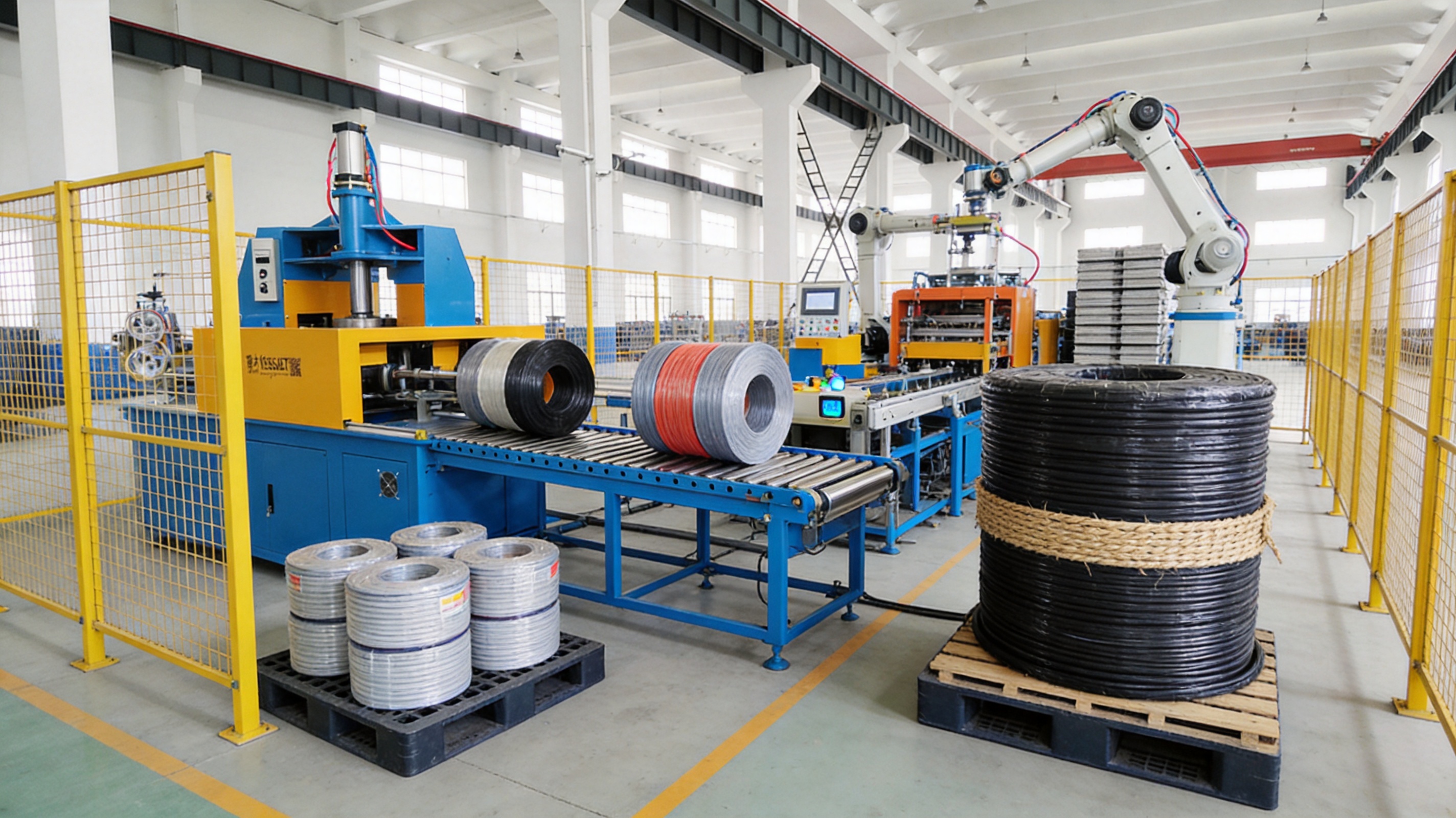
Intelligent production also requires stable physical handling. A robot or palletizing system can only work efficiently when incoming coils have consistent dimensions and positions. The servo arrangement system and automatic wrapping process help create more predictable packages for downstream automation.
The connection between coiling, wrapping, stacking, and palletizing can reduce manual bottlenecks throughout the end-of-line area. It can also improve worker safety by reducing the need to repeatedly lift, carry, or reposition finished coils.
12. Recommended Applications by Production Type
High-Volume Standard Cable Production
Factories producing large quantities of standardized BV, BVR, or RVV products can benefit from continuous coiling and wrapping. The repeatable process supports stable output and helps reduce the labor required for repetitive packaging.
Multi-Specification Cable Production
Manufacturers producing different cable diameters and coil sizes can use the available model range to match equipment capacity with product requirements. Automatic adjustment features can reduce the time required to change between selected specifications.
Electronic Wire Packaging
UL electronic wires and similar products often require clean, orderly, and clearly labeled packages. The servo arrangement and automatic label feeding functions can support a neat appearance and more consistent product identification.
Large-Diameter Cable Packaging
For larger cable products, the CP1860 and CP2480 models offer larger coil dimensions and wider cable diameter ranges. PVC woven belt or other suitable materials may be used where a stronger wrapping solution is required.
Factories Planning End-of-Line Automation
Manufacturers that intend to introduce automatic stacking or palletizing can use the coiling and wrapping machine as a central packaging station. Its integration capability can support a gradual transition from manual handling to a more automated production line.
13. Frequently Asked Questions
Q1: What types of cables can this machine process?
The machine is intended for wires and cables such as BV, BVR, RVV, UL electronic wires, flower wires, and comparable products. Final suitability depends on the cable diameter, flexibility, insulation surface, coil dimensions, and required wrapping method.
Q2: What wrapping materials can be used?
Depending on the model and configuration, the machine can use PVC film, PE film, PP film, paper tape, or PVC woven belt. The best material depends on the cable size, coil weight, required protection, appearance, and customer packaging standard.
Q3: Does the machine coil and wrap in separate steps?
The equipment integrates coiling and wrapping into one continuous process. This reduces manual transfer between stations and supports a more efficient packaging cycle.
Q4: How does the servo motor system improve the coil?
The servo motor cable arrangement system guides the cable in a controlled pattern during winding. This helps produce neater loops, more uniform edges, and more consistent coil dimensions than an uncontrolled or heavily manual arrangement process.
Q5: Is manual adjustment required during operation?
The automatic adjustable thread holding arm is designed to reduce the need for manual adjustment. Operators still need to set up the machine correctly, supply materials, monitor production, and perform maintenance, but repetitive position correction is reduced.
Q6: Can labels be applied automatically?
Yes. The equipment includes an automatic label feeder designed to reduce manual labeling. The exact label format, information, and placement should be confirmed during project planning.
Q7: What happens if the machine malfunctions?
The automatic error detection system identifies operating problems and alerts the operator with an alarm. The operator should then follow the appropriate inspection and troubleshooting procedure before restarting production.
Q8: What is the fastest available output?
For selected smaller models and suitable 100-meter cable coils, the average output is listed at approximately 2 to 3 coils per minute. Actual output depends on cable diameter, coil dimensions, wrapping material, product flexibility, and operating conditions.
Q9: Which model is suitable for large cables?
The CP1860 is intended for larger coils and cable diameters up to approximately 15 mm in the provided specifications. The CP2480 covers larger coil dimensions and cable diameters up to approximately 25 mm, with PVC woven belt listed as its wrapping material.
Q10: Can the machine connect to a stacking or palletizing system?
Yes. The equipment is recommended for connection with an automatic stacking system or automatic palletizing system. The final interface and layout should be designed according to the customer’s product dimensions and factory arrangement.
Q11: How should a customer select the model?
The customer should provide cable diameter, cable type, cable length per coil, desired inner and outer coil diameters, coil height, wrapping material, expected output, label requirements, and downstream handling needs. These details allow the appropriate model and configuration to be evaluated.
Q12: Is the machine suitable for a turnkey cable production line?
Yes. It can form part of a broader wire and cable production solution involving extrusion, motorized pay-off, motorized take-up, coiling, wrapping, stacking, and palletizing. A complete solution should be planned according to the production capacity and product range of the factory.
14. Purchasing and Project Evaluation Checklist
Before purchasing, manufacturers should prepare representative cable samples. Samples allow the engineering team to evaluate flexibility, surface condition, coil formation, wrapping performance, and label placement.
The required product range should be documented clearly. If a factory produces several cable diameters, it should identify the smallest and largest products, the most common products, and the expected future product range. This information supports a more practical model selection.
Packaging requirements should also be defined. The customer should specify whether the finished coil requires PVC film, PE film, PP film, paper tape, woven belt, or another material. The desired appearance, package strength, and storage environment should be considered.
Output calculations should be based on actual production needs rather than only the maximum listed speed. Shift length, product changeovers, material replacement, inspection time, and planned maintenance all influence real daily capacity.
The factory layout should be reviewed before delivery. Cable entry, operator position, finished product discharge, storage areas, electrical connections, and future links to stacking or palletizing systems should be included in the layout plan.
Finally, the customer should confirm training, spare parts, maintenance procedures, technical documentation, and after-sales support. These factors help ensure that the machine continues to provide value throughout its operating life.
15. Conclusion
The Fully Automatic Coiling & Wrapping Machine provides an integrated solution for manufacturers seeking to automate one of the most repetitive stages of wire and cable production. By combining cable coiling, servo-controlled arrangement, automatic holding arm adjustment, wrapping, labeling, and error detection, the equipment helps reduce manual work and improve packaging consistency.
Its main advantages over conventional or disconnected solutions include continuous operation, space savings, improved coil appearance, reduced handling, automatic label feeding, faster fault awareness, and compatibility with automatic stacking or palletizing systems. The available model range supports different cable diameters and coil dimensions, from compact wire packages to larger cable coils.
The machine also reflects the broader manufacturing strengths of Shanghai Yessjet Precise Machinery Co., Ltd. The company’s focus on wire and cable extrusion lines, pay-off and take-up equipment, coiling machinery, accessory equipment, intelligent stackers, and turnkey production solutions supports a system-level approach to cable manufacturing automation.
For the best result, customers should select the model based on actual cable samples, coil dimensions, wrapping materials, output targets, and factory layout. With the correct configuration and maintenance plan, the equipment can help cable producers save labor, increase capacity, improve package quality, and establish a stronger foundation for intelligent end-of-line production.
References
1. Product technical information for the Fully Automatic Coiling & Wrapping Machine, including model ranges, coil dimensions, cable diameter ranges, wrapping materials, and average output speeds.
2. Product application information for BV, BVR, RVV, UL electronic wires, flower wires, and related wire and cable products.
3. Manufacturing and product portfolio information for Shanghai Yessjet Precise Machinery Co., Ltd., including wire and cable production line equipment, coiling machinery, pay-off and take-up systems, accessory equipment, intelligent robot stackers, and automatic packaging solutions.
4. General principles of automated wire and cable coiling, wrapping, labeling, material handling, and end-of-line packaging.
5. General industrial practices for production-line integration, automated fault notification, servo motion control, preventive maintenance, and packaging quality management.
Sales Email: sales@yessjet.com
Telephone: +86-0510-87258118
Additional Telephone: +86-18620549810
Company Address: No. 27, Youth Farm, Fengyi Village, Guanlin Town, Yixing City, Jiangsu Province, China.