LANGUAGE
 中文简体
 русский
 Français
 Español
 Português
 عربى

Content
- 1 Why Automatic Coiling Matters in Wire and Cable Production
- 2 Core Working Principle of the Automatic Coiling Machine
- 3 Product Range and Technical Specifications
- 4 Servo Motor Cable Arrangement System
- 5 Automatic Adjustable Thread Holding Arm
- 6 Automatic Label Feeder and Packaging Integration
- 7 Continuous and Non-Stop Production
- 8 Touch-Screen Graphic Operation
- 9 Automatic Fault Detection and Alarm System
- 10 Application Range
- 11 Advantages Compared with Conventional Coiling Equipment
- 12 Advantages Compared with Disconnected Coiling and Packaging Lines
- 13 Manufacturing Strengths of Shanghai Yessjet Precise Machinery Co., Ltd.
- 14 Advanced Production and Quality Control Approach
- 15 Installation and Line Integration
- 16 Operating Procedure
- 17 Maintenance Considerations
- 18 How to Select the Correct Model
- 19 Economic Benefits for Cable Manufacturers
- 20 Safety and Operator Training
- 21 Quality Inspection of Finished Coils
- 22 Customization and Complete Cable Production Solutions
- 23 Frequently Asked Questions
- 23.1 What types of wire and cable can the machine process?
- 23.2 Can the machine receive cable directly from an extrusion line?
- 23.3 Does the machine automatically wrap the finished coil?
- 23.4 Is manual adjustment required when changing coil size?
- 23.5 How many product programs can be stored?
- 23.6 What is the function of the servo motor cable arrangement system?
- 23.7 Does the machine provide fault alarms?
- 23.8 Can the machine apply labels automatically?
- 23.9 Which model is suitable for a 1–12 mm wire diameter?
- 23.10 Which model is suitable for larger cables up to 25 mm?
- 23.11 Can the equipment be customized?
- 23.12 What information should be provided when requesting a quotation?
- 24 Conclusion
- 25 References
- 26 Product: Automatic Coiling Machine
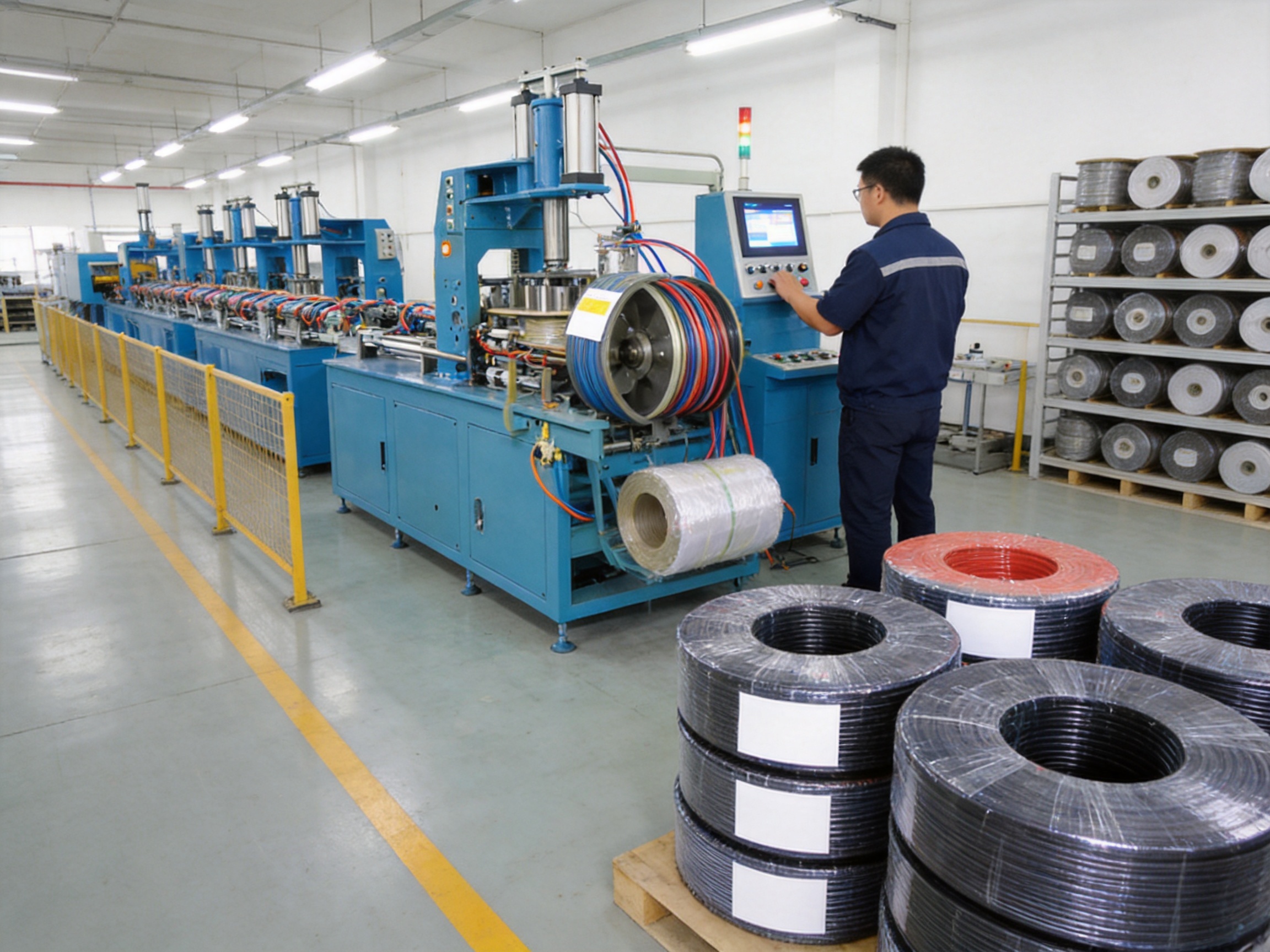
Automatic coiling is an important finishing process in modern wire and cable production. After insulation, sheathing, testing, and length measurement, the finished product must be formed into consistent coils, secured, labeled, and prepared for storage or shipment. If these operations depend heavily on manual labor, manufacturers may encounter irregular coil dimensions, inconsistent cable arrangement, slow packaging speed, higher labor costs, and avoidable handling damage. An automatic coiling machine addresses these challenges by integrating cable winding, traversing, coil formation, labeling, and wrapping into one coordinated production system.
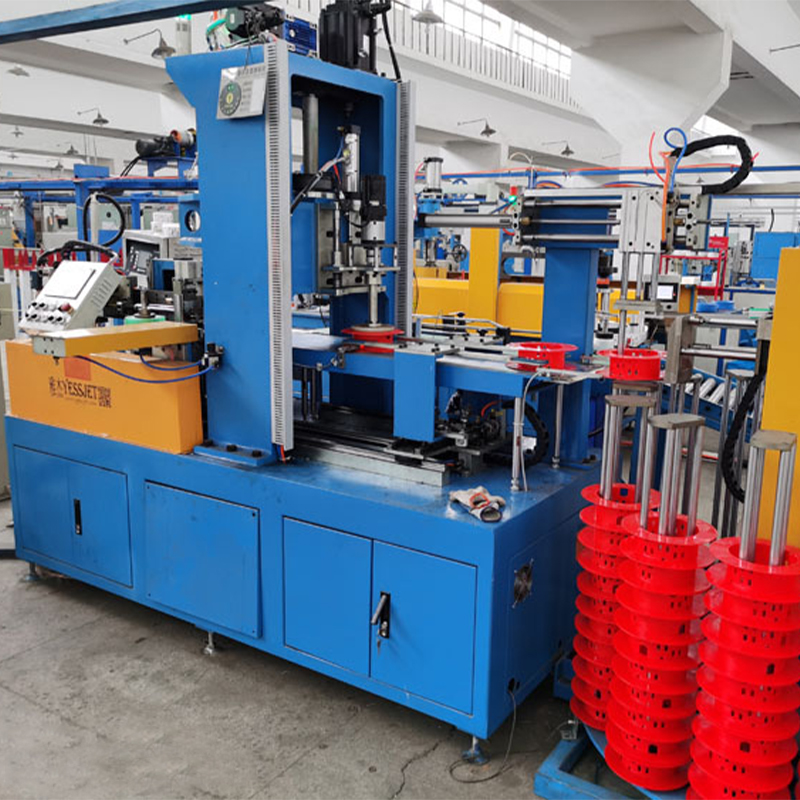
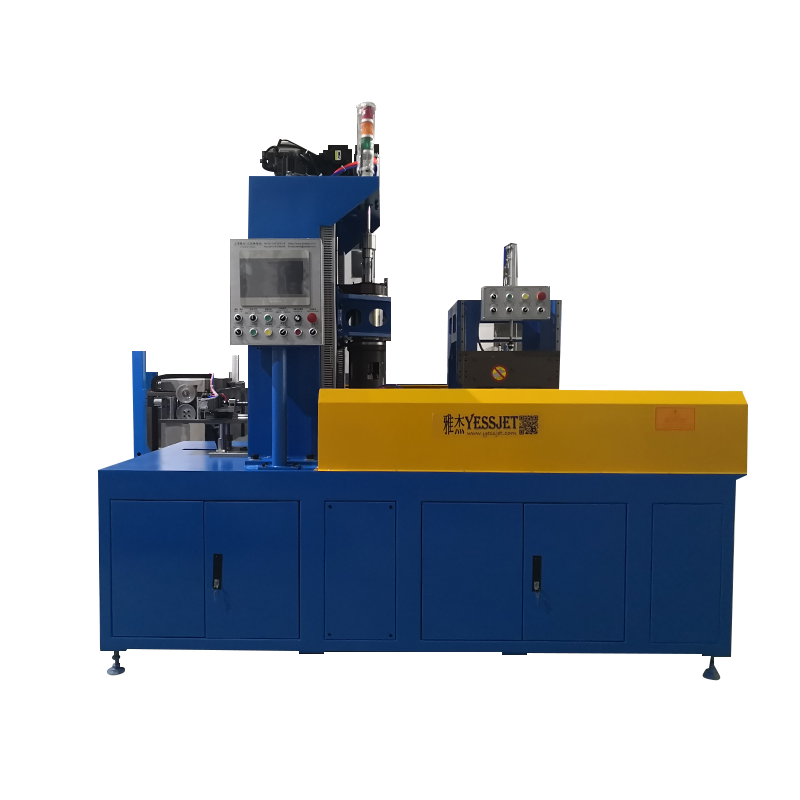
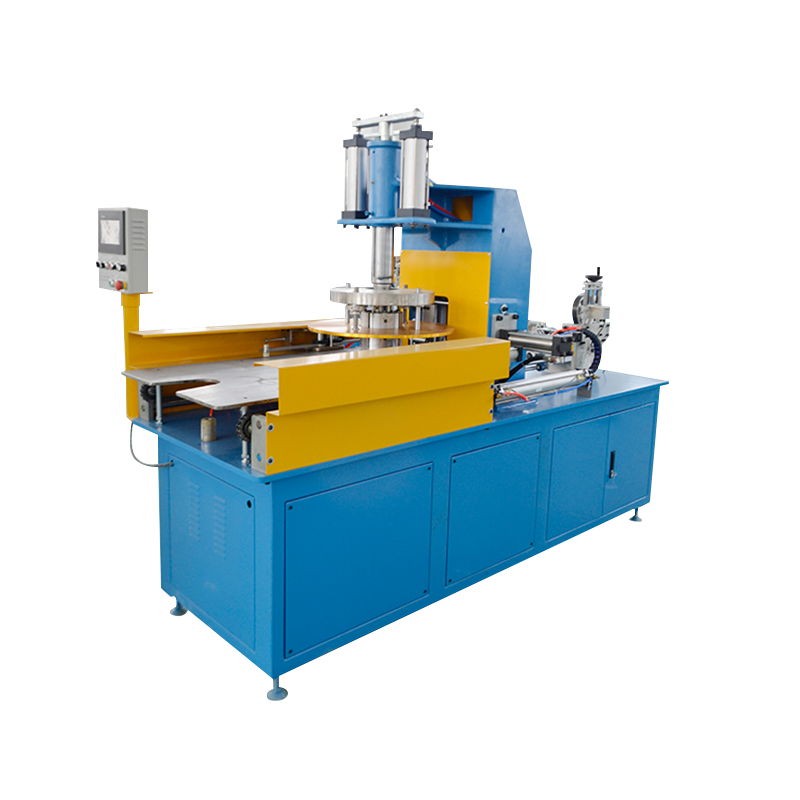
The Automatic Coiling Machine supplied by Shanghai Yessjet Precise Machinery Co., Ltd. is designed for continuous wire and cable processing. It can receive cable directly from an extrusion line or from a motorized pay-off machine, form the cable into accurately controlled coils, and complete wrapping operations with limited operator intervention. The equipment is suitable for many common wire types, including BV, BVR, RVV, UL electronic wires, flower wires, and similar products within the machine’s working range.
Its design combines a servo motor cable arrangement system, an automatic adjustable thread holding arm, an automatic label feeder, fault detection, touch-screen operation, programmable product data storage, and non-stop production capability. These features help manufacturers improve coil appearance, reduce setup time, support consistent packaging quality, and make better use of factory space.
For cable producers seeking a practical upgrade from manual coiling or disconnected packaging stations, this machine offers a complete and adaptable solution. It is particularly valuable for companies that need to process several cable sizes, change product specifications frequently, or maintain high output while controlling operating costs.
Automatic Coiling Machine
Why Automatic Coiling Matters in Wire and Cable Production
Wire and cable production does not end when the product leaves the extrusion line. The finished cable must be collected in a form that protects its surface, preserves its electrical and mechanical properties, and makes it convenient for customers to transport and use. Coiling is therefore both a production activity and a product presentation process.
A coil with uneven layers, loose loops, crossed cable, or inconsistent outer dimensions can create problems throughout the supply chain. It may occupy more warehouse space than necessary, become difficult to count or handle, and require additional labor before shipment. Poorly controlled winding can also cause tangling, abrasion, or localized bending. In contrast, a well-formed coil has a smooth surface, stable geometry, and a professional appearance.
Traditional manual coiling often depends on the skill and physical effort of operators. Workers must guide the cable, control the winding path, maintain tension, stop the machine at the correct length, secure the coil, apply a label, and wrap the finished product. Even when experienced workers perform these tasks carefully, production consistency can vary between shifts and operators.
An automatic system coordinates these functions according to programmed parameters. The operator selects or enters the required coil data, and the machine performs the winding process with repeatable movement. This approach is especially beneficial when the same product must be manufactured in large quantities or when a factory produces multiple cable specifications in a single working day.
Core Working Principle of the Automatic Coiling Machine
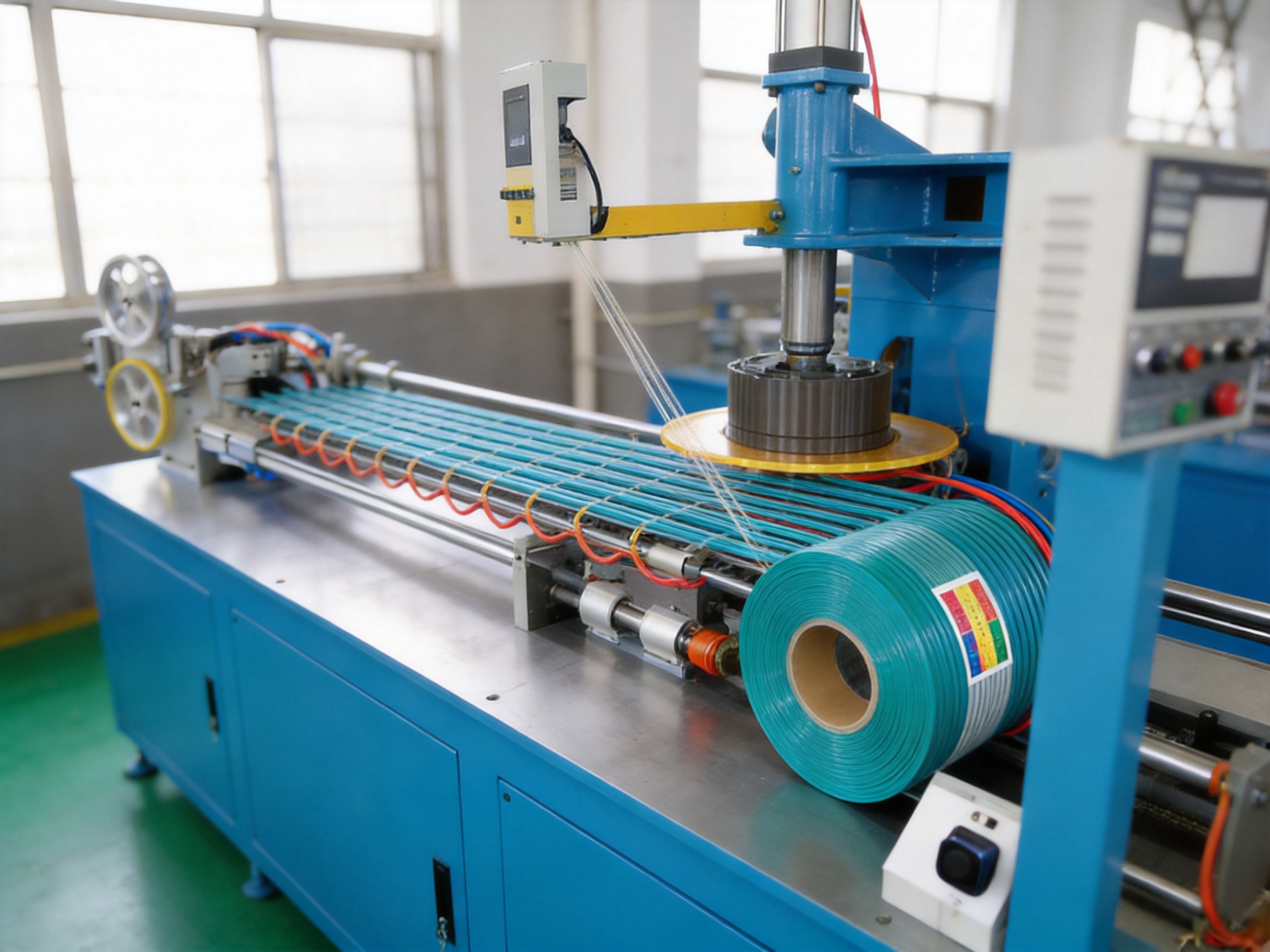
The machine is designed to receive a continuous wire or cable from an upstream extrusion line or pay-off system. The incoming product is guided into the coiling area, where a controlled winding mechanism forms the cable into a circular coil. A servo motor traversing system moves the cable arrangement mechanism in a coordinated pattern so that the cable is distributed evenly across the coil width.
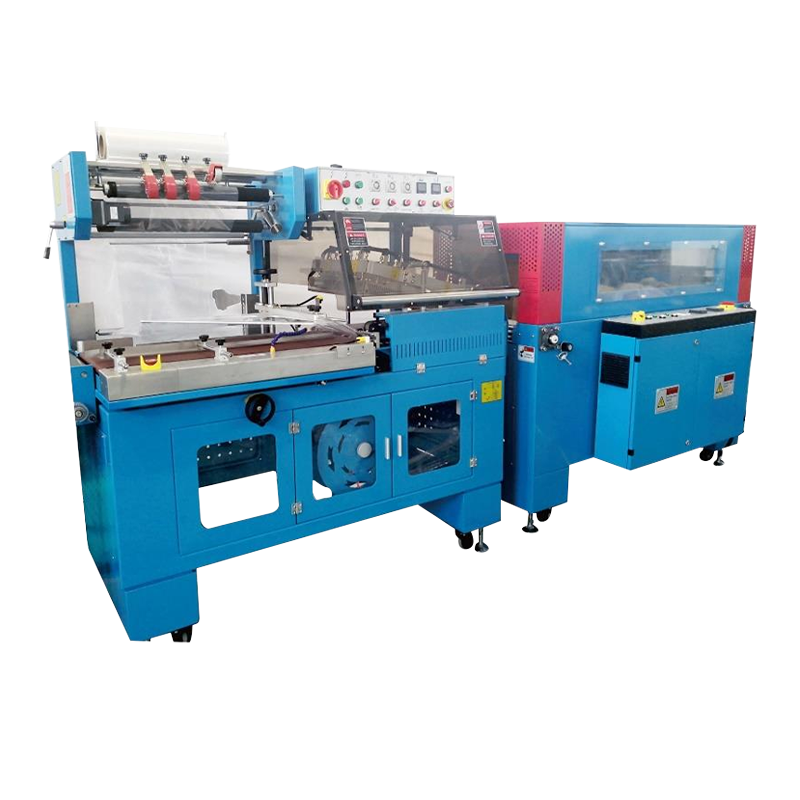
As the coil reaches its programmed dimensions or length, the system completes the winding cycle. The automatic thread holding arm helps retain the cable and supports stable operation without requiring constant manual adjustment. Once the coil is secured, the machine can carry out labeling and wrapping operations. Packaging materials may include PP tape, paper tape, woven tape, or other suitable materials according to the customer’s product and packaging requirements.
The touch-screen graphic operation terminal gives the operator access to machine settings, product data, operating status, and alarms. Up to 99 types of coil data can be entered and stored in the PLC memory. This allows users to save commonly manufactured specifications and recall them when required, reducing the time needed to prepare the machine for production.
Because the system is designed for automatic adjustment when changing from one coil size to another, operators do not need to manually reset every device for each product change. The exact degree of automatic adjustment depends on the selected configuration and production conditions, but the principle is to reduce setup work and make changeovers more efficient.
Product Range and Technical Specifications
The Automatic Coiling Machine is available in several models to accommodate different coil dimensions and wire diameters. The table below summarizes the principal working ranges supplied for the C1246, C1860, C2060, and C2480 models.
| Model | Coil Height (mm) | Outer Diameter (mm) | Inner Diameter (mm) | Applicable Wire Diameter (mm) | Maximum Listed Speed (RPM) |
|---|---|---|---|---|---|
| C1246 | 50–120 | 180–460 | 120–220 | 1–12 | 900 |
| C1860 | 60–180 | 220–600 | 180–250 | 5–15 | 300 |
| C2060 | 60–200 | 220–600 | 180–250 | 5–15 | 300 |
| C2480 | 80–240 | 250–800 | 250–320 | 10–25 | 150 |
These figures provide a general basis for model selection. The appropriate model depends on the cable construction, conductor size, insulation material, required coil diameter, production speed, packaging method, and integration arrangement. A manufacturer should confirm the precise application range with the equipment supplier before placing an order.
The C1246 model is suitable for relatively small and medium wire diameters and provides a listed speed of up to 900 RPM. It may be appropriate for high-speed production of smaller electrical wires and electronic cables when the product characteristics permit such operation.
The C1860 and C2060 models are designed for a broader medium-size coil range, supporting wire diameters from 5 to 15 mm. Their similar dimensional ranges make them useful for applications that require larger coils than the C1246 but do not require the maximum dimensions of the C2480.
The C2480 model is intended for larger cable products, with a listed applicable wire diameter of 10 to 25 mm and an outer coil diameter range of 250 to 800 mm. Its lower listed RPM reflects the larger product size and the need for controlled, stable winding.
Servo Motor Cable Arrangement System
One of the most important features of the machine is its servo motor cable arrangement system. Cable arrangement directly affects the appearance, density, stability, and dimensional accuracy of the finished coil. If the cable guide moves irregularly or depends on inconsistent manual control, the winding layers may overlap unevenly or leave gaps.
The servo system provides controlled and repeatable traversing movement. As the coil rotates, the cable arrangement mechanism moves across the required width in a coordinated pattern. This produces a smoother coil surface and a more orderly distribution of cable. The result is a finished product that is easier to handle, wrap, label, stack, and transport.
Servo control also supports flexible production. Different cable diameters and coil dimensions require different arrangement patterns. By storing and recalling production data, the machine can apply the appropriate movement parameters for each product specification. This is more efficient than relying on manual adjustment and visual judgment for every new order.
Compared with basic winding machines that use less precise mechanical movement, a servo-based arrangement system offers an important competitive advantage: greater repeatability. This does not merely improve appearance. Consistent arrangement can also reduce the risk of loose loops, uncontrolled cable movement, and unnecessary use of packaging material.
Automatic Adjustable Thread Holding Arm
The automatic adjustable thread holding arm is designed to retain and guide the cable during the winding process. In manual or semi-automatic equipment, operators may need to adjust the holding mechanism when the cable diameter or coil size changes. Such adjustments take time and can introduce setup errors.
With an automatic adjustable system, the machine can accommodate different production specifications with less manual intervention. The holding arm helps maintain stable cable positioning and supports a reliable transition from the start of winding to the completion of the coil. Its automatic operation is particularly useful in production environments where several wire sizes are processed in succession.
Reducing manual adjustment has several benefits. It can shorten changeover periods, reduce the physical workload on operators, and limit the possibility of incorrectly positioning the cable. It also contributes to a safer workplace because personnel have less need to reach into the active coiling area during routine operation.
Automatic Label Feeder and Packaging Integration
Product identification is essential in wire and cable manufacturing. A finished coil may need to display information such as product type, length, customer order, batch number, production date, or other traceability data. If labels are applied manually, workers must stop or slow the production process and maintain consistent placement.
The automatic label feeder reduces this additional labor. It can feed labels as part of the coiling and packaging sequence, helping ensure that each finished coil receives its required identification. Automatic labeling also supports a more uniform appearance and reduces the likelihood of labels being missed, misplaced, or attached to the wrong product.
Wrapping can be performed using PP tape, paper tape, woven tape, or other compatible materials. The selected wrapping material depends on the product’s surface, required protection, customer preference, storage conditions, and shipping method. Integrating wrapping into the coiling operation means the product can leave the machine in a more complete and shipment-ready condition.
This integrated approach is a significant advantage over separate manual stations. A conventional process may require one worker to coil the cable, another to apply a label, and another to wrap the product. The automatic machine combines these stages into a coordinated workflow, helping reduce handling, floor-space requirements, and labor dependence.
Continuous and Non-Stop Production
Continuous operation is a major consideration for extrusion plants. Extrusion lines are designed to run steadily, and interruptions at the take-up or packaging stage can affect the entire production process. If the coiling station cannot keep pace with the extrusion line, the upstream equipment may need to slow down or stop.
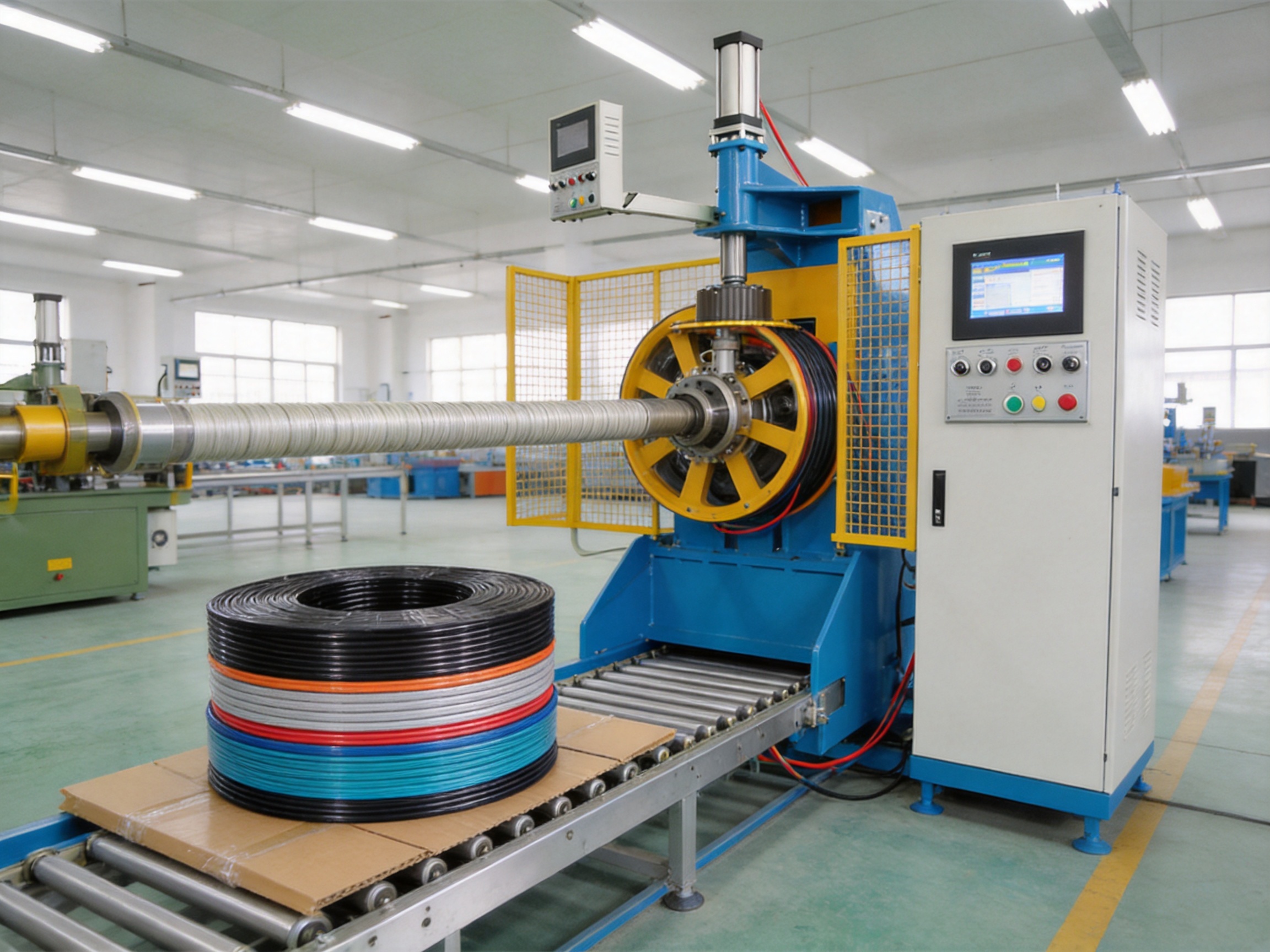
The Automatic Coiling Machine is designed for auto-coiling with continuous operation in one machine. Its non-stop production concept helps improve output and minimize interruptions during normal production. When correctly matched to the extrusion line, the coiler can receive the finished cable continuously and process it into completed coils.
Continuous processing can improve manufacturing efficiency in several ways. It helps maintain a more stable line speed, reduces idle time, and limits the need for repeated manual intervention. It can also make production planning more predictable because operators can estimate output based on programmed cable length, coil dimensions, and machine speed.
In addition, a continuous automatic system makes it easier to standardize work. Instead of depending on individual operator methods, the plant can establish repeatable procedures for data entry, product selection, label supply, packaging material loading, and quality inspection.
Touch-Screen Graphic Operation
The screen touch graphic operation terminal is designed to make the machine easier to operate. Clear access to parameters and machine status is important because coiling applications may involve many product combinations. Operators need to know which model or product program is active, whether the machine is running normally, and whether an adjustment or intervention is required.
A graphical interface can present operating information in a more direct format than a collection of separate switches and mechanical controls. It can guide operators through product selection, production settings, alarm review, and routine operation. This is useful for both experienced technicians and newly trained personnel.
The terminal also supports the PLC data storage function. Up to 99 types of coil data can be entered and retained. These records may include settings related to coil height, outer diameter, inner diameter, wire diameter, winding speed, traversing behavior, labeling, and wrapping, depending on the machine configuration.
Stored data improves production consistency because operators can select an established program rather than recreate settings from memory. It also helps preserve process knowledge within the factory. If a trained operator changes shifts or leaves the company, saved product programs remain available to authorized personnel.
Automatic Fault Detection and Alarm System
Reliable fault detection is essential for an automatic production machine. A problem involving cable feeding, winding, labeling, wrapping, or machine movement can affect product quality if it is not identified quickly. The Automatic Coiling Machine can automatically detect equipment faults and issue an alarm to remind the operator.
Alarm functions help reduce response time. Instead of allowing the machine to continue producing defective coils, the system can notify the operator that attention is required. The operator can then inspect the relevant area, correct the condition, and restart production according to the approved operating procedure.
Fault monitoring also supports preventive maintenance. Repeated alarms may indicate a need to inspect a guide, sensor, drive component, wrapping material path, or other part of the system. By reviewing operating events and maintenance records, production managers can identify recurring issues before they develop into longer downtime events.
Automatic error detection does not eliminate the need for trained personnel or scheduled maintenance. It is a support function that improves awareness and helps personnel respond in a more organized way. Operators should always follow the equipment manual, safety procedures, and site-specific lockout requirements when investigating a fault.
Application Range
The machine is suitable for high-speed automatic coiling and winding packaging of various wires and cables. Typical applications include building wires, flexible wires, electronic wires, control cables, and other products compatible with the specified dimensional range.
BV wires are commonly used in building electrical installations, while BVR wires offer flexibility for applications that require easier routing. RVV cables are used in many flexible electrical and control applications. UL electronic wires and flower wires may also require accurate coiling and attractive packaging for distribution or retail presentation.
The machine’s suitability for a particular cable depends on more than the nominal diameter. Important considerations include insulation hardness, surface friction, conductor construction, flexibility, minimum bending radius, permitted winding tension, coil weight, and packaging requirements. Product trials are recommended for new materials or unusual cable structures.
Because the equipment is available in several models, it can support a variety of production scales. Smaller cable manufacturers may select a compact high-speed model, while producers of larger cables may require a model with greater coil diameter and wire capacity. The modular product range allows a factory to select equipment closer to its actual needs rather than using one oversized machine for every application.
Advantages Compared with Conventional Coiling Equipment
Higher Production Efficiency
Automatic winding, labeling, and wrapping reduce the number of manual steps required for each coil. Continuous production helps maintain line utilization and allows the factory to process more product during a working shift.
More Consistent Coil Appearance
The servo traversing system creates a smooth and orderly cable arrangement. Consistent geometry gives the product a professional appearance and makes finished coils easier to stack and transport.
Reduced Labor Requirement
Automatic thread holding, label feeding, product data recall, and fault alarms reduce the number of tasks that operators must perform manually. This can lower labor costs and allow personnel to focus on supervision, quality checks, material replenishment, and maintenance.
Faster Product Changeovers
Stored coil data and automatic adjustment reduce the need for repeated manual settings. This is especially valuable for factories serving many customers or producing short and medium production runs.
Better Use of Factory Space
Combining coiling and packaging functions in one machine can reduce the footprint compared with several independent stations. Saving installation space may allow a manufacturer to improve material flow, create clearer operator access, or add capacity within an existing workshop.
Improved Packaging Consistency
Automatic wrapping and labeling help produce a uniform finished package. Consistency supports better brand presentation, easier warehouse identification, and more reliable order fulfillment.
Improved Process Control
The touch-screen terminal, PLC memory, servo movement, and alarm functions provide greater control than a basic manually adjusted winder. The production process becomes easier to monitor, document, and repeat.
Advantages Compared with Disconnected Coiling and Packaging Lines
Some manufacturers operate a separate coiling machine, labeling station, and wrapping station. Although such an arrangement can be functional, it often requires additional conveyors, operators, transfer space, and coordination. Every transfer between stations creates another opportunity for cable movement, surface contact, handling damage, or production delay.
An integrated automatic coiling system minimizes these transfers. The cable remains within a controlled process from winding through packaging. This can improve product flow and reduce the amount of intermediate storage required between operations.
Integrated equipment also simplifies supervision. Rather than monitoring several independent machines with different controls, the operator can manage the main process from one graphic terminal. A unified system may make it easier to identify where a problem has occurred and to coordinate corrective action.
The space-saving advantage is particularly important for plants operating in established buildings. Expanding floor space can be expensive or impossible. A compact integrated solution allows manufacturers to modernize production without extensive construction or relocation.
Manufacturing Strengths of Shanghai Yessjet Precise Machinery Co., Ltd.
Shanghai Yessjet Precise Machinery Co., Ltd. focuses on wire and cable machinery, including cable extrusion lines, pay-off equipment, take-up equipment, coiling machines, fully automatic coiling packaging equipment, intelligent robot stackers, and accessory equipment. This product scope gives the company a broad understanding of the complete cable production process rather than only one isolated machine function.
Knowledge of the full production line is valuable when integrating a coiler with an extrusion line or motorized pay-off machine. Cable speed, tension, product diameter, take-up behavior, and packaging requirements must work together. A supplier familiar with upstream and downstream equipment can better evaluate the complete process and help customers select compatible machinery.
The company’s equipment development emphasizes automation, servo control, PLC operation, fault detection, and integrated packaging. These technologies reflect the requirements of modern cable factories, where manufacturers need higher output, repeatable quality, efficient changeovers, and lower dependence on manual labor.
The product range also demonstrates an ability to serve different cable sizes. Models from the C1246 through the C2480 cover small, medium, and larger coiling applications. This allows the company to offer a more targeted solution according to the customer’s cable diameter and required coil dimensions.
As a machinery manufacturer and supplier in China, the company can support customized wire and cable production solutions. Customization may involve machine configuration, line integration, packaging material selection, coil data, labeling requirements, production speed, layout, and other application-specific details. The exact scope should be confirmed through technical discussion and sample testing.
Manufacturing quality depends not only on individual components but also on system assembly, control programming, testing, and commissioning. A professional machinery supplier should verify mechanical movement, servo response, cable tracking, safety functions, label feeding, wrapping operation, and alarm performance before delivery. These processes help ensure that the equipment is prepared for installation and production use.
Advanced Production and Quality Control Approach
A modern automatic coiling machine requires coordinated work across mechanical engineering, electrical control, software configuration, assembly, and testing. The machine’s performance is determined by how these elements operate together. A well-built frame alone is not enough if cable guidance, servo motion, sensors, and control logic are not properly matched.
Mechanical Precision
The winding structure, guide components, holding arm, and packaging mechanisms must be manufactured and assembled with appropriate accuracy. Mechanical alignment influences coil geometry, cable movement, and the long-term stability of the machine.
Servo and Motion Control
The servo motor arrangement system must respond accurately to programmed commands. Controlled acceleration, deceleration, and traversing movement help prevent sudden cable movement and support a smooth winding surface.
PLC and Interface Configuration
The PLC stores product data and coordinates the machine’s operating sequence. The touch-screen interface must present settings and alarms in a practical manner so that operators can manage production efficiently.
Integrated Testing
Testing should evaluate the machine as a complete system. Important checks include cable feeding, winding quality, adjustment behavior, label feeding, wrapping performance, alarm response, emergency functions, and compatibility with the expected production range.
Application-Oriented Engineering
Different wires and cables behave differently during coiling. The supplier’s ability to consider cable flexibility, surface properties, diameter, coil size, and line speed is an important manufacturing strength. Application-oriented engineering helps ensure that the selected machine is not only technically functional but also appropriate for the customer’s actual process.
Installation and Line Integration
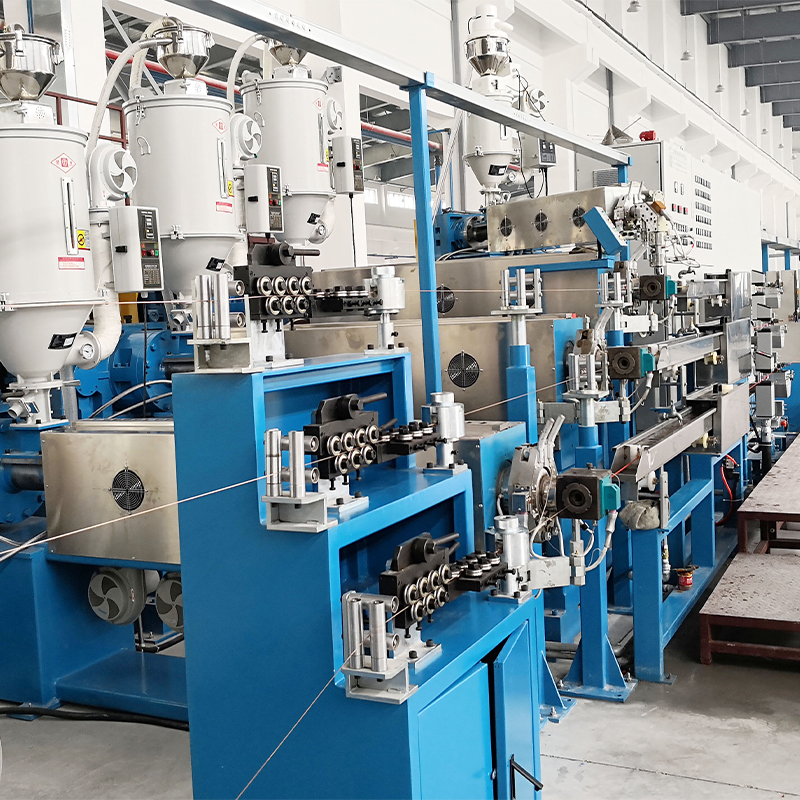
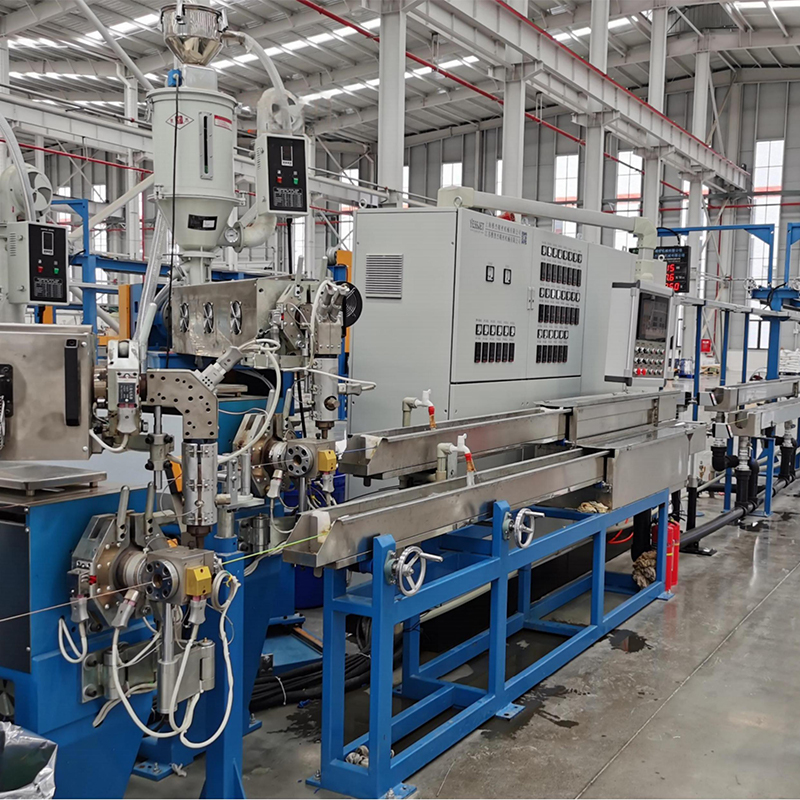
The machine can be used with an extrusion line or a motorized pay-off machine. Successful integration requires attention to product speed, cable tension, line height, floor layout, electrical supply, compressed air if required, packaging materials, and operator access.
Before installation, the customer should prepare a clear layout showing the extrusion line, cooling and testing equipment, pay-off or take-up devices, coiler, operator position, material storage, and finished-goods area. Sufficient space should be reserved for loading packaging materials, maintaining the machine, removing completed coils, and safely accessing control panels.
The incoming cable must be delivered at a stable speed and tension. Excessive tension can affect coil shape or damage the cable, while insufficient control can create loose loops. The extrusion line and coiling machine should therefore be commissioned as a coordinated system.
Operators should also verify that the selected packaging material is compatible with the wrapping mechanism and the finished cable. PP tape, paper tape, and woven tape have different handling characteristics. Material width, thickness, strength, and roll dimensions should be confirmed before routine production.
Operating Procedure
A typical operating sequence begins with inspection of the machine, cable path, packaging materials, labels, safety guards, and emergency stop functions. The operator then selects an existing coil program or enters the required production data through the touch-screen terminal.
The cable is threaded through the relevant guides and holding mechanism according to the operating instructions. The operator checks that the cable is correctly positioned and that the selected program corresponds to the product being manufactured.
After starting the machine, the operator observes the initial winding section. The first coil should be inspected for outer diameter, inner diameter, height, surface smoothness, cable arrangement, and packaging position. If the result is acceptable, production can continue under normal supervision.
During operation, the operator monitors the machine display, packaging material supply, label availability, cable surface, and alarm status. Finished coils should be removed and transferred according to the factory’s handling procedure.
At the end of a production run, the operator should follow the approved shutdown procedure, clean the cable path, inspect wear components, record any alarms, and prepare the machine for the next product. Routine care helps preserve performance and reduces unexpected downtime.
Maintenance Considerations
Preventive maintenance is essential for maintaining coiling accuracy and operational reliability. The exact maintenance schedule should follow the supplier’s manual and the customer’s production environment, but several general areas deserve regular attention.
Cable guides and contact surfaces should be inspected for contamination, wear, sharp edges, or damage that could mark the finished product. The holding arm and traversing mechanism should be checked for smooth movement. Fasteners, sensors, and mechanical connections should be inspected according to the recommended interval.
The servo system and electrical cabinet should be kept clean and protected from excessive dust, moisture, and heat. Operators should not open or service electrical equipment unless they are qualified and authorized to do so. Fault alarms should be recorded so that repeated events can be analyzed.
Packaging material paths require attention because adhesive residue, dust, or incorrect material loading can affect wrapping quality. Label feeders should be checked for correct roll installation and reliable label separation.
Maintenance records should include the date, machine hours, observed condition, replaced components, alarms, and corrective actions. A structured record helps the production team identify trends and plan service before a failure interrupts the line.
How to Select the Correct Model
Model selection should begin with the cable diameter and required finished coil dimensions. The C1246, C1860, C2060, and C2480 models cover different ranges, but the nominal wire diameter is only one part of the decision.
The customer should also provide the desired coil height, outer diameter, inner diameter, cable length per coil, line speed, cable material, cable flexibility, surface finish, and wrapping method. If multiple products will be processed, the full product range should be considered rather than selecting a model based on only the most common item.
Production speed must be evaluated together with cable weight and coil size. A smaller wire may support a higher rotational speed, while a larger cable requires lower speed and more controlled movement. The target output should therefore be confirmed through practical testing.
Customers should also determine whether they require direct integration with an extrusion line, connection to a separate pay-off machine, automatic labeling, automatic wrapping, or additional downstream stacking equipment. These requirements affect the overall configuration and factory layout.
Economic Benefits for Cable Manufacturers
The financial value of an automatic coiling machine comes from more than its output speed. Labor reduction, lower handling requirements, better product consistency, reduced waste, and improved floor-space utilization all contribute to the total return on investment.
When one operator can supervise a larger share of the process, the manufacturer may be able to increase output without increasing labor in direct proportion. This is particularly important in regions where skilled production labor is expensive or difficult to recruit.
Consistent coiling can also reduce rejected or reworked packages. A stable coil is easier to wrap and label correctly, which lowers the possibility of customer complaints caused by poor presentation or difficult handling.
Space savings may provide another economic benefit. By combining coiling and packaging functions, the factory may avoid purchasing multiple separate machines or expanding the production building. Existing space can be used more productively.
Stored product data and rapid changeover help support mixed-order manufacturing. A producer can serve more product specifications without spending excessive time on manual setup. This flexibility can be valuable for custom orders and smaller production batches.
Safety and Operator Training
Automatic equipment improves process control, but operators must still receive proper training. Training should cover normal operation, product selection, material loading, alarm response, emergency stop use, cleaning, and safe removal of finished coils.
Personnel should keep hands, clothing, tools, and loose materials away from rotating and moving components. Guards and protective devices must remain in place during operation. Any maintenance or adjustment inside a hazardous area should be performed only after the machine has been stopped and isolated according to the site’s safety procedures.
Operators should understand that an alarm is a signal requiring investigation, not a function to be bypassed. Repeatedly resetting an alarm without identifying its cause can create quality or safety risks. Supervisors should maintain clear procedures for escalation and technical support.
Quality Inspection of Finished Coils
Finished coils should be inspected at regular intervals and whenever a product program is changed. Basic checks include cable surface condition, coil outer diameter, inner diameter, height, winding neatness, wrapping tightness, label accuracy, and overall package appearance.
Depending on the cable type, additional checks may include coil length, weight, bending condition, insulation integrity, and electrical test results. The coiling process should not compromise the cable’s specified minimum bending radius or cause visible deformation.
Inspection results should be recorded using the manufacturer’s quality system. If the coil begins to show uneven arrangement or packaging variation, the operator should review the product program, cable path, tension, guide condition, and packaging material supply.
Consistent inspection helps the factory distinguish between a machine setting issue, a cable extrusion issue, a material issue, or an operator handling issue. This makes corrective action more efficient.
Customization and Complete Cable Production Solutions
Every cable factory has different production goals. One customer may need a high-speed coiler for small building wires, while another may require a large-diameter machine for heavier cables. Some manufacturers need automatic labeling and wrapping, while others require integration with robot stacking or additional packaging equipment.
Shanghai Yessjet Precise Machinery Co., Ltd. provides wire and cable machinery and can support customized production line solutions. The company’s product portfolio includes extrusion lines, pay-off and take-up machines, accessory equipment, coiling machinery, fully automatic coiling packaging equipment, and intelligent robot stackers.
This broader product capability allows the company to consider the complete production route. A customer can discuss the relationship between extrusion, cooling, testing, take-up, coiling, packaging, and stacking rather than treating each stage as an isolated purchase.
Customization should be based on documented technical requirements. Customers should provide cable samples or detailed product information, expected output, coil drawings, packaging requirements, factory layout, power standards, and preferred control functions. A clear technical specification reduces misunderstanding and helps both parties evaluate the proposed solution accurately.
Frequently Asked Questions
What types of wire and cable can the machine process?
The machine is suitable for various wires and cables within the applicable model range. Typical examples include BV, BVR, RVV, UL electronic wires, flower wires, and similar products. Final suitability depends on cable diameter, flexibility, surface properties, coil dimensions, and production speed.
Can the machine receive cable directly from an extrusion line?
Yes. The machine is designed for auto-coiling wire from an extrusion line or from a pay-off machine. The upstream equipment must provide compatible speed, tension, and product positioning.
Does the machine automatically wrap the finished coil?
Yes. The machine can wind the cable into a coil and wrap it after winding. Common packaging materials include PP tape, paper tape, and woven tape, subject to the selected configuration and material compatibility.
Is manual adjustment required when changing coil size?
The machine is designed so that it is unnecessary to adjust every device manually when changing from one coil size to another. Product data can be stored in the PLC, and the automatic adjustment functions reduce changeover work. The exact adjustment procedure depends on the machine model and configuration.
How many product programs can be stored?
Up to 99 types of coil data can be entered and retained in the PLC memory. This allows operators to recall established settings for frequently manufactured products.
What is the function of the servo motor cable arrangement system?
The servo system controls the traversing movement used to distribute the cable across the coil width. It helps produce a smoother surface, more orderly winding, and more consistent coil geometry.
Does the machine provide fault alarms?
Yes. The machine can automatically detect equipment faults and issue an alarm to remind the operator. The alarm system helps personnel respond quickly and supports maintenance analysis.
Can the machine apply labels automatically?
Yes. An automatic label feeder is included as a key feature. It reduces manual labeling work and helps create more consistent product identification.
Which model is suitable for a 1–12 mm wire diameter?
The C1246 model has a listed applicable wire diameter range of 1–12 mm. The final selection should also consider the required coil height, inner diameter, outer diameter, production speed, and cable characteristics.
Which model is suitable for larger cables up to 25 mm?
The C2480 model has a listed applicable wire diameter range of 10–25 mm. It supports larger coil dimensions and should be evaluated according to the cable’s weight, flexibility, and required package size.
Can the equipment be customized?
Customization and line integration can be discussed according to cable specifications, production capacity, packaging materials, label requirements, layout, and connection with upstream or downstream machinery. Technical confirmation is required for each project.
What information should be provided when requesting a quotation?
Useful information includes cable diameter, construction, material, minimum bending radius, extrusion speed, desired cable length per coil, coil dimensions, packaging method, label format, expected output, power requirements, and factory layout. Cable samples or drawings are also helpful.
Conclusion
The Automatic Coiling Machine provides an integrated solution for forming, arranging, labeling, and wrapping wires and cables. Its servo motor cable arrangement system supports smooth coil surfaces, while the automatic adjustable holding arm reduces manual intervention. The automatic label feeder, fault detection, touch-screen terminal, PLC memory, and continuous production design further improve efficiency and process control.
Compared with manual coiling or disconnected packaging stations, the machine offers clear advantages in labor reduction, space utilization, production consistency, changeover efficiency, and finished-coil presentation. Its model range supports products from smaller electronic and building wires to larger cables, with application ranges that should be matched carefully to each customer’s requirements.
Shanghai Yessjet Precise Machinery Co., Ltd. combines automatic coiling equipment with a broader portfolio of wire and cable production machinery. This enables the company to support equipment integration and customized cable production solutions rather than supplying only a standalone winder. Its focus on servo technology, PLC control, intelligent operation, and integrated packaging makes the equipment suitable for manufacturers seeking higher productivity and more consistent finished products.
For a successful project, customers should define their cable specifications, coil requirements, production speed, packaging materials, and line layout in advance. With correct model selection, installation, operator training, and preventive maintenance, an automatic coiling machine can become a dependable part of a modern wire and cable manufacturing system.
References
1. Product technical information for Automatic Coiling Machine, including model ranges, coil dimensions, wire diameter ranges, and operating speed data.
2. Product information for wire and cable extrusion lines, motorized pay-off equipment, motorized take-up equipment, and cable packaging systems.
3. General principles of industrial automation, servo motor motion control, programmable logic controller operation, and human-machine interface design.
4. General manufacturing practices for wire and cable coiling, labeling, wrapping, quality inspection, and preventive maintenance.
5. General safety practices for rotating machinery, automatic packaging equipment, operator training, machine guarding, and maintenance isolation.