LANGUAGE
 中文简体
 русский
 Français
 Español
 Português
 عربى

Content
- 1 1. The Role of High-Performance Extrusion in Cable Manufacturing
- 2 2. Product Overview
- 3 3. PE and PVC Processing Capability
- 4 4. Output Performance and Production Efficiency
- 5 5. Precision Insulation Thickness Control
- 6 6. Integrated Automatic Pay-Off
- 7 7. High-Torque Gearbox Motor
- 8 8. PLC Control and Process Coordination
- 9 9. Intelligent Cooling for Product Stability
- 10 10. Synchronized Haul-Off and Take-Up
- 11 11. Comparison with Conventional Cable Extrusion Equipment
- 12 12. Manufacturing Strengths of the Supplier
- 13 13. Quality and Standards Considerations
- 14 14. Applications Across Wire and Cable Markets
- 15 15. Operational Benefits for Manufacturers
- 16 16. Installation, Commissioning, and Process Setup
- 17 17. Maintenance and Long-Term Reliability
- 18 18. Recommended Selection Criteria
- 19 19. Why an Integrated System Can Outperform a Collection of Separate Machines
- 20 20. Frequently Asked Questions
- 20.1 Q1: What materials can this cable extruder process?
- 20.2 Q2: What is the stated maximum PVC extrusion capacity?
- 20.3 Q3: What thickness tolerance is the machine designed to achieve?
- 20.4 Q4: Which cable products can be manufactured?
- 20.5 Q5: How does automatic pay-off improve production?
- 20.6 Q6: Why is PLC control important?
- 20.7 Q7: What is the purpose of intelligent cooling?
- 20.8 Q8: Is the system suitable for high-volume production?
- 20.9 Q9: Can the extruder be connected to coiling and packaging equipment?
- 20.10 Q10: Does compliance with IEC 60228 and GB/T 12706 happen automatically?
- 20.11 Q11: What information should a buyer provide when requesting a quotation?
- 20.12 Q12: How can manufacturers protect long-term equipment performance?
- 21 21. Conclusion
- 22 References
- 23 Product: Full Auto PE PVC High-Performance Cable Extruder
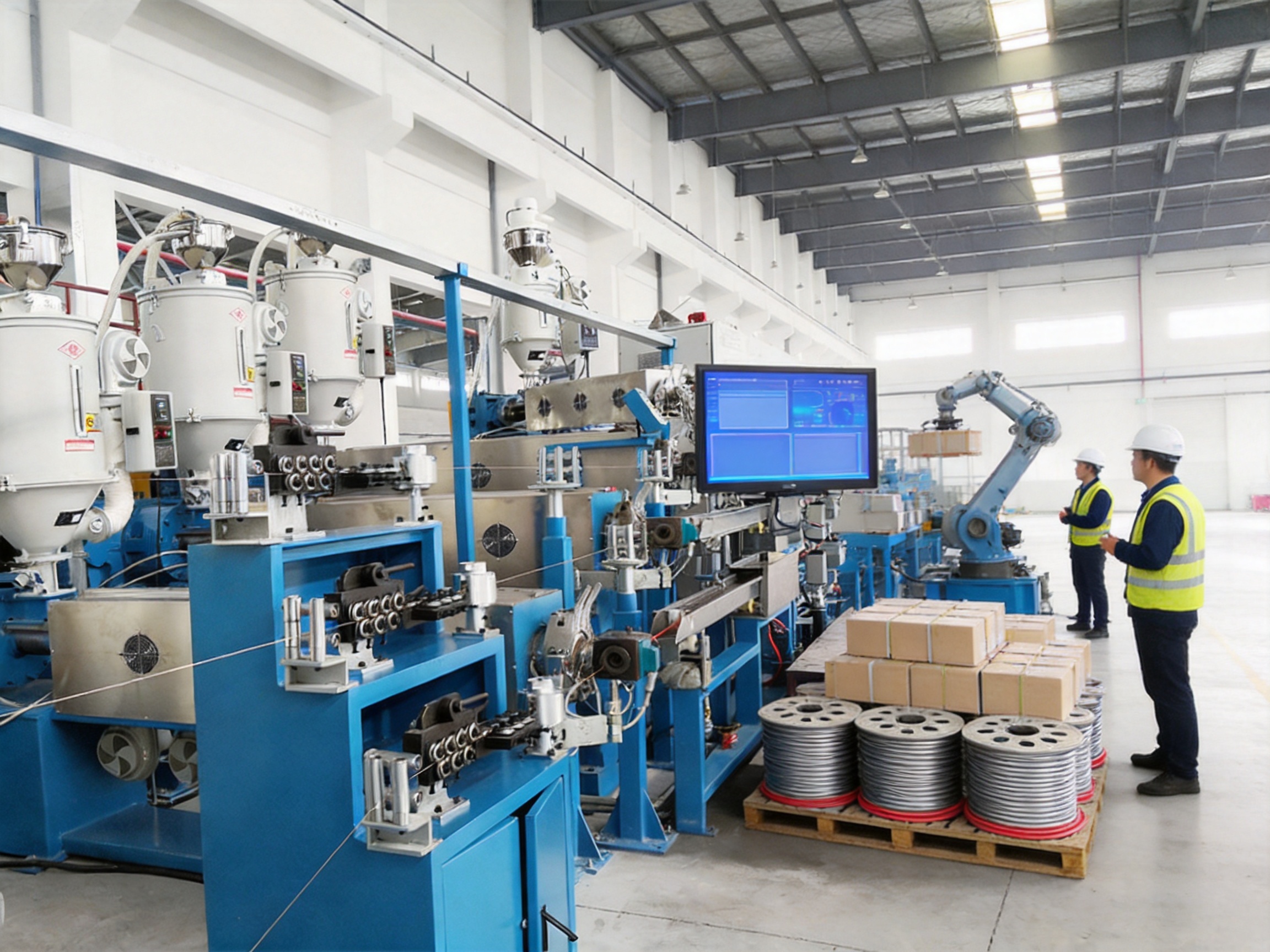
Modern wire and cable manufacturers face constant pressure to increase output, improve dimensional accuracy, reduce material waste, and deliver stable quality across long production runs. These demands are especially important when producing insulated wires, power cables, communication cables, automotive harnesses, and other products that require a consistent polymer layer around a conductive core. A cable extrusion line must therefore do more than melt and apply plastic. It must coordinate material feeding, conductor pay-off, extrusion, cooling, diameter control, hauling, take-up, and process monitoring as one reliable production system.
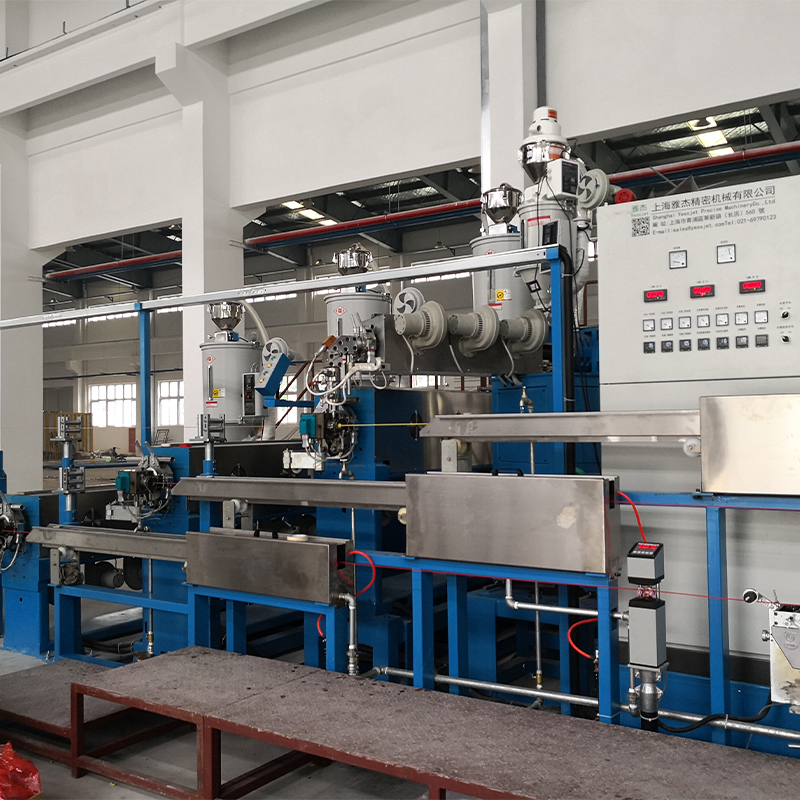
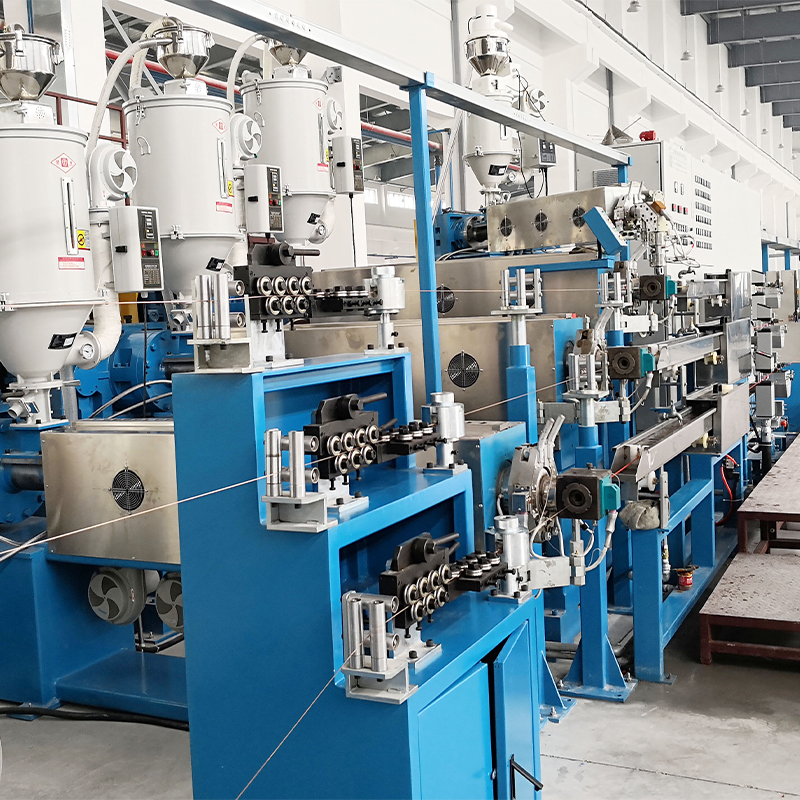
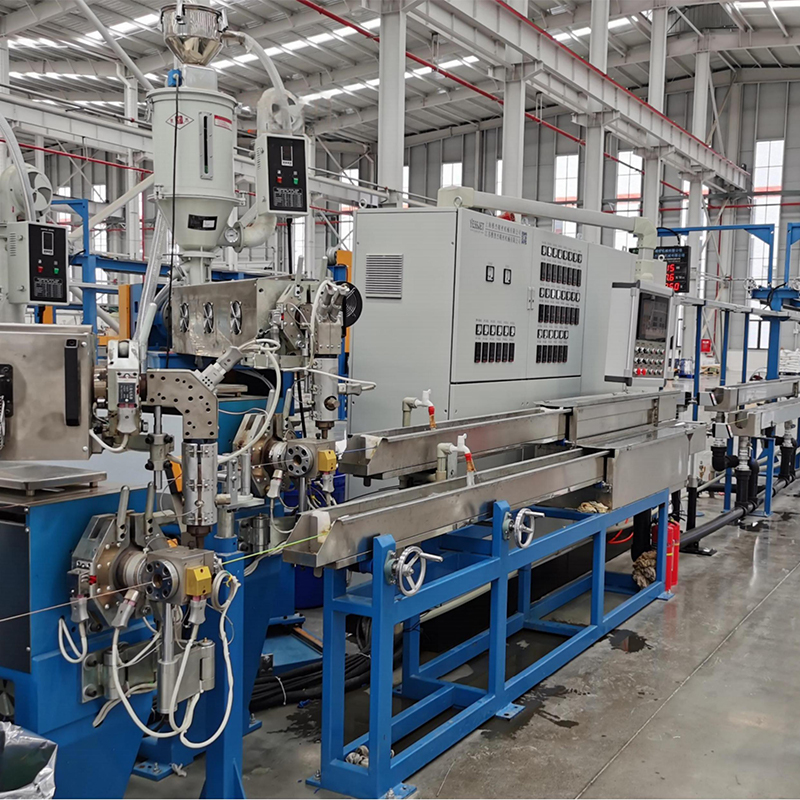
The Full Auto PE PVC High-Performance Cable Extruder is designed for this type of integrated manufacturing environment. It supports continuous extrusion of polyethylene and polyvinyl chloride insulation layers and protective jackets. By combining automatic pay-off, precision extrusion, intelligent cooling, synchronized haul-off and take-up units, and PLC-based control, the system reduces manual intervention while supporting stable production performance.
Its stated PVC extrusion capacity reaches up to 120 kilograms per hour, representing a claimed improvement of approximately 50 percent over standard models. At the same time, the equipment is designed to maintain insulation thickness tolerance within ±0.03 millimeters. This combination of throughput and precision gives cable producers a practical solution for increasing production capacity without accepting unnecessary losses in dimensional quality.
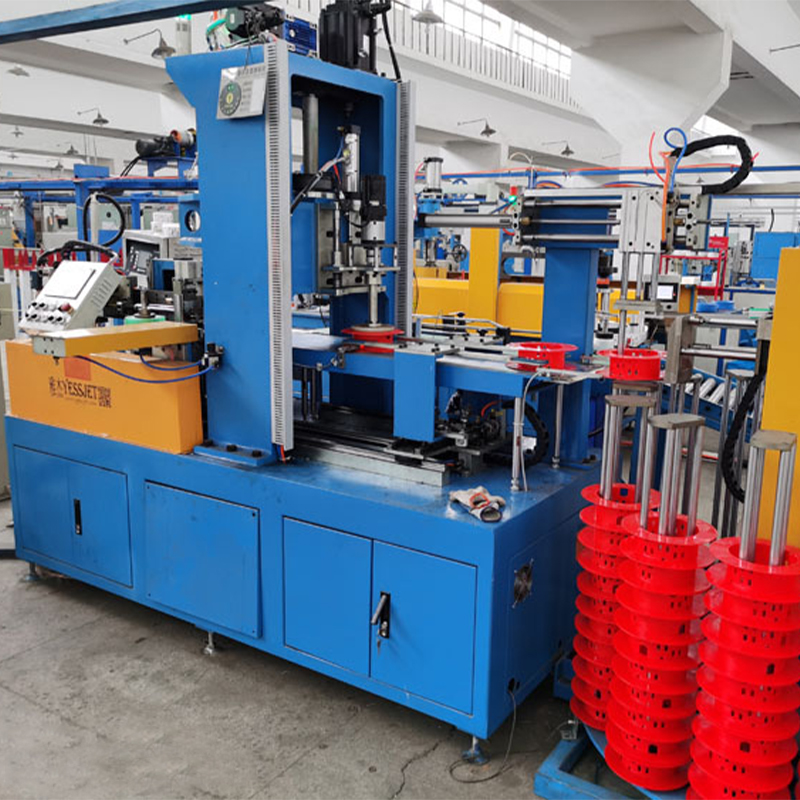
The equipment is supplied by Shanghai Yessjet Precise Machinery Co., Ltd., a Chinese manufacturer focused on wire and cable machinery, cable production line solutions, and related equipment. The company’s product scope includes wire and cable extrusion lines, fully automatic coiling and packaging equipment, intelligent robot stackers, coiling machines, motorized pay-off systems, motorized take-up systems, and accessory equipment. This broader manufacturing scope is important because cable production performance depends not only on the extruder itself but also on the compatibility of upstream and downstream machinery.
1. The Role of High-Performance Extrusion in Cable Manufacturing
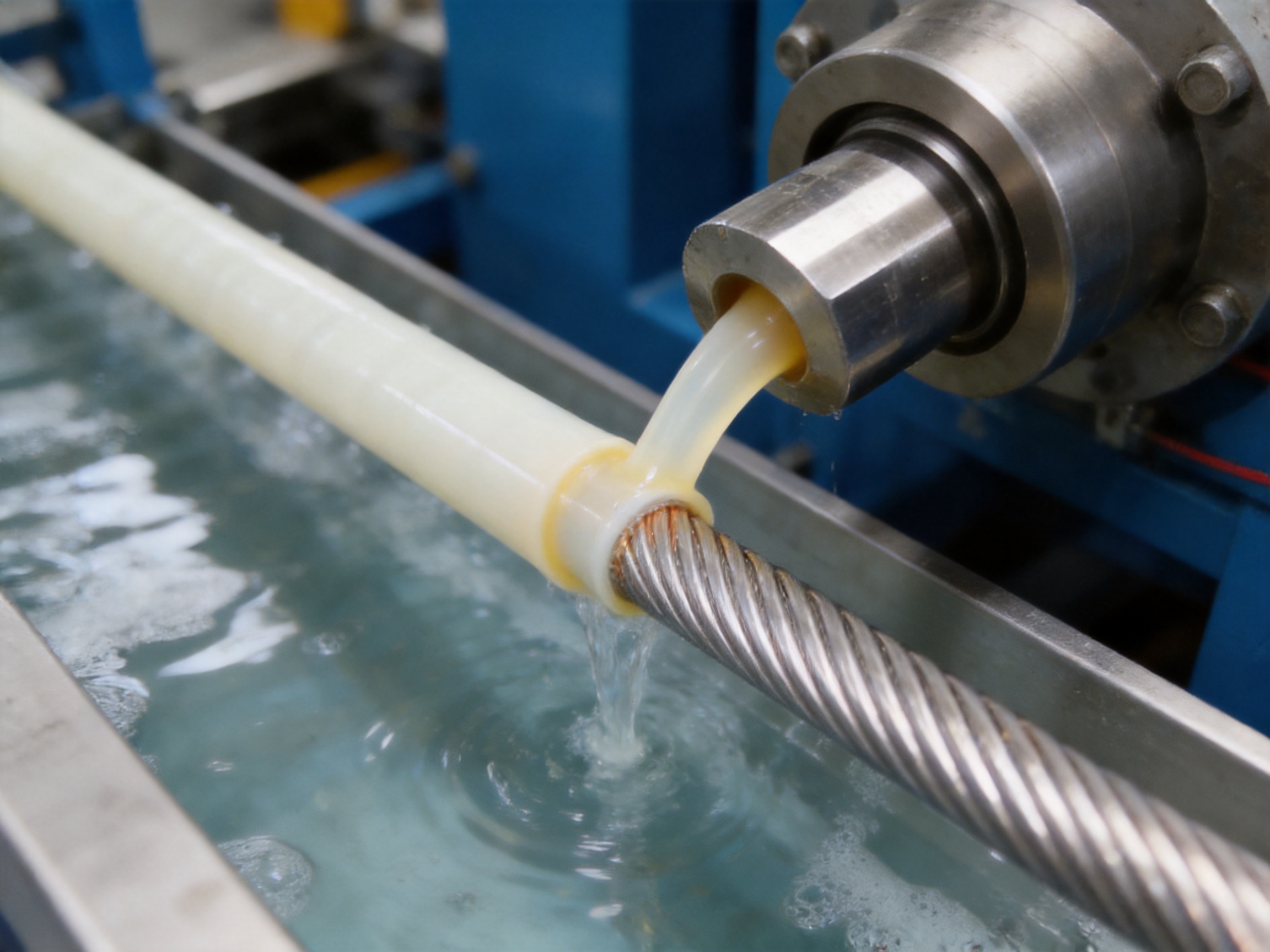
Extrusion is one of the central processes in wire and cable production. During extrusion, polymer pellets or other thermoplastic materials are heated, melted, mixed, and forced through a die. A conductor passes through the die at a controlled speed, allowing the molten polymer to form an insulation layer or jacket around it. The newly coated cable then enters a cooling section, passes through a haul-off system, and is wound onto a take-up reel or prepared for further processing.
Although the basic principle is straightforward, industrial cable extrusion requires accurate coordination between many variables. These include polymer temperature, screw speed, line speed, conductor tension, die centering, cooling-water conditions, haul-off speed, and take-up torque. A small change in one part of the process can influence the finished cable. For example, excessive line tension can stretch the insulation, while insufficient cooling can allow the surface to deform before the product reaches the take-up unit.
A high-performance extruder is therefore expected to provide four essential capabilities. First, it must melt and homogenize the material consistently. Second, it must apply the insulation or jacket with accurate concentricity and thickness. Third, it must maintain synchronized movement throughout the line. Fourth, it must provide operators with a clear method for monitoring and adjusting the process.
The Full Auto PE PVC High-Performance Cable Extruder addresses these requirements through an integrated configuration. Its high-torque gearbox motor supports stable extrusion, while PLC control coordinates key production functions. Automatic pay-off and synchronized take-up help maintain continuous material movement. Intelligent cooling supports rapid stabilization of the extruded layer before the cable proceeds to downstream operations.
2. Product Overview
The Full Auto PE PVC High-Performance Cable Extruder is intended for continuous production of cable insulation and protective jackets using PE and PVC materials. Its application range covers power cables, communication wires, automotive harnesses, and related wire products. The system is particularly suitable for manufacturers seeking a production line that combines higher output with repeatable dimensional performance.
The equipment integrates the following principal functions:
Automatic conductor pay-off for controlled and continuous feeding.
PE and PVC extrusion for insulation and jacket application.
High-torque gearbox motor drive for stable material processing.
PLC control for coordinated operation and process adjustment.
Intelligent cooling for rapid and controlled solidification of the polymer layer.
Synchronized haul-off and take-up for consistent product transport and winding.
Support for continuous cable production with reduced manual handling.
The line is designed as more than an individual plasticizing machine. It is an integrated production system in which the major process units work together. This approach can simplify production management and reduce the operating variation that may occur when separate machines are not properly synchronized.
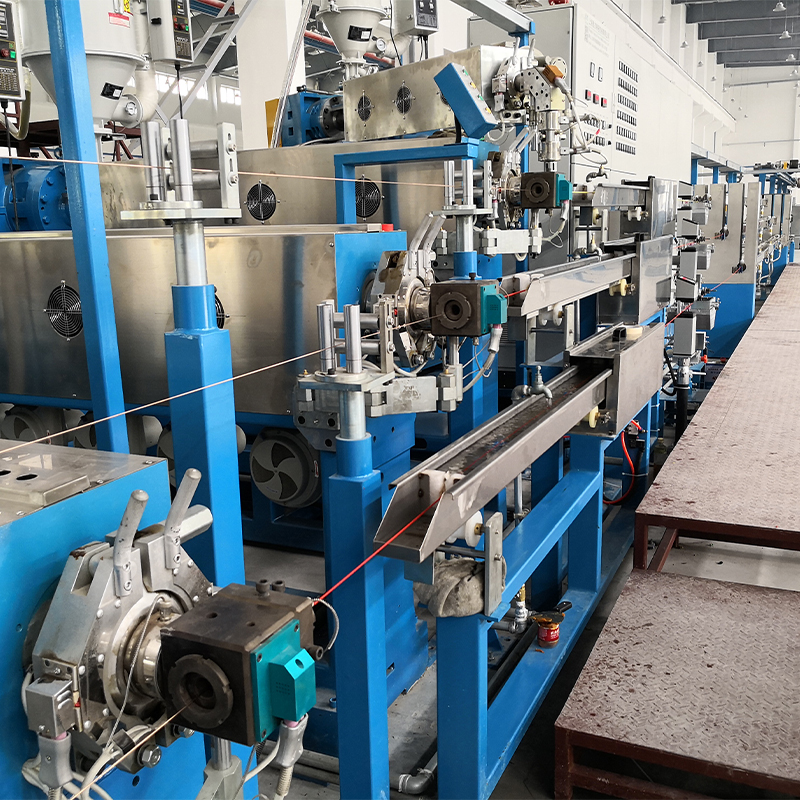
Full Auto PE PVC High-Performance Cable Extruder
3. PE and PVC Processing Capability
One of the main advantages of the equipment is its ability to support both PE and PVC extrusion. These materials are widely used in the wire and cable sector, but they have different processing characteristics and end-use properties.
3.1 Polyethylene Extrusion
Polyethylene is commonly selected for applications requiring favorable insulation performance, moisture resistance, and dependable electrical characteristics. PE grades can be used in communication cables, data-related products, and various power and signal applications. Processing performance depends on the selected compound, temperature profile, screw configuration, die design, and line speed.
A stable PE extrusion process must deliver consistent melting and pressure behavior. The polymer must be sufficiently plasticized to fill the die evenly, but excessive heat or residence time can negatively affect material performance. The extruder’s controlled drive and process coordination help manufacturers establish repeatable production conditions for different cable constructions.
3.2 PVC Extrusion
PVC remains one of the most widely used cable materials because it can provide practical insulation and jacket performance across many general-purpose applications. It is used for power wires, control cables, building wires, industrial cables, and other products where flexibility, mechanical protection, and cost efficiency are important.
The stated PVC extrusion capacity of up to 120 kilograms per hour is a major productivity feature of this model. Compared with standard equipment, the claimed 50 percent higher output can help manufacturers produce more cable within the same operating period. Higher capacity can also support shorter delivery schedules and better utilization of factory space, provided that the selected conductor, compound, die, cooling system, and downstream equipment are appropriately matched.
PVC processing requires careful management of temperature and residence time. If the material is overheated, surface quality and material stability may be affected. If it is insufficiently plasticized, the insulation may not form smoothly around the conductor. The combination of a high-torque motor, controlled extrusion, and coordinated line operation helps create a more stable foundation for PVC cable production.
3.3 Flexible Production Across Cable Types
Supporting both PE and PVC gives manufacturers greater product flexibility. A factory may use the same general production platform for different customer orders, provided that the machine configuration and process settings are suitable for the intended material and cable design. This can be valuable for producers serving multiple market segments instead of manufacturing a single standardized product.
Material flexibility also supports more efficient production planning. Manufacturers can organize jobs according to compound type, conductor size, insulation color, jacket specification, or customer requirement. A PLC-based control platform can help operators reproduce previously established settings more consistently, reducing the need for repeated manual adjustments during routine changeovers.
4. Output Performance and Production Efficiency
Production capacity is a key factor in evaluating any industrial cable extruder. A machine with high nominal speed is not necessarily efficient if it produces excessive scrap, requires frequent stops, or cannot maintain stable quality. Practical productivity must be considered as a combination of output rate, uptime, changeover efficiency, dimensional control, and material utilization.
The Full Auto PE PVC High-Performance Cable Extruder is designed to address these factors through coordinated operation. Its stated PVC capacity of up to 120 kilograms per hour provides a high production benchmark. The integrated pay-off and take-up units reduce the need for constant manual intervention, while the synchronized haul-off system helps maintain a continuous production flow.
Higher output can provide several benefits:
Manufacturers may complete large orders in less operating time.
Production schedules can become easier to manage during periods of high demand.
Labor can be focused on quality inspection, material preparation, and maintenance rather than repetitive handling.
Machine utilization can improve because the line is designed for continuous operation.
Material and energy usage can be assessed more efficiently on a per-unit basis.
Fewer manual interruptions can help reduce the risk of inconsistent cable tension or accidental process disturbances.
However, productivity should always be evaluated against the exact cable design. Actual output may vary according to conductor diameter, insulation thickness, compound formulation, cooling requirements, line speed, and finished-cable specifications. The 120-kilogram-per-hour figure should therefore be treated as a stated performance capability under suitable operating conditions, rather than a universal output for every product.
5. Precision Insulation Thickness Control
Insulation thickness is one of the most important quality characteristics in cable manufacturing. A layer that is too thin may fail to provide the required electrical or mechanical protection. A layer that is too thick can increase material consumption, enlarge the finished cable diameter, reduce flexibility, and raise production costs.
The equipment is designed to maintain insulation thickness tolerance within ±0.03 millimeters. This stated tolerance demonstrates the system’s emphasis on dimensional consistency. For manufacturers producing cables with strict customer specifications, stable thickness control can reduce rework and improve the predictability of finished-product testing.
Thickness consistency depends on the coordination of several machine functions. The conductor must travel at a stable speed and with controlled tension. The polymer must be delivered at a consistent rate. The die must remain properly aligned with the conductor. The haul-off must maintain the required line speed, and the take-up must avoid introducing excessive pull on the finished cable.
By combining controlled extrusion with synchronized transport, the Full Auto PE PVC High-Performance Cable Extruder provides a process structure suited to these requirements. The PLC system can coordinate operating parameters, while the mechanical drive system supports continuous movement. Intelligent cooling then helps the polymer layer retain its intended geometry as it solidifies.
Improved thickness consistency can create benefits beyond appearance. It can support more uniform electrical performance, predictable stripping behavior, consistent cable diameter, stable downstream coiling, and more reliable compliance testing. It can also reduce the amount of polymer applied above the required specification, which is particularly important when resin prices represent a significant portion of production cost.
6. Integrated Automatic Pay-Off
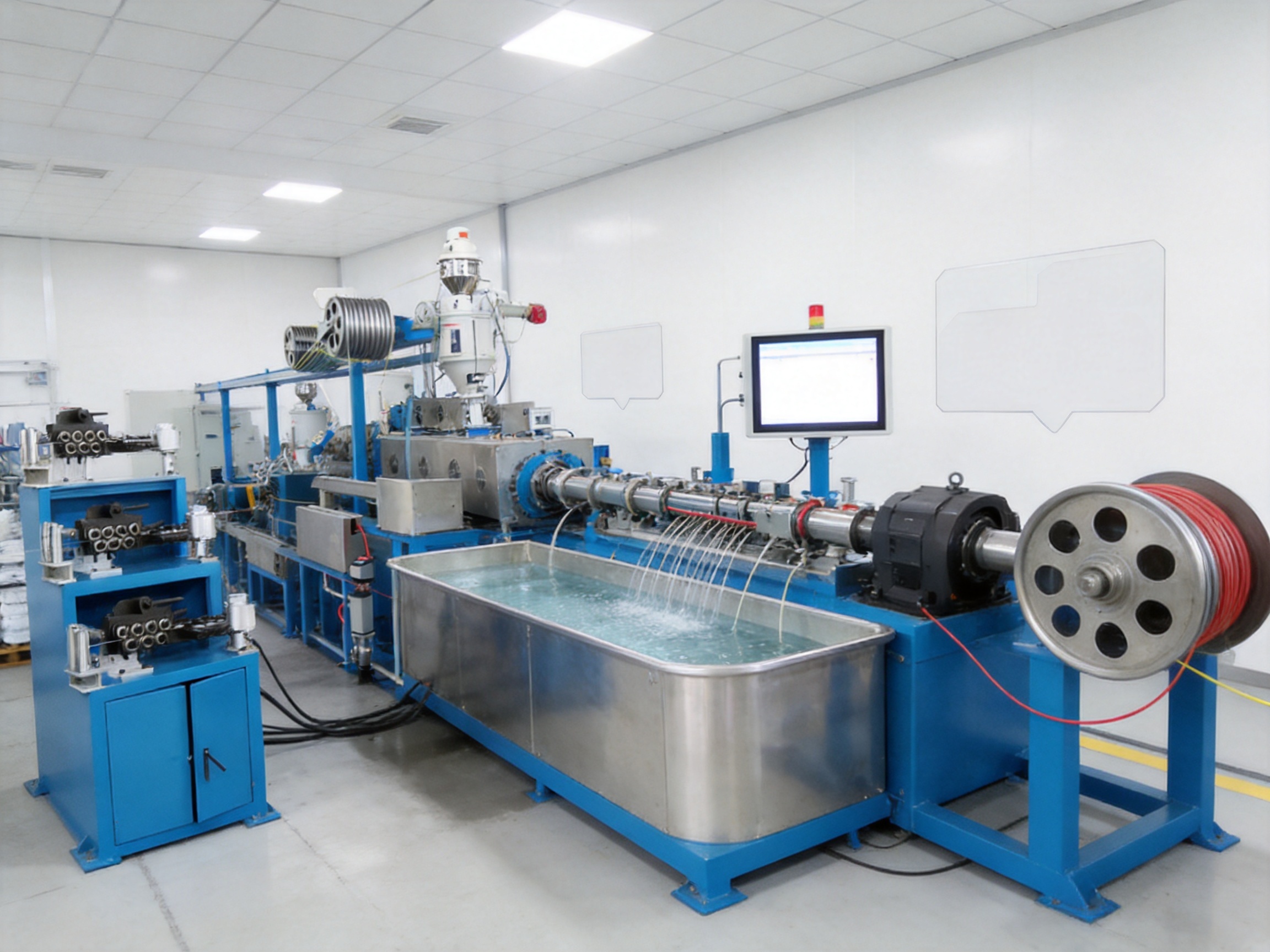
The pay-off unit is responsible for feeding the conductor or intermediate cable into the extrusion line. A poorly controlled pay-off can cause tangling, sudden tension changes, conductor deformation, or line stoppages. For this reason, automatic pay-off is an important part of a high-performance extrusion system.
The integrated automatic pay-off is designed to support continuous feeding while reducing the operator’s need to make frequent manual corrections. It can help maintain a steady conductor path from the supply reel to the extrusion head. Stable feeding is especially important when the cable product requires a tight insulation thickness tolerance.
Automatic pay-off can also improve workplace efficiency. Operators do not need to remain constantly focused on basic material release and tension correction. Instead, they can monitor the process, inspect the cable surface, prepare the next material batch, or perform other production tasks. In a high-volume factory, this reduction in repetitive intervention can improve labor allocation.
Pay-off performance must still be matched to the conductor size, reel dimensions, material weight, and production speed. Correct reel loading, alignment, and tension settings remain important. The automation system is intended to support the operator, not eliminate the need for proper setup and routine inspection.
7. High-Torque Gearbox Motor
The extrusion drive is one of the most important mechanical systems in the line. It must provide enough torque to rotate the screw under changing material conditions while maintaining stable speed. A high-torque gearbox motor gives the machine a strong drive foundation for processing thermoplastic materials in continuous production.
Torque is particularly important during start-up, material changes, higher-output operation, and processing of compounds with different flow characteristics. A drive with suitable torque capacity can help reduce speed fluctuation when the extrusion load changes. Stable screw rotation supports more consistent polymer throughput and pressure behavior.
The gearbox also contributes to controlled power transmission. In an industrial extruder, the drive must operate reliably over long production periods. Proper mechanical transmission can reduce unnecessary vibration and support the service life of connected components. The exact maintenance requirements depend on the final configuration, operating conditions, lubricant selection, and manufacturer instructions.
Compared with a lower-capacity drive system, a high-torque arrangement can offer greater process stability when the line is operated near its intended production range. It can also provide additional operating margin for different cable constructions, although the material, screw, die, and temperature profile must always be selected appropriately.
8. PLC Control and Process Coordination
Automation is most effective when it coordinates the complete line instead of controlling only one isolated unit. The PLC control system is intended to connect the operating logic of the pay-off, extruder, cooling section, haul-off, and take-up equipment.
A PLC-based system can support repeatable machine operation by managing programmed sequences, monitoring signals, and coordinating speed relationships. It can also provide a more structured method for setting production parameters. Rather than relying entirely on manual adjustment, operators can use defined settings for different products and production conditions.
Important functions of a coordinated control system may include:
Controlled starting and stopping of the production line.
Speed coordination between extrusion, haul-off, and take-up sections.
Adjustment of screw speed and line speed according to the selected process.
Monitoring of operating conditions and machine status.
Support for alarms or protective shutdowns when abnormal conditions occur.
Improved repeatability between production batches.
Reduced risk of improper sequencing during start-up and shutdown.
The exact functions available depend on the machine configuration and control-program design. Nevertheless, the inclusion of PLC control is a meaningful advantage over basic manually coordinated extrusion equipment. It provides a foundation for standardized operation, production records, operator training, and future integration with broader factory automation systems.
9. Intelligent Cooling for Product Stability
Cooling is not simply the final step after extrusion. It is a critical part of forming the finished cable geometry. Once the molten polymer leaves the die, it must be cooled sufficiently to stabilize the insulation or jacket surface. If cooling is too slow or uneven, the polymer may sag, deform, or develop surface irregularities before the cable reaches the take-up section.
The intelligent cooling unit is designed to provide controlled cooling after extrusion. Its role is to support stable product dimensions and surface quality while allowing the line to operate at an efficient speed. Proper cooling can help preserve insulation concentricity and reduce the risk of deformation during transport.
Cooling conditions depend on material type, cable diameter, polymer temperature, production speed, and required finished properties. PE and PVC may require different process settings, and larger cable constructions may require a longer or more carefully controlled cooling path. The ability to integrate cooling with the extrusion and haul-off sequence helps the operator manage these variables as part of a complete production process.
Stable cooling can also support downstream operations. A properly solidified cable is easier to inspect, measure, wind, coil, package, or feed into another production stage. It is less likely to stick, flatten, or change shape during take-up. For manufacturers selling finished cable in reels or coils, this contributes to a cleaner and more consistent product presentation.
10. Synchronized Haul-Off and Take-Up
The haul-off and take-up units determine how the finished cable moves through the end of the line. Their operation must be synchronized with extrusion output and conductor feeding. If the haul-off speed is too high, the insulation can be stretched and become thinner than intended. If it is too low, material may accumulate or the product may lose dimensional stability.
The synchronized system is designed to maintain coordinated movement from the extrusion head through cooling and winding. The take-up unit collects the finished cable under controlled conditions, helping reduce manual winding work and supporting organized reel formation.
Consistent take-up tension is especially important for cable products with sensitive insulation or jacket surfaces. Excessive tension can deform a still-warm polymer layer or create uneven winding. Insufficient tension can result in loose layers, crossed turns, and poor reel quality. A coordinated haul-off and take-up arrangement helps create a more predictable relationship between line speed and winding speed.
For manufacturers, the practical advantages include fewer interruptions, better reel utilization, improved operator safety, and more consistent finished packages. When the take-up process is properly matched to the cable construction, downstream handling becomes easier and the risk of damage during storage or transportation can be reduced.
11. Comparison with Conventional Cable Extrusion Equipment
Competitiveness in cable machinery should be judged by the total production result rather than by one isolated specification. The Full Auto PE PVC High-Performance Cable Extruder offers several advantages compared with more basic or manually coordinated extrusion lines.
| Evaluation Area | Conventional or Basic Equipment | Full Auto PE PVC High-Performance Cable Extruder | Production Benefit |
|---|---|---|---|
| Material compatibility | May be configured for a limited material range | Designed for PE and PVC extrusion | Greater flexibility for different cable products |
| Production capacity | Standard output may limit large-volume orders | Stated PVC capacity up to 120 kg/h | Higher potential throughput and improved order responsiveness |
| Thickness consistency | More dependent on manual adjustments | Designed for tolerance within ±0.03 mm | More predictable insulation dimensions |
| Line coordination | Separate units may require manual synchronization | Integrated pay-off, extrusion, cooling, haul-off, and take-up | Reduced process interruption and improved continuity |
| Control method | Basic controls may provide limited coordination | PLC-based process control | Improved repeatability and easier parameter management |
| Material feeding | Manual or less automated conductor handling | Automatic pay-off system | Lower routine labor demand and more stable feeding |
| Cooling management | Cooling may be less integrated with line speed | Intelligent cooling integrated into the production sequence | Better dimensional stabilization after extrusion |
| Take-up operation | Manual winding or less coordinated collection | Synchronized haul-off and take-up | More organized reels and reduced handling effort |
This comparison does not mean that every conventional machine is unsuitable or that every production environment requires maximum automation. Instead, it shows where an integrated high-performance system can create value. Manufacturers producing large volumes, multiple cable types, or products with demanding dimensional requirements are more likely to benefit from automation and coordinated process control.
12. Manufacturing Strengths of the Supplier
Shanghai Yessjet Precise Machinery Co., Ltd. presents itself as a manufacturer of wire and cable machinery and turnkey cable production line solutions. The company’s stated product categories cover the major stages of wire and cable processing, including extrusion, coiling, packaging, stacking, pay-off, take-up, and accessory equipment.
This breadth is a meaningful strength for customers planning a complete production line. Cable manufacturing equipment must work as a connected system. If the extruder, take-up unit, coiler, and packaging equipment are supplied without adequate compatibility, the factory may encounter speed mismatches, inconsistent tension, difficult maintenance, or complicated operator training.
A supplier with experience across multiple equipment categories can approach line design more holistically. The manufacturer can consider how the extrusion speed relates to take-up capacity, how finished cable is transferred to a coiling machine, how packages are prepared for handling, and how an intelligent robot stacker may fit into the final production sequence.
The product portfolio also suggests an ability to support different levels of automation. A customer may begin with an extrusion machine and later add automatic coiling, packaging, or robotic stacking equipment as production volume increases. This type of modular development can help manufacturers align capital investment with business growth.
12.1 Equipment Integration
Integrated equipment design is valuable because each production stage influences the next. An extruder with high output must be supported by a take-up system with suitable speed and reel capacity. A coiling machine must be compatible with the cable diameter and line output. Packaging equipment must accommodate the finished coil or reel format. Stacking equipment must handle the package weight and dimensions.
By supplying multiple categories of related machinery, the company can support a more consistent technical approach across the production line. This can simplify communication during equipment selection and commissioning. It may also reduce the number of separate suppliers involved in a project, making responsibility for system coordination clearer.
12.2 Focus on Precise Machinery
The company name emphasizes precise machinery, which corresponds closely with the requirements of cable extrusion. In this industry, precision is reflected in more than a single tolerance figure. It includes stable mechanical construction, controlled drives, consistent material processing, accurate line synchronization, reliable cooling, and repeatable operator settings.
The Full Auto PE PVC High-Performance Cable Extruder reflects this focus through its stated ±0.03-millimeter insulation thickness tolerance, PLC control, high-torque drive, and integrated production units. These features are intended to support manufacturers that view product consistency as a central part of competitiveness.
12.3 Turnkey Production Orientation
Turnkey cable production solutions can be valuable for new factories, capacity expansions, and modernization projects. A turnkey approach may include equipment selection, line arrangement, process matching, installation coordination, commissioning support, and operator training. The exact scope should be confirmed with the supplier for each project.
For a buyer, the main advantage of a turnkey orientation is that the production line can be planned around the intended product range instead of assembled as unrelated individual machines. This can improve layout efficiency and make it easier to define a complete workflow from conductor pay-off to finished cable packaging.
13. Quality and Standards Considerations
The equipment description identifies IEC 60228 and GB/T 12706 among the global and national standards considered in relation to product quality. IEC 60228 addresses conductors of insulated cables, including conductor resistance and construction-related requirements. GB/T 12706 covers power cables with extruded insulation and associated requirements in the relevant scope.
Machinery compliance and cable product compliance are related but not identical. A machine can support the production of cable intended to meet a standard, but the finished cable must still be manufactured using suitable conductors, polymer compounds, tooling, process settings, inspection methods, and testing procedures. The manufacturer should verify the final product against the current edition of the applicable standard.
The extruder contributes to standard-oriented production by helping control insulation geometry, surface quality, line speed, and process repeatability. Consistent extrusion is a foundation for subsequent electrical, mechanical, dimensional, and aging tests. A stable line can also make quality records easier to interpret because fewer production variables change unexpectedly from batch to batch.
Manufacturers should establish a documented quality plan covering incoming materials, conductor dimensions, polymer preparation, temperature settings, die configuration, cooling conditions, finished diameter, insulation thickness, eccentricity, surface appearance, electrical performance, and reel or coil inspection.
14. Applications Across Wire and Cable Markets
14.1 Power Cables
Power cable production requires reliable insulation and jacket application, stable conductor handling, and consistent finished dimensions. PE and PVC compounds may be selected according to voltage class, environmental conditions, flexibility, flame behavior, and customer requirements. The extruder can support continuous application of the insulation or protective layer when the machine is configured with suitable tooling and process parameters.
14.2 Communication Wires
Communication wires and related products can require accurate insulation geometry because conductor spacing, dielectric characteristics, and finished dimensions influence signal performance. The ability to maintain a controlled polymer layer is therefore valuable. PE is widely associated with communication-related insulation applications, although the precise compound and cable construction depend on the product specification.
14.3 Automotive Harnesses
Automotive harnesses are manufactured in high volumes and may include numerous wire sizes, colors, insulation types, and production batches. A flexible extrusion platform can help support this variety. Automatic pay-off, PLC control, and synchronized take-up can reduce repetitive work and help maintain consistent wire quality across extended production runs.
14.4 Industrial and General-Purpose Wires
Industrial wires, control cables, building wires, and general-purpose insulated products may benefit from the same combination of output and dimensional control. The exact configuration should be selected according to conductor construction, polymer grade, insulation thickness, finished diameter, and required line speed.
15. Operational Benefits for Manufacturers
The principal operational benefit of the system is the reduction of disconnected manual tasks. In a basic line, operators may need to adjust conductor release, extrusion speed, haul-off, cooling, and winding separately. These actions can create inconsistency, especially during long shifts or rapid product changes.
An integrated automated line provides a more organized workflow. Once the material, tooling, and process parameters have been correctly prepared, the line can operate with fewer routine interventions. This can help operators concentrate on quality checks and exception handling instead of continuously correcting normal machine movement.
Other potential benefits include:
Improved production continuity during long cable runs.
Reduced risk of tension-related defects.
More consistent cable winding and reel formation.
Lower dependence on individual operator technique.
Faster response to production demands when the line is configured for high output.
Improved traceability when process settings and operating conditions are recorded.
More effective use of labor in a modern factory environment.
Better preparation for future factory automation and digital monitoring.
These benefits are strongest when the machine is correctly installed, maintained, and operated according to the intended process range. Automation does not replace engineering discipline. It makes a well-designed process more repeatable.
16. Installation, Commissioning, and Process Setup
Successful installation begins with an accurate definition of the product range. Before commissioning, the manufacturer should identify conductor sizes, PE and PVC compound types, insulation thicknesses, cable diameters, target output, reel dimensions, and applicable standards. This information influences die selection, screw configuration, cooling length, haul-off capacity, and take-up specifications.
The production area should provide sufficient space for material handling, machine access, electrical connection, cooling-water management, ventilation, and finished-product movement. The floor should be capable of supporting the equipment and maintaining alignment. Utility requirements, including power supply and cooling-water conditions, should be confirmed before delivery.
Commissioning typically involves checking mechanical alignment, drive rotation, temperature control, PLC operation, safety functions, pay-off movement, cooling circulation, haul-off synchronization, and take-up response. Trial production should begin with conservative settings before the line is progressively adjusted toward the intended operating range.
During process setup, operators should record the settings that produce acceptable results. Useful records may include barrel-zone temperatures, die temperature, screw speed, line speed, haul-off speed, cooling conditions, conductor tension, take-up tension, and finished thickness measurements. These records can later serve as reference recipes for repeat production.
17. Maintenance and Long-Term Reliability
Regular maintenance is essential for preserving extrusion accuracy and production uptime. Preventive maintenance should cover the extruder drive, gearbox, screw and barrel, heating and cooling systems, die assembly, pay-off, haul-off, cooling section, take-up, electrical cabinet, sensors, and safety devices.
Material residue should be managed carefully, particularly when changing between compounds or colors. Improper cleaning can create contamination, surface defects, or unstable output. Operators should follow the recommended cleaning procedure and use materials that are compatible with the equipment.
The die and tooling deserve special attention because wear or damage can influence concentricity and insulation thickness. Mechanical alignment should be checked whenever tooling is changed or abnormal cable dimensions are observed. Cooling water should also be monitored for cleanliness and flow stability to prevent poor heat transfer or deposits in the cooling system.
Electrical and control-system maintenance should include inspection of connections, sensors, operator interfaces, and alarm functions. A reliable PLC system depends on accurate input signals and properly maintained control hardware. Backup copies of machine parameters and control data can help reduce recovery time in the event of a fault.
Preventive maintenance normally costs less than emergency repair and unplanned production stoppage. It also protects the precision advantages that justify investment in a high-performance extrusion line.
18. Recommended Selection Criteria
Buyers comparing cable extruders should look beyond nominal output. The following criteria are important when evaluating this type of equipment:
Material range: Confirm whether the machine is suitable for the intended PE and PVC compounds.
Product range: Define conductor sizes, insulation thicknesses, finished diameters, and cable constructions.
Output requirements: Compare expected production volume with the stated capacity and actual operating conditions.
Dimensional accuracy: Request information about thickness tolerance, concentricity, measurement methods, and trial results.
Automation level: Determine which functions are automatic and which require operator adjustment.
Line synchronization: Verify the relationship between pay-off, extrusion, cooling, haul-off, and take-up units.
Control system: Review PLC functions, operator interface, alarm handling, recipe management, and data-recording options.
Maintenance support: Confirm access to spare parts, technical assistance, manuals, and service guidance.
Expansion potential: Consider whether coiling, packaging, robotic stacking, or additional take-up equipment may be added later.
Standards and testing: Identify the standards applicable to the finished cable and the inspection equipment required.
Factory requirements: Confirm power, cooling, space, ventilation, foundation, and environmental conditions.
This process helps ensure that the machine is evaluated as part of a complete production strategy rather than as an isolated purchase.
19. Why an Integrated System Can Outperform a Collection of Separate Machines
Separate machines can sometimes achieve the required functions, but they may require more engineering effort to coordinate. Differences in motor response, control logic, tension behavior, and operator interfaces can create weak points in the production process. Each additional manual transfer also increases the possibility of handling damage or material contamination.
An integrated cable extrusion system reduces these coordination challenges. The pay-off, extruder, cooling section, haul-off, and take-up are designed to work as one line. This makes it easier to establish a controlled production sequence and may simplify operator training.
Integration can also improve troubleshooting. When a thickness variation occurs, the operator can evaluate the relationship between extrusion output, line speed, cooling, and take-up tension within one coordinated system. This is more efficient than investigating several unrelated machines with separate controls and operating methods.
The value of integration becomes even greater when the line is connected to coiling, packaging, or robotic stacking equipment. A continuous production workflow can reduce manual transportation and support a more efficient factory layout.
20. Frequently Asked Questions
Q1: What materials can this cable extruder process?
The equipment is designed for PE and PVC extrusion. The precise compound grades, temperature settings, screw configuration, tooling, and production range should be confirmed for each application with the supplier.
Q2: What is the stated maximum PVC extrusion capacity?
The stated PVC extrusion speed is up to 120 kilograms per hour. Actual output depends on the cable construction, material formulation, insulation thickness, line speed, cooling conditions, tooling, and operating parameters.
Q3: What thickness tolerance is the machine designed to achieve?
The stated insulation thickness tolerance is within ±0.03 millimeters. Final performance depends on correct machine setup, die alignment, conductor stability, material quality, and process control.
Q4: Which cable products can be manufactured?
The listed applications include power cables, communication wires, automotive harnesses, and other wire and cable products requiring PE or PVC insulation or protective jackets.
Q5: How does automatic pay-off improve production?
Automatic pay-off supports continuous conductor feeding and reduces the amount of repetitive manual adjustment. Stable feeding can also help maintain insulation thickness and reduce tension-related process disturbances.
Q6: Why is PLC control important?
PLC control coordinates major line functions and provides a structured method for managing operating sequences, speed relationships, alarms, and production settings. It can improve repeatability compared with entirely manual control.
Q7: What is the purpose of intelligent cooling?
Intelligent cooling helps stabilize the molten insulation or jacket after it leaves the die. Controlled cooling supports finished dimensions, surface quality, and reliable transport into the haul-off and take-up sections.
Q8: Is the system suitable for high-volume production?
The stated output and integrated automation make it suitable for manufacturers seeking continuous, higher-volume production. The final suitability should be verified against the customer’s product range and required operating schedule.
Q9: Can the extruder be connected to coiling and packaging equipment?
The supplier’s broader product range includes coiling machines, fully automatic coiling and packaging equipment, and intelligent robot stackers. A complete configuration should be planned according to cable diameter, package format, line speed, and handling requirements.
Q10: Does compliance with IEC 60228 and GB/T 12706 happen automatically?
No. The equipment can support production aligned with applicable standards, but finished-cable compliance also depends on conductor materials, insulation compounds, design, process settings, testing, and quality control. The final product must be verified against the current requirements of the relevant standard.
Q11: What information should a buyer provide when requesting a quotation?
A buyer should provide the material type, conductor size and construction, insulation or jacket thickness, finished cable diameter, target output, cable colors, reel dimensions, voltage or application requirements, applicable standards, factory utilities, and desired automation level.
Q12: How can manufacturers protect long-term equipment performance?
They should follow preventive maintenance schedules, clean the extrusion system correctly, inspect tooling, maintain cooling conditions, verify tension and alignment, back up control parameters, and train operators in safe and consistent machine operation.
21. Conclusion
The Full Auto PE PVC High-Performance Cable Extruder is designed for manufacturers that need a combination of output, dimensional control, automation, and production flexibility. Its ability to process PE and PVC supports a broad range of wire and cable applications, while the stated PVC capacity of up to 120 kilograms per hour provides a strong productivity benchmark.
The machine’s key advantages come from the way its functions are integrated. Automatic pay-off supports stable conductor feeding. The high-torque gearbox motor provides a strong drive foundation for continuous extrusion. PLC control coordinates the production sequence. Intelligent cooling helps stabilize the insulation or jacket. Synchronized haul-off and take-up support controlled transport and organized winding.
The stated insulation thickness tolerance of ±0.03 millimeters further emphasizes the equipment’s focus on precision. For manufacturers, this can support more predictable product quality, lower material waste, improved downstream handling, and better alignment with customer specifications.
The supplier’s wider range of wire and cable machinery adds another advantage. Because the company also provides coiling, packaging, stacking, pay-off, take-up, and accessory equipment, customers can consider a broader production solution instead of purchasing disconnected machinery from multiple sources. This is particularly useful for factories planning new cable production lines, capacity expansions, or automation upgrades.
As with any industrial system, actual results depend on correct product definition, material selection, tooling, installation, commissioning, operator training, and maintenance. When these factors are properly managed, the Full Auto PE PVC High-Performance Cable Extruder can serve as a dependable foundation for efficient and precise cable manufacturing.
References
1. IEC 60228, Conductors of Insulated Cables, International Electrotechnical Commission.
2. GB/T 12706, Power Cables with Extruded Insulation and Associated Requirements, relevant national standard series.
3. General principles of thermoplastic polymer extrusion for wire and cable insulation and jacketing.
4. Industrial practices for cable conductor pay-off, haul-off synchronization, cooling, and take-up control.
5. Manufacturer-provided product information for the Full Auto PE PVC High-Performance Cable Extruder.
6. Manufacturer-provided information concerning wire and cable production line equipment, coiling systems, packaging machinery, take-up units, pay-off units, and robotic stacking equipment.