LANGUAGE
 中文简体
 русский
 Français
 Español
 Português
 عربى

Content
- 1 Why Cable Insulation Extrusion Requires Precise Process Control
- 2 Product Overview
- 3 Core Design of the Single-Screw Extruder
- 4 Cooling Water Tank for Controlled Cable Solidification
- 5 Advantages Compared with Less Integrated Extrusion Equipment
- 6 Applications in Cable Manufacturing
- 7 Manufacturing Strengths of Shanghai Yessjet Precise Machinery Co., Ltd.
- 8 Advanced Manufacturing Process for the Extrusion Machine
- 9 Operating the XLPE PE Cable Extruder Efficiently
- 10 Quality Control and Standards Considerations
- 11 Maintenance Recommendations
- 12 How to Select the Correct Configuration
- 13 Why Integrated Cable Machinery Adds Long-Term Value
- 14 Q&A
- 14.1 What materials can this cable extruder process?
- 14.2 What is the purpose of the cooling water tank?
- 14.3 How does the machine help improve insulation uniformity?
- 14.4 Can the equipment be used for different cable sizes?
- 14.5 Is the machine suitable for automotive wire production?
- 14.6 Does the equipment perform the complete XLPE crosslinking process?
- 14.7 What auxiliary equipment may be added to the line?
- 14.8 How can production waste be reduced?
- 14.9 What information should be provided when requesting a quotation?
- 14.10 How does the manufacturer support turnkey projects?
- 15 Conclusion
- 16 References
- 17 Product: XLPE PE Cable Extruder with Cooling Water Tank
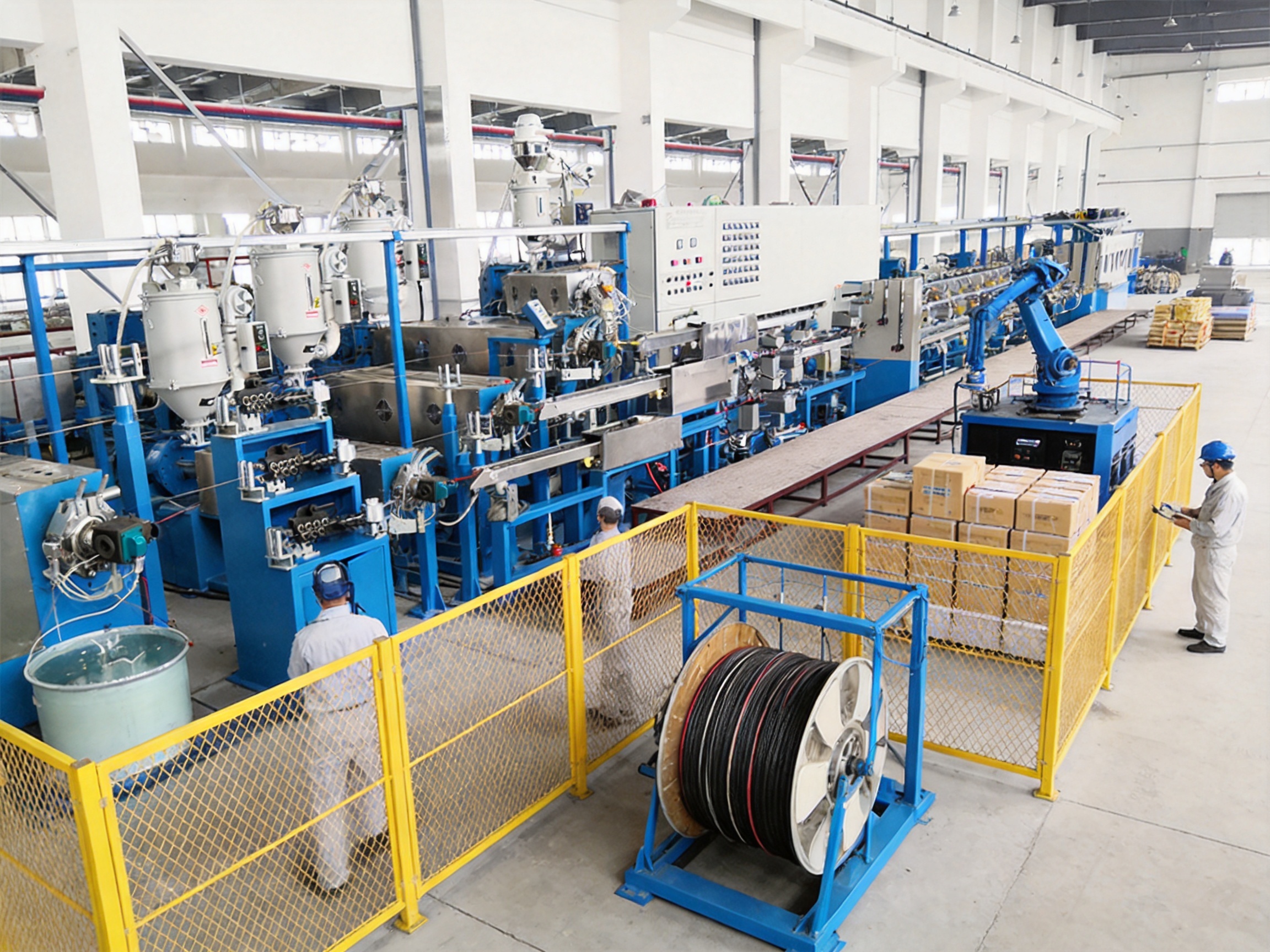
Modern cable manufacturing requires more than simply forcing polymer through a die. Insulation must be dimensionally accurate, electrically reliable, mechanically durable, and cooled quickly enough to preserve its shape throughout the production process. For manufacturers of power cables, communication wires, automotive conductors, and other insulated products, the extrusion line must maintain stable operating conditions while supporting continuous production and efficient quality control.
The XLPE PE Cable Extruder with Cooling Water Tank is designed to address these requirements through the coordinated operation of a precision single-screw extruder, an electrically heated temperature-control system, and a multi-section cooling water tank. The equipment is intended for the continuous processing of XLPE and PE insulation materials, helping cable producers obtain more uniform insulation, better dimensional stability, and dependable production performance.
Manufactured by Shanghai Yessjet Precise Machinery Co., Ltd., this type of equipment reflects a practical approach to cable machinery design. The machine combines controlled material conveying, stable thermal management, accurate extrusion, and staged cooling in one integrated production solution. Its configuration can be adapted to the requirements of different cable structures, conductor sizes, insulation materials, and line layouts.
Why Cable Insulation Extrusion Requires Precise Process Control
Cable insulation forms a protective and functional layer around the conductor. It must withstand electrical stress, resist mechanical damage, maintain its shape during installation, and remain stable under the expected operating temperature. Small variations in insulation thickness can affect dielectric performance, material consumption, stripping behavior, and compliance with product specifications.
In a conventional or poorly controlled extrusion process, several problems may occur. The polymer may not melt evenly, the extrudate may fluctuate in diameter, the insulation may contain surface defects, or the hot cable may deform before it reaches a stable temperature. These problems can lead to rejected products, increased scrap, additional inspection requirements, and unstable downstream operations.
A cable extruder therefore needs to control several variables at the same time. These include screw speed, material feeding, barrel temperature, die temperature, melt pressure, conductor centering, line speed, cooling-water temperature, water circulation, and take-up tension. The XLPE PE Cable Extruder with Cooling Water Tank is engineered around this coordinated control concept.
Its single-screw extrusion unit provides a stable path for feeding, melting, mixing, and conveying the insulation compound. The electrical heating system helps establish and maintain appropriate temperatures in different barrel zones. After the insulation is applied, the multi-section water tank supports progressive cooling, allowing the cable to solidify in a controlled manner instead of undergoing an abrupt thermal change.
Product Overview
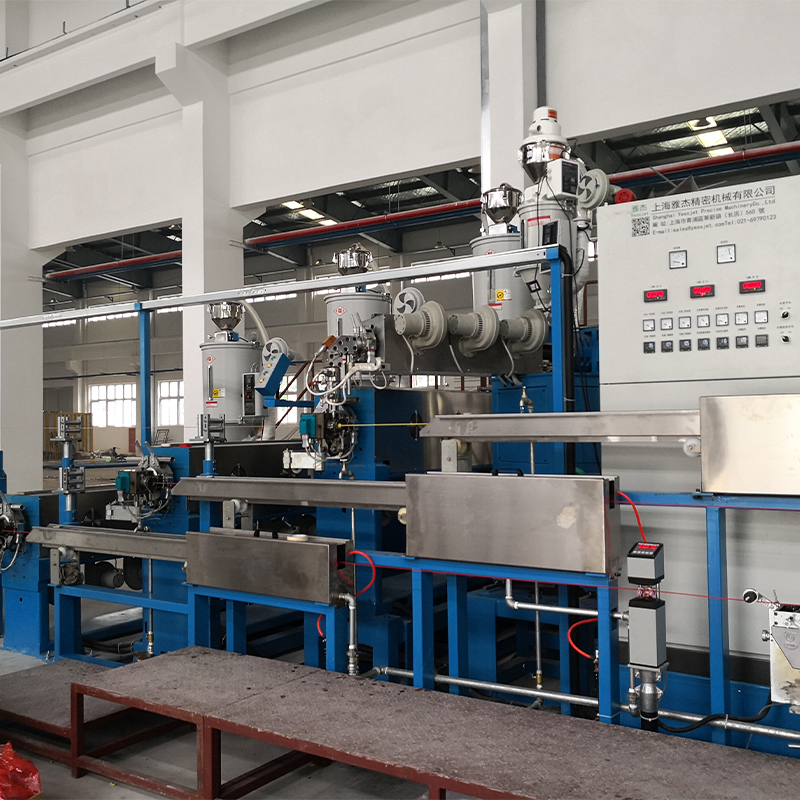
The equipment is suitable for extrusion and cooling operations involving XLPE and PE insulation materials. It is particularly applicable to continuous cable production lines in which a conductor is fed through a crosshead, insulated by molten polymer, and then cooled before further processing.
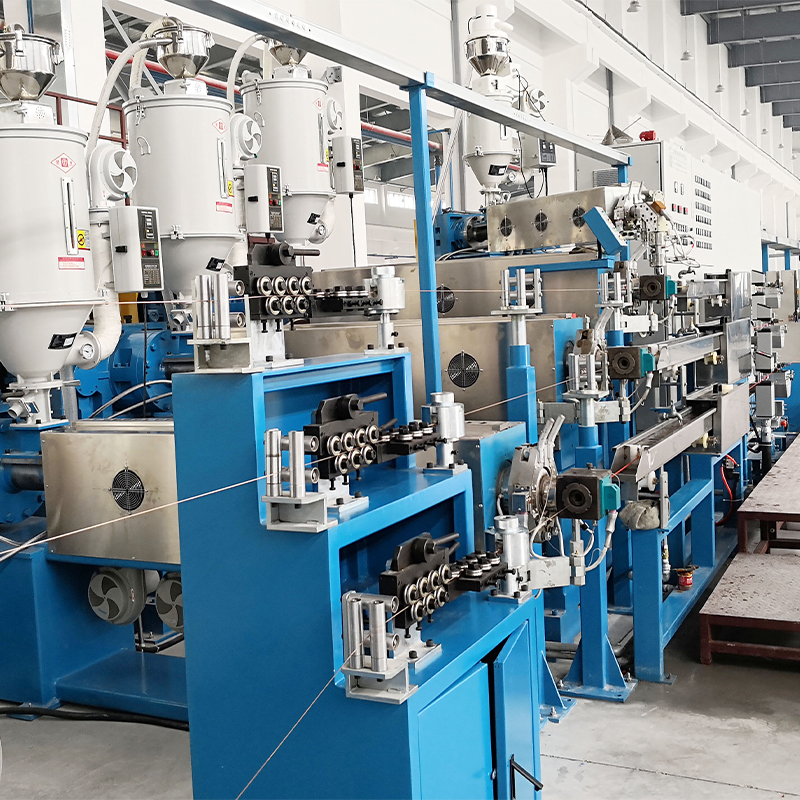
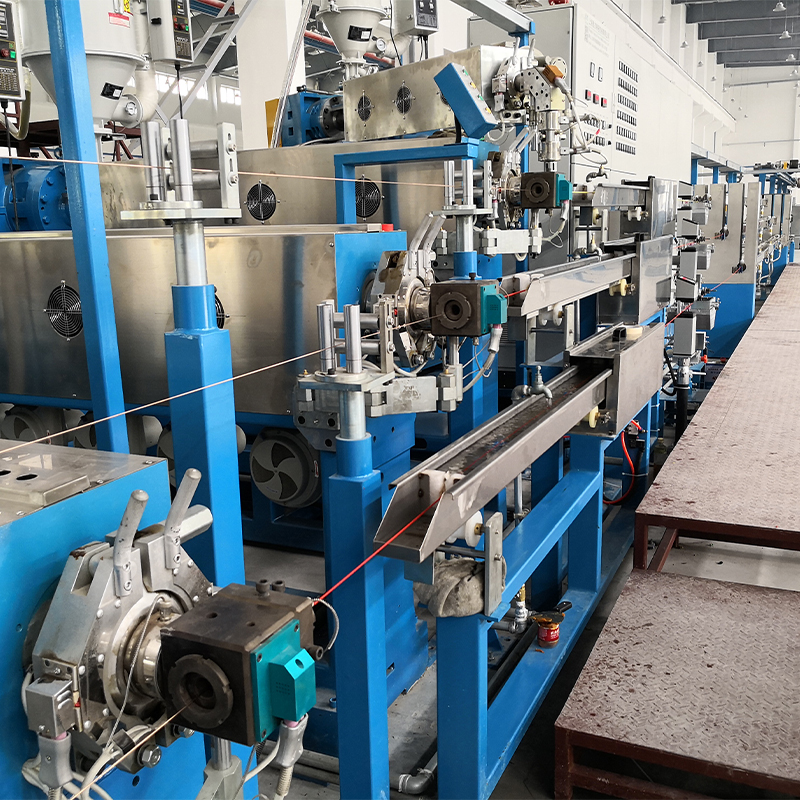
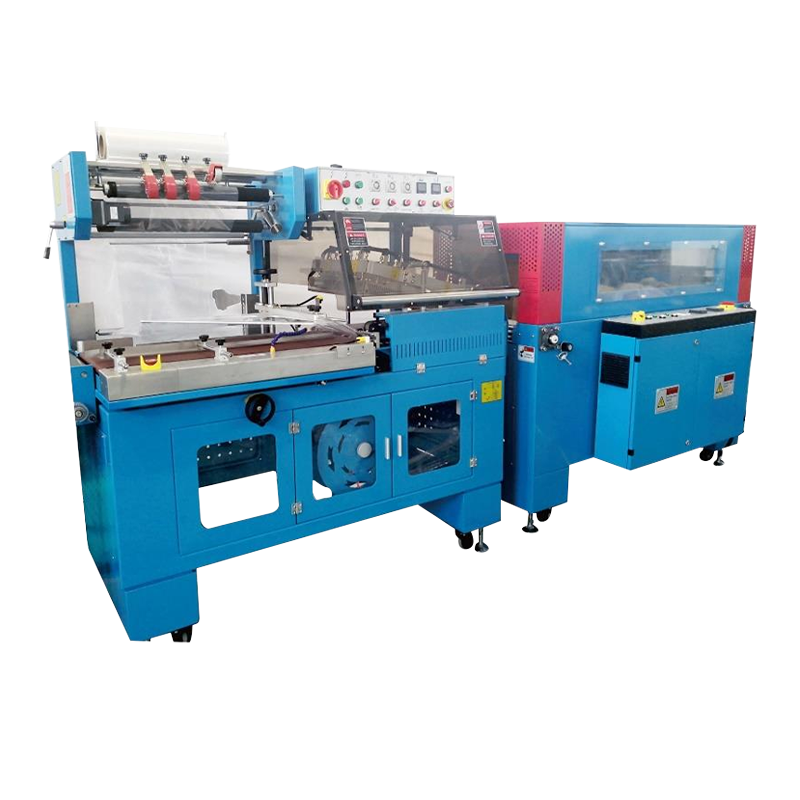
The principal systems include a high-precision single-screw extruder, temperature-controlled electrical heating, an extrusion head or compatible crosshead arrangement, and a multi-section cooling water tank. Depending on the complete line configuration, the machine may also operate with motorized pay-off equipment, a spark tester, diameter measurement equipment, a motorized take-up machine, a coiling machine, or automated packaging equipment.
This modular approach enables users to select a configuration according to the final cable product. A basic insulation line may require only the extruder, crosshead, cooling tank, and take-up. A more advanced production line may include online inspection, automatic tension control, coding, length measurement, coiling, and intelligent stacking.
The equipment is not limited to one cable category. Its application may include power wires, control cables, communication conductors, automotive wires, building wires, and other insulated products, provided that the selected screw, die, crosshead, and process parameters are appropriate for the material and conductor design.
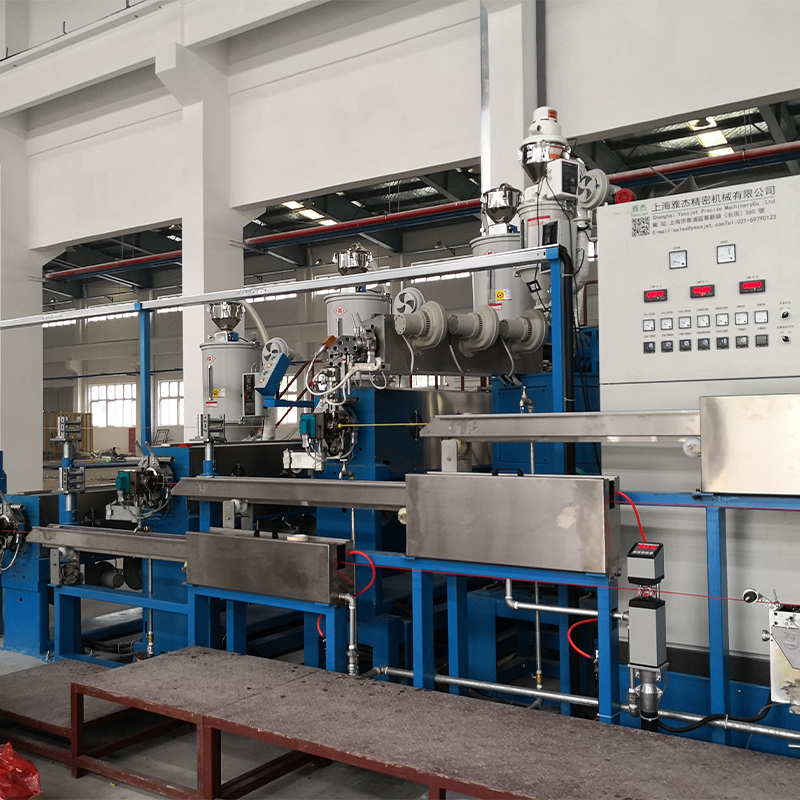
XLPE PE Cable Extruder with Cooling Water Tank
Core Design of the Single-Screw Extruder
The single-screw extruder is the central processing unit of the machine. Its function is to transport polymer pellets or compound through the barrel, gradually heat the material, melt it, homogenize it, and deliver it to the extrusion head at a consistent pressure and flow rate.
A high-precision screw and barrel arrangement is important because the quality of the melt directly affects insulation consistency. If the material is not sufficiently plasticized, the extrudate may show roughness, unmelted particles, or unstable flow. If the material is overheated or exposed to excessive shear, its properties may deteriorate. A properly designed extrusion system seeks a balance between melting efficiency, mixing performance, throughput, and material protection.
The screw geometry can be selected according to the characteristics of XLPE, PE, or other compatible insulation compounds. Different formulations may require different conveying behavior, compression ratios, residence times, and temperature settings. For this reason, production parameters should be established according to the specific raw material supplier’s technical data and the required cable standard.
The extruder’s drive system should provide smooth speed adjustment and sufficient torque for continuous operation. Stable screw rotation helps reduce output pulsation and makes it easier for operators to match extrusion volume with line speed. When combined with appropriate conductor centering and take-up control, stable output supports more uniform insulation thickness.
Material Feeding and Conveying
Consistent feeding is the first step in achieving consistent insulation. Irregular feeding can cause fluctuations in melt pressure and output, even when the screw speed remains unchanged. The production line should therefore use clean, dry, and properly prepared insulation material. Depending on the compound, material drying or moisture control may be required before extrusion.
The conveying section of the screw transports the material into the heated zones. The compression and melting areas then convert the solid polymer into a continuous melt. The metering section helps deliver the material toward the die at a more stable rate. A well-coordinated screw design reduces the risk of excessive residence time and supports a smoother extrusion process.
Thermal Management Along the Barrel
The electrical heating system is divided into controlled temperature zones. Each zone can be adjusted to support a gradual and appropriate thermal profile. Rather than applying the same temperature throughout the barrel, the operator can establish a process curve that reflects the material’s melting and flow characteristics.
Stable thermal control is essential for XLPE and PE cable insulation because the viscosity of the melt changes significantly with temperature. If the temperature is too low, the polymer may not flow evenly through the die. If the temperature is too high, the material may become excessively fluid, lose dimensional stability, or experience thermal degradation depending on its formulation.
Temperature sensors and control instruments work with the electrical heating elements to maintain the selected setpoints. The system should be monitored during startup, steady production, material changes, and shutdown. Operators can use trends in temperature, pressure, and cable dimensions to identify process drift before it becomes a major quality issue.
Cooling Water Tank for Controlled Cable Solidification
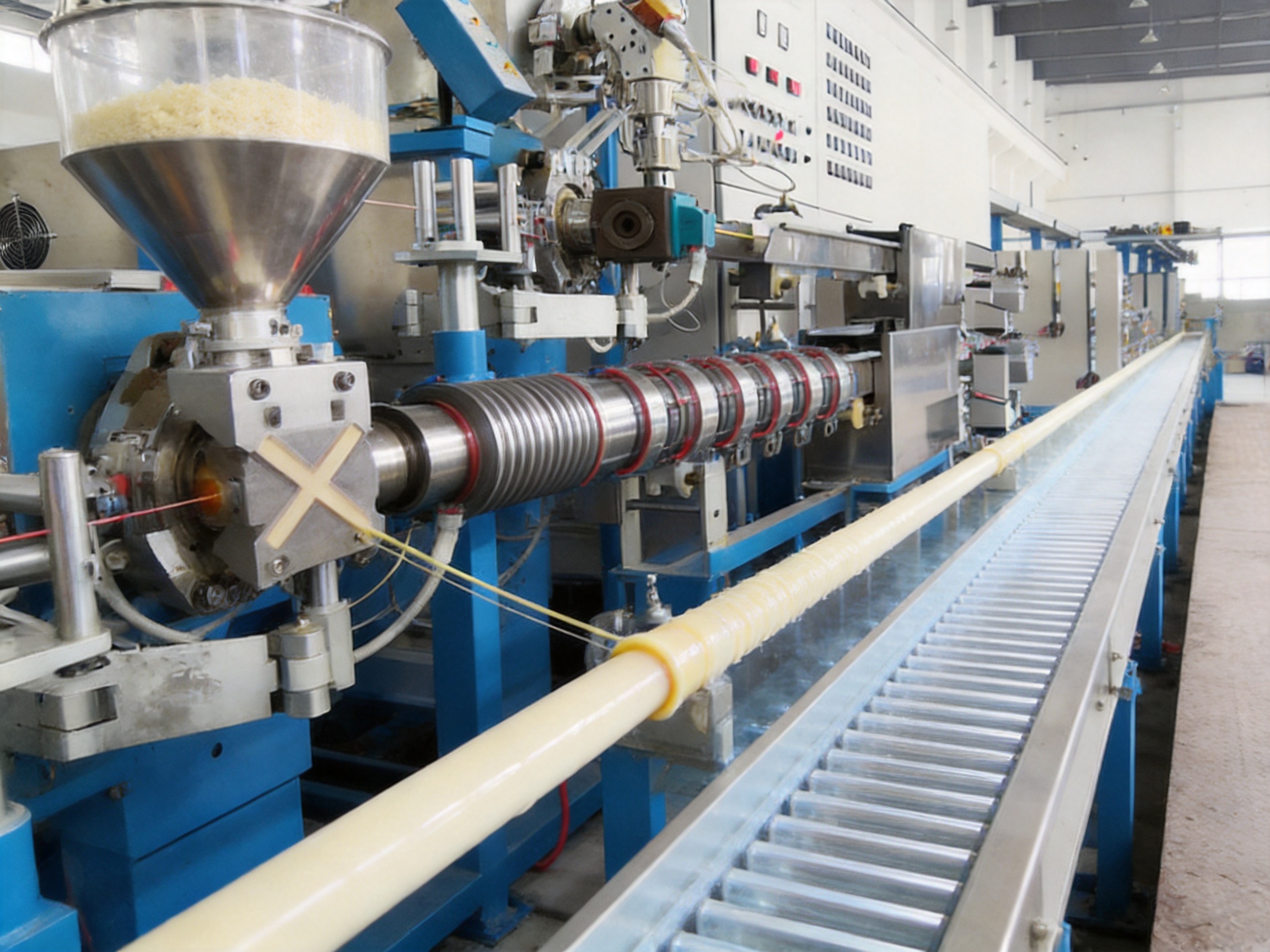
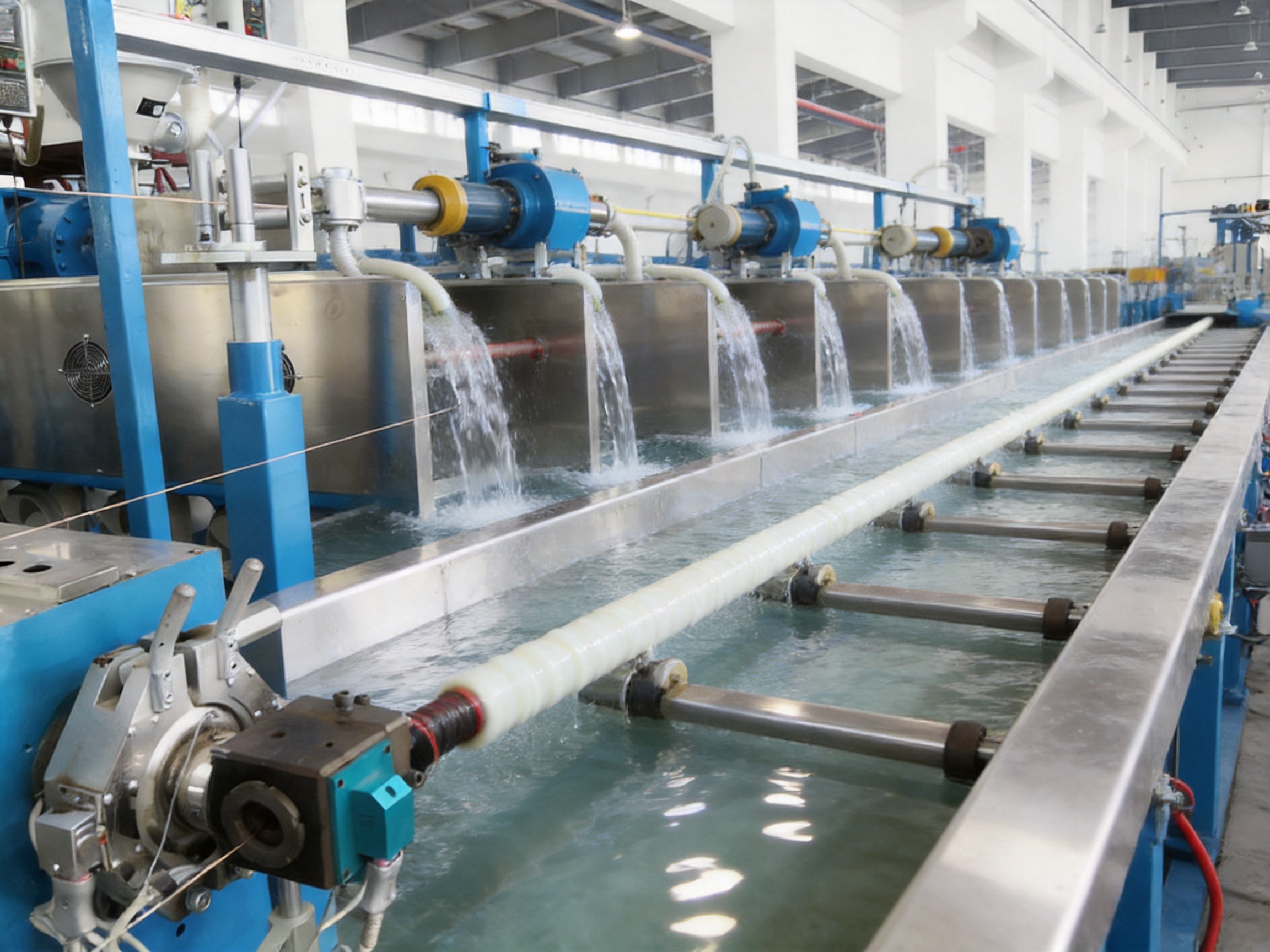
After the molten insulation leaves the die, it must cool while maintaining the required cable shape. The cooling water tank provides a controlled environment for this stage. Its multi-section design allows the cable to pass through several cooling zones rather than entering one undifferentiated tank.
Staged cooling can provide several advantages. It can reduce sudden thermal shock, improve dimensional stability, and give the insulation sufficient time to solidify before the cable reaches downstream equipment. It also helps the manufacturer adjust the cooling profile to match production speed, insulation thickness, and material behavior.
Water circulation and temperature stability are important factors in the performance of the cooling tank. If the water becomes excessively warm, cooling efficiency may decline during long production runs. If water flow is uneven, the cable may cool inconsistently around its circumference. Proper tank design, circulation, filtration, drainage, and routine maintenance help maintain repeatable conditions.
The cable path through the tank should be aligned carefully to avoid unnecessary contact or bending while the insulation is still soft. A stable support arrangement helps prevent surface marks and dimensional changes. The length and number of cooling sections can be selected according to the required line speed and product specification.
Compared with a short or poorly controlled cooling arrangement, a multi-section water tank gives operators more flexibility. They can adjust water temperature, flow, and residence time to suit different products. This is particularly useful when one production line is used for multiple conductor sizes or insulation thicknesses.
Cooling and Dimensional Stability
Cooling is not merely a method of lowering cable temperature. It is also a dimensional-control operation. As the insulation changes from a molten or semi-molten state to a solid state, it may shrink or deform. The timing and rate of cooling influence the final outside diameter, concentricity, surface finish, and resistance to downstream tension.
Controlled cooling helps the cable retain its intended geometry before it passes to a capstan, measuring unit, take-up machine, or coiler. When the extruder output and cooling capacity are properly matched, the line can operate at a stable speed with fewer adjustments.
Advantages Compared with Less Integrated Extrusion Equipment
The market includes many types of cable extrusion machinery, from basic standalone extruders to fully automated production lines. The XLPE PE Cable Extruder with Cooling Water Tank offers competitive advantages through the integration of extrusion and cooling functions in a coordinated system.
More Consistent Insulation Thickness
Uniform insulation thickness depends on stable melt delivery, accurate die adjustment, consistent conductor positioning, and appropriate line speed. The precision single-screw extruder helps regulate material output, while the controlled cooling tank reduces deformation after the insulation is applied.
Although no machine can replace proper die setup and process supervision, the integrated design gives manufacturers a stronger foundation for repeatable production. More stable thickness can reduce material waste and support more predictable electrical testing results.
Improved Cooling Efficiency
A multi-section tank provides more controlled heat removal than a basic single-stage cooling arrangement. This can be valuable for thicker insulation layers, higher production speeds, and materials that require a gradual transition from molten polymer to solid insulation.
Efficient cooling also supports smoother downstream handling. When the cable has achieved sufficient rigidity before take-up or coiling, the risk of deformation, surface damage, and unstable winding can be reduced.
Adaptability to Different Cable Products
The machine can be configured for different cable sizes and insulation requirements. The extruder capacity, screw specification, die tooling, cooling length, line speed, and take-up arrangement may be selected according to the intended product range.
This adaptability is an important advantage for manufacturers that serve several markets rather than producing one fixed cable design. A flexible line can improve equipment utilization and reduce the need to purchase separate machines for every cable category.
Better Coordination Between Major Process Stages
In a disconnected production arrangement, the extruder, cooling section, and take-up system may be adjusted independently. This can increase the time required for startup and make it more difficult to identify the source of process instability.
An integrated production concept allows the major stages to be considered as one process. Extrusion output, cooling capacity, line speed, and winding tension can be matched more effectively. This makes operation more straightforward and supports a more predictable production rhythm.
Lower Risk of Traditional Production Problems
Uneven insulation thickness, slow cooling, surface defects, and unstable cable dimensions are common concerns in cable extrusion. The equipment addresses these problems through precision conveying, temperature control, and staged water cooling.
The result is not simply a higher production speed. It is a more controlled manufacturing process in which operators have better tools for maintaining quality from one batch to the next.
| Production Requirement | Potential Problem in a Basic Line | Integrated Equipment Response | Expected Manufacturing Benefit |
|---|---|---|---|
| Stable polymer melting | Inconsistent plasticization or output fluctuation | Controlled single-screw conveying and multi-zone heating | More uniform melt flow and easier process adjustment |
| Insulation thickness control | Variation caused by unstable output or conductor movement | Coordinated extrusion, tooling, line speed, and take-up operation | Improved dimensional consistency and reduced waste |
| Fast and even cooling | Deformation or insufficient solidification before take-up | Multi-section water tank with controlled cooling conditions | Better cable shape retention and surface quality |
| Continuous operation | Frequent manual adjustments and production interruptions | Integrated process layout with compatible auxiliary equipment | Higher operating efficiency and smoother production flow |
| Product flexibility | Limited ability to process different cable sizes | Configurable extrusion, tooling, tank, and take-up specifications | Broader product range and improved line utilization |
Applications in Cable Manufacturing
Power Cables and Building Wires
PE-based and XLPE-based insulation systems are widely used in power-related cable products. The extrusion machine can support the production of insulated conductors when the selected material, tooling, and process parameters match the cable design.
Building wire production often requires dependable dimensional control, smooth surfaces, and stable color or identification. A controlled extrusion and cooling process helps manufacturers meet these expectations while maintaining continuous output.
Communication Cables
Communication cables can require accurate insulation dimensions and consistent material properties to preserve electrical performance. Variations in insulation geometry may affect impedance and signal behavior in certain cable constructions.
The extruder’s stable melt delivery and the cooling tank’s dimensional-control function can support the production of communication conductors, including applications where a smooth and uniform insulation layer is essential.
Automotive Wires
Automotive wires must often meet demanding requirements related to vibration, temperature variation, chemical exposure, flexibility, and compact installation spaces. The exact material and insulation formulation depend on the vehicle application, but the extrusion process must remain stable across long production runs.
The equipment can be incorporated into an automotive wire production line when the extruder capacity, crosshead, tooling, cooling arrangement, and testing equipment are selected for the target wire family.
Control and Instrumentation Cables
Control cables and instrumentation cables may use multiple insulated conductors and require reliable dimensional accuracy. Consistent extrusion makes it easier to assemble, twist, sheath, and test the finished cable.
For these products, the ability to maintain stable process conditions at different conductor sizes can help reduce setup time and improve production planning.
Manufacturing Strengths of Shanghai Yessjet Precise Machinery Co., Ltd.
Shanghai Yessjet Precise Machinery Co., Ltd. focuses on wire and cable machinery, including cable extrusion lines, coiling and packaging equipment, intelligent robot stackers, coiling machines, motorized pay-off equipment, motorized take-up equipment, and accessory systems. This broader product scope is an important strength because cable production performance depends on how individual machines work together.
A supplier that understands only one machine may provide a technically functional extruder but leave the customer to solve integration problems elsewhere. A supplier with experience across pay-off, extrusion, cooling, take-up, coiling, packaging, and stacking can provide a more coordinated production concept.
Process-Oriented Equipment Design
The company’s approach is centered on the complete manufacturing process rather than on isolated machine functions. The extruder is considered together with the conductor pay-off, crosshead, cooling tank, testing equipment, take-up, and final handling system.
This process-oriented approach can help users define the correct line speed, cable path, machine spacing, control strategy, and product changeover method before installation. It also supports more efficient troubleshooting because the supplier can evaluate upstream and downstream influences on extrusion quality.
Precision Manufacturing and Assembly
Reliable cable machinery depends on accurate mechanical fabrication and careful assembly. The screw and barrel must be aligned correctly, the die and crosshead must be mounted securely, the tank must maintain a stable cable path, and the transmission components must operate smoothly under continuous load.
Manufacturing quality is also reflected in the finish of electrical cabinets, the organization of wiring, the accessibility of maintenance points, and the protection of moving components. These details influence daily operation, troubleshooting time, and long-term equipment reliability.
Configuration Based on Customer Requirements
Cable producers do not all manufacture the same products. One customer may focus on small automotive wires, while another may produce larger power conductors or communication cables. Their requirements for output, cooling length, pay-off capacity, take-up size, and automation level may be very different.
Yessjet can support a customized equipment configuration based on the intended cable specifications and plant conditions. Important engineering inputs may include conductor material and diameter, insulation material, finished cable diameter, target line speed, production capacity, factory layout, power supply, cooling-water conditions, and required inspection systems.
Turnkey Cable Production Solutions
A complete cable production solution may include more than the main extruder. It can include conductor pay-off, straightening or preheating equipment where required, extrusion, cooling, diameter monitoring, spark testing, marking, meter counting, take-up, coiling, packaging, and storage handling.
By supplying different categories of wire and cable machinery, the company can help customers plan a line that is more coherent from a technical and operational perspective. This can reduce the effort required to coordinate multiple unrelated suppliers.
Advanced Manufacturing Process for the Extrusion Machine
Advanced manufacturing is not limited to using modern components. It also includes structured engineering, material selection, fabrication, assembly, testing, and customer support. Each stage contributes to the finished machine’s ability to operate reliably in an industrial environment.
Engineering and Specification Review
Before manufacturing begins, the equipment configuration should be reviewed against the customer’s product requirements. The cable size range, insulation compound, expected production rate, cooling demand, and line arrangement determine the appropriate machine design.
This review helps prevent mismatches such as insufficient extruder capacity, inadequate cooling length, unsuitable tooling, or an oversized system that increases investment without providing useful production benefits.
Mechanical Component Production
Mechanical components require accurate dimensions and appropriate surface treatment. The barrel, screw, die components, frame, tank, rollers, guards, and transmission parts must be fabricated according to the approved design.
Components exposed to polymer, heat, water, or continuous friction should be selected and finished for their working environment. The cooling tank, for example, must resist corrosion and maintain a stable structure during repeated filling, draining, and temperature changes.
Electrical System Integration
The electrical system coordinates heating, drive control, temperature sensing, safety protection, water circulation, and operator interface functions. Clear wiring, appropriate protection, and logical control design make the equipment easier to operate and maintain.
Temperature control should be responsive without creating unnecessary fluctuation. Drive control should allow suitable speed adjustment. Emergency-stop circuits and guarding should help protect operators during production and maintenance activities.
Assembly and Alignment
Accurate assembly is essential for extrusion performance. The screw must rotate smoothly within the barrel, the drive system must be aligned, and the crosshead must be positioned correctly relative to the conductor path.
Alignment of the conductor through the die and cooling tank is equally important. An offset cable path can create uneven insulation thickness or cause contact with tank components. Assembly checks should therefore include mechanical alignment, rotational inspection, electrical verification, and functional testing.
Factory Testing
Before shipment, the machine should undergo a structured inspection. This may include checking the heating system, temperature sensors, drive motor, control cabinet, water circulation, tank leakage, safety functions, and operating interfaces.
Where practical, trial operation and sample production can help verify that the major systems work together. Factory testing also provides an opportunity to identify installation issues before the equipment reaches the customer’s plant.
Operating the XLPE PE Cable Extruder Efficiently
Material Preparation
Raw materials should be stored and handled according to the compound manufacturer’s recommendations. Contamination, excessive moisture, and incorrect material mixing can produce defects that no extrusion machine can fully correct.
Operators should confirm the material grade, color, batch information, and required drying conditions before production. Recycled material or regrind should be used only when permitted by the cable specification and material supplier.
Startup Procedure
A controlled startup allows the barrel and die to reach their required temperatures before the screw begins continuous operation. The cooling-water system should be filled and checked, the conductor path should be clear, and the pay-off and take-up systems should be ready.
The extruder should normally start at a low screw speed. Material output can then be increased gradually while operators observe melt pressure, surface appearance, insulation diameter, and cable centering. The line speed should be synchronized with extrusion output and take-up tension.
Steady-State Production
During normal operation, operators should monitor temperature zones, screw speed, line speed, water conditions, cable diameter, spark-test results, and winding behavior. Trends are often more useful than isolated readings because gradual changes can indicate wear, material variation, or cooling-system instability.
Process records can include raw material batch, die size, temperature settings, screw speed, line speed, cooling-water temperature, and inspection results. These records help manufacturers reproduce successful settings and investigate quality issues.
Changeover Between Products
Product changeover should be planned to minimize material waste and avoid mixing incompatible compounds. The die, crosshead, screw, temperature profile, cooling conditions, and take-up settings may require adjustment when the conductor size or insulation material changes.
Tooling should be cleaned and inspected at suitable intervals. Excessive deposits around the die can disturb the melt flow and create surface defects. Changeover procedures should also include verification of cable centering and initial sample testing.
Shutdown and Cleaning
At the end of production, the operator should follow the recommended shutdown sequence for the selected material. The screw, barrel, crosshead, and die may require purging or cleaning to prevent degraded polymer from remaining in the flow path.
The cooling tank should be drained or refreshed according to the plant’s maintenance schedule. Sediment, material particles, and scale can affect water circulation and cable surface quality. Keeping the tank clean supports stable cooling performance.
Quality Control and Standards Considerations
The final cable must be evaluated according to its intended application and governing product specification. Typical checks may include conductor resistance, insulation thickness, eccentricity, outside diameter, spark testing, tensile properties, elongation, aging performance, voltage withstand, and visual inspection.
The extrusion machine supports these requirements by helping maintain stable process conditions, but the machine itself is only one part of the quality system. Correct raw materials, verified tooling, trained operators, calibrated instruments, and documented inspection procedures are also essential.
The equipment is designed to support cable production aligned with recognized IEC, GB, and ANSI requirements when the complete line configuration, materials, process parameters, and testing procedures are selected appropriately. The applicable standard should always be confirmed for the specific cable product and target market.
Insulation Thickness and Eccentricity
Thickness should be measured at suitable intervals or monitored continuously where online measurement is available. Eccentricity can result from off-center conductor positioning, die misalignment, unstable melt flow, or uneven cooling.
Correcting eccentricity may require adjustments to the crosshead, die centering, conductor tension, line alignment, or process speed. It should not be addressed by changing temperature alone unless the process data indicates that melt flow is the source of the problem.
Electrical Testing
A spark tester can detect pinholes and other insulation discontinuities during production. Its use provides an additional safeguard, but it does not replace dimensional and laboratory testing.
Finished cable testing should be based on the cable standard and customer specification. The extrusion line should be integrated with appropriate testing equipment when continuous online quality control is required.
Visual and Surface Inspection
A smooth, clean insulation surface is an important indicator of stable extrusion. Roughness, die lines, bubbles, discoloration, and foreign particles should be investigated promptly.
Possible causes include contaminated material, incorrect temperature, excessive residence time, die damage, moisture, unstable pressure, or improper cooling. Systematic troubleshooting is more effective than making multiple adjustments at once.
Maintenance Recommendations
Preventive maintenance helps preserve the machine’s performance and reduce unplanned downtime. Maintenance schedules should be adapted to operating hours, material type, line speed, and factory conditions.
Extruder Maintenance
The screw, barrel, heater bands, temperature sensors, drive system, and pressure-related components should be inspected regularly. Operators should watch for abnormal noise, vibration, temperature deviation, or motor-load changes.
Any sign of unusual wear should be evaluated before it affects output stability. A worn screw or barrel can reduce conveying efficiency and increase material residence time.
Cooling Tank Maintenance
The water tank should be kept clean and free of deposits. Pumps, valves, filters, hoses, and circulation channels should be checked for blockage or leakage. Water quality should be managed to reduce scale and corrosion.
Cooling rollers and guides should remain properly aligned and free from sharp edges or damaged surfaces. These components contact the cable while the insulation may still be vulnerable to marking.
Electrical and Safety Maintenance
Electrical cabinets should be kept dry and clean. Connections, cooling fans, circuit protection, sensors, and emergency-stop functions should be inspected according to the maintenance plan.
Guards should remain installed during operation. Maintenance work should follow appropriate isolation and lockout procedures, particularly when working near the screw drive, take-up system, heaters, or rotating components.
How to Select the Correct Configuration
Choosing the right equipment begins with a clear definition of the cable products to be manufactured. The following factors should be reviewed before ordering:
First, define the conductor material, conductor diameter, number of cores, insulation thickness, finished cable diameter, and required production speed. These values influence the extruder size, screw design, crosshead, die tooling, cooling length, and take-up capacity.
Second, identify the exact insulation compound. XLPE, PE, and related materials may have different processing requirements. If the product requires a special crosslinking process, such as peroxide, silane, or irradiation crosslinking, the complete production technology must be considered rather than selecting an extruder in isolation.
Third, assess the factory environment. Available electrical power, cooling-water supply, floor space, ventilation, material storage, and cable routing all affect installation and operation.
Fourth, decide the desired automation level. Manual adjustments may be adequate for a small production line, while a larger plant may benefit from automatic diameter control, centralized data recording, automatic tension control, online inspection, coiling, packaging, and robotic handling.
Finally, confirm after-sales support, spare-parts availability, installation guidance, operator training, and technical documentation. These services can influence the equipment’s long-term value as much as its initial mechanical specification.
Why Integrated Cable Machinery Adds Long-Term Value
The value of an extrusion machine should be evaluated over its full operating life rather than only by its purchase price. A machine that reduces material waste, simplifies operation, improves product consistency, and minimizes downtime can deliver a lower total cost of ownership.
Stable insulation thickness can reduce polymer consumption. Reliable cooling can decrease rejected cable caused by deformation. A coordinated take-up system can reduce winding defects. Accessible maintenance points can shorten service time. These benefits accumulate throughout daily production.
Integrated machinery also helps manufacturers respond to changing customer requirements. When the line supports several cable sizes and product categories, the factory can use its equipment more flexibly. The ability to add compatible accessories or automation modules can extend the usefulness of the original investment.
Q&A
What materials can this cable extruder process?
The machine is designed for XLPE and PE insulation applications. The precise material range depends on the screw, barrel, crosshead, die, temperature profile, and processing conditions selected for the project. Material suppliers’ recommendations should be followed for each compound.
What is the purpose of the cooling water tank?
The cooling water tank removes heat from the extruded insulation and helps the cable solidify while retaining its intended dimensions. A multi-section tank allows cooling conditions to be controlled progressively rather than relying on a single abrupt cooling stage.
How does the machine help improve insulation uniformity?
The single-screw extruder provides controlled polymer conveying and melting, while the electrical heating system supports a stable thermal profile. When combined with correct die centering, conductor alignment, line speed, and take-up tension, these functions help produce more consistent insulation thickness.
Can the equipment be used for different cable sizes?
Yes, the equipment can be configured for a specified range of cable sizes. Different products may require different dies, crossheads, screw specifications, cooling settings, and line speeds. The usable range should be confirmed during the engineering stage.
Is the machine suitable for automotive wire production?
It can be incorporated into automotive wire production when the selected insulation material, tooling, cooling system, and testing equipment meet the requirements of the intended automotive wire specification. Product-specific validation is necessary before commercial production.
Does the equipment perform the complete XLPE crosslinking process?
The equipment described here is an extrusion and cooling system for XLPE and PE insulated cables. Some XLPE cable constructions require additional crosslinking technology, such as chemical, moisture, or irradiation methods. The complete process should be defined according to the selected XLPE formulation and cable standard.
What auxiliary equipment may be added to the line?
Possible auxiliary equipment includes motorized pay-off systems, motorized take-up systems, conductor guides, spark testers, diameter measurement devices, marking units, meter counters, coiling machines, packaging equipment, and intelligent robot stackers.
How can production waste be reduced?
Waste reduction depends on stable startup procedures, accurate material preparation, correct tooling, controlled line speed, regular maintenance, and effective inspection. The integrated extruder and cooling tank help reduce defects related to unstable melt output and insufficient cooling, but operators must also maintain the entire line correctly.
What information should be provided when requesting a quotation?
Useful information includes conductor material and diameter, insulation material, insulation thickness, cable diameter, target output, line speed, required standards, plant power supply, factory layout, preferred automation level, and any requirements for coiling, packaging, or robotic stacking.
How does the manufacturer support turnkey projects?
Shanghai Yessjet Precise Machinery Co., Ltd. provides wire and cable machinery covering extrusion, pay-off, take-up, coiling, packaging, stacking, and accessory equipment. This product range allows the company to support broader cable production line planning instead of focusing only on one standalone machine.
Conclusion
The XLPE PE Cable Extruder with Cooling Water Tank is designed to provide a stable and practical solution for cable insulation extrusion. Its high-precision single-screw extruder supports controlled polymer melting and conveying, while the temperature-controlled electrical heating system helps maintain a consistent processing environment. The multi-section water tank then provides staged cooling to improve cable dimensional stability and downstream handling.
Compared with less integrated equipment, the machine offers advantages in process coordination, cooling efficiency, product adaptability, and potential reduction of common insulation defects. Its performance is strengthened when combined with correctly selected crossheads, tooling, pay-off equipment, take-up equipment, online testing, coiling, packaging, and automated handling systems.
Shanghai Yessjet Precise Machinery Co., Ltd. brings together cable extrusion technology and a wider range of wire and cable production equipment. Through configuration review, precision manufacturing, electrical integration, assembly, testing, and turnkey project support, the company can help manufacturers build production lines suited to their cable products and factory conditions.
For manufacturers seeking dependable XLPE and PE cable insulation processing, the most important consideration is not simply machine speed. It is the complete relationship between material preparation, extrusion stability, temperature control, cooling performance, dimensional inspection, take-up tension, and final product testing. A properly configured extrusion line provides the foundation for efficient production, consistent quality, and long-term manufacturing value.
References
International Electrotechnical Commission. Standards and technical guidance for insulated power cables, cable testing, and polymeric insulation systems.
International Electrotechnical Commission. Guidance on cable construction, conductor performance, insulation dimensions, and routine electrical testing.
American National Standards Institute. Industry standards for wire, cable, insulation, and electrical product evaluation.
China National Standards. Requirements for wire and cable products, polymeric insulation, dimensional inspection, and electrical performance testing.
Polymer processing engineering references covering single-screw extrusion, melt flow, thermal management, die design, and polymer cooling.
Industrial cable manufacturing references covering conductor pay-off, insulation extrusion, cooling systems, spark testing, take-up control, coiling, and packaging.
Equipment operating and maintenance principles for continuous polymer extrusion machinery, water circulation systems, electrical heating systems, and automated cable production lines.