LANGUAGE
 中文简体
 русский
 Français
 Español
 Português
 عربى

Content
- 1 What Is an Accumulator Dancer?
- 2 Why Cable Accumulation Matters in Continuous Production
- 3 Product Types and Installation Configurations
- 4 Key Advantages Compared with Basic Cable Storage Solutions
- 5 Technical Specifications of the Vertical Models
- 6 Applications in Wire and Cable Manufacturing
- 7 Manufacturing Strengths and Engineering Approach
- 8 Advantages for Production Managers
- 9 Advantages for Cable Operators and Maintenance Teams
- 10 Installation and Commissioning Considerations
- 11 Recommended Maintenance Practices
- 12 How the Accumulator Supports a Turnkey Cable Production Solution
- 13 Frequently Asked Questions
- 13.1 What is the main purpose of an accumulator dancer?
- 13.2 Can the accumulator be used with an extrusion line?
- 13.3 Is it suitable for CV lines?
- 13.4 What is the difference between vertical and horizontal types?
- 13.5 Can the accumulation capacity be customized?
- 13.6 How do I choose the correct model?
- 13.7 Does a larger wheel always provide better performance?
- 13.8 Can the accumulator prevent all production downtime?
- 13.9 How does the equipment protect the cable?
- 13.10 What information should be provided for a quotation?
- 13.11 Can the accumulator be integrated with motorized payoff and take-up equipment?
- 13.12 Is the accumulator suitable for different cable products?
- 14 Conclusion
- 15 References
- 16 Product: Accumulator Dancer(cable storage rack)
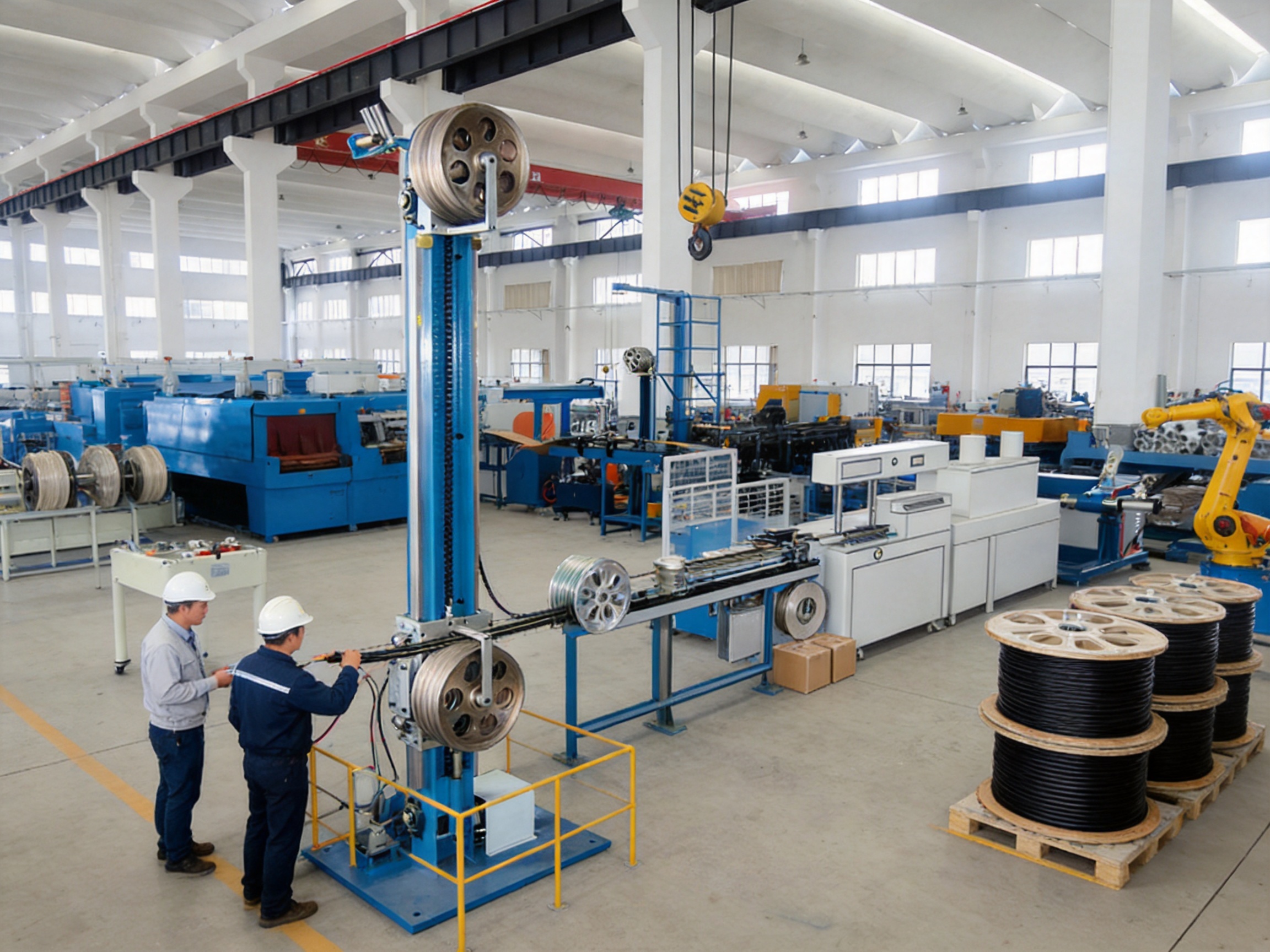
Modern wire and cable manufacturing depends on continuous, controlled material movement. Whether a production line is extruding insulation, processing a cable through a CV line, or rewinding finished product, the cable must remain stable while reels are changed, operators perform inspections, or upstream and downstream equipment operate at different speeds. Any interruption during these steps can reduce productivity, increase labor requirements, create cable defects, and raise manufacturing costs.
The Accumulator Dancer, also known as a cable storage rack or wire accumulator, is designed to solve this production challenge. It temporarily stores a controlled length of cable and releases it at a regulated speed, allowing the line to continue operating during reel changeover and other short interruptions. In addition to accumulating cable, the equipment supports and guides the product, helping prevent unnecessary contact, abrasion, bending, and mechanical damage.
Available in vertical and horizontal configurations, the accumulator dancer can be integrated into extrusion lines, CV lines, rewinding lines, payoff systems, and take-up systems. Its storage capacity can be customized according to cable diameter, line speed, available installation space, and the customer’s production requirements.
For cable manufacturers seeking stable, continuous, and efficient production, a properly designed accumulator is much more than a temporary storage device. It is an important part of line synchronization, cable protection, reel-change management, and overall process automation.
Accumulator Dancer(cable storage rack)
What Is an Accumulator Dancer?
An accumulator dancer is a cable-handling machine positioned within a wire or cable production line. It creates a reserve length of cable between two production stages. When the upstream section continues feeding cable while the downstream section pauses or slows, the accumulator stores the additional material. When the downstream section resumes operation, the stored cable is released in a controlled manner.
The term “dancer” refers to the movement or position control principle used to regulate cable tension and line speed. Depending on the design, a movable frame, dancer arm, wheel assembly, or equivalent mechanical structure responds to variations in cable demand. This movement helps maintain a stable cable path and reduces sudden tension changes.
The cable storage rack performs several functions at the same time:
1. It supports the cable along a controlled route.
2. It creates temporary cable storage during reel replacement.
3. It helps regulate payoff and take-up speed.
4. It protects the cable from uncontrolled dragging or contact with surrounding equipment.
5. It reduces production downtime during routine material-handling operations.
6. It assists operators with cable maintenance, inspection, and line management.
In a conventional line without an accumulator, changing an empty payoff reel or a full take-up reel may require the entire process to stop. With a properly sized accumulator dancer, the cable already produced can be stored temporarily while the reel change takes place. Once the new reel is ready, the stored cable is gradually discharged and the line returns to its normal operating condition.
Why Cable Accumulation Matters in Continuous Production
Wire and cable production is often organized around continuous processes. Extrusion equipment may run steadily for long periods, while reel replacement is an intermittent operation. These two activities do not naturally occur at the same speed. The extrusion line may produce cable continuously, but an operator still needs time to remove a full reel, install an empty reel, connect the cable, verify the winding path, and restart the take-up system.
Without temporary storage, the extrusion line must stop whenever the take-up reel is changed. Frequent stops and starts can cause several problems:
• Lower line utilization and reduced daily output.
• Increased scrap during acceleration, deceleration, and restart.
• Greater thermal and mechanical stress on process equipment.
• Additional operator workload.
• Increased risk of inconsistent cable dimensions or surface quality.
• More complicated coordination between payoff, extrusion, cooling, inspection, and take-up equipment.
An accumulator dancer creates a buffer between these stages. The buffer allows the production line to continue operating for a defined period while a reel change is completed. The amount of available time depends on the accumulation capacity, cable diameter, line speed, and the efficiency of the reel-change procedure.
This approach is especially useful when cable quality depends on steady extrusion conditions. Maintaining a stable extrusion process can help reduce dimensional variation, surface defects, and material waste. Instead of repeatedly stopping the line, the accumulator allows the process to remain closer to its normal operating condition.
Product Types and Installation Configurations
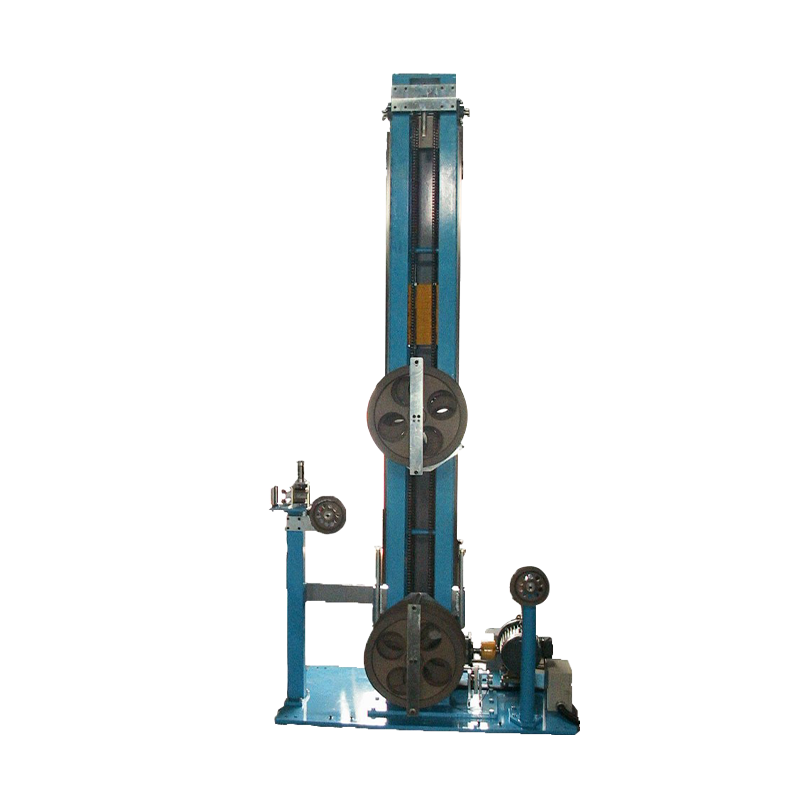
Vertical Accumulator Dancer
A vertical accumulator uses a vertically arranged wheel or storage structure. It is often selected when the production building provides sufficient vertical clearance and when the manufacturer wants to reduce the floor area occupied by the storage section.
Vertical designs can provide a practical solution for lines where floor space is limited but the building height is suitable. The cable follows a repeated path through the wheel arrangement, creating a storage length within a relatively compact horizontal footprint.
The vertical configuration may be suitable for:
• Extrusion lines with limited floor space.
• Cable lines requiring an extended buffer between processing and take-up.
• Production areas where equipment must be arranged in a narrow layout.
• Applications that require a clear and organized cable path.
The supplied vertical models include different wheel diameters, wheel quantities, accumulation capacities, and cable diameter ranges. These variations allow the equipment to be matched more closely to the cable being manufactured.
Horizontal Accumulator Dancer
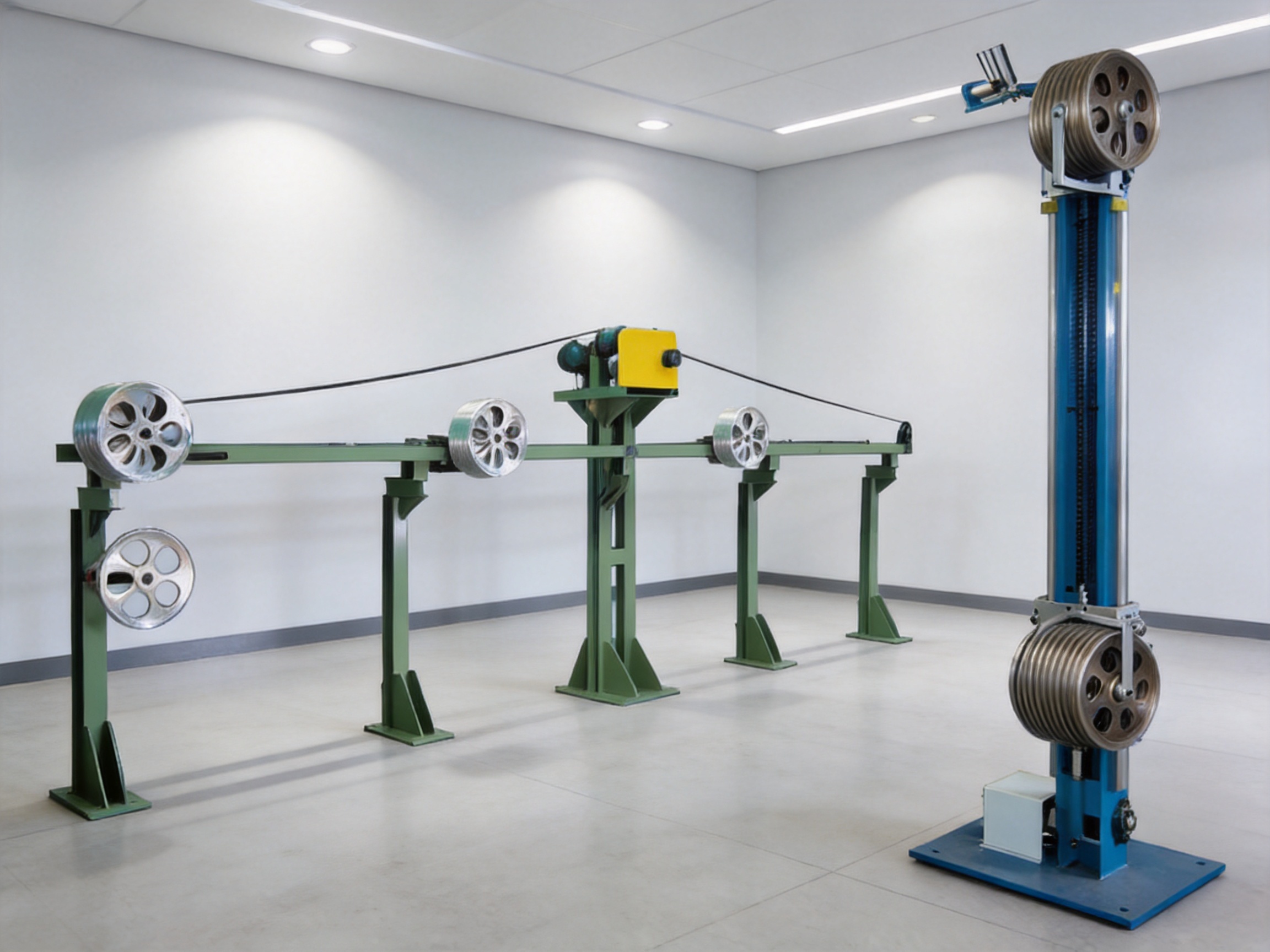
A horizontal accumulator uses a horizontally arranged cable storage path. It can be useful when the facility has limited ceiling height or when the production line layout naturally provides a long horizontal installation area.
Horizontal equipment may also simplify access for certain maintenance and inspection activities. The final selection depends on the cable size, required storage length, line speed, available space, existing equipment arrangement, and the preferred operator access direction.
For both vertical and horizontal types, the accumulation capacity can be manufactured according to customer requirements. This custom approach is important because a standard storage length may not provide sufficient time for a particular reel-change procedure, while an oversized unit may occupy unnecessary space and increase investment cost.
Key Advantages Compared with Basic Cable Storage Solutions
Continuous Operation During Reel Changeover
The principal advantage of an accumulator dancer is its ability to support continued line operation during reel replacement. A basic cable guide or passive rack may support the cable, but it may not provide the controlled storage and release function required for continuous production.
The accumulator creates a defined reserve of cable. This reserve gives operators time to change a reel without immediately stopping the upstream process. The result can be higher production continuity and improved use of extrusion, cooling, inspection, and other line equipment.
Reduced Cable Wear and Damage
Cable can be damaged when it is dragged across unsuitable surfaces, exposed to sharp edges, allowed to form uncontrolled loops, or subjected to excessive bending and tension. The cable storage rack provides a planned route through a series of wheels or support points.
A controlled cable path helps separate the product from the machine frame and surrounding structures. It also reduces the likelihood of random contact with the floor or nearby equipment. This protective function is particularly important for cables with sensitive insulation, finished surfaces, shielding layers, or strict appearance requirements.
The wheel diameter is an important consideration. A larger wheel may reduce bending severity for cables that require a greater minimum bending radius. The appropriate wheel diameter should always be selected according to the cable construction, material characteristics, and process requirements.
Improved Line Synchronization
Payoff equipment, extrusion equipment, cooling sections, inspection systems, and take-up equipment may have different response times and operating characteristics. An accumulator provides a controlled buffer that helps these stages operate together.
When the downstream take-up speed changes, the accumulator can absorb or release cable to reduce the effect on the upstream process. This buffering function can make the complete line more stable and easier to operate.
Flexible Capacity Selection
Different cable products require different storage lengths. A small conductor, a medium-sized insulated wire, and a larger power cable do not use the same wheel arrangement or buffer capacity.
The listed models provide examples of this range. For instance, the AC-0330V model has a 300 mm wheel diameter, 10+11 wheels, a listed capacity of 41 m, and a cable diameter range of 2–6 mm. The AC-0360V model uses 600 mm wheels, 6+7 wheels, a listed capacity of 24 m, and a cable diameter range of 12–20 mm.
These specifications demonstrate that storage length is not determined by wheel count alone. Wheel diameter, cable diameter, path arrangement, and the required operating clearance all influence the final capacity. Custom sizing makes it possible to balance operational needs with installation limitations.
Better Use of Factory Space
Vertical and horizontal choices give production engineers more flexibility when planning a line. A vertical unit may be preferred where floor area is restricted. A horizontal unit may be more suitable in a facility with lower ceilings or a long open production bay.
Compared with an improvised cable storage arrangement, a dedicated rack provides a more orderly and predictable installation. It can reduce loose cable loops, improve operator access, and make the overall line easier to inspect.
Support for Automated Production
Modern cable plants increasingly use automatic or semi-automatic payoff, take-up, reel-handling, and inspection systems. An accumulator dancer can serve as an important interface between these systems.
By maintaining a controlled cable path and a defined storage range, the unit supports more consistent operation. It can be incorporated into a production line control strategy in which line speed, dancer position, and reel-change status are coordinated.
The exact control method depends on the complete line configuration. However, the mechanical function of the accumulator remains valuable even when the surrounding line uses different automation platforms or control components.
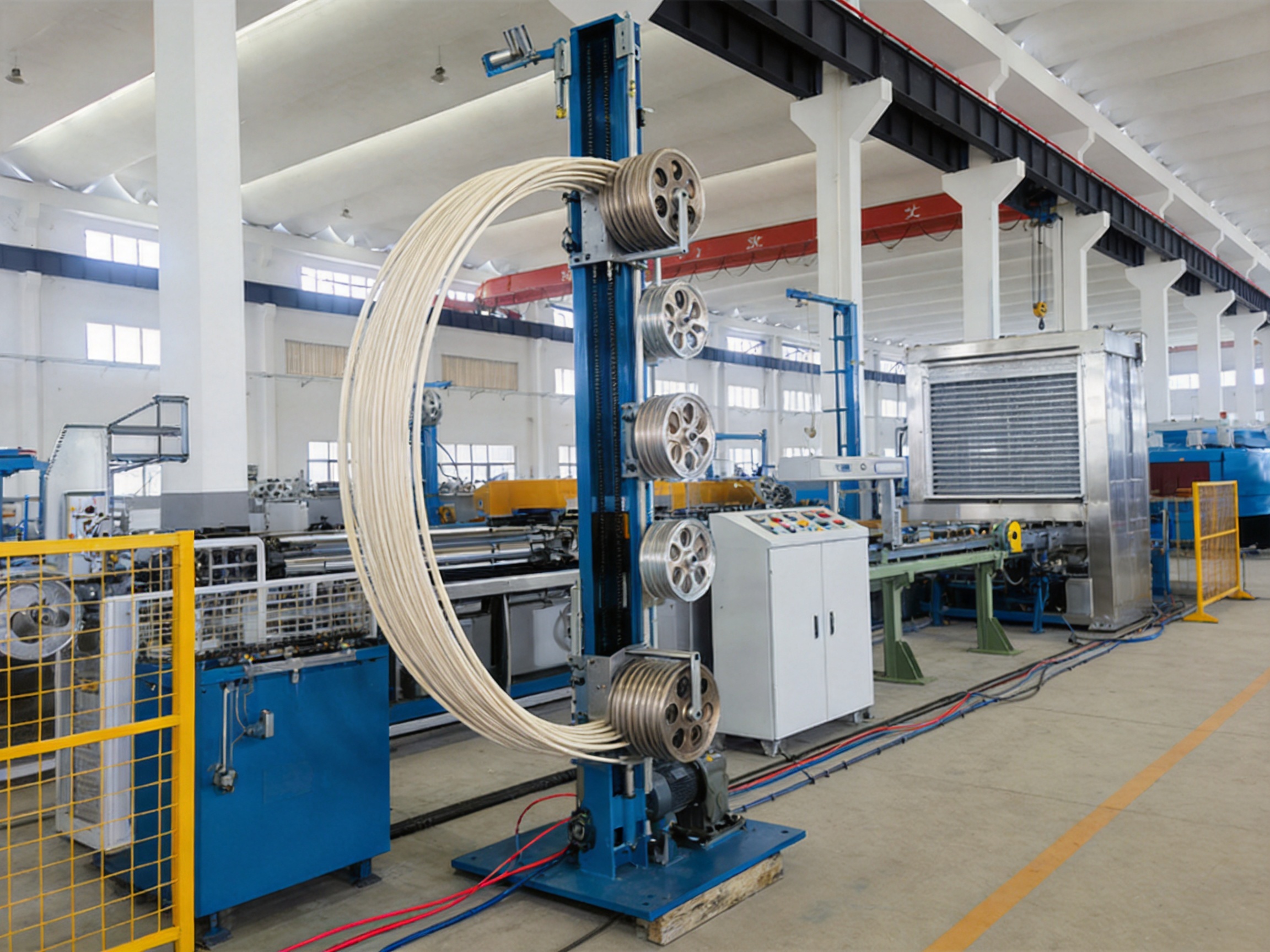
Technical Specifications of the Vertical Models
The following table presents the available vertical accumulator dancer models and their principal reference data.
| Model | Wheel Diameter (mm) | Number of Wheels | Capacity (m) | Cable Diameter (mm) |
|---|---|---|---|---|
| AC-0330V | 300 | 10+11 | 41 | 2–6 |
| AC-0335V | 350 | 9+10 | 38 | 4–11 |
| AC-0340V | 400 | 7+8 | 30 | 6–12 |
| AC-0345V | 450 | 7+8 | 31 | 8–13 |
| AC-0350V | 500 | 6+7 | 24 | 10–15 |
| AC-0360V | 600 | 6+7 | 24 | 12–20 |
The capacity figures in the table are reference values. The final usable capacity can be affected by cable construction, actual cable diameter, installation conditions, operating speed, safety clearance, and the selected control method. Customers should provide complete application information before final equipment confirmation.
How to Select the Wheel Diameter
Wheel diameter should be selected according to the cable’s flexibility and minimum bending requirements. A cable with a robust construction may tolerate a tighter route than a cable with a sensitive outer jacket, special shielding, optical components, or other materials that require careful handling.
Using a wheel that is too small may increase bending stress and create unnecessary mechanical loading. Using a suitable or larger wheel diameter can provide a gentler route and may reduce the chance of surface deformation or internal stress.
The correct selection must also consider the cable’s installation direction, line speed, tension, and the number of repeated passes through the storage path. A professional equipment supplier can evaluate these factors together instead of selecting the wheel solely from the cable’s nominal diameter.
How to Select Accumulation Capacity
The required accumulation capacity should be based on the time needed to complete a reel change and the cable speed during that operation. A simplified planning relationship is:
Required storage length = cable speed × reel-change time, plus an appropriate operating reserve.
This calculation is only a starting point. The actual design should also account for acceleration and deceleration, operator response time, cable tension, the required minimum and maximum dancer positions, and the possibility of unexpected delays.
If the storage length is too short, the upstream line may still need to stop before the reel change is complete. If the storage length is unnecessarily long, the equipment may require more space and a higher investment. Proper sizing therefore improves both production reliability and cost efficiency.
Applications in Wire and Cable Manufacturing
Extrusion Lines
In an extrusion line, the accumulator can be installed between the extrusion and take-up sections or in another suitable location determined by the complete line design. It helps maintain continuous cable movement when the take-up reel is changed.
This is useful for insulated wires, control cables, building wires, data cables, and other products that require a stable extrusion process. By reducing unnecessary line stops, the accumulator can help the plant maintain consistent process conditions and lower restart waste.
CV Lines
CV lines are used for continuous vulcanization and other continuous cable-processing applications. These lines often require stable movement through heating, curing, cooling, and downstream handling sections. An accumulator may be used to control cable payoff or take-up during reel changeover, depending on the line configuration.
Because CV lines can be long and highly integrated, the accumulator must be selected and installed with attention to cable tension, line speed, product temperature, and the location of surrounding equipment. The cable storage rack should be treated as part of the complete process rather than as an isolated machine.
Rewind Lines
Rewinding operations frequently involve changing input or output reels. A cable accumulator helps maintain an orderly material path and can provide temporary storage while a reel is removed or installed.
For rewinding, the cable path must be carefully coordinated with the winding direction, traverse mechanism, reel dimensions, and required winding quality. The accumulator can help prevent sudden pulling or slack conditions that may otherwise affect the finished coil.
Payoff and Take-Up Systems
The product can be used with motorized payoff equipment and motorized take-up equipment. The accumulator provides a buffer that helps the payoff and take-up sections respond to changes in demand.
When the take-up section temporarily slows, stored cable can absorb the difference. When the take-up accelerates or resumes after a reel change, the stored cable can be released in a controlled manner. This can reduce the need for abrupt speed changes at the upstream processing stage.
Cable Inspection and Process Management
A controlled storage section can also make cable inspection and maintenance more manageable. Operators can identify the cable path more easily, access selected points for inspection, and keep the production area more organized.
Although the accumulator is not a substitute for a dedicated inspection system, its stable support and defined routing can contribute to a more disciplined manufacturing environment.
Manufacturing Strengths and Engineering Approach
Shanghai Yessjet Precise Machinery Co., Ltd. develops and supplies wire and cable machinery, complete production line solutions, and accessory equipment for cable processing applications. The company’s product range includes wire and cable extrusion lines, fully automatic coiling and packaging equipment, intelligent robot stackers, coiling machines, motorized payoff equipment, motorized take-up equipment, cable extrusion machines, and related accessories.
This broad product scope is important when selecting an accumulator dancer. A supplier that understands only one isolated component may not fully appreciate the interaction between the accumulator, extrusion equipment, payoff, take-up, coiling, and packaging processes. A supplier with wider cable machinery experience can evaluate the accumulator as part of a complete manufacturing workflow.
Application-Oriented Product Development
The accumulator dancer is designed around practical cable production requirements: cable support, controlled accumulation, product protection, reel-change continuity, and maintenance access. Rather than treating the rack as a simple frame with wheels, the engineering process must consider the relationship between cable diameter, wheel arrangement, available capacity, line speed, and installation orientation.
This application-oriented approach allows the product to be configured for different production scenarios. Vertical and horizontal options provide layout flexibility, while customized accumulation capacity allows the machine to be matched to the customer’s actual reel-change procedure.
Integration with Complete Lines
A cable storage rack should fit into the line without creating new tension, alignment, or access problems. The equipment must be positioned correctly in relation to upstream and downstream machines. Cable entry and exit heights, routing direction, operator clearance, and the movement of adjacent equipment all require attention.
Experience in complete wire and cable production lines helps the manufacturer consider these integration issues during project planning. This can reduce the risk of installing a machine that performs well independently but does not work smoothly with the existing production line.
Customization Capability
The available information specifies that accumulation capacity can be made according to customer requirements. This is a significant advantage for factories with non-standard cable sizes, special line speeds, unusual building dimensions, or customized reel-change procedures.
Customization may involve the accumulation length, wheel arrangement, equipment orientation, cable diameter range, connection points, support structure, and interface requirements. The exact scope depends on the application and should be confirmed through technical discussion.
Manufacturing Quality and Process Control
Reliable cable equipment depends on accurate fabrication, consistent assembly, correct alignment, and appropriate inspection. The storage rack must maintain a smooth cable path, and the wheels must be positioned so that the cable does not rub unnecessarily against the frame or neighboring components.
A disciplined manufacturing process can include engineering review, material preparation, component fabrication, surface treatment where applicable, mechanical assembly, alignment inspection, functional testing, and final quality verification. Each stage contributes to the equipment’s operating stability.
For a cable accumulator, attention to detail is especially important because small alignment errors may create repeated contact or uneven cable loading over many operating cycles. Careful assembly and inspection help support long-term operation and consistent cable handling.
Professional Technical Communication
Successful equipment selection requires accurate technical information from both the customer and the supplier. Important data includes cable diameter, cable material, minimum bending radius, line speed, reel dimensions, reel-change time, installation height, available floor area, cable entry direction, and the required storage capacity.
A professional manufacturer can use this information to recommend a suitable model or develop a customized configuration. Clear technical communication before manufacturing is often more valuable than attempting to correct an unsuitable configuration after installation.
Advantages for Production Managers
Production managers generally evaluate equipment according to output, reliability, labor use, quality, maintenance, and return on investment. An accumulator dancer can contribute to each of these areas.
Higher Equipment Utilization
By reducing the need to stop the main production process during reel replacement, the accumulator can increase the utilization rate of extrusion and related line equipment. More available operating time can translate into greater output from the same production assets.
Lower Material Waste
Every stop and restart may generate non-conforming material, especially when the process needs time to return to stable temperature, pressure, speed, or tension conditions. Reducing unnecessary stops can help limit this type of waste.
Improved Labor Efficiency
Operators can perform reel-change activities while the accumulator manages the temporary cable reserve. This makes the work sequence more organized and reduces the pressure to complete every step immediately before the stored cable is exhausted.
More Stable Product Quality
Continuous process conditions are generally easier to control than repeated stop-and-start cycles. A stable cable path also helps reduce uncontrolled bending, pulling, and surface contact. These benefits can support more consistent finished cable quality.
More Predictable Maintenance
A dedicated cable storage rack makes the cable route visible and accessible. Operators can inspect wheels, supports, and cable movement according to a planned maintenance schedule. This is preferable to maintaining an improvised storage arrangement that may be difficult to inspect or adjust.
Advantages for Cable Operators and Maintenance Teams
Operators interact with the cable path every day, so practical usability is essential. A well-designed accumulator should not only provide the required capacity; it should also make the production line easier to understand and manage.
The defined routing of a cable storage rack helps operators identify the correct cable entry and exit points. It reduces the possibility of random loops and helps maintain separation from unrelated machine components. This organization can make reel changes, visual checks, cleaning, and troubleshooting more efficient.
Maintenance teams can inspect the wheel arrangement, support structure, fasteners, and cable contact surfaces as part of routine service. Any unusual noise, vibration, resistance, or cable marking should be investigated promptly. Preventive attention can help avoid larger problems and protect the cable product.
When the accumulator is integrated into an automated line, maintenance personnel should also verify sensors, position feedback, control signals, and interlocks where these are included in the project. The exact electrical and control configuration depends on the complete machine specification.
Installation and Commissioning Considerations
Confirming the Installation Location
The selected location must provide sufficient space for the equipment, cable entry and exit, operator movement, maintenance access, and any required safety barriers. Vertical models require adequate overhead clearance, while horizontal models require sufficient longitudinal space.
The foundation or support structure must be capable of carrying the equipment and the operational loads. The installation surface should be level and stable enough to maintain alignment during operation.
Checking Cable Compatibility
Before commissioning, the actual cable should be compared with the design data. The cable diameter, construction, stiffness, surface material, and minimum bending radius should be consistent with the selected accumulator model.
If the cable product changes significantly, the manufacturer or technical team should confirm whether the existing wheel arrangement remains appropriate. A model selected for a small flexible wire may not be suitable for a larger, stiffer cable simply because the cable can physically pass through the same route.
Setting the Cable Path
The cable must be threaded through the wheels according to the approved path. Incorrect threading can reduce storage capacity, increase friction, or cause the cable to contact the frame.
During initial testing, operators should observe the cable at low speed before gradually increasing to the target operating speed. The cable should move smoothly without abnormal rubbing, twisting, sudden tension changes, or uncontrolled slack.
Coordinating with Reel Change Procedures
The accumulator provides time for reel changeover, but the reel-change procedure must still be clearly defined. Operators should know the available storage range, the sequence for stopping or slowing the relevant equipment, the correct cable connection method, and the steps for returning to normal operation.
Clear procedures help prevent the cable reserve from being completely exhausted before the new reel is ready. They also reduce the possibility of excessive dancer movement or uncontrolled cable release.
Recommended Maintenance Practices
Regular inspection supports the reliable operation of the accumulator dancer. The maintenance schedule should be adapted to the operating environment, production hours, cable material, and line speed.
Important inspection points include wheel rotation, wheel surface condition, bearing condition where applicable, frame alignment, fasteners, cable contact areas, support structure, guards, and the general cleanliness of the cable path.
Operators should look for:
• Unusual noise during wheel rotation.
• Increased resistance or uneven movement.
• Cable rubbing, marking, flattening, or twisting.
• Loose fasteners or changes in frame alignment.
• Accumulation of dust, insulation particles, oil, or other contaminants.
• Abnormal dancer position during steady production.
• Difficulty maintaining the expected cable tension.
Cleaning should be performed with methods compatible with the cable and machine materials. Lubrication, when required, should follow the relevant equipment instructions and should not introduce contamination to the cable product.
Maintenance personnel should record inspections and corrective actions. A simple history of wheel replacement, alignment adjustment, unusual cable marks, and operating changes can help identify recurring issues.
How the Accumulator Supports a Turnkey Cable Production Solution
A cable manufacturer may need more than a single accessory. The production project may include conductor payoff, extrusion, cooling, spark testing, diameter measurement, printing, capstan transport, take-up, coiling, packaging, and palletizing. Each section affects the performance of the next.
An accumulator dancer can help connect these stages by providing controlled cable storage and tension management. When paired with motorized payoff and take-up equipment, it can contribute to a more coordinated line. When used with coiling and packaging equipment, it can help create a stable transition from continuous cable production to downstream product handling.
The ability to supply multiple categories of wire and cable machinery gives Shanghai Yessjet Precise Machinery Co., Ltd. a broader perspective on turnkey cable production solutions. The company’s experience across extrusion, coiling, packaging, robotic stacking, payoff, take-up, and accessory equipment supports project discussions that consider the complete workflow.
For customers planning a new production line, this broader capability can simplify communication. For customers upgrading an existing line, it can help identify how the accumulator should interact with current equipment rather than treating the upgrade as an isolated installation.
Frequently Asked Questions
What is the main purpose of an accumulator dancer?
The main purpose is to temporarily store and control cable between production stages. It allows the line to continue operating during reel changeover and helps regulate cable payoff, take-up, and tension.
Can the accumulator be used with an extrusion line?
Yes. The product is designed for installation in extrusion lines and can be used to accumulate or control cable during payoff and take-up reel replacement. The final position depends on the complete line layout.
Is it suitable for CV lines?
Yes. The accumulator can be used with CV lines when its cable range, wheel diameter, capacity, speed, and installation arrangement are compatible with the application. Technical confirmation is recommended before ordering.
What is the difference between vertical and horizontal types?
A vertical type stores cable in an upright arrangement and may save floor space when sufficient ceiling height is available. A horizontal type stores cable along a horizontal route and may be preferred when ceiling height is limited or the line layout provides sufficient floor length.
Can the accumulation capacity be customized?
Yes. Accumulation capacity can be made according to customer requirements. The design should consider cable diameter, line speed, reel-change time, available space, and the required operating reserve.
How do I choose the correct model?
Model selection should begin with cable diameter, cable construction, minimum bending radius, required capacity, line speed, and installation space. Wheel diameter and number of wheels should then be evaluated together with the reel-change procedure.
Does a larger wheel always provide better performance?
Not necessarily. A larger wheel may provide a gentler bending route, but the best choice depends on the cable, line layout, capacity, speed, and available space. Oversizing can increase equipment dimensions without providing a practical production benefit.
Can the accumulator prevent all production downtime?
The accumulator is designed to reduce or eliminate downtime associated with planned reel replacement within its available storage capacity. It cannot compensate for every possible fault, extended maintenance activity, material shortage, or emergency stop. The actual result depends on the reel-change procedure and line design.
How does the equipment protect the cable?
It supports and guides the cable through a defined route, helping prevent uncontrolled dragging, contact with unsuitable surfaces, excessive slack, and unnecessary wear. Correct wheel selection and proper installation are essential for effective protection.
What information should be provided for a quotation?
Useful information includes the cable diameter range, cable construction, minimum bending radius, production speed, required accumulation length, reel dimensions, reel-change time, cable entry and exit direction, preferred vertical or horizontal arrangement, available installation space, and details of existing line equipment.
Can the accumulator be integrated with motorized payoff and take-up equipment?
Yes. It can be used as part of a line containing motorized payoff and take-up equipment. The mechanical and control interfaces should be reviewed according to the complete project requirements.
Is the accumulator suitable for different cable products?
It may be suitable for different products within the confirmed cable diameter and bending requirements. If the production line handles several substantially different cable types, each product should be reviewed to ensure that the selected wheel diameter and storage arrangement are appropriate.
Conclusion
The Accumulator Dancer Cable Storage Rack is an important accessory for manufacturers that need continuous, organized, and protected cable handling. By storing a controlled cable reserve, it allows extrusion, CV, and rewind lines to continue operating during reel changeover. It also supports cable guidance, reduces uncontrolled contact, improves line synchronization, and makes production management more efficient.
Vertical and horizontal configurations provide installation flexibility, while customizable accumulation capacity allows the equipment to match specific production requirements. The available models cover different wheel diameters, wheel quantities, storage capacities, and cable diameter ranges, making it possible to select a practical solution for many wire and cable applications.
Compared with a basic passive rack or improvised cable loop, a dedicated accumulator dancer offers more controlled storage, better cable protection, improved reel-change efficiency, and stronger integration potential. Its performance depends on correct model selection, proper installation, suitable cable routing, and disciplined maintenance.
With experience in wire and cable extrusion lines, payoff and take-up equipment, coiling and packaging systems, intelligent robot stackers, and accessory machinery, Shanghai Yessjet Precise Machinery Co., Ltd. can support customers seeking individual equipment or broader cable production solutions. A carefully engineered accumulator is a practical investment for improving productivity, reducing unnecessary stops, and building a more stable cable manufacturing process.
References
1. Wire and Cable Production Engineering Principles, technical reference material for continuous extrusion and reel-handling operations.
2. Industrial Cable Handling and Minimum Bending Radius Guidelines, general guidance for cable routing, support, and mechanical protection.
3. Continuous Extrusion and CV Line Process Management, reference material concerning line synchronization, tension control, and production continuity.
4. Industrial Machinery Maintenance Practices, general recommendations for inspection, alignment, cleaning, and preventive maintenance.
5. Accumulator Dancer Product Information, model data and application information supplied for the cable storage rack product.
6. Wire and Cable Machinery Project Engineering References, general information concerning extrusion lines, payoff systems, take-up systems, coiling, packaging, and turnkey production solutions.