LANGUAGE
 中文简体
中文简体 русский
 Français
 Español
 Português
 عربى
عربى
Content
- 1 Why Heat Shrink Packaging Matters in Cable Manufacturing
- 2 How the Cable Heat Shrink Packaging Machine Works
- 3 Key Technical Specifications
- 4 Advantages Compared with Conventional Packaging Methods
- 5 PLC Control and Operating Convenience
- 6 Film Selection for Cable Coil Packaging
- 7 Manufacturing Strengths Behind the Equipment
- 8 Safety and Energy Considerations
- 9 Installation and Production Line Integration
- 10 Quality Control for Finished Packages
- 11 Applications in Wire and Cable Industries
- 12 Operating Recommendations for Consistent Performance
- 13 Purchasing Guidance for Cable Manufacturers
- 14 Why Choose a Specialized Machinery Supplier
- 15 Q&A: Cable Heat Shrink Packaging Machine
- 15.1 What products can this machine package?
- 15.2 Which films can be used?
- 15.3 What is the operating temperature range?
- 15.4 Does the package cover the whole coil?
- 15.5 How should the machine model be selected?
- 15.6 What output can the machine achieve?
- 15.7 Is the machine difficult to operate?
- 15.8 Can the machine be connected with other cable equipment?
- 15.9 What safety features are included?
- 15.10 How can film waste be reduced?
- 15.11 What should be checked before purchasing?
- 16 Conclusion
- 17 References
- 18 Product: Cable Heat Shrink Packaging Machine
Packaging is an essential stage in modern wire and cable production. Even when a cable has been manufactured to exacting electrical and mechanical standards, poor packaging can expose it to dust, moisture, abrasion, corrosion, deformation, and handling damage. These risks become more serious when cable coils must be stored for long periods, transported across different climates, or delivered to customers in a clean and professional condition.
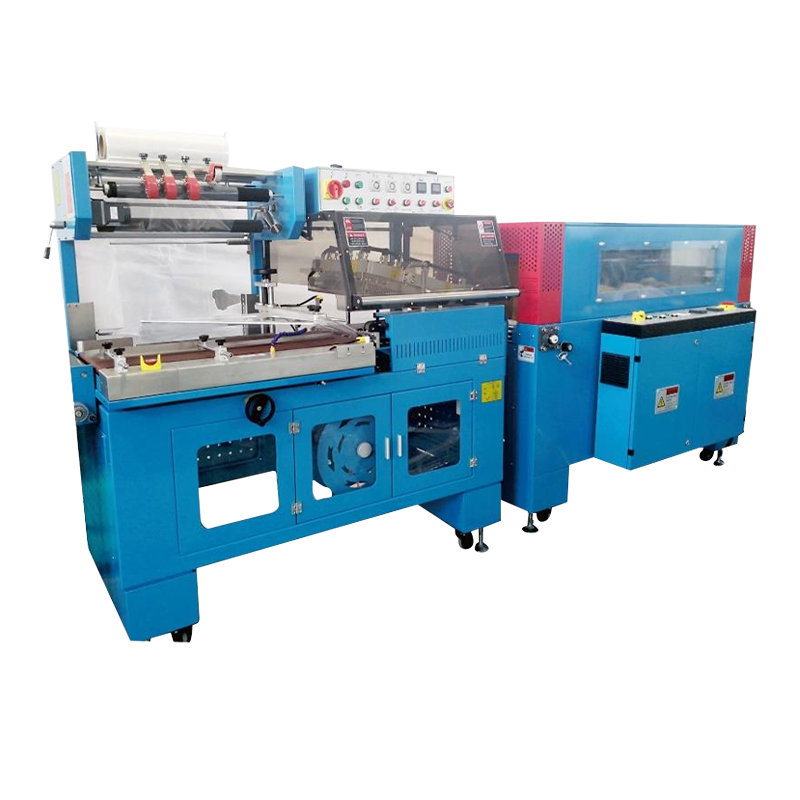
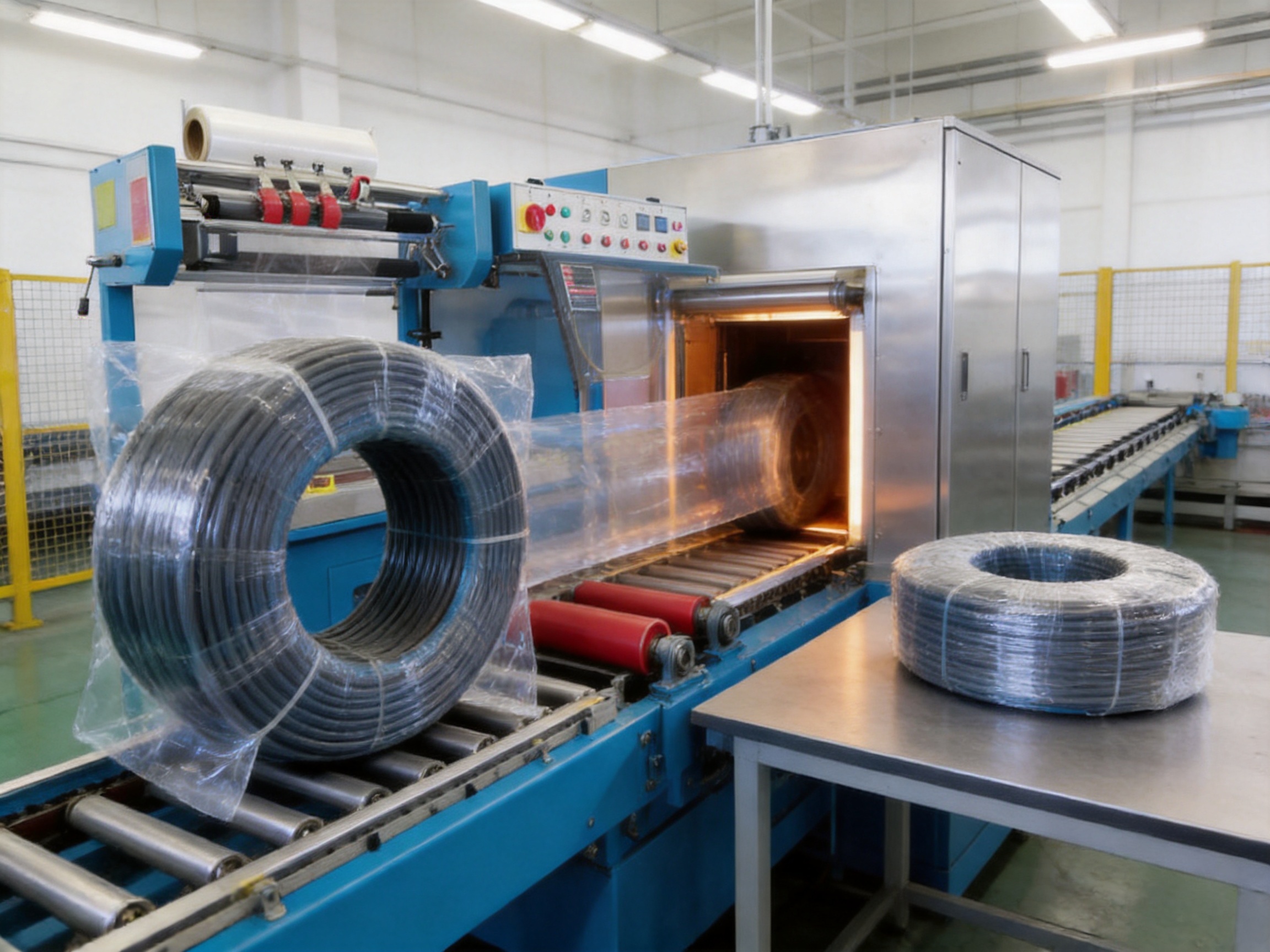
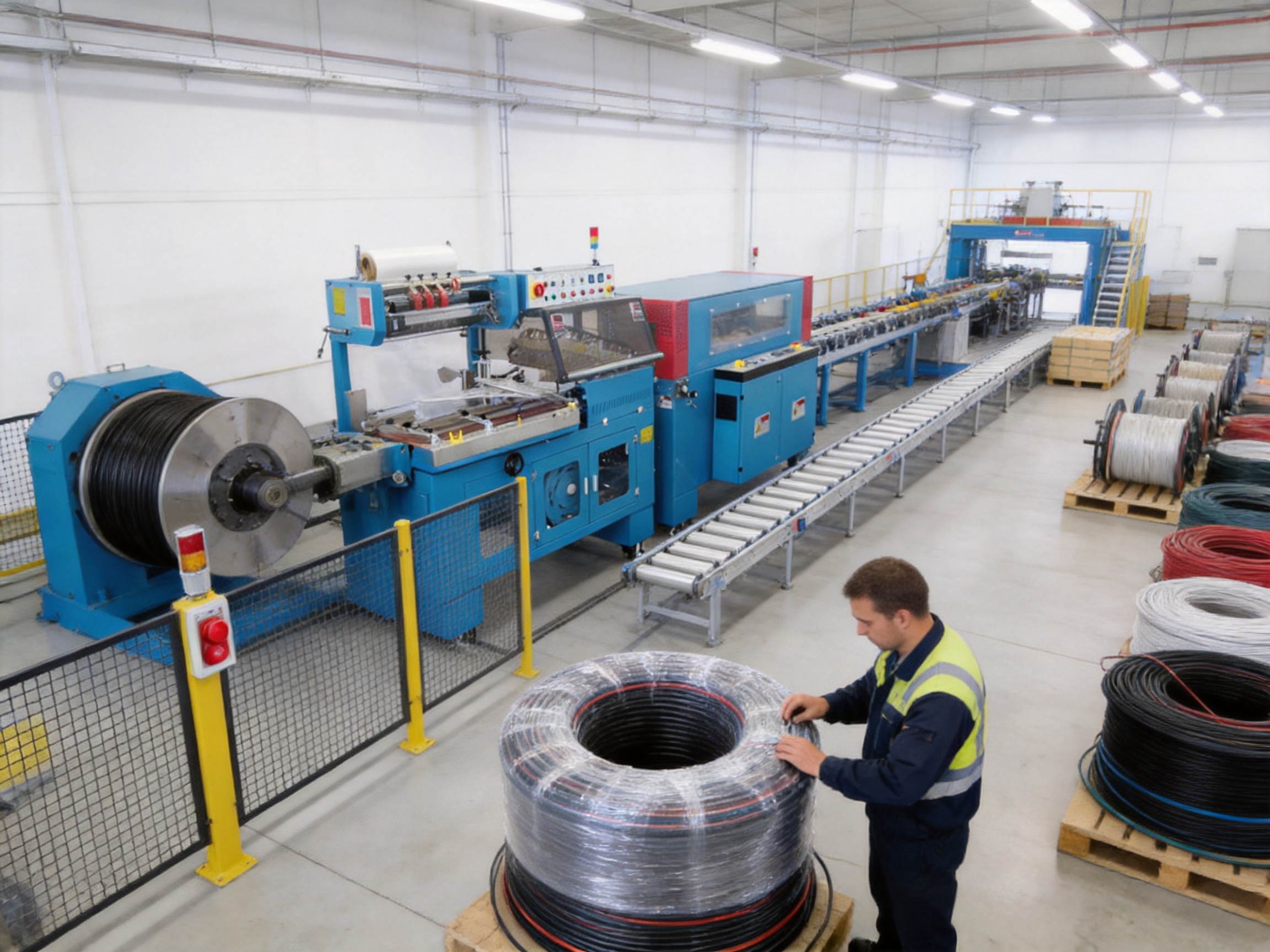
The Cable Heat Shrink Packaging Machine is designed to address these challenges through an integrated film application, sealing, heating, shrinking, and discharge process. It automatically wraps cable coils and related products with PE, PVC, or POF film, transfers the wrapped product through a controlled hot shrink tunnel, and delivers the finished package to a working table. The result is a close-fitting protective layer that covers the front, back, right, and left sides of the coil.
Developed for power cable, communication cable, industrial wire, and associated components, this machine combines automatic operation with a straightforward mechanical structure. Its PLC control system, adjustable temperature range, multiple model options, safety functions, and efficient material usage make it suitable for cable manufacturers seeking reliable packaging performance without unnecessary complexity.
Cable Heat Shrink Packaging Machine
Why Heat Shrink Packaging Matters in Cable Manufacturing
Wire and cable products are often packaged in coils, rolls, bundles, or other circular formats. These products may have exposed surfaces, open spaces, uneven contours, or edges that are difficult to protect with conventional wrapping methods. A basic stretch wrap may leave gaps, loosen during transport, or fail to cover the entire product uniformly. Manual packaging can provide better flexibility, but it is labor-intensive and may produce inconsistent results from one coil to another.
Heat shrink packaging offers a practical alternative. The film is first applied around the cable coil and then exposed to controlled heat. As the film contracts, it conforms closely to the shape of the product. This creates a neat package with fewer loose sections and a more stable outer surface. The finished package can help keep dust and moisture away from the cable while reducing contact with external contaminants during handling and storage.
For cable manufacturers, consistent packaging is also part of product presentation. A well-formed package makes coils easier to identify, stack, count, and move. It can reduce the likelihood of film snagging on neighboring products and improve the appearance of finished goods before shipment. When the packaging process is automated, production personnel can spend less time on repetitive wrapping tasks and more time on inspection, material handling, and quality control.
Protection During Storage
Cables may remain in warehouses for days, weeks, or months before they are installed. During this period, the product can be exposed to airborne particles, humidity fluctuations, condensation, and accidental contact. A tight shrink film layer provides an additional barrier between the cable surface and the surrounding environment. Although packaging is not a replacement for appropriate warehouse conditions, it supports better product preservation when combined with proper storage practices.
Protection During Transportation
Transportation involves vibration, friction, loading, unloading, and possible contact with other goods. Loose film or incomplete wrapping can unwind, tear, or catch on equipment. A close-fitting package helps stabilize the coil and reduces the exposed surface area. It can also make the coil easier to handle with carts, conveyors, forklifts, or other material-handling equipment.
Improved Packaging Consistency
Manual wrapping depends heavily on operator technique. Film tension, overlap, sealing position, and package appearance may vary between workers and shifts. The Cable Heat Shrink Packaging Machine uses a repeatable sequence controlled by mechanical settings and PLC logic. This supports more uniform packaging quality and makes the process easier to standardize across production lines.
How the Cable Heat Shrink Packaging Machine Works
The machine follows a clear operating sequence: film application, sealing, transfer to the hot shrink tunnel, heat shrinking, and discharge. The process is designed to reduce manual intervention while maintaining control over the important packaging parameters.
Film Application
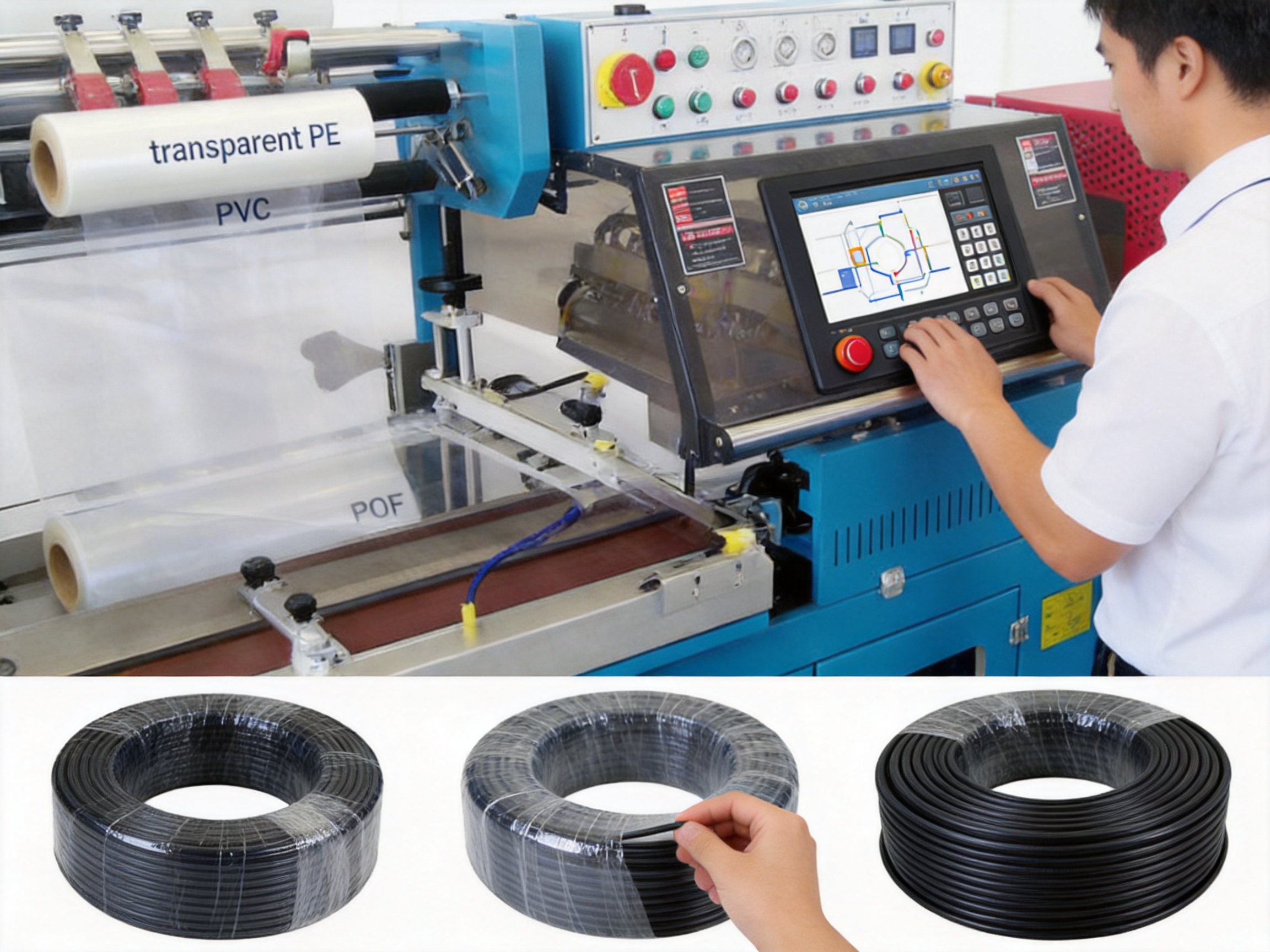
The cable coil is positioned for packaging, and the selected film is applied around the product. Depending on production requirements, the machine can work with PE or POF film, while the product description also identifies PVC film as a suitable packaging option. Film selection may depend on the required flexibility, appearance, sealing behavior, thickness, and storage environment.
The film is arranged to cover the coil rather than merely wrapping a narrow band around its circumference. This full-package approach is particularly useful for round coils with open front and rear surfaces. By enclosing the front, back, right, and left sides, the machine helps create a more complete protective layer than simple side wrapping.
Automatic Sealing
After the film is positioned, the automatic sealing mechanism closes the film around the cable coil. The sealing stage prepares the package for the shrinking process and helps prevent the film from separating as the product moves through the tunnel. Consistent sealing is important because an uneven or incomplete seal can result in open areas, wrinkles, or film movement during heating.
Transfer to the Hot Shrink Tunnel
The sealed coil is transferred into the hot shrink tunnel. This integrated transfer operation reduces the need for operators to manually move each wrapped coil between separate machines. It also supports a more continuous workflow, which is valuable when packaging is installed near a coiling machine, take-up system, or finished-product handling area.
Controlled Heat Shrinking
Inside the tunnel, heat causes the film to contract around the product. The machine provides adjustable temperature settings from approximately 150 to 200°C. This range allows the operator to select a suitable working condition for the chosen film and the dimensions of the cable coil. Correct adjustment is important: insufficient heat may leave the film loose, while excessive heat may damage the film, produce unwanted distortion, or affect package appearance.
The shrinking stage should be understood as a controlled thermal process rather than simply a high-temperature operation. Film type, thickness, package dimensions, conveyor speed, ambient conditions, and product surface characteristics can all affect the result. The PLC control system and adjustable operating parameters help operators establish a repeatable setting for each packaging specification.
Discharge to the Working Table
After heat shrinking, the packed coil is sent out to the working table. This provides a convenient point for visual inspection, labeling, weighing, palletizing, or transfer to the next stage. A defined discharge area also helps separate unfinished products from completed packages and supports better organization on the production floor.
Key Technical Specifications
The product range includes three principal machine models. The main selection factor is the combined dimension represented by the outside diameter and height of the cable coil. Output capacity varies according to model and product size, as well as the selected film, operating conditions, and production arrangement.
| Model | Applicable Dimension | Nominal Output | Typical Application Consideration |
|---|---|---|---|
| HP 430 | Outside diameter plus height less than or equal to 430 mm | 1–10 volumes per minute | Compact cable coils and moderate-sized packaged products |
| HP 600 | Outside diameter plus height less than or equal to 600 mm | 1–10 volumes per minute | Medium-sized cable coils requiring flexible throughput |
| HP 800 | Outside diameter plus height less than or equal to 800 mm | 1–5 volumes per minute | Larger coils and products requiring a wider packaging envelope |
The expression “outside diameter plus height” is an important consideration during model selection. Manufacturers should measure the actual coil dimensions, including any variation caused by winding, binding, labels, protective materials, or protruding components. Selecting a machine based only on the nominal cable diameter may lead to an unsuitable packaging envelope.
The HP 430 model is appropriate when the production line primarily handles smaller coils or when floor space and investment efficiency are important. The HP 600 model provides a broader operating range for manufacturers working with several cable sizes. The HP 800 model is intended for larger packages and can accommodate a greater combined product dimension, although its output range is lower than that of the smaller models.
Advantages Compared with Conventional Packaging Methods
Compared with Manual Wrapping
Manual wrapping may be acceptable for occasional packaging or highly irregular products, but it becomes inefficient as production volume increases. Operators must repeatedly position the film, maintain tension, cut or seal the material, and inspect the package. This creates labor demand and may cause variation in film consumption and package quality.
The automatic machine performs the main packaging sequence with limited operator involvement. Its PLC-based control structure supports repeatable operation, while the integrated tunnel removes the need for a separate manual heating step. This can improve productivity and reduce the physical burden associated with repetitive wrapping and handling.
Compared with Basic Stretch Wrapping
Stretch wrapping typically secures film around selected areas of a product. It may not fully enclose the front and rear surfaces of a cable coil, especially when the coil has a broad open center or uneven profile. Heat shrink packaging is better suited to applications where the manufacturer wants a more complete enclosure and a tighter-fitting package.
The shrink film forms around the product after heating, which can reduce loose flaps and improve package neatness. The result is particularly useful for products that must be displayed, stored in organized stacks, or delivered to customers in a clean finished condition.
Compared with Separate Sealing and Shrinking Equipment
A production line assembled from independent sealing equipment, transfer conveyors, and shrink tunnels may require additional floor space and coordination. Each machine must be adjusted and maintained separately, and the operator may need to transfer products between stages.
The Cable Heat Shrink Packaging Machine integrates the major functions into one packaging solution. Film application, sealing, heating, shrinking, and discharge are arranged as a connected process. This compact approach can simplify line planning and reduce unnecessary product movement.
Compared with Overspecialized Systems
Some automated packaging systems are designed for narrow product specifications and may require complex programming or extensive changeover work when the product size changes. The available HP models provide a practical range for different coil dimensions, while adjustable temperature settings allow the process to respond to different film requirements.
The machine is not intended to replace every packaging method in every application. However, for cable coils and related components within its dimensional range, it provides a focused balance between automation, ease of use, protection, and cost control.
PLC Control and Operating Convenience
The PLC control system is one of the central features of the machine. In a packaging application, PLC control coordinates the timing of film movement, sealing, transfer, tunnel operation, and discharge. It also gives operators a structured way to manage temperature and other process settings.
An intuitive control arrangement is valuable because cable production environments often involve multiple product sizes and changing production schedules. Operators need to understand the status of the machine quickly, identify whether the equipment is ready, and adjust the process without unnecessary complexity. A clear control interface can shorten training time and help reduce setup errors.
Adjustable Temperature Settings
The 150–200°C temperature range provides flexibility for heat-shrink operations. The best setting should be determined through practical testing with the selected film and product. The operator can evaluate film tightness, package appearance, seal integrity, surface condition, and production speed before establishing a standard parameter.
Temperature adjustment is also useful when the machine processes products with different dimensions. A larger coil may require different heat distribution or tunnel residence conditions than a smaller product. The ability to modify the setting gives the packaging team more control than a fixed-temperature system.
Simple Design for Maintenance
The machine is described as having a simple design for easy operation and maintenance. Simplicity can be a significant advantage in industrial packaging. A machine that is easy to understand allows technicians to inspect film paths, sealing areas, heating components, conveyors, and safety devices more efficiently.
Routine maintenance should include checking film alignment, cleaning areas where film residue may accumulate, inspecting sealing surfaces, verifying conveyor movement, and reviewing temperature performance. The actual maintenance schedule should follow the equipment manual and the operating environment. Regular attention helps preserve package quality and reduces unexpected downtime.
Film Selection for Cable Coil Packaging
The machine can use PE, PVC, or POF film according to the packaging requirement. Each film type has different characteristics, and the final selection should consider the cable surface, coil size, desired appearance, storage conditions, sealing behavior, and customer expectations.
PE Film
PE film is commonly associated with practical industrial packaging. It can provide a durable outer layer for cable coils and is suitable when protection, flexibility, and cost control are important. PE film is often considered for larger or heavier products where the package must tolerate handling and transportation demands.
PVC Film
PVC film may be selected when particular clarity, shrink behavior, or package appearance is required. Its suitability should be evaluated in relation to the machine settings, sealing method, workplace conditions, and applicable environmental requirements. Trial packaging is recommended before high-volume production.
POF Film
POF film is often used when a clean, transparent, and attractive package is desired. It can produce a smooth appearance around suitable products and may be useful for cable accessories, smaller coils, or finished goods where visual presentation is important. Operators should match film thickness and heating conditions to the product dimensions and expected handling load.
Regardless of the material selected, film quality has a direct effect on package quality. The film should be stored in a dry, clean environment and protected from excessive heat, sharp objects, and contamination. Incorrect storage can affect film performance before it reaches the machine.
Manufacturing Strengths Behind the Equipment
Shanghai Yessjet Precise Machinery Co., Ltd. supplies wire and cable machinery, cable production line solutions, coiling equipment, pay-off and take-up machines, accessory equipment, and automatic packaging systems. The Cable Heat Shrink Packaging Machine reflects the company’s broader focus on equipment for the cable manufacturing workflow rather than an isolated packaging device.
Experience Across the Cable Production Process
A packaging machine performs best when its design considers the conditions created by upstream and downstream equipment. Cable coils may arrive from a coiling machine, take-up system, or other cable handling equipment. Their dimensions, winding tightness, orientation, and transfer method can affect packaging performance.
A company active in wire and cable machinery can design packaging equipment with a better understanding of these production relationships. This supports more practical integration between coiling, conveying, packaging, inspection, storage, and final handling. It also makes it easier for customers to discuss a complete production requirement rather than purchasing equipment without considering the entire workflow.
Integration of Mechanical and Control Engineering
Reliable packaging requires more than a heating chamber. The film path, sealing mechanism, product transfer, conveyor arrangement, tunnel structure, temperature control, and safety system must work together. The manufacturer’s strength lies in combining these mechanical and electrical functions into a coordinated unit.
The PLC control system provides the logic layer, while the mechanical assemblies perform the physical operations. This combination is important for maintaining consistent timing and reducing the risk of mismatched process stages. When the machine is correctly adjusted, the product can pass from wrapping to sealing and shrinking without unnecessary manual intervention.
Manufacturing Focus on Practical Usability
Industrial customers evaluate equipment not only by headline automation features but also by daily usability. A machine must be understandable to operators, accessible to maintenance personnel, and adaptable to real production conditions. The simple design of this equipment is intended to support those practical requirements.
Features such as adjustable temperature, emergency stop functions, safety guards, and a defined discharge area contribute to a more manageable production environment. These details may appear basic, but they have a direct effect on the machine’s usefulness over its working life.
Support for Customized Cable Production Lines
Wire and cable manufacturers often produce a wide range of products. Cable sizes, insulation materials, coil dimensions, and packaging requirements can differ from one order to another. A machinery supplier that provides several categories of cable equipment is better positioned to evaluate where the packaging machine should be placed and how it should communicate with adjacent processes.
Customization may involve the selected model, product transfer direction, working-table arrangement, film specifications, line layout, or operating parameters. Any customization should be confirmed through technical discussion and product testing. The objective is to achieve a workable combination of capacity, package quality, operator access, and available factory space.
Safety and Energy Considerations
Heat shrink packaging involves elevated temperatures and moving mechanisms, so safety must be included in both equipment design and operating procedures. The machine is equipped with safety guards and emergency stop functions intended to help protect personnel during operation.
Safety guards help limit direct access to moving and heated areas. Emergency stop devices provide a rapid means of stopping the machine when an abnormal condition occurs. Operators should still receive appropriate training, understand the location and function of emergency controls, and never bypass guards or safety interlocks.
Because the tunnel operates at approximately 150–200°C, personnel should avoid contact with heated surfaces and allow appropriate cooling time during maintenance. Film scraps, packaging residue, and foreign objects should be removed according to the recommended procedure. The work area should remain clean to reduce trip hazards and prevent material from interfering with moving parts.
Reducing Material Waste
Automatic film application can help control the amount of material used for each coil. When wrapping is standardized, the machine is less likely to apply excessive overlapping layers or leave large unused sections. Reduced film waste can lower consumable costs and support a more efficient packaging operation.
Material efficiency depends on correct setup. Operators should use the proper film width, confirm product dimensions, maintain suitable sealing conditions, and avoid unnecessary rework. A poorly adjusted machine may consume more film than expected or produce packages that require repackaging.
Managing Energy Consumption
The heating tunnel is the primary energy-consuming area of the packaging process. Energy-efficient operation depends on suitable temperature settings, proper tunnel adjustment, reasonable production scheduling, and regular inspection of heating and insulation components.
Operating at the highest possible temperature is not automatically the best approach. The correct setting is the lowest effective temperature and process time that produces a stable, tight package without damaging the film. This approach can support both energy management and film quality.
Installation and Production Line Integration
Before installation, the customer should confirm the maximum outside diameter and height of the cable coils, expected output, film type, product orientation, and available floor space. The inlet and discharge areas should be planned so that operators can load and remove products safely without interrupting the production flow.
The machine may be positioned after a coiling machine or take-up system, depending on the factory layout. If the coil is transferred directly from upstream equipment, the transfer method should be checked carefully. The product must arrive in a stable position and within the dimensional range of the selected HP model.
Electrical supply, ventilation, access for maintenance, and operator visibility should also be considered. The hot shrink tunnel requires an appropriate working environment, and the installation area should allow technicians to inspect the equipment without moving unrelated machinery.
Commissioning Procedure
Commissioning should begin with a physical inspection. The operator or technician can verify that the machine is level, the film route is correctly installed, guards are secure, emergency stop functions are available, and no transport materials remain in the equipment.
The next stage is a dry run without product. This allows the team to observe conveyor movement, sealing action, transfer timing, and discharge operation. After the dry run, sample cable coils can be processed using a conservative temperature and speed setting. The package should then be inspected for seal integrity, shrink tightness, wrinkles, exposed product areas, and film damage.
Once a suitable setting is established, the values can be documented for each major product family. Recording standard parameters improves changeover efficiency and gives operators a reference when the same cable specification returns to production.
Quality Control for Finished Packages
A heat-shrunk cable coil should be inspected as a packaged product, not merely as a cable wrapped in film. Quality checks should address the integrity of the complete protective layer and the condition of the cable beneath it.
Coverage
The film should cover the intended surfaces of the coil, including the front, back, right, and left sides. Any significant open section, torn area, or exposed cable should be investigated. Coverage is especially important when the package will be stored outdoors temporarily or transported through dusty environments.
Seal Integrity
The seal should remain closed after the coil leaves the tunnel. A weak seal may open when the package is moved, while an overheated seal may become brittle or distorted. Inspection should confirm that the sealing line is continuous and suitable for the selected film.
Shrink Uniformity
The package should be tight enough to remain stable without excessive wrinkles or film deformation. Some visual variation may be acceptable depending on the film and coil profile, but significant loose areas can indicate insufficient heating, unsuitable film, or incorrect machine adjustment.
Product Condition
The cable itself should not show signs of heat damage, abrasion, compression, or deformation. The operating temperature applies to the film-shrinking process, but the actual product exposure depends on tunnel design, residence time, and package configuration. Sample testing is therefore important when packaging sensitive cable types or components.
Production Records
Manufacturers can improve traceability by recording the product specification, film type, machine model, temperature setting, production date, and inspection result. These records help identify the cause of packaging problems and make it easier to repeat successful operating conditions.
Applications in Wire and Cable Industries
The machine is suitable for a range of cable-related applications where coils or compact bundled products require a protective outer package. Typical uses include power cable coils, communication cable products, industrial wires, control cables, accessory components, and other products with dimensions within the selected model’s operating range.
For power cable manufacturers, packaging helps protect finished coils during warehouse storage and transportation to construction sites, distributors, or project locations. For communication cable producers, clean and stable packaging is useful when products move through distribution networks where dust and handling exposure may be significant.
Industrial cable manufacturers may also benefit when they produce several product sizes and need a packaging system that can be adjusted between specifications. The HP 430, HP 600, and HP 800 models provide options for different combined coil dimensions, allowing customers to select a machine that corresponds more closely to their product range.
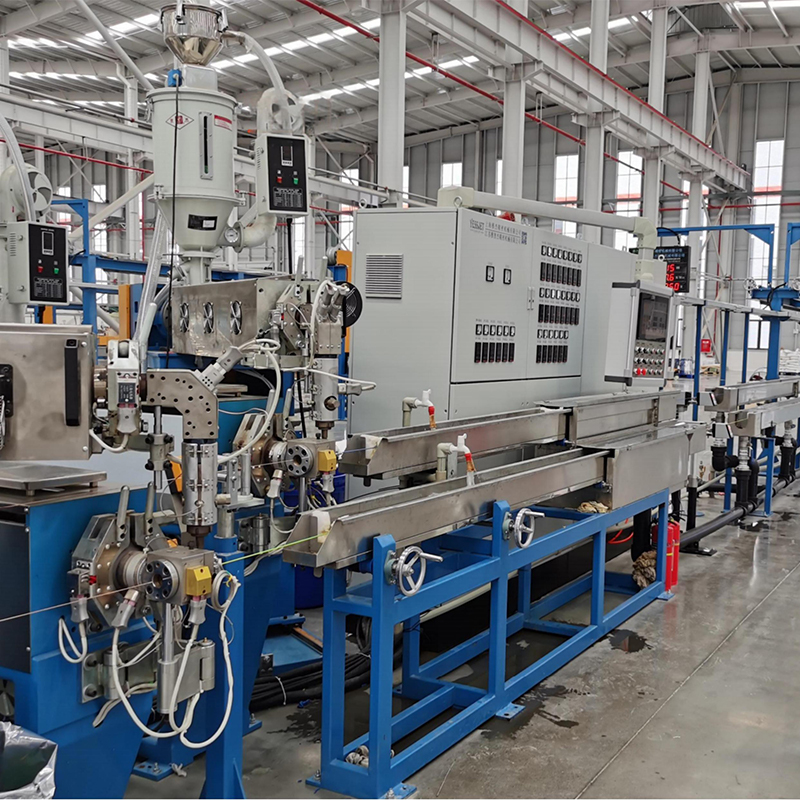
The system can also serve as part of a broader turnkey cable production solution. In such an arrangement, extrusion, cooling, take-up, coiling, packaging, and stacking may be planned as connected stages. The specific configuration depends on cable type, factory space, production capacity, and the customer’s preferred level of automation.
Operating Recommendations for Consistent Performance
First, measure the actual products rather than relying on estimated dimensions. Coil height and outside diameter can vary with winding tension, cable construction, binding method, and operator handling. The largest expected product should be included in the model-selection calculation.
Second, test the selected film before starting continuous production. Film suppliers may provide nominal shrink information, but the final result depends on the machine and product. A short trial can reveal whether the film shrinks evenly, seals correctly, and provides the expected appearance.
Third, establish product-specific settings. A small coil and a large coil may require different conveyor or heating conditions. Maintaining a simple parameter record can help operators make faster adjustments during changeovers.
Fourth, inspect the film route regularly. Misalignment can create uneven wrapping, film folds, weak seals, and material waste. Early correction is usually easier than troubleshooting a large quantity of defective packages.
Fifth, maintain a clean tunnel and sealing area. Film residue can affect sealing performance and may create unpleasant smoke or odor when exposed to heat. Cleaning should be performed only under safe conditions and according to the equipment instructions.
Finally, train operators to respond correctly to alarms, film breaks, jams, and emergency stop events. A well-designed machine can improve safety, but safe results also depend on disciplined operating procedures.
Purchasing Guidance for Cable Manufacturers
When evaluating a Cable Heat Shrink Packaging Machine, buyers should consider more than the nominal output. The first question is whether the equipment can accommodate the full product envelope. The second is whether the output range matches the required production rate. The third is whether the film and package appearance meet customer expectations.
Buyers should also review the connection between the packaging machine and existing equipment. If the machine will be installed after a coiler or take-up system, the product transfer method must be compatible. If the packed coil will move to a robot stacker, palletizing station, or manual inspection table, the discharge arrangement should be considered during planning.
Maintenance access is another important purchasing factor. Operators should be able to reach the film path, sealing area, conveyor components, control panel, and tunnel inspection points without unnecessary disassembly. A simple structure can reduce the time required for routine service and help keep the packaging line available.
Technical communication with the supplier should include product drawings or samples, coil dimensions, target output, preferred film materials, factory power conditions, and required safety arrangements. Providing accurate information at the beginning improves the chance of selecting the correct model and reduces later modifications.
Why Choose a Specialized Machinery Supplier
A specialized wire and cable machinery supplier understands that packaging quality is connected to the manufacturing process preceding it. Cable coils are not generic boxes or flat products. Their shape, winding condition, mass, and handling method are determined by cable production requirements.
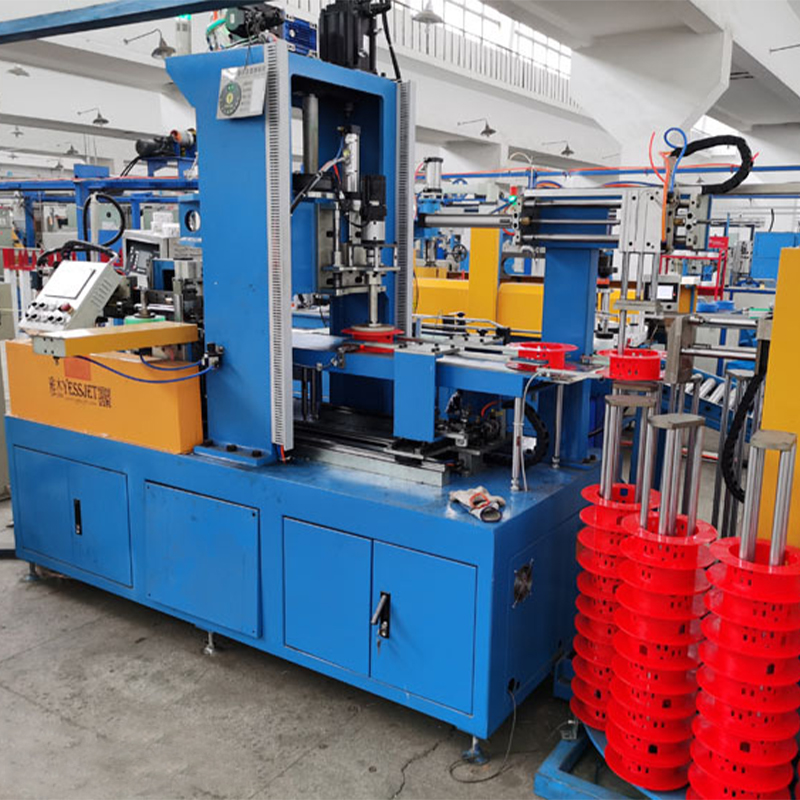
Shanghai Yessjet Precise Machinery Co., Ltd. focuses on machinery for wire and cable production, including wire and cable extrusion lines, coiling and packaging equipment, intelligent robot stackers, coiling machines, motorized pay-off equipment, motorized take-up equipment, accessory equipment, and cable extrusion machines. This product scope enables the supplier to approach packaging as part of a complete cable manufacturing system.
The company’s equipment development strengths can be seen in the practical combination of automation and accessibility. The Cable Heat Shrink Packaging Machine is not presented as a complicated standalone system requiring excessive operator intervention. Instead, it uses a straightforward process, PLC control, adjustable heating, integrated transfer, safety features, and model options for different coil sizes.
For customers planning a new line, upgrading an existing facility, or replacing manual packaging, this broader equipment capability can simplify technical discussions. The supplier can consider the relationship between the cable extrusion process, pay-off and take-up operations, coiling, packaging, and final stacking. The result is a more coordinated approach to production planning.
Q&A: Cable Heat Shrink Packaging Machine
What products can this machine package?
The machine is designed for cable coils, wire coils, and related cable components. It is suitable for power, communication, and industrial cable applications when the product dimensions are within the selected model’s operating range.
Which films can be used?
The machine can automatically wrap products with PE, PVC, or POF film, depending on the packaging requirement and validated operating conditions. Film thickness, width, shrink behavior, and sealing characteristics should be confirmed before production.
What is the operating temperature range?
The adjustable temperature range is approximately 150–200°C. The correct setting depends on the film, product size, tunnel conditions, and required package appearance. Testing is recommended before establishing a production standard.
Does the package cover the whole coil?
The equipment is designed to fully package the coil, including the front, back, right, and left sides. Actual coverage depends on correct product positioning, film selection, and suitable machine adjustment.
How should the machine model be selected?
Select the model according to the combined outside diameter and height of the largest expected product. HP 430 supports a combined dimension up to 430 mm, HP 600 supports up to 600 mm, and HP 800 supports up to 800 mm.
What output can the machine achieve?
The stated output is 1–10 volumes per minute for HP 430 and HP 600, and 1–5 volumes per minute for HP 800. Actual output depends on product dimensions, film, heating conditions, operator workflow, and the complete production-line arrangement.
Is the machine difficult to operate?
The machine uses an intuitive PLC control system and a simple design intended to support easy operation and maintenance. Operators should still receive training in film loading, parameter adjustment, safety procedures, and routine inspection.
Can the machine be connected with other cable equipment?
It can be considered as part of a broader cable production line involving coiling machines, take-up equipment, stacking systems, and other accessories. The exact integration method should be confirmed using product dimensions, transfer requirements, and factory layout information.
What safety features are included?
The equipment includes safety guards and emergency stop functions. These features support safer operation, but personnel must follow operating instructions, avoid bypassing protective devices, and use appropriate procedures during cleaning and maintenance.
How can film waste be reduced?
Film waste can be reduced by selecting the correct film size, maintaining proper alignment, using product-specific settings, avoiding unnecessary overlap, and correcting sealing or shrinking problems promptly. Automatic operation also helps improve consistency compared with manual wrapping.
What should be checked before purchasing?
Buyers should confirm the maximum coil diameter and height, desired output, preferred film, package coverage, upstream and downstream equipment, available space, electrical requirements, safety expectations, and maintenance access. Product samples or drawings are useful for technical evaluation.
Conclusion
The Cable Heat Shrink Packaging Machine provides a focused solution for manufacturers that need reliable protection and consistent presentation for wire and cable coils. Its film application, automatic sealing, hot shrink tunnel, controlled temperature range, and finished-product discharge create a connected packaging workflow that reduces manual handling.
Compared with conventional manual wrapping, the machine can improve repeatability, labor efficiency, package neatness, and material control. Compared with basic wrapping methods, heat shrink packaging offers more complete coverage and a closer fit around the coil. The three available model ranges allow manufacturers to match equipment capacity to product dimensions, while PLC control and safety functions support practical industrial operation.
The machine also benefits from the manufacturer’s wider involvement in wire and cable machinery. Shanghai Yessjet Precise Machinery Co., Ltd. provides equipment covering extrusion, coiling, pay-off, take-up, packaging, stacking, and related cable production functions. This broader capability supports integrated line planning and helps customers evaluate packaging as part of the entire manufacturing process.
For cable producers seeking a simple, adaptable, and efficient way to protect finished coils during storage and transportation, the Cable Heat Shrink Packaging Machine offers a strong combination of automation, flexibility, safety, and manufacturing practicality.
References
1. Product technical information for Cable Heat Shrink Packaging Machine, including model dimensions, output ranges, film types, control functions, and packaging process descriptions.
2. General principles of polymer film sealing and heat shrink packaging for industrial products.
3. General wire and cable manufacturing practices covering extrusion, take-up, coiling, handling, storage, and transportation.
4. Industrial machinery safety principles relating to guarding, emergency stop functions, heated surfaces, and operator training.
5. Packaging quality-control practices for film coverage, seal integrity, shrink uniformity, material consumption, and finished-product inspection.