LANGUAGE
 中文简体
中文简体 русский
 Français
 Español
 Português
 عربى
عربى
Content
- 1 Understanding the Role of Cable Conveyor Belt Systems
- 2 Two Transmission Modes for Different Production Conditions
- 3 How the System Improves Cable Production Workflows
- 4 Advantages Over Conventional Manual Carrying
- 5 Product Advantages in Comparison with Single-Function Conveyors
- 6 Manufacturing and Engineering Strengths
- 7 Design Considerations for a Reliable Installation
- 8 Energy and Labor Efficiency
- 9 Applications in Wire and Cable Manufacturing
- 10 Why Supplier Experience Matters
- 11 Customization and Turnkey Production Solutions
- 12 Recommended Project Evaluation Process
- 13 Operational and Maintenance Practices
- 14 Safety and Workplace Organization
- 15 Value for Different Factory Sizes
- 16 Questions and Answers
- 16.1 What products can the cable conveyor belt system transfer?
- 16.2 What is the difference between automatic track transmission and manual roller transmission?
- 16.3 Can both transmission modes be used in one production project?
- 16.4 How does the conveyor reduce labor costs?
- 16.5 Can the system be integrated with cable production machinery?
- 16.6 Is the system suitable for small-batch production?
- 16.7 Is the system suitable for continuous production?
- 16.8 What information should be provided when requesting a quotation?
- 16.9 Can the conveyor support future production expansion?
- 16.10 How does this system compare with using forklifts?
- 17 Conclusion
- 18 References
- 19 Product: Cable Conveyor Belt Systems
In modern wire and cable manufacturing, efficient material handling is essential for maintaining stable production, reducing labor requirements, and protecting finished products. Cable conveyor belt systems provide a practical connection between production equipment and downstream handling areas by transferring packaged goods from the production location to a designated manual handling station. When correctly designed and integrated, a conveyor system can remove repeated carrying tasks, improve workplace organization, and help manufacturers achieve a more consistent material flow.
The cable conveyor belt system described in this article is designed for factories that need a reliable way to move packaged cable products after production, coiling, or packing operations. Its transmission platform includes two flexible operating modes: automatic track transmission and manual roller transmission. The automatic track option supports continuous and consistent movement, while the manual roller option provides a simple and flexible solution for small-batch operations, temporary production tasks, or areas where operators need direct control over product movement.
This combination gives the system an advantage over single-mode conveying equipment. Instead of forcing every production environment to use a fully automated solution, it allows the handling method to match the actual production requirement. High-volume operations can benefit from automatic movement, while small production batches and variable workflows can use manual roller transfer. The result is a versatile material handling platform that supports both efficiency and operational flexibility.
Understanding the Role of Cable Conveyor Belt Systems
A cable conveyor belt system is a material transfer device used to move packaged products between different positions in a production or handling area. In wire and cable factories, products may leave an extrusion line, coiling machine, packaging machine, or other production equipment in a finished or semi-finished state. These products often need to be transported to a location where operators inspect, label, sort, stack, or prepare them for shipment.
Without a suitable conveyor, operators may need to carry packages manually over short but repeated distances. Although each individual movement may appear simple, repeated manual carrying can create unnecessary labor intensity, interrupt the production rhythm, and increase the risk of package damage. A conveyor creates a defined transfer route, helping products move through the factory in a more orderly manner.
The system is especially useful when production equipment and manual handling stations are separated by a fixed distance. Instead of relying on forklifts or repeated operator movement, the conveyor can connect the two locations directly. This supports a smoother workflow and can reduce unnecessary handling steps.
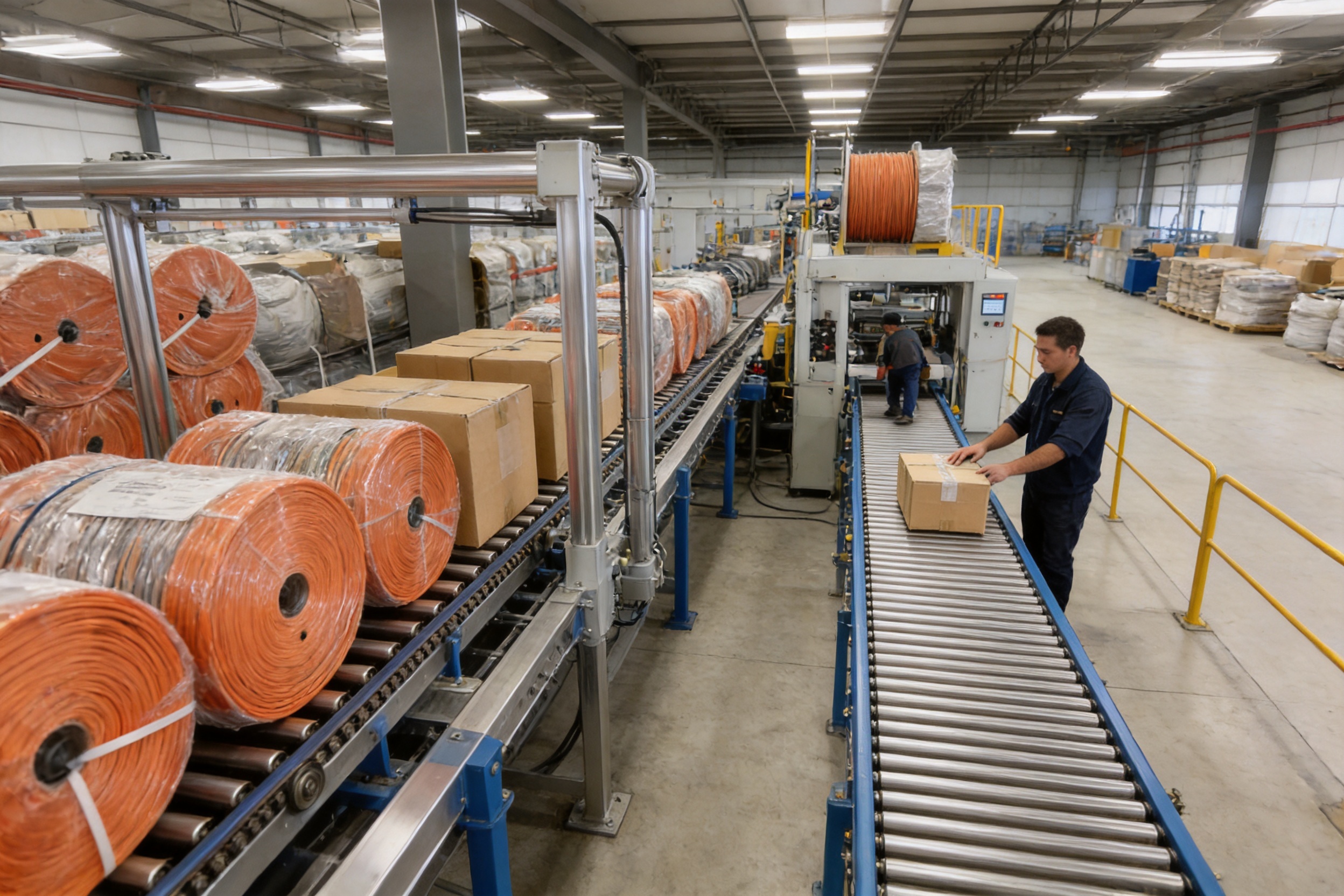
For cable manufacturers, the conveyor may be used after cable coiling, bundling, wrapping, labeling, or packaging. It can also support the movement of cartons, bags, reels, coils, and other packaged goods, provided that the product dimensions and weight are compatible with the selected conveyor configuration.
The key purpose is not simply to move goods from one point to another. A well-planned conveyor system also improves the organization of the production floor. It creates a defined material flow path, reduces random product accumulation, and gives operators a clearer work area. These benefits can contribute to improved safety, better space utilization, and more predictable production management.
Two Transmission Modes for Different Production Conditions
Automatic Track Transmission
Automatic track transmission is designed for operations that require consistent, repeatable, and efficient product movement. Once the packaged goods are placed on the transmission platform, the track can move them along the planned route toward the designated handling location. This reduces the need for continuous manual pushing or carrying.
The automatic track mode is particularly suitable for production lines with a relatively stable output. When products leave a machine at regular intervals, automatic conveying can help maintain a continuous flow. Operators can focus on inspection, packaging confirmation, stacking, or other value-added tasks instead of repeatedly transporting products.
Another benefit is process consistency. Manual movement depends on operator availability, physical effort, and individual working habits. An automatic track provides a more standardized transfer method. Products follow the same general route, and the time required for movement can be more predictable. This is valuable when several machines or workstations need to work together as part of a coordinated production process.
Automatic transmission may also help reduce congestion around production equipment. When finished packages are moved away from the machine promptly, the area immediately around the machine remains clearer. This can make it easier for operators to access equipment, perform routine checks, and respond to production conditions.
Manual Roller Transmission
Manual roller transmission provides a simpler operating method for flexible production environments. Products can be pushed or guided manually across the rollers toward the handling point. This mode is useful for small-batch production, changing product types, intermittent operations, and situations where operators need to control the exact timing of transfer.
Manual roller conveyors can be practical where the volume of packaged goods does not justify continuous automatic operation. They can also be useful when different products have different handling sequences. An operator may inspect a package, adjust its orientation, or combine it with another package before moving it to the next location.
This operating mode can reduce equipment complexity while still providing the benefits of a defined transfer path. Compared with carrying goods across the factory floor, roller transmission requires less physical effort and can make short-distance movement more convenient. It may also be suitable as a backup or auxiliary handling route when the automatic line is not operating.
The inclusion of both automatic track and manual roller transmission gives the product a broader application range than a conveyor designed around only one operating principle. Manufacturers can select the most appropriate mode for each area, or use both modes in a coordinated handling layout.
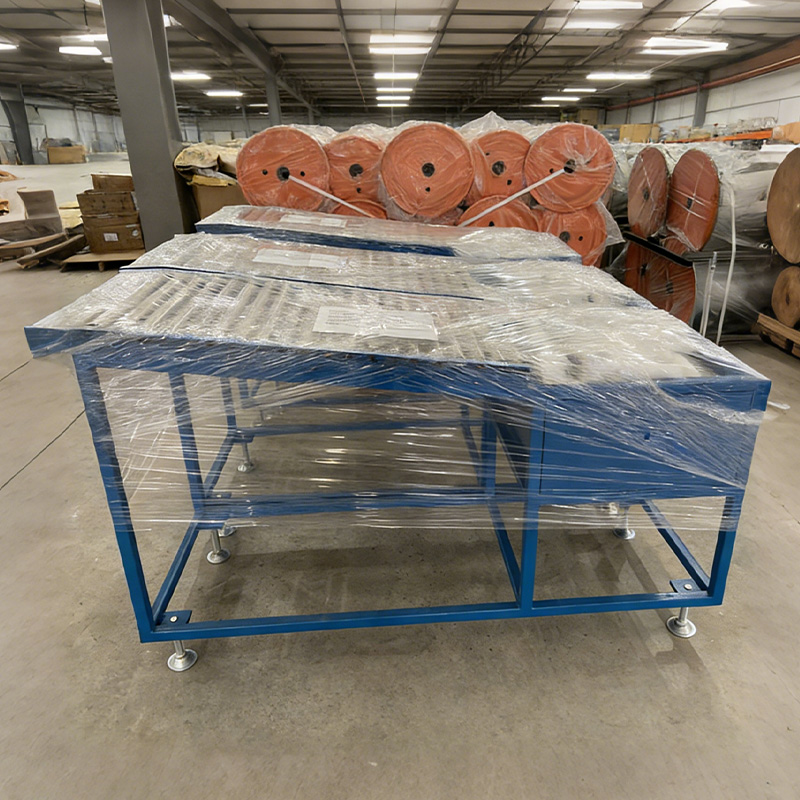
Cable Conveyor Belt Systems
How the System Improves Cable Production Workflows
Wire and cable production involves multiple stages, including conductor processing, insulation extrusion, cooling, marking, coiling, take-up, packaging, inspection, and storage. Each stage can create a need for organized product movement. While the cable conveyor belt system is mainly intended for packaged goods transfer, it can become an important connection between the production line and the final manual handling process.
After a package has been completed, it must usually be moved away from the production machine. If this task is performed manually, operators may need to interrupt their primary duties. The conveyor provides a dedicated path that can carry the package toward a manual handling station, where personnel can perform the next required operation.
This arrangement can improve workflow in several ways. First, it separates production from final handling. The production machine can continue operating while the product moves along the conveyor. Second, it reduces the number of unnecessary transport actions. Third, it helps establish a consistent location for inspection, sorting, and storage preparation.
A conveyor can also help synchronize different operating areas. For example, the output of a coiling or packaging machine may be transferred to a station where workers check package appearance, confirm labels, and place products into a shipping arrangement. By connecting these areas, the conveyor helps reduce waiting and unnecessary walking.
In a larger facility, several conveyors may be arranged to serve different machines or production zones. Each conveyor can be planned according to the available floor space, transfer distance, product size, and required handling speed. This makes the system adaptable to both compact workshops and more structured production facilities.
Advantages Over Conventional Manual Carrying
Manual carrying is easy to begin because it does not require dedicated equipment. However, it becomes less efficient as production volume increases or as packages become heavier, larger, or more frequent. A conveyor system offers several practical advantages over relying entirely on manual transport.
Lower Labor Intensity
The most direct benefit is a reduction in repetitive lifting, pushing, and carrying. Operators can spend more time on inspection, packing verification, equipment observation, and other tasks that require attention. Reducing repeated physical movement can also support a more sustainable working environment.
More Consistent Material Flow
A conveyor provides a stable route between the production area and the manual handling station. Products are less likely to be left in random locations or moved through irregular paths. This consistency supports clearer production planning and easier workplace management.
Reduced Handling Steps
Every additional handling step creates an opportunity for product damage, misplacement, or delay. By moving packages directly from the production location to the designated handling point, the system can reduce unnecessary transfers. Fewer handling steps may be especially beneficial for carefully packaged cable products or products that must retain a specific orientation.
Improved Use of Factory Space
A planned conveyor route can help organize the relationship between machinery, operators, and finished goods. Instead of requiring open space for repeated carrying routes, the system creates a dedicated material flow path. When properly arranged, this may help improve the use of available floor space and reduce product accumulation around machines.
Support for Energy and Cost Control
The stated purpose of the transmission platform is to save energy and labor costs. By optimizing material flow and reducing unnecessary handling, the system can contribute to lower operating expenditure. The economic benefit depends on the production volume, transfer distance, operating schedule, product weight, and selected configuration, but the principle is clear: a better-organized transfer process can reduce avoidable resource consumption.
| Handling method | Typical strength | Best suited for | Operational consideration |
|---|---|---|---|
| Manual carrying | Simple to start | Very low output or temporary movement | Higher labor intensity and less consistent flow |
| Manual roller transmission | Flexible and easy to control | Small batches and variable product handling | Requires operator guidance |
| Automatic track transmission | Consistent and efficient movement | Regular production and repeated transfer tasks | Requires suitable layout and operating coordination |
| Combined transmission platform | Flexible operation across different conditions | Factories with mixed production requirements | Configuration should match product and workflow requirements |
Product Advantages in Comparison with Single-Function Conveyors
Many conventional conveyor solutions are designed around a single operating method. A fully automatic conveyor can provide efficient movement, but it may be less convenient for small batches, temporary product changes, or manual intervention. A basic roller conveyor is flexible, but it may require more operator effort and may not provide the same consistency for continuous production.
The dual transmission concept addresses both requirements. Automatic track transmission supports stable and repeated movement, while manual roller transmission supports flexible control. This makes the system suitable for manufacturers whose production schedule changes between high-volume and small-batch work.
Another advantage is the focus on packaged goods transfer rather than a generic conveyor application. The system is intended to connect production output with a manual handling location. This application-specific orientation allows the layout and operating logic to be considered in relation to cable manufacturing activities such as coiling, packaging, checking, and dispatch preparation.
The system can also provide a practical balance between automation and human involvement. Not every factory needs complete automation at every stage. Some operations still require an employee to check package condition, confirm information, or make a handling decision. By automating the repetitive transfer section while retaining a manual handling point, the conveyor supports a more realistic and cost-conscious production model.
Compared with relying on forklifts for short-distance movement, a fixed conveyor route can be more direct and more suitable for frequent repetitive transfer. It can reduce the need for vehicle traffic around production equipment and may help maintain a cleaner production area. Compared with carrying packages by hand, it can reduce physical effort and improve process repeatability.
These advantages are most valuable when the system is integrated into a complete workflow rather than installed as an isolated machine. The conveyor should be positioned so that products can be received easily from the production equipment and delivered conveniently to the next handling stage.
Manufacturing and Engineering Strengths
Shanghai Yessjet Precise Machinery Co., Ltd. supplies wire and cable machinery, cable production line solutions, coiling equipment, pay-off equipment, take-up equipment, packaging equipment, intelligent robot stackers, and accessory equipment. This broader product background is important because a conveyor system used in a cable factory must often work alongside other machines.
A supplier with experience across the wire and cable production process can better understand the relationship between extrusion, take-up, coiling, packaging, and final handling. The conveyor can therefore be considered as part of a complete production solution rather than as an independent transfer device.
Application-Based Engineering
Effective conveyor manufacturing begins with understanding the application. Important factors include the type of packaged goods, package dimensions, package weight, transfer distance, production output, available floor space, operator position, and the required handling sequence. These factors influence the structure, transmission method, working height, route, and interface arrangement.
For example, a line serving a continuous packaging operation may benefit from automatic track transmission. A workshop handling several cable sizes in small batches may prefer manual roller transmission. A mixed production area may use a combination of both. Engineering the system around the real production condition helps prevent the common problem of selecting equipment based only on general specifications.
Integration with Cable Machinery
Because the company provides a range of cable machinery, the conveyor can be evaluated in relation to upstream and downstream equipment. A conveyor located after a coiling machine may need to receive packages at a suitable height and position. A conveyor serving a packaging machine may need to maintain adequate clearance for operators and finished product inspection. A line connected to an intelligent robot stacker may require a controlled delivery position for stable downstream picking or stacking.
This system-level understanding can improve compatibility and reduce the risk of mismatched equipment. It also supports more efficient planning for customers seeking a cable production turnkey solution.
Practical Manufacturing Process
A reliable conveyor system depends on controlled manufacturing from design through assembly. A typical production process includes application review, layout planning, mechanical design, component preparation, frame fabrication, transmission platform assembly, electrical or control integration where required, inspection, and final testing.
During frame fabrication, dimensional accuracy is important because alignment affects product movement and operating stability. The transmission surface must be assembled carefully so that packages can move smoothly without unnecessary resistance or deviation. Rollers, tracks, supports, and connecting structures should be checked as part of the complete assembly rather than treated as unrelated components.
Assembly quality also affects installation efficiency. Clearly arranged components, suitable connection points, and a logical structure can make the equipment easier to position and commission at the customer’s site. A well-organized manufacturing process reduces avoidable adjustment work and supports more reliable startup.
Inspection and Functional Testing
Before delivery, the system should be inspected for structural integrity, transmission smoothness, operating safety, and suitability for the intended packaged goods. Testing may include checking the movement of representative packages, observing transfer stability, confirming the operation of the automatic track, and verifying the usability of the manual roller platform.
The objective of testing is not only to confirm that the conveyor moves. It is also to verify that the transfer process is practical for operators. The package should arrive at a usable position, the route should be clear, and the system should support the planned manual handling activity.
Where the conveyor is integrated with other machinery, interface checks are especially important. The equipment should be reviewed in relation to product discharge height, package direction, machine access, operator movement, and downstream receiving conditions.
Design Considerations for a Reliable Installation
Product Characteristics
Product characteristics are the foundation of conveyor selection. Cable packages may differ in size, weight, shape, wrapping method, and surface condition. Some packages may be rigid cartons, while others may be flexible bags or wrapped coils. The transmission platform should be selected and arranged according to the actual product range.
The system should also consider whether packages require a particular orientation. If labels must remain visible or if products must arrive in a certain direction, the conveyor route and operator station should support that requirement. Products that are unstable or irregularly shaped may require additional guidance or a suitable support arrangement.
Transfer Distance and Layout
The distance between the production area and the manual handling station determines the required conveyor length and layout. A straight route is often simple and efficient, but the factory may require a direction change, a gap between machines, or a route around structural obstacles.
During planning, the conveyor should not block emergency access, routine maintenance areas, electrical panels, or operator walkways. The route should provide enough room for safe loading and unloading. Good layout planning is essential because even a technically capable conveyor can become inconvenient if placed in a difficult operating position.
Operating Frequency
Production frequency helps determine whether automatic or manual transmission is more suitable. For regular, repeated output, automatic track transmission can reduce the need for operator involvement. For irregular output or occasional movement, manual roller transmission may be more economical and easier to manage.
In many real factories, the best solution is not determined by average production alone. A production area may operate at high output during one shift and handle small orders during another. A flexible transmission platform can help accommodate these changes without requiring a completely different material handling system.
Operator Interaction
The conveyor should be designed around the people who use it. Operators need convenient access to the product, clear visibility, and enough space to perform inspection or packing tasks. The delivery position should minimize awkward bending, stretching, or repeated turning.
Manual roller transmission is especially dependent on good operator positioning. If the rollers are too high, too low, or difficult to access, the flexibility of the system will be reduced. Similarly, automatic track transmission should deliver products to a point where the operator can receive and process them efficiently.
Maintenance Access
Routine maintenance is easier when transmission components and structural connections can be inspected without dismantling large sections of the system. The installation should provide access to areas that may require cleaning, adjustment, lubrication, or replacement during the service life of the equipment.
A practical design balances compactness with maintainability. Reducing the footprint is useful, but not if it makes routine inspection unnecessarily difficult. Manufacturers should discuss maintenance expectations during the project planning stage.
Energy and Labor Efficiency
The conveyor system is intended to improve material flow while saving energy and labor costs. Labor efficiency is achieved by reducing manual carrying and allowing personnel to focus on designated handling tasks. Instead of repeatedly transporting packages from one production location to another, workers can remain closer to the inspection, sorting, or packaging station.
Energy efficiency is closely connected to the operating method and production requirement. Automatic track transmission can provide controlled movement for regular output, while manual roller transmission avoids the need to operate an automatic mechanism when the production volume is low or the transfer is occasional. This ability to select the operating mode can help avoid using a higher-energy solution than the application requires.
Cost control also comes from reducing process waste. When products follow a defined route, fewer packages may be misplaced, delayed, or moved multiple times. Better organization can reduce waiting time and help operators identify the location of products more easily.
The actual return on investment will depend on factors such as labor costs, daily operating hours, product volume, package weight, transfer distance, and the number of operators currently involved in movement. Even so, the system provides a clear mechanism for improving efficiency: it replaces repeated, non-value-added transportation with a planned transfer process.
Applications in Wire and Cable Manufacturing
Post-Coiling Product Transfer
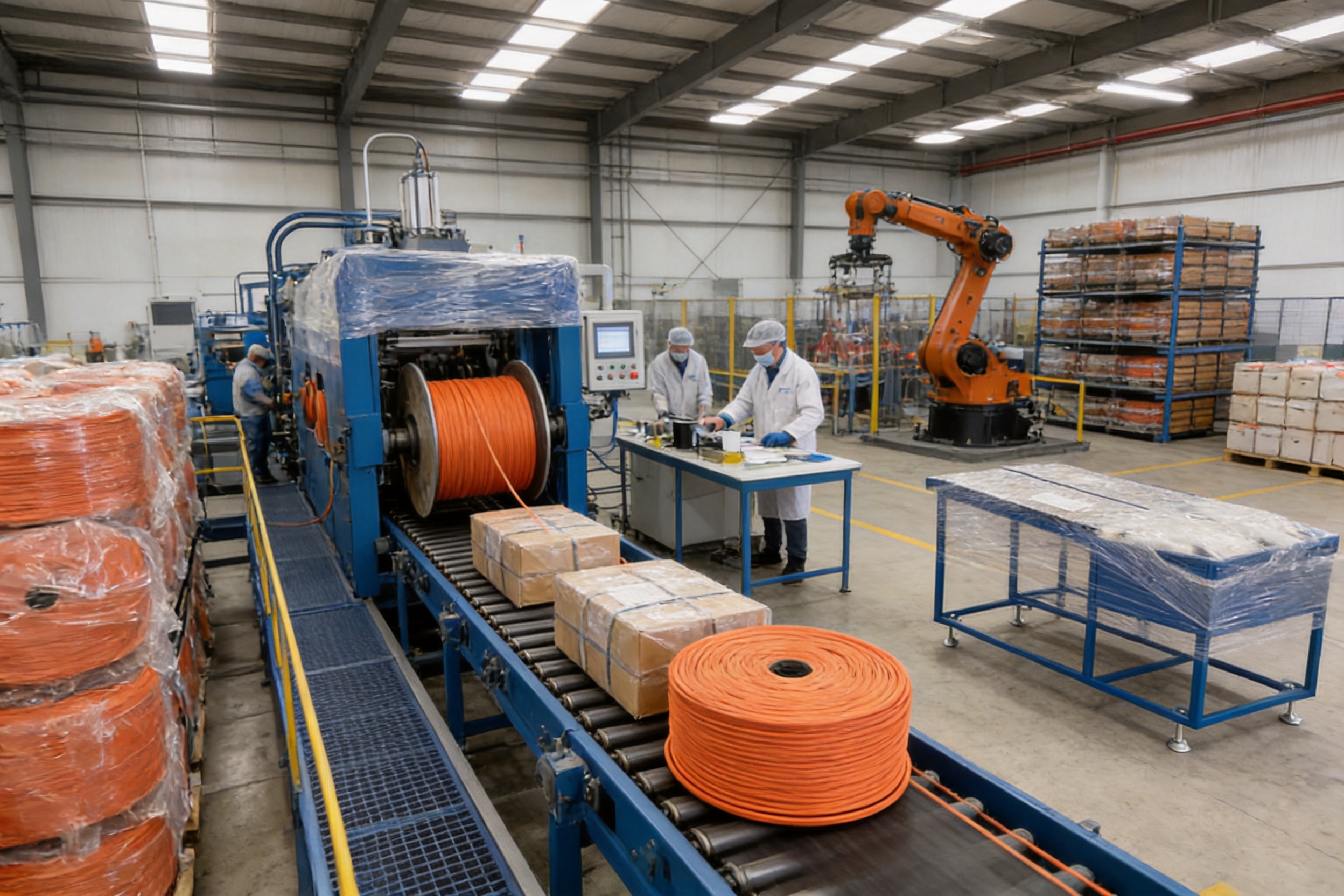
After cables are coiled, the finished coils may need to be wrapped, labeled, checked, or moved to a shipping preparation area. A conveyor can transfer the packaged coils from the coiling area to the next manual handling point, reducing congestion near the coiling machine.
Packaging Line Output
Packaging equipment may produce a steady stream of finished cable packages. Automatic track transmission can move these products away from the packaging station at a consistent rate. Operators at the receiving station can then inspect packaging quality, confirm product information, and prepare the packages for stacking or dispatch.
Small-Batch Cable Production
Small-batch production often involves frequent product changes and irregular output. Manual roller transmission can give operators direct control over the movement of each package. This can be useful when packages need to be inspected individually or grouped according to customer order.
Connection to Stacking Operations
Where a factory uses an intelligent robot stacker, the conveyor may serve as the transfer platform between packaging output and the robot’s receiving area. The conveyor can help deliver packages to a predictable position, allowing the downstream stacking process to operate more systematically. The exact interface should be determined according to product size, stacking requirements, and the robot system layout.
Finished Goods Handling
The conveyor can also support movement toward a designated finished goods area. By establishing a clear route, it can help separate production output from raw materials, work-in-process products, and maintenance traffic. This separation can improve inventory visibility and general factory organization.
Why Supplier Experience Matters
The performance of a conveyor system depends not only on the visible transmission platform but also on the supplier’s ability to understand the surrounding production process. A supplier focused on wire and cable machinery can evaluate the conveyor in the context of extrusion lines, coiling machines, pay-off equipment, take-up equipment, packaging systems, and robot stacking solutions.
This broader capability is valuable for customers that want to expand or modernize a complete cable production line. Instead of purchasing unrelated machines from multiple sources, a customer may work with one machinery partner to coordinate several production and handling stages. This can simplify technical communication and make it easier to develop a consistent production layout.
Shanghai Yessjet Precise Machinery Co., Ltd. presents itself as a wire and cable machinery manufacturer providing custom wire and cable production line solutions. Its product range includes both major production equipment and accessory equipment. The cable conveyor belt system fits into this range by addressing the material movement requirements that appear between production, packaging, and manual handling operations.
A machinery supplier with a broad portfolio can also support future expansion. A customer may begin with a conveyor for one production area and later add coiling, packaging, stacking, or other equipment. Designing the original transfer route with future development in mind can help reduce the need for major modifications later.
Customization and Turnkey Production Solutions
Every cable factory has different building dimensions, production capacities, product types, and labor arrangements. For this reason, a conveyor system should be evaluated as a configurable solution rather than a one-size-fits-all product.
Customization may involve the transmission method, platform length, operating height, product receiving position, delivery position, route arrangement, and relationship with upstream or downstream equipment. The customer may also require a specific combination of automatic track transmission and manual roller transmission to serve different areas of the same factory.
A turnkey production solution requires more than supplying individual machines. It involves considering how material enters the line, how it is processed, how it is packaged, how it is transferred, and how it is finally stacked or prepared for shipment. The conveyor is an important part of this chain because it connects production output to human or robotic handling.
During the planning stage, customers should provide information about product dimensions, package weight, production speed, operating hours, available floor space, transfer distances, and the desired level of automation. Clear application information allows the supplier to recommend a more suitable configuration and avoid unnecessary equipment capacity.
Customization should also consider future product changes. Cable manufacturers may produce different conductor sizes, insulation materials, package lengths, and order quantities. A flexible conveyor arrangement can provide greater long-term value if it can support the expected product range without extensive alteration.
Recommended Project Evaluation Process
Step One: Define the Material Flow
The first step is to identify where packaged goods are produced, where they must go, and which operations occur between those locations. The material flow should be mapped from the production machine to the manual handling station or downstream equipment.
Step Two: Record Product Information
Product dimensions, package weight, package shape, wrapping method, and expected output should be recorded. This information helps determine whether automatic track transmission, manual rollers, or a combined platform is most appropriate.
Step Three: Review the Factory Layout
The available floor area, machine positions, walkway requirements, maintenance access, and operator locations should be reviewed. A conveyor route should support production without creating new obstructions.
Step Four: Select the Operating Mode
Automatic track transmission is generally suitable for consistent output and repeated movement. Manual roller transmission is generally suitable for flexible, intermittent, or small-batch work. A combined solution may be selected where the production area includes both conditions.
Step Five: Confirm Interfaces
The receiving and delivery points should be checked carefully. The conveyor must work with the output height and direction of the upstream machine and provide a suitable handover point for operators or downstream equipment.
Step Six: Plan Testing and Acceptance
Before final acceptance, representative packages should be used to verify movement, transfer stability, operator access, and overall workflow. Testing under realistic conditions can reveal layout or handling issues that may not be visible during an empty-running test.
Operational and Maintenance Practices
Regular cleaning helps maintain smooth product movement and keeps the working area organized. Packaging materials, labels, dust, and other production debris should not be allowed to accumulate on or around the transmission platform.
Operators should observe whether packages move smoothly, whether products remain stable, and whether unusual noise or resistance appears during operation. Early identification of abnormal conditions can help prevent more serious interruptions.
Mechanical connections, rollers, tracks, supports, and other moving or load-bearing components should be inspected according to the equipment’s maintenance requirements. Any adjustment or service work should be performed by trained personnel using appropriate safety procedures.
The system should also be used within its intended application range. Overloading the platform, placing unstable packages on an unsuitable surface, or using the conveyor for products outside the agreed conditions may reduce performance and create safety risks.
Clear operator instructions are valuable even for simple manual roller transmission. Personnel should understand loading direction, safe hand positions, package limits, emergency procedures, and the correct method for clearing a stalled product.
Safety and Workplace Organization
A conveyor should be incorporated into the factory’s wider safety plan. Walkways should remain clear, and operators should have enough room to stand and move around the receiving and delivery points. The system should not interfere with access to emergency exits or essential equipment.
Because the conveyor reduces the need for manual carrying, it may help lower the risk associated with repetitive lifting and awkward transport. However, operators may still need to handle products at the final station. The working height and package presentation should therefore be considered as part of ergonomic planning.
Automatic operation should include appropriate operating controls and procedures. Operators should know how to start, stop, and respond to abnormal conditions. Manual rollers should also be arranged so that packages can be controlled safely, especially when the products have substantial weight or momentum.
A clean and clearly organized conveyor route makes it easier to identify product movement and detect problems. Good housekeeping is therefore both a safety measure and an efficiency measure.
Value for Different Factory Sizes
Small and medium-sized cable manufacturers may benefit from the system because it provides a practical improvement without requiring complete factory automation. Manual roller transmission can be used where output is limited, while automatic track transmission can be introduced in areas with more regular demand.
Larger manufacturers may use the system as part of a more extensive production line. Multiple conveyors can connect packaging stations, inspection areas, robotic stacking equipment, and finished goods locations. In this environment, the value of the system comes from its ability to support a structured and repeatable material flow.
Contract manufacturers and factories with frequently changing orders may also appreciate the flexibility of the two transmission modes. The same general handling concept can support different product batches and operating schedules, provided the conveyor is configured for the relevant package range.
For companies planning a new cable production facility, including material handling during the initial layout stage can prevent later congestion. For existing factories, the conveyor may provide a focused upgrade to one of the most repetitive and labor-intensive transfer tasks.
Questions and Answers
What products can the cable conveyor belt system transfer?
The system is intended for packaged goods produced in or around wire and cable manufacturing operations. Depending on the selected configuration, these goods may include packaged coils, cable packages, cartons, wrapped products, and similar finished or semi-finished items. The exact product range should be confirmed through application review.
What is the difference between automatic track transmission and manual roller transmission?
Automatic track transmission moves products through a powered or controlled track with limited continuous operator effort. Manual roller transmission allows operators to push or guide products across rollers. Automatic transmission is suitable for regular, repeated output, while manual roller transmission is suitable for flexible or small-batch handling.
Can both transmission modes be used in one production project?
Yes. The two modes can be considered as complementary options. A factory may use automatic track transmission after a high-output packaging machine and manual roller transmission in a small-batch inspection or sorting area. The best arrangement depends on the production layout and handling requirements.
How does the conveyor reduce labor costs?
It reduces the amount of repeated carrying and transport work performed by operators. Personnel can remain at the designated manual handling station instead of walking between production equipment and the handling area. The actual labor saving depends on product volume, transfer distance, package weight, and the previous handling method.
Can the system be integrated with cable production machinery?
It can be planned as an accessory system for cable extrusion, coiling, packaging, take-up, and stacking workflows. Integration should be evaluated according to the output position of the upstream machine, the required delivery position, product characteristics, and the desired level of automation.
Is the system suitable for small-batch production?
Yes. Manual roller transmission is particularly suitable for small-batch work because it allows operators to control the movement of each package. It can also support production environments with frequent product changes or irregular output.
Is the system suitable for continuous production?
Yes. Automatic track transmission is intended to support consistent and efficient movement in production environments with regular output. The final configuration should be selected according to the expected package flow and operating conditions.
What information should be provided when requesting a quotation?
Useful information includes product type, package dimensions, package weight, production output, transfer distance, required conveyor height, factory layout, operating mode, and the location of upstream and downstream equipment. Photographs, drawings, and a simple layout plan can also help the supplier evaluate the application.
Can the conveyor support future production expansion?
Potentially, depending on the original design and available capacity. Customers planning future expansion should discuss expected product changes, higher output, additional machines, and possible extension routes during the initial engineering stage.
How does this system compare with using forklifts?
A conveyor is intended for repeated and predictable transfer along a fixed route, while forklifts are more flexible for general warehouse movement. For short-distance movement between production and manual handling stations, a fixed conveyor may reduce vehicle traffic and provide a more direct workflow. The best choice depends on the factory layout and logistics plan.
Conclusion
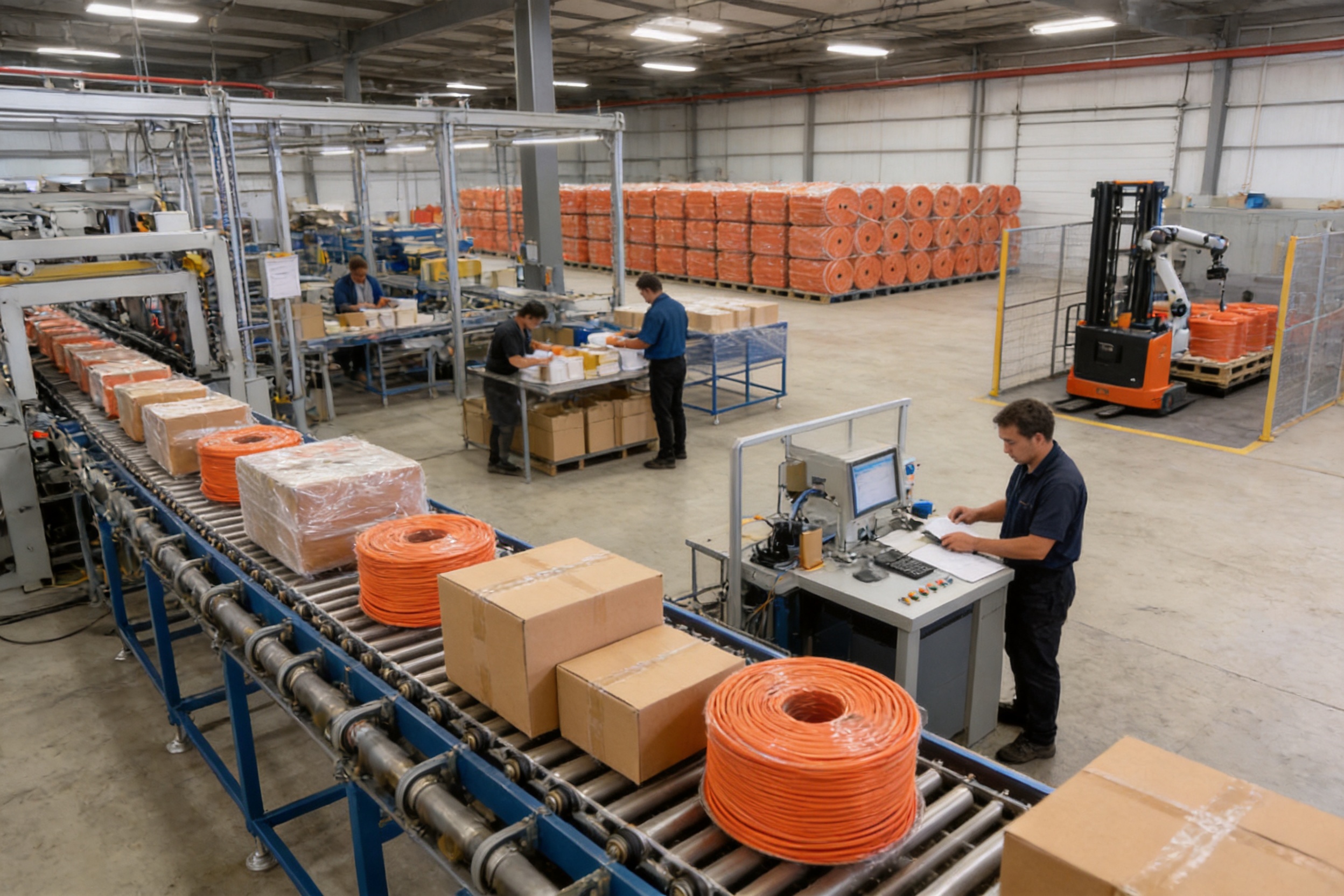
Cable conveyor belt systems provide a practical way to improve the transfer of packaged goods in wire and cable production environments. By connecting production locations with designated manual handling stations, the system reduces unnecessary carrying, supports better material flow, and helps lower labor intensity.
The combination of automatic track transmission and manual roller transmission is a central product advantage. Automatic movement supports regular and efficient production, while manual rollers provide flexibility for small batches, variable products, and operator-controlled handling. This dual-mode approach offers a balanced alternative to single-function conveyor equipment.
The system also gains value when supplied by a machinery manufacturer with experience in cable extrusion, coiling, take-up, pay-off, packaging, robot stacking, and accessory equipment. This broader engineering background supports better integration with existing or planned production lines and makes it possible to consider the conveyor as part of a complete cable production solution.
Through application-based design, controlled fabrication, careful assembly, functional testing, and practical installation planning, the conveyor can provide stable support for factory material handling. For manufacturers seeking to streamline packaged goods transfer, reduce repetitive labor, and improve production organization, this type of transmission platform is a useful step toward a more efficient and cost-conscious cable manufacturing workflow.
References
1. General principles of industrial material handling and conveyor system planning.
2. Wire and cable manufacturing process guidance covering extrusion, coiling, take-up, packaging, and finished goods handling.
3. Industrial ergonomics principles for reducing repetitive lifting, carrying, and manual transport tasks.
4. Production layout and workflow planning practices for manufacturing facilities.
5. Equipment maintenance principles for mechanical transmission platforms, rollers, tracks, and factory handling systems.
6. Shanghai Yessjet Precise Machinery Co., Ltd. product information for cable conveyor belt systems and related wire and cable machinery.