LANGUAGE
 中文简体
中文简体 русский
 Français
 Español
 Português
 عربى
عربى
Content
- 1 Why Circular Wire Coil Packaging Matters
- 2 Core Operating Principle
- 3 Main Features and Functional Advantages
- 4 Comparison with Manual and Conventional Wrapping Methods
- 5 Model Range and Technical Specifications
- 6 Applications in Wire and Cable Manufacturing
- 7 Manufacturing and Engineering Strengths
- 8 How the Machine Improves Production Efficiency
- 9 Product Quality and Packaging Appearance
- 10 Recommended Installation and Operating Workflow
- 11 Maintenance and Long-Term Performance
- 12 Safety Considerations
- 13 Choosing the Right Model
- 14 Integration with a Complete Cable Production Line
- 15 Company Manufacturing and Service Capabilities
- 16 Frequently Asked Questions
- 16.1 Is this machine fully automatic?
- 16.2 What products can be wrapped?
- 16.3 Which wrapping materials can be used?
- 16.4 How many product programs can be stored?
- 16.5 What is the largest listed model?
- 16.6 What is the smallest listed model?
- 16.7 Does the machine detect operating problems?
- 16.8 Can the machine be used with different coil sizes?
- 16.9 What should be checked before ordering?
- 16.10 How does the machine compare with manual wrapping?
- 16.11 Can the machine be integrated with other cable equipment?
- 17 Conclusion
- 18 References
- 19 Product: Auto-Wrapping Machine For Circular Object
Efficient packaging is an essential part of modern wire and cable production. After extrusion, cooling, testing, coiling, and take-up, the finished wire must be protected, organized, and prepared for storage or shipment. Manual wrapping can be slow, inconsistent, physically demanding, and difficult to standardize. An automatic circular object wrapping machine provides a practical solution by applying packaging material around wire coils and other circular products with controlled speed, repeatable tension, and reliable operating logic.
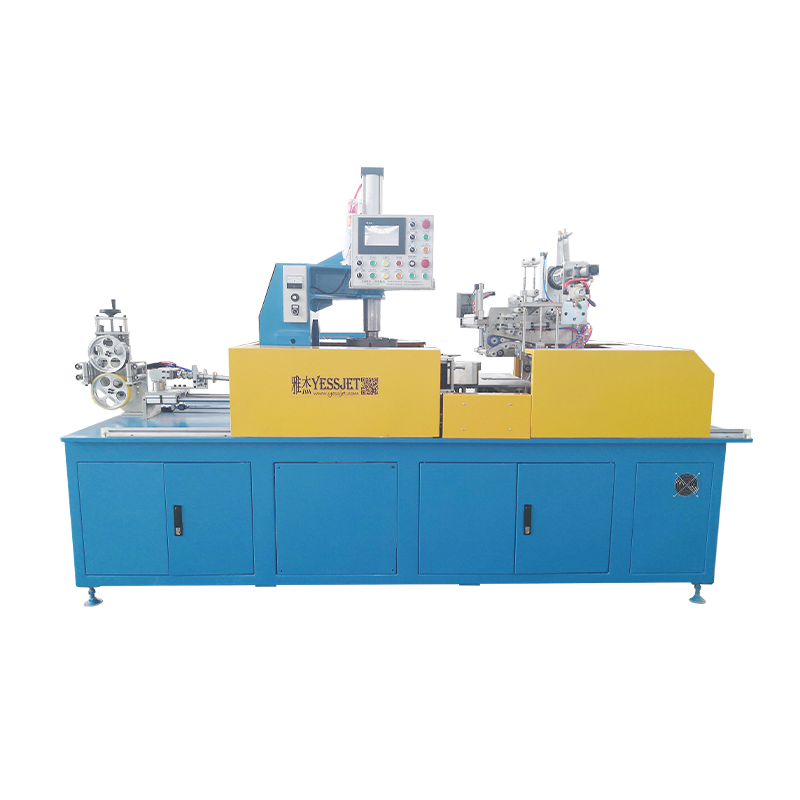
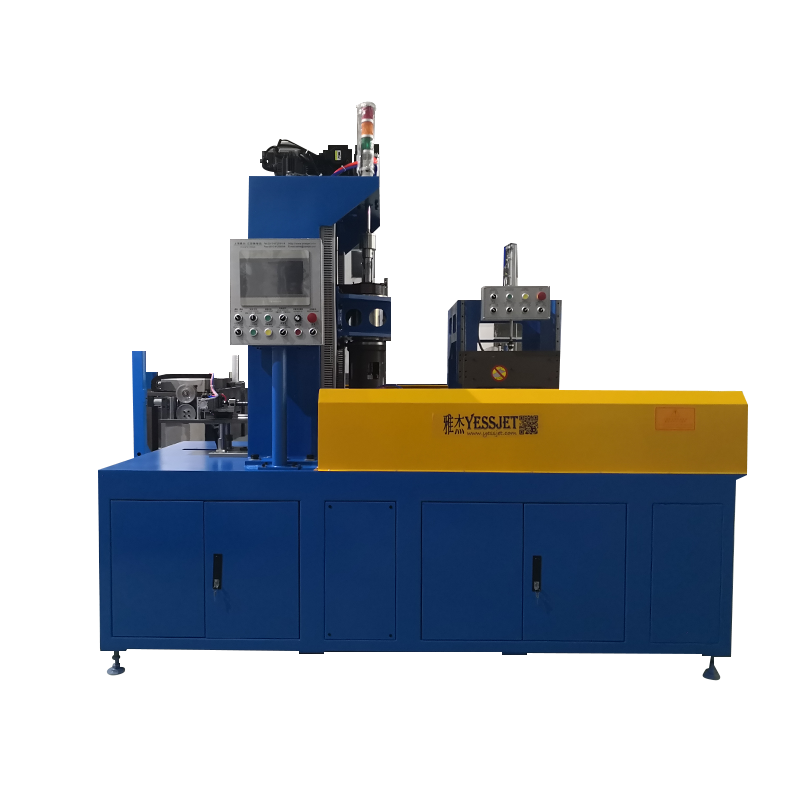
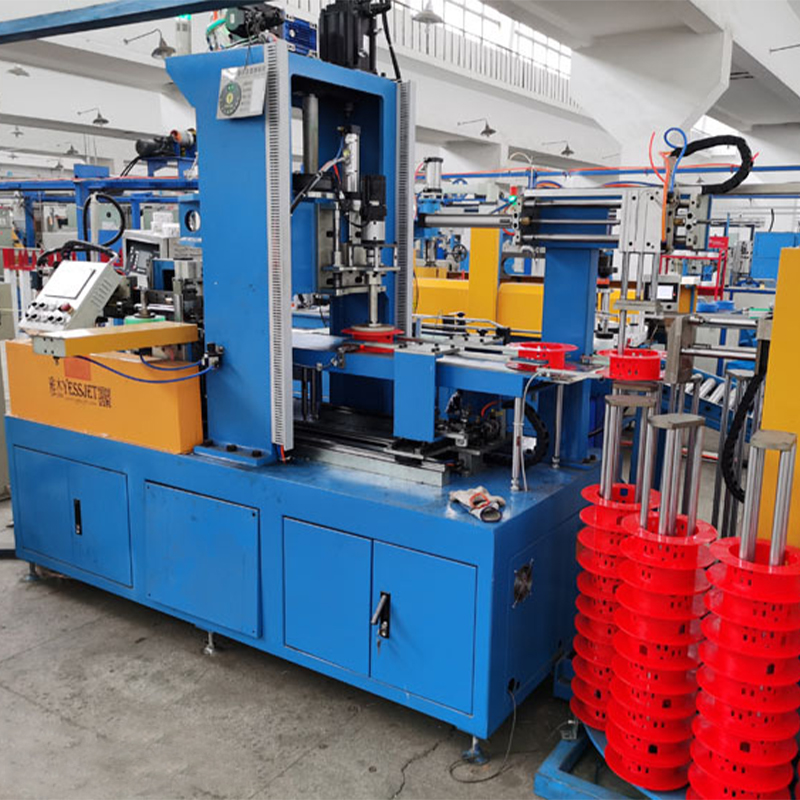
The Auto-Wrapping Machine for Circular Object is designed for manufacturers that need a productive and flexible packaging solution for circular objects. It is particularly suitable for wire coils made from products such as BV, BVR, RVV, UL electronic wires, flower wires, and other similar cables. The machine can use PVC film, PE film, PP woven band, or paper, depending on the required packaging appearance and protection level.
Although the equipment performs the wrapping process automatically, it is semi-automatic in terms of loading and unloading. The operator places the circular object onto the machine’s handling plate manually. After the coil is positioned, the wrapping cycle can be controlled through the machine interface. This operating method gives manufacturers a useful balance between automation, affordability, flexibility, and ease of implementation.
Manufactured by Shanghai Yessjet Precise Machinery Co., Ltd., the machine is part of a broader range of wire and cable production and packaging equipment. Its design reflects the practical requirements of cable factories: high throughput, stable operation, straightforward adjustments, protection of finished products, and compatibility with different coil dimensions.
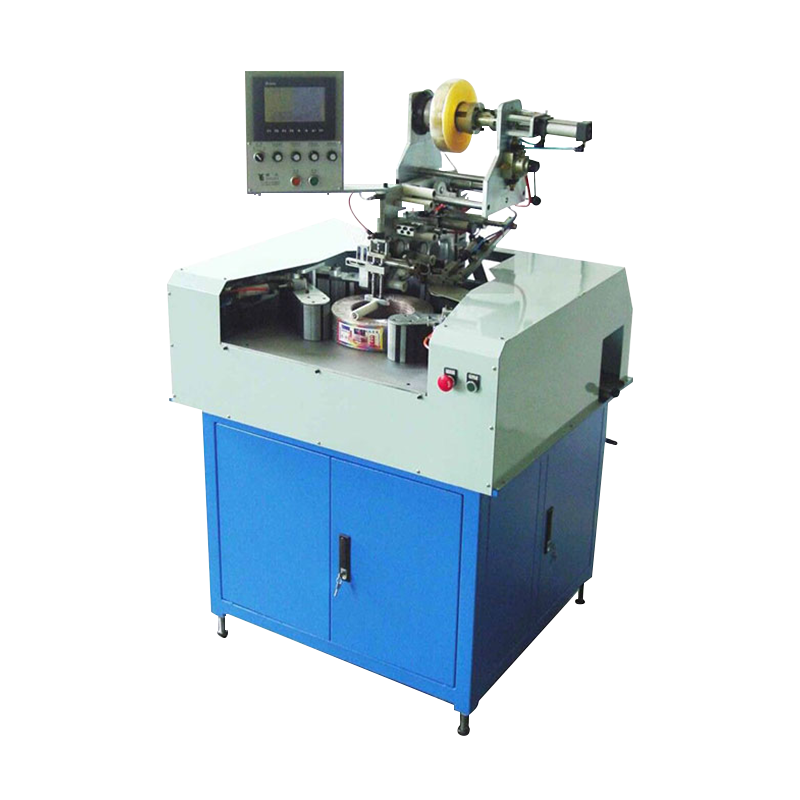
Auto-Wrapping Machine For Circular Object
Why Circular Wire Coil Packaging Matters
Wire and cable products are often manufactured continuously and then formed into coils for handling. Once a coil has been created, it must remain compact and stable. Without suitable packaging, the coil may loosen, become tangled, collect dust, suffer surface damage, or lose its intended shape during transport.
Packaging also communicates product quality. A clean and uniform wrapped coil is easier to stack, identify, store, and deliver. For distributors and end users, consistent packaging can make product handling simpler and reduce the possibility of damage before installation. In many markets, packaging is also used to display labels, product specifications, production information, or brand markings.
Manual wrapping methods can create several problems. Workers may apply different levels of tension from one coil to another. The overlap of the film may be irregular, and the final package may have loose edges or exposed sections. Repetitive manual work can also reduce productivity and increase operator fatigue. These problems become more serious when production volumes increase or when the manufacturer offers several coil sizes.
A mechanized wrapping process addresses these issues through controlled movement and programmable operation. The circular object is rotated smoothly while the packaging material is applied around its circumference. The result is a more consistent package, better use of material, and improved production rhythm.
Core Operating Principle
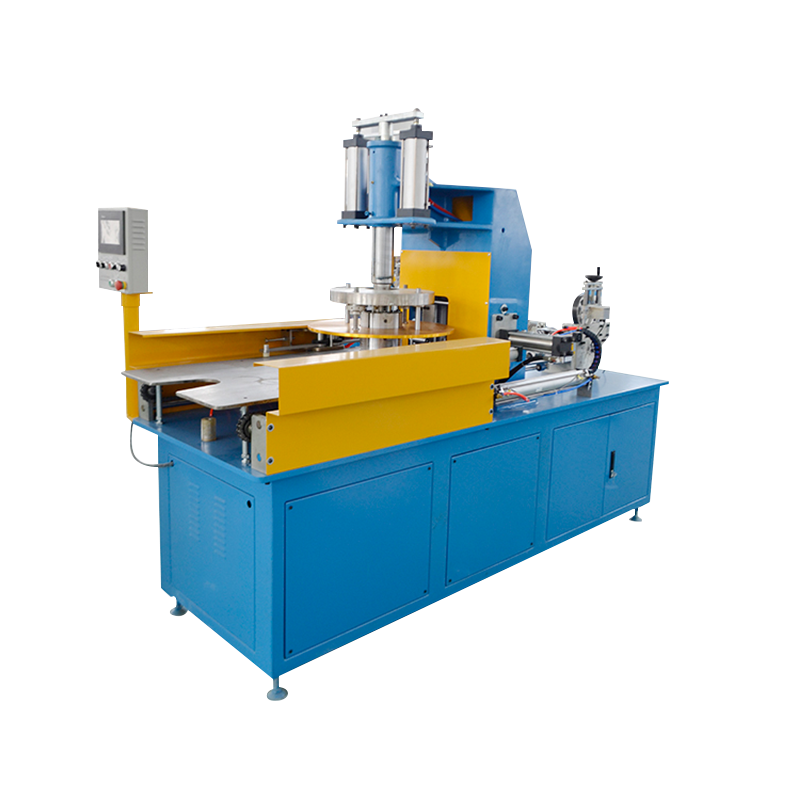
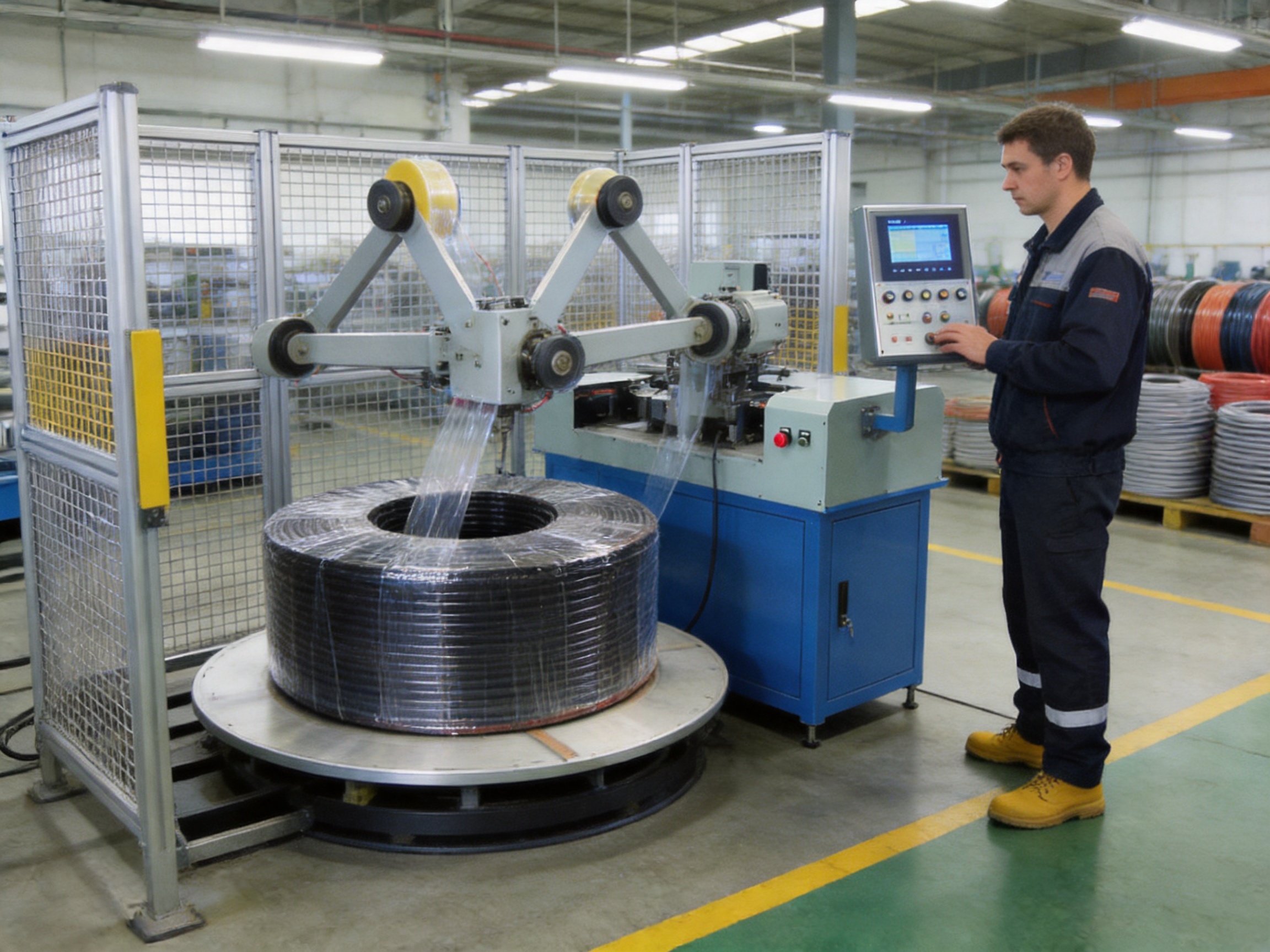
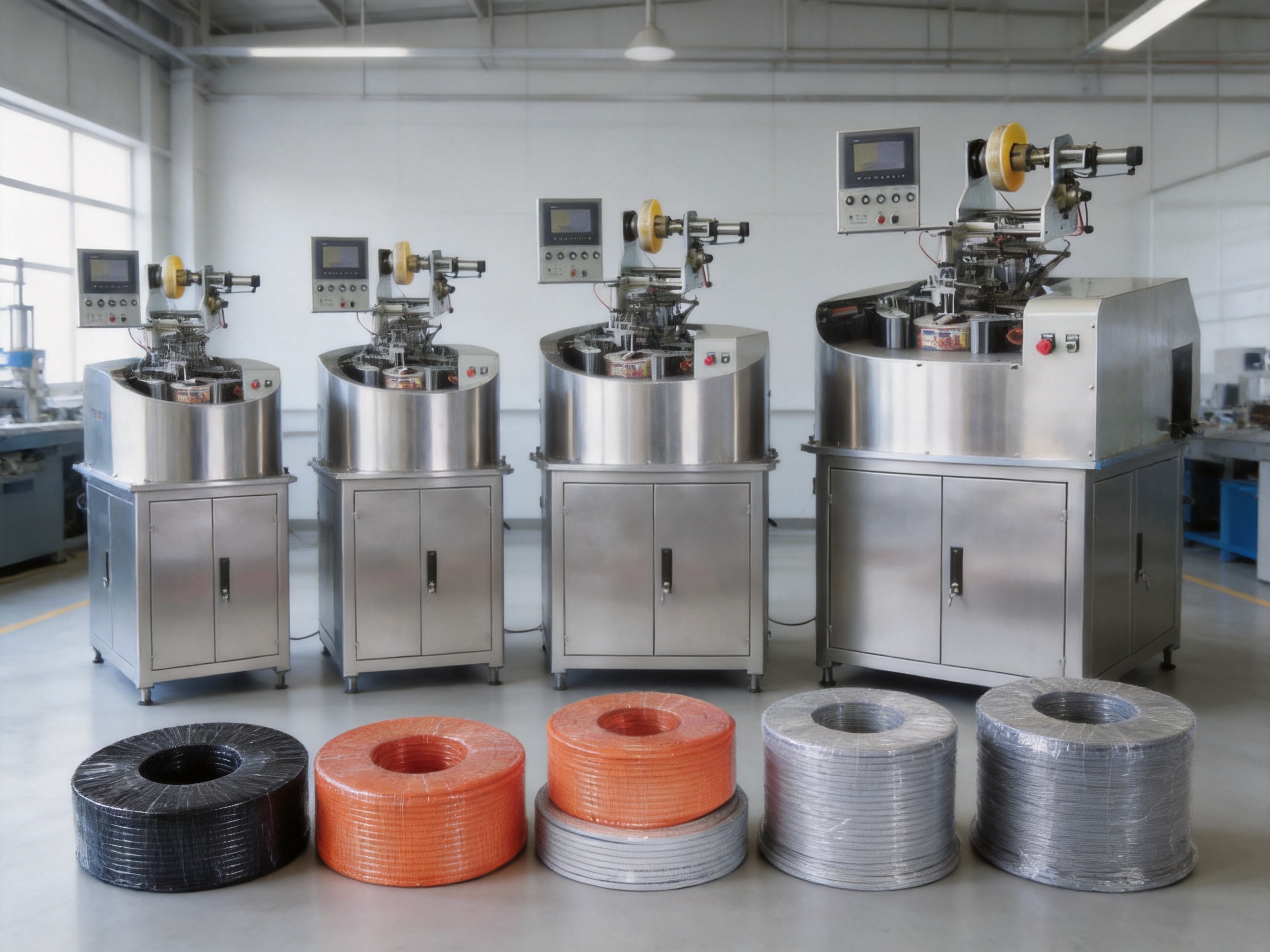
The machine is designed around a motor-driven carrier with four arms. After the operator places a circular object on the handling plate, the carrier rotates the product smoothly. At the same time, the film or other wrapping material is fed around the coil to create a continuous protective layer.
The operator can select or enter wrapping parameters through the screen touch graphic operation terminal. Up to 99 types of coil wrapping data can be entered and retained in the PLC memory. This feature is useful for factories that produce multiple cable specifications. Instead of adjusting every parameter manually for each order, the operator can select an appropriate stored program and make minor changes when necessary.
The wrapping cycle is controlled by the machine’s electrical and programmable logic system. Depending on the selected configuration, the control process can manage rotation, material feeding, wrapping duration, and other operating steps. Automatic error detection helps identify equipment abnormalities and sends an alarm to remind the operator to inspect the machine.
This design allows the machine to perform repetitive wrapping work with limited operator intervention. The worker remains responsible for loading the circular object, choosing the correct product program, checking the wrapping material, and removing the completed package. The machine performs the repetitive rotation and wrapping operation in a consistent manner.
Main Features and Functional Advantages
High-Speed Wrapping
The machine is designed for high-speed coil wrapping with PVC film, PE film, PP woven band, or paper. The actual production speed may vary according to coil dimensions, material thickness, required overlap, product weight, and the selected wrapping pattern. Even so, mechanized rotation is generally faster and more repeatable than manual wrapping.
High-speed operation is particularly valuable for cable manufacturers with continuous extrusion lines. A packaging machine that can keep pace with upstream production helps prevent finished coils from accumulating in intermediate storage areas. It can also reduce the time between final inspection and shipment.
Four-Arm Motorized Carrier
The four-arm carrier is one of the machine’s main mechanical features. Driven by a motor, it turns the coil smoothly during wrapping. Smooth rotation helps reduce sudden movement, which can otherwise cause material displacement, uneven tension, or instability in the product.
The carrier design is suitable for circular objects with different outside diameters and heights within the model range. It supports a controlled wrapping path while maintaining the object’s position during the cycle. This helps improve package appearance and reduces the likelihood of incomplete coverage.
Touchscreen Graphic Operation
The screen touch graphic operation terminal gives the operator a direct way to control the equipment. A visual interface is generally easier to understand than a system based only on mechanical switches or complex manual adjustments. Operators can view operating information, select stored recipes, and respond to alarms from a central control screen.
For factories with multiple shifts, a clear interface can reduce training time and limit operating mistakes. New operators can follow established parameter settings instead of relying entirely on personal experience. Experienced operators can also adjust the process more efficiently when a different coil specification is introduced.
Storage of 99 Wrapping Programs
The PLC memory can store up to 99 types of coil wrapping data. This is a significant advantage for production environments with a broad product mix. Different wires may require different wrapping widths, wrapping times, overlap patterns, or material selections.
Recipe storage improves changeover management. A production team can assign a program to a specific cable type, order, or coil dimension. When the same product is manufactured again, the stored data can be recalled rather than recreated from the beginning. This contributes to repeatability and helps reduce setup time.
Automatic Error Detection and Alarm Notification
Automatic error detection helps the machine identify abnormal operating conditions and notify the operator through an alarm. This function does not eliminate the need for inspection or maintenance, but it improves awareness and can shorten response time when a problem occurs.
Early notification is useful for issues such as material feeding irregularities, operating interruptions, or other equipment conditions recognized by the control system. By giving the operator a clear warning, the machine supports more organized troubleshooting and helps prevent unattended faults from continuing for long periods.
Material Flexibility
The machine can use PVC film, PE film, PP woven band, or paper as wrapping materials. This flexibility enables manufacturers to select packaging according to product requirements, customer expectations, cost targets, and environmental considerations.
PVC and PE films can provide a smooth and visually clean package. PP woven band may be selected when a different level of strength or appearance is preferred. Paper can be useful when a paper-based packaging approach is required. The applicable material width and thickness depend on the selected machine model and the desired wrapping process.
Comparison with Manual and Conventional Wrapping Methods
The main advantage of a mechanized wrapping machine over manual packaging is consistency. A worker may wrap a coil effectively, but maintaining the same quality across hundreds or thousands of coils is difficult. The machine repeats the programmed motion and applies a controlled wrapping process with less variation.
Compared with basic wrapping equipment that offers only simple start-and-stop functions, this machine provides recipe storage, touchscreen control, motorized four-arm rotation, and automatic error notification. These functions are especially useful when a factory handles multiple coil sizes or needs to maintain a stable packaging standard across different shifts.
Compared with fully automatic systems that include robotic loading and unloading, this equipment has a simpler semi-automatic structure. The operator manually places the object on the handling plate. This can reduce system complexity, floor-space requirements, initial investment, and integration demands. For many small and medium-sized cable manufacturers, manual loading combined with automatic wrapping is an appropriate level of automation.
The machine can therefore occupy a practical position between labor-intensive packaging and a fully integrated robotic packaging cell. It automates the most repetitive part of the work while retaining operator control over product placement and inspection.
| Comparison Item | Manual Wrapping | Basic Wrapping Equipment | Auto-Wrapping Machine for Circular Objects |
|---|---|---|---|
| Wrapping consistency | Depends heavily on operator skill | Improved but may have limited adjustment | Programmable and repeatable |
| Product changeover | Manual adjustment for each product | Usually limited settings | Up to 99 stored wrapping programs |
| Operator workload | High and repetitive | Moderate | Loading, program selection, and supervision |
| Rotation method | Manual or inconsistent | May use a simple drive system | Motor-driven four-arm carrier |
| Error awareness | Relies on visual observation | May provide limited indication | Automatic error detection and alarm notification |
| Material options | Flexible but labor-intensive | May be restricted by design | PVC, PE film, PP woven band, or paper |
| Automation level | Manual | Partially mechanized | Semi-automatic wrapping with manual loading |
Model Range and Technical Specifications
The product family includes five models: P100, P120, P140, P180, and P210. The models cover different circular object heights, outside diameters, inside diameters, and maximum coil weights. Selecting the correct model is important because the coil must fit safely within the equipment’s mechanical range.
| Model | Object Height (mm) | Outside Diameter (mm) | Inside Diameter (mm) | Maximum Coil Weight | Wrapping Material | Material Width (mm) | Material Thickness (mm) |
|---|---|---|---|---|---|---|---|
| P100 | 50–100 | 180–460 | 120 | 35 kg | PVC or PE film | 40 | 0.04–0.07 |
| P120 | 70–120 | 220–600 | 140 | 40 kg | PVC or PE film | 45 | 0.04–0.07 |
| P140 | 70–140 | 300–600 | 180 | 60 kg | PVC or PE film | 50 | 0.04–0.07 |
| P180 | 90–180 | 320–600 | 180 | 80 kg | PVC or PE film | 60 | 0.04–0.07 |
| P210 | 100–210 | 400–800 | 250 | 100 kg | PVC or PE film | 80 | 0.04–0.07 |
The P100 model is suitable for smaller and lighter coils, with an object height range of 50 to 100 millimeters, an outside diameter range of 180 to 460 millimeters, and a maximum coil weight of 35 kilograms. Its specified packing material width is 40 millimeters.
The P120 model expands the outside diameter range to 220–600 millimeters and supports coils up to 40 kilograms. It is suitable for applications that require a moderate increase in product size while retaining a compact machine format.
The P140 model can handle object heights from 70 to 140 millimeters, outside diameters from 300 to 600 millimeters, and maximum coil weights of 60 kilograms. Its 50-millimeter material width provides broader coverage than the smaller models.
The P180 model is designed for larger or heavier coils. It supports object heights from 90 to 180 millimeters, outside diameters from 320 to 600 millimeters, and coil weights up to 80 kilograms. The corresponding packing material width is 60 millimeters.
The P210 is the largest listed model. It supports object heights from 100 to 210 millimeters, outside diameters from 400 to 800 millimeters, inside diameters of 250 millimeters, and coil weights up to 100 kilograms. Its specified packing material width is 80 millimeters.
All listed models use wrapping materials with a thickness range of 0.04 to 0.07 millimeters. The correct film or band should be selected according to the product surface, desired package strength, wrapping appearance, and production requirements.
Applications in Wire and Cable Manufacturing
BV and BVR Wires
BV and BVR wires are widely used in electrical installations and building applications. After production, these wires may be gathered into circular coils for retail distribution or project delivery. A consistent wrapping process helps maintain the coil shape and protects the wire surface from dust and handling damage.
RVV Cables
RVV cables are commonly used for power, control, and general electrical connection applications. Depending on conductor size and cable construction, RVV products can be produced in different coil dimensions. The range of machine models allows manufacturers to match the wrapping equipment to the relevant coil size.
UL Electronic Wires
UL electronic wires are frequently supplied in organized coils for equipment manufacturers and electrical assembly operations. Their packaging often needs to be clean, compact, and easy to identify. A programmed wrapping operation can support a consistent appearance across different product batches.
Flower Wires and Other Circular Products
Flower wires and similar products may also be gathered into circular forms before shipment. The machine is not limited only to one cable category. Its broader application is circular objects that fall within the relevant model’s height, diameter, and weight range.
Before purchasing, users should confirm the object shape, coil rigidity, surface condition, weight distribution, and required packaging material. These factors influence the appropriate model and the most suitable operating parameters.
Manufacturing and Engineering Strengths
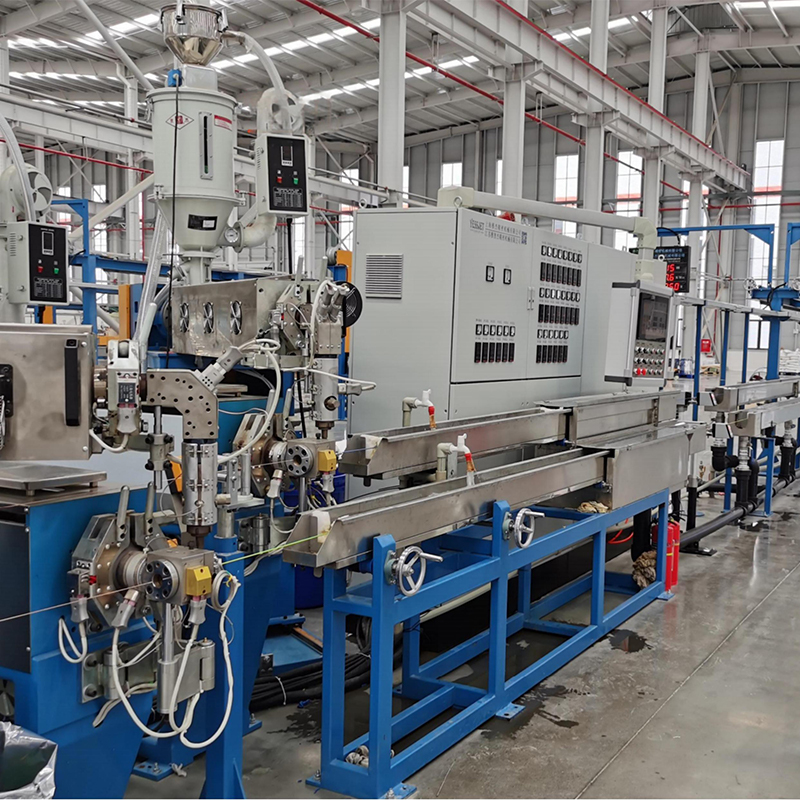
Shanghai Yessjet Precise Machinery Co., Ltd. focuses on wire and cable machinery, including extrusion lines, coiling equipment, pay-off systems, take-up systems, accessory equipment, packaging machinery, and intelligent stacking solutions. This product coverage gives the company a broader understanding of the production environment in which the wrapping machine will operate.
A packaging machine is more valuable when it can be evaluated as part of the complete manufacturing process. Cable production involves coordinated stages. The extrusion line determines the finished cable characteristics, the coiling machine forms the product, the take-up system manages winding, and the packaging machine prepares the coil for storage or shipment. Experience across these stages can support more practical equipment selection and integration.
Process-Oriented Equipment Design
The machine is designed around a clear industrial process: manually position the circular object, select or set the wrapping program, start the cycle, monitor the operation, and remove the finished package. A process-oriented design reduces unnecessary complexity and makes the machine easier to incorporate into existing production areas.
The semi-automatic structure also allows manufacturers to retain visual quality control. The operator can check the coil before wrapping, confirm that the object is correctly positioned, and inspect the finished package after the cycle. This combination of mechanical automation and human supervision can be useful for products with varying surface conditions or frequent specification changes.
Programmable Control Integration
The PLC-based control concept provides a foundation for repeatable operation. Stored data can help standardize production and reduce dependence on individual operator memory. The touchscreen terminal provides a practical link between the operator and the control system.
Programmable control is also useful when production requirements evolve. A factory may begin with several common coil sizes and later add new products. The ability to retain multiple wrapping data sets gives the equipment room to support a wider range of orders without requiring a separate machine for every product.
Mechanical Stability
The four-arm motorized carrier is intended to turn the coil smoothly. Mechanical stability is important because a circular object may shift if it is not properly supported or if the rotation changes abruptly. A stable carrier supports more uniform wrapping and helps protect the product during operation.
Machine selection should always consider maximum coil weight and dimensions. Operating within the specified range is essential for safe movement, reliable performance, and long service life. Products that exceed the listed limits may require a different model or a customized engineering assessment.
Support for Production Standardization
Standardization is a major strength for manufacturers serving multiple customers or operating several shifts. The stored recipe function can help establish a common wrapping method for each product category. Operators can follow defined settings rather than creating individual approaches.
Standardized settings can also support quality analysis. If a package is found to be too loose, too tight, or visually inconsistent, the production team can review the selected program and adjust the process in a controlled manner. This is more systematic than trying to correct purely manual wrapping habits.
How the Machine Improves Production Efficiency
The first efficiency benefit is reduced manual labor. The operator no longer needs to rotate the coil and apply film by hand throughout the entire packaging cycle. This reduces repetitive motion and allows one worker to supervise more than one activity when the factory layout permits.
The second benefit is improved cycle repeatability. A machine can repeat the same basic wrapping motion with less variation than manual work. This supports consistent package quality and can reduce rework caused by loose or incomplete wrapping.
The third benefit is faster product changeover. With 99 stored wrapping programs, the operator can recall settings for different products. This is valuable for order-based production, where several wire specifications may be packaged during one shift.
The fourth benefit is better use of packaging material. Controlled movement can help reduce excessive overlap or unnecessary film consumption. Material savings depend on the selected wrapping pattern, object dimensions, film properties, and operator settings, but a programmed process offers a stronger basis for optimization.
The fifth benefit is improved workplace organization. A dedicated packaging station creates a defined location for wrapping operations. Coils can be brought to the station, processed, inspected, labeled, and transferred to storage or shipment. A more organized workflow can reduce unnecessary handling.
Product Quality and Packaging Appearance
Packaging quality is not limited to protection. The appearance of the final coil can influence customer confidence and operational efficiency. A uniform package is easier to stack and identify. It also provides a more professional presentation than an irregular hand-wrapped product.
Consistent material overlap helps cover the coil surface. The correct wrapping material width should be selected for the coil dimensions and the desired protective effect. Narrower material may be appropriate for smaller models, while wider material can provide broader coverage for larger coils.
Material thickness also affects the final package. The listed range is 0.04–0.07 millimeters. Thinner material may help reduce packaging consumption, while thicker material may offer a stronger or more substantial package. The correct choice depends on the product, transportation conditions, storage period, and customer expectations.
Manufacturers should also consider the condition of the wire coil before wrapping. The coil should be properly formed, with no excessive loose loops or protruding sections. Correct positioning on the handling plate allows the carrier to rotate the product smoothly and supports a more uniform result.
Recommended Installation and Operating Workflow
Step 1: Confirm the Product Range
Before installation, confirm the minimum and maximum object height, outside diameter, inside diameter, and coil weight. Compare these values with the technical range of the selected model. If products vary significantly, select a model that can safely cover the full production range or discuss alternative configurations with the supplier.
Step 2: Prepare the Work Area
The machine should be installed on a stable surface with enough room for loading, unloading, inspection, and material replacement. The operator must be able to access the control terminal and observe the wrapping area without obstruction.
The work area should also provide suitable electrical power and safe cable routing. Packaging material should be stored close enough for efficient replacement but positioned so that it does not interfere with moving parts or operator access.
Step 3: Load the Wrapping Material
Install the selected PVC film, PE film, PP woven band, or paper according to the machine’s material path. Confirm the material width and thickness before starting production. Incorrect material dimensions may affect feeding, tension, coverage, or package appearance.
Step 4: Place the Circular Object
The machine is semi-automatic, so the object should be placed on the handling plate manually. The coil should be positioned securely and centered as required by the machine design. The operator should check that no part of the product is likely to contact an unintended machine surface during rotation.
Step 5: Select the Program
Use the touchscreen graphic terminal to select a stored wrapping program or enter the required operating data. Confirm that the selected program matches the product, wrapping material, and coil dimensions.
Step 6: Start and Monitor the Cycle
Start the wrapping cycle after confirming that the working area is clear. The four-arm carrier rotates the circular object while the material is applied. The operator should monitor the first cycles of a new product setting and check whether the material is feeding smoothly and covering the product as expected.
Step 7: Inspect and Remove the Finished Coil
After wrapping is completed, inspect the package for uniform coverage, secure material, and proper shape. Remove the finished coil from the handling plate and transfer it to labeling, storage, or shipment. If the result is not satisfactory, review the program settings and material condition before continuing production.
Maintenance and Long-Term Performance
Regular maintenance is important for preserving the machine’s wrapping quality and operating reliability. Operators should keep the working area clean and remove film fragments, dust, and other debris that could interfere with material feeding or moving components.
The wrapping material path should be checked regularly. Damaged, folded, or improperly installed film can cause uneven feeding or interruptions. Material rolls should be stored in a clean and dry environment to protect their condition before use.
Mechanical components should be inspected according to the manufacturer’s maintenance recommendations. Particular attention should be given to the carrier, rotating parts, fasteners, guards, and areas subject to repeated movement. Abnormal noise, vibration, or movement should be investigated rather than ignored.
The touchscreen and PLC control functions should also be kept in good working condition. Operators should record recurring alarms and report them to maintenance personnel. Automatic error detection is most effective when alarms are treated as useful diagnostic information instead of being repeatedly reset without investigation.
A preventive maintenance schedule can include daily cleaning, regular visual inspection, periodic mechanical checks, electrical inspection, and verification of stored programs. The exact schedule depends on operating hours, production volume, environmental conditions, and the manufacturer’s instructions.
Safety Considerations
Only trained personnel should operate the machine. Operators should understand the loading process, the control interface, emergency procedures, and the correct method of replacing wrapping material. Loose clothing, jewelry, and other items that could become caught in moving components should be avoided.
The operator should not reach into the wrapping area while the carrier is moving. Before maintenance or adjustment, the machine should be stopped and isolated according to the factory’s safety procedures. Guards and protective devices should remain in place during normal operation.
Coil weight must remain within the selected model’s rated range. Overloading can place excessive stress on the carrier, drive system, handling plate, or supporting structure. The dimensions of the coil should also remain within the listed limits to prevent interference during rotation.
Safety instructions, electrical requirements, and installation procedures should be confirmed with the supplier before commissioning. A suitable risk assessment should be completed as part of the factory’s overall equipment management process.
Choosing the Right Model
Model selection begins with the largest and smallest coil dimensions that the machine will need to process. Users should collect actual production data rather than estimating based only on one current product. Future product plans should also be considered if the machine is expected to serve the factory for many years.
The P100 model is appropriate for lighter and smaller products. The P120 offers a moderate increase in diameter and height. The P140 and P180 provide greater capacity for larger or heavier coils. The P210 is suitable for the largest listed range, including coils up to 100 kilograms and outside diameters up to 800 millimeters.
In addition to physical dimensions, users should evaluate production volume, packaging material availability, operator workflow, floor space, and the desired level of integration with upstream and downstream equipment. A smaller model may be more efficient for a narrow product range, while a larger model may provide greater flexibility but require more space and investment.
It is also important to confirm whether the stated material specifications meet the intended packaging application. Users may need to provide product samples or detailed coil drawings so that the equipment configuration can be evaluated accurately.
Integration with a Complete Cable Production Line
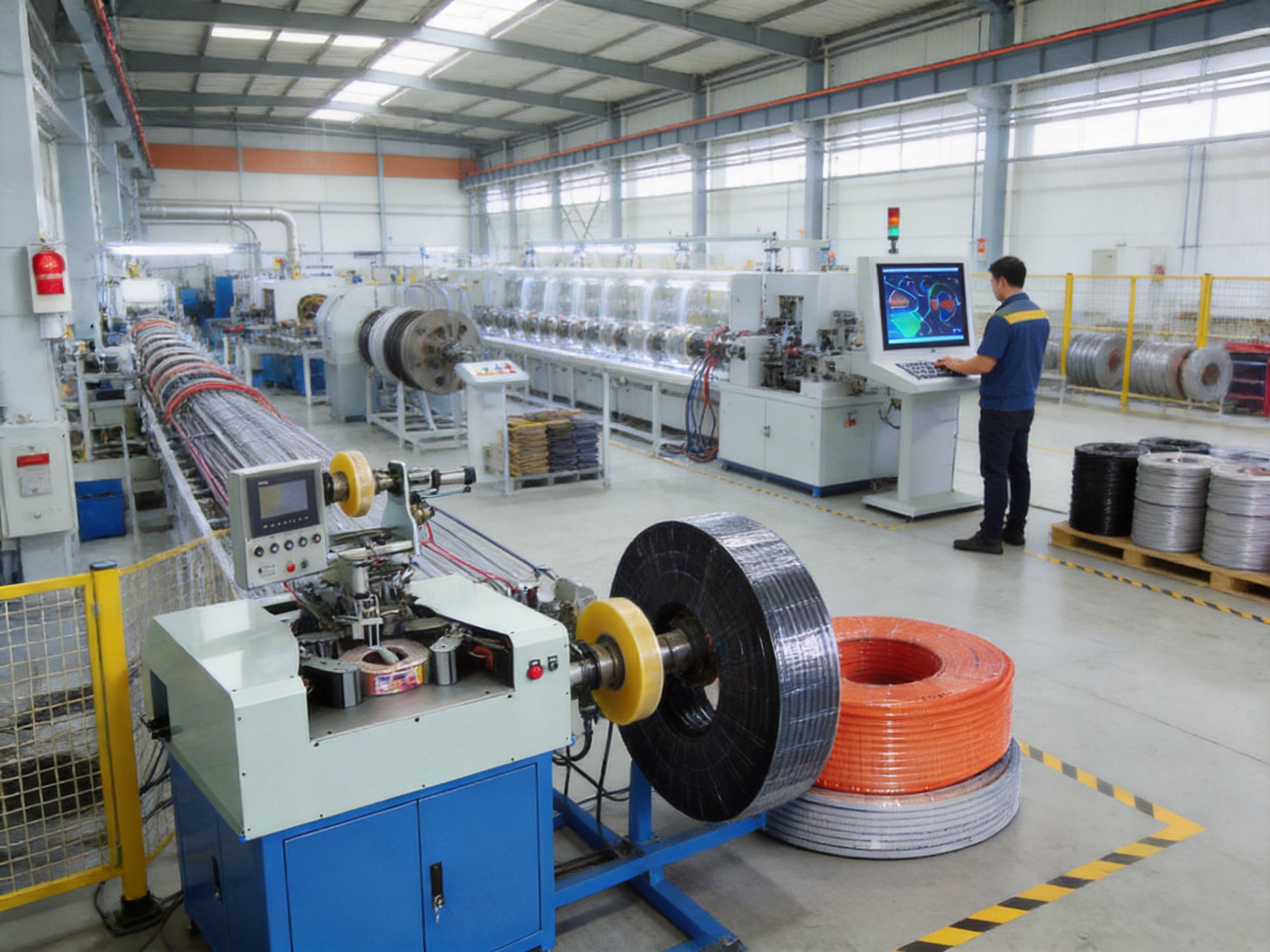
The circular object wrapping machine can be used as an independent packaging station or as part of a broader wire and cable production system. In a complete production environment, wire may pass through extrusion, cooling, diameter control, marking, testing, coiling, wrapping, stacking, and shipment preparation.
Integration does not always require complete automation. A factory can begin with a semi-automatic wrapping station and later improve material handling, labeling, or stacking as production requirements grow. This staged approach allows manufacturers to improve efficiency without replacing the entire production system at once.
Shanghai Yessjet Precise Machinery Co., Ltd. also provides equipment categories including wire and cable extrusion lines, fully automatic coiling packaging equipment, intelligent robot stackers, coiling machines, motorized pay-off equipment, motorized take-up equipment, and accessory equipment. This broader product range can support discussions about equipment matching and production-line development.
For a customer seeking a turnkey cable production solution, coordination between equipment stages can be important. Cable dimensions, coil sizes, line speed, product weight, and packaging requirements should be considered together. A wrapping machine selected without reference to upstream coiling conditions may not deliver the best overall result.
Company Manufacturing and Service Capabilities
As a wire and cable machinery manufacturer, Shanghai Yessjet Precise Machinery Co., Ltd. is positioned to serve customers that require equipment for cable production, coiling, packaging, and handling. Its product portfolio demonstrates an emphasis on complete process coverage rather than a single isolated machine category.
The company’s engineering strength is reflected in the combination of mechanical movement, electrical control, programmable operation, and production practicality incorporated into the wrapping machine. The use of a motor-driven carrier, touchscreen interface, PLC memory, and alarm functions shows attention to the requirements of industrial users that need repeatable daily operation.
Equipment manufacturing quality depends on more than individual components. It also depends on proper design coordination, accurate assembly, electrical organization, functional testing, and attention to the final application. A machinery supplier with experience in related wire and cable equipment can evaluate how the wrapping station fits into the customer’s wider workflow.
Customers can discuss their coil dimensions, product types, desired packaging materials, production capacity, and factory conditions with the supplier. This information helps determine the most suitable model and supports more effective planning before purchase.
The company can be contacted through its sales department for product consultation, technical discussion, and equipment selection. Its listed contact information includes sales@yessjet.com and the telephone numbers +86-0510-87258118 and +86-18888031330.
Frequently Asked Questions
Is this machine fully automatic?
The machine is semi-automatic. The operator manually places the circular object on the handling plate. Once the object is correctly positioned, the wrapping operation is performed by the machine through its programmed control system.
What products can be wrapped?
The machine is suitable for circular objects within the dimensions and weight limits of the selected model. Typical applications include wire coils made from BV, BVR, RVV, UL electronic wires, flower wires, and other similar cable products.
Which wrapping materials can be used?
The listed wrapping materials include PVC film, PE film, PP woven band, and paper. The applicable material width and thickness should be confirmed for the selected model and the intended product.
How many product programs can be stored?
The PLC memory can store up to 99 types of coil wrapping data. This allows operators to save settings for different wire products, coil dimensions, or packaging requirements.
What is the largest listed model?
The P210 is the largest listed model. It supports object heights from 100 to 210 millimeters, outside diameters from 400 to 800 millimeters, inside diameters of 250 millimeters, and coil weights up to 100 kilograms.
What is the smallest listed model?
The P100 is the smallest listed model. It supports object heights from 50 to 100 millimeters, outside diameters from 180 to 460 millimeters, inside diameters of 120 millimeters, and coil weights up to 35 kilograms.
Does the machine detect operating problems?
Yes. The equipment includes automatic error detection and alarm notification functions. When the control system identifies an equipment problem, it can alert the operator so that inspection and maintenance can be carried out.
Can the machine be used with different coil sizes?
Yes. Each model covers a defined range of object heights, diameters, and weights. Within that range, different wrapping programs can be stored and selected. Users should choose a model that safely accommodates their complete production range.
What should be checked before ordering?
Users should provide the coil height, outside diameter, inside diameter, weight, product type, desired wrapping material, material width, material thickness, production volume, and available installation space. Product samples or drawings may also be useful for technical confirmation.
How does the machine compare with manual wrapping?
It provides more consistent rotation and wrapping, reduces repetitive manual work, supports stored product programs, and can improve production efficiency. Manual loading remains necessary, but the repetitive wrapping motion is automated.
Can the machine be integrated with other cable equipment?
It can be used as part of a broader wire and cable production workflow. Integration requirements depend on the upstream coiling process, downstream stacking or labeling process, factory layout, and the customer’s desired automation level.
Conclusion
The Auto-Wrapping Machine for Circular Object is a practical packaging solution for wire and cable manufacturers that need consistent, efficient, and flexible coil wrapping. Its semi-automatic structure allows manual product placement while automating the repetitive wrapping process. This makes it suitable for factories seeking a meaningful productivity improvement without the complexity of a fully robotic packaging cell.
The motor-driven four-arm carrier supports smooth rotation, while the touchscreen graphic operation terminal simplifies control. Storage for up to 99 wrapping programs helps manufacturers manage multiple cable products and reduce changeover effort. Automatic error detection and alarm notification improve operator awareness and support more organized maintenance.
The five-model range covers coil weights from 35 to 100 kilograms and outside diameters from 180 to 800 millimeters. With support for PVC film, PE film, PP woven band, and paper, the machine can be adapted to different packaging strategies. Its strongest advantages over manual and basic wrapping methods are repeatability, recipe management, mechanical stability, material flexibility, and improved labor efficiency.
Supported by a company with a broader portfolio of wire and cable extrusion, coiling, take-up, pay-off, packaging, accessory, and robotic stacking equipment, the machine can be considered not only as a standalone wrapper but also as part of a complete cable production solution. Proper model selection, safe operation, preventive maintenance, and careful integration can help manufacturers achieve reliable packaging quality and a more efficient production workflow.
References
1. Product technical information for the Auto-Wrapping Machine for Circular Object, including model ranges, dimensions, coil weights, and wrapping material specifications.
2. Wire and cable production process principles covering extrusion, coiling, take-up, packaging, material handling, and finished-product preparation.
3. Industrial automation practices for programmable logic controllers, recipe management, touchscreen operator interfaces, and equipment alarm systems.
4. General machinery safety principles for rotating equipment, manual loading stations, material handling, maintenance, and operator training.
5. Packaging engineering principles relating to film selection, material thickness, overlap, coil stability, transport protection, and warehouse handling.