LANGUAGE
 中文简体
 русский
 Français
 Español
 Português
 عربى

Content
- 1 What a Wire and Cable Extrusion Line Does
- 2 Complete Line Configuration
- 3 Core Advantages of the Extrusion System
- 4 Performance Range and Model Selection
- 5 Manufacturing Strengths and Engineering Process
- 6 Why the Line Can Outperform Basic Competitor Configurations
- 7 Closed-Loop Diameter Control and Quality Management
- 8 Haul-Off and Tension Control
- 9 Cooling System and Product Stability
- 10 Printing, Winding, and End-of-Line Automation
- 11 Retrofitting Existing Cable Lines
- 12 Maintenance and Long-Term Reliability
- 13 Applications
- 14 How to Select the Correct Line
- 15 Quality, Efficiency, and Total Cost of Ownership
- 16 Q&A
- 16.1 What products can be manufactured on this line?
- 16.2 Which materials are supported?
- 16.3 How is finished diameter controlled?
- 16.4 Does the diameter gauge measure wall-thickness eccentricity?
- 16.5 Why is haul-off tension important?
- 16.6 Can the line be used for several cable sizes?
- 16.7 Can automatic coiling be added later?
- 16.8 What is the benefit of PLC control?
- 16.9 How should the correct extruder model be selected?
- 16.10 What support does the manufacturer provide?
- 17 Conclusion
- 18 References
- 19 Product: Wire And Cable Extrusion Line
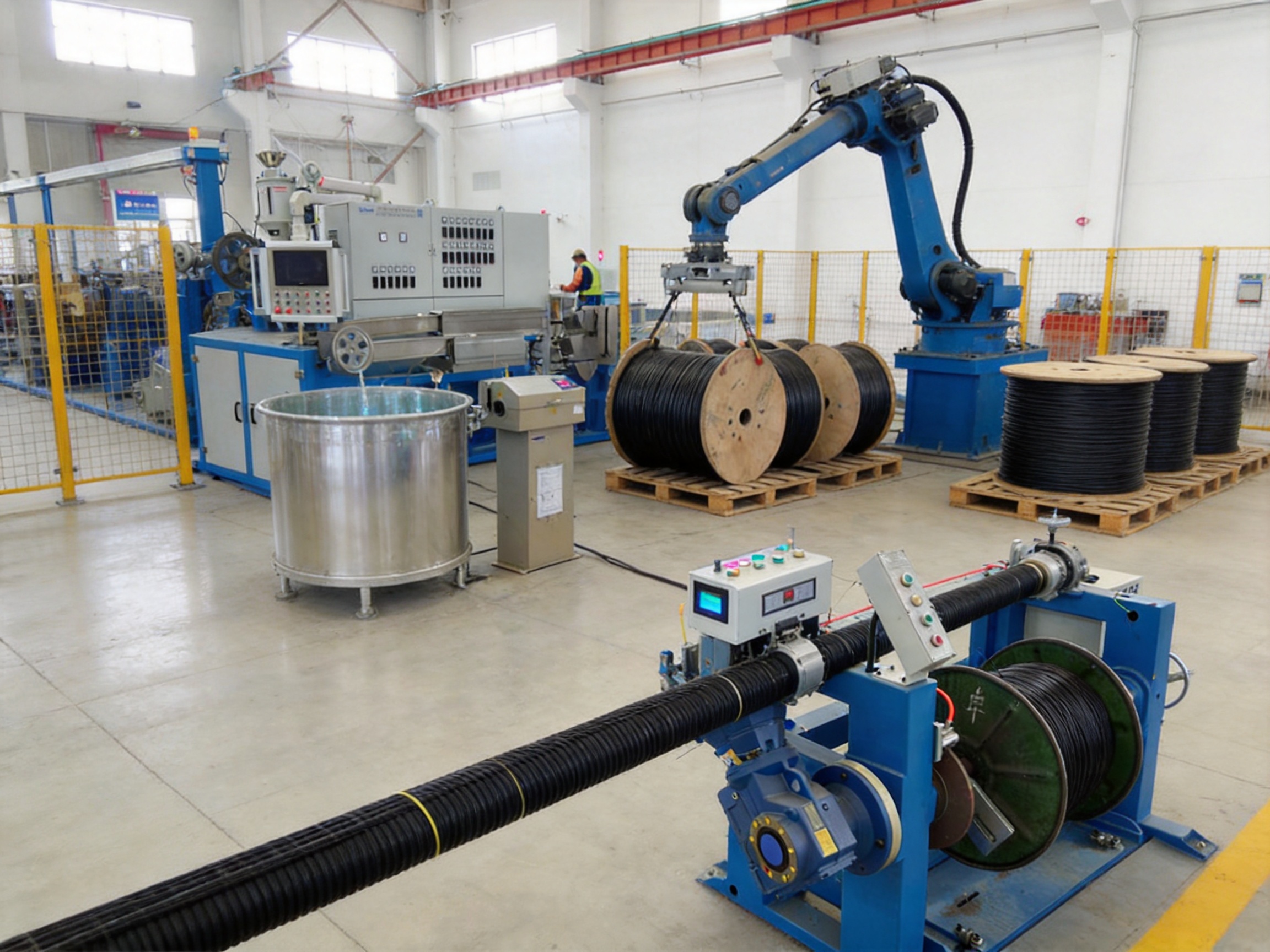
Wire and cable manufacturing demands more than a high-output extruder. A reliable production system must coordinate conductor pay-off, polymer melting, insulation or sheathing, cooling, diameter measurement, printing, haul-off, tension control, take-up, and final winding with precision. Any weakness in one section can affect the entire cable, resulting in unstable dimensions, surface defects, excessive material consumption, conductor elongation, or production downtime.
A modern Wire and Cable Extrusion Line provides an integrated solution for producing insulated wires, sheathed cables, and related cable products. By combining carefully matched mechanical equipment, programmable control, temperature regulation, online measurement, and flexible winding technology, the line supports consistent quality across a wide range of materials and conductor sizes.
Shanghai Yessjet Precise Machinery Co., Ltd. develops and manufactures cable production equipment for customers requiring dependable performance, customization, and long-term production value. Its extrusion lines are designed around the actual requirements of the selected polymer, conductor construction, finished diameter, production speed, and winding method rather than a one-size-fits-all configuration.
What a Wire and Cable Extrusion Line Does
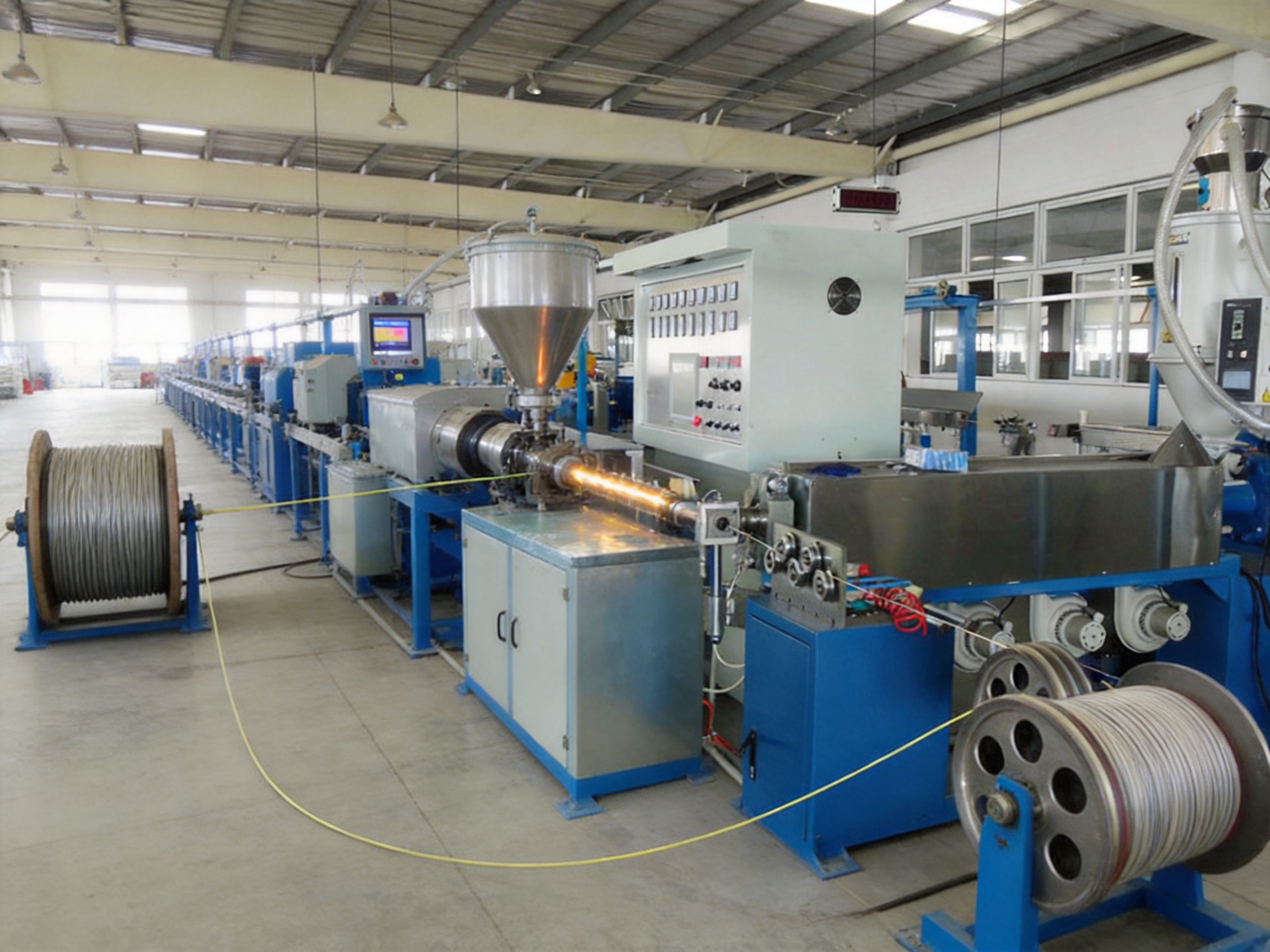
A Wire and Cable Extrusion Line applies a continuous layer of thermoplastic or other insulating material around a conductor. Depending on the application, the line may produce primary insulation, an outer sheath, protective coatings, or other polymer layers. The conductor enters the line from a pay-off system, passes through guiding and straightening equipment, receives the polymer coating through an extrusion crosshead, and then travels through cooling, measurement, printing, haul-off, and take-up sections.
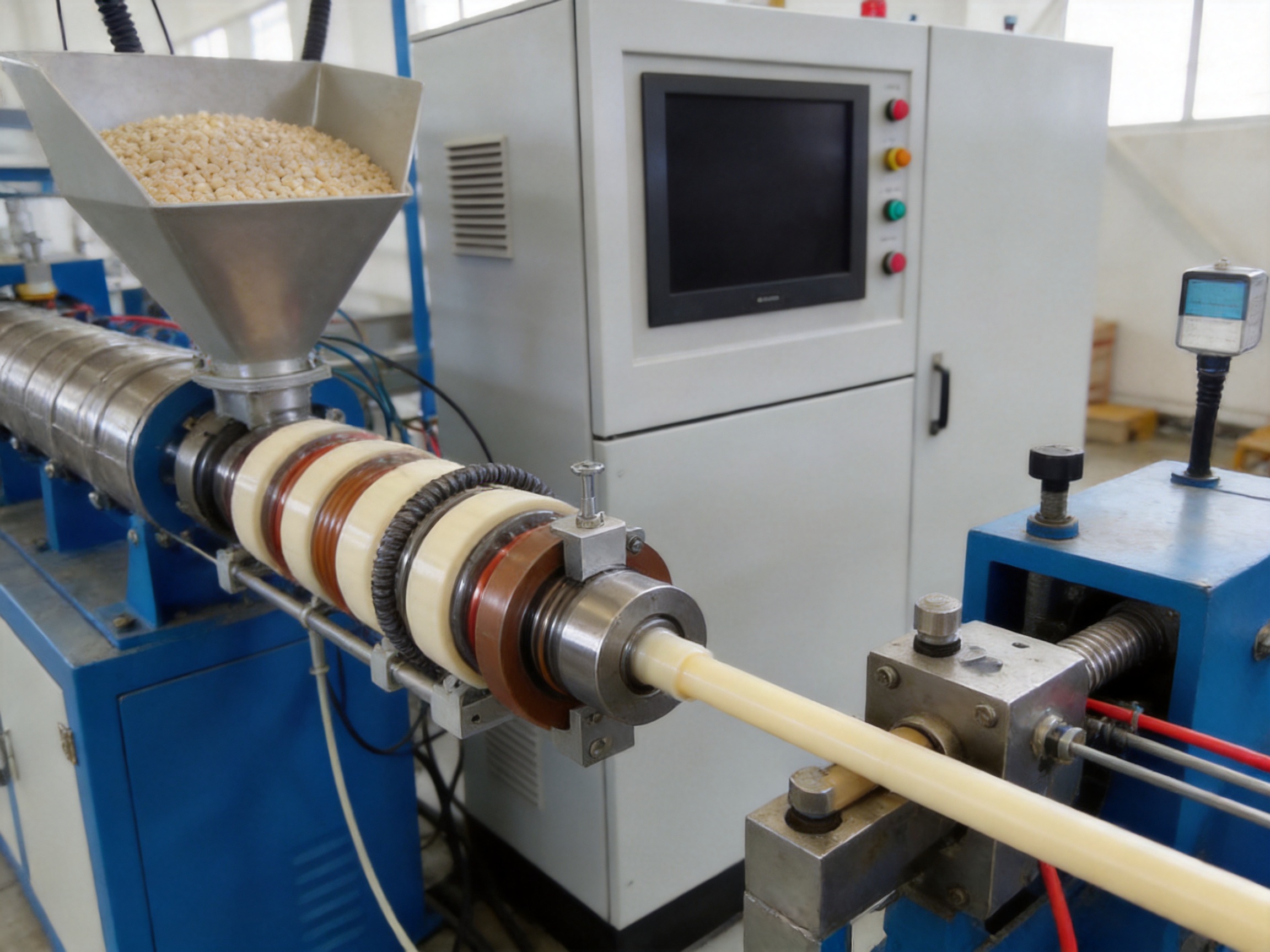
The extrusion process begins when plastic pellets or compound are supplied to the extruder hopper. The rotating screw transports the material through the heated barrel. During this movement, the polymer is compacted, melted, mixed, and pressurized. The homogeneous melt then flows through the crosshead and die, where it is formed around the moving wire or cable.
Immediately after leaving the die, the hot coating must be stabilized. Cooling tanks remove heat while preserving the required diameter and surface condition. A diameter measuring instrument can monitor the product continuously, allowing operators or the control system to identify deviations before a large quantity of material is produced. Ink printing equipment can add model information, certification markings, meter counts, dates, or customer-specific identification.
At the end of the line, the haul-off controls the movement of the cable. The take-up system then winds the finished product onto a reel or into a coil. Tension control is essential throughout this process because excessive pulling can stretch the conductor, while insufficient control can cause loops, uneven winding, or unstable product transport.
Complete Line Configuration
A complete line is normally configured from the following sections:
1. Pay-off stand: This unit supplies the bare conductor or intermediate cable at a controlled speed.
2. Straightening stand: It removes unwanted bends and helps position the conductor accurately before coating.
3. Extrusion machine: The extruder melts, mixes, and pressurizes the selected polymer.
4. Crosshead and die assembly: These components distribute the melt around the conductor and determine the initial coating geometry.
5. Electrical control and operation box: The control system coordinates the drives, heaters, sensors, safety circuits, and production sequence.
6. Outer diameter measuring instrument: The gauge monitors the finished cable diameter and supports quality control.
7. Pre-cooling water tank: This section begins cooling the freshly extruded coating.
8. Ink printing machine: It prints production information on the cable surface.
9. Main cooling water tank: The longer cooling section brings the cable to a stable temperature and prevents sticking or deformation.
10. Dual-wheel take-up or haul-off machine: Coordinated drive and driven wheels transport the product at a controlled speed.
11. Winding and storage rack: This section temporarily stores or guides cable between process stages when required.
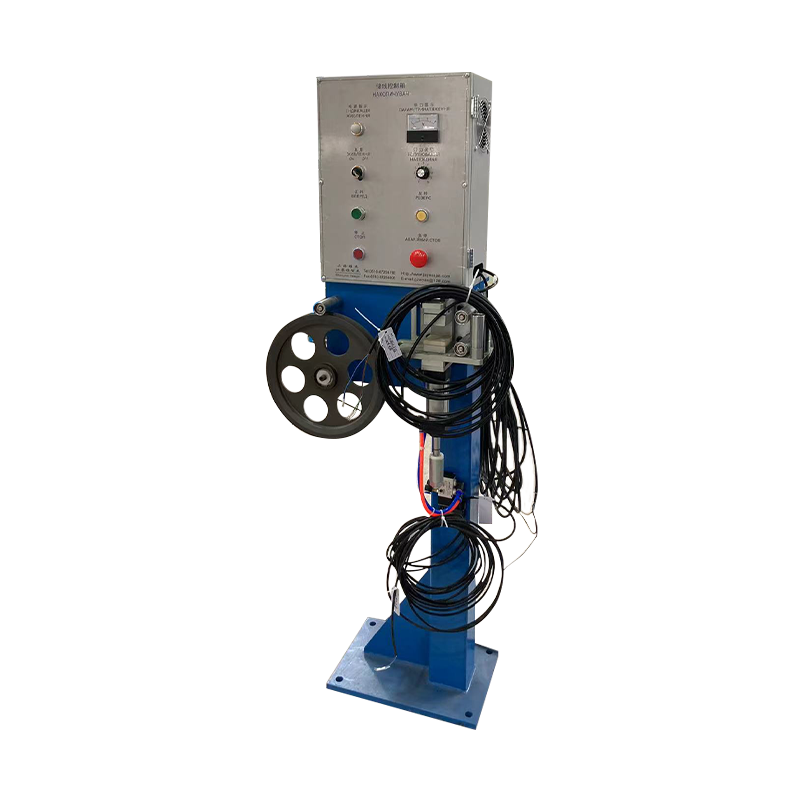
12. Tension control rack: Dancer rolls, sensors, and related mechanisms help maintain stable line tension.
13. Dual-axis take-up machine: The finished wire or cable is wound onto a reel with controlled traverse and tension.
These sections can be adapted according to product type. A small building wire line may prioritize high speed and compact coiling, while a larger power cable line may require a heavier pay-off, extended cooling length, larger crosshead, higher-capacity haul-off, and reel-handling equipment.
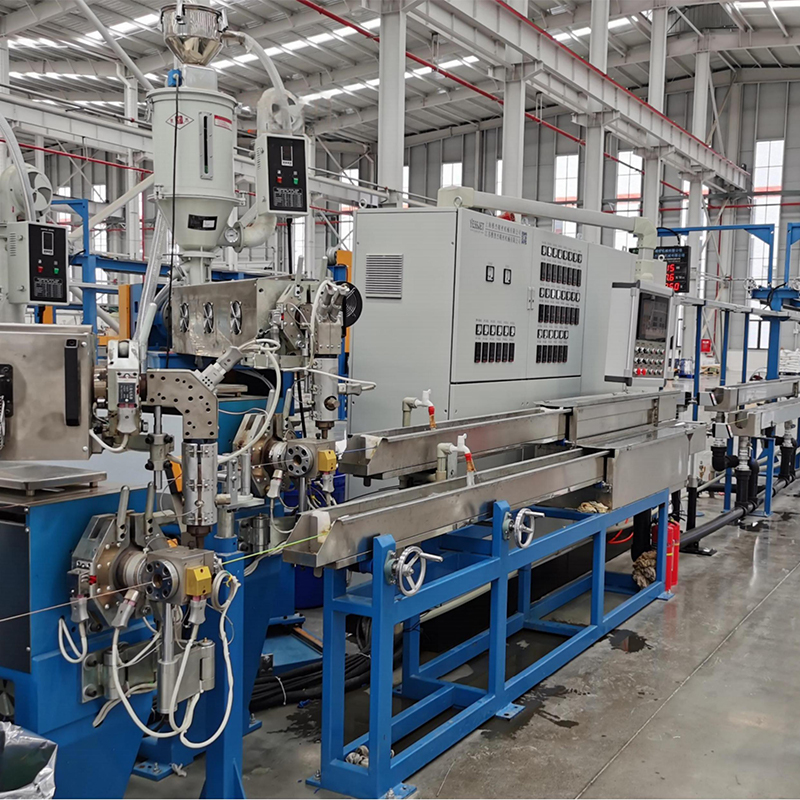
Wire And Cable Extrusion Line
Core Advantages of the Extrusion System
Material-Specific Screw and Barrel Design
The screw and barrel are among the most influential components in an extrusion line. Their geometry determines how efficiently material is conveyed, melted, mixed, and pressurized. A screw that performs well with flexible PVC may not be suitable for polyethylene, low-smoke zero-halogen compounds, fluoropolymers, nylon, or other engineering materials.
The equipment configuration supports different screw and barrel arrangements for different plastic families, including PVC, PE, LSZH compounds, Teflon-type materials, and nylon. This material-specific approach helps avoid the common problem of using a universal screw for polymers with very different melting behavior and processing windows.
For example, PVC generally requires careful control of residence time and shear because excessive thermal exposure may cause degradation. Polyethylene requires stable melting and controlled temperature development along the barrel. LSZH materials may have high filler content and require suitable mixing performance without excessive shear heating. Fluoropolymer and nylon processing can involve different temperature requirements and specialized material-handling considerations.
By considering polymer viscosity, thermal sensitivity, required output, conductor diameter, and finished wall thickness, the manufacturer can select a more appropriate screw geometry. This improves melt uniformity and reduces the likelihood of unmelted particles, surface defects, inconsistent insulation thickness, or unstable pressure.
Imported Barrel and Screw Components
The line uses barrel and screw components imported from Taiwan, supporting high extrusion capacity and reliable processing performance. The purpose of this configuration is not simply to increase maximum output. A properly manufactured screw and barrel also help maintain repeatable material conveying, stable pressure, and predictable operating behavior over long production runs.
Dimensional accuracy between the screw and barrel is important because excessive clearance can reduce output and increase residence time, while unsuitable clearance can create unnecessary friction and heat. Manufacturing precision in these components supports a more stable balance between throughput, melt quality, and energy consumption.
Programmable Production Control
The electrical system is controlled by a programmable logic controller. PLC-based control allows the line to coordinate the extruder, haul-off, cooling system, measurement equipment, printing machine, pay-off, and take-up equipment in a defined sequence.
Compared with a relay-based system, a PLC architecture offers greater flexibility for recipe storage, alarm management, interlocking, speed coordination, and future expansion. Operators can monitor operating conditions from the control panel and adjust production parameters according to material and cable specifications.
A well-designed control system also improves safety. Emergency stops, heater protection, motor overload monitoring, water-level protection, and abnormal-temperature alarms can be integrated into the line logic. The system can prevent certain operations from starting until the relevant conditions are satisfied, reducing the risk of incorrect startup or equipment damage.
Accurate Temperature Management
Temperature stability is fundamental to cable extrusion. A polymer that is too cold may not melt completely, while a polymer that is too hot may degrade, become excessively fluid, or produce unstable dimensions. For this reason, the line uses logical tracer-type temperature controllers from RKC in Japan, together with SSR electrical circuits.
The stated temperature control deviation is approximately plus or minus 2 degrees Celsius under suitable operating conditions. This level of control helps maintain a consistent melt state and supports stable insulation thickness, surface finish, and extrusion pressure.
Temperature management extends beyond the barrel. The die, crosshead, cooling water, and surrounding production environment also affect final cable quality. A temperature profile should therefore be developed for the complete process rather than setting every zone to the same value.
| Material | Typical Feed Zone | Typical Compression Zone | Typical Metering Zone | Typical Die Zone |
|---|---|---|---|---|
| HDPE | 160–175°C | 190–200°C | 210–220°C | 215–225°C |
| Flexible PVC | 150–160°C | 165–175°C | 170–180°C | 175–185°C |
| XLPE | 100–115°C | 120–130°C | 125–135°C | 130–140°C |
| LSZH | 155–165°C | 170–180°C | 175–185°C | 180–190°C |
These figures are starting references rather than universal production recipes. Actual settings depend on compound formulation, conductor speed, die design, screw geometry, cooling conditions, and required finished dimensions. Production engineers should confirm the actual melt temperature and pressure during commissioning and subsequent process optimization.
Performance Range and Model Selection
The extrusion line is available in multiple model sizes. The model number generally corresponds to screw diameter, while the G and S versions provide different capacity and drive configurations. This range allows customers to select equipment according to conductor size, material demand, production speed, and investment plan.
| Model | Screw Diameter | L/D Ratio | Maximum RPM | PVC Capacity | LDPE Capacity | LSZH Capacity | Finished Diameter | Drive Motor |
|---|---|---|---|---|---|---|---|---|
| EX-40G | 40 mm | 26:1 | 120 | 24 kg/h | 14 kg/h | — | 0.8–3 mm | 11 kW |
| EX-40S | 40 mm | 26:1 | 120 | 48 kg/h | 14 kg/h | — | 0.8–3 mm | 15 kW |
| EX-50G | 50 mm | 26:1 | 120 | 60 kg/h | 35 kg/h | — | 1–6 mm | 15 kW |
| EX-50S | 50 mm | 26:1 | 120 | 75 kg/h | 35 kg/h | — | 1–6 mm | 18.5 kW |
| EX-60G | 60 mm | 26:1 | 120 | 100 kg/h | 60 kg/h | 22 kg/h | 2–8 mm | 22 kW |
| EX-60S | 60 mm | 26:1 | 120 | 120 kg/h | 60 kg/h | 24 kg/h | 2–8 mm | 30 kW |
| EX-70G | 70 mm | 26:1 | 120 | 140 kg/h | 95 kg/h | 36 kg/h | 3–15 mm | 30 kW |
| EX-70S | 70 mm | 26:1 | 120 | 160 kg/h | 95 kg/h | 40 kg/h | 3–15 mm | 37 kW |
| EX-80G | 80 mm | 26:1 | 110 | 200 kg/h | 130 kg/h | 48 kg/h | 5–20 mm | 37 kW |
| EX-80S | 80 mm | 26:1 | 110 | 250 kg/h | 130 kg/h | 52 kg/h | 5–20 mm | 45 kW |
| EX-90G | 90 mm | 26:1 | 110 | 280 kg/h | 180 kg/h | 65 kg/h | 8–25 mm | 45 kW |
| EX-90S | 90 mm | 26:1 | 110 | 320 kg/h | 180 kg/h | 70 kg/h | 8–25 mm | 55 kW |
| EX-100G | 100 mm | 25:1 | 100 | 380 kg/h | 240 kg/h | 90 kg/h | 10–30 mm | 55 kW |
| EX-100S | 100 mm | 25:1 | 100 | 450 kg/h | 240 kg/h | 100 kg/h | 10–30 mm | 75 kW |
| EX-120G | 120 mm | 25:1 | 100 | 500 kg/h | — | — | 15–40 mm | 90 kW |
| EX-120S | 120 mm | 25:1 | 100 | 600 kg/h | — | — | 15–40 mm | 110 kW |
The capacities shown are maximum reference values and can vary with material density, formulation, moisture, screen-pack resistance, operating temperature, screw speed, and die configuration. Correct model selection should be based on the expected production range rather than maximum capacity alone. Operating a machine continuously near its limit may reduce process flexibility, while selecting an oversized extruder can increase capital cost and energy consumption.
Manufacturing Strengths and Engineering Process
Application-Based Design
A major advantage of working with an experienced machinery manufacturer is the ability to configure the line around the product. Before equipment selection, the engineering process should review conductor material, conductor diameter, insulation material, finished cable diameter, line speed, production volume, printing requirements, reel dimensions, local power supply, factory layout, and quality standards.
Shanghai Yessjet Precise Machinery Co., Ltd. uses this type of application-based approach when configuring Cable Extrusion Line equipment. The design process can consider polymer behavior, target output, screw selection, crosshead geometry, cooling length, haul-off requirements, take-up format, and future automation needs.
Integrated Mechanical and Electrical Engineering
Extrusion lines perform best when the mechanical and electrical systems are designed as one coordinated system. The extruder cannot be evaluated separately from the haul-off, because output and line speed determine wall thickness. The take-up cannot be selected separately from the product diameter, because winding tension and reel dimensions affect finished quality. The cooling system must match the material and line speed, while the measurement system must be positioned where its feedback can be used effectively.
Integrated engineering reduces compatibility problems between individual machines. It also simplifies commissioning because the drives, sensors, safety functions, and control logic are planned together. This is particularly valuable for customers purchasing a complete line rather than individual standalone machines.
Fabrication and Assembly Control
Reliable equipment depends on more than a design drawing. Fabrication accuracy, frame alignment, component fit, wiring quality, sensor installation, and assembly inspection all influence the performance of the finished line. The manufacturing process should include dimensional checks on machine frames, verification of rotating components, inspection of electrical cabinets, testing of heater circuits, and confirmation of interlocks.
For an extrusion line, alignment is especially important. Pay-off guides, crosshead centerlines, cooling tanks, haul-off belts, and take-up guides must work on a consistent path. Misalignment can create uneven coating distribution, surface contact, conductor stress, or poor reel winding.
Commissioning and Process Support
Commissioning is not simply a machine startup. It includes heating verification, motor rotation checks, screw-speed testing, water-flow adjustment, crosshead centering, conductor threading, haul-off synchronization, take-up tension setup, and sample inspection. Material trials should be performed using the customer’s intended compound whenever possible.
Process support is also important after installation. Operators need practical instructions for temperature profiling, startup, shutdown, screen-pack replacement, die cleaning, tension adjustment, and fault diagnosis. A line that is mechanically capable but poorly understood by operators may not achieve its expected performance.
Why the Line Can Outperform Basic Competitor Configurations
Stable Output Instead of Maximum Output Only
Some competing machines emphasize a headline capacity without explaining the conditions required to reach it. A more useful comparison considers stable output, melt quality, dimensional repeatability, changeover time, energy use, and maintenance requirements. The line described here is designed to provide a practical operating range in which the extruder, cooling system, haul-off, and take-up remain coordinated.
Stable output is particularly important for cable manufacturers because a small dimensional error repeated over a long production run can represent a significant quantity of rejected material. Consistent pressure and temperature allow operators to maintain a more predictable process rather than making frequent manual corrections.
Better Control of Wall Thickness
Insulation or sheath thickness depends on the relationship between polymer output, conductor speed, die geometry, melt temperature, and cooling conditions. The line’s coordinated PLC control, haul-off system, and diameter measurement equipment provide a stronger foundation for wall-thickness consistency than a basic line with independent manual controls.
An outer diameter gauge does not directly measure eccentricity. For high-value cable or demanding standards, customers may add ultrasonic wall-thickness measurement or capacitance-based eccentricity monitoring. Nevertheless, stable conductor alignment, accurate crosshead centering, uniform melt pressure, and controlled haul-off tension help reduce the causes of eccentricity before additional inspection equipment is applied.
Reduced Operator Dependence
Manual adjustment can be necessary during setup, but excessive dependence on operator reaction creates inconsistency between shifts. PLC recipes, digital temperature control, synchronized drives, alarm messages, and online diameter monitoring help standardize production settings. This allows trained operators to focus on process verification rather than continuously correcting unstable equipment.
Flexible Material Capability
The availability of different screw and barrel configurations gives the customer more flexibility than a line designed for only one compound. This is useful for manufacturers producing several cable families, including PVC building wire, polyethylene-insulated cable, LSZH products, nylon-coated wires, and other specialized products.
Material flexibility does not mean that every polymer can be processed with identical settings. Each material still requires suitable temperature, screw speed, die design, and cooling conditions. However, the equipment platform can be configured to support a broader production portfolio while preserving the ability to optimize each material separately.
Future Expansion Capability
Many manufacturers initially purchase the extrusion line and add automatic coiling, strapping, or robotic palletizing later. If the original control architecture has no spare inputs, outputs, communication ports, or physical space, future expansion can become expensive.
The line can be designed with future end-of-line automation in mind. Spare I/O capacity, pre-wired terminals, documented signal maps, and planned communication interfaces make it easier to add automatic coilers or robotic palletizing equipment when production volume justifies the investment.
Closed-Loop Diameter Control and Quality Management
Laser diameter gauges can measure cable diameter continuously after the product has passed through the cooling section. Typical scanning rates may range from 500 to 2,000 measurements per second, allowing the system to identify short-term fluctuations as well as gradual process drift.
The measurement signal can be used for monitoring, alarms, statistical records, or closed-loop adjustment. Depending on the control strategy, the system may influence extruder screw speed, haul-off speed, or another relevant process variable. The objective is to maintain the product near the target diameter without creating unstable oscillation.
Control-loop response time must be considered carefully. The gauge is located some distance from the die, and the cable requires time to travel through the cooling tank. If the distance is long or the line speed is relatively low, a disturbance may reach the gauge several seconds after it occurs at the die. The control system should therefore use appropriate delay compensation, deadband, and adjustment rates.
Overcorrection can be as damaging as under-correction. If the system reacts too aggressively to every small measurement change, the extruder and haul-off may continually accelerate and decelerate, creating new diameter variation. Proper commissioning should establish a stable feedback response based on the actual line geometry and product type.
Haul-Off and Tension Control
The haul-off is responsible for moving the cable through the line and influencing the draw-down ratio. Its speed must be synchronized with polymer output. If the haul-off moves too quickly relative to output, the coating may become thinner. If it moves too slowly, the coating may become thicker or accumulate before solidification.
Excessive tension can stretch the conductor permanently. This risk is greater with fine stranded conductors, where the mechanical margin may be limited. Conductor elongation can alter strand lay, increase resistance per unit length, and affect the dimensional relationship between the conductor and insulation.
The correct belt pressure depends on cable diameter, surface condition, and compound hardness. Soft materials may require lower clamping pressure and wider contact surfaces to avoid marks. Larger or stiffer cables may require more positive traction. A well-designed tension system combines dancer-roll feedback, drive synchronization, and suitable mechanical adjustment.
Pay-off and take-up tension should be considered together. If the pay-off resists movement while the haul-off pulls strongly, the conductor may experience excessive stress before it reaches the crosshead. If the take-up pulls too hard, the finished cable may be stretched after cooling. Stable tension during acceleration and deceleration is as important as stable tension during continuous operation.
Cooling System and Product Stability
Cooling is necessary to solidify the polymer and preserve the required geometry. A pre-cooling tank begins heat removal shortly after the die, while the main cooling tank provides additional length for complete stabilization. Water temperature, flow, cleanliness, tank alignment, and cable immersion all influence performance.
Insufficient cooling can allow the coating to deform at the haul-off or take-up. Excessively sudden cooling may create internal stress in some materials. The correct cooling method depends on polymer type, wall thickness, line speed, and cable construction.
The water tanks should be maintained to prevent contamination, sediment, and temperature drift. Operators should regularly inspect water circulation, filtration, spray or immersion conditions, and tank guides. Good cooling practice reduces surface damage and supports reliable diameter measurement.
Printing, Winding, and End-of-Line Automation
Ink printing is often required for product identification and traceability. The printer can mark model numbers, dates, meter information, standards, customer references, or other production data. Printing performance depends on cable surface condition, ink selection, line speed, drying time, and the distance between the printer and the cooling section.
Winding quality affects both storage and customer satisfaction. A cable that is correctly extruded but poorly wound may develop crossed turns, loose layers, edge collapse, or reel instability. The take-up must coordinate traverse movement, reel rotation, line speed, and tension.
Automatic coiling is valuable for small-gauge building wires and products manufactured at high speed. Manual coiling may become the bottleneck when the extruder can produce material faster than operators can handle it. An automatic coiler can standardize coil dimensions, reduce labor requirements, and improve packaging consistency.
Robotic palletizing extends automation beyond the coiler. A robot can transfer coils, reels, or packaged cable to pallets according to a programmed arrangement. This reduces repetitive lifting and can improve storage density and handling safety.
Successful integration requires reliable communication between the main line PLC and end-of-line equipment. Meter counting, cut signals, coil-change commands, product-ready signals, fault signals, and emergency-stop circuits must be coordinated. Planning these interfaces during the initial machine design reduces the cost of later upgrades.
Retrofitting Existing Cable Lines
Not every cable manufacturer needs to replace an entire production line. Older equipment may still have a mechanically sound extruder, frame, cooling tank, or take-up system while suffering from outdated controls, analog temperature regulation, or obsolete drives.
A structured retrofit assessment can determine whether modernization is practical. Mechanical checks may include screw and barrel wear measurement, gearbox backlash testing, frame alignment verification, crosshead inspection, and evaluation of the pay-off and take-up bearings. Electrical checks may include heater-circuit testing, cabinet inspection, drive condition, sensor availability, and spare-parts status.
High-value retrofit projects often include PLC replacement, a modern touchscreen HMI, recipe management, closed-loop diameter monitoring, digital PID controllers, servo-driven haul-off, and improved tension feedback. These upgrades can deliver substantial performance improvements when the core mechanical platform remains within acceptable condition.
Not every component should be replaced automatically. A gearbox that is mechanically sound may not require replacement, and a corrosion-free cooling tank may continue to perform effectively. Conversely, a distorted frame, severely worn barrel, damaged crosshead, or unreliable feed system may make control upgrades uneconomical.
Maintenance and Long-Term Reliability
Preventive maintenance protects both production quality and equipment value. Operators should monitor screw and barrel performance, heater operation, cooling-water condition, drive temperature, gearbox lubrication, belt wear, sensor cleanliness, and take-up alignment.
The extrusion screw should be inspected for wear, corrosion, deposits, and damage during scheduled maintenance. Barrel condition influences output stability and melt quality. Screen packs, filters, and die components should be cleaned or replaced according to material contamination and pressure behavior.
Temperature sensors must be installed securely and checked for accuracy. A faulty thermocouple can cause the controller to display an acceptable value while the actual barrel or die temperature is different. Similarly, a dirty diameter gauge lens can create false measurements and unnecessary process adjustments.
Cooling tanks require regular cleaning and alignment checks. Water leaks, blocked circulation lines, damaged guides, or incorrect water levels can affect product stability. Take-up equipment should be inspected for traverse accuracy, reel clamping, brake function, and tension response.
Applications
The Wire and Cable Extrusion Line can be configured for a broad range of applications, including building wires, appliance wires, automotive-related wires, control cables, communication cables, industrial cables, flexible cables, and protective sheathing products.
Small-diameter products generally require accurate conductor guidance, high line speed, responsive haul-off control, and efficient automatic coiling. Larger cables require greater extrusion capacity, stronger mechanical support, longer cooling length, and heavier reel-handling capability.
Material selection also affects the configuration. PVC is widely used for general insulation and sheathing. Polyethylene is selected for electrical, communication, and environmental performance requirements. LSZH compounds are used where reduced smoke and halogen-free characteristics are important. Nylon and fluoropolymer materials may be used where chemical resistance, temperature performance, or mechanical protection is required.
How to Select the Correct Line
Customers should begin with the product specification rather than the machine model. Important questions include:
What conductor materials and diameters will be processed?
Which insulation or sheath compounds will be used?
What is the target finished diameter and wall thickness?
What production speed and daily output are required?
Will the line produce one product or several product families?
Is online diameter measurement required?
Will the product be wound onto reels, coiled, or both?
What factory power supply, floor space, and water-cooling resources are available?
Will automatic coiling, strapping, or robotic palletizing be added later?
Answers to these questions help determine screw diameter, L/D ratio, motor power, crosshead design, cooling length, haul-off type, take-up size, and control architecture. Choosing a line only by screw diameter can lead to an unsuitable configuration if the actual material or product range is not considered.
Quality, Efficiency, and Total Cost of Ownership
The purchase price is only one part of the total cost of a cable extrusion line. Energy use, scrap rate, operator requirements, maintenance, changeover time, spare parts, and production uptime have a major effect on long-term profitability.
Stable temperature control and efficient screw design can reduce unnecessary heating and reprocessing. Accurate diameter control reduces material overuse and rejected cable. Coordinated haul-off and take-up systems reduce handling problems. Flexible recipes reduce setup time when changing between products.
A line that costs slightly more initially may deliver a lower total cost of ownership if it operates reliably, consumes material efficiently, and can be upgraded as production needs change. This is why the engineering quality of the complete system is more important than comparing isolated component prices.
Q&A
What products can be manufactured on this line?
The line can be configured for insulated wires, sheathed cables, building wires, control cables, industrial cables, flexible products, and other polymer-coated conductors. The exact product range depends on the screw, crosshead, die, cooling system, and take-up configuration.
Which materials are supported?
Typical materials include PVC, PE, LDPE, LSZH compounds, Teflon-type fluoropolymers, nylon, and other thermoplastic materials. Each material requires suitable screw geometry, temperature settings, die design, and cooling conditions.
How is finished diameter controlled?
The line can use an online outer diameter measuring instrument positioned after cooling. The measurement can be displayed for the operator, used to trigger alarms, recorded for quality documentation, or integrated into a closed-loop control strategy.
Does the diameter gauge measure wall-thickness eccentricity?
No. An outer diameter gauge measures the external diameter. It does not directly identify the thinnest insulation point around the conductor. Ultrasonic or capacitance-based systems may be added when direct wall-thickness and eccentricity measurement is required.
Why is haul-off tension important?
Haul-off tension affects product draw-down, insulation thickness, conductor elongation, and transport stability. Excessive tension may stretch fine stranded conductors, while insufficient tension may cause unstable movement or poor winding.
Can the line be used for several cable sizes?
Yes, within the designed operating range. Changeover may require different dies, guides, process recipes, take-up settings, and temperature profiles. The practical range should be confirmed during technical design.
Can automatic coiling be added later?
Yes, if the line is designed with suitable communication signals, spare PLC capacity, mechanical space, and compatible meter-counting and cutting functions. Planning these requirements during the original build makes future installation easier.
What is the benefit of PLC control?
PLC control coordinates the complete line, stores operating recipes, manages alarms, synchronizes drives, supports safety interlocks, and provides a platform for future expansion. It also reduces dependence on separate manual adjustments.
How should the correct extruder model be selected?
The selection should consider material type, required output, finished diameter, line speed, wall thickness, production schedule, and future product plans. Maximum capacity should not be the only selection criterion.
What support does the manufacturer provide?
Support may include application consultation, line configuration, equipment manufacturing, factory testing, installation guidance, commissioning, operator training, maintenance recommendations, and retrofit evaluation. The specific scope should be confirmed in the technical agreement.
Conclusion
A Wire and Cable Extrusion Line is a complete manufacturing system rather than a standalone extruder. Its performance depends on the interaction of material handling, screw and barrel design, temperature control, crosshead centering, cooling, diameter measurement, haul-off tension, printing, and take-up winding.
The equipment configuration described here combines imported Taiwan barrel and screw components, programmable PLC control, RKC temperature controllers from Japan, SSR electrical circuits, online measurement capability, coordinated haul-off, and flexible take-up arrangements. These features support stable production across a broad range of cable applications.
Shanghai Yessjet Precise Machinery Co., Ltd. strengthens this equipment platform through application-based engineering, integrated mechanical and electrical design, material-specific extrusion configuration, manufacturing inspection, commissioning support, and future automation planning. Compared with basic competitor configurations, the main advantages are process stability, product flexibility, control integration, upgrade potential, and attention to total production performance.
For manufacturers planning a new cable factory, expanding an existing plant, or modernizing older equipment, the most effective solution is one designed around the actual cable specification and production strategy. With the correct configuration, a modern extrusion line can improve dimensional consistency, reduce waste, increase production efficiency, and provide a scalable foundation for automated cable manufacturing.
References
1. General principles of thermoplastic polymer extrusion and screw design.
2. Industrial practices for wire and cable insulation and jacketing.
3. Guidelines for temperature control, melt pressure, and polymer processing stability.
4. Principles of conductor tension, haul-off synchronization, and cable dimensional control.
5. Technical practices for online laser diameter measurement and closed-loop extrusion control.
6. Industrial automation methods for PLC-based production lines and end-of-line equipment.
7. Maintenance principles for extrusion screws, barrels, crossheads, cooling systems, and take-up machinery.
8. General requirements for insulated wires, sheathed cables, conductor resistance, and dimensional inspection.