LANGUAGE
 中文简体
中文简体 русский
 Français
 Español
 Português
 عربى
عربى
Content
- 1 1. The Role of Extrusion in Cable Manufacturing
- 2 2. Designed for PP, PVC, and PE Processing
- 3 3. Main Performance Advantages
- 4 4. How the Extruder Supports Production Efficiency
- 5 5. Manufacturing Strengths Behind the Equipment
- 6 6. Comparison with Conventional Cable Extruders
- 7 7. Application Areas
- 8 8. Standards and Quality Considerations
- 9 9. Installation and Commissioning Recommendations
- 10 10. Maintenance and Long-Term Reliability
- 11 11. Economic Value for Cable Manufacturers
- 12 12. Selecting the Right Configuration
- 13 13. Why Manufacturer Experience Matters
- 14 14. Operational Best Practices
- 15 15. Frequently Asked Questions
- 15.1 Q1: What materials can the High-Efficiency Cable Extruder process?
- 15.2 Q2: What is the maximum stated output?
- 15.3 Q3: How can the machine improve material utilization?
- 15.4 Q4: Can one machine process both crystalline and amorphous polymers?
- 15.5 Q5: What is the purpose of the hardened helical gear reducer?
- 15.6 Q6: Does intelligent power regulation reduce energy consumption?
- 15.7 Q7: Is the extruder suitable for automated production lines?
- 15.8 Q8: What information should a buyer provide before requesting a quotation?
- 15.9 Q9: How does the machine support cable quality?
- 15.10 Q10: What maintenance is required?
- 15.11 Q11: Can the machine be customized?
- 15.12 Q12: Is the machine suitable for both small and large cable products?
- 16 16. A Practical Evaluation Method for Buyers
- 17 17. Conclusion
- 18 References
- 19 Product: High-Efficiency PP PVC PE Cable Extruder
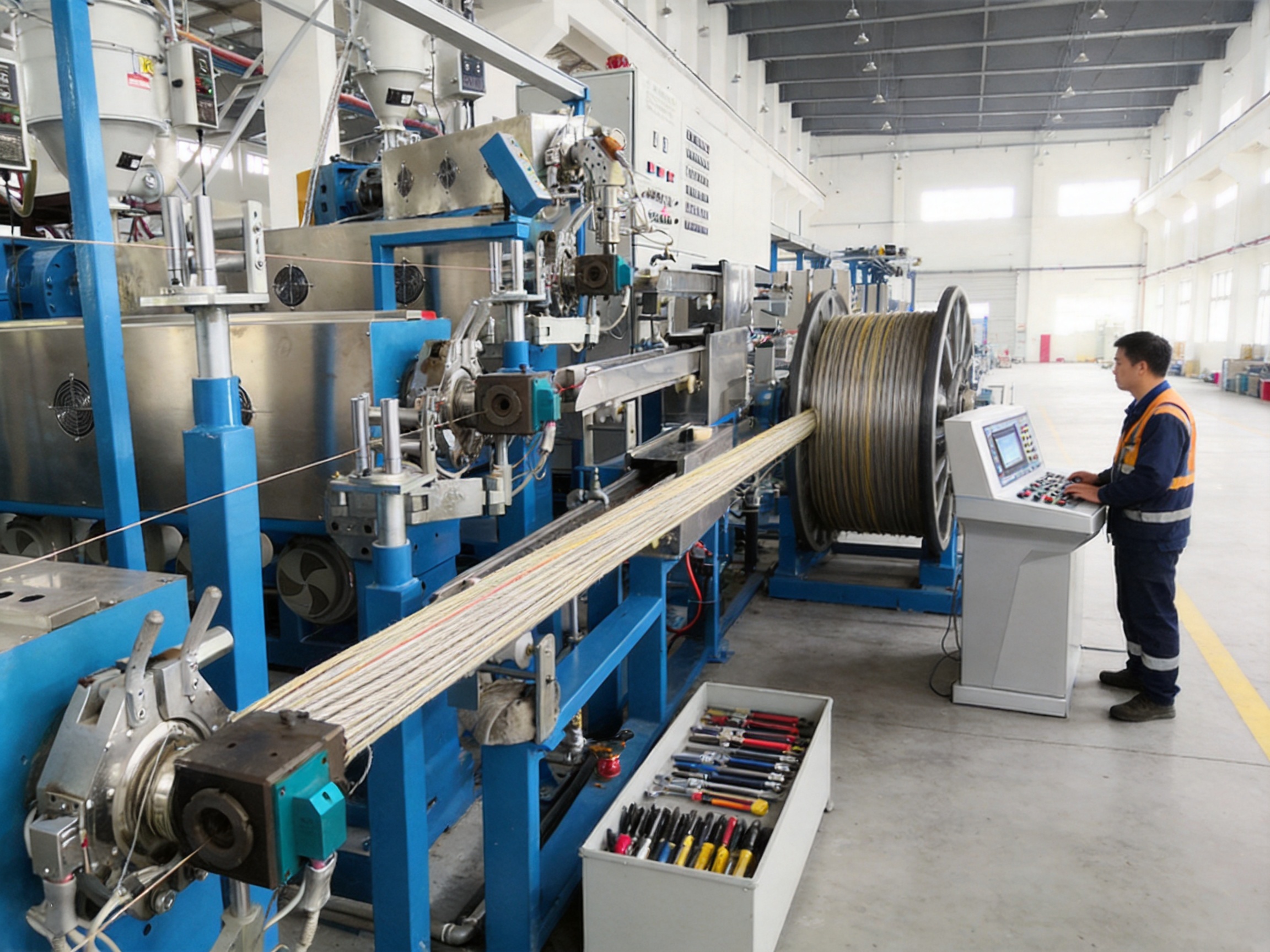
Modern wire and cable manufacturers are under constant pressure to produce more while controlling energy consumption, raw material usage, labor costs, and production downtime. Customers expect consistent insulation, reliable jackets, precise dimensions, and stable electrical performance. At the same time, cable producers must often process several polymer types on the same production floor, including polypropylene, polyvinyl chloride, and polyethylene. These materials have different melting behavior, flow characteristics, thermal requirements, and processing sensitivities. A cable extruder that performs well with one material may not automatically deliver the same results with another.
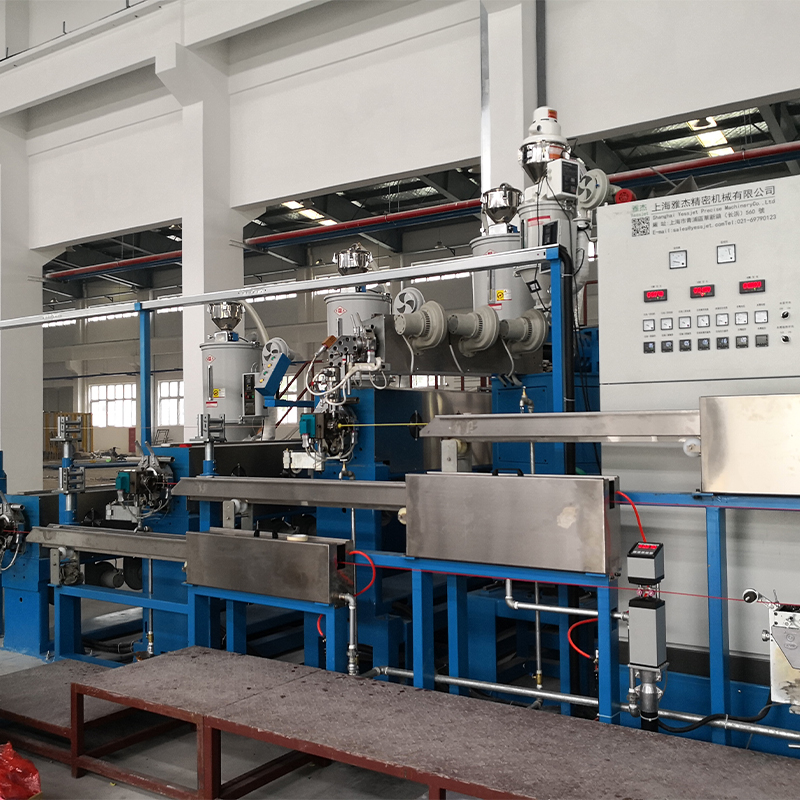
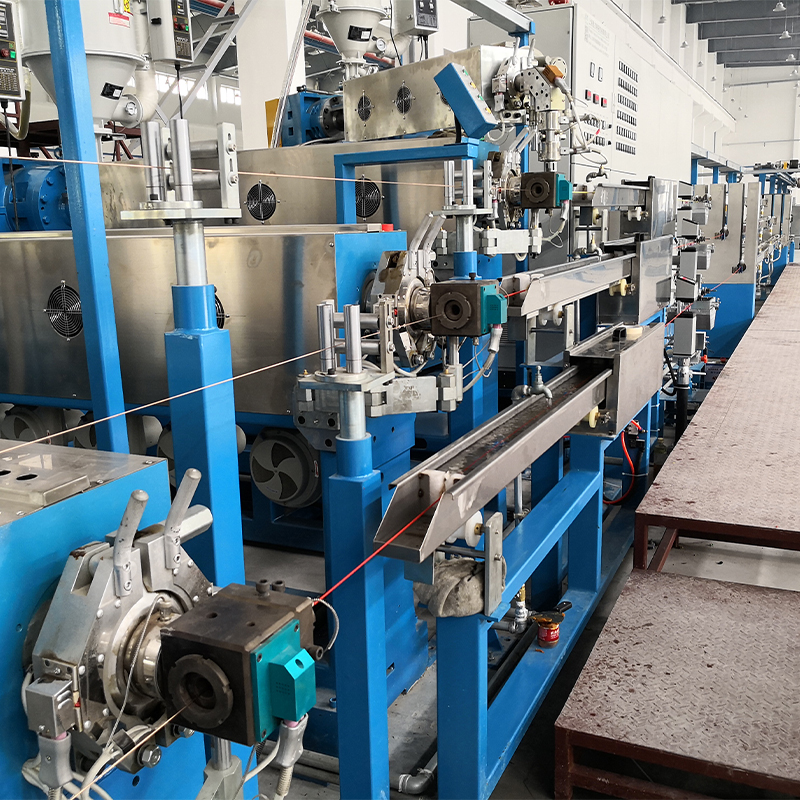
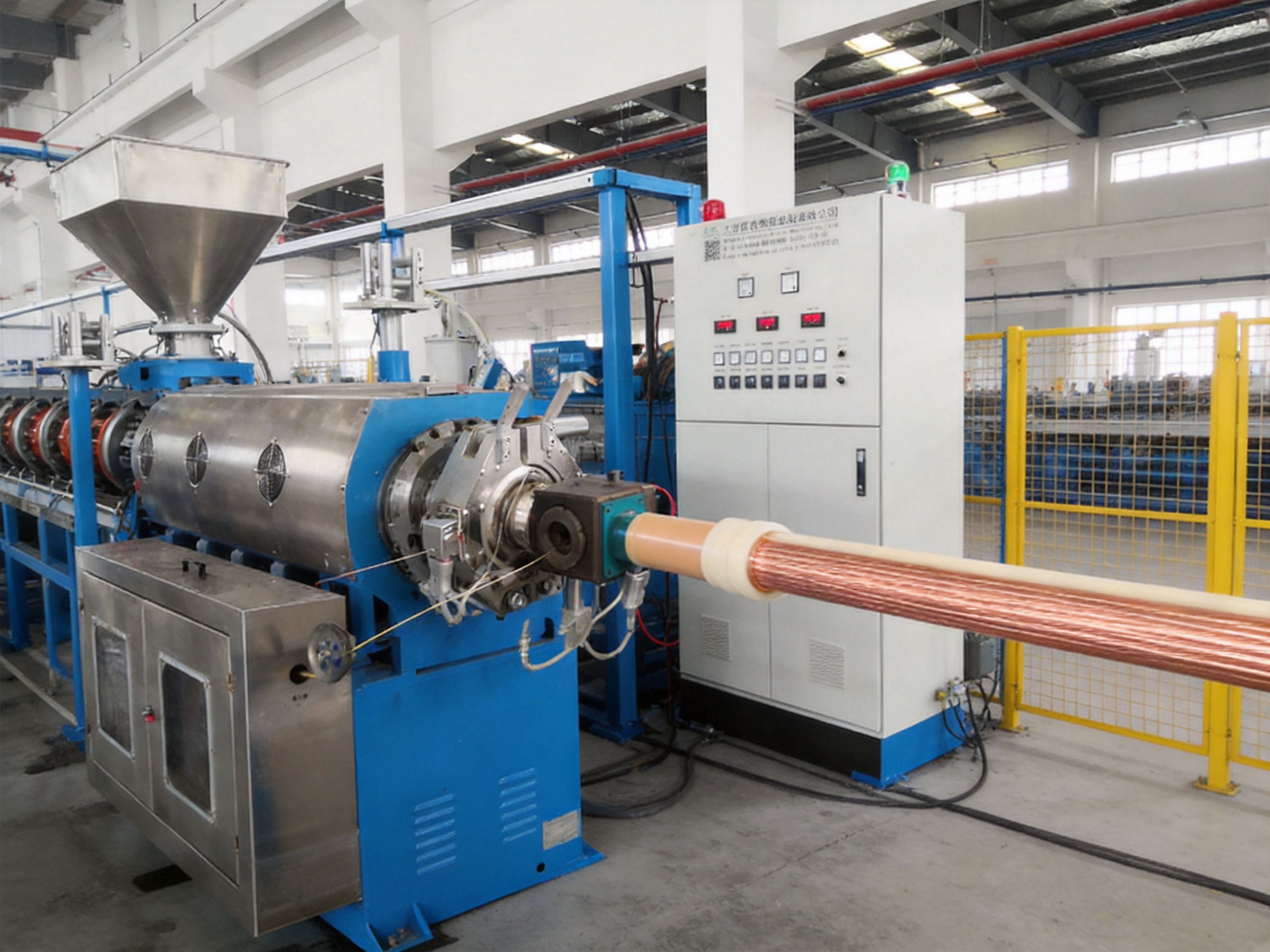
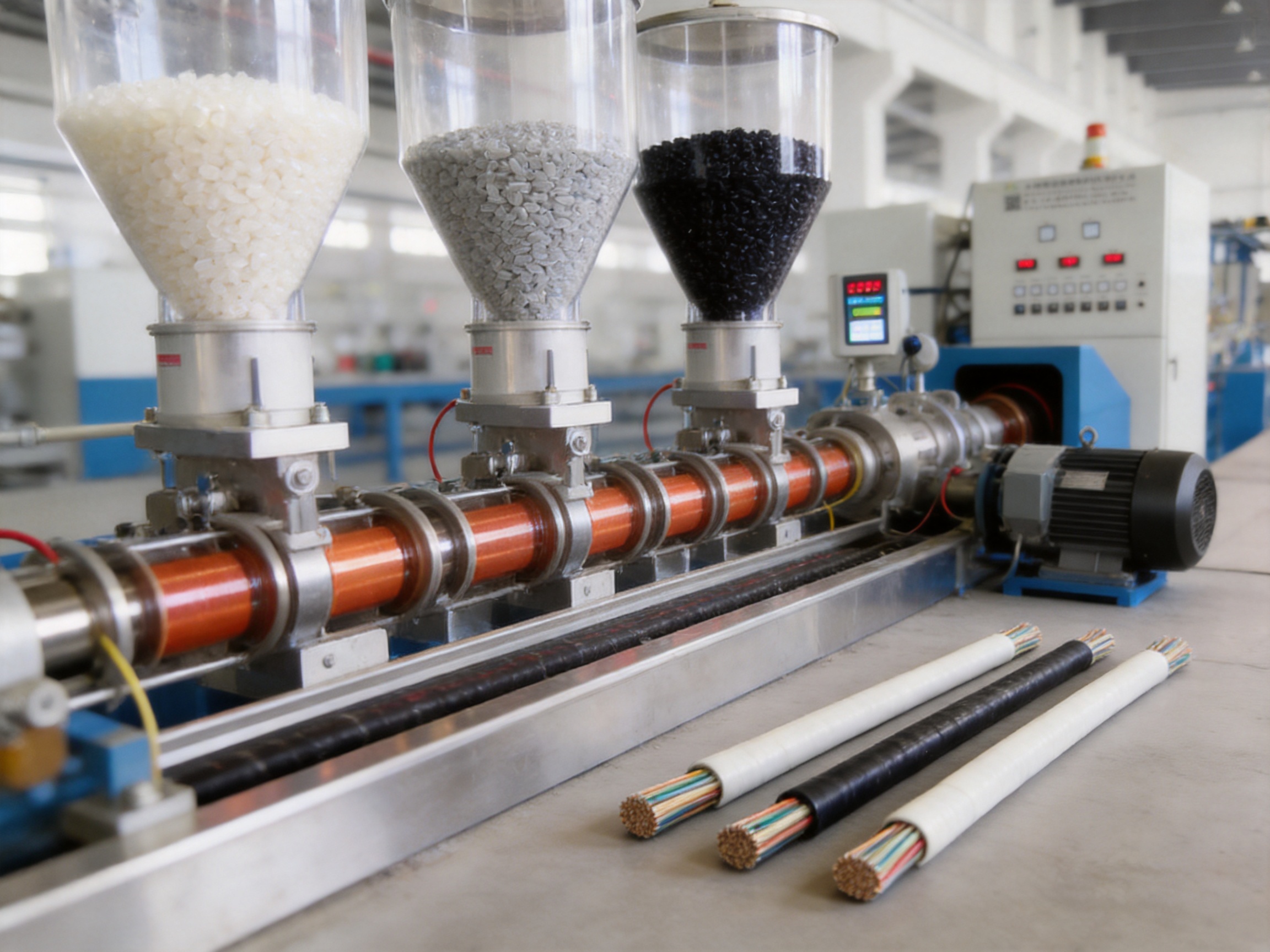
The High-Efficiency PP PVC PE Cable Extruder is designed as a multifunctional core machine for cable insulation and jacketing applications. It supports PP, PVC, and PE materials while combining energy-conscious operation, high-yield extrusion, precision plasticization, and stable torque transmission. The equipment is intended to help manufacturers simplify multi-material production without sacrificing output consistency or cable quality.
With a maximum output of up to 240 kilograms per hour for large-caliber cable applications, the extruder is suited to production environments that require dependable throughput. Its hardened helical gear reducer, intelligent power regulation, and precision plasticization system are engineered to support smooth operation when switching between different polymer structures. The machine is also described as capable of improving material utilization by 15 percent compared with conventional models, creating an opportunity to reduce raw material waste and strengthen production economics.
This article examines the equipment’s operating principles, material compatibility, manufacturing advantages, production value, and suitability for modern wire and cable production lines.
1. The Role of Extrusion in Cable Manufacturing
Extrusion is one of the most important stages in wire and cable manufacturing. During this process, polymer material is melted, homogenized, and formed around a conductor or cable core. The resulting insulation or jacket must maintain a uniform wall thickness, adhere properly to the underlying cable structure, and remain free from bubbles, voids, contamination, and surface defects.
Although extrusion can appear straightforward, it involves a complex balance of material feeding, heating, shearing, melting, pressure control, die design, cooling, and line synchronization. Small fluctuations in any of these areas can create cable defects. A variation in melt pressure can change the diameter. Inadequate plasticization can cause rough surfaces or weak mechanical performance. Excessive shear or heat can degrade sensitive polymers. Unstable pulling speed can result in uneven coverage along the cable length.
For this reason, the quality of an extrusion machine directly affects the efficiency and reliability of the complete cable production line. A machine with better plasticizing consistency and power control can help reduce scrap, shorten setup time, and produce cable with more stable dimensions.
The High-Efficiency PP PVC PE Cable Extruder is positioned as a core device for manufacturers that need both flexibility and production capacity. Instead of focusing on only one polymer family, it is designed to support three widely used materials, allowing one equipment platform to serve diverse product requirements.
2. Designed for PP, PVC, and PE Processing
PP, PVC, and PE are widely used in the wire and cable industry, but their processing properties are not identical. A successful multi-material extruder must provide sufficiently controlled temperature, pressure, torque, and plasticization performance to accommodate these differences.
2.1 Polypropylene Processing
Polypropylene is valued for its low density, electrical insulation performance, chemical resistance, and relatively favorable mechanical properties. It has a crystalline structure, which means that the transition from solid material to a fully processed melt must be carefully controlled. If the material is not properly heated and mixed, the extrusion surface may become inconsistent or the final insulation may not achieve the required uniformity.
The extruder’s torque transmission and plasticization systems are intended to provide stable processing when working with crystalline PP. Controlled material flow can help the machine maintain a consistent melt supply to the extrusion die, supporting uniform insulation thickness and surface quality.
2.2 PVC Processing
Polyvinyl chloride has an amorphous structure and is commonly used for insulation and protective cable jackets. PVC formulations may contain plasticizers, stabilizers, pigments, and other additives. These formulation differences mean that the processing window can vary from one compound to another.
Stable power regulation is especially valuable during PVC processing because excessive heat or uncontrolled energy input may affect compound quality. A controlled extrusion system can help maintain more predictable operating conditions and reduce the risk associated with sudden variations in melt behavior.
2.3 Polyethylene Processing
Polyethylene is used in a broad range of cable applications because of its electrical properties, moisture resistance, and processing versatility. Different PE grades may require different temperature profiles and operating speeds. The ability to work with PE on the same extrusion platform gives manufacturers more flexibility when producing communication cables, power cables, control cables, and other insulated products.
By combining compatibility with PP, PVC, and PE, the machine can support a broader product portfolio than a single-material extruder. This can be particularly useful for contract manufacturers, cable plants with changing orders, and factories that need to process different compounds during the same production shift or production week.
3. Main Performance Advantages
The High-Efficiency PP PVC PE Cable Extruder is built around several performance priorities: throughput, material utilization, stable transmission, controlled energy use, and processing flexibility. These priorities address some of the most common weaknesses found in conventional extrusion equipment.
3.1 High Output for Large-Caliber Cable Applications
The machine offers a maximum output of up to 240 kilograms per hour for large-caliber cables. Actual production capacity depends on the material formulation, screw configuration, cable diameter, insulation or jacket thickness, extrusion temperature, line speed, cooling conditions, and other process parameters. Even so, the stated capacity makes the equipment appropriate for manufacturers that need high-volume production rather than small-batch laboratory processing.
High output is valuable only when it is accompanied by stable quality. A machine that runs quickly but produces excessive scrap may create higher costs instead of greater productivity. The equipment therefore combines throughput with torque transmission and plasticization features intended to maintain steady melt delivery. This balance allows manufacturers to pursue faster production while keeping dimensional variation under control.
3.2 Improved Material Utilization
Raw material is often one of the largest cost components in cable production. Even a small amount of over-extrusion can create a significant financial impact over long production runs. If a cable receives more insulation or jacket material than necessary, the producer pays for additional compound without necessarily increasing product value.
The High-Efficiency PP PVC PE Cable Extruder is described as improving material utilization by 15 percent compared with conventional models. This advantage is associated with the machine’s precision plasticization and controlled extrusion performance. Better material utilization may help reduce overfeeding, unstable melt output, startup waste, and process-related scrap.
The practical result is not only lower material consumption. Reduced waste can also lower handling and disposal requirements, improve production planning, and make it easier to calculate the material cost of each cable specification. For manufacturers operating in competitive markets, these improvements can strengthen margins without requiring a corresponding increase in selling prices.
3.3 Hardened Helical Gear Reducer
The transmission system is a critical part of an extruder because it transfers motor power to the screw. The machine uses a hardened helical gear reducer, a configuration associated with strong load-bearing capability, efficient power transfer, and reliable operation under demanding production conditions.
Compared with less robust transmission arrangements, a hardened helical gear reducer can offer better resistance to wear and more stable torque delivery. This is important when the machine processes materials with different flow resistance or when production requires long operating cycles. Consistent screw torque helps support a more predictable feeding and melting process.
A stable reducer also contributes to the service life of the equipment. When the transmission system is properly designed, the motor and screw can operate with fewer sudden load fluctuations. This may help reduce mechanical stress and support more reliable production scheduling.
3.4 Intelligent Power Regulation
Energy consumption is an important consideration in extrusion. Heating zones, motors, cooling systems, haul-off equipment, and auxiliary machines all contribute to the overall power demand of a cable production line. Uncontrolled energy input can increase operating costs and may also create processing instability.
The intelligent power regulation system is intended to adjust energy use according to production conditions. Instead of applying excessive power continuously, the equipment can support a more controlled relationship between motor load, heating demand, material flow, and extrusion speed. This approach can help manufacturers reduce unnecessary energy consumption while maintaining process stability.
Intelligent regulation is also useful when changing between PP, PVC, and PE. Because each material has different processing characteristics, the machine must respond to variations in load and thermal behavior. Controlled power delivery helps reduce abrupt changes that could otherwise affect melt quality or cable dimensions.
3.5 Precision Plasticization
Plasticization refers to the process through which solid polymer pellets or granules are transformed into a homogeneous melt. Good plasticization requires sufficient heat transfer, mixing, and shear, but the process must remain within an appropriate thermal and mechanical range.
The extruder’s precision plasticization system is designed to produce a stable and uniform melt before the material reaches the die. This can improve surface appearance, insulation consistency, and dimensional stability. Homogeneous plasticization also helps distribute additives, pigments, and compound components more evenly.
For cable manufacturers, precision plasticization can reduce the likelihood of unmelted particles, weak spots, surface lines, and inconsistent insulation. It can also support more reliable downstream cooling and testing because a stable melt is easier to control during forming.
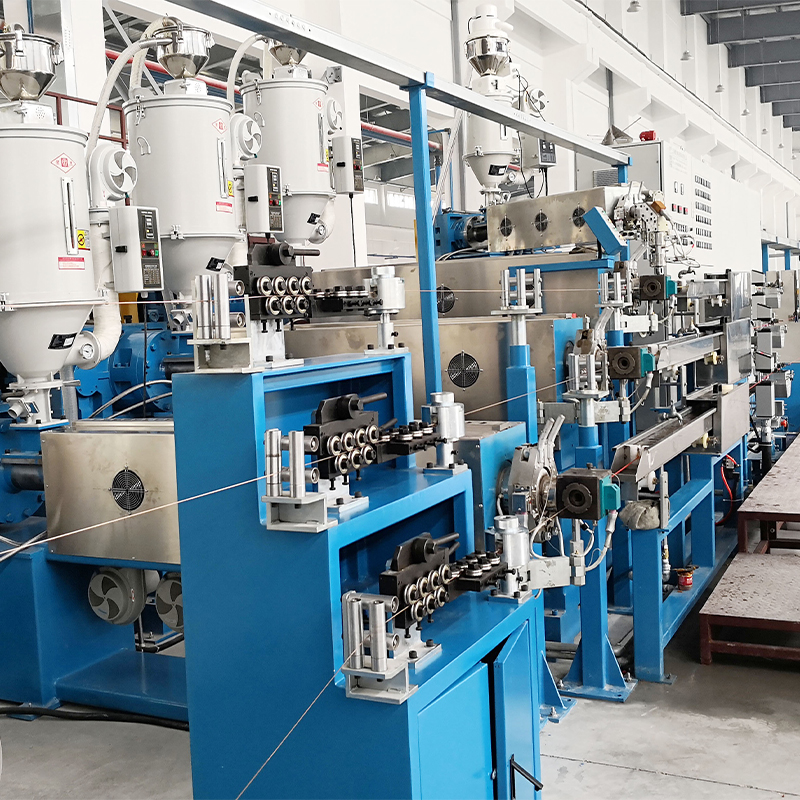
High-Efficiency PP PVC PE Cable Extruder
4. How the Extruder Supports Production Efficiency
Production efficiency involves more than maximum kilograms per hour. A genuinely efficient extrusion system should help manufacturers reduce setup losses, minimize scrap, maintain consistent quality, and keep the line operating for extended periods. The High-Efficiency PP PVC PE Cable Extruder addresses these objectives through a combination of material versatility and mechanical stability.
4.1 Reduced Material Changeover Pressure
Many cable factories manufacture several product types. A single facility may produce PVC-insulated building wire, PE communication cable, PP-insulated specialty cable, and protective jackets for industrial applications. If different extruders are required for each polymer, the manufacturer may need more floor space, additional operators, and larger investment in equipment and maintenance.
A multi-material extruder can simplify this arrangement. It does not eliminate the need for proper cleaning, temperature adjustment, compound handling, and process validation, but it provides a more flexible foundation for switching between material families. This can help manufacturers respond more quickly to different production orders.
Material changeovers should be planned carefully. Operators must confirm the appropriate temperature profile, feeding rate, screw speed, die configuration, and cleaning procedure for each compound. When these steps are managed correctly, a flexible extrusion platform can support a wider production schedule without requiring a dedicated machine for every material.
4.2 Stable Output and Reduced Scrap
Scrap can originate during startup, shutdown, material changes, diameter adjustment, or continuous production. Typical causes include unstable melt pressure, inconsistent feeding, excessive temperature fluctuation, poor centering, or incorrect line synchronization.
Stable torque transmission and intelligent power management can help reduce the operating fluctuations that lead to these problems. The extruder’s objective is to maintain a consistent material supply to the die so that the insulation or jacket remains as uniform as possible along the cable length.
Lower scrap rates improve more than raw material costs. They also reduce the labor associated with sorting and reprocessing, minimize production interruptions, and make delivery planning more predictable. In a high-volume plant, these benefits can accumulate quickly.
4.3 Support for Automated Production Lines
The extruder can function as part of a broader wire and cable production line. Depending on the product configuration, downstream equipment may include a cooling trough, diameter control system, spark tester, capstan or haul-off, take-up machine, coiling machine, and packaging equipment.
When the extruder delivers a stable melt, downstream equipment can operate more effectively. Uniform cable dimensions support reliable pulling and winding. Consistent surface quality improves the performance of spark testing and inspection systems. Predictable output also allows the take-up or coiling equipment to work with fewer speed corrections.
This compatibility is important for manufacturers developing integrated production lines. A high-performance extruder should not be considered as an isolated machine; it should serve as a dependable part of the complete manufacturing workflow.
5. Manufacturing Strengths Behind the Equipment
The performance of an extrusion machine depends on the quality of its engineering, component selection, assembly accuracy, and final testing. A manufacturer specializing in wire and cable machinery must understand not only mechanical design but also polymer behavior, cable geometry, electrical testing, cooling, winding, and production-line coordination.
5.1 Application-Oriented Engineering
An application-oriented approach begins with the cable product rather than with the machine alone. The manufacturer must consider conductor material, conductor diameter, insulation material, jacket compound, finished cable diameter, production speed, and required quality standards.
This approach allows the extruder to be configured for the actual production requirement. A line intended for large-caliber power cable may require different output and torque characteristics from a line designed for small communication wire. Similarly, PVC jacketing and PE insulation may require different process settings. Understanding these differences is essential for selecting suitable screw, die, heating, cooling, and control parameters.
The High-Efficiency PP PVC PE Cable Extruder reflects this application-focused philosophy by supporting multiple common cable polymers and emphasizing stable output for large-caliber applications.
5.2 Precision Mechanical Assembly
Extrusion equipment contains multiple rotating, heating, and alignment components. The screw and barrel must be assembled with appropriate precision. The transmission system must maintain accurate alignment. Heating zones should transfer energy consistently, while temperature sensors must provide reliable feedback.
Mechanical assembly quality influences vibration, noise, wear, and melt stability. An accurately assembled machine can operate more smoothly and reduce the risk of premature component failure. It can also make maintenance easier because wear patterns are more predictable and access points can be arranged logically.
5.3 Component and Transmission Reliability
The hardened helical gear reducer is one example of a component selected to support demanding production. The transmission must withstand continuous torque while maintaining smooth screw rotation. Other machine elements, including bearings, screw components, barrel sections, heaters, sensors, control cabinets, and feeding parts, must work together as a complete system.
A reliable manufacturer evaluates the equipment as an integrated unit. The objective is not merely to install individual high-quality components but to ensure that those components are correctly matched to the process requirements.
5.4 Process Testing and Quality Control
Before an extrusion machine is placed into service, its mechanical, electrical, and thermal functions should be checked. Typical checks may include screw rotation, reducer operation, temperature control, power response, feeding stability, emergency stop performance, and control-system communication.
For cable applications, process testing may also involve trial extrusion with a suitable polymer. This enables the manufacturer or customer to evaluate melt stability, surface finish, dimensional consistency, and compatibility with downstream equipment. Such testing is valuable because a machine can meet a mechanical specification while still requiring process adjustment for a particular cable compound.
A manufacturer with experience in complete wire and cable machinery can provide stronger coordination between the extruder and other line equipment. This reduces the risk of mismatched speeds, incompatible controls, or insufficient cooling capacity.
5.5 Customization for Customer Requirements
Cable producers often have specialized requirements. They may need a particular conductor range, a special insulation thickness, a specific die arrangement, a certain line speed, or integration with existing take-up and coiling systems. A flexible manufacturer should be able to discuss these requirements during the engineering stage.
Customization may involve screw dimensions, die tooling, temperature zones, control interfaces, feeding arrangements, cooling sections, line layout, or auxiliary equipment. The purpose of customization is not to add unnecessary complexity but to ensure that the equipment matches the customer’s products and operating practices.
6. Comparison with Conventional Cable Extruders
Conventional extruders may provide acceptable results for standard applications, but they can have limitations when manufacturers need high output, multi-material flexibility, and tighter cost control. The following comparison highlights how the High-Efficiency PP PVC PE Cable Extruder is positioned against more basic equipment.
| Evaluation Area | Conventional Single-Purpose Extruder | High-Efficiency PP PVC PE Cable Extruder |
|---|---|---|
| Material flexibility | Often optimized for one material family | Designed to support PP, PVC, and PE processing |
| Output potential | May be limited by basic transmission and plasticization design | Maximum stated output of up to 240 kg/h for large-caliber cable applications |
| Torque transmission | May use a less robust reduction arrangement | Uses a hardened helical gear reducer |
| Power management | Basic or manually adjusted power control | Intelligent power regulation for more controlled operation |
| Material utilization | Greater risk of over-extrusion and startup waste | Stated material-utilization improvement of up to 15% compared with conventional models |
| Production flexibility | May require separate machines for different polymers | One platform can support a broader range of cable products |
| Manufacturing integration | May be purchased as an isolated machine | Can be considered as part of a complete wire and cable production workflow |
| Cost-control potential | Higher material, energy, or changeover costs may occur | Designed to support lower waste, efficient power use, and multi-material production |
This comparison does not mean that every conventional extruder will perform poorly. Machine results depend on configuration, operating conditions, maintenance, and material formulation. However, the High-Efficiency PP PVC PE Cable Extruder is differentiated by combining several valuable functions in one design rather than relying on a single advantage.
For a manufacturer comparing equipment, the most important question is whether the machine can produce the required cable quality at the required speed and cost. Output figures should therefore be evaluated together with material utilization, energy consumption, changeover requirements, maintenance needs, and compatibility with existing equipment.
7. Application Areas
The extruder can serve a range of wire and cable production applications involving PP, PVC, and PE insulation or jacketing.
7.1 Power and Building Cable
PVC is widely used for building wire and various power cable jackets. The extruder can help produce uniform protective layers around conductors, provided that the correct compound, die, temperature profile, and cooling system are selected.
For larger cable sizes, the stated output capacity can be valuable. High-volume production requires a machine that can maintain melt delivery and mechanical stability over long operating periods. Proper downstream cooling and diameter control remain essential to achieving a finished product that meets the customer’s dimensional requirements.
7.2 Communication and Data Cable
PE and related materials are frequently used in communication cable applications. Electrical insulation performance, moisture resistance, and dimensional precision are important considerations. A stable extrusion process helps protect the geometry of the cable and supports consistent insulation coverage.
Communication cable production may involve relatively small conductors and tightly controlled dimensions. In these applications, the manufacturer should configure the extruder and die system for the intended cable range rather than relying solely on the maximum output rating.
7.3 Control and Industrial Cable
Industrial control cables may use PVC, PE, or other polymer compounds depending on the required flexibility, environmental resistance, and mechanical protection. A multi-material extruder allows manufacturers to address different customer specifications without investing in a completely separate machine for each product family.
Industrial cable orders can also vary significantly in batch size. The ability to process different materials and specifications can help a cable producer manage both regular orders and customized production requirements.
7.4 Protective Jackets and Specialty Products
In addition to primary insulation, extrusion is used to apply outer jackets and protective layers. These layers may be designed to provide mechanical protection, resistance to moisture, improved handling, or a finished appearance suitable for installation.
Because PP, PVC, and PE each offer different properties, the appropriate material depends on the cable’s intended environment. The machine’s multi-material compatibility gives producers more options when developing or manufacturing these products.
8. Standards and Quality Considerations
The equipment is described as compliant with IEC 60228 and ASTM D2240 standards. These references are relevant to cable conductor requirements and hardness-related material evaluation, respectively. However, compliance of a production machine should always be understood in relation to the complete cable product, the selected compound, the tooling, and the manufacturing process.
IEC 60228 is associated with conductors of insulated cables and provides requirements related to conductor classes, resistance, and construction. A cable manufacturer must ensure that the conductor, insulation, dimensions, and finished product meet the applicable requirements for the specific cable type.
ASTM D2240 is commonly used to measure the indentation hardness of rubber and plastic materials using a durometer. For polymer compounds used in cable production, hardness can be one of several properties evaluated alongside tensile strength, elongation, aging resistance, electrical performance, and environmental resistance.
A cable extruder supports compliance by helping the manufacturer achieve stable insulation and jacket geometry. Nevertheless, the final product must be tested using appropriate laboratory and production-line methods. Typical inspections may include conductor resistance, insulation thickness, outer diameter, spark testing, tensile strength, elongation, aging performance, and visual examination.
Manufacturers should establish a documented quality plan covering incoming materials, process settings, startup approval, in-process inspection, finished cable testing, and traceability. The extruder can provide the production foundation, but consistent quality depends on the entire operating system.
9. Installation and Commissioning Recommendations
Correct installation is necessary to obtain the expected performance from any extrusion machine. The equipment should be placed on a suitable foundation with enough space for operation, inspection, cleaning, and maintenance. Electrical supply, ventilation, temperature control, material handling, and downstream line alignment should be confirmed before commissioning.
9.1 Mechanical Alignment
The extruder should be aligned with the crosshead, cooling section, haul-off, and take-up equipment. Misalignment can cause uneven cable movement, increased mechanical stress, or inconsistent coating thickness. The complete line should be checked as a connected system rather than as separate machines.
9.2 Material Preparation
Operators should verify the condition of PP, PVC, or PE materials before feeding them into the machine. Material storage, moisture exposure, contamination, additives, colorants, and batch consistency can all affect extrusion quality. The recommended material preparation procedure should be followed for each compound.
9.3 Temperature and Speed Setup
Each polymer requires an appropriate temperature profile and screw speed. Operators should begin with validated settings and make gradual adjustments based on melt pressure, surface appearance, output, and finished cable dimensions. Sudden changes may create instability and make it difficult to identify the cause of a defect.
9.4 Trial Production
Initial trial production should be used to confirm the relationship between feeding rate, screw speed, line speed, die size, cooling conditions, and cable diameter. Samples should be inspected before the machine is released for full production.
Commissioning records should include material type, batch number, temperature settings, screw speed, line speed, output, cable diameter, insulation thickness, and test results. These records provide a useful reference for later production runs and troubleshooting.
10. Maintenance and Long-Term Reliability
Regular maintenance protects output stability and extends equipment service life. Maintenance schedules should cover the transmission system, screw and barrel, heaters, sensors, feeding parts, control cabinet, cooling areas, and safety systems.
10.1 Transmission Maintenance
The hardened helical gear reducer should be inspected according to the manufacturer’s maintenance recommendations. Lubricant condition, oil level, temperature, vibration, and unusual noise should be monitored. Early identification of abnormal conditions can prevent more serious damage.
10.2 Screw and Barrel Inspection
Wear between the screw and barrel can affect plasticization, output, and energy consumption. Abrasive compounds, contamination, excessive temperature, or improper cleaning can accelerate wear. Periodic inspection helps determine whether the components remain within acceptable operating condition.
10.3 Heating and Temperature Control
Heating zones and temperature sensors should be checked for accurate response. A failed heater or inaccurate sensor can produce local overheating or insufficient melting. Operators should also keep the relevant surfaces clean so that heat transfer remains consistent.
10.4 Cleaning During Material Changes
Cleaning is especially important when changing between PVC, PP, and PE or when changing colors and formulations. Residual material can contaminate the next production run or create variations in the extruded layer. A defined purge and cleaning procedure can reduce changeover waste and protect product quality.
10.5 Electrical and Safety Checks
Control cabinets, wiring, emergency stops, protective covers, alarms, and interlocks should be inspected regularly. Operators must be trained to follow safe procedures around high temperatures, rotating components, electrical systems, and pressurized polymer melt.
11. Economic Value for Cable Manufacturers
The business value of an extruder should be evaluated over its operating life rather than only by its purchase price. A machine that costs less initially may create higher long-term expenses if it consumes more material, uses more energy, requires frequent repairs, or limits the factory to a narrow product range.
The High-Efficiency PP PVC PE Cable Extruder can contribute to long-term value in several ways. Its multi-material capability can reduce the need for separate machines. Its stated 15 percent improvement in material utilization can lower compound consumption. Its intelligent power regulation may help control energy demand. Its high output can support larger production volumes. Its hardened transmission system can contribute to reliable operation under continuous loads.
These potential benefits should be measured using the customer’s actual production data. A factory should compare material consumption per kilometer, electricity use per kilogram, startup scrap, changeover time, maintenance cost, average operating speed, and finished-product rejection rate. This approach gives a more realistic picture of the machine’s return on investment.
Another economic advantage is production flexibility. When market demand changes, a manufacturer with a multi-material extruder can adjust its product mix more easily. This flexibility may be important for businesses serving construction, telecommunications, industrial automation, power distribution, and customized cable markets.
12. Selecting the Right Configuration
Although the extruder is designed as a flexible machine, the correct configuration depends on the cable product. Buyers should provide detailed information during the technical evaluation process.
| Requirement | Information to Confirm | Why It Matters |
|---|---|---|
| Polymer material | PP, PVC, PE, formulation, additives, color | Determines thermal and plasticization requirements |
| Conductor range | Minimum and maximum conductor diameter | Influences die and crosshead selection |
| Finished cable size | Target insulation or jacket diameter | Determines output and cooling requirements |
| Production capacity | Required kilograms per hour or meters per minute | Ensures the machine matches production targets |
| Insulation thickness | Nominal and allowable tolerance | Supports tooling and process-control decisions |
| Downstream equipment | Cooling, haul-off, testing, take-up, coiling, packaging | Ensures line synchronization |
| Factory conditions | Power supply, floor space, ventilation, ambient temperature | Supports safe installation and stable operation |
| Quality requirements | Applicable standards and inspection procedures | Defines acceptance and testing criteria |
Providing complete technical information at the beginning helps prevent mismatches between the extruder and the customer’s intended products. It also allows the manufacturer to recommend appropriate auxiliary equipment and line layout.
13. Why Manufacturer Experience Matters
Wire and cable machinery is a specialized field. A supplier that understands only general plastics processing may not fully appreciate the importance of conductor centering, spark testing, cable tension, cooling length, take-up synchronization, and insulation thickness control.
A dedicated wire and cable machinery manufacturer can approach the project from the perspective of the entire production process. This includes extrusion, coiling, take-up, pay-off, packaging, stacking, and auxiliary handling. Such experience supports better communication between the customer’s process engineers and the equipment supplier.
Manufacturer experience also matters after delivery. Operators may need assistance with installation, parameter setting, troubleshooting, maintenance planning, and future expansion. A supplier with a broader product portfolio can help customers build or upgrade a complete production line rather than treating the extruder as an isolated purchase.
The manufacturing strengths associated with the equipment include mechanical engineering, precision assembly, transmission design, intelligent control, material-processing knowledge, and production-line integration. These capabilities are particularly valuable for customers seeking turnkey wire and cable production solutions.
14. Operational Best Practices
To obtain reliable results, operators should treat the extruder as a controlled process rather than simply a high-speed machine. The following practices can help improve consistency.
14.1 Establish Standard Recipes
For each cable specification, manufacturers should create a standard process recipe covering material batch, feeding rate, temperature zones, screw speed, line speed, die configuration, cooling conditions, and take-up settings. Standard recipes reduce operator-to-operator variation.
14.2 Monitor Key Process Indicators
Important indicators include melt pressure, motor load, screw speed, temperature stability, cable diameter, insulation thickness, line tension, and surface appearance. Trends are often more useful than isolated readings. A gradual increase in motor load, for example, may indicate material inconsistency, contamination, or developing mechanical wear.
14.3 Control Startup Waste
Startup procedures should be planned so that the machine reaches stable temperature before production material is introduced at full rate. Operators should allow sufficient purge time and inspect initial cable samples before directing the product to the finished take-up.
14.4 Maintain Clean Material Handling
Clean hoppers, feeders, storage containers, and conveying systems reduce contamination. Foreign particles can damage the screw and barrel, create surface defects, or cause electrical weaknesses in the finished cable.
14.5 Coordinate the Complete Line
The extruder, cooling system, haul-off, tester, and take-up must operate at compatible speeds. An imbalance between these machines can create cable tension, diameter variation, looping, or winding defects. Line coordination should therefore be included in both commissioning and daily production management.
15. Frequently Asked Questions
Q1: What materials can the High-Efficiency Cable Extruder process?
The machine is designed for PP, PVC, and PE cable insulation and jacketing applications. The exact operating parameters depend on the compound formulation, additives, cable structure, and required output.
Q2: What is the maximum stated output?
The stated maximum output is up to 240 kilograms per hour for large-caliber cable applications. Actual output depends on the material, cable dimensions, insulation or jacket thickness, screw speed, die configuration, cooling capacity, and line speed.
Q3: How can the machine improve material utilization?
The machine is described as improving material utilization by 15 percent compared with conventional models. Precision plasticization and stable extrusion control can help reduce over-extrusion, unstable output, and process scrap. Actual savings should be confirmed through production testing.
Q4: Can one machine process both crystalline and amorphous polymers?
Yes. The equipment is designed to support PP, which has a crystalline structure, as well as PVC and PE materials with different processing characteristics. Appropriate cleaning, temperature adjustment, tooling, and process validation are necessary when changing materials.
Q5: What is the purpose of the hardened helical gear reducer?
The reducer transfers motor power to the extrusion screw while supporting stable torque delivery. Its hardened helical gear design is intended to provide reliable operation and resistance to wear under continuous production loads.
Q6: Does intelligent power regulation reduce energy consumption?
Intelligent power regulation is designed to manage energy input more effectively according to production conditions. It may help reduce unnecessary energy use while maintaining stable extrusion. The actual energy-saving result depends on the material, operating speed, production schedule, and factory conditions.
Q7: Is the extruder suitable for automated production lines?
Yes. It can serve as the core extrusion unit in a broader wire and cable line that includes cooling, haul-off, testing, take-up, coiling, packaging, or other auxiliary equipment. Proper synchronization and technical matching are required.
Q8: What information should a buyer provide before requesting a quotation?
The buyer should provide the material type, compound formulation if available, conductor diameter, target cable diameter, insulation or jacket thickness, required output, production speed, applicable standards, factory power conditions, and details of existing or planned downstream equipment.
Q9: How does the machine support cable quality?
Stable torque transmission, controlled power regulation, and precision plasticization help maintain a consistent melt supply. This supports uniform insulation or jacket thickness and a more stable cable surface. Finished products must still undergo the required electrical, dimensional, mechanical, and visual tests.
Q10: What maintenance is required?
Maintenance should include inspection of the gear reducer, lubrication, screw and barrel condition, heaters, temperature sensors, feeding system, electrical cabinet, safety devices, and control system. Cleaning procedures should be followed during material changes to reduce contamination and buildup.
Q11: Can the machine be customized?
Configuration may be adapted according to cable size, material, output, die requirements, line layout, control preferences, and auxiliary equipment. The final configuration should be determined through a technical review of the customer’s production requirements.
Q12: Is the machine suitable for both small and large cable products?
The equipment can support different cable applications when configured with suitable tooling and process parameters. Its stated maximum output is especially relevant to large-caliber cable production, while smaller cable products require appropriate die, screw-speed, and line-speed settings.
16. A Practical Evaluation Method for Buyers
Before purchasing a cable extruder, manufacturers should conduct a structured evaluation rather than comparing only headline output figures. The first step is to define the product range. A factory producing one PVC cable specification has different requirements from a factory processing several PP, PVC, and PE products.
The second step is to calculate the required production capacity. Buyers should distinguish between theoretical maximum output and sustainable production output. Sustainable output should include realistic startup, changeover, inspection, and maintenance conditions.
The third step is to evaluate material utilization. Requesting a production trial with the intended compound and cable design can help determine actual over-extrusion, startup waste, and finished-product consistency. This is especially important when raw material prices are high.
The fourth step is to assess integration. The extruder should match the crosshead, cooling system, haul-off, spark tester, diameter control, take-up, and packaging equipment. Line synchronization can have as much influence on productivity as the extruder itself.
The fifth step is to review service and maintenance support. Buyers should understand commissioning procedures, spare parts availability, operator training, recommended maintenance intervals, and troubleshooting assistance.
Finally, the manufacturer should compare total operating cost. Energy, material, labor, maintenance, downtime, and scrap should be included in the calculation. A machine with strong control over these factors can provide greater long-term value than a lower-priced machine with limited flexibility.
17. Conclusion
The High-Efficiency PP PVC PE Cable Extruder is designed for cable manufacturers that require a combination of material flexibility, output capability, process stability, and cost control. Its compatibility with PP, PVC, and PE allows it to support a broad range of insulation and jacketing applications. Its precision plasticization system is intended to provide a homogeneous melt, while the hardened helical gear reducer supports reliable torque transmission during continuous operation.
The machine’s intelligent power regulation addresses the need for controlled energy use and stable processing when polymer behavior changes. Its maximum stated output of up to 240 kilograms per hour gives it a strong position for high-volume and large-caliber cable production. The stated 15 percent improvement in material utilization compared with conventional models further strengthens its economic appeal by helping manufacturers reduce raw material waste.
Its greatest advantage is the way these functions work together. High output without stable plasticization can create scrap. Material flexibility without suitable transmission strength can limit reliability. Intelligent controls without accurate mechanical assembly may not deliver consistent results. By combining these elements, the equipment is positioned as a practical core machine for modern wire and cable production lines.
For manufacturers planning a new line or upgrading existing equipment, the extruder should be evaluated according to actual material formulations, cable dimensions, production targets, quality standards, and downstream requirements. With proper configuration, installation, commissioning, and maintenance, it can support more efficient production workflows and help cable enterprises respond to increasingly demanding market requirements.
References
1. International Electrotechnical Commission, IEC 60228, Conductors of Insulated Cables.
2. ASTM International, ASTM D2240, Standard Test Method for Rubber Property—Durometer Hardness.
3. General principles of polymer extrusion processing and screw plasticization.
4. General practices for wire and cable insulation, jacketing, cooling, testing, and take-up synchronization.
5. Technical information supplied for the High-Efficiency PP PVC PE Cable Extruder.