LANGUAGE
 中文简体
中文简体 русский
 Français
 Español
 Português
 عربى
عربى
Content
- 1 Why Cable Packaging Matters in Modern Production
- 2 Working Principle of the Cable Heat Shrink Packaging Machine
- 3 Main Features of the Equipment
- 4 Technical Specifications and Model Selection
- 5 Advantages Compared with Basic Packaging Methods
- 6 Advantages Compared with Less Flexible Heat Shrink Systems
- 7 Applications in Wire and Cable Manufacturing
- 8 Film Selection and Packaging Results
- 9 Manufacturing Strengths and Engineering Approach
- 10 Quality Control Considerations in Manufacturing
- 11 Production Integration and Factory Layout
- 12 Operating Recommendations
- 13 Maintenance and Service Practices
- 14 Economic Value for Cable Manufacturers
- 15 Why the Equipment Is Suitable for Different Production Scales
- 16 Frequently Asked Questions
- 16.1 What products can the machine package?
- 16.2 Which films are compatible with the machine?
- 16.3 What temperature does the heat shrink tunnel use?
- 16.4 How is the correct model selected?
- 16.5 What is the machine output?
- 16.6 Does the machine cover the entire coil?
- 16.7 Can the machine be connected to a cable production line?
- 16.8 Is the machine difficult to operate?
- 16.9 What safety functions are provided?
- 16.10 Can the machine reduce packaging labor?
- 16.11 What information should be prepared before requesting a quotation?
- 16.12 How does heat shrink packaging protect cable coils?
- 17 Selection Checklist for Buyers
- 18 Conclusion
- 19 References
- 20 Product: Cable Heat Shrink Packaging Machine
The final packaging stage is an important part of wire and cable production. Even when a cable has been extruded, cooled, tested, and coiled correctly, poor packaging can expose it to dust, moisture, abrasion, corrosion, and handling damage. A suitable packaging system must therefore do more than place film around a coil. It should create a stable protective layer, maintain a clean appearance, reduce manual work, control material consumption, and adapt to different product dimensions.
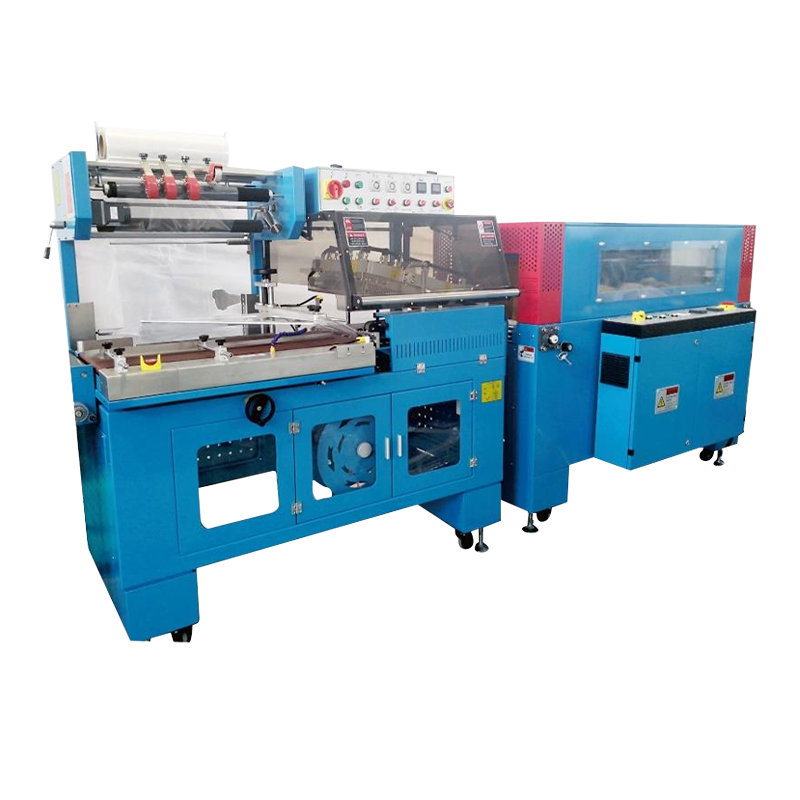
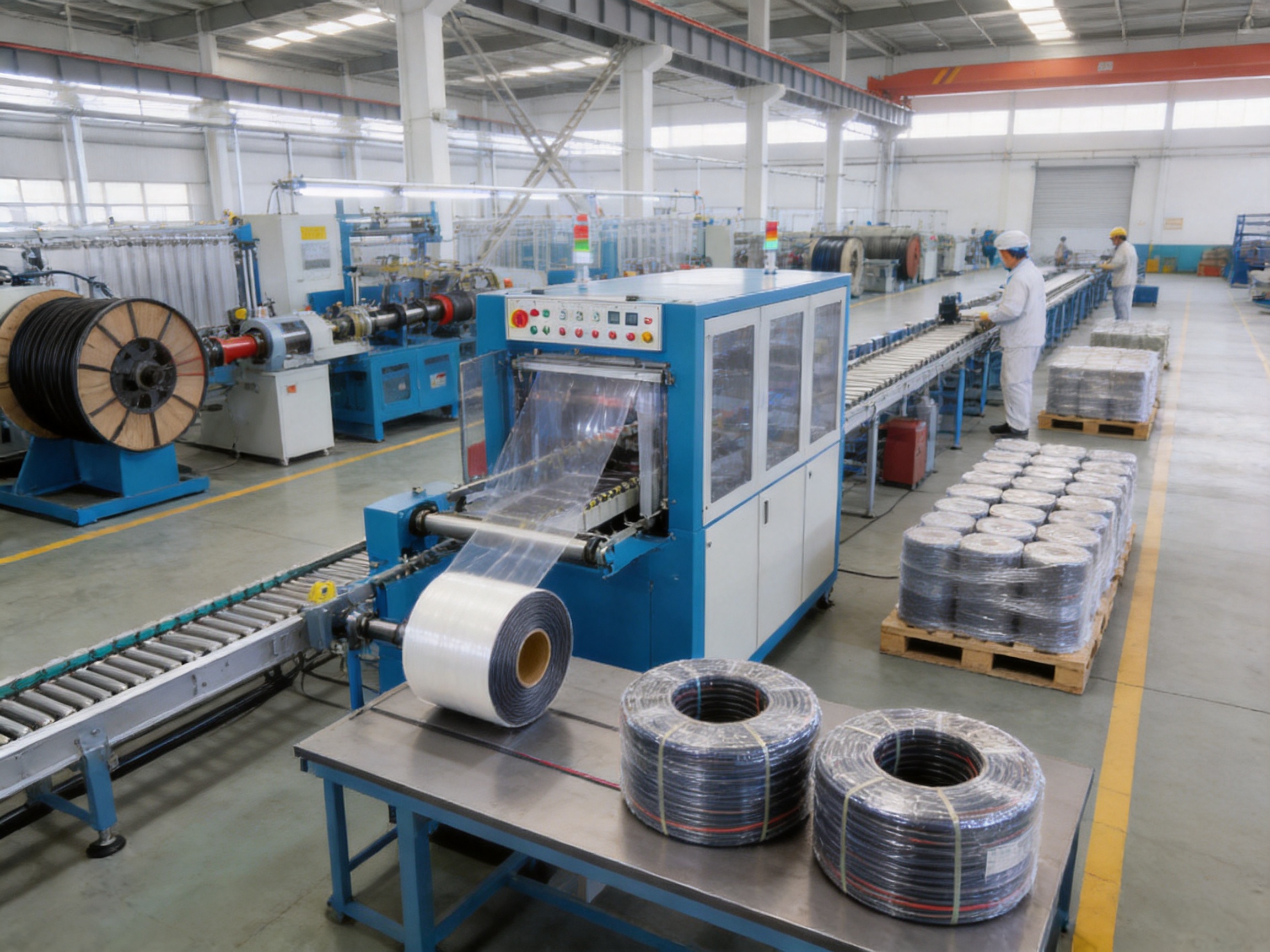
The Cable Heat Shrink Packaging Machine is designed for these requirements. It combines automatic film application, sealing, heat shrinking, and discharge into one continuous packaging workflow. It is suitable for cable coils, wire coils, and related circular or compact products used in power, communications, industrial manufacturing, and general electrical applications. By using PE, PVC, or POF film and applying controlled heat, the machine forms a close-fitting package around the coil.
This type of equipment provides a practical bridge between cable production and finished-goods logistics. It can be positioned after a coiling machine, take-up system, inspection station, or other cable processing equipment. Once the coil reaches the packaging position, the machine wraps it, seals the film, transfers it through a hot shrink tunnel, and sends the finished package to a working table or discharge area.
Cable Heat Shrink Packaging Machine
Why Cable Packaging Matters in Modern Production
Wire and cable products are often stored for long periods or transported through several distribution stages before reaching the final user. During this time, the cable may be exposed to warehouse dust, humidity, rain, condensation, friction, and repeated loading and unloading. A loosely wrapped coil can lose its shape, collect contaminants, or suffer surface damage. Packaging is therefore directly connected with product presentation, protection, and handling efficiency.
Traditional manual wrapping methods can be suitable for occasional production, but they become less practical as output increases. Manual operators must measure film, position the coil, wrap the material, seal the package, and apply heat. The results can vary from one package to another. Film may be too loose in one case and excessively tight in another. Uneven sealing can also create weak points that open during transportation.
An automatic heat shrink packaging system addresses these challenges by standardizing the main packaging steps. The film is applied according to a repeatable process, sealing is performed by a dedicated mechanism, and the shrink tunnel uses controlled temperature to form the film around the product. The result is a cleaner package with more consistent dimensions and a reduced dependence on manual judgment.
For cable manufacturers, consistent packaging can produce several operational benefits:
• Improved protection against dust and moisture during storage.
• Reduced risk of film loosening during transportation.
• Faster handling of completed coils.
• More uniform product appearance for customers and distributors.
• Lower labor requirements at the final packaging station.
• Better control of film consumption and packaging costs.
• Easier integration with upstream coiling and take-up equipment.
Working Principle of the Cable Heat Shrink Packaging Machine
The machine operates through a coordinated film application, heating, shrinking, and discharge process. Although the system is designed for simple operation, every stage contributes to package quality.
1. Coil Positioning
The cable coil is placed in the designated loading or transfer position. Depending on the production arrangement, the coil may arrive from a coiling machine, a motorized take-up system, a conveyor, or an operator-assisted loading point. Correct positioning allows the film to cover the required surface and helps maintain a stable sealing process.
2. Film Application
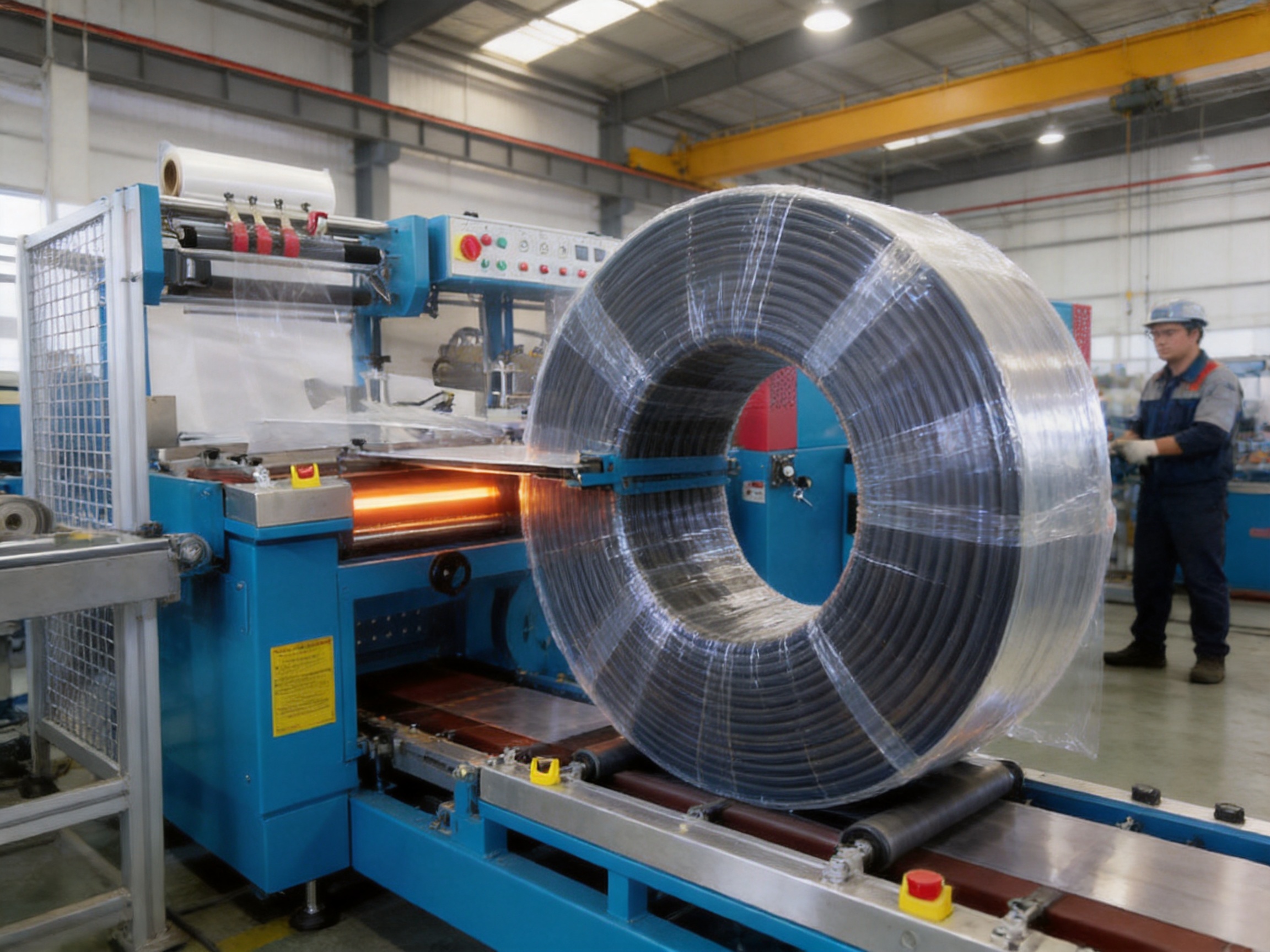
The packaging machine uses suitable PE, PVC, or POF film. The selected film is placed around the coil so that the product is enclosed from the front, back, right, and left sides. This is particularly valuable for cable coils because a partial wrap may leave edges or side surfaces exposed to dust and moisture.
Film selection can depend on the cable material, coil dimensions, required appearance, storage conditions, and transportation method. PE film is widely used for practical protective packaging. POF film can provide a clear and neat appearance, while PVC film may be selected for particular packaging requirements. The machine concept supports flexibility by allowing users to choose the film type according to the application.
3. Automatic Sealing
After the film is placed around the product, the automatic sealing mechanism closes the film. A reliable seal is essential because it keeps the package together before and during heat shrinking. The sealing stage should be adjusted according to film thickness and material characteristics. When the sealing conditions are properly set, the package can move into the heat tunnel without the film opening or shifting.
4. Transfer to the Hot Shrink Tunnel
The sealed coil is transferred to the hot shrink tunnel. The tunnel supplies controlled heat to the film, causing it to contract around the outer surface of the coil. Rather than relying on manual heating, the system provides a dedicated and repeatable heating environment. This helps create a closer fit and a more professional finished package.
5. Controlled Shrinking
The operating temperature can be adjusted within a range of approximately 150 to 200 degrees Celsius. The correct setting depends on the film type, film thickness, coil size, and desired shrinking result. Excessive heat may damage the film or create an uneven appearance, while insufficient heat may leave the package loose. Adjustable temperature control allows the operator to establish suitable parameters for different products.
6. Discharge to the Working Table
After shrinking, the finished coil is sent to the working table or discharge area. This arrangement simplifies collection, inspection, labeling, palletizing, or transfer to a warehouse. The completed package can be checked for sealing quality, film coverage, surface appearance, and general stability before shipment.
Main Features of the Equipment
Automatic Sealing and Packing
The machine combines sealing and packing operations so that the operator does not need to complete every step manually. This reduces repetitive labor and helps maintain a consistent work rhythm. Automatic movement between stages also limits unnecessary handling of the coil.
Full-Surface Film Coverage
The PE film can fully package the coil, including the front, back, right, and left sides. Full coverage is important for products that will be stored in open warehouse areas, moved across long distances, or handled several times before installation. A complete film layer reduces the number of exposed surfaces where dust and moisture can collect.
Adjustable Heating Temperature
The heating range of 150 to 200 degrees Celsius allows the machine to be adapted to different film materials and product conditions. Operators can establish practical settings through trial packaging and visual inspection. Once the appropriate parameters have been confirmed, the PLC control system helps maintain repeatable operation.
PLC Control System
The programmable logic controller coordinates the principal machine actions. It can manage the sealing sequence, transfer movement, heating operation, and discharge timing. A PLC-based system is generally easier to adjust and maintain than a packaging machine that depends entirely on mechanical timing or manual control.
Simple Operating Structure
The equipment is designed with a straightforward operating concept. A clear workflow helps new operators understand loading, parameter adjustment, starting, stopping, and routine inspection. Simple operation is especially useful in cable factories where several product sizes may be packaged during the same shift.
Safety-Oriented Design
Safety guards and emergency stop functions are included to help protect operators during production. The guards reduce direct access to moving or heated areas, while emergency stop controls allow the machine to be halted quickly when an abnormal situation occurs. Operators should still follow site safety procedures, use appropriate protective equipment, and receive training before operating the system.
Energy and Material Efficiency
Heat shrink packaging uses the amount of film needed to form a protective package around the coil rather than requiring multiple layers of manual wrapping. Consistent sealing and controlled shrinking can reduce unnecessary film usage. The energy-efficient design also helps control operating costs when compared with inefficient manual heating or poorly controlled packaging processes.
Technical Specifications and Model Selection
The equipment is available in several models for different combined product dimensions. The key selection value is the sum of the outside diameter and the coil height. This measurement helps determine whether the coil can pass through the packaging and shrinking area.
| Model | Maximum Combined Dimension | Output |
| HP 430 | Outside diameter + height less than or equal to 430 mm | 1 to 10 units per minute |
| HP 600 | Outside diameter + height less than or equal to 600 mm | 1 to 10 units per minute |
| HP 800 | Outside diameter + height less than or equal to 800 mm | 1 to 5 units per minute |
The listed output is a reference range and can vary according to coil dimensions, film characteristics, sealing time, heating settings, loading method, and the overall production layout. Smaller, lighter coils may move through the system more quickly than large or dense coils. A complete application assessment should therefore consider both the maximum size and the required production rhythm.
Choosing the HP 430 Model
The HP 430 is suitable for compact cable and wire coils whose outside diameter plus height does not exceed 430 millimeters. It can be a practical choice for smaller product lines, limited installation spaces, or manufacturers handling relatively narrow cable ranges.
Choosing the HP 600 Model
The HP 600 provides a larger working range for medium-sized coils. It is suitable for cable factories that produce several coil specifications and need a balance between capacity and installation footprint. Its stated output range is 1 to 10 units per minute, depending on the product and process settings.
Choosing the HP 800 Model
The HP 800 is designed for larger coils with a combined outside diameter and height of up to 800 millimeters. Its reference output is 1 to 5 units per minute. The lower stated range compared with the smaller models reflects the greater size and handling requirements of large packaged products.
Advantages Compared with Basic Packaging Methods
Many cable producers begin with manual film wrapping or simple stretch-wrapping equipment. These methods may require less initial equipment, but they can create limitations as production volumes grow. The Cable Heat Shrink Packaging Machine offers several advantages over these basic approaches.
More Consistent Package Quality
Manual wrapping depends heavily on the operator’s technique. The amount of overlap, film tension, sealing position, and heating time may vary throughout the day. An automatic system establishes a repeatable process, helping packages maintain a similar appearance and protective quality.
Better Side and Edge Protection
Basic wrapping often focuses on the most visible surface of the coil. The side edges may remain partially exposed. The full-package design is intended to cover the front, back, right, and left sides, giving the coil a more complete barrier against external contaminants.
Reduced Manual Work
When production output increases, manual packaging can become a bottleneck after the cable has already been produced. Automatic transfer, sealing, shrinking, and discharge reduce the amount of repetitive work and allow personnel to focus on inspection, material supply, quality control, or other production activities.
Improved Appearance
A tight shrink package generally looks cleaner than a loosely applied layer of film. A professional appearance can support product identification, customer confidence, and organized warehouse management. Neat packaging is especially useful when coils are sold through distributors or displayed before installation.
More Controlled Material Consumption
Inconsistent manual wrapping may use excessive film to compensate for uncertainty. The machine supports a more controlled packaging pattern, which can reduce waste and make film consumption easier to estimate. Over time, this helps manufacturers monitor packaging costs more accurately.
More Convenient Integration
A standalone manual station can interrupt the flow between cable production and finished-product storage. This machine is designed as part of a broader cable production environment and can be arranged after coiling, take-up, inspection, or conveying equipment. Such integration can shorten internal transportation distances and reduce unnecessary product handling.
Advantages Compared with Less Flexible Heat Shrink Systems
Not all heat shrink machines provide the same level of practical flexibility. Some systems are optimized for one product dimension or rely on complicated adjustments. The described equipment focuses on a simple structure, adjustable temperature, PLC control, and several model sizes.
Its adjustable heating range gives users more control when changing from one film to another. A manufacturer can also select a model based on its actual coil range instead of using one oversized machine for every application. This can help reduce unnecessary investment in capacity that is not required.
The simple design is another practical advantage. A machine with fewer complicated operating steps can be easier to understand, clean, inspect, and maintain. Maintenance personnel can focus on the sealing parts, heaters, sensors, conveyors, guards, control components, and film path without dealing with an unnecessarily complicated process.
The machine also combines packaging and shrinking rather than requiring several independent stations. This can save floor space and reduce the need to transfer partly packaged coils between separate pieces of equipment. A compact process is particularly valuable in factories where cable extrusion, coiling, testing, and packing must fit within a defined production area.
Applications in Wire and Cable Manufacturing
Power Cable Coils
Power cables are commonly stored and transported in coiled form. Depending on the product, the coil may be placed in a carton, on a pallet, or directly into a warehouse staging area. Heat shrink packaging can provide an additional barrier against dust and moisture before the cable is installed.
Communication Cable Products
Communication cables require clean and organized handling because contamination, abrasion, and poor storage can complicate installation. A neat film package helps keep the cable coil together and supports easier movement through distribution channels.
Industrial Control Cables
Industrial cables are often shipped to machinery manufacturers, control panel builders, automation integrators, and maintenance departments. The packaging machine can be used for coils of different sizes, provided the selected model is suitable for the combined product dimensions.
General Wire Coils
Small and medium wire coils can benefit from automatic packaging when they are produced in regular batches. The system can help standardize the appearance of multiple coil specifications and reduce the time needed to prepare them for storage.
Accessory and Related Components
In some production environments, packaging equipment is used not only for cable but also for compatible accessories or compact circular products. The suitability of such applications should be evaluated according to size, shape, material, film requirements, and heat tolerance.
Film Selection and Packaging Results
The choice of film affects sealing performance, visual appearance, shrink behavior, and protection. PE, PVC, and POF film are identified as suitable options for this machine concept, but the final selection should be based on the product and operating conditions.
PE film is commonly selected when the main priorities are practical protection, durability, and economical packaging. It can help shield the cable from dust and moisture and is suitable for many warehouse and transportation conditions.
PVC film may be selected when the packaging process requires a particular combination of clarity, shrink behavior, and availability. Operators should verify the correct temperature and sealing parameters for the selected material.
POF film is often considered when a clear, attractive package is important. It can provide a smooth appearance after shrinking when the heating conditions are properly controlled. The appropriate film thickness should be selected according to coil size and the expected handling environment.
Regardless of the film type, the film should be stored in a clean and dry area. Rolls should be protected from deformation and excessive heat. Contaminated or damaged film may cause poor sealing, uneven shrinking, or visible defects in the final package.
Manufacturing Strengths and Engineering Approach
The performance of a packaging machine depends not only on its final appearance but also on the quality of its design, assembly, control integration, and testing. Shanghai Yessjet Precise Machinery Co., Ltd. operates in the wire and cable machinery field and provides equipment associated with cable production, coiling, take-up, pay-off, accessory processing, and intelligent handling. This wider industry focus supports a more connected approach to packaging equipment development.
Experience in Cable Production Environments
A packaging machine designed by a company familiar with wire and cable production can take into account the characteristics of cable coils, including coil diameter, coil height, winding stability, surface sensitivity, and production rhythm. This is different from adapting a general-purpose packaging machine without considering the upstream cable process.
Process-Oriented Equipment Design
The equipment is arranged around a clear process: film application, sealing, heating, shrinking, and discharge. A process-oriented design makes it easier to define operating parameters, identify maintenance points, and connect the machine with other cable machinery.
PLC and Control Integration
Control integration allows the packaging sequence to be coordinated through programmable logic. It also creates a foundation for future production improvements, such as recipe management, additional sensors, production counters, or communication with upstream and downstream systems, subject to the final configuration.
Modular Product Range
The HP 430, HP 600, and HP 800 models provide different size ranges rather than forcing every customer to purchase the largest available system. A model-based approach helps align the equipment with the customer’s actual coil dimensions, factory space, and target output.
Focus on Maintainability
The simple design described for the machine supports practical maintenance. Operators can inspect the film path, sealing elements, heating system, conveyor or transfer components, sensors, and safety devices as part of a routine schedule. Easy access to common service points can reduce downtime and help maintenance teams respond more efficiently.
Attention to Operator Safety
Packaging equipment includes moving mechanisms and high-temperature areas, so safety must be considered in both design and operation. Guards and emergency stop functions provide important protective measures. Clear operating procedures, warning labels, regular inspection, and proper training should complement these built-in functions.
Adaptation to Turnkey Cable Solutions
The company’s broader product range includes wire and cable extrusion lines, cable extrusion machines, motorized pay-off equipment, motorized take-up equipment, coiling machines, intelligent robot stackers, fully automatic coiling and packaging equipment, and accessory equipment. This portfolio enables customers to consider packaging as part of a complete cable production solution rather than an isolated purchase.
Quality Control Considerations in Manufacturing
Reliable packaging equipment requires attention at several manufacturing stages. Mechanical frames must be assembled accurately so that film movement, sealing, and product transfer remain stable. Heating components must be positioned correctly to provide a usable shrink environment. Sensors and control components must be checked for correct response. Safety guards and emergency stop functions must also be verified before delivery.
A disciplined manufacturing process can include design review, component inspection, mechanical assembly, electrical wiring, PLC programming, trial operation, adjustment, and final inspection. Each stage contributes to the machine’s long-term reliability. Testing with representative cable coils and film can help reveal issues that may not be visible during an empty-machine trial.
Before installation, customers should confirm the coil dimensions, expected output, film type, film thickness, power requirements, factory layout, and connection requirements. Providing accurate production information allows the equipment configuration to match the intended application more closely.
During commissioning, technicians or trained operators can verify the following items:
• Film feeding and alignment.
• Sealing temperature and sealing time.
• Heat tunnel temperature stability.
• Transfer speed and discharge timing.
• Product positioning and package coverage.
• Emergency stop response.
• Guard installation and access protection.
• PLC sequence and control-panel operation.
• Finished package appearance and tightness.
Production Integration and Factory Layout
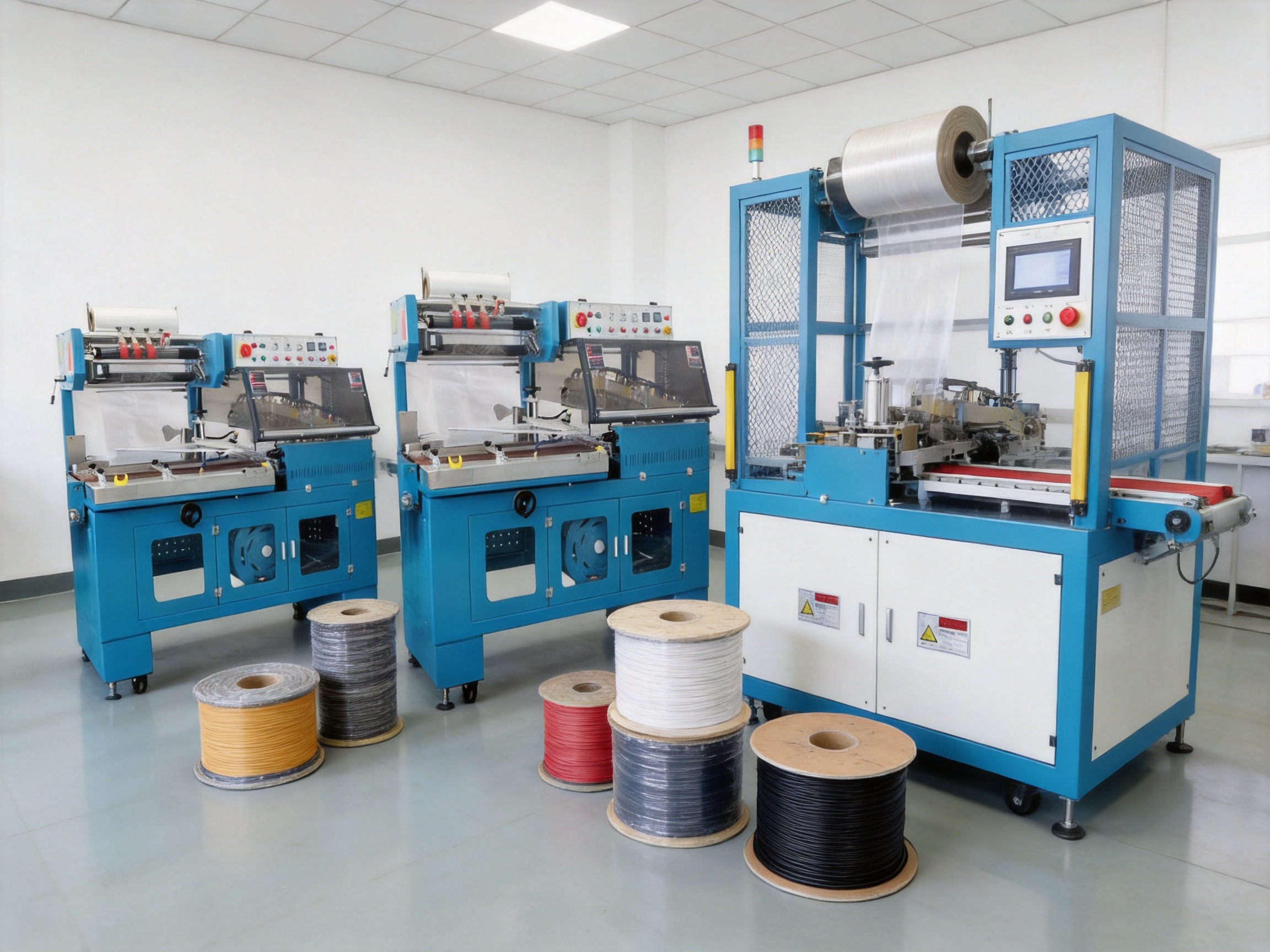
The packaging machine can be installed as a downstream unit after a coiling machine or cable take-up system. A typical process may begin with cable extrusion, followed by cooling, testing, coiling, packaging, inspection, and storage. The exact arrangement depends on cable type, coil dimensions, production volume, and site conditions.
When planning the layout, the factory should leave enough space for incoming coils, film roll replacement, operator access, maintenance, finished-package discharge, and emergency movement. The working table at the discharge end should be positioned so that operators can inspect or label the package without blocking the next product.
Material flow should be as direct as possible. If coils must be carried across long distances between coiling and packaging, the benefits of automation may be reduced. A suitable conveyor, transfer device, or integrated handling arrangement can help maintain a smooth connection between production stages.
Electrical and thermal requirements should also be evaluated before installation. The customer should prepare the required power supply, ventilation conditions, floor strength, and environmental controls according to the final machine configuration. The machine should be placed in a clean, adequately ventilated area away from unnecessary water spray, excessive dust, and obstructed walkways.
Operating Recommendations
Operators should begin each shift with a basic inspection. The film roll should be correctly installed and free from damage. The sealing area should be clean, and no scraps of film should obstruct the moving parts. Guards should be closed and emergency stop devices should be in their normal operating condition.
The operator should confirm that the selected temperature is suitable for the film currently in use. If the film type or thickness changes, the packaging settings may need to be adjusted. A short trial package is recommended before full production begins.
Coils should be placed in a stable condition. A badly formed or loose coil may shift during transfer and produce an uneven package even when the machine is operating correctly. Upstream coiling quality is therefore an important factor in final packaging quality.
During production, operators should observe the film surface, seal strength, shrink uniformity, and discharge movement. Wrinkles, holes, open seals, excessive film tension, or incomplete coverage may indicate incorrect settings, worn components, unsuitable film, or improper product positioning.
At the end of a shift, the operator should remove film scraps, clean accessible surfaces, inspect the sealing area, and record any abnormalities. Regular attention to small problems can prevent larger failures and support stable long-term operation.
Maintenance and Service Practices
Routine maintenance should follow the operating instructions supplied with the final machine. Common maintenance activities may include cleaning the film path, checking sealing components, inspecting heaters, verifying sensors, tightening accessible fasteners, and examining transfer components for wear.
Heating areas require particular attention because accumulated film residue can affect heat transfer and create undesirable odors or smoke. Cleaning should be performed only after the equipment has been stopped and the hot areas have cooled to a safe temperature.
The PLC and electrical cabinet should be kept clean and dry. Unusual alarms, unstable temperature readings, delayed movement, or repeated emergency stops should be investigated rather than ignored. If a control component or heating element requires replacement, the replacement part should match the approved specification.
Preventive maintenance can be organized according to daily, weekly, monthly, and production-volume intervals. The exact schedule depends on operating hours and environmental conditions. Keeping a maintenance record helps identify recurring problems and supports planning for consumable or spare-part replacement.
Economic Value for Cable Manufacturers
The economic value of automatic packaging comes from more than machine speed. It also includes labor reduction, lower rework, reduced film waste, more stable product handling, and improved use of factory space. When the packaging process is consistent, fewer coils may need to be opened and repackaged because of loose film or incomplete coverage.
Automation can also improve production planning. A manufacturer can estimate the packaging capacity of the selected model and organize upstream coiling output accordingly. This helps prevent finished coils from accumulating in an unprotected area while waiting for manual packaging.
Neat and stable packages may reduce damage claims and improve the efficiency of loading operations. Packages that maintain their shape are easier to stack, identify, move, and count. The benefits are particularly relevant for manufacturers supplying distributors, construction projects, electrical contractors, and industrial equipment producers.
Before purchasing, customers should compare the total operating value rather than only the initial machine price. Important factors include compatible coil dimensions, output requirements, film usage, labor costs, maintenance accessibility, safety functions, integration potential, and expected service life.
Why the Equipment Is Suitable for Different Production Scales
Small and medium-sized cable producers may need automation without installing a large, complicated packaging line. The simple design and model selection options make it possible to choose a machine that fits the product range and available floor space.
Larger manufacturers may use the equipment as part of a more comprehensive automatic production system. It can be combined with cable extrusion equipment, motorized pay-off and take-up systems, coiling machines, conveyors, intelligent robot stackers, and other downstream handling equipment.
The same basic packaging principle can support different operational styles. A factory may load coils manually while automating sealing and shrinking, or it may connect the machine to a more advanced automatic transfer system. This flexibility allows automation to be introduced progressively as production requirements develop.
Frequently Asked Questions
What products can the machine package?
The machine is primarily intended for cable coils, wire coils, and related compact products used in power, communication, and industrial applications. Product suitability depends on the coil dimensions, shape, stability, film selection, and required packaging result.
Which films are compatible with the machine?
The stated compatible film options include PE, PVC, and POF. The exact film thickness and operating temperature should be selected according to the product and film supplier’s recommendations. Trial packaging is useful when introducing a new film material.
What temperature does the heat shrink tunnel use?
The adjustable temperature range is approximately 150 to 200 degrees Celsius. The correct operating point depends on film type, thickness, coil size, and desired shrink result. Operators should avoid assuming that one temperature is suitable for every film.
How is the correct model selected?
Model selection is based mainly on the combined dimension of the coil’s outside diameter and height. The HP 430 supports a combined dimension up to 430 millimeters, the HP 600 up to 600 millimeters, and the HP 800 up to 800 millimeters.
What is the machine output?
The HP 430 and HP 600 models have a reference output range of 1 to 10 units per minute. The HP 800 has a reference output range of 1 to 5 units per minute. Actual output depends on coil size, film, sealing and heating settings, loading method, and product transfer conditions.
Does the machine cover the entire coil?
The equipment is designed to fully package the coil, including the front, back, right, and left sides. Correct product positioning and suitable film dimensions are still necessary to achieve complete coverage.
Can the machine be connected to a cable production line?
Yes. It can be arranged after a coiling machine, motorized take-up system, conveyor, inspection station, or other downstream equipment. The final connection method depends on the factory layout and required level of automation.
Is the machine difficult to operate?
The machine uses a straightforward workflow and PLC control system. Operators should receive training on loading, film replacement, temperature adjustment, safety procedures, emergency stopping, and routine inspection. After training, the basic operating sequence is intended to be simple.
What safety functions are provided?
The equipment includes safety guards and emergency stop functions. These features should be used together with site-specific risk assessments, operator training, protective equipment, and regular safety inspections.
Can the machine reduce packaging labor?
It can reduce the repetitive manual work associated with film wrapping, sealing, heating, and transferring finished coils. The amount of labor saved depends on the original packaging method, production volume, product range, and degree of line integration.
What information should be prepared before requesting a quotation?
Customers should provide the cable or coil type, minimum and maximum outside diameter, coil height, weight, film type and thickness, target output, available floor space, power conditions, and preferred loading and discharge method. These details help determine the appropriate model and configuration.
How does heat shrink packaging protect cable coils?
The shrunk film creates a close-fitting layer around the coil. This layer helps shield the cable from dust, moisture, and some handling-related contamination during storage and transportation. It does not replace appropriate warehouse conditions or other protective packaging required for severe environments.
Selection Checklist for Buyers
A well-planned purchase begins with a clear understanding of the production process. Buyers should measure both the smallest and largest coils rather than selecting a model based on one average product. The maximum combined dimension must remain within the selected model’s working range.
The expected daily and hourly output should also be reviewed. A machine with sufficient maximum dimensions may not provide the desired production rhythm if the coils are large, heavy, or slow to load. Output should be evaluated together with upstream coiling capacity and downstream handling capability.
Film availability is another important point. The factory should confirm that the preferred PE, PVC, or POF film can be sourced consistently and that its width and thickness are appropriate for the equipment. Film cost and storage conditions should be included in the operating-cost evaluation.
Finally, buyers should consider installation, operator training, preventive maintenance, spare parts, service response, and future expansion. A machine that fits present requirements but cannot be integrated into future production may provide less value over its working life.
Conclusion
The Cable Heat Shrink Packaging Machine provides a practical automatic solution for protecting wire and cable coils after production. Its film application, sealing, hot shrinking, and discharge process helps create a tight and uniform package while reducing repetitive manual handling. Support for PE, PVC, and POF film, adjustable heating from approximately 150 to 200 degrees Celsius, PLC control, safety guards, and emergency stop functions make the equipment suitable for a wide range of cable packaging applications.
The HP 430, HP 600, and HP 800 models allow manufacturers to match machine capacity with coil dimensions. Compared with basic manual wrapping or less integrated packaging methods, the equipment offers greater consistency, fuller side coverage, easier operation, controlled material use, and better potential for connection with cable production lines.
Supported by experience in wire and cable machinery, Shanghai Yessjet Precise Machinery Co., Ltd. can approach packaging as part of a complete production solution. Its wider equipment range covers extrusion, pay-off, take-up, coiling, stacking, packaging, and related cable processing requirements. This broader manufacturing strength can help customers plan a more coordinated and scalable production environment.
For a successful application, the final machine should be selected according to actual coil dimensions, film characteristics, required output, factory layout, and handling method. With the correct model, suitable process settings, proper maintenance, and trained operators, automatic heat shrink packaging can improve product protection, packaging appearance, production efficiency, and logistics readiness.
References
1. Product specification information for Cable Heat Shrink Packaging Machine, including HP 430, HP 600, and HP 800 model data.
2. Internal product description covering film application, automatic sealing, heat shrinking, PLC control, safety functions, and discharge operation.
3. General technical principles of polymer-film sealing and heat-shrink packaging for industrial products.
4. General practices for wire and cable coil storage, transportation protection, and finished-product handling.
5. General industrial guidance for programmable logic controller operation, machine guarding, emergency stopping, and preventive maintenance.