LANGUAGE
 中文简体
中文简体 русский
 Français
 Español
 Português
 عربى
عربى
Content
- 1 Why Extrusion Performance Determines Cable Quality
- 2 Multimaterial Capability for Flexible Cable Manufacturing
- 3 High Output for Large-Caliber Cable Applications
- 4 Precision Plasticization and Improved Material Utilization
- 5 Hardened Helical Gear Reducer for Reliable Torque Transmission
- 6 Intelligent Power Regulation and Energy-Conscious Operation
- 7 Advantages Compared with Conventional Extruders
- 8 Designing a Complete and Coordinated Cable Production Workflow
- 9 Manufacturing Strengths and Engineering Approach
- 10 Process Stability During Material Changeovers
- 11 Quality and Standards Considerations
- 12 Operational Benefits for Cable Manufacturers
- 13 Installation, Commissioning, and Maintenance
- 14 Application Areas
- 15 How to Evaluate the Extruder Before Purchase
- 16 Recommended Production Practices
- 17 Frequently Asked Questions
- 17.1 What materials can the High-Efficiency Cable Extruder process?
- 17.2 What is the maximum output?
- 17.3 How does the machine help reduce material costs?
- 17.4 Can one machine be used for different cable materials?
- 17.5 What is the purpose of the hardened helical gear reducer?
- 17.6 Does intelligent power regulation reduce energy consumption?
- 17.7 Is the extruder suitable for large-caliber cables?
- 17.8 Can the extruder be integrated into a complete cable production line?
- 17.9 What standards are relevant to the finished cable?
- 17.10 What should be prepared before installation?
- 17.11 How can manufacturers maintain stable long-term performance?
- 17.12 Who can benefit most from this equipment?
- 18 Conclusion
- 19 References
- 20 Product: High-Efficiency PP PVC PE Cable Extruder
Modern wire and cable manufacturers face constant pressure to produce more output while reducing material waste, energy consumption, labor requirements, and equipment downtime. These demands are especially important when a factory produces multiple cable types and must process different insulation and jacketing materials on the same production platform. A high-performance extruder must therefore provide more than basic melting and conveying. It must deliver stable plasticization, precise dimensional control, dependable torque transmission, fast material changeovers, and consistent operation over extended production cycles.
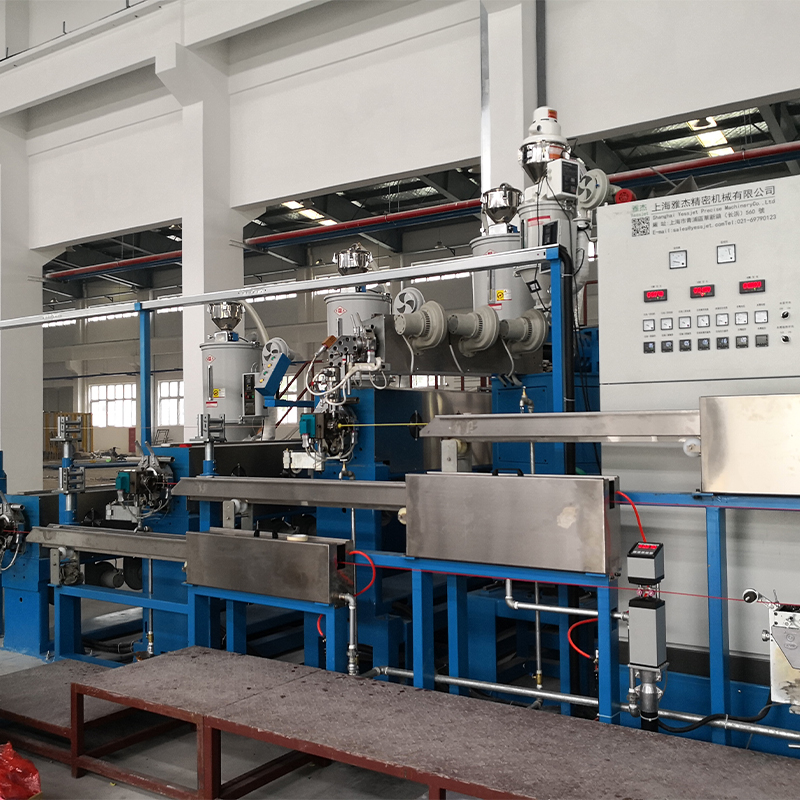
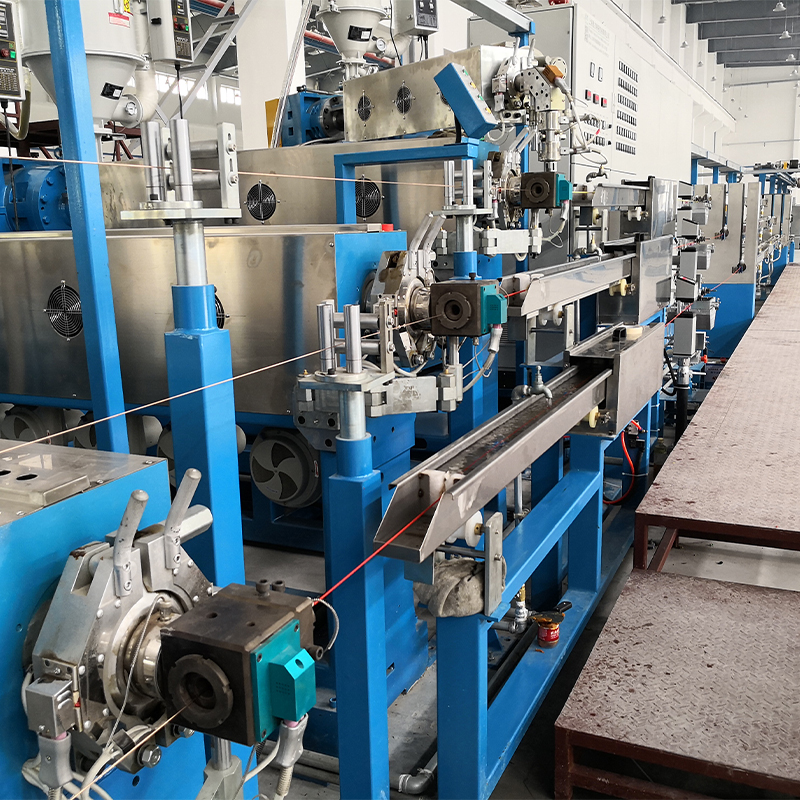
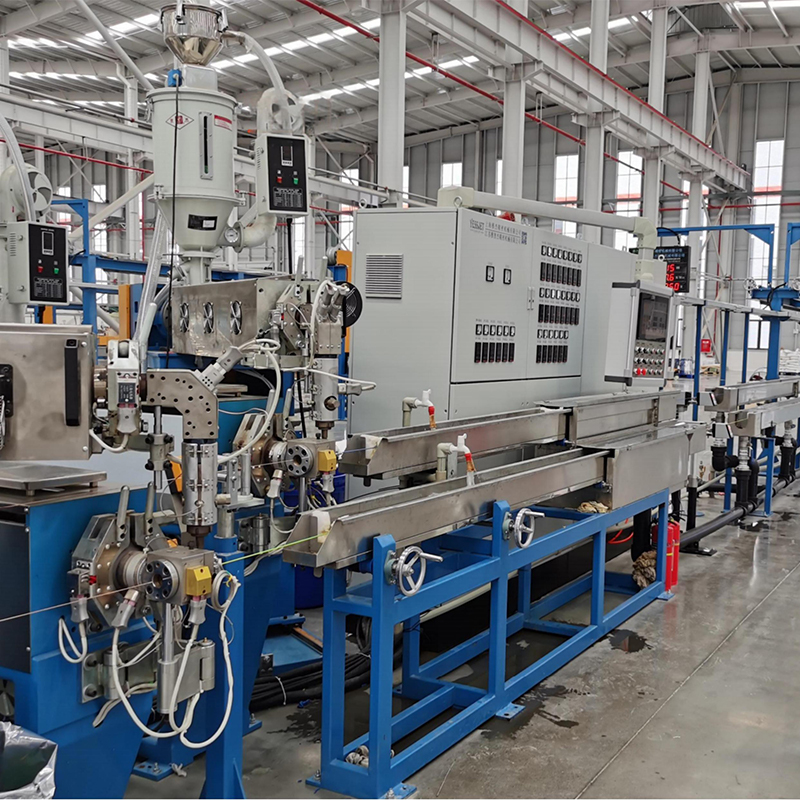
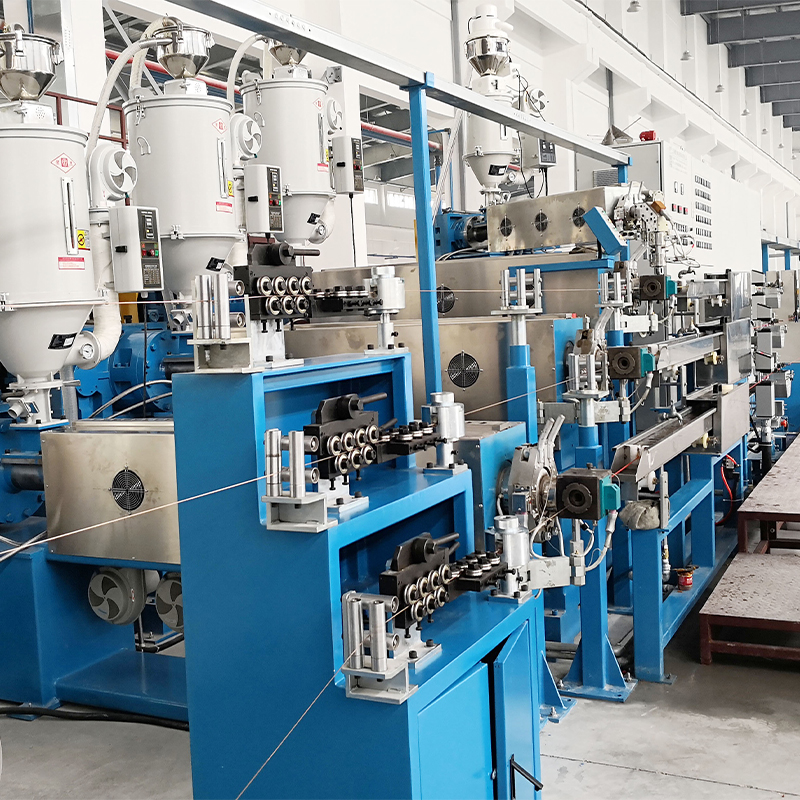
The High-Efficiency PP PVC PE Cable Extruder is developed as a multifunctional core machine for cable insulation and jacketing applications. It is designed to process polypropylene, polyvinyl chloride, and polyethylene, allowing manufacturers to respond to different product specifications without maintaining separate extrusion systems for every material family. Its configuration combines a precision plasticization system, a hardened helical gear reducer, intelligent power regulation, and a structure intended to support high-yield cable manufacturing.
With a maximum output of up to 240 kilograms per hour for large-caliber cable applications, the extruder is suitable for production environments that require both capacity and process stability. The machine is also engineered to improve material utilization by approximately 15 percent compared with conventional models under comparable operating conditions. For cable producers, this potential improvement can directly influence raw material costs, production efficiency, and the overall competitiveness of finished cable products.
The equipment is supplied by Shanghai Yessjet Precise Machinery Co., Ltd., a manufacturer focused on wire and cable machinery, cable production line solutions, coiling equipment, take-up and pay-off systems, packaging equipment, and intelligent material-handling technologies. By combining extrusion technology with related production-line equipment, the company can support customers seeking a coordinated manufacturing workflow rather than an isolated machine purchase.
High-Efficiency PP PVC PE Cable Extruder
Why Extrusion Performance Determines Cable Quality
In insulated and jacketed cables, the extrusion process directly affects electrical safety, mechanical durability, appearance, production speed, and long-term service performance. The polymer must be heated to the correct processing condition, mixed uniformly, conveyed at a controlled rate, and applied concentrically around the conductor or cable core. Any instability in these stages can create defects such as uneven wall thickness, surface roughness, voids, poor bonding, inconsistent diameter, or excessive material consumption.
Different polymers create different processing challenges. Polypropylene generally requires careful control of melting and flow behavior because its crystalline structure influences heat absorption, viscosity, and cooling response. Polyvinyl chloride has an amorphous structure and can be sensitive to excessive shear, overheating, and residence time. Polyethylene requires accurate temperature management and stable conveying to achieve a smooth, uniform layer. An extruder intended to work with all three materials must therefore provide a broad and controllable processing range.
A conventional machine may perform adequately with one material but become unstable when operators change to another. Changes in melt pressure, screw load, motor demand, and output rate can lead to production interruptions and increased setup waste. The High-Efficiency PP PVC PE Cable Extruder addresses this challenge through coordinated torque transmission, intelligent power regulation, and controlled plasticization. These features are intended to help the machine maintain a more stable extrusion condition when switching between materials with different thermal and rheological characteristics.
Stable extrusion is important not only for the appearance of a cable jacket but also for downstream operations. A jacket with inconsistent diameter may create problems during cooling, take-up, coiling, packaging, or final installation. A precise extrusion process reduces the burden placed on subsequent equipment and supports a more synchronized production line.
Multimaterial Capability for Flexible Cable Manufacturing
One of the most significant advantages of the equipment is its compatibility with PP, PVC, and PE materials. This flexibility allows a manufacturer to use one main extrusion platform for a wider range of cable products. Depending on the material formulation and cable design, these polymers can be selected for insulation, sheathing, protective layers, control cables, power cables, communication products, and other specialized applications.
Multimaterial compatibility can improve factory utilization in several ways. First, it allows production planners to assign different orders to the same extrusion line without investing in a separate machine for every polymer category. Second, it can help increase equipment utilization during periods when a single product family does not provide enough demand to keep one dedicated line operating continuously. Third, it supports manufacturers that offer customized cable constructions with varying insulation and jacket materials.
Material flexibility also requires disciplined process management. Operators must establish appropriate temperature profiles, screw speeds, output targets, cooling conditions, and changeover procedures for each polymer. The machine provides the mechanical and control foundation for these adjustments, while production teams remain responsible for selecting formulations and operating parameters appropriate to the cable design.
When PP, PVC, or PE is changed, the extruder must maintain smooth feeding and conveying while avoiding excessive shear and unnecessary thermal exposure. The hardened helical gear reducer supports reliable torque transmission to the screw, while intelligent power regulation helps match motor demand to actual operating conditions. Together, these systems are designed to reduce sudden fluctuations and promote a more predictable process.
For factories producing several cable specifications, the ability to work with multiple materials can be more valuable than maximum speed alone. A machine that delivers stable output across a broad range of materials can reduce changeover losses, simplify production planning, and help manufacturers respond more quickly to customer requirements.
High Output for Large-Caliber Cable Applications
The extruder offers a maximum output of up to 240 kilograms per hour for large-caliber cable production. This capacity provides a strong foundation for manufacturers that need to process substantial quantities of polymer without sacrificing process control. High output is particularly important in power cable, industrial cable, and other applications where the insulation or jacket volume is considerable.
Output capacity must be evaluated together with melt quality and dimensional stability. A machine that produces a high quantity of material but generates frequent surging, uneven plasticization, or excessive scrap may not deliver a genuine productivity advantage. The design of this extruder places emphasis on coordinated conveying, plasticization, and power management so that increased throughput can be supported by stable operation.
For production managers, the practical value of a 240-kilogram-per-hour maximum output depends on material type, formulation, cable diameter, layer thickness, screw speed, temperature settings, and line configuration. Actual output should be confirmed during technical planning and commissioning. Nevertheless, the stated capacity demonstrates that the equipment is intended for demanding industrial production rather than low-volume laboratory work.
High output can also improve the economics of long production runs. When the extrusion process remains stable, operators can produce more cable within a scheduled shift, reduce the frequency of stoppages, and make better use of downstream cooling, take-up, and packaging equipment. The result can be a more balanced production line in which the extruder does not become the limiting stage.
Precision Plasticization and Improved Material Utilization
Plasticization is the process through which polymer pellets or compound granules are heated, compressed, mixed, and transformed into a homogeneous melt. In cable extrusion, plasticization quality has a direct influence on surface finish, insulation consistency, jacket integrity, and dimensional accuracy. Incomplete melting or poor mixing can create visible and hidden defects, while excessive thermal or mechanical stress can degrade the compound.
The High-Efficiency PP PVC PE Cable Extruder incorporates a precision plasticization system intended to promote uniform melting and stable melt delivery. The goal is to provide a consistent polymer condition at the die, where the material is formed around the conductor or cable core. A more uniform melt can help reduce fluctuations in pressure and output, giving operators a better basis for controlling cable diameter and wall thickness.
The machine is also described as improving material utilization by approximately 15 percent compared with conventional models. This improvement should be understood as a design and operating objective that may vary according to polymer formulation, product dimensions, process settings, operator practice, and production conditions. When achieved, better utilization can reduce over-extrusion, startup waste, trim loss, and material variation across the production run.
Raw material is one of the largest variable costs in many cable factories. Even a small reduction in unnecessary polymer consumption can create meaningful annual savings when production volumes are high. A cable jacket that is only slightly thicker than specification across thousands of meters can consume a substantial amount of additional compound. Precise extrusion control helps manufacturers approach the intended wall thickness more consistently and reduce the margin of unnecessary material.
Improved utilization also supports sustainability objectives. Lower polymer consumption means fewer raw materials are required for the same finished cable length. It can reduce waste handling, decrease the energy associated with processing excess material, and support more efficient use of warehouse space. These benefits are especially relevant for manufacturers seeking to improve both operating margins and environmental performance.
Hardened Helical Gear Reducer for Reliable Torque Transmission
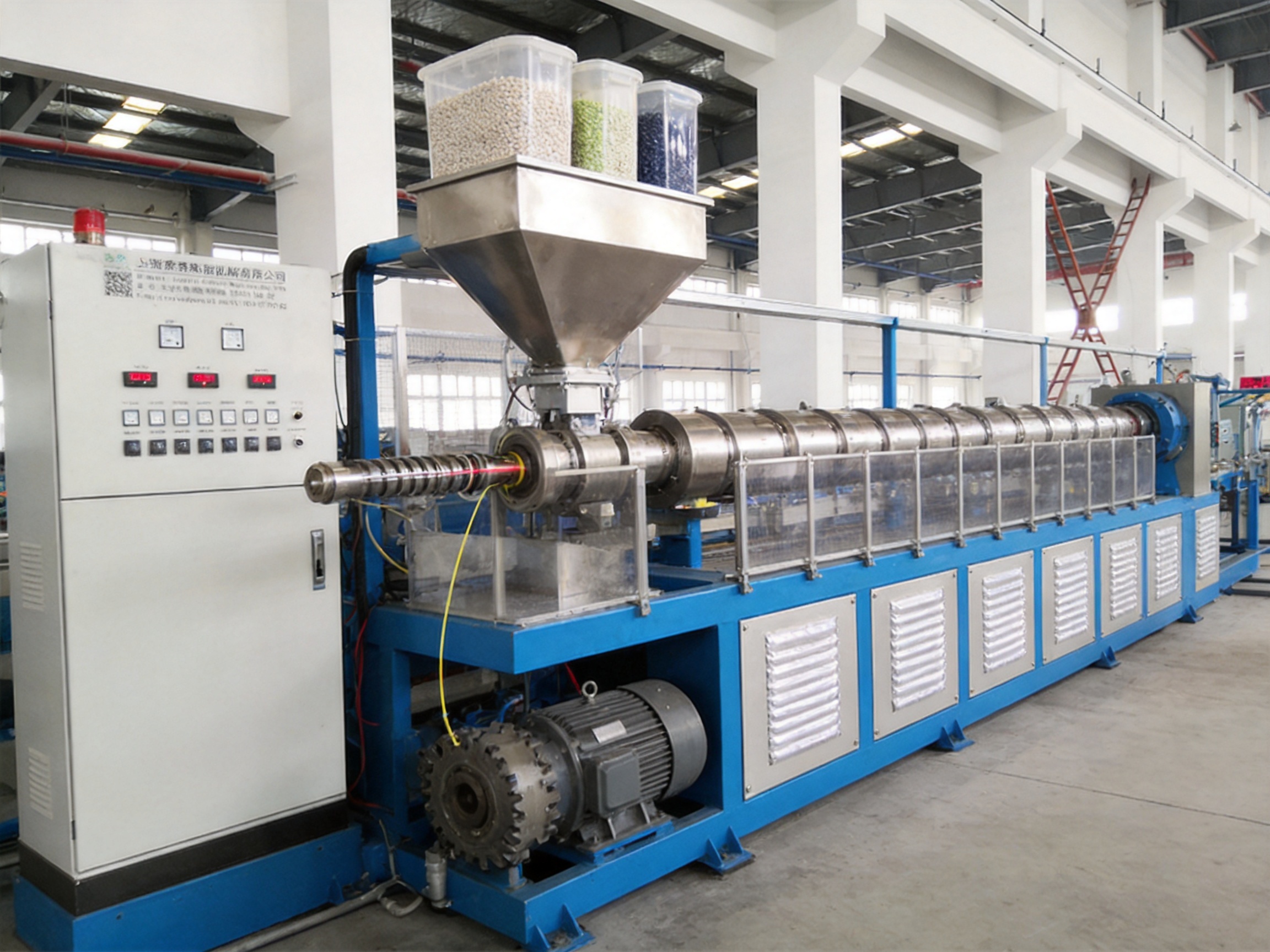
Torque transmission is a critical part of an extrusion machine because the screw must rotate continuously under load while conveying and plasticizing polymer. The gear reducer transfers motor power to the screw and determines how efficiently and reliably the drive system can respond to production demands. If the reducer experiences excessive wear, backlash, vibration, or heat generation, the extrusion process may become unstable and maintenance costs may increase.
The equipment uses a hardened helical gear reducer designed for demanding industrial operation. Helical gears are known for smooth engagement and effective load transfer, while hardened gear surfaces can provide improved resistance to wear when correctly manufactured, lubricated, aligned, and maintained. This combination is intended to support dependable screw rotation and stable performance during high-load production.
A robust reducer can be especially valuable when processing large-caliber cable, because the required polymer throughput and screw torque may be higher than in smaller cable applications. The drive system must maintain sufficient force without creating excessive vibration or irregular speed. Smooth torque transmission helps the plasticization system work under more consistent mechanical conditions.
The reducer also contributes to equipment service life. By using a hardened gear structure and appropriate engineering practices, the machine is designed to withstand repeated production cycles. Maintenance intervals and service requirements will depend on operating load, lubricant selection, ambient conditions, installation accuracy, and preventive maintenance procedures, but a reliable transmission system provides a strong mechanical foundation for long-term operation.
Intelligent Power Regulation and Energy-Conscious Operation
Energy efficiency is increasingly important in cable extrusion because the process requires continuous heating, screw rotation, cooling, and auxiliary equipment operation. Electricity consumption affects the cost per meter of finished cable and contributes to the environmental footprint of production. Intelligent power regulation helps the machine respond more effectively to changing process requirements rather than operating all systems at unnecessarily high levels.
The extruder is equipped with an intelligent power regulation system intended to coordinate power demand with operating conditions. During startup, material changes, speed adjustments, and high-output production, the system can support more controlled energy use. Stable power delivery can also help reduce fluctuations in screw speed and melt pressure, which may otherwise affect product consistency.
Energy-saving performance should be evaluated across the complete production line. The extruder is one component of a larger system that may include preheating, cooling, water circulation, diameter measurement, take-up, pay-off, coiling, and packaging. When these systems are properly matched, the overall line can operate more efficiently than a group of independently selected machines. The manufacturer’s broader product portfolio supports this approach by offering related equipment for coordinated cable production.
Energy consumption is influenced by many factors, including polymer type, output rate, screw design, barrel temperature, ambient conditions, cable dimensions, insulation thickness, and cooling requirements. Intelligent regulation does not eliminate the need for correct process setup, but it can provide operators with a more responsive and controllable platform.
Advantages Compared with Conventional Extruders
The High-Efficiency PP PVC PE Cable Extruder offers several potential advantages over conventional equipment designed for narrower applications or less integrated control. These advantages relate to flexibility, material efficiency, output, drive durability, and production coordination.
| Evaluation Area | Conventional Equipment Challenge | High-Efficiency Extruder Advantage | Production Benefit |
|---|---|---|---|
| Material range | May be optimized for one material family and require extensive adjustment for others | Designed for PP, PVC, and PE processing | Greater product flexibility and improved line utilization |
| Material utilization | Higher risk of over-extrusion and startup waste | Precision plasticization and controlled extrusion support improved utilization | Potential reduction in polymer cost and production scrap |
| Drive system | Standard transmission components may experience higher wear under heavy load | Hardened helical gear reducer for stable torque transmission | Reliable screw operation and improved durability |
| Power management | Less responsive energy control can increase unnecessary consumption | Intelligent power regulation coordinates power demand with operation | More energy-conscious production and controlled operation |
| Output capability | Limited throughput may restrict large-volume cable production | Maximum output of up to 240 kilograms per hour for large-caliber cable applications | Higher production capacity and better suitability for industrial lines |
| Production flexibility | Separate machines may be needed for different polymer types | One multifunctional platform supports several common cable polymers | Lower equipment duplication and simpler production planning |
These advantages should be considered in relation to the manufacturer’s actual products and operating objectives. A factory focused on one narrow cable specification may prioritize specialized speed, while a diversified producer may place greater value on material flexibility and rapid changeovers. The equipment is particularly attractive for companies seeking a balance between throughput, process control, and broad application capability.
Designing a Complete and Coordinated Cable Production Workflow
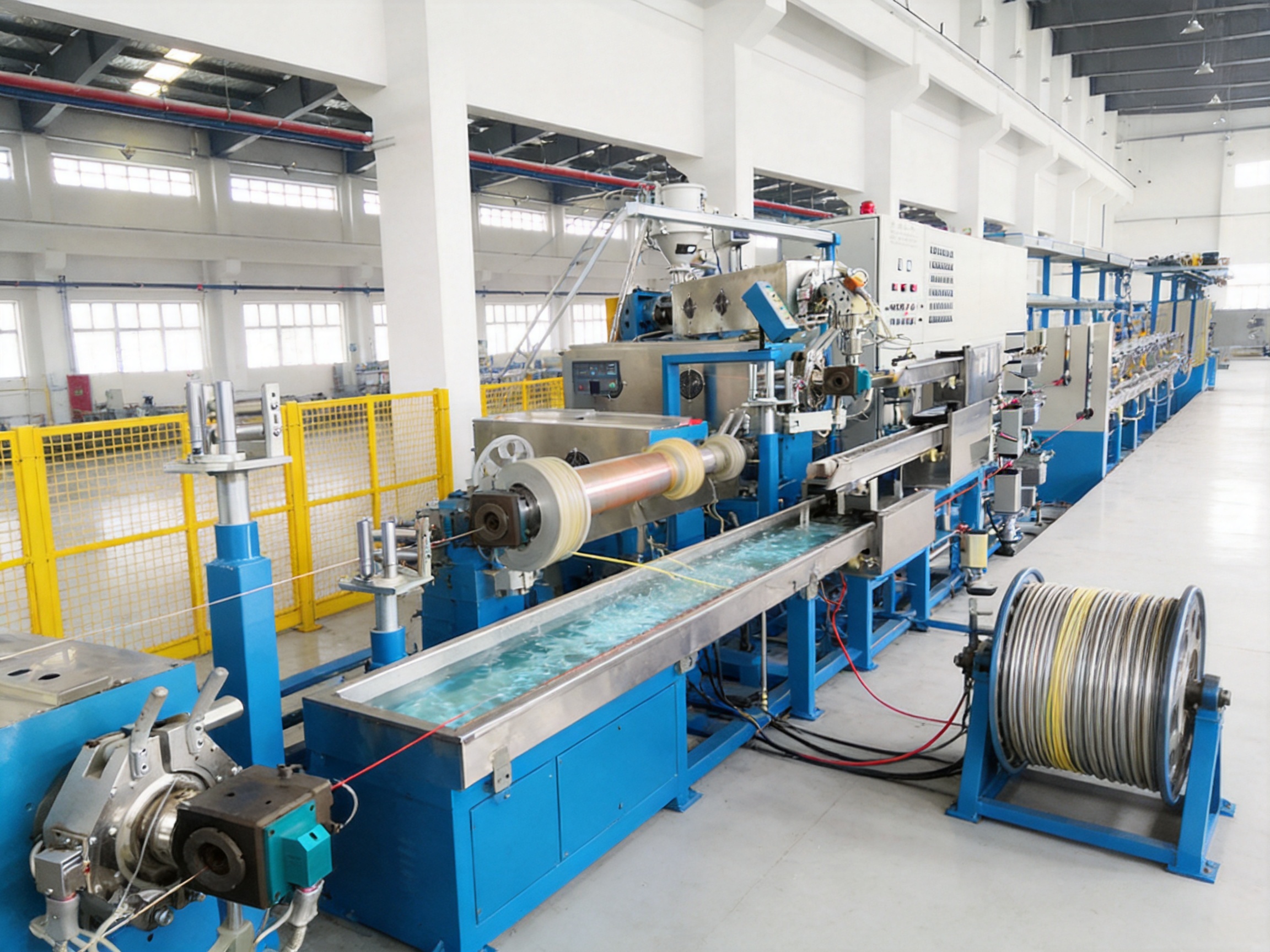
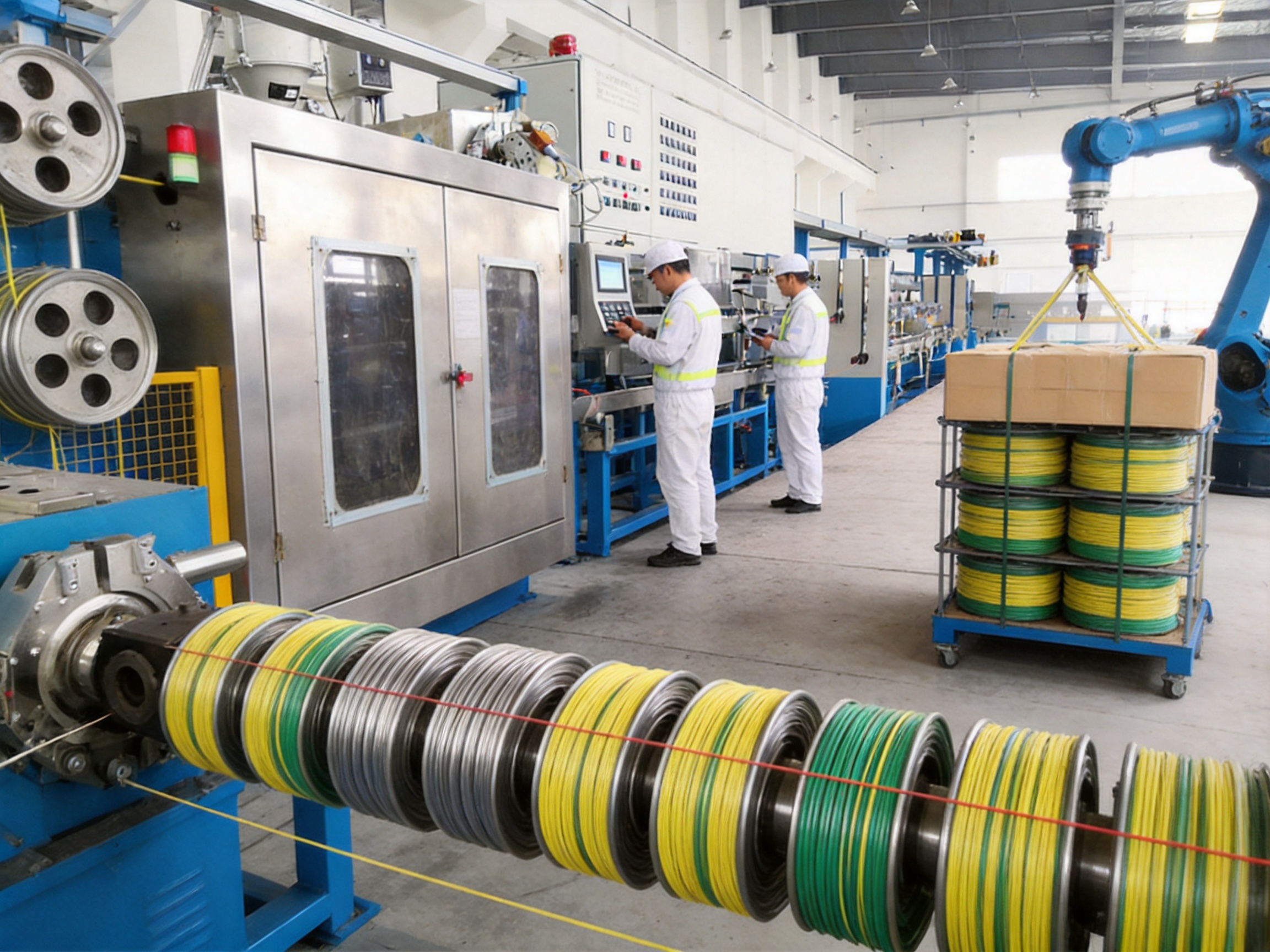
An extruder rarely operates alone. A complete wire and cable production line may include a motorized pay-off, conductor preheating equipment, an extrusion head, cooling troughs, diameter monitoring, spark testing, a motorized take-up, coiling machinery, packaging equipment, and material-handling systems. Each component must work at a compatible speed and tension to produce cable efficiently.
The manufacturer’s product range includes motorized pay-off equipment, motorized take-up equipment, coiling machines, fully automatic coiling and packaging equipment, intelligent robot stackers, accessory equipment, and wire and cable extrusion lines. This wider capability allows customers to consider the extrusion process as part of a complete manufacturing solution.
A motorized pay-off provides controlled unwinding of the conductor or cable core. Consistent pay-off tension is important because fluctuations can affect centering, elongation, and the final position of the insulation layer. After extrusion and cooling, a motorized take-up maintains controlled winding tension and collects the finished cable in a suitable package.
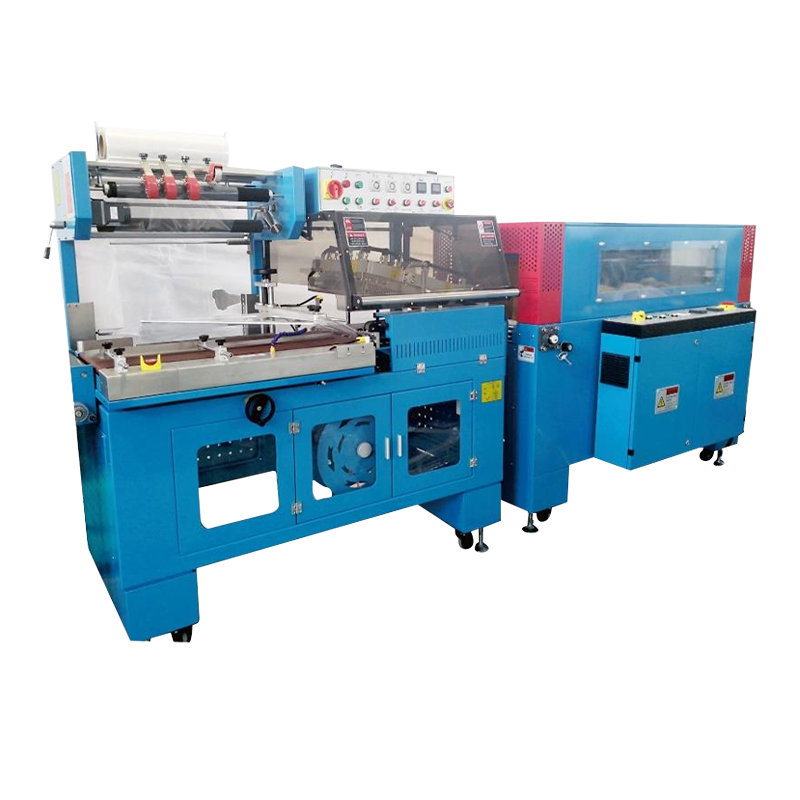
Coiling and packaging equipment can further reduce manual handling. Automated coiling systems help form uniform coils, while packaging equipment can prepare finished products for storage, transport, and delivery. Intelligent robot stackers can support organized movement of coils or packages, improving workplace efficiency and reducing repetitive manual operations.
When these systems are engineered as a coordinated line, the benefits of the extruder can be better realized. A high-output extruder should not be paired with an undersized take-up or an unreliable pay-off. Similarly, a precise extrusion process can lose its advantage if downstream tension control is inconsistent. Integrated planning helps maintain a stable production rhythm from raw material input to finished package.
Manufacturing Strengths and Engineering Approach
Advanced cable machinery depends on more than a product concept. It requires mechanical design, electrical control, machining accuracy, assembly discipline, process testing, and application support. Shanghai Yessjet Precise Machinery Co., Ltd. positions itself as a wire and cable machinery manufacturer providing turnkey production solutions. This positioning reflects an engineering approach that considers the complete workflow rather than only the main machine frame.
Precision machinery manufacturing begins with a clear understanding of the customer’s cable specifications. Important factors include conductor material, cable diameter, insulation or jacket thickness, polymer type, production speed, take-up format, factory layout, and desired automation level. These parameters influence the extruder configuration, die arrangement, cooling system, line speed, drive selection, and downstream equipment.
Mechanical accuracy is essential in extrusion equipment. Screw alignment, barrel geometry, die concentricity, reducer installation, bearing support, and frame stability all influence process behavior. Careful fabrication and assembly help reduce vibration and maintain the alignment needed for stable operation. The use of robust transmission components also supports the machine’s suitability for continuous industrial production.
Electrical and control integration is another important manufacturing strength. Intelligent power regulation must work together with motor control, heating zones, sensors, alarms, and operator settings. A well-integrated control system makes it easier to monitor important production conditions and respond to changes in polymer behavior or line speed. It can also help operators establish repeatable recipes for different cable products.
Quality control should extend from incoming components to final line testing. Reducers, motors, heating elements, control cabinets, sensors, screws, barrels, dies, and auxiliary equipment must be checked against technical requirements. During assembly and commissioning, manufacturers should verify rotation direction, temperature response, safety functions, control accuracy, mechanical alignment, and communication between line components.
For a machinery supplier, application knowledge is as important as manufacturing capability. Cable production varies significantly from one customer to another. A company that can evaluate the relationship between extrusion, cooling, tension, take-up, coiling, and packaging is better positioned to recommend practical equipment combinations. This reduces the risk of creating a line in which one machine performs well but the overall system remains unbalanced.
Process Stability During Material Changeovers
Material changeovers are a normal part of diversified cable manufacturing, but they can create waste and downtime if not managed carefully. Changing from one polymer to another may require adjustments to temperature zones, screw speed, feed rate, output, cooling conditions, and die settings. Residual material in the barrel and head may also affect the first portion of the new product.
The extruder’s multimaterial design and controlled power system are intended to make these transitions more manageable. Stable torque transmission helps maintain consistent screw rotation, while precision plasticization supports a more uniform melt condition. Operators can then apply the process settings appropriate to PP, PVC, or PE while monitoring pressure, temperature, output, and cable dimensions.
An effective changeover procedure should include material preparation, cleaning or purging, verification of temperature settings, inspection of the die and tooling, and controlled startup of the new product. Production teams should record the successful parameters for each material and cable specification. This creates a repeatable operating knowledge base and helps reduce the time required for future orders.
Shorter and more predictable changeovers can provide a competitive advantage for manufacturers serving customers with varied order quantities. Instead of reserving one line for each material or accepting long idle periods, the factory can schedule multiple products on a flexible extrusion platform. This capability may be especially valuable for contract manufacturers and cable companies producing customized orders.
Quality and Standards Considerations
The equipment is described as supporting cable enterprises working toward IEC 60228 and ASTM D2240-related requirements. IEC 60228 is associated with conductors of insulated cables, including conductor classes and resistance-related considerations. ASTM D2240 is commonly used for determining the indentation hardness of rubber and plastic materials. These standards address different aspects of materials and cable construction, so the final product must be tested according to the specific standards and customer specifications applicable to its intended use.
Machinery compliance and product compliance should be considered separately. An extruder provides the process capability required to manufacture a cable, but the finished cable must still be produced with approved materials, suitable tooling, correct process parameters, and appropriate inspection. Manufacturers should validate conductor dimensions, insulation thickness, jacket dimensions, electrical properties, mechanical properties, temperature performance, and other requirements relevant to the product design.
Process control contributes to quality by reducing variation. Important control points can include polymer drying or preparation, feeding consistency, barrel temperature, melt pressure, screw speed, line speed, cooling water conditions, cable diameter, concentricity, spark testing, take-up tension, and final package dimensions. Monitoring these parameters helps identify deviations before they become large quantities of nonconforming product.
The extruder’s stable operation is particularly useful for maintaining consistent insulation and jacket geometry. Uniform thickness supports electrical performance and helps prevent premature mechanical damage. For manufacturers supplying demanding industrial or infrastructure markets, repeatability is often as important as maximum production speed.
Operational Benefits for Cable Manufacturers
The machine can create value at several levels of a cable manufacturing business. At the production level, the high output and material flexibility can help increase line utilization. At the cost level, improved material usage and intelligent power regulation can support lower operating expenses. At the management level, integrated equipment planning can simplify production control and reduce dependence on manual handling.
For small and medium-sized manufacturers, a multifunctional extruder can reduce the need to purchase separate lines for PP, PVC, and PE products. This can make capital investment more efficient, provided the planned product range is compatible with the machine’s technical configuration. It also allows the factory to test new cable products without immediately committing to a completely separate production platform.
For larger manufacturers, the equipment can serve as a high-capacity line within a broader production network. Its output capability can support large-volume orders, while its flexible material range can help cover different product categories. In a multi-line factory, equipment with similar control concepts can also simplify operator training and maintenance planning.
Reduced material waste can improve both direct and indirect costs. Direct savings come from lower polymer consumption. Indirect savings may result from fewer rejected lengths, less time spent on rework, reduced waste handling, and more predictable production scheduling. These benefits are strongest when the machine is correctly configured and operated with disciplined quality procedures.
Automation in the surrounding line can further reduce labor requirements. Motorized pay-off and take-up systems regulate movement and tension, while coiling, packaging, and robot stacking equipment can handle finished products with less manual intervention. This creates a safer and more organized production environment and allows employees to focus on supervision, quality checks, and equipment management.
Installation, Commissioning, and Maintenance
Successful installation begins with appropriate site preparation. The factory should confirm floor strength, line length, equipment clearance, electrical supply, ventilation, cooling water availability, polymer storage, and access for maintenance. The extrusion line should be positioned so operators can safely reach control points, inspect the process, clean the equipment, and replace tooling when required.
Commissioning should proceed in stages. Mechanical systems are checked first for correct assembly, alignment, lubrication, and fastener security. Electrical systems are then tested for wiring accuracy, grounding, emergency stops, sensor operation, heating response, and motor control. After these checks, the machine can be run at controlled speed with suitable material while operators verify pressure, temperature, output, cable dimensions, cooling, and take-up behavior.
Preventive maintenance is essential for protecting the machine’s performance. Operators should inspect the reducer, lubrication system, motor, heaters, sensors, control cabinet, screw, barrel, die, cooling equipment, and downstream drives at defined intervals. Abnormal vibration, temperature, noise, pressure fluctuation, or power consumption should be investigated rather than ignored.
Tooling maintenance is especially important. A damaged or contaminated die can affect concentricity, surface finish, and material flow. Regular cleaning and inspection help maintain consistent product quality and reduce startup waste. The correct die and tooling arrangement should always be selected for the cable diameter, insulation thickness, polymer, and production speed.
Maintenance records can help production teams identify recurring issues. By documenting material changes, operating conditions, alarms, replaced components, and quality results, the factory can establish more accurate service intervals and improve troubleshooting. This data-driven approach complements the equipment’s intelligent control functions.
Application Areas
The High-Efficiency PP PVC PE Cable Extruder can serve a broad range of wire and cable production requirements. Potential applications include insulation and jacketing for power cables, control cables, industrial cables, building wires, flexible cables, signal products, and other polymer-coated conductors. The exact suitability depends on cable design, polymer formulation, tooling, and required production standards.
Large-caliber cable producers can benefit from the machine’s high output potential. These products require a substantial quantity of insulation or jacket compound, and stable conveying is necessary to maintain production speed. The hardened reducer and controlled plasticization system provide a suitable foundation for heavy-duty operation.
Manufacturers serving multiple markets may value the PP, PVC, and PE capability. A single production platform can support different performance requirements, provided that operators use the correct compound and process recipe. This flexibility can help a company expand its product range and respond to changing customer demand.
Contract manufacturers may also benefit from the machine’s adaptability. Customer orders can vary in conductor size, polymer type, layer thickness, and packaging format. A flexible line allows production planners to organize short, medium, and long runs more effectively while reducing the need for duplicate equipment.
How to Evaluate the Extruder Before Purchase
Before purchasing an extrusion machine, manufacturers should prepare a detailed technical specification. The specification should include the polymer types, expected output range, cable diameter range, insulation and jacket thickness, conductor specifications, required line speed, production standards, package formats, and desired automation level.
It is important to distinguish maximum output from normal output. A maximum figure demonstrates the upper capability of the equipment under suitable conditions, while normal production depends on product geometry, formulation, quality requirements, and operating practices. Customers should request a technical discussion that relates the stated output to their actual cable products.
Energy performance should also be evaluated in relation to the complete line. Ask how the extruder interacts with pay-off, take-up, cooling, coiling, packaging, and control systems. A properly balanced line can deliver better practical efficiency than a machine selected only for its individual motor power or nominal speed.
Material changeover requirements should be discussed in advance. Different compounds may require different temperature profiles, screw designs, cleaning methods, or die configurations. A supplier with experience in turnkey cable production can help determine which tooling and accessories are necessary for the proposed product range.
After-sales support is another important consideration. Installation guidance, commissioning, operator training, spare parts availability, troubleshooting, and maintenance instructions can significantly influence the long-term value of the machine. A strong supplier should be able to support the equipment throughout its service life, not only during the initial sale.
Recommended Production Practices
To obtain the best performance from the extruder, raw materials should be stored and prepared according to the compound supplier’s recommendations. Contamination, moisture, incorrect blending, or inconsistent pellet size can affect feeding and plasticization. Clean material handling practices help protect both product quality and the extrusion system.
Operators should allow the machine to reach stable temperature conditions before starting full production. Rapidly increasing screw speed or output before the melt is uniform can create pressure surges and unnecessary waste. A controlled startup gives the machine time to establish a consistent flow through the die.
Process recipes should be documented for each cable type. Useful information includes barrel temperatures, screw speed, feed rate, line speed, cooling settings, take-up tension, die configuration, and acceptable diameter ranges. Standardized recipes reduce dependence on individual operator memory and make production more repeatable across different shifts.
Quality checks should be performed throughout the run rather than only at the end. Diameter, surface condition, concentricity, insulation integrity, and package tension should be monitored at suitable intervals. Early detection allows operators to correct a deviation before it affects a large length of cable.
When changing from PVC to PP or PE, or between different compound grades, operators should follow a controlled purge and cleaning procedure. Residual material can affect the first section of the new product, and incompatible residues may influence color, surface quality, or processing stability. A documented changeover procedure helps control this risk.
Frequently Asked Questions
What materials can the High-Efficiency Cable Extruder process?
The machine is designed for PP, PVC, and PE cable extrusion applications. These materials can be used for insulation layers or jackets depending on the cable design, compound formulation, and technical requirements. Final material suitability should be confirmed during engineering evaluation.
What is the maximum output?
The stated maximum output is up to 240 kilograms per hour for large-caliber cable applications. Actual output depends on polymer type, cable size, layer thickness, screw speed, temperature settings, tooling, and line configuration.
How does the machine help reduce material costs?
The extruder combines precision plasticization and controlled extrusion to support improved material utilization. The design is described as providing approximately 15 percent better utilization than conventional models under comparable conditions. Actual savings depend on product specifications, process control, raw material quality, and operating practices.
Can one machine be used for different cable materials?
Yes. The equipment is designed to support PP, PVC, and PE production. Operators must use the correct processing parameters, tooling, cleaning procedures, and compound specifications for each material.
What is the purpose of the hardened helical gear reducer?
The reducer transfers motor power to the extrusion screw. Its hardened helical gear construction is intended to provide smooth and reliable torque transmission, improved wear resistance, and stable screw rotation during demanding production.
Does intelligent power regulation reduce energy consumption?
Intelligent power regulation is designed to coordinate power demand with actual operating conditions and support more efficient control of the extrusion process. Overall energy consumption will also depend on output, polymer type, temperature settings, cooling requirements, and auxiliary equipment.
Is the extruder suitable for large-caliber cables?
The equipment is specifically described as supporting high output for large-caliber cable applications, with a maximum output of up to 240 kilograms per hour. Technical suitability should be confirmed according to the required cable diameter, layer thickness, compound, die size, and production speed.
Can the extruder be integrated into a complete cable production line?
Yes. It can be combined with pay-off, take-up, cooling, coiling, packaging, stacking, and other accessory equipment. Coordinated line engineering helps maintain compatible speed, tension, control, and material flow from conductor input to finished cable packaging.
What standards are relevant to the finished cable?
The supplied information references IEC 60228 and ASTM D2240. These standards address different areas of cable conductors and material hardness. The applicable standards depend on the cable type, market, customer specification, and material system. Finished products should be tested using the required procedures.
What should be prepared before installation?
The customer should prepare suitable floor space, electrical power, cooling water, ventilation, material storage, line clearance, lifting access, and operator safety arrangements. The complete line layout should also be reviewed before delivery.
How can manufacturers maintain stable long-term performance?
Regular lubrication, reducer inspection, tooling cleaning, sensor checks, electrical inspection, temperature monitoring, and preventive maintenance are essential. Operators should also record process data and correct abnormal vibration, pressure, temperature, noise, or power behavior promptly.
Who can benefit most from this equipment?
The extruder is well suited to cable manufacturers that need a flexible platform for PP, PVC, and PE materials, high output for demanding production, improved material utilization, and integration with automated pay-off, take-up, coiling, packaging, or stacking systems.
Conclusion
The High-Efficiency PP PVC PE Cable Extruder is designed to address the main challenges of modern cable production: material flexibility, output capacity, process stability, energy management, and cost control. Its ability to process PP, PVC, and PE gives manufacturers greater freedom when developing and scheduling cable products. Its precision plasticization system supports consistent melt delivery, while the hardened helical gear reducer provides a reliable mechanical foundation for screw operation.
The machine’s intelligent power regulation and stated material-utilization improvement can help manufacturers pursue lower production costs without relying solely on increased line speed. With output reaching up to 240 kilograms per hour for large-caliber cable applications, it is positioned for industrial environments where stable, high-volume production is required.
Its value becomes even greater when integrated with the manufacturer’s broader range of pay-off, take-up, coiling, packaging, stacking, and accessory equipment. A coordinated turnkey approach can help cable factories create a more balanced production workflow, reduce manual handling, and improve the consistency of finished cable packages.
For companies evaluating new extrusion capacity, the most important step is to match the machine configuration with actual cable specifications, polymer formulations, output targets, quality standards, and future expansion plans. When correctly selected, installed, and maintained, this multifunctional extruder can provide a strong platform for efficient, reliable, and adaptable wire and cable manufacturing.
References
International Electrotechnical Commission. IEC 60228: Conductors of Insulated Cables.
ASTM International. ASTM D2240: Standard Test Method for Rubber Property—Durometer Hardness.
International Electrotechnical Commission. General principles for electrical cable insulation, conductor construction, and routine production testing.
Technical literature on polymer extrusion, screw plasticization, melt conveying, and cable jacketing processes.
Industrial references on helical gear reducers, torque transmission, preventive maintenance, and energy management in extrusion machinery.