LANGUAGE
 中文简体
中文简体 русский
 Français
 Español
 Português
 عربى
عربى
Content
- 1 Why Tension Control Is Essential in Cable Manufacturing
- 2 Working Principle of a Wire Cable Tension Control System
- 3 Key Advantages Compared with Basic Winding Arrangements
- 4 Application in Wire and Cable Production Lines
- 5 Engineering Strengths of the Product
- 6 Advanced Manufacturing and Quality Approach
- 7 How the System Supports Product Quality
- 8 Installation and Operating Considerations
- 9 Recommended Selection Criteria
- 10 Why Choose an Experienced Machinery Manufacturer
- 11 Economic Benefits for Cable Manufacturers
- 12 Quality, Safety, and Operational Discipline
- 13 Future-Oriented Value of Tension Management
- 14 Frequently Asked Questions
- 14.1 What is the main function of a Wire Cable Tension Control System?
- 14.2 Can the system be used with a storage rack?
- 14.3 What problems can occur without proper tension control?
- 14.4 Is the system suitable for different cable types?
- 14.5 Can it be integrated with existing equipment?
- 14.6 Does tension control replace a take-up machine?
- 14.7 How does the system reduce cable waste?
- 14.8 Why is tension especially important during coiling?
- 14.9 What should be considered before installation?
- 14.10 What makes this product different from a basic mechanical winding arrangement?
- 14.11 Can the system support a complete cable production solution?
- 14.12 How should operators maintain stable performance?
- 15 Conclusion
- 16 References
- 17 Product: Wire Cable Tension Control Systems
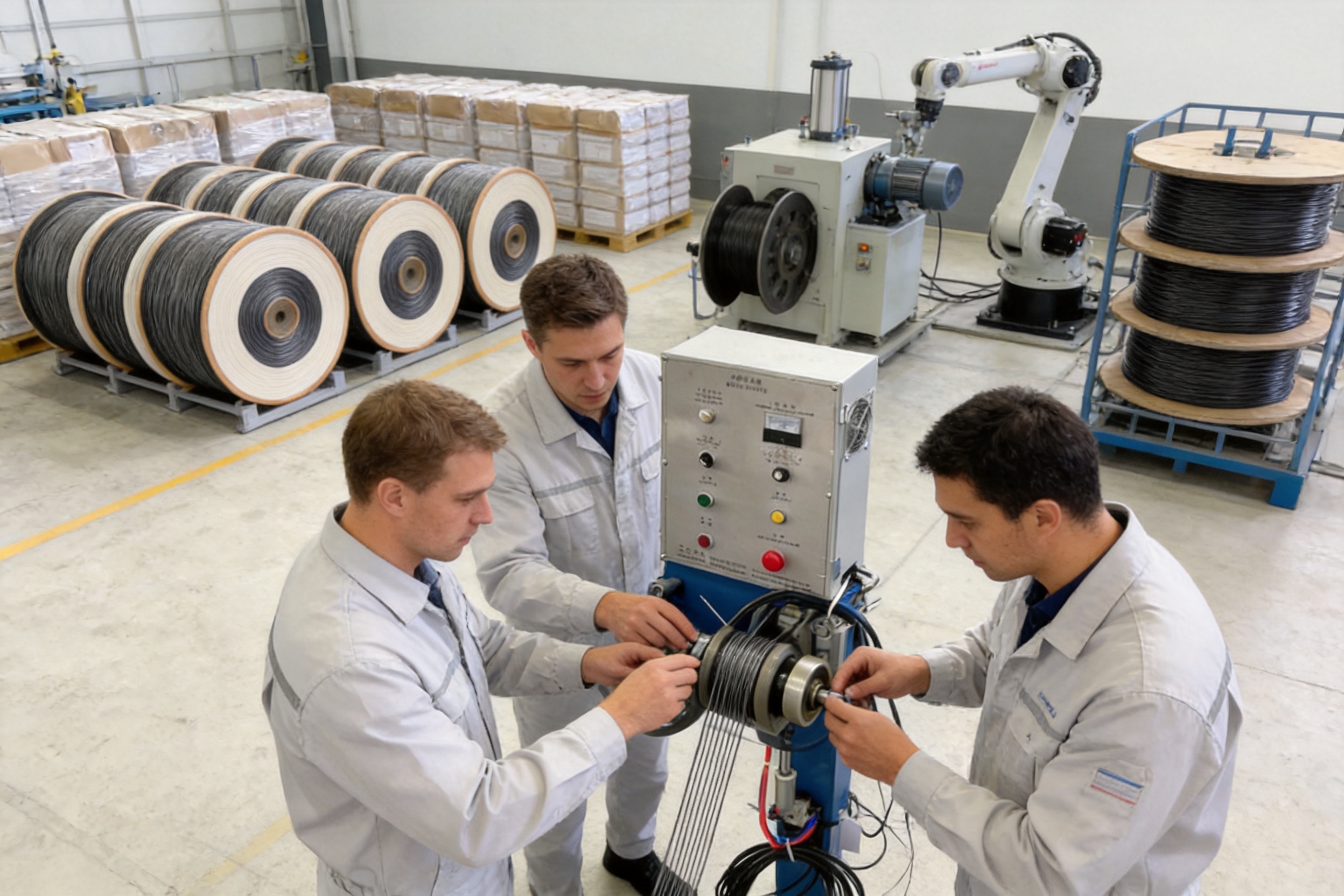
Wire and cable manufacturers depend on stable tension control to achieve consistent winding quality, protect finished products, and maintain efficient production. Even when extrusion, cooling, sizing, and take-up equipment operate correctly, poor tension management can create defects during winding. Excessive tension may stretch the cable, deform its insulation, damage conductors, or affect the final electrical and mechanical properties. Insufficient tension can result in loose winding, uneven layers, cable crossover, disordered arrangement, and difficult downstream handling.
Wire Cable Tension Control Systems are designed to address these challenges through continuous cable tension regulation. Their core function is to maintain a suitable and stable tension level while cable is transferred, stored, wound, or prepared for subsequent processing. By adjusting cable tension during operation, the system helps prevent the two most common winding problems: excessive pulling force and inadequate control of cable movement.
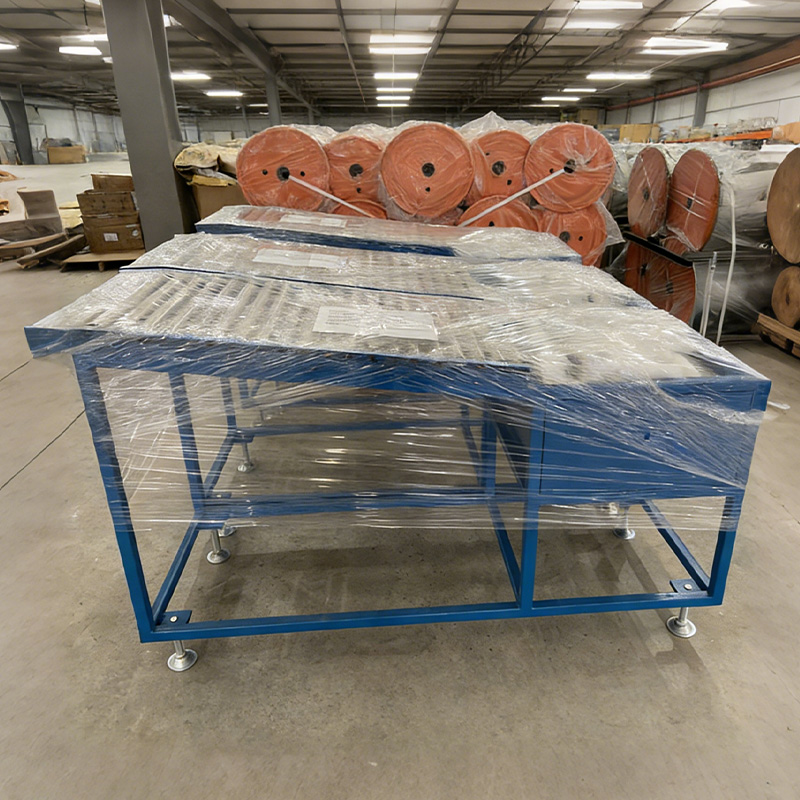
Manufactured for use in cable production and processing environments, these systems can be integrated with storage racks, coiling machines, take-up equipment, and other auxiliary machinery. This makes them suitable for individual production stations as well as complete wire and cable production lines. Their practical design focuses on reliable tension management, straightforward integration, and stable output rather than unnecessary complexity.
For manufacturers seeking improved winding consistency and lower material waste, a tension control system can be an important investment. It supports better product handling, improves production yield, and helps operators maintain repeatable results across different cable sizes and production conditions.
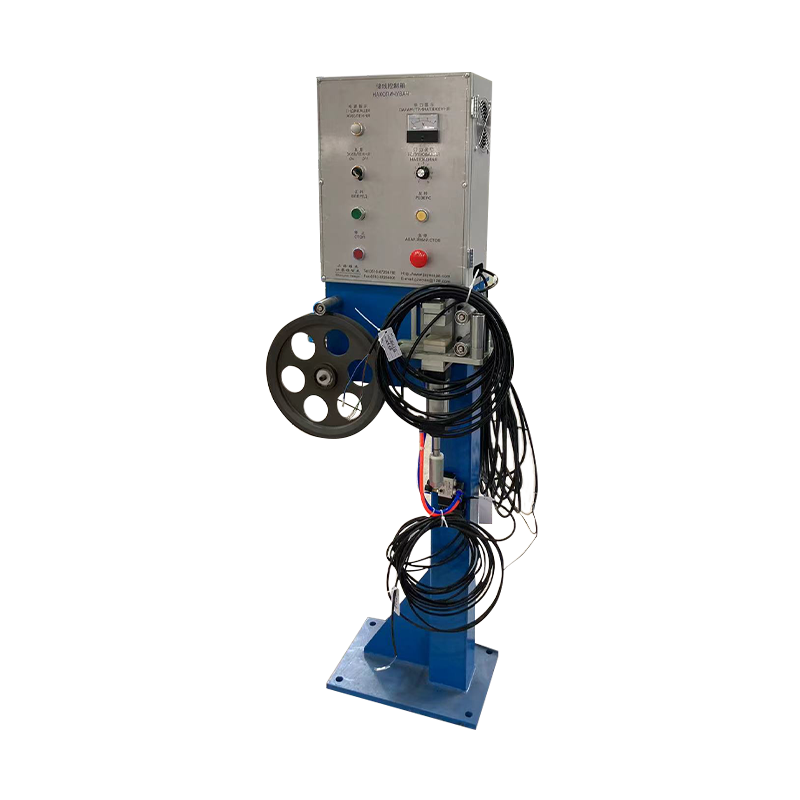
Wire Cable Tension Control Systems
Why Tension Control Is Essential in Cable Manufacturing
Cable is a flexible product, but its flexibility does not mean that it can withstand unlimited pulling force or uncontrolled movement. Different cables have different mechanical characteristics. A small control cable, insulated wire, power cable, communication cable, or special-purpose cable may respond differently to the same winding force. The conductor material, insulation structure, outer diameter, construction, and surface finish all influence the appropriate tension range.
During winding, the cable must move at a controlled speed while being guided onto a reel, coil, storage position, or take-up device. If the pulling force changes repeatedly, the cable may not settle into a uniform arrangement. One section may be tightly compacted while another section remains loose. Over time, this irregularity can affect the appearance of the coil, the stability of transportation, and the ease of unwinding at the next production stage.
Excessive tension is particularly harmful when the cable contains sensitive insulation or a carefully controlled conductor structure. Pulling forces that are too high can extend the cable slightly, compress insulation, or create mechanical stress that is not visible immediately. In some cases, these effects can influence dimensional accuracy or product performance. Even if the cable remains functional, unnecessary tension may reduce process reliability and increase the risk of rejects.
Insufficient tension creates a different set of problems. A cable that is not held firmly enough may move laterally, form loops, shift between layers, or become tangled. Loose winding also increases the occupied volume of a coil and may lead to damage during handling. If the cable is later fed into an extrusion, cutting, testing, or packaging process, unstable winding can cause feeding interruptions and additional labor.
A dedicated tension control system provides a controlled response between the moving cable and the winding equipment. It helps maintain a balanced relationship among line speed, cable movement, storage capacity, and winding force. The result is a more predictable process that can be adjusted according to the characteristics of the product.
Working Principle of a Wire Cable Tension Control System
The fundamental purpose of the system is to regulate the tension applied to the cable as it passes through a production or winding section. The system monitors changes in cable movement or tension conditions and adjusts the relevant control elements so that the cable remains within the desired operating range.
In a typical production arrangement, cable travels from an upstream process, passes through a storage or buffering area, and then moves toward a coiling machine, take-up machine, or other downstream equipment. The tension control system is positioned within this material path. It may work together with guiding components, storage racks, rollers, braking elements, or drive control components, depending on the line configuration.
The system is especially useful when the upstream and downstream sections operate at different speeds or when temporary storage is required between processes. A storage rack can provide a buffer that allows the production line to continue operating while the downstream coil is changed or adjusted. However, the stored cable must still be managed carefully. If its tension is too low, the material may become disordered. If its tension is too high, the cable may be pulled unnecessarily. Tension control helps maintain orderly storage and stable release.
During winding, the system supports controlled cable placement. It helps prevent sudden changes in pulling force caused by changes in coil diameter, variations in production speed, or intermittent movement. The objective is not simply to apply more force. The objective is to apply an appropriate and stable force that matches the product and the operating condition.
Because cable types vary significantly, a useful tension control system should allow operators or line designers to establish suitable working parameters. The appropriate settings depend on the cable’s diameter, material, construction, insulation, surface condition, line speed, winding method, and final packaging requirements. The system is therefore best understood as a process-control accessory that supports different production scenarios rather than as a single fixed-purpose device.
Key Advantages Compared with Basic Winding Arrangements
More Stable Winding Quality
A basic winding arrangement may rely mainly on the mechanical resistance of the take-up device or on manual adjustment by an operator. Such methods can work under limited conditions, but they are more sensitive to changes in cable size, line speed, and coil diameter. The resulting tension may fluctuate during production, especially when the reel becomes fuller or when the cable path changes.
A dedicated tension control system provides a more consistent method of managing these changes. By regulating tension rather than relying solely on fixed mechanical resistance, it supports more uniform cable placement. This can improve coil appearance, reduce irregular layers, and make finished coils easier to transport and unwind.
Better Protection for Cable Structure
Some basic systems focus only on moving cable from one point to another. They may not provide sufficient control over the force applied to the product. This creates a risk that the cable will be pulled too strongly during acceleration, winding, or temporary speed changes.
The Wire Cable Tension Control Systems are designed specifically around the need to regulate cable force. This product-oriented focus helps protect the cable from unnecessary mechanical stress. The benefit is particularly relevant for cables with sensitive insulation, delicate surface finishes, complex conductor arrangements, or strict dimensional requirements.
Reduced Loose Winding and Cable Disorder
Insufficient tension is often overlooked because it does not create an immediate visible failure. However, loose winding can gradually cause cable displacement, crossing, overlapping, and tangling. These problems may appear during storage, transportation, or unwinding rather than at the moment of production.
By maintaining suitable tension throughout the winding process, the system helps the cable remain orderly. This contributes to better storage density and more reliable downstream feeding. It also reduces the need for manual correction and lowers the possibility of damage caused by tangled material.
Improved Compatibility with Storage Racks
The product is often used together with storage racks. This combination is valuable in production lines where cable must be held temporarily between two stages. The rack provides the physical storage space, while the tension control system helps manage the cable as it enters, remains within, and exits the storage area.
Compared with a storage rack used without controlled tension, an integrated arrangement can provide more predictable cable movement. It supports smoother material handling and helps keep the cable organized during temporary accumulation. This is useful when production processes have different operating speeds or when a downstream machine requires periodic changeover.
Lower Material Waste
Winding defects can lead to product rework, damaged cable sections, additional inspection, and rejected coils. Even when each individual defect appears minor, the cumulative cost can be substantial in a high-volume production environment.
Stable tension control helps reduce the conditions that cause such defects. By preventing excessive stretching and insufficiently controlled winding, it supports better production yield. It also helps manufacturers use more of the cable produced by the extrusion line, reducing waste associated with handling and winding errors.
Practical Integration Rather Than Unnecessary Complexity
Some advanced-looking systems may include functions that are not relevant to every cable manufacturer. Additional complexity can increase installation difficulty, operator training requirements, and maintenance workload. The value of the Wire Cable Tension Control Systems lies in their direct focus on a practical production requirement: adjusting cable tension to support stable winding.
This focused design makes the system suitable for manufacturers that want to improve process control without redesigning their entire production line. It can be considered as an accessory within a broader machinery solution, allowing the user to improve a specific process area while preserving the overall line arrangement.
| Production Requirement | Risk Without Effective Tension Control | Value of the Tension Control System |
|---|---|---|
| Uniform cable winding | Loose layers, uneven placement, and disordered coils | Supports consistent cable arrangement and improved coil quality |
| Protection of cable structure | Stretching, insulation stress, or mechanical damage from excessive force | Helps regulate pulling force according to process requirements |
| Stable material transfer | Sudden tension changes during speed variation or equipment adjustment | Provides more controlled movement between production stages |
| Storage rack operation | Unorganized accumulation and difficult cable retrieval | Supports orderly buffering and smoother material handling |
| Production yield | Rejected coils, rework, and waste caused by winding defects | Helps reduce avoidable defects and improve usable output |
Application in Wire and Cable Production Lines
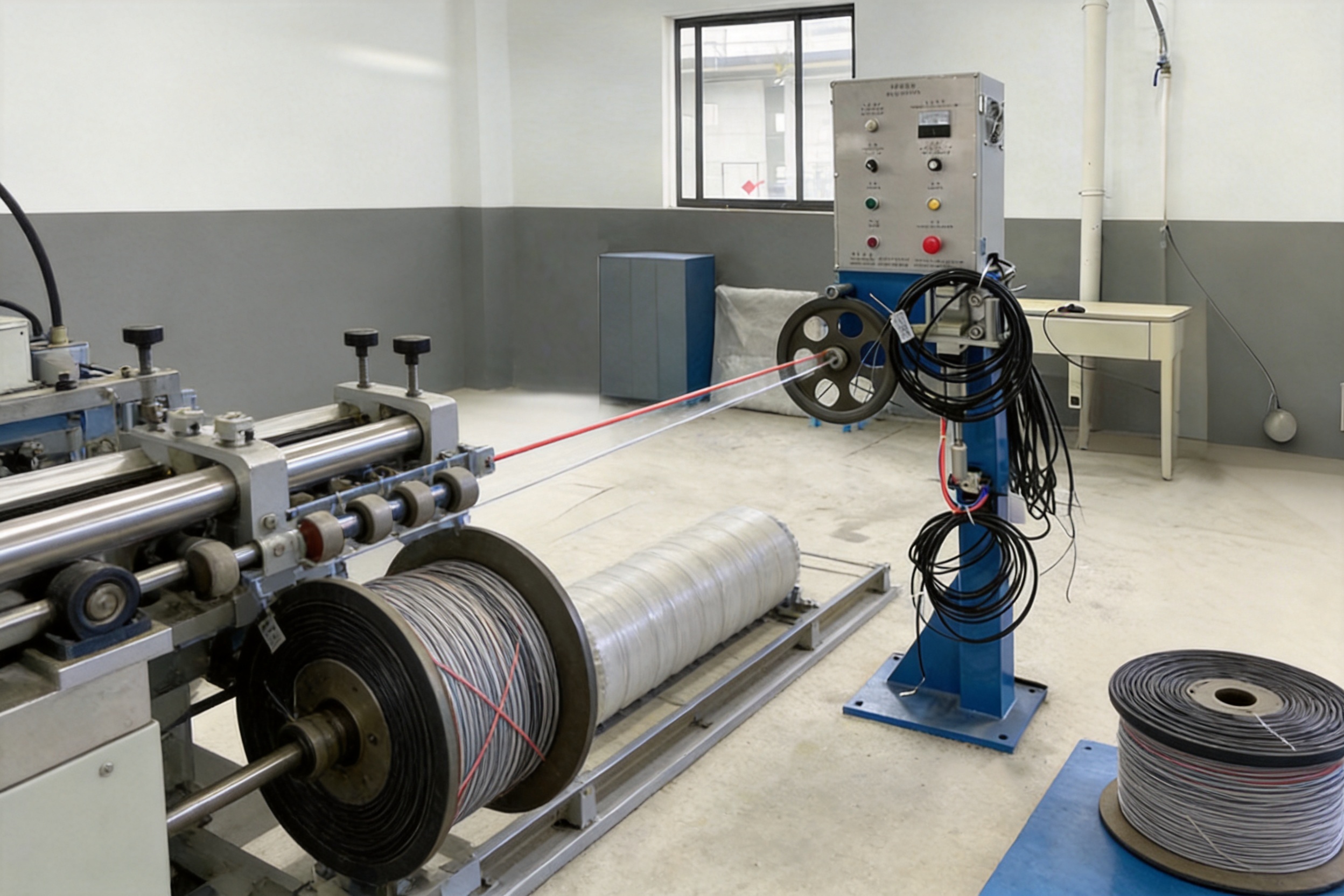
Wire Cable Tension Control Systems can be applied at different points in a cable manufacturing or processing workflow. Their exact position depends on the line layout, the type of cable, and the required handling method. Common applications include the connection between extrusion and take-up equipment, the transfer section before coiling, and storage or buffering areas between production stages.
Extrusion Line Take-Up
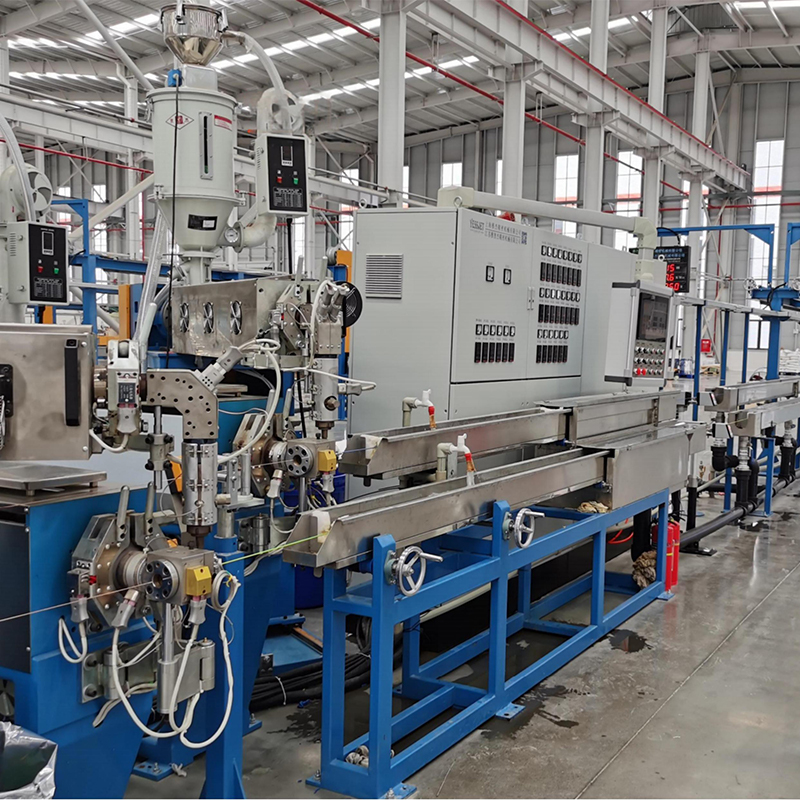
In a wire and cable extrusion line, the cable passes through several stages before it reaches the take-up machine. These stages may include conductor feeding, insulation extrusion, cooling, diameter control, surface inspection, and final winding. Once the cable has been formed and cooled, it must be collected without damaging its surface or changing its dimensions.
A tension control system positioned before or near the take-up section helps coordinate the movement of the finished cable with the winding speed. This is important because the take-up reel changes in diameter as more cable is collected. Without appropriate compensation, the surface speed and pulling force can change as the reel fills. Controlled tension helps the take-up section continue operating more consistently.
Coiling and Packaging
Coiling machines are used to prepare cable for storage, shipment, installation, or further processing. The quality of the coil directly affects packaging efficiency and customer convenience. A tightly controlled and orderly coil is easier to place into packaging, label, stack, and transport.
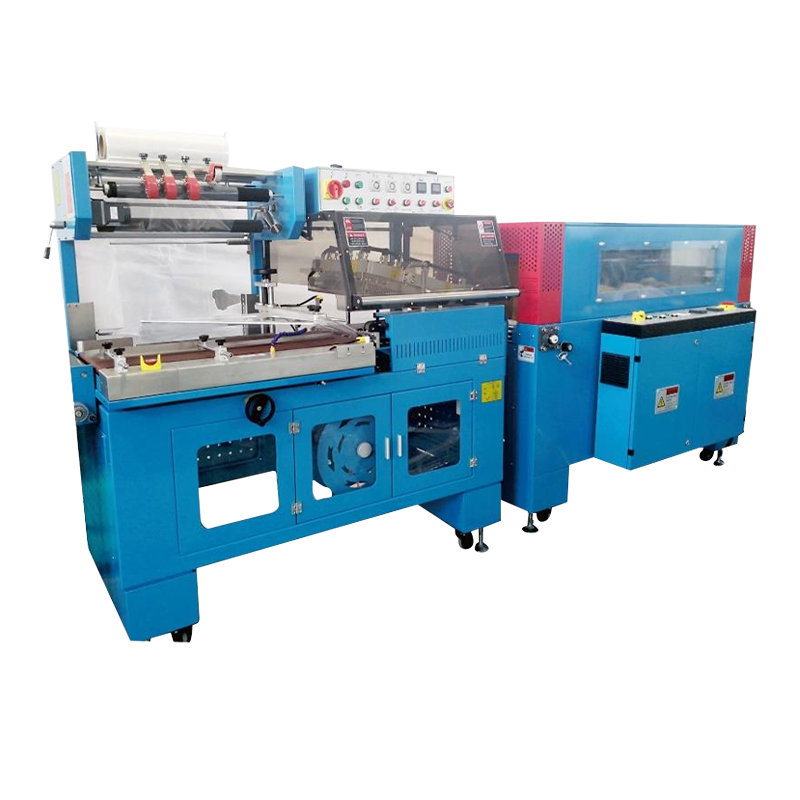
When the cable is coiled with unstable tension, the finished package may have loose edges, inconsistent outer dimensions, or cable sections that shift during handling. A tension control system helps maintain a more regular winding condition. This supports the work of fully automatic coiling and packaging equipment by providing a better-controlled cable supply.
Storage and Buffering
Storage racks are commonly used to hold cable temporarily between machines. They can help separate production speeds, provide material reserves, and reduce interruptions during reel or coil replacement. However, the effectiveness of a storage rack depends on how the cable is placed and removed.
Tension control contributes to a more organized storage process. It helps the cable enter the rack with an appropriate level of restraint and supports controlled release toward the next machine. This can be especially useful in high-throughput lines where the operator cannot repeatedly correct loose or tangled cable by hand.
Motorized Pay-Off and Take-Up Equipment
Motorized pay-off equipment supplies cable to a downstream process, while motorized take-up equipment collects cable from an upstream process. Both machines must operate in coordination with line speed and cable condition. If the pay-off releases cable too quickly or the take-up pulls too strongly, tension can become unstable.
A tension control system helps create a more balanced relationship between supply and collection. It does not replace the need for correctly selected pay-off and take-up machinery, but it improves the interaction between them. This makes it a useful accessory for production lines that include motorized material handling equipment.
Engineering Strengths of the Product
The product is designed around a clear industrial need and can be incorporated into different cable manufacturing scenarios. Its engineering value comes from the relationship between tension adjustment, cable protection, storage integration, and winding quality.
Process-Focused Design
The system is not intended to perform every function in a cable factory. Instead, it concentrates on one of the most important variables in cable winding: tension. This process-focused approach allows the equipment to be evaluated according to practical results such as winding stability, cable protection, handling efficiency, and reduction of defects.
By concentrating on a defined function, the system can be integrated into a wider machinery arrangement without forcing the manufacturer to replace equipment that is already performing well. This is an important advantage for factories that are upgrading an existing line in stages.
Adaptability to Different Cable Conditions
Cable products differ in size, construction, flexibility, and surface characteristics. A control system must therefore be suitable for adjustment according to the product being processed. The ability to regulate tension helps users establish different working conditions for different cable types rather than using one fixed setting for every product.
This adaptability is valuable for manufacturers that produce multiple cable specifications. It can help reduce changeover difficulties and support more stable production when moving from a smaller, more flexible cable to a larger or more rigid product.
Integration with Complete Machinery Solutions
The manufacturer provides a broader range of wire and cable machinery, including extrusion lines, coiling and packaging equipment, robot stackers, coiling machines, motorized pay-off equipment, motorized take-up equipment, and accessory equipment. Within this product portfolio, the tension control system can serve as a supporting component in a complete production solution.
This broader equipment capability is useful because cable production performance depends on the coordination of several machines. A tension system must be considered together with line speed, take-up design, storage requirements, coiling method, and packaging flow. A supplier with experience across these areas can evaluate the relationship among machines rather than treating the accessory as an isolated component.
Support for Production Line Efficiency
Stable tension contributes to efficiency in several ways. It reduces manual correction, supports smoother material transfer, and lowers the likelihood of winding-related stoppages. It can also help operators maintain a consistent production rhythm when cable is moved between extrusion, storage, coiling, and packaging stages.
Improved efficiency does not necessarily mean increasing speed alone. In many factories, efficiency is improved by reducing interruptions, minimizing waste, shortening adjustment time, and maintaining stable quality. Tension control supports these objectives by making the cable movement more predictable.
Advanced Manufacturing and Quality Approach
The performance of a tension control system depends not only on its concept but also on the quality of its manufacturing and integration. Shanghai Yessjet Precise Machinery Co., Ltd. is positioned as a wire and cable machinery manufacturer serving cable production applications. Its product range indicates experience with complete line equipment and specialized auxiliary systems.
Engineering from Application Requirements
Industrial machinery should be developed from the actual process requirements of the user. For a cable tension system, this means considering the cable type, line speed, winding method, storage arrangement, available installation space, and connection with upstream and downstream machinery.
An application-oriented manufacturing process begins with understanding how the cable will move through the line. The design team can then determine how the tension control unit should be positioned, how operators will adjust it, and how it will interact with the storage rack or winding machine. This approach is more reliable than selecting a generic device without considering the full material path.
Precision Mechanical Manufacturing
Tension management depends on smooth and repeatable mechanical movement. Components that contact or guide the cable must be manufactured and assembled with attention to alignment, surface condition, dimensional consistency, and operating stability. Poorly aligned components can introduce additional friction or side movement, which may undermine the intended control effect.
Precision machinery manufacturing therefore involves more than producing individual parts. It requires correct assembly relationships, stable mounting, appropriate adjustment capability, and inspection of the finished unit. These factors help the system perform consistently after installation.
Functional Inspection and Assembly Verification
A reliable manufacturing process should include inspection at multiple stages. Incoming components can be checked for conformity, machined parts can be verified for dimensions, and assembled units can be reviewed for fit, movement, and adjustment range. Functional testing should focus on whether the system responds appropriately to changes in operating conditions.
For a cable tension control system, practical verification may include checking the cable path, adjustment response, guide alignment, mechanical movement, and connection points. These checks help identify assembly problems before the equipment is delivered to the customer.
System-Level Coordination
Because tension control operates as part of a larger production line, manufacturing quality also includes the ability to coordinate the system with other equipment. The manufacturer’s experience with extrusion lines, pay-off units, take-up units, coiling machines, and packaging systems supports a system-level view of cable production.
This is a meaningful advantage over suppliers that provide only a general-purpose tension device without understanding the surrounding cable process. The system can be considered in relation to material flow, storage, winding, and final handling. Such coordination helps reduce installation conflicts and improves the chance of achieving the desired production result.
Customization and Project Adaptation
Cable factories often have different floor plans, product specifications, production speeds, and equipment combinations. A practical machinery supplier must be able to adapt the solution to the user’s process rather than assuming that every factory has the same requirements.
Customization may involve installation position, cable path, rack arrangement, connection with existing machines, operating parameters, or the configuration of supporting equipment. The exact scope depends on the project, but the ability to discuss these factors is important when integrating a tension control system into an established line.
How the System Supports Product Quality
Cable quality is determined by many factors, including conductor preparation, insulation extrusion, cooling, dimensional control, electrical testing, and final handling. Tension control does not replace these processes, but it helps protect their results during winding and material transfer.
A cable may meet dimensional and electrical requirements when it leaves the extrusion section, yet still be affected by poor winding. Excessive pulling can place stress on the product, while loose winding can create handling defects. Stable tension provides an additional layer of process protection between cable formation and final packaging.
Consistent winding also improves inspection. When the cable is arranged neatly, operators can more easily review coil appearance, identify surface problems, confirm approximate length, and apply packaging materials. Disordered coils make inspection more difficult and may hide damaged sections or create uncertainty during length measurement.
Improved winding quality can also benefit customers. A well-formed coil is easier to install, unwind, and store. It is less likely to shift during transportation and can reduce the amount of preparation required before use. For cable manufacturers, these practical advantages can support customer satisfaction and reduce complaints associated with packaging or handling.
Installation and Operating Considerations
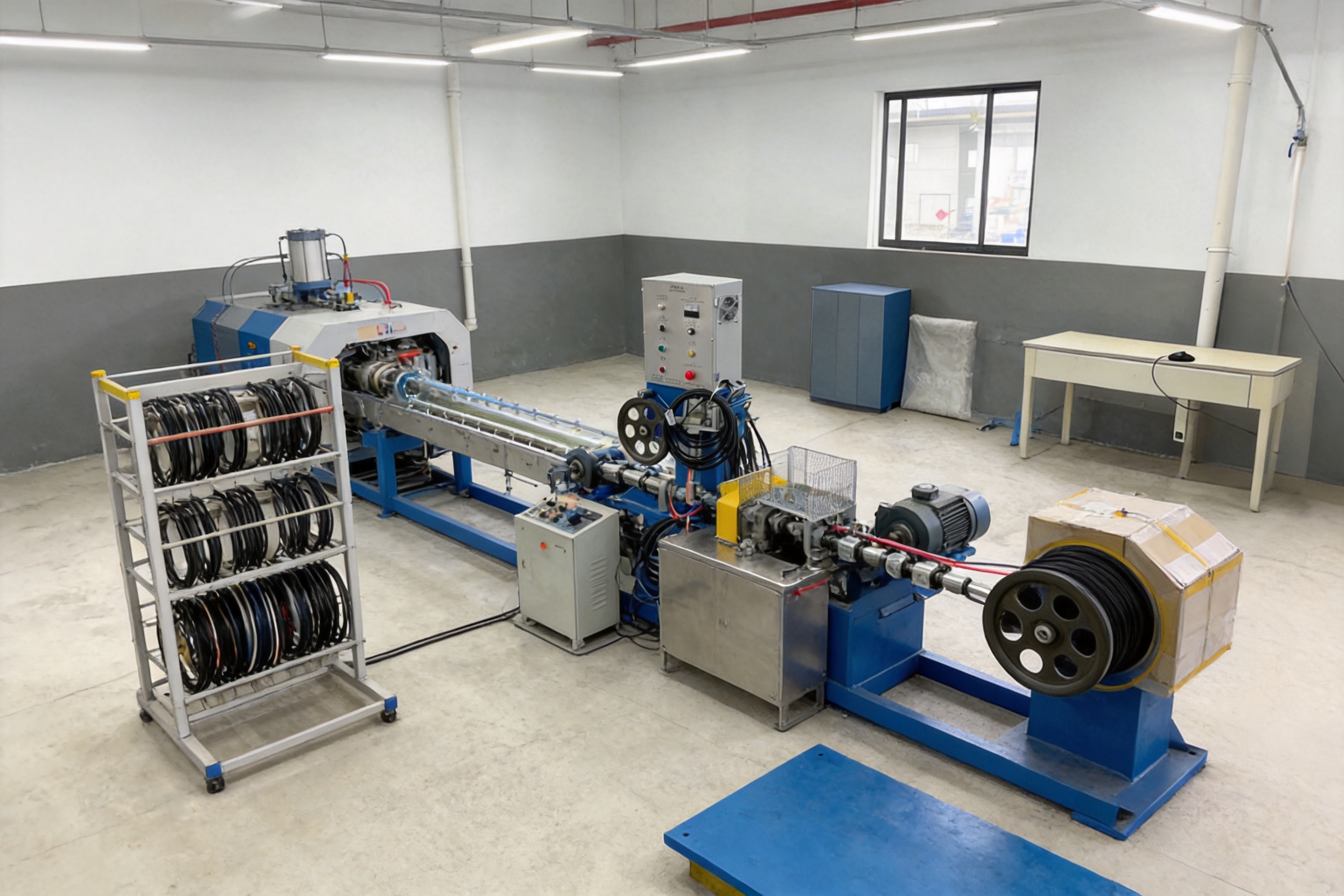
Correct installation is essential for obtaining the intended benefit from a tension control system. The equipment should be positioned so that the cable path is as direct and orderly as possible. Unnecessary bends, sharp contact points, and misaligned guides can create additional resistance and make tension adjustment more difficult.
The storage rack, coiling machine, pay-off unit, or take-up unit should be reviewed as part of the same material path. Operators need to understand where the cable enters, where it is temporarily stored, and how it reaches the next process. The system should be installed in a way that allows access for adjustment, inspection, cleaning, and maintenance.
Before regular production begins, the system should be tested using the actual or representative cable. The operator can observe whether the cable remains orderly, whether the winding layers are stable, and whether the cable shows signs of excessive pulling or insufficient restraint. Settings should be adjusted gradually rather than changed abruptly.
Different cable products may require different tension conditions. A smaller flexible cable may need a different setting from a larger rigid cable. The line speed and coil diameter should also be considered. When a production line changes product specifications, the operator should confirm that the previous tension setting remains appropriate.
Routine maintenance should include checking cable-contact surfaces, guides, mechanical adjustment points, mounting elements, and any associated control or drive components. Dust, residue, or wear can influence cable movement. Keeping the cable path clean and properly aligned helps preserve stable performance.
Recommended Selection Criteria
When selecting a Wire Cable Tension Control System, manufacturers should first define the process problem they want to solve. Is the primary concern cable stretching, loose winding, storage disorder, take-up instability, or frequent manual correction? Clear identification of the problem makes it easier to evaluate whether the system is correctly configured.
The cable specification is another important factor. The supplier should understand the product diameter, conductor construction, insulation material, flexibility, surface finish, and normal production speed. These details influence the required tension range and the design of the cable path.
The existing equipment should also be considered. A system intended for a new production line may be designed together with the extrusion, take-up, storage, and packaging equipment. A system intended for an existing line must fit the current layout and work with available machines. In both cases, integration is more important than selecting an isolated component based only on a catalog description.
Manufacturers should also review the expected production volume, changeover frequency, operator skill level, and maintenance resources. A simple and focused system may be ideal for one factory, while another may need a more extensively coordinated arrangement. The right solution should balance performance, usability, installation requirements, and long-term operating cost.
Why Choose an Experienced Machinery Manufacturer
Purchasing a tension control system from a company experienced in wire and cable machinery offers advantages beyond the equipment itself. Cable production is an interconnected process. Problems that appear to be related to tension may actually involve take-up speed, storage capacity, guide alignment, coil geometry, or machine coordination.
A manufacturer familiar with complete cable production lines can evaluate these relationships more effectively. It can discuss how the tension system should be positioned and how it should interact with other machinery. This reduces the risk of installing a device that performs well in isolation but does not solve the actual production problem.
Shanghai Yessjet Precise Machinery Co., Ltd. offers machinery associated with wire and cable extrusion, coiling, packaging, material pay-off, material take-up, stacking, and auxiliary functions. This product scope reflects an ability to address both core production equipment and supporting process requirements.
For customers developing a new cable production line, this broader capability can simplify project coordination. For customers upgrading an existing line, it can provide a practical path for improving one part of the process without replacing every machine. The tension control system can therefore be evaluated as a component within a larger production strategy.
The company’s location in Jiangsu Province, China, places its manufacturing operations within a region known for industrial equipment production and supply-chain support. More importantly, the value of the supplier should be assessed through its engineering communication, manufacturing control, product fit, commissioning support, and ability to understand the customer’s cable process.
Economic Benefits for Cable Manufacturers
The financial benefit of tension control is usually achieved through several small improvements rather than one single change. Reducing rejected coils, preventing cable damage, lowering manual correction, and improving packaging consistency can collectively produce a meaningful return.
Material waste is one of the most direct costs. If a cable section is stretched, damaged, tangled, or wound incorrectly, the manufacturer may need to cut it out, rework it, or reject the complete coil. Stable tension reduces the likelihood of these avoidable losses.
Labor efficiency is another consideration. Operators who frequently correct loose winding or cable disorder spend time away from other production tasks. A more stable process allows them to focus on inspection, changeover, maintenance, and quality control rather than continuous manual adjustment.
Equipment utilization can also improve. Winding interruptions and material jams reduce the effective operating time of the line. By helping cable move consistently between processes, tension control supports smoother machine operation and more predictable production planning.
Finally, improved coil quality can reduce downstream handling problems. Neatly wound cable is easier to package, stack, transport, and deliver. This may lower the risk of damage after production and help maintain product quality until the cable reaches the customer.
Quality, Safety, and Operational Discipline
Stable cable movement contributes to a more organized production environment. Loose cable, unexpected loops, and uncontrolled accumulation can create trip hazards, interfere with machine access, and make inspection more difficult. Better material control supports cleaner and more disciplined operation.
Operators should still follow appropriate safety procedures when using the system. Moving cable and rotating equipment can create pinch points and entanglement risks. Guards, emergency stops, access controls, and operating instructions should be maintained according to the complete line design.
Training should cover tension adjustment, product changeover, signs of excessive or insufficient tension, routine inspection, and emergency response. Operators should know that increasing tension is not always the solution to loose winding. The cable path, storage position, speed coordination, and machine settings may also need to be checked.
A well-managed process combines equipment capability with disciplined operation. The Wire Cable Tension Control System provides a technical means of regulating tension, while operators and engineers ensure that the system is used according to the cable specification and production objective.
Future-Oriented Value of Tension Management
As cable manufacturers seek higher productivity and more consistent quality, control of material movement becomes increasingly important. Automation is not limited to the main extrusion machine. Supporting processes such as pay-off, storage, tension regulation, coiling, packaging, and stacking also influence the overall performance of the line.
A stable tension system provides a foundation for further automation. When cable movement is predictable, it becomes easier to coordinate automatic coiling, length measurement, packaging, robotic handling, and production monitoring. In contrast, uncontrolled cable movement can limit the effectiveness of downstream automation.
The system can therefore be viewed as a practical step toward a more integrated production line. It improves a fundamental process variable while remaining compatible with different types of cable handling equipment. For manufacturers planning gradual modernization, this makes tension management a useful and realistic starting point.
Frequently Asked Questions
What is the main function of a Wire Cable Tension Control System?
Its main function is to adjust and stabilize the tension of cable during winding, storage, and material transfer. It helps prevent excessive tension that may stretch or damage the cable and insufficient tension that may cause loose or disordered winding.
Can the system be used with a storage rack?
Yes. The system is often used together with storage racks. It helps manage the cable as it enters, remains within, and leaves the storage area, supporting more orderly buffering and smoother material handling.
What problems can occur without proper tension control?
Common problems include cable stretching, insulation stress, loose winding, uneven layers, cable crossover, tangling, unstable coil dimensions, material jams, and increased production waste.
Is the system suitable for different cable types?
The system can support different cable manufacturing and processing scenarios because tension can be adjusted according to the product and operating conditions. The appropriate setting should be determined by cable construction, diameter, flexibility, line speed, and winding method.
Can it be integrated with existing equipment?
It can be considered for integration with existing extrusion lines, coiling machines, motorized pay-off equipment, motorized take-up equipment, and storage arrangements. The final configuration depends on the current cable path, machine layout, and process requirements.
Does tension control replace a take-up machine?
No. A tension control system is an accessory or supporting system. It helps regulate cable force and movement, while the take-up machine performs the primary collection or winding function.
How does the system reduce cable waste?
By helping prevent excessive pulling and insufficiently controlled winding, the system reduces the likelihood of stretched cable, damaged sections, rejected coils, and rework. This can improve the usable output of the production line.
Why is tension especially important during coiling?
Coiling requires the cable to be placed in orderly layers. If tension changes significantly, the cable may become loose, cross over itself, or form uneven edges. Stable tension supports better coil structure and easier packaging and unwinding.
What should be considered before installation?
Manufacturers should consider cable specifications, production speed, line layout, storage rack position, take-up or coiling equipment, cable-contact surfaces, operator access, and maintenance requirements. Reviewing the complete material path helps ensure effective integration.
What makes this product different from a basic mechanical winding arrangement?
The product is designed specifically for cable tension regulation rather than relying only on fixed resistance or manual correction. This focused function supports more consistent winding, better cable protection, improved storage handling, and lower risk of winding-related defects.
Can the system support a complete cable production solution?
Yes. It can be used as part of a broader machinery arrangement that includes wire and cable extrusion lines, pay-off and take-up equipment, coiling machines, packaging equipment, storage racks, and automatic stacking systems.
How should operators maintain stable performance?
Operators should keep the cable path clean, inspect guides and contact surfaces, confirm proper alignment, review tension settings during product changes, and monitor the cable for signs of excessive pulling or loose winding. Regular inspection helps preserve reliable operation.
Conclusion
Wire Cable Tension Control Systems provide a practical solution to one of the most important challenges in cable winding: maintaining the correct balance between cable movement and pulling force. By controlling tension in real time, the system helps prevent stretching, insulation stress, loose winding, cable disorder, and avoidable production waste.
Its compatibility with storage racks, coiling machines, take-up equipment, pay-off equipment, and broader wire and cable production lines makes it suitable for both new projects and equipment upgrades. Compared with basic winding arrangements that depend primarily on fixed resistance or manual adjustment, a dedicated tension control system offers more consistent process management and better protection for the finished cable.
The product’s value is strengthened when it is supplied by a machinery manufacturer with experience across the complete cable production process. Engineering knowledge in extrusion, material handling, coiling, packaging, and auxiliary equipment supports better system integration and more practical project solutions.
For manufacturers seeking stable winding quality, improved production yield, reduced material waste, and more orderly cable handling, tension management should be treated as an essential process requirement rather than an optional accessory. A properly selected and integrated Wire Cable Tension Control System can help create a more reliable, efficient, and scalable cable production operation.
References
1. Product specification and application information for Wire Cable Tension Control Systems.
2. General principles of wire and cable extrusion, take-up, storage, and winding operations.
3. Industrial guidelines for cable handling, tension regulation, and material transfer.
4. Manufacturing practices for precision machinery assembly, mechanical alignment, and functional inspection.
5. Engineering principles for automated coiling, packaging, pay-off, take-up, and cable production line integration.