LANGUAGE
 中文简体
 русский
 Français
 Español
 Português
 عربى

Content
- 1 What Is a Cable Conveyor Belt System?
- 2 The Role of Conveyors in Wire and Cable Manufacturing
- 3 Two Transmission Modes for Different Operating Conditions
- 4 Major Advantages Over Conventional Manual Handling
- 5 Advantages Compared with Basic Conveyor Solutions
- 6 Integration with Wire and Cable Production Equipment
- 7 Manufacturing Strengths and Engineering Approach
- 8 How the System Improves Material Flow
- 9 Energy and Labor Efficiency
- 10 Operational Safety and Workplace Ergonomics
- 11 Maintenance and Service Considerations
- 12 Selection Guidelines for Cable Conveyor Belt Systems
- 13 Application Scenarios
- 14 Why Choose an Experienced Wire and Cable Machinery Manufacturer?
- 15 Implementation Process
- 16 Return on Investment and Long-Term Value
- 17 Frequently Asked Questions
- 17.1 What products can a cable conveyor belt system transport?
- 17.2 What is the difference between automatic track transmission and manual roller transmission?
- 17.3 Can both transmission modes be used in one production area?
- 17.4 Can the conveyor connect with a cable extrusion line?
- 17.5 Does the system reduce labor requirements?
- 17.6 Is the equipment suitable for small factories?
- 17.7 How does the system save energy?
- 17.8 Can the system be customized for a factory layout?
- 17.9 What maintenance does the conveyor require?
- 17.10 Why is supplier experience important?
- 18 Conclusion
- 19 References
- 20 Product: Cable Conveyor Belt Systems
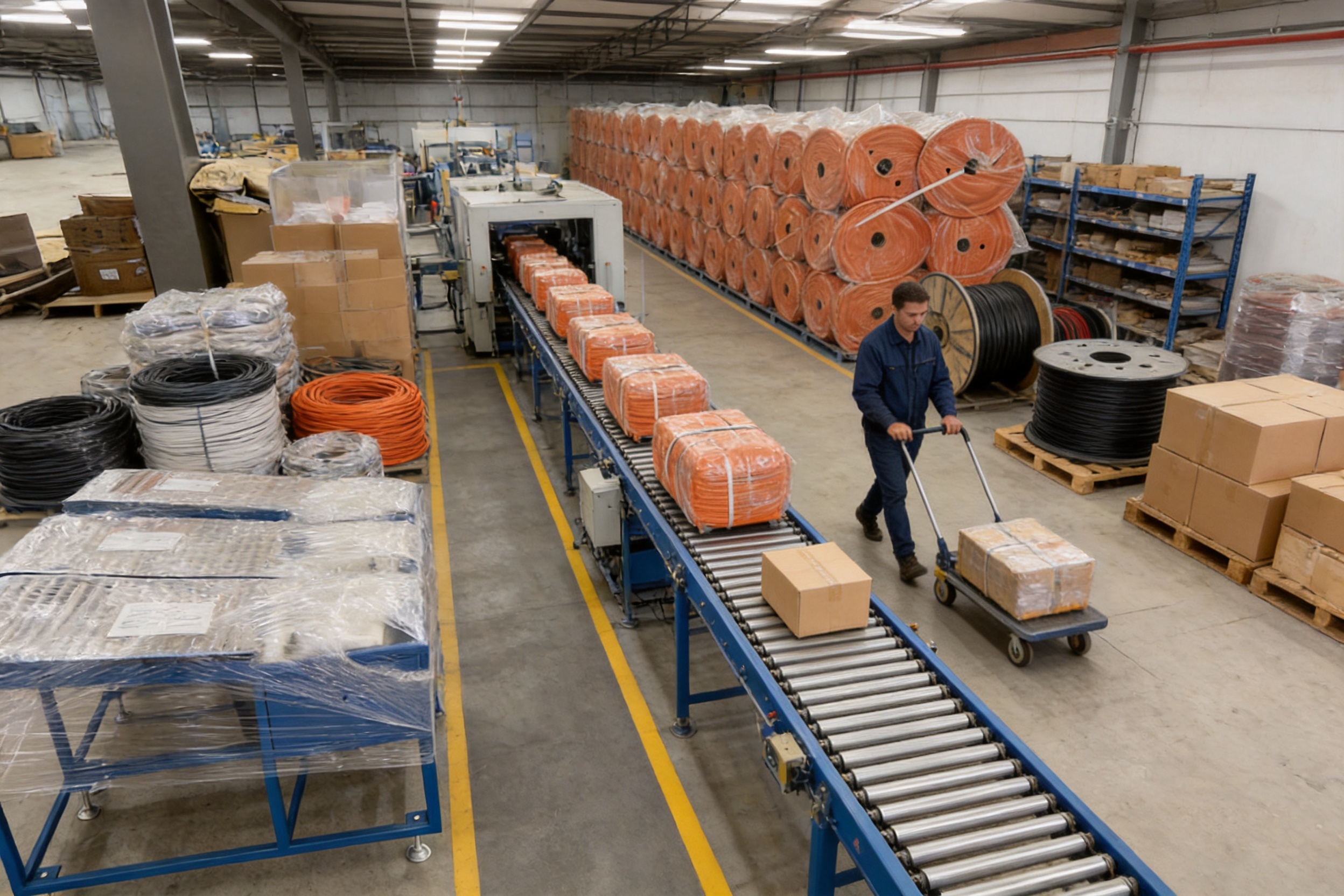
Modern wire and cable factories depend on more than extrusion lines, take-up equipment, coiling machines, and packaging units. They also need a dependable method for moving finished packages between production equipment and the next handling point. Cable conveyor belt systems provide this essential connection. By organizing the movement of packaged goods, they reduce unnecessary manual carrying, improve workplace flow, and help manufacturers control handling costs.
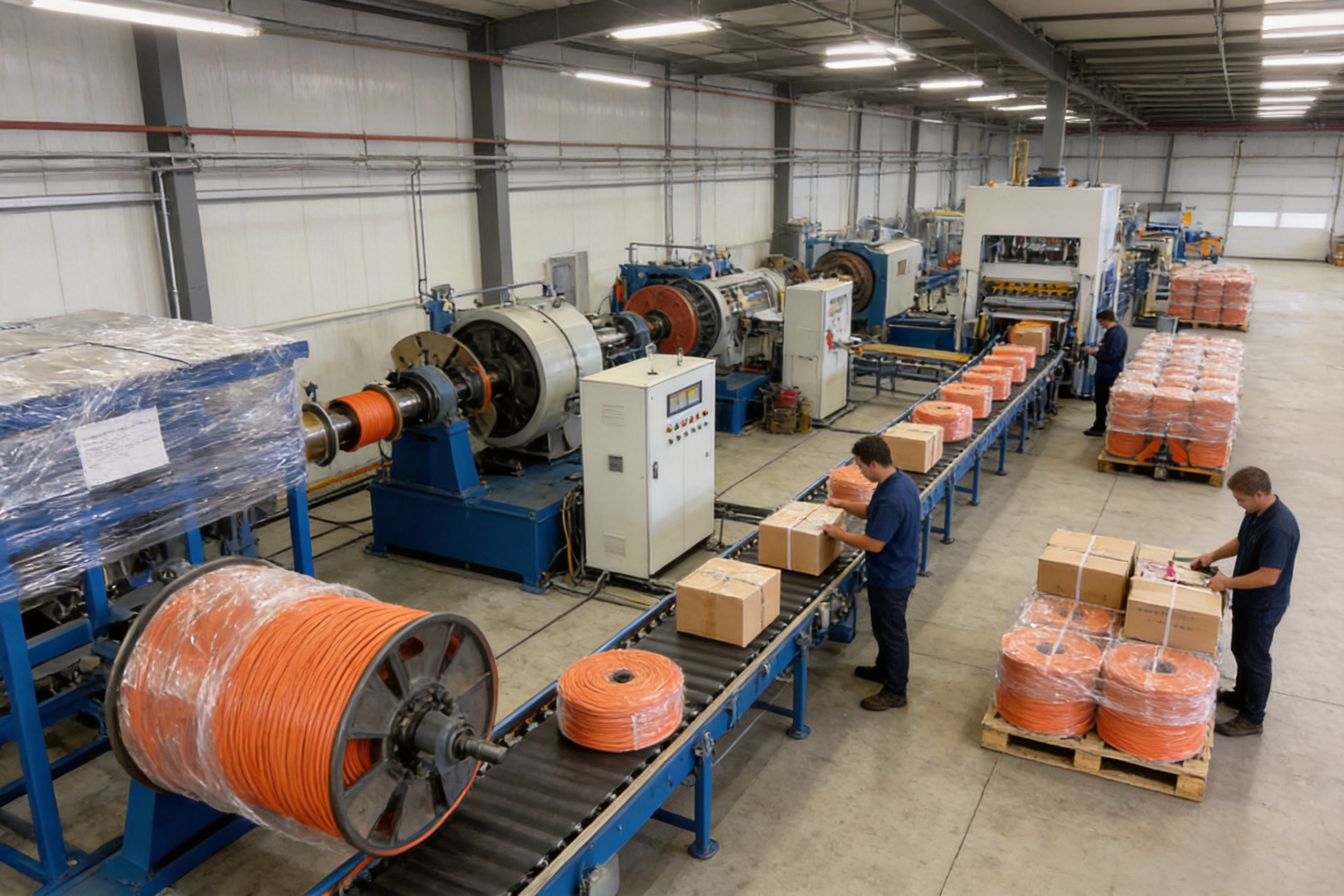
The cable conveyor belt system described in this article is an accessory solution designed for packaged goods transfer in wire and cable production environments. It combines two practical transmission modes: automatic track transmission and manual roller transmission. The automatic track option supports stable, continuous conveyance, while the manual roller option provides simple and flexible movement for small-batch handling or locations where operators need direct control.
When correctly integrated with a cable extrusion machine, coiling machine, packaging line, or finished-product handling station, the system can create a smoother path from production to manual inspection, storage, palletizing, or dispatch. Instead of requiring workers to repeatedly lift, drag, or carry packages, the conveyor transports products to a designated location with less physical effort and fewer unnecessary movements.
For manufacturers seeking a practical accessory for a complete wire and cable production line, this type of conveyor system offers a strong balance of operational simplicity, energy efficiency, adaptability, and cost control.
What Is a Cable Conveyor Belt System?
A cable conveyor belt system is a material handling device used to move packaged wire and cable products from one production area to another. It is positioned after or alongside equipment such as a coiling machine, automatic packaging machine, cable take-up unit, or finished-product collection station.
The system is not limited to one particular cable product. It can be configured for different package sizes, product weights, transfer distances, and handling requirements. Its primary purpose is to create an organized transportation route between the production location and a designated manual handling or downstream processing position.
In a typical application, a package leaves a production or packaging machine and enters the conveyor area. The automatic track transmission section moves the package along a predetermined path. When the package reaches the required location, an operator can inspect, label, stack, store, or transfer it. In applications with limited output or frequent product changes, the manual roller transmission section allows workers to move packages by hand with minimal resistance.
This combination makes the equipment suitable for factories with different production modes. High-volume operations can benefit from automatic transportation, while small-batch or mixed-order production can use the manual roller section without requiring a fully automated material handling layout.
The Role of Conveyors in Wire and Cable Manufacturing
Wire and cable manufacturing often includes several connected stages. Conductors may pass through drawing, stranding, insulation extrusion, sheathing, cooling, measuring, coiling, take-up, packaging, inspection, and storage. Each stage can produce a handling requirement. If finished packages are not transferred efficiently, the overall production line may experience delays even when the primary machines are operating correctly.
Manual transportation is often underestimated. Workers may need to carry coils, cartons, reels, or wrapped packages from one location to another. Repeated carrying can consume labor hours, increase physical fatigue, and create congestion around production equipment. It can also interrupt the rhythm of a packaging line when operators must leave their workstations to move products.
A conveyor system addresses this problem by separating production from transportation. Once the package is placed on the transmission platform, it can move toward the designated location in a more predictable manner. This supports a cleaner factory layout and allows employees to focus on inspection, packaging quality, labeling, palletizing, or other tasks that require human judgment.
In addition, an organized conveyor route can reduce the risk of packages being placed in temporary locations such as walkways, machine access zones, or emergency passages. Better material flow contributes to improved housekeeping and a more orderly production environment.
Two Transmission Modes for Different Operating Conditions
Automatic Track Transmission
Automatic track transmission is designed for consistent and efficient conveyance. It is suitable for production areas where packaged products are generated continuously or at regular intervals. The track provides a defined movement route, reducing the need for workers to manually push every item across the factory floor.
Automatic transportation is particularly valuable when the conveyor is connected to a packaging machine or another production unit with a repetitive output. As products leave the upstream equipment, the transmission platform can carry them toward the next designated station. This supports a continuous workflow and helps prevent accumulation near the production machine.
The automatic track mode can also help standardize the distance and direction of movement. A consistent route reduces random handling and makes it easier for factory personnel to understand where finished products will appear. This is beneficial for inspection, sorting, labeling, and storage operations.
Compared with manual carrying, automatic track transmission can lower labor intensity and improve the utilization of available personnel. Workers do not need to spend as much time transporting goods, allowing the factory to use its labor resources for more valuable tasks.
Manual Roller Transmission
Manual roller transmission is intended for simple, flexible operation. It is useful in small-batch production, sampling areas, product-changeover zones, and facilities where output is not continuous. Products can be pushed along the rollers by operators without requiring a fully automated transport sequence.
The roller arrangement reduces friction between the package and the supporting surface. This allows an operator to move goods more easily and with less physical force than would be required when dragging them directly across the floor.
Manual rollers are also advantageous when products vary substantially in size, packaging format, or destination. An operator can decide when to move the package, where to stop it, and which handling station should receive it. This flexibility is important for manufacturers producing multiple wire and cable specifications on the same line.
By including both automatic and manual transmission options, the system can support a broader range of factory conditions than a single-mode conveyor. The factory can use automatic movement during normal production and manual handling when changing products, processing special orders, or managing irregular output.
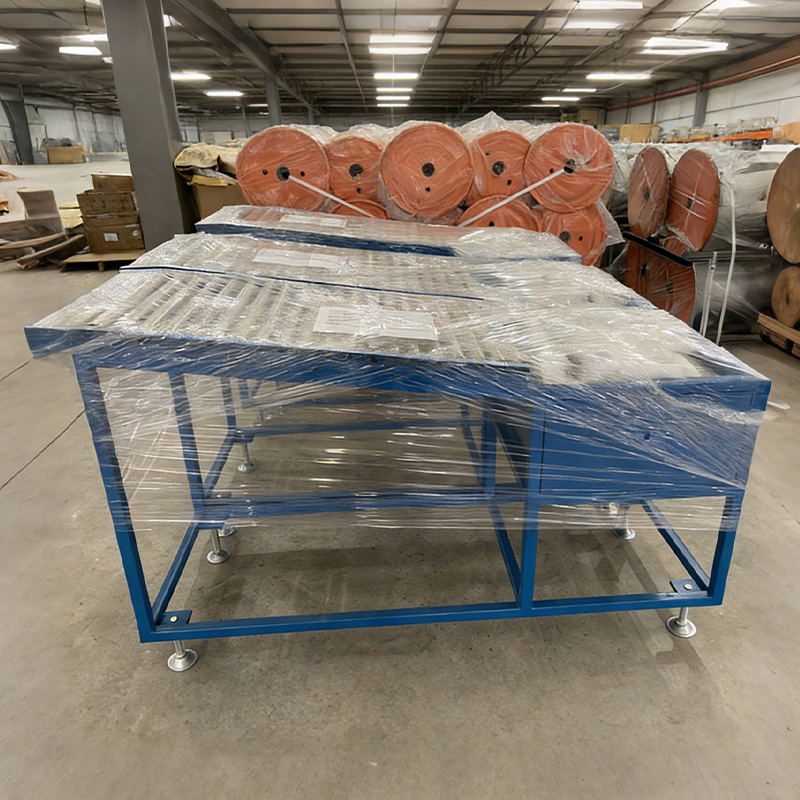
Cable Conveyor Belt Systems
Major Advantages Over Conventional Manual Handling
Reduced Labor Intensity
The most direct advantage of a cable conveyor belt system is the reduction in repetitive carrying. Workers can place packages on the transmission platform and allow the conveyor or rollers to perform most of the movement. This is especially beneficial for heavier packages, large coils, and products that must be transferred many times during a shift.
Reducing lifting and carrying can help create a more sustainable working environment. Employees experience less physical strain, while production managers can assign personnel to inspection, quality control, machine operation, and order preparation instead of routine transportation.
Lower Operational Costs
A well-designed conveyor can reduce the labor resources required for internal material movement. It may also decrease the amount of time lost when operators travel between production and handling locations. Although the conveyor is an investment, its operating value can increase as production volume grows.
Energy-saving operation is another important consideration. The system is intended to optimize the material flow path rather than move products unnecessarily. A shorter and more direct route can reduce wasted motion and avoid the need for additional lifting equipment or repeated transfers.
When the conveyor is integrated with a suitable production layout, manufacturers can improve output without expanding the workforce at the same rate. This can support more competitive production costs over the service life of the equipment.
Improved Production Continuity
Production equipment performs best when materials can move away from the output point without delay. If finished packages accumulate near a coiling machine or packaging unit, operators may need to stop the machine to clear the area. A conveyor provides a controlled exit path and helps maintain a more continuous workflow.
Stable transportation also reduces interruptions caused by unplanned manual movement. The upstream machine can continue operating while packages move toward the next station. This makes the handling process more predictable and supports better scheduling.
Better Workplace Organization
A dedicated transportation route gives finished packages a clearly defined path. This can make the factory easier to manage and reduce the risk of materials being placed in unsuitable areas.
Organized material flow is important in cable factories because coils, cartons, reels, and bundled products may occupy substantial floor space. A conveyor system helps separate product movement from pedestrian paths and machine access areas. The result is a cleaner and more orderly environment for operators and maintenance personnel.
Flexible Handling for Various Products
Wire and cable factories often manufacture products with different diameters, lengths, insulation materials, package dimensions, and labeling requirements. A useful accessory should therefore support more than one production condition.
The automatic track mode provides stable movement for regular production, while the manual roller mode accommodates product changes and irregular orders. This dual-mode concept allows the same material handling system to remain useful as production requirements evolve.
Advantages Compared with Basic Conveyor Solutions
Not all conveyor systems provide the same level of practical value. A basic fixed conveyor may offer movement, but it may not address the different production rhythms found in wire and cable manufacturing. The system described here is differentiated by its combination of automatic and manual transmission capabilities.
First, the dual-mode structure offers greater flexibility than a conveyor designed only for automatic operation. Fully automatic equipment may be efficient in high-volume conditions, but it can be less convenient when products are processed in small quantities or when the destination changes frequently. Manual roller transmission provides a useful alternative without requiring the entire handling process to be automated.
Second, the system focuses on the transfer of packaged goods from a production location to a designated manual handling location. This practical positioning makes it suitable for factories that do not need a complicated warehouse automation system but still want to eliminate unnecessary carrying.
Third, the system can be incorporated into a larger cable production solution. It can work as an accessory around extrusion, coiling, packaging, and take-up equipment rather than operating as an isolated machine. This makes it easier to plan the complete material flow of a production line.
Fourth, the system emphasizes simple operation. A conveyor used in a busy factory should not create a new layer of unnecessary complexity. Automatic track transmission handles repetitive movement, while manual rollers give operators a straightforward way to control products when flexibility is more important than automatic sequencing.
Finally, the equipment supports a cost-conscious approach. Many factories require improvements in handling efficiency but may not need a highly complex robotic system for every stage. A conveyor with automatic and manual options can provide meaningful productivity gains while maintaining a relatively practical investment level.
Integration with Wire and Cable Production Equipment
Connection with Cable Extrusion Machines
Cable extrusion machines produce insulated wires, sheathed cables, and other continuous products. After extrusion and cooling, the cable may be collected by a take-up unit or transferred to a coiling or packaging station. Once the product is packaged, the conveyor can carry it away from the production area.
This arrangement helps separate the continuous extrusion process from the final handling process. The extrusion line can focus on stable product formation, while the conveyor supports orderly movement after packaging.
Connection with Coiling Machines
Coiling machines create organized cable coils for storage, transportation, or later installation. Depending on the cable size and packaging method, the finished coil may be placed into a box, wrapped with film, strapped, or otherwise prepared for shipment.
A conveyor located after the coiling machine can receive the finished package and transfer it to an inspection or manual handling station. This reduces the need for operators to carry coils away from the machine immediately after production.
Connection with Fully Automatic Coiling and Packaging Equipment
Fully automatic coiling and packaging equipment is designed to complete multiple operations with limited manual intervention. However, the final package still needs to leave the machine and reach a suitable location. A conveyor can provide the link between automatic packaging and human inspection, palletizing, or storage.
When the conveyor is properly matched to the output rhythm of the packaging equipment, it can help prevent finished products from blocking the machine outlet. It also gives operators a more convenient position for checking package integrity, product identification, and labeling.
Connection with Motorized Pay-Off and Take-Up Equipment
Motorized pay-off and take-up machines support the controlled supply and collection of wire and cable. Although these machines are mainly concerned with product tension, winding, and production continuity, the finished output still requires organized handling.
The conveyor can complement the take-up and packaging stages by transporting completed packages to a designated downstream position. This creates a more complete solution from material feeding to finished-product movement.
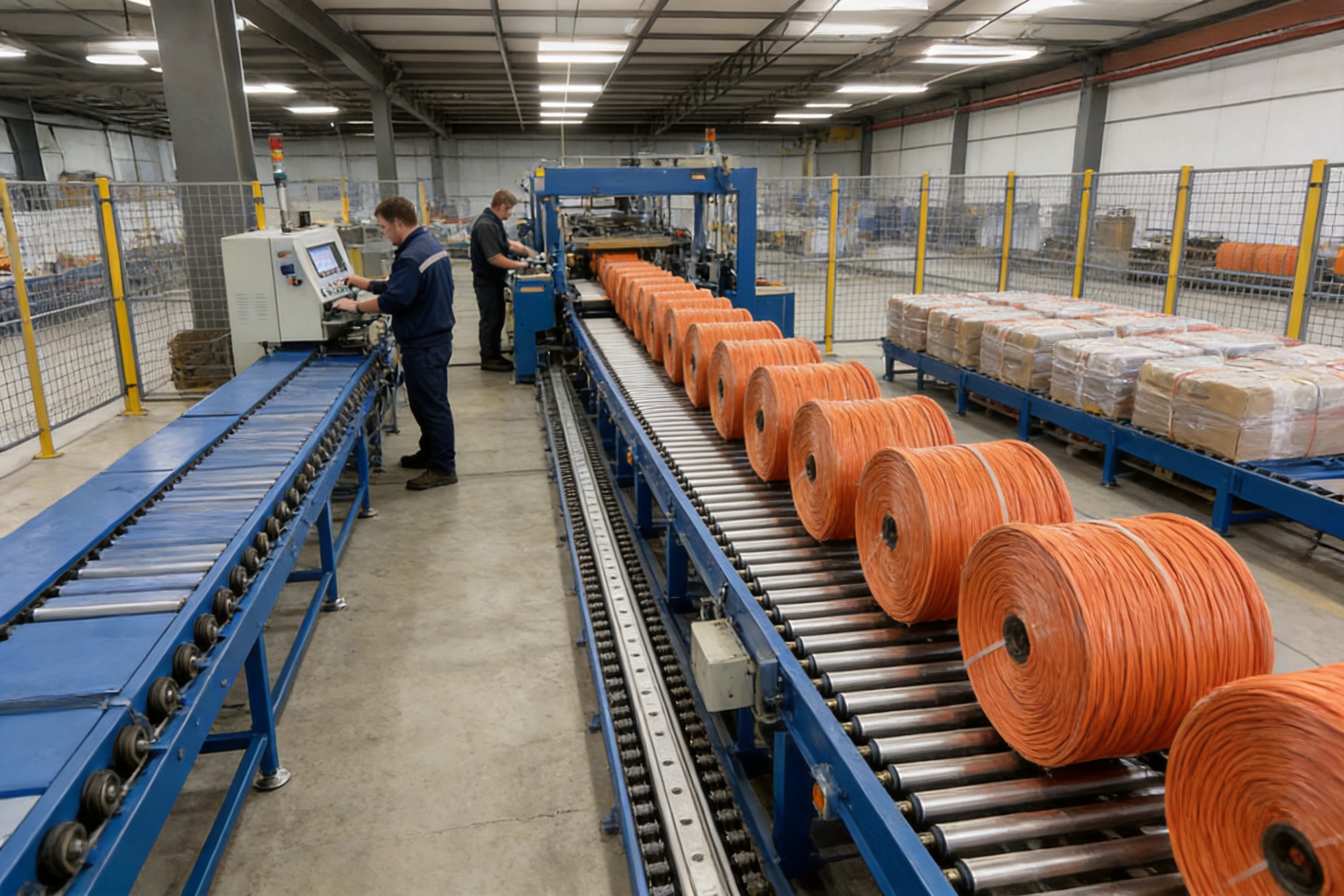
Manufacturing Strengths and Engineering Approach
The value of a cable conveyor system depends not only on its basic structure but also on the manufacturing quality behind it. Shanghai Yessjet Precise Machinery Co., Ltd. is positioned as a supplier of wire and cable machinery and turnkey cable production solutions. Its product range includes wire and cable extrusion lines, fully automatic coiling and packaging equipment, intelligent robot stackers, coiling machines, motorized pay-off equipment, motorized take-up equipment, and accessory equipment.
This broad product portfolio provides an important engineering advantage. A manufacturer that understands extrusion, winding, coiling, packaging, and stacking can evaluate the conveyor as part of the complete production process rather than treating it as an independent transfer device.
Experience Across the Complete Production Flow
Wire and cable production involves interactions between speed, tension, package dimensions, machine timing, operator access, and final storage. Conveyor design must take these factors into account. A supplier with experience across multiple machine categories can better understand how packages are created and how they should be transported afterward.
This complete-line perspective supports more practical equipment selection. The conveyor can be considered in relation to the upstream product output, the downstream manual handling position, and the available factory space. Such coordination is often more useful than choosing a generic conveyor without considering the production process.
Integration-Oriented Design
Accessory equipment should support the main production line rather than create a separate bottleneck. The system is therefore intended to help connect production equipment with manual handling stations. Its role is simple but important: transport packaged goods along a defined route and make the overall workflow more efficient.
An integration-oriented approach also helps manufacturers plan future improvements. A factory may begin with manual roller transmission and later add or emphasize automatic track transmission as production volume increases. This allows material handling capability to develop alongside business requirements.
Practical Manufacturing and Assembly
Reliable conveyor operation depends on accurate fabrication, proper assembly, and careful checking of moving components. Supporting structures must maintain alignment, transmission components must operate smoothly, and the working surface must be suitable for the intended packaged goods.
Precise machining and controlled assembly contribute to stable movement. Components that are not correctly aligned can cause vibration, uneven transportation, noise, or package deviation. A professional manufacturing process should therefore include dimensional verification, assembly inspection, operating checks, and functional testing before delivery.
Quality Control for Production Equipment
Quality control should cover both individual components and the assembled system. Structural parts need to be checked for dimensions and finish. Moving parts require inspection for smooth operation. Electrical or control components, where used for automatic transmission, should be checked for correct function and safe operation.
Factory testing is particularly valuable because it allows potential issues to be identified before installation at the customer’s site. A tested system can reduce commissioning time and make integration with the customer’s production equipment more efficient.
Application-Focused Customization
Wire and cable factories do not all have the same layout. Some require a short straight transfer route, while others need a longer connection between equipment and manual handling areas. Product dimensions, package weight, output speed, and available floor space can also vary.
A machinery manufacturer with experience in custom wire and cable production lines can evaluate these conditions and develop a more suitable conveyor arrangement. Customization may involve the transmission length, platform layout, connection position, working height, or relationship between automatic track and manual roller sections.
The objective of customization is not to add unnecessary complexity. It is to ensure that the accessory fits the actual production environment and provides useful handling performance.
How the System Improves Material Flow
Material flow describes how products move through a factory from one operation to the next. Inefficient flow often includes backtracking, waiting, repeated lifting, temporary storage, and crossing traffic paths. These issues can reduce productivity even when individual machines operate correctly.
The cable conveyor belt system improves material flow by establishing a direct connection between the production area and the designated handling point. Packages do not need to be carried through unrelated work zones or placed temporarily on the floor.
A direct route also supports visual management. Operators can quickly see where finished products are moving and where they will arrive. Supervisors can more easily identify congestion, accumulation, or delays. This visibility helps improve scheduling and daily production management.
When automatic transmission is used, packages can be moved at a stable pace. When manual roller transmission is used, operators retain control over the timing and destination of each package. Both methods are more organized than unplanned manual carrying.
The system can also help establish a separation between production activities and finished-product handling. This is useful in plants where the same team operates machines and prepares goods for storage or shipment. The conveyor can bring products to the workers instead of requiring workers to repeatedly travel back to the machine.
Energy and Labor Efficiency
Energy efficiency in a factory is influenced by equipment design, operating schedules, maintenance, and material flow. A conveyor system contributes by reducing unnecessary movement and supporting a shorter transportation route.
The automatic track mode is intended for consistent conveyance rather than repeated manual transportation. Its value is strongest when packages are produced regularly and must travel a predictable distance. The manual roller mode can be used when automatic movement is not necessary, avoiding the need to operate powered equipment for every small-batch transfer.
This combination supports a more balanced use of energy. Automatic transmission is available when it provides a clear productivity benefit, while manual rollers offer a low-complexity option for irregular production.
Labor efficiency is also improved because employees spend less time on low-value transport work. They can concentrate on tasks that require attention, such as checking product appearance, confirming packaging quality, verifying labels, inspecting cable specifications, and preparing finished goods for dispatch.
Lower physical demand can contribute to more consistent work performance. When workers are less fatigued by repetitive carrying, they may be better able to maintain concentration throughout the shift. This can support both productivity and product handling quality.
Operational Safety and Workplace Ergonomics
Any material handling equipment should be planned with safety in mind. A conveyor can reduce some risks associated with manual carrying, but it must still be installed, operated, and maintained correctly.
By reducing the need to lift heavy packages, the system can help lower the risk of strain caused by repeated handling. A defined transportation path can also reduce the chance of products being dragged across walkways or left in areas where they may create trip hazards.
Operators should receive clear instructions on how to load packages, start or stop automatic transmission, use the manual rollers, and respond to unusual conditions. Work areas should remain free from obstructions, and emergency access should not be blocked by packages or equipment.
Routine inspection should include the supporting structure, transmission surfaces, rollers, moving parts, electrical elements, and any protective features. If unusual noise, vibration, or movement occurs, the system should be checked before continued operation.
Good ergonomics also involves working height and operator position. A suitable conveyor arrangement allows workers to handle packages without excessive bending, reaching, or twisting. These factors are important when the equipment operates for long periods or handles frequent product output.
Maintenance and Service Considerations
Simple maintenance is one of the practical advantages of a well-planned conveyor system. The equipment should be kept clean and inspected regularly to ensure that packaging materials, dust, cable fragments, or other debris do not interfere with movement.
Rollers and transmission components should be checked for free movement and correct alignment. Structural connections should be inspected to confirm that they remain secure. If the automatic section includes a drive system, the motor, transmission components, control elements, and emergency stop functions should be checked according to the operating requirements.
Maintenance intervals depend on operating hours, product weight, environmental conditions, and production intensity. High-output factories may require more frequent inspection than small-batch workshops. Establishing a written maintenance schedule helps prevent minor issues from becoming production interruptions.
Because the system is intended to work alongside wire and cable production equipment, maintenance planning should also consider the surrounding machines. Access to the conveyor should remain available even when extrusion, coiling, or packaging equipment is operating. A practical layout makes cleaning and inspection easier.
Technical support from an experienced machinery supplier can also be valuable during installation, commissioning, adjustment, and future expansion. A supplier familiar with the entire production line can provide more relevant guidance than a provider focused only on general-purpose conveying.
Selection Guidelines for Cable Conveyor Belt Systems
Before selecting a system, manufacturers should evaluate the products that will be transported. Important factors include package length, width, height, weight, surface material, stability, and whether the package is boxed, wrapped, strapped, or placed on a reel.
The output rate of the upstream equipment should also be considered. A high-volume packaging line may require automatic track transmission, while a low-volume workshop may obtain sufficient benefit from manual rollers. Some plants may need both options to accommodate different production schedules.
The distance between the production machine and the manual handling station affects the conveyor layout. Available floor space, walkway positions, machine access, and storage areas should be reviewed before installation.
Manufacturers should also consider future production plans. If output is expected to increase, it may be beneficial to prepare a conveyor route that can support higher usage. If product variety is expected to grow, flexible manual handling capability may be particularly valuable.
The following table summarizes key evaluation points:
| Evaluation Factor | Why It Matters | Recommended Consideration |
|---|---|---|
| Package size | Determines the required working width and support arrangement | Measure the largest and smallest regular packages |
| Package weight | Influences structural and transmission requirements | Use the heaviest normal package as a design reference |
| Output frequency | Determines whether automatic movement is necessary | Compare conveyor capacity with machine output |
| Transfer distance | Defines the required route and installation space | Plan the shortest practical path between stations |
| Product variety | Affects flexibility and operator control | Consider combining automatic tracks with manual rollers |
| Workplace layout | Influences access, safety, and maintenance | Keep walkways and machine service zones clear |
| Future expansion | Supports long-term production planning | Allow room for capacity or layout changes where possible |
Application Scenarios
High-Volume Packaging Lines
In a high-volume factory, packaged products may leave a machine at regular intervals throughout the day. Automatic track transmission can carry each package away from the output point and toward a checking or handling station. This helps keep the packaging area clear and limits the need for continuous manual carrying.
Small-Batch Cable Production
Small-batch manufacturers often change product specifications more frequently. Output may be irregular, and packages may have different destinations. Manual roller transmission provides an economical and flexible way to move goods without requiring every transfer to follow an automatic sequence.
Mixed Production Workshops
A workshop may produce standard cable, specialty cable, short orders, samples, and customer-specific packages in the same facility. A combined transmission system can use automatic movement for standard products and manual rollers for special orders.
Inspection and Repacking Areas
Finished packages may need visual inspection, measurement confirmation, label checking, or repacking before storage. The conveyor can bring packages to a designated inspection position, reducing travel for the operator and improving the organization of the quality control area.
Finished-Goods Transfer
After packaging, products may need to move toward a storage zone, palletizing position, or shipment preparation area. The conveyor creates a defined route that can reduce temporary placement and improve the separation between production and logistics activities.
Why Choose an Experienced Wire and Cable Machinery Manufacturer?
Choosing a conveyor supplier with knowledge of wire and cable machinery offers several advantages. The supplier can understand the output characteristics of cable equipment, the shape and handling needs of coils, and the practical relationship between packaging and downstream transportation.
Shanghai Yessjet Precise Machinery Co., Ltd. provides equipment for wire and cable production, including extrusion lines, coiling and packaging systems, robot stackers, pay-off machines, take-up machines, and accessory equipment. This product scope reflects an ability to address multiple stages of the production process.
For customers planning a complete cable production line, working with a supplier that can provide both primary and accessory equipment may simplify communication and project coordination. It can also make it easier to develop a consistent solution for machine arrangement, product transfer, and finished-goods handling.
An experienced supplier can assist with questions such as where the conveyor should be positioned, how it should connect with the packaging outlet, whether automatic or manual transmission is more suitable, and how the system should accommodate future production requirements.
The strongest machinery solutions are not necessarily the most complicated. They are the solutions that address the actual factory problem, integrate with existing equipment, operate reliably, and remain practical for the people who use them every day.
Implementation Process
Production Requirement Review
The first step is to review the customer’s production process. This includes identifying the upstream equipment, package types, output rhythm, transfer distance, manual handling tasks, and final destination.
Layout Planning
The conveyor route should be planned around machine access, operator positions, storage areas, walkways, and maintenance requirements. A direct route is usually preferred, but the layout must also support safe operation and convenient inspection.
Transmission Mode Selection
The customer and equipment supplier can determine whether automatic track transmission, manual roller transmission, or a combination of both is appropriate. The decision should be based on production volume, product variation, and the desired degree of automation.
Manufacturing and Assembly
After the configuration is confirmed, the conveyor components are manufactured and assembled. Structural accuracy, moving-part alignment, operating stability, and connection positions should be checked during this stage.
Testing and Commissioning
The completed system should be tested under operating conditions. Packages should be moved through the intended route to verify stability, accessibility, and compatibility with the upstream and downstream stations.
Operator Training
Operators should be trained in normal operation, manual roller use, automatic track use, cleaning, basic inspection, and emergency procedures. Clear operating practices help protect both personnel and equipment.
Return on Investment and Long-Term Value
The financial value of a conveyor system should be considered over its operating life rather than only by its initial purchase price. Savings may come from reduced manual transport, fewer production interruptions, better use of labor, lower physical strain, and more efficient use of factory space.
For a growing production line, the value may increase as output rises. A manual handling process that appears manageable at low volume can become a significant bottleneck when orders increase. Installing organized transportation in advance can help the factory scale more smoothly.
The system may also reduce indirect costs caused by disorderly movement. Products that are repeatedly carried or temporarily placed may be more exposed to damage, contamination, package deformation, or labeling errors. A controlled route can support better product handling and reduce avoidable rework.
Long-term value is strongest when the equipment is properly matched to the production requirements. An oversized or unnecessarily complex system may not provide the best return. A practical combination of automatic track transmission and manual rollers can deliver useful efficiency without making the handling process difficult to manage.
Frequently Asked Questions
What products can a cable conveyor belt system transport?
The system is designed for packaged wire and cable products and can be considered for coils, wrapped packages, cartons, reels, and other finished goods, provided their size and weight are compatible with the selected configuration. Product dimensions should be reviewed before final equipment selection.
What is the difference between automatic track transmission and manual roller transmission?
Automatic track transmission moves packages along a defined route with powered or controlled conveyance and is suitable for regular, continuous production. Manual roller transmission allows operators to push packages by hand, making it useful for small batches, irregular output, and frequent product changes.
Can both transmission modes be used in one production area?
Yes. Combining the two modes can provide efficient automatic transportation for standard production and flexible manual movement for special orders, changeovers, or small-batch products.
Can the conveyor connect with a cable extrusion line?
It can be used as an accessory around a cable extrusion line, particularly after take-up, coiling, or packaging operations. The exact arrangement depends on the output equipment, package form, and required handling destination.
Does the system reduce labor requirements?
It can reduce the amount of labor required for repetitive internal transportation. Workers still need to load, inspect, guide, or handle products, but they spend less time carrying packages from one location to another.
Is the equipment suitable for small factories?
Yes. The manual roller transmission option can be useful for small factories or small-batch production because it provides flexible movement without requiring a fully automated material handling system.
How does the system save energy?
It supports a more direct material flow and reduces unnecessary carrying and repeated transfers. Manual rollers can be used when powered automatic movement is not necessary, while automatic transmission can be used for regular production.
Can the system be customized for a factory layout?
Equipment planning can take into account the production machine position, transfer distance, package dimensions, working height, and designated manual handling location. A layout review is recommended before manufacturing.
What maintenance does the conveyor require?
Regular maintenance generally includes cleaning, checking rollers and moving components, confirming structural connections, inspecting the automatic transmission section, and verifying safe operation. The exact schedule depends on usage and working conditions.
Why is supplier experience important?
A supplier experienced in wire and cable machinery can understand how extrusion, coiling, take-up, packaging, and stacking operations interact. This knowledge helps the conveyor function as part of a complete production solution rather than as an isolated accessory.
Conclusion
Cable conveyor belt systems provide a practical method for improving the movement of packaged goods in wire and cable factories. By transporting products from production areas to designated manual handling stations, they reduce unnecessary carrying, improve material flow, lower labor intensity, and support more orderly production environments.
The combination of automatic track transmission and manual roller transmission is a key advantage. Automatic conveyance supports continuous, high-efficiency production, while manual rollers provide flexibility for small batches, product changes, and irregular handling requirements. This makes the system suitable for both large production lines and more flexible manufacturing workshops.
When integrated with cable extrusion machines, coiling machines, packaging equipment, take-up systems, and other wire and cable machinery, the conveyor can help create a more complete and efficient production workflow. Its value comes from practical integration, not unnecessary complexity.
Shanghai Yessjet Precise Machinery Co., Ltd. supports wire and cable manufacturers with a broad range of production and accessory equipment. Its experience across extrusion, coiling, packaging, pay-off, take-up, stacking, and material handling equipment provides a foundation for developing coordinated cable production solutions.
For manufacturers seeking to improve internal transportation while controlling investment and operating costs, a properly configured cable conveyor belt system is a dependable step toward more efficient, safer, and better-organized production.
References
1. International Organization for Standardization, principles of machinery safety and risk reduction.
2. International Electrotechnical Commission, guidance for electrical equipment used in industrial machinery.
3. Manufacturing material handling principles for conveyor selection, factory layout, and workflow improvement.
4. Wire and cable production engineering references covering extrusion, take-up, coiling, packaging, and finished-product handling.
5. Industrial ergonomics guidance for reducing repetitive lifting, carrying, and manual transportation tasks.
6. Production management references on energy efficiency, labor utilization, and continuous material flow.