LANGUAGE
 中文简体
中文简体 русский
 Français
 Español
 Português
 عربى
عربى
Content
- 1 What Is an Accumulator Dancer Cable Storage Rack?
- 2 Why Cable Accumulation Matters in Continuous Production
- 3 Main Functions of the Cable Storage Rack
- 4 Vertical and Horizontal Accumulator Configurations
- 5 Product Configuration and Technical Parameters
- 6 Advantages Compared with Basic Cable Storage Solutions
- 7 Integration with Extrusion, CV, and Rewind Lines
- 8 Engineering and Manufacturing Strengths
- 9 Manufacturing Process for a Reliable Accumulator Dancer
- 10 Operational Benefits for Cable Manufacturers
- 11 Installation Considerations
- 12 Maintenance and Cable Management
- 13 How to Select the Correct Model
- 14 Why Customization Is Important
- 15 Application Industries
- 16 Questions and Answers
- 16.1 What is the main purpose of an accumulator dancer?
- 16.2 Is the accumulator suitable for both payoff and take-up applications?
- 16.3 What types of accumulator are available?
- 16.4 Can the accumulation capacity be customized?
- 16.5 What cable diameters are supported by the listed models?
- 16.6 Why is wheel diameter important?
- 16.7 Can the rack be installed in an existing production line?
- 16.8 How does the accumulator help protect cable quality?
- 16.9 Does the accumulator eliminate all production downtime?
- 16.10 What information should be provided when requesting a quotation?
- 16.11 What makes a specialized cable machinery manufacturer valuable?
- 16.12 How should the equipment be maintained?
- 17 Conclusion
- 18 References
- 19 Product: Accumulator Dancer(cable storage rack)
Modern wire and cable manufacturing depends on continuous, controlled, and highly coordinated production. Every stage of a cable line must work together, from pay-off and conductor processing to extrusion, cooling, take-up, rewinding, and final packaging. When a reel needs to be changed, however, the production line can face a serious interruption. Without a suitable cable storage system, the line may need to stop, the cable may become tangled or damaged, and valuable production time may be lost.
An accumulator dancer, also known as a cable storage rack, is designed to solve this problem. It temporarily stores a controlled length of cable while the upstream or downstream equipment continues operating. During reel changeover, the stored cable provides a buffer that allows operators to replace a reel without immediately stopping the entire production process. This simple but essential function can improve line continuity, reduce material waste, protect cable quality, and support more efficient plant management.
The accumulator dancer described in this article is engineered for use in extrusion lines, CV lines, and rewind lines. It is available in vertical and horizontal configurations, with storage capacity customized according to production requirements. The equipment supports and guides the cable through a structured wheel arrangement, helping maintain an orderly cable path while reducing the possibility of abrasion, deformation, or uncontrolled movement.
For manufacturers searching for a dependable wire accumulator, vertical wire accumulator, or horizontal wire cable accumulator, the selection of the correct design is important. Capacity, cable diameter, wheel size, line speed, installation space, changeover method, and maintenance access all influence the final configuration. A properly selected accumulator dancer becomes more than a storage device; it becomes an important part of a stable, continuous, and efficient cable production system.
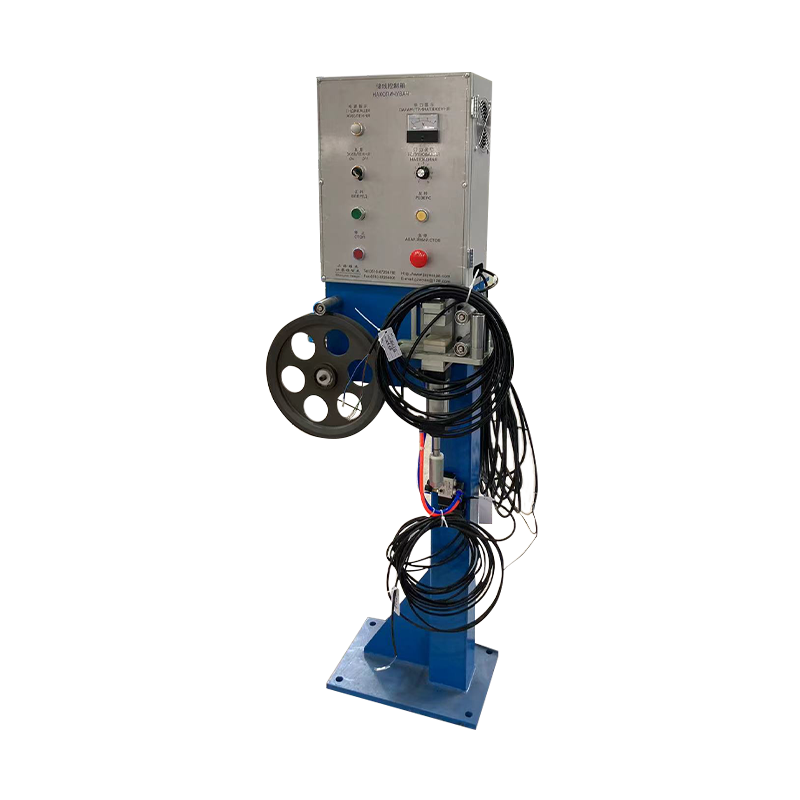
Accumulator Dancer(cable storage rack)
What Is an Accumulator Dancer Cable Storage Rack?
An accumulator dancer is a mechanical cable storage device installed within a continuous production line. It temporarily accumulates cable in a controlled path so that one part of the line can continue running while another part undergoes reel replacement, splicing, or adjustment. The word “dancer” refers to the controlled movement or tension-balancing function associated with the cable path, while “accumulator” describes the stored cable length.
In a typical cable production process, the cable moves continuously from one machine to another. The pay-off reel supplies material to the line, and the take-up reel collects the finished cable. When the pay-off reel is nearly empty or the take-up reel is full, a reel change is necessary. If there is no buffer between these operations, the entire line may have to stop. An accumulator creates a temporary reserve of cable that allows the line to keep running during the changeover period.
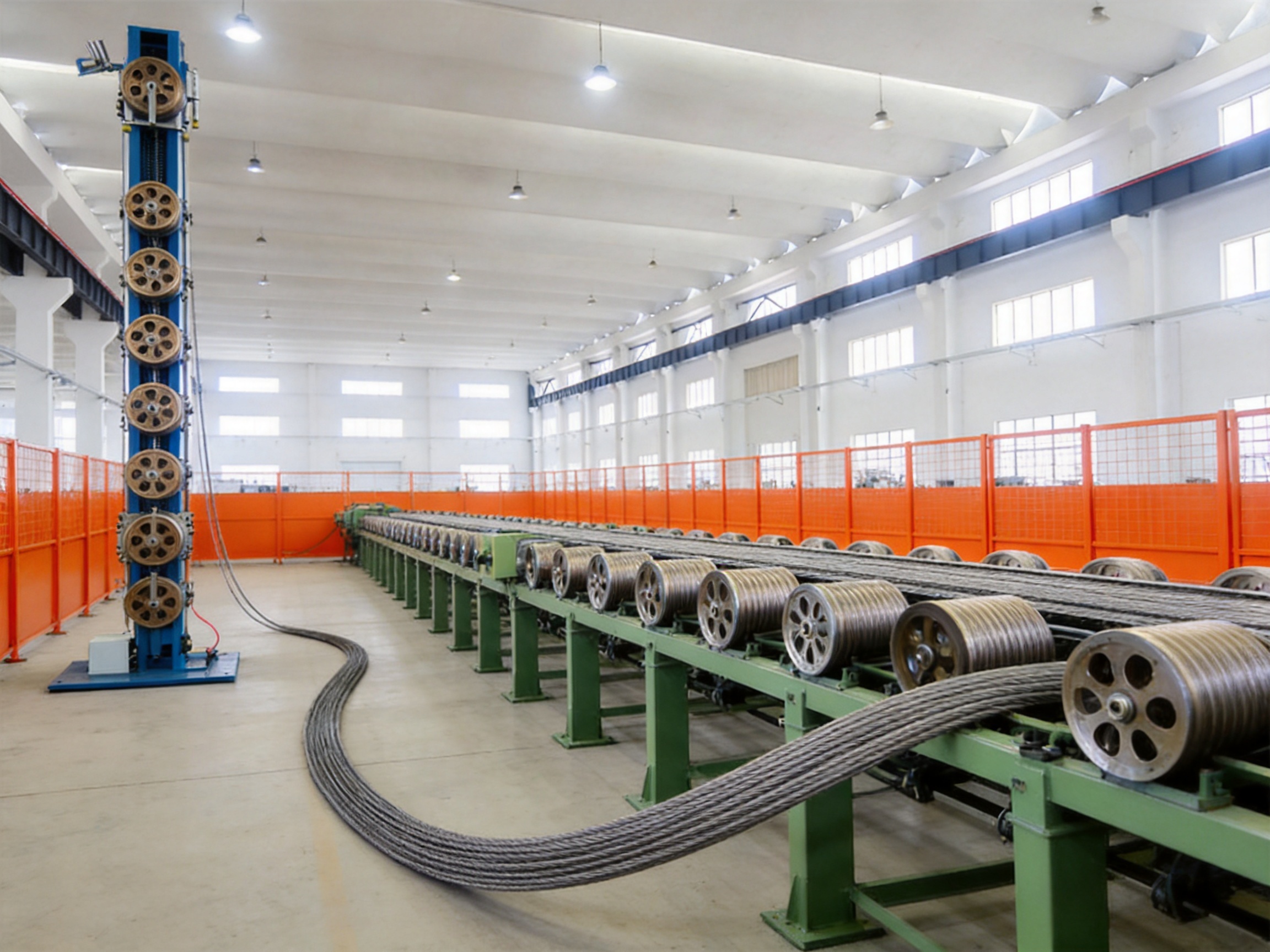
The storage rack uses multiple wheels arranged in a carefully planned structure. Cable passes around the wheels in a controlled route, creating a reserve length without requiring a large floor area. Depending on the equipment design, the wheels may be positioned vertically or horizontally. The selected arrangement depends on the available installation space, cable characteristics, line layout, and the required accumulation capacity.
Besides storing cable, the equipment helps support and fix the cable during operation. The guided wheel path reduces random cable movement and helps maintain a stable production route. It also forms a protective barrier between the cable and surrounding equipment, lowering the risk of contact damage, excessive bending, or uncontrolled sagging.
Why Cable Accumulation Matters in Continuous Production
Continuous cable production is particularly sensitive to interruptions. Even a short stop can affect extrusion temperature, material flow, conductor alignment, cooling conditions, surface quality, and downstream tension. In some processes, restarting the line may produce a section of cable that does not meet quality requirements. This section may need to be cut out, increasing scrap and reducing productivity.
Reel changeover is one of the most common causes of interruption. Replacing a reel involves stopping or slowing the relevant equipment, securing the cable, removing the empty or full reel, installing a new reel, and restoring normal tension. If the production line has no accumulated cable reserve, each stage must be coordinated within a very limited time. A small delay at one point can stop the entire line.
An accumulator dancer creates separation between the cable production process and the reel-handling process. The line can continue consuming or producing cable from the stored reserve while operators complete the changeover. Once the new reel is ready, the storage rack gradually returns to its normal working position. This makes the overall process smoother and gives operators more time to perform the changeover safely and accurately.
The result is a more flexible production line with fewer unnecessary stops. The cable can remain under better control, while operators can focus on safe reel handling instead of rushing to prevent the line from running out of material. In high-output plants, the time saved during repeated reel changes can become a significant improvement in annual production capacity.
Main Functions of the Cable Storage Rack
Temporary Cable Storage
The primary function is to accumulate a defined length of cable. The stored length acts as a buffer between two production operations. Capacity can be selected according to the reel-change time, line speed, cable diameter, and required operating margin.
Cable Support and Fixing
The rack supports the cable along an organized route. Proper support helps reduce uncontrolled movement, excessive sagging, and contact with unrelated machine components. This is particularly important for finished cables with sensitive outer jackets, insulation layers, or surface treatments.
Cable Protection
The wheel arrangement helps guide the cable through a controlled path. When the wheel diameter and cable route are properly matched to the cable specification, the risk of sharp bending and surface damage can be reduced. The storage structure also helps keep the cable away from the floor and other potential sources of contamination.
Improved Reel Changeover
During reel replacement, the accumulator allows the production line to continue operating for a defined period. This reduces the pressure on operators and helps prevent unnecessary line stoppage. The changeover process can therefore become more predictable and easier to standardize.
Improved Maintenance Access
A rationally arranged cable path simplifies inspection and maintenance. Operators can more easily identify the cable route, inspect wheel condition, and check for abnormal movement. Organized cable management also reduces the difficulty of cleaning and servicing adjacent production equipment.
Production Continuity
By minimizing interruptions, the accumulator supports stable operation of extrusion, CV, and rewind lines. Consistent line operation can contribute to better process control, more uniform product quality, and improved utilization of upstream and downstream equipment.
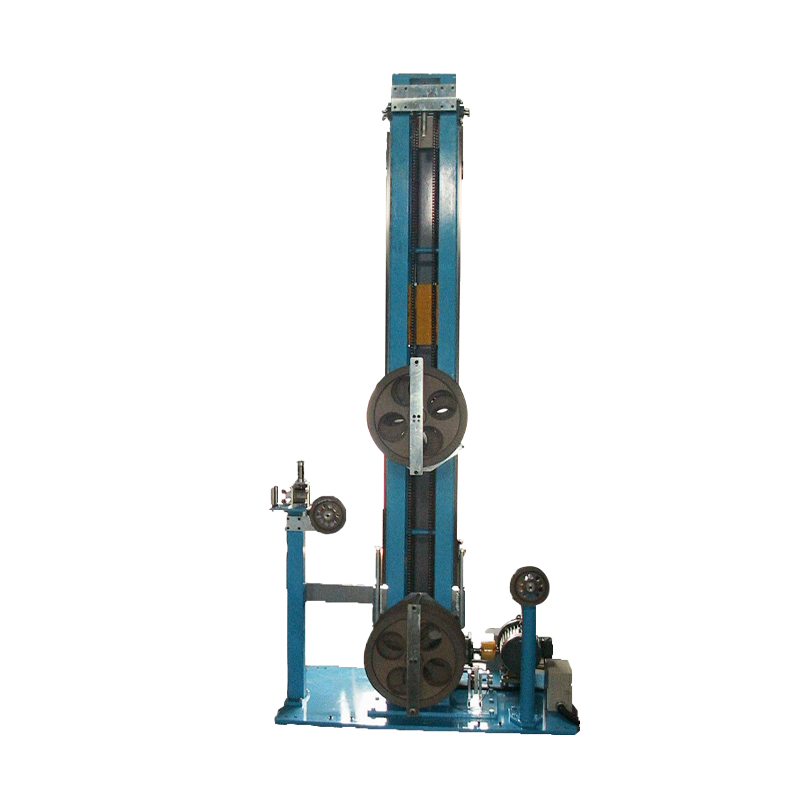
Vertical and Horizontal Accumulator Configurations
The accumulator dancer is generally available in two main configurations: vertical and horizontal. Both designs perform the same basic function, but they are suited to different factory layouts and operating conditions.
Vertical Wire Accumulator
A vertical accumulator places the cable storage path in an upright arrangement. This configuration can provide substantial storage capacity while using a relatively small floor footprint. It is often appropriate where floor space is limited but sufficient vertical clearance is available.
The vertical structure can also provide a clear and organized cable route. The wheels are arranged in rows or levels, allowing the cable to move through the equipment while remaining separated from the floor and nearby obstacles. This arrangement is useful in production workshops where multiple machines are installed in a compact layout.
Vertical systems should be evaluated against building height, overhead cranes, lighting, ventilation ducts, and other elevated equipment. Sufficient clearance must be maintained for installation, operation, inspection, and maintenance. The final vertical height can be selected or adapted according to the required capacity and the available plant space.
Horizontal Wire Cable Accumulator
A horizontal accumulator distributes the storage path along the floor or a horizontal frame. It is suitable for facilities with limited overhead clearance or layouts where the cable needs to follow a horizontal production direction.
This design may simplify integration into longer production lines and can be convenient when equipment access is primarily arranged at operator level. It may also be appropriate for lines where the upstream and downstream machines are positioned horizontally and the cable path must remain close to the production floor.
Horizontal systems require adequate floor length and a stable installation area. The equipment must be positioned so that operators can safely access reels, wheels, sensors, and cable guides. A well-designed horizontal layout can provide efficient cable handling without interfering with other production operations.
How to Choose Between the Two Types
The choice between vertical and horizontal construction should not be based only on available space. Engineers should also consider cable diameter, storage capacity, line speed, cable bending requirements, reel dimensions, maintenance access, operator movement, and future expansion plans.
A vertical design may be preferred when floor space is scarce and the workshop has adequate height. A horizontal design may be more suitable when overhead clearance is restricted or when the production line naturally follows a low, extended layout. Both forms can be customized to meet customer requirements, making the equipment adaptable to a wide range of cable processing environments.
Product Configuration and Technical Parameters
The supplied product range includes several vertical accumulator models. The model selection is associated with wheel diameter, wheel quantity, accumulation capacity, and applicable cable diameter. These parameters should be matched to the actual line conditions before ordering.
| Model | Wheel Diameter | Number of Wheels | Accumulation Capacity | Applicable Cable Diameter |
|---|---|---|---|---|
| AC-0330V | 300 mm | 10 + 11 | 41 m | 2–6 mm |
| AC-0335V | 350 mm | 9 + 10 | 38 m | 4–11 mm |
| AC-0340V | 400 mm | 7 + 8 | 30 m | 6–12 mm |
| AC-0345V | 450 mm | 7 + 8 | 31 m | 8–13 mm |
| AC-0350V | 500 mm | 6 + 7 | 24 m | 10–15 mm |
| AC-0360V | 600 mm | 6 + 7 | 24 m | 12–20 mm |
The figures in the table provide a reference for model selection. Actual application suitability should be confirmed using the complete production specification. Cable construction, flexibility, surface material, line speed, tension, and required changeover time may affect the final choice.
Wheel Diameter
Wheel diameter is an important factor in cable handling. A larger wheel generally provides a gentler bending path, which may be beneficial for cables with larger diameters or more rigid constructions. Smaller wheels may be suitable for smaller and more flexible cables, particularly where compact equipment dimensions are required.
The correct wheel diameter helps balance cable protection, storage capacity, and equipment size. Selecting a wheel that is too small for the cable may increase bending stress or affect the cable surface. Selecting a wheel that is unnecessarily large may increase the equipment footprint and cost without providing a practical benefit.
Number of Wheels
The number and arrangement of wheels determine the cable path and storage volume. A greater number of wheel positions can provide a longer accumulation path within a controlled structure. However, the arrangement must remain compatible with the cable diameter, bending requirements, and line speed.
The wheel layout should also permit convenient inspection. Operators need to see whether the cable is correctly positioned and whether any abnormal rubbing, misalignment, or accumulation occurs during operation.
Accumulation Capacity
Accumulation capacity is measured in meters of cable stored within the equipment. The required capacity depends mainly on line speed and the time needed to complete a reel change. For example, a faster production line may require a larger reserve to provide the same changeover window as a slower line.
Capacity can be customized according to customer requirements. This allows the accumulator to be designed for particular reel sizes, process speeds, and operating procedures rather than forcing every customer to use a standard configuration.
Applicable Cable Diameter
The cable diameter range must be considered together with wheel diameter and cable flexibility. The table shows reference ranges from 2–6 mm to 12–20 mm for the listed vertical models. If a cable falls outside a standard range, a customized engineering review may be required.
Advantages Compared with Basic Cable Storage Solutions
Basic cable storage arrangements may consist of loose loops, temporary floor supports, or improvised guide structures. While these methods may appear economical, they can create safety, quality, and productivity problems. An engineered accumulator dancer provides a more controlled and repeatable alternative.
More Controlled Cable Movement
A structured wheel path keeps the cable in a defined position. Loose cable loops can shift unpredictably, cross over one another, or contact the floor. A purpose-built rack helps maintain orderly movement and makes abnormal conditions easier to identify.
Lower Risk of Cable Damage
Improvised storage may expose cable to sharp edges, excessive bending, dirt, or accidental impact from operators and vehicles. The accumulator provides a dedicated support structure that separates the cable from these hazards. Correct wheel sizing and guided movement further improve cable protection.
Better Use of Production Space
Vertical and horizontal configurations allow the equipment to be adapted to different factory layouts. A vertical design can use height efficiently, while a horizontal design can integrate into a low-profile production line. This flexibility is more practical than relying on uncontrolled cable loops spread across the workshop.
More Efficient Changeover
The storage rack provides a defined operating reserve for reel replacement. Operators can follow a repeatable changeover process instead of responding to an urgent loss of cable supply. This can reduce downtime and make production scheduling more reliable.
Improved Maintenance and Management
A rational cable route makes it easier to inspect the line, clean the working area, and locate wear points. The equipment helps establish a consistent cable management method, which is valuable for plants operating several similar production lines.
Customizable Capacity
Many basic storage solutions offer little flexibility. An engineered accumulator can be configured according to the customer’s accumulation requirements. This is especially useful when a plant produces multiple cable sizes or plans to increase line speed in the future.
Integration with Extrusion, CV, and Rewind Lines
The accumulator dancer is designed for installation within extrusion, CV, and rewind lines. Its position in the line depends on the production objective. It may be used to control payoff, manage take-up, or provide a buffer during reel changeover.
Extrusion Line Integration
In an extrusion line, the cable may pass through conductor preparation, insulation extrusion, cooling, diameter control, and take-up. The accumulator can be placed where it helps separate continuous extrusion from reel handling. This arrangement can reduce the need to stop the extrusion process when a take-up reel becomes full or a new reel must be prepared.
Extrusion processes often require stable speed and tension. Any sudden change in cable movement can affect the relationship between extrusion output and cable travel. The accumulator helps provide a controlled buffer, allowing reel changes to take place without an abrupt interruption to the process.
CV Line Integration
CV lines require careful control of cable movement through specialized curing and cooling stages. A cable storage rack can assist with downstream handling and reel changeover, provided that its location and operating method are correctly coordinated with the line control system.
Because CV cables may have demanding dimensional and surface requirements, the cable path must be designed to avoid unnecessary stress or contact. The accumulator’s wheel diameter, cable route, and installation position should be reviewed according to the specific cable construction and line operating conditions.
Rewind Line Integration
Rewind lines transfer cable from one reel to another, often for length adjustment, inspection, repackaging, or customer-specific delivery requirements. An accumulator can provide a reserve during reel handling and help maintain an organized path between the supply and collection sections.
In rewind applications, the system may also support more convenient operation when reels have different dimensions or when the line must be stopped briefly for joint preparation. The storage capacity should be selected according to rewind speed and the expected duration of reel replacement.
Engineering and Manufacturing Strengths
A reliable accumulator dancer depends on more than a frame and a group of wheels. Its performance is influenced by structural planning, component selection, dimensional accuracy, assembly quality, and application-specific engineering. A manufacturer with experience in wire and cable machinery can evaluate the accumulator as part of the complete production line rather than as an isolated accessory.
Experience in Complete Cable Machinery
The manufacturer develops and supplies equipment for wire and cable production, including extrusion lines, coiling and packaging equipment, intelligent robot stackers, coiling machines, motorized pay-off equipment, motorized take-up equipment, accessory equipment, and cable extrusion machines. This broad product range provides a practical understanding of the relationships between cable storage, line speed, reel handling, tension control, and final packaging.
Such experience is valuable when an accumulator must be integrated into an existing production line. Instead of considering only the rack dimensions, engineers can review how the device interacts with upstream and downstream machines, operator procedures, and the customer’s production goals.
Application-Oriented Design
The accumulator is available in vertical and horizontal forms because production workshops do not share the same layout. Customization can also address accumulation capacity and cable diameter. This application-oriented approach helps customers avoid purchasing equipment that is either too small for the process or unnecessarily large for the available space.
Design review may include the cable specification, reel changeover procedure, line speed, installation direction, available height and floor area, required storage length, and maintenance access. This information helps establish a more appropriate configuration before manufacturing begins.
Integrated Production Capability
Manufacturing cable machinery requires coordination between mechanical structure, rotating components, cable-guiding parts, and line integration requirements. A company specializing in this field can organize the production process around the practical needs of cable manufacturers.
The manufacturing approach should include careful preparation of drawings, material and component selection, frame fabrication, wheel installation, alignment, assembly, inspection, and final preparation for delivery. Each stage contributes to the operating stability of the finished accumulator.
Focus on Structural Rationality
The product content emphasizes a rational structure that simplifies later maintenance and management. Structural rationality includes a clear cable route, accessible components, suitable support points, stable wheel positioning, and a frame arrangement that can be installed in the intended production environment.
A rational design is especially important for plants that operate continuously. Maintenance work must be efficient, and operators must be able to understand the cable path without unnecessary complexity. Clear construction can also support faster training for new personnel.
Customization for Customer Requirements
Standard models provide a useful starting point, but cable factories may have different requirements. The desired accumulation capacity may depend on reel dimensions, production speed, operator working methods, and the time required to prepare a replacement reel.
Customization enables the storage rack to match these conditions. The manufacturer can evaluate whether a vertical or horizontal solution is more suitable and determine an appropriate wheel arrangement and storage length. This is a significant advantage over generic storage products that are not designed specifically for wire and cable processing.
Manufacturing Process for a Reliable Accumulator Dancer
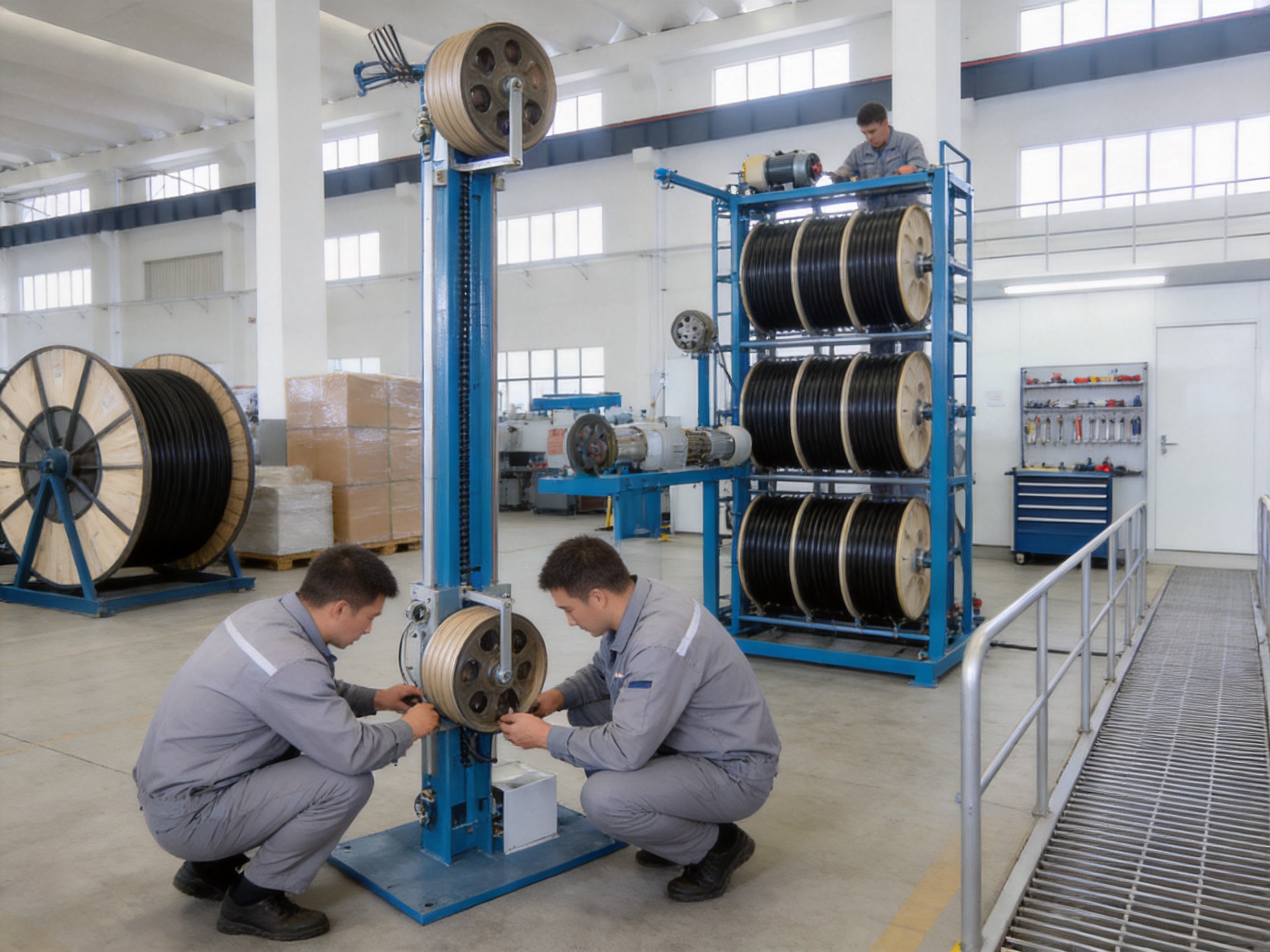
Although the accumulator is an accessory device, it should be manufactured with the same attention to engineering detail as other production-line equipment. A disciplined manufacturing process helps ensure that the rack operates smoothly and maintains a consistent cable path.
Requirement Confirmation
The process begins with an understanding of the customer’s application. Important information includes cable diameter, cable construction, line speed, target accumulation length, reel dimensions, installation location, and whether the equipment will be integrated into a new or existing line.
The customer should also identify whether the accumulator will mainly support payoff control, take-up control, or reel changeover. These functions may require different installation positions and operating arrangements.
Mechanical Design
After the application is reviewed, the manufacturer determines the suitable type, wheel diameter, wheel quantity, frame dimensions, and cable route. The design should allow the cable to be stored without exceeding the bending limitations of the product.
Vertical and horizontal layouts are considered according to workshop space and line direction. The design should also include access for installation, inspection, lubrication where applicable, cleaning, and replacement of wear components.
Frame Fabrication
The frame must provide stable support for the wheel assembly and remain secure during continuous operation. Fabrication quality affects the alignment of the cable route and the long-term stability of the equipment.
Key considerations include dimensional consistency, firm joining of structural members, stable mounting points, and appropriate surface treatment. A well-prepared frame reduces vibration and helps keep the wheels in their intended positions.
Wheel and Guide Assembly
The wheels are installed according to the planned cable route. Their positions must be consistent so that the cable can pass smoothly through the accumulation path. Improper alignment can increase friction, create uneven loading, or cause the cable to move outside the intended route.
Guide elements should be arranged to support the cable without creating sharp contact points. The cable path should be checked across the full range of accumulator movement, not only at the normal operating position.
Assembly and Alignment
During final assembly, the frame, wheels, guides, mounting components, and operating elements are brought together. Alignment checks help confirm that the cable path is continuous and that the moving components do not interfere with one another.
Where the accumulator is integrated with another machine, connection points and installation orientation must be reviewed. The finished unit should be suitable for transportation, positioning, and commissioning at the customer’s facility.
Inspection and Trial Operation
Before delivery, the equipment should be inspected for structural condition, wheel movement, cable routing, dimensional conformity, and general assembly quality. A trial movement check can help identify friction, misalignment, or unexpected interference.
Final preparation may also include documentation of the model, applicable cable diameter, capacity, installation requirements, and recommended maintenance practices. Clear information supports smoother commissioning and operator training.
Operational Benefits for Cable Manufacturers
The practical value of an accumulator dancer can be measured through several production and management improvements.
Reduced Downtime
The most direct benefit is reduced downtime during reel changeover. The stored cable provides a temporary reserve, allowing the line to remain active while the reel is replaced. The amount of available time depends on line speed and accumulation capacity, but the principle remains the same: cable storage separates continuous processing from reel handling.
Lower Material Waste
Repeated starts and stops may create nonconforming cable sections, especially in processes that require stable temperature, pressure, speed, and tension. By reducing unnecessary stops, an accumulator may help lower the amount of cable lost during restart and adjustment.
More Stable Cable Quality
Stable movement helps maintain consistent production conditions. The accumulator does not replace proper process control, but it can support a smoother relationship between cable production and reel changeover. This is beneficial for maintaining dimensional, surface, and handling quality.
Improved Operator Safety
Reel changes require attention to heavy reels, rotating equipment, and moving cable. A storage reserve gives operators more time to complete the work in an orderly manner. It reduces the need for rushed actions and supports clearer separation between cable handling and active production.
Better Equipment Utilization
Extruders, cooling systems, control systems, and take-up devices represent substantial investments. Frequent line stoppages reduce the effective utilization of these machines. An accumulator helps the complete line operate for longer periods, improving the value obtained from the installed equipment.
More Organized Workshops
A dedicated cable storage rack keeps cable off the floor and within a defined route. This supports better housekeeping and makes the production area easier to inspect. Organized equipment placement can also simplify material movement and reduce the risk of accidental contact with stored cable.
Installation Considerations
Correct installation is essential for reliable performance. Before the equipment arrives, the customer should confirm the available space, foundation or mounting condition, cable entry and exit direction, line height, and relationship with nearby machines.
Space and Clearance
Vertical accumulators require sufficient overhead clearance, while horizontal accumulators require enough floor length. In both cases, operators need safe access to the equipment. Space should be reserved for inspection, cleaning, wheel replacement, cable threading, and emergency intervention.
Cable Entry and Exit
The entry and exit positions should align with the upstream and downstream cable paths. Sharp changes in direction should be avoided unless they are supported by suitable guides and wheel geometry. The cable should enter and leave the rack smoothly without rubbing against the frame.
Connection with Existing Equipment
When installed in an existing extrusion or rewind line, the accumulator must be coordinated with the speed, tension, and control behavior of the surrounding machines. The installation team should verify the position of the pay-off, take-up, dancer controls, and reel changeover area.
Commissioning
Commissioning should begin at a controlled speed. Operators can check cable tracking, wheel movement, storage behavior, and reel changeover timing before moving to normal production conditions. Any abnormal noise, uneven cable movement, or surface contact should be investigated immediately.
Maintenance and Cable Management
Routine maintenance helps preserve the performance of the accumulator dancer and protect the cable. Maintenance schedules should follow the operating environment, line speed, cable type, and production hours.
Wheel Inspection
Operators should inspect the wheels for surface wear, contamination, looseness, or damage. The wheel surface should remain suitable for contact with the cable. Any rough or damaged area may affect the cable jacket or create additional resistance.
Frame Inspection
The frame and mounting points should be checked for looseness, deformation, corrosion, or unusual vibration. Fasteners should be inspected according to the manufacturer’s maintenance recommendations.
Cable Route Inspection
The complete cable route should be observed during operation. Operators should confirm that the cable remains centered, does not cross incorrectly, and does not touch unintended structural parts. Changes in the cable route may indicate misalignment or a developing mechanical problem.
Cleaning
Dust, process residue, and foreign material should be removed from the wheel area and surrounding structure. Clean equipment makes it easier to identify defects and reduces the possibility of contamination reaching the cable surface.
Documentation
Maintenance records can include inspection dates, observed wear, replacement parts, line speed, cable type, and any changeover issues. These records help production teams identify trends and plan maintenance before a failure causes downtime.
How to Select the Correct Model
Model selection should begin with the cable diameter. The applicable range listed for each model provides an initial reference. The cable’s flexibility and construction should also be considered, because two cables with the same nominal diameter may behave differently during accumulation.
Next, determine the required accumulation capacity. This should be based on line speed multiplied by the expected reel changeover time, with an additional operating margin where appropriate. If the production line operates at a high speed or requires a long changeover, a larger storage capacity may be necessary.
The available installation space is the next consideration. A vertical model may be preferred for compact floor layouts, while a horizontal design may be more suitable for low-clearance workshops. Access for operators and maintenance personnel must be preserved in either configuration.
Finally, evaluate integration with the line. The accumulator should be positioned so that it can perform its intended payoff or take-up control function without creating excessive tension or an unnecessarily complicated cable route. Customers should provide complete technical information to support an accurate recommendation.
Why Customization Is Important
Wire and cable products vary widely in size, construction, flexibility, and production speed. A storage rack designed for a small flexible wire may not be suitable for a larger cable with a rigid jacket. Similarly, an accumulator that works well on a low-speed rewind line may not provide enough capacity for a high-speed extrusion line.
Customization allows the equipment to reflect the customer’s actual conditions. Accumulation capacity can be adjusted, and the vertical or horizontal structure can be selected according to the plant layout. Wheel diameter and quantity can also be considered in relation to cable diameter and bending requirements.
Customized engineering can also support future production plans. If a customer expects to increase line speed, add new cable products, or change reel dimensions, these factors can be reviewed during the design stage. Planning for future requirements may reduce the need for major modifications later.
Application Industries
The accumulator dancer is suitable for a wide range of cable processing applications. These include insulated wire production, power cable processing, control cable manufacturing, communication cable production, specialty cable production, and cable rewinding operations.
It can be used by manufacturers that need to connect continuous processing equipment with reel-based material handling. The equipment is particularly valuable where reel changeover is frequent, line stoppage is costly, or cable surface protection is important.
Because the capacity can be customized, the storage rack can be considered for both standard production and specialized cable lines. The final application should always be reviewed according to cable type, line speed, installation conditions, and the desired changeover procedure.
Questions and Answers
What is the main purpose of an accumulator dancer?
Its main purpose is to temporarily store a controlled length of cable during reel changeover. It allows an extrusion, CV, or rewind line to continue operating while an empty or full reel is replaced.
Is the accumulator suitable for both payoff and take-up applications?
Yes. It can be installed to accumulate or control cable payoff or take-up, depending on the production line arrangement and the customer’s operating requirements.
What types of accumulator are available?
The equipment is available in vertical and horizontal types. The choice depends on available floor space, overhead clearance, line direction, storage capacity, cable characteristics, and maintenance access.
Can the accumulation capacity be customized?
Yes. Accumulation capacity can be made according to customer requirements. The required capacity should be calculated from line speed, reel changeover time, cable diameter, and the desired operating margin.
What cable diameters are supported by the listed models?
The reference vertical models cover cable diameters from approximately 2–6 mm through 12–20 mm. The appropriate model depends on the actual cable specification and operating conditions.
Why is wheel diameter important?
Wheel diameter affects the cable bending path and the overall equipment size. A suitable diameter helps provide controlled cable movement while reducing unnecessary bending stress and surface contact.
Can the rack be installed in an existing production line?
Yes. It can be evaluated for installation in an existing extrusion, CV, or rewind line. The available space, cable entry and exit direction, line speed, tension conditions, and reel changeover method should be reviewed before installation.
How does the accumulator help protect cable quality?
It guides and supports the cable through a defined route, helping reduce uncontrolled loops, floor contact, excessive bending, and accidental contact with surrounding equipment. Correct model selection and proper installation remain essential.
Does the accumulator eliminate all production downtime?
It is designed to reduce or avoid downtime caused by reel changeover, but actual performance depends on the line configuration, storage capacity, operator procedure, and changeover time. It does not replace proper production planning and maintenance.
What information should be provided when requesting a quotation?
Useful information includes cable diameter, cable construction, line speed, desired accumulation length, reel dimensions, preferred vertical or horizontal arrangement, installation space, line direction, and whether the equipment will be used for payoff or take-up control.
What makes a specialized cable machinery manufacturer valuable?
A specialized manufacturer understands the relationship between accumulators, extrusion equipment, payoff systems, take-up systems, rewinding, coiling, packaging, and other cable production stages. This broader knowledge supports more practical integration and customization.
How should the equipment be maintained?
Maintenance should include inspection of wheels, guides, frame members, mounting points, cable tracking, and cleanliness. Operators should monitor unusual noise, vibration, friction, or cable surface marks and address problems promptly.
Conclusion
An accumulator dancer cable storage rack is a practical and important solution for continuous wire and cable production. By storing a controlled length of cable during reel changeover, it helps connect continuous processing with reel-based handling. The result can be less downtime, lower material waste, improved cable protection, safer operation, and more organized maintenance.
The availability of vertical and horizontal configurations allows the equipment to adapt to different factory layouts. Reference models support cable diameters from small wires to larger cables, while customized capacity allows the storage length to match line speed and reel replacement requirements. Wheel diameter, wheel quantity, cable route, and installation position can all be considered as part of the application design.
The manufacturer’s broader experience in wire and cable machinery provides an additional advantage. Knowledge of extrusion lines, CV lines, rewind systems, motorized payoff and take-up equipment, coiling machinery, packaging systems, and intelligent stacking equipment supports a more complete understanding of cable production requirements. This helps position the accumulator not as an isolated accessory, but as a coordinated component of a turnkey cable production solution.
For cable manufacturers seeking stable production, better reel changeover, and improved cable management, a properly engineered accumulator dancer can provide measurable operational value. The most effective solution is one designed around the cable specification, production speed, storage requirement, workshop layout, and long-term manufacturing objectives.
References
1. Product specification data for vertical accumulator dancer cable storage rack models, including wheel diameter, wheel quantity, accumulation capacity, and applicable cable diameter.
2. General principles of continuous wire and cable extrusion line operation, reel changeover, cable tension control, and production-line integration.
3. Industrial cable handling practices concerning cable bending, guided movement, surface protection, storage, and maintenance.
4. Engineering considerations for wire and cable production machinery, including extrusion equipment, CV lines, rewind lines, payoff systems, take-up systems, coiling equipment, and packaging equipment.
5. Manufacturing and maintenance principles for mechanical cable storage racks, rotating wheel assemblies, production-line accessories, and customized industrial machinery.